
PADI Rescue Course: Complete Guide to Certification, Training & What to Expect
Master the PADI rescue course — requirements, costs, skills & exam tips. Everything US divers need to earn their Rescue Diver certification. 🎯
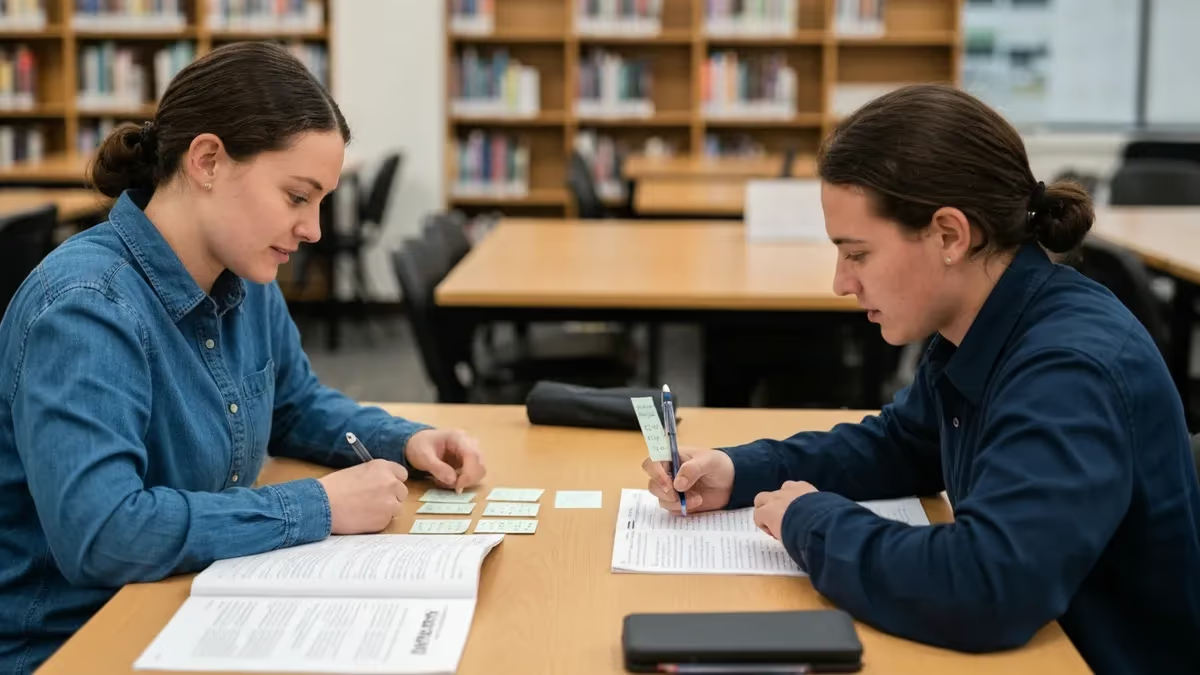
The padi rescue course is widely considered the most transformative certification in recreational diving. Unlike earlier certifications that focus primarily on your own skills and safety, the PADI Rescue Diver course shifts your perspective outward — teaching you to recognize problems before they escalate, assist distressed divers underwater and at the surface, and manage realistic diving emergencies with calm, practiced confidence. Thousands of US divers complete this certification every year, and nearly all of them describe it as the most challenging and rewarding course they have ever taken.
The PADI rescue course builds on the foundational skills you developed as an Open Water and Advanced Open Water diver. It is not a beginner course, and it is not designed to be easy. You will be placed in scenarios that push you mentally and physically — simulated panicking divers, unconscious victim recoveries, search patterns for missing divers, and emergency first-response situations. Every skill is practiced until it becomes instinctive, because in a real emergency there is no time to think through steps. Muscle memory saves lives, and this course is built around creating exactly that.
Prerequisites for enrollment are straightforward but firm. You must hold a PADI Advanced Open Water Diver certification or equivalent from a recognized agency. You must also hold a current Emergency First Response (EFR) certificate, or an equivalent CPR and first aid qualification earned within the past 24 months. Most dive shops offer EFR training as part of a combined package with the rescue course, so completing both in the same weekend is very common. Minimum age is 12 years old for a Junior Rescue Diver certification, or 15 for the standard Rescue Diver rating.
The course is divided into three major components: knowledge development, rescue exercises in confined water, and rescue scenarios in open water. Knowledge development is typically completed as self-study using PADI's ebook or video materials before you arrive at the dive shop. This covers topics such as diver stress, panic recognition, surface rescues, missing diver procedures, and accident management. Arriving with the theory already studied means your in-water time is spent practicing skills rather than sitting through lectures, which dramatically improves learning outcomes.
Confined water sessions introduce each rescue skill in a controlled pool or pool-like environment. You will practice removing an unconscious diver's equipment, towing victims to shore, performing rescue breathing in the water, and coordinating with a buddy during complex scenarios. Your instructor will correct your technique in real time, and you will repeat each skill until it meets PADI's performance requirements. This is where most students discover the physical demands of the course — rescue breathing while towing a full-sized adult through water is genuinely exhausting, and that is entirely by design.
Open water scenarios are where the course comes alive. These sessions take everything you practiced in the pool and apply it in realistic dive site conditions — variable visibility, currents, surge, and real distances between you and a distressed diver. Scenarios are deliberately unpredictable. You might be asked to manage a panicking diver while simultaneously signaling for help and keeping yourself safe. You might have to locate a missing diver using a systematic search pattern across a large area. Each scenario is debriefed afterward so you understand what you did well and where your decision-making can improve.
Upon successful completion, you earn the PADI Rescue Diver certification, which is a significant milestone in any diver's progression. It is also a direct prerequisite for the PADI Divemaster course, making it the gateway to professional-level diving. The skills you learn in the rescue course are not just for emergencies — they make you a sharper, more situationally aware diver on every single dive you make for the rest of your life.
PADI Rescue Course by the Numbers

How the PADI Rescue Course Works Step by Step
Complete Prerequisites
Self-Study Knowledge Development
Confined Water Practice
Open Water Scenarios
Debrief and Certification
The skills you master during the PADI rescue course go far beyond what most divers expect when they first enroll. The first major skill cluster focuses on self-rescue — understanding that before you can help anyone else, you must maintain control of yourself. This means practicing buoyancy control under stress, managing equipment problems calmly, and recognizing when you are approaching your own limits. Many experienced divers are surprised to discover gaps in their own self-rescue readiness during these early exercises.
Recognizing stress in other divers is one of the most practically valuable skills in the entire course. Stress manifests in predictable ways: wide eyes, erratic breathing, tight grip on equipment, refusal to descend, or hyperventilation at the surface. The rescue course trains you to notice these signals before a stressed diver becomes a panicking diver, because a panicking diver is dramatically harder to assist and poses a real danger to any rescuer who approaches carelessly. You will learn specific approach techniques that allow you to assist a distressed diver without being pulled underwater yourself.
The PADI rescue course places heavy emphasis on unresponsive diver management, which is the most technically demanding portion of the curriculum. You will practice locating an unresponsive diver underwater, establishing positive buoyancy, ascending safely while controlling the victim, and beginning rescue breathing at the surface before you even reach shore. You will also practice the full sequence of removing an unresponsive diver from the water, positioning them correctly, and initiating CPR — skills that directly complement your Emergency First Response training.
Missing diver procedures teach you how to conduct a systematic search when a buddy fails to surface. You will learn the standard search patterns used by recreational rescue teams: the expanding square, the U-pattern, and the circular search. You will practice calling a dive and organizing other divers on the surface to assist in a coordinated search. Understanding when to call for emergency services versus continuing to search is a critical judgment call that the course addresses directly through scenario practice.
Accident management scenarios simulate the chaos of a real diving emergency at a crowded dive site. You play the role of the most trained person on the scene — the one who has to take charge, delegate tasks to bystanders, manage the victim, communicate clearly with emergency services, and document the incident accurately. The padi owd course builds foundational safety awareness, but the Rescue course is where you learn to act as the leader in a genuine crisis.
Every rescue skill is taught with a recognition component built in. Before you can practice towing a tired diver, you must demonstrate that you can correctly identify a tired diver from ten meters away based on body language and swimming pattern alone. Before you practice the panicking diver approach, you must explain the specific risks of approaching a panicking diver head-on and describe the techniques used to avoid being pulled under. Knowledge and physical skill are always taught together, reinforcing each other throughout every session.
By the time you complete your final open water scenario, the transformation in your diving awareness is unmistakable. You will find yourself automatically scanning other divers for signs of stress, positioning yourself for quick response, and thinking through contingency plans before every dive. This situational awareness is not just a safety asset — it makes you a better dive buddy, a more observant explorer, and a much more confident diver in challenging conditions anywhere in the world.
PADI Open Water Certification vs. Rescue Diver: Key Differences
The PADI Open Water Diver course covers fundamental diving physics, equipment operation, basic underwater communication, and entry-level dive planning. The PADI rescue course builds significantly on this foundation by introducing stress physiology, accident analysis, emergency oxygen administration, and incident reporting procedures. Where Open Water knowledge can be absorbed in a few study sessions, Rescue Diver theory requires deeper engagement because you must understand not just what to do but why each action is taken in a specific sequence during high-pressure situations.
Rescue Diver candidates are also expected to demonstrate knowledge of EFR procedures including CPR, AED operation, and secondary care skills. This integration of first aid knowledge with diving-specific rescue theory is what makes the knowledge component more demanding than any previous PADI course. Many students find the written knowledge reviews — which must be completed before pool sessions — to be more challenging than they anticipated, particularly the sections covering missing diver accident management and post-rescue documentation requirements that may be used by emergency services.

Is the PADI Rescue Course Worth It?
- +Dramatically improves your situational awareness on every future dive
- +Required prerequisite for PADI Divemaster and all professional certifications
- +Teaches life-saving skills applicable both underwater and in surface emergencies
- +Builds genuine confidence in challenging dive conditions and unfamiliar environments
- +Recognized globally — your rescue skills transfer to any dive destination worldwide
- +Complements EFR/CPR training with diving-specific emergency response protocols
- −More physically demanding than most recreational divers expect before starting
- −Requires current EFR/CPR certification as a hard prerequisite — adds time and cost
- −Higher course cost than Open Water or Advanced Open Water certifications
- −Emotionally intense scenarios can be stressful, particularly unconscious diver simulations
- −Requires sufficient open water dive experience to perform skills confidently under pressure
- −Time commitment of 3–4 full days can be difficult to schedule around work obligations
PADI Rescue Diver Enrollment Checklist
- ✓Confirm you hold a valid PADI Advanced Open Water Diver certification or recognized equivalent
- ✓Verify your Emergency First Response (CPR/First Aid) certification is dated within the past 24 months
- ✓Schedule your EFR renewal if your card has expired before booking the Rescue course
- ✓Purchase or rent the PADI Rescue Diver ebook or video program and complete all knowledge reviews
- ✓Answer the medical statement honestly and obtain physician clearance if any conditions apply
- ✓Ensure your dive gear is in good working order — have your regulator serviced if overdue
- ✓Bring a wetsuit appropriate for your local water temperature throughout all pool and open water sessions
- ✓Arrive at your first pool session having already read the assigned knowledge chapters
- ✓Bring a dive light and surface marker buoy to open water sessions — required for some scenarios
- ✓Plan your schedule to allow at least 3 consecutive or closely spaced days for the full course
Physical Fitness Matters More Than You Think
PADI's medical guidelines recommend that Rescue Diver candidates be in good cardiovascular health before enrolling. Towing an unconscious adult diver 50+ meters while performing rescue breathing is one of the most physically demanding tasks in recreational diving training. Students who complete 30 minutes of moderate cardio exercise several times per week in the month before their course consistently report better performance and less fatigue during the most demanding rescue scenarios.
The cost of the PADI rescue course varies significantly across the United States, and understanding what drives that variation helps you make a smarter purchasing decision. In popular coastal dive markets such as Florida, California, and Hawaii, courses typically range from $400 to $600 including all required materials, gear rental, and boat fees for open water dives. In inland markets where open water sessions must be conducted at quarries or lakes, costs often run $300 to $450. Urban dive shops in expensive metro areas may charge more due to overhead, while smaller independent shops frequently offer more competitive pricing.
When comparing course prices, always ask specifically what is included. Some shops advertise a low headline price but charge separately for the PADI ebook or video program (typically $50–$75), gear rental (mask, fins, wetsuit, BCD, regulator — potentially $75–$150 per day), boat fees for open water dives ($25–$50 per tank), and the PADI certification processing fee (approximately $25). A shop offering an all-inclusive package at $500 may represent significantly better value than a shop advertising $280 with numerous add-ons that push your total past $500 anyway.
Combining the Emergency First Response course with your Rescue Diver training is almost always the most cost-effective approach if your EFR card has expired or is about to expire. Most dive shops offer bundled pricing for EFR plus Rescue Diver that saves $50–$100 compared to taking the courses separately. EFR alone typically costs $100–$150 when taken independently. The bundled course usually runs a long weekend — Friday evening for EFR theory and skills, then Saturday and Sunday for the full Rescue Diver course.
Scheduling considerations matter more for the rescue course than for most other PADI certifications. Because the course requires multiple open water dives in scenarios that depend on reasonable weather and visibility, scheduling during winter months at northern dive sites can be challenging. Many students choose to combine their Rescue Diver certification with a dive trip to a warm-water destination — completing the course in the Florida Keys, in the Caribbean, or on a liveaboard in Mexico while simultaneously getting exceptional diving in. This approach is increasingly popular and many tropical dive operators offer the course specifically for traveling divers.
Group size affects both the cost and the quality of your rescue course experience. PADI standards allow up to eight students per instructor for rescue exercises, but the best instructors prefer smaller groups of four to six students. Smaller groups mean more scenario repetitions per person, more individualized feedback, and more realistic multi-person scenario coordination. When scheduling your course, ask how many students will be enrolled. If a shop is running a large group to cut costs, it may be worth paying slightly more at a shop that caps enrollment at a smaller number.
Payment timing and refund policies are worth reviewing carefully before you book. Most dive shops require a deposit of $75–$150 to hold your spot, with the balance due on the first day of the course. Cancellation policies vary widely — some shops offer full refunds up to 48 hours before the course, while others apply the deposit toward a future date but do not issue cash refunds. If you are traveling to complete the course, travel insurance that covers dive course cancellations is worth considering, since weather-related postponements of open water sessions are not uncommon at exposed coastal sites.
Financing options are increasingly available through dive shops affiliated with major dive equipment retailers. Some shops offer payment plans that split the course cost over two to three months with no interest. PADI itself offers a scholarship fund called PADI Women's Dive Day grants and the Project AWARE scholarship, which can offset certification costs for qualifying applicants. If the cost of the rescue course is a barrier, it is worth spending 30 minutes researching whether any of these programs apply to your situation before you decide to delay your certification.

Your Emergency First Response (CPR and First Aid) card must be valid — not just started — when you complete your Rescue Diver certification. PADI instructors cannot certify a Rescue Diver candidate whose EFR card expires during the course. If your EFR card expires within 60 days of your planned Rescue Diver course date, renew it beforehand or enroll in a combined EFR plus Rescue Diver package so both are completed and current simultaneously.
Once you hold your PADI Rescue Diver certification, the path forward in recreational diving opens up dramatically. The most direct next step for divers who want to continue developing is the padi open water certification pathway leading to Divemaster — but from the Rescue Diver level, the Divemaster course is your immediate next option.
PADI Divemaster is the first professional rating in the PADI system, and it qualifies you to lead certified divers, assist instructors during courses, and work at dive operations around the world. The skills you built in the Rescue course are the foundation the Divemaster curriculum is built upon.
The PADI Divemaster course is significantly longer than any recreational certification — typically 40 to 80 hours of training spanning several weeks to several months depending on your pace and your shop's schedule. It includes supervised dive leadership experience, rescue skill performance reviews, a comprehensive exam covering dive theory across five subjects (physics, physiology, skills and environment, equipment, and recreational dive planner), and a practical skills circuit assessment. Rescue Diver skills like stamina towing, tired diver assistance, and unresponsive diver management are all evaluated again at the Divemaster level to a higher performance standard.
Even if professional diving is not your goal, the Rescue Diver certification unlocks access to several PADI specialty courses that have Rescue Diver as a prerequisite or recommendation. The Search and Recovery Diver specialty course builds directly on the missing diver procedures you learned in the rescue course, teaching advanced search patterns and lift bag techniques for recovering lost objects. The Night Diver and Wreck Diver specialties are more accessible to divers who have completed Rescue training because the risk management framework you developed makes you a safer participant in higher-complexity dive environments.
The Rescue Diver certification is also increasingly recognized by dive trip operators worldwide as a marker for allowing access to more challenging dive sites. Drift dives in strong currents, blue water diving, cave diving orientation courses, and technical diving introductory programs all look favorably on applicants who hold a Rescue Diver rating. The certification signals that you have been trained to manage emergencies and make good decisions under pressure — qualities that matter when diving in environments where mistakes carry higher consequences than they do at a calm, shallow, sheltered reef.
Within your local diving community, the Rescue Diver certification changes how other divers relate to you. Fellow divers will naturally look to you in an emergency. Dive charter operators will seat you strategically on boats when they know your certification level. Some dive clubs and expedition groups give preference to Rescue-certified members when organizing trips to challenging destinations. None of this is formal or official — it is simply the earned recognition that comes from completing the most demanding recreational diving certification that PADI offers.
Maintaining your Rescue Diver skills over time requires deliberate practice. PADI recommends a formal rescue skills tune-up every two years, and many dive shops offer half-day rescue skill refresher workshops for certified divers. Between formal refreshers, you can stay sharp by practicing surface rescue breathing with a buddy, reviewing missing diver procedures before dives at unfamiliar sites, and staying current with your EFR/CPR certification. Skills that are not practiced do decay — the goal is to keep your rescue responses fast and automatic, not just remembered in theory.
The broader diving community benefits measurably when more divers hold Rescue certification. Statistically, dive accidents that result in fatalities most commonly involve situations where bystanders had no rescue training and critical minutes were lost before proper help arrived. Every Rescue Diver in the water represents a meaningful improvement in the safety margin of the entire diving group. When you encourage your regular dive buddies to pursue their own Rescue Diver certifications, you are not just helping them develop — you are making every dive you share together genuinely safer for everyone involved.
Preparing effectively for the PADI rescue course starts well before your first pool session. The single most impactful thing you can do is complete all knowledge development materials thoroughly before you arrive. PADI's rescue course materials are well-written and genuinely engaging — this is not dry regulatory reading.
Work through each chapter actively, pausing to answer the knowledge review questions honestly rather than skimming ahead. If a question reveals a gap in your understanding, go back and re-read that section before moving on. Arriving at your pool session with solid theoretical knowledge means you can focus entirely on physical skill execution rather than trying to absorb two things simultaneously.
Physical preparation pays dividends that most divers underestimate. The towing skills in the rescue course require sustained effort over distances that can reach 100 meters or more in some open water scenarios. If you are not regularly swimming, spend two to three weeks doing pool laps or open water swims before your course begins.
You do not need to be an elite athlete — but you do need enough cardiovascular endurance to perform demanding physical tasks while keeping your breathing controlled and your decision-making clear. Panicking yourself during a rescue exercise because you are out of breath defeats the entire purpose of the training.
Practice your existing dive skills before the rescue course to ensure they are smooth and automatic. Specifically, work on buoyancy control at various depths, mask removal and replacement underwater, and regulator recovery. In rescue scenarios, you will need to perform these fundamental skills while simultaneously managing another person — any hesitation or struggle with basics becomes a significant liability. A refresher dive or two in the weeks before your course, with deliberate attention to skill precision rather than just enjoying the dive, is an excellent investment.
Study the PADI Rescue Diver knowledge reviews with particular attention to the sections on stress recognition and the panicking diver approach. These topics have the most counterintuitive elements — the correct way to approach a panicking diver is the opposite of what most people's instincts suggest. Understanding the reasoning behind each step (why you approach from behind, why you establish vocal contact before physical contact, why you signal before you submerge) helps you remember and execute the sequence correctly under the cognitive load of a realistic scenario.
During your pool sessions, prioritize quality of movement over speed. Instructors can slow a student down, but they cannot easily correct sloppy technique that has been practiced fast and reinforced incorrectly. Ask questions freely — your instructor expects them and values a student who is actively processing the material. If a scenario debrief reveals a decision you made that you do not fully understand, ask specifically what the correct decision was and why. The debriefs are often where the deepest learning happens, and passive listening misses most of it.
The dan padi collaboration on dive safety research has consistently shown that rescue-trained divers have better safety records across all types of recreational diving — not just in emergency situations. The heightened awareness and pre-dive risk assessment habits developed in the rescue course transfer directly into your everyday diving practice. Use your open water scenario debriefs to actively analyze your pre-dive planning decisions, not just your in-water rescue technique, and you will leave the course with improvements that benefit every dive you make.
After your certification is complete, write down the three things that surprised you most about the course while they are fresh. Review your scenario debriefs if your instructor provided written notes. Identify the one or two skills that felt least natural and commit to practicing them within your next five dives. The rescue course compresses an enormous amount of learning into a short period — the divers who retain and apply it most effectively are the ones who treat completion as the beginning of building rescue proficiency, not the end of the learning process.
PADI Questions and Answers
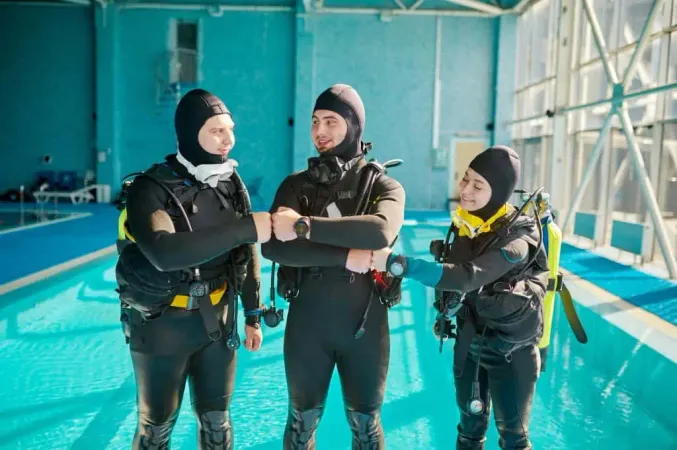
Certified Professional Association of Diving Instructors Diver: All You Need to Know
PADI Practice Test PDF (Free Printable 2026)
PADI OWD Course — Your Complete Open Water Diver Guide for 2026

PADI Scuba Diving Course: Complete Guide to Open Water Certification & Beyond

PADI Rescue Diver Course: Complete Guide to Certification, Training & What to Expect
About the Author

Educational Psychologist & Academic Test Preparation Expert
Columbia University Teachers CollegeDr. Lisa Patel holds a Doctorate in Education from Columbia University Teachers College and has spent 17 years researching standardized test design and academic assessment. She has developed preparation programs for SAT, ACT, GRE, LSAT, UCAT, and numerous professional licensing exams, helping students of all backgrounds achieve their target scores.
Join the Discussion
Connect with other students preparing for this exam. Share tips, ask questions, and get advice from people who have been there.
View discussion (8 replies)