
OTA Certification Programs in Southern California: Complete 2026 September Study & Prep Guide
OTA certification programs southern california explained: requirements, costs, NBCOT prep tips & top schools. Your complete 2026 September guide. 🎓

If you are exploring ota certification programs in Southern California, you are entering one of the most competitive and rewarding allied health pathways in the country. Southern California's dense population, aging demographics, and world-class hospital networks create extraordinary demand for credentialed Occupational Therapy Assistants. Graduates from accredited programs in the region consistently report faster job placement and higher starting salaries than national averages, making the investment in a quality program both practical and financially sound for motivated students.
OTA certification programs in Southern California typically span four to six semesters of full-time study and culminate in an Associate of Applied Science (AAS) degree. Accreditation by the Accreditation Council for Occupational Therapy Education (ACOTE) is non-negotiable: only graduates of ACOTE-accredited programs are eligible to sit for the National Board for Certification in Occupational Therapy (NBCOT) examination. This single licensing exam — the COTA credential exam — is the gateway to legal practice in California and all other U.S. states, so program accreditation status should be your very first evaluation criterion when comparing schools.
Southern California's OTA landscape includes community colleges, private career colleges, and university-affiliated programs spread across Los Angeles, San Diego, Orange County, the Inland Empire, and the Central Coast. Community colleges such as Los Angeles City College, Grossmont College, and Loma Linda University–adjacent programs offer affordable tuition with robust clinical networks. Private colleges, while pricier, often provide accelerated schedules, evening cohorts, and stronger employer pipeline partnerships that suit career-changers and working adults who cannot pause employment.
Admission to competitive Southern California OTA programs typically requires a minimum 2.5–3.0 GPA, completion of prerequisite courses in anatomy, physiology, psychology, and medical terminology, documented observation hours (commonly 40–80 hours) in occupational therapy settings, letters of recommendation, and a personal statement. Some programs have moved to holistic admissions that weight lived experience and bilingual ability — particularly Spanish fluency — because much of Southern California's patient population is predominantly Spanish-speaking, and bilingual OTAs command premium placement in community health settings.
Financial considerations matter enormously. California community college OTA programs can cost as little as $8,000–$12,000 in total tuition for California residents, while private institutions may charge $35,000–$55,000. The federal financial aid system (FAFSA), Cal Grants, institutional scholarships, and HRSA workforce development grants can significantly offset costs. AOTA Foundation scholarships, the California OT Association's student awards, and employer tuition-reimbursement programs through major health systems like Kaiser Permanente and Providence Health are also worth researching before committing to a program.
Clinical fieldwork is the spine of every ACOTE-accredited OTA program. California requires Level I fieldwork (observational, integrated throughout the curriculum) and two Level II fieldwork rotations of at least 16 weeks each at approved clinical sites. Southern California's fieldwork opportunities span acute care hospitals, skilled nursing facilities, pediatric clinics, school districts, hand therapy centers, inpatient psychiatric units, and community mental health agencies — an unparalleled diversity that prepares graduates to work confidently across multiple practice settings.
Beyond the NBCOT credential, California's Department of Consumer Affairs (DCA) Board of Occupational Therapy requires a state license before you can practice. The COTA California license involves submitting your NBCOT passing score, completing a licensure application, passing a California law and professional standards exam, and undergoing a background check. Starting this process the moment your NBCOT results arrive saves critical weeks — most Southern California employers need licensed practitioners, not merely credential-holders, before beginning orientation.
OTA Certification Programs in Southern California by the Numbers

Top OTA Program Pathways in Southern California
Affordable two-year pathways offered at institutions like Grossmont College and LA City College. California resident tuition typically runs $8,000–$12,000 total. Highly competitive admissions with waitlists of 12–24 months at top programs.
Accelerated cohort-based programs at institutions like Concorde Career College or Bryan University. Often designed for working adults with evening and hybrid schedules. Tuition ranges $35,000–$55,000 but placement support is typically stronger.
Programs connected to large university systems offer research exposure, interprofessional education with OT doctoral students, and robust alumni networks. Examples include programs affiliated with Loma Linda University's health sciences campus in the Inland Empire.
Several ACOTE-accredited programs now deliver didactic coursework online with in-person lab and fieldwork requirements fulfilled locally. This model suits Southern California students who live far from campus but need clinical hours in their home region.
Understanding the full cost structure of Southern California OTA programs is essential before you commit to an application cycle. Community college programs represent the most affordable entry point, with California resident tuition and fees typically totaling between $8,000 and $12,000 over two years. However, that sticker price excludes textbooks (budget $1,500–$2,500), uniforms and clinical supplies ($400–$700), liability insurance for fieldwork ($150–$300/year), the NBCOT exam application fee ($555 for first-time candidates), and the California state licensure application fee ($250). Realistic all-in costs for a community college route run $12,000–$17,000 for residents.
Private career college programs in Southern California present a sharply different financial picture. Total program costs including tuition, fees, and supplies commonly range from $38,000 to $58,000. Many private institutions offer institutional scholarships that reduce net price by 15–25%, and nearly all participate in federal Title IV financial aid. Before enrolling, request the institution's cohort default rate and on-time graduation rate — data that reveals whether students actually finish and can repay loans. A program with a 60% on-time completion rate and high loan debt is a significant financial risk regardless of its ACOTE accreditation status.
Admission requirements across Southern California programs share a common core but differ importantly in the details. Almost all ACOTE-accredited programs require completion of prerequisite college courses: human anatomy and physiology (often with lab), introduction to psychology, developmental psychology or lifespan development, English composition, and medical terminology. Grade minimums for prerequisites typically range from C to B depending on program competitiveness. At oversubscribed community college programs, a B+ average in prerequisites is often the practical floor for a competitive application.
Observation hours are another near-universal requirement. Most Southern California programs specify between 40 and 100 hours of documented observation in occupational therapy settings, and they generally require hours in at least two different practice settings — for example, one acute care setting and one pediatric or community mental health setting. Securing quality observation hours in Southern California can be competitive itself, as many OT departments limit observer slots. Reaching out to program fieldwork coordinators, joining the California Occupational Therapy Association (CalOT) as a student affiliate, and networking with working OTAs on LinkedIn are the most effective strategies for securing placements.
Letters of recommendation are required by virtually every program — typically two or three letters. The strongest letters come from licensed OTs or OTAs who supervised your observation hours, followed by science faculty who can speak to your academic capability. Generic character references from employers outside healthcare add limited value. If you have been out of school for several years, a letter from a healthcare supervisor and one from a community college science instructor who evaluated your recent prerequisite coursework generally performs best with admissions committees.
The personal statement is your opportunity to demonstrate two things simultaneously: why OTA specifically (not physical therapy, nursing, or another allied health field) and why you are ready for the academic and clinical demands of the program right now. Admissions committees at Southern California programs read hundreds of essays describing personal caregiving experiences. To stand out, go beyond the narrative and articulate specific skills those experiences built — clinical observation, patience with pediatric communication, comfort with cognitive disability — and connect them directly to the OTA competencies listed in the program's accreditation standards.
Financial aid timelines require careful planning. FAFSA opens October 1 for the following academic year, and California's Cal Grant system has a March 2 deadline for new applicants. Most community college OTA programs have application windows in fall for the following fall or spring cohort, meaning you may be applying 12–18 months before you actually start. Mapping the financial aid calendar alongside the admissions calendar early — ideally 18 months before your target start date — prevents the painful situation of being accepted but financially unprepared.
NBCOT COTA Exam Preparation: Strategies by Study Style
Self-directed NBCOT COTA preparation works best when organized around the official exam blueprint, which divides content into four domains: Gathering Information and Forming Clinical Impressions, Formulating and Implementing the Intervention Plan, Communicating and Adhering to Ethical and Legal Standards, and Managing OTA Practice. Allocate study time proportionally to domain weight — Domain 2 carries the heaviest percentage and deserves the most preparation hours in your self-study schedule.
The most effective self-study resources include the NBCOT's own practice exam (strongly recommended as a benchmark tool 4–6 weeks before your test date), the TherapyEd COTA National Review guide, and free and paid question banks from AOTA and third-party prep providers. Flashcard systems like Anki, loaded with domain-specific terminology and frame of reference definitions, reinforce retention between longer study sessions. Set a weekly goal of completing at least 50 timed practice questions and reviewing every incorrect answer in detail — passive re-reading is far less effective than active retrieval.

Pursuing OTA Certification in Southern California: Pros and Cons
- +Exceptional job market density — LA, San Diego, and Orange County rank among the top U.S. metros for OTA employment opportunities
- +Higher-than-national-average salaries, with experienced COTAs in SoCal hospital systems earning $70,000–$80,000+
- +Diverse fieldwork settings expose you to more practice areas than most U.S. regions can offer in a single program
- +Community college programs deliver accredited credentials at a fraction of private school costs for California residents
- +Bilingual OTAs (especially Spanish-English) command premium placement and salary in SoCal's large community health sector
- +Strong professional associations — CalOT and AOTA both offer student memberships with networking and scholarship access
- −Community college programs often have waitlists of 12–24 months, delaying your start date significantly
- −High cost of living in Southern California means housing and transportation costs during school can rival tuition itself
- −Private program tuition ($38K–$58K) creates substantial debt burden if scholarships and grants do not cover the gap
- −Admission is highly competitive — GPAs below 3.0 and fewer than 60 documented observation hours rarely advance
- −California state licensure adds an extra step and several weeks of processing after passing the NBCOT
- −Traffic and commuting to clinical sites across sprawling metro areas (LA especially) adds significant time and cost burden
COTA Exam Readiness: 10-Step Preparation Checklist
- ✓Verify your OTA program is ACOTE-accredited before applying — only graduates of accredited programs can sit for the NBCOT COTA exam.
- ✓Complete all Level I and Level II fieldwork hours and obtain a signed attestation from your fieldwork supervisor confirming competency.
- ✓Apply to the NBCOT exam within 30 days of program graduation to avoid processing delays that can push your test date weeks later.
- ✓Download and review the official NBCOT COTA Exam Blueprint to understand exact domain weightings before building your study schedule.
- ✓Take at least one full-length timed NBCOT practice exam 4–6 weeks before your test date to identify your weakest content domains.
- ✓Study adaptive equipment, activity analysis, documentation standards, and supervision regulations — these appear heavily in vignette questions.
- ✓Review California-specific OT Practice Act provisions through the DCA Board website, as state rules occasionally differ from generic NBCOT content.
- ✓Join a CalOT student chapter or NBCOT study group to access peer support, case discussions, and shared question banks.
- ✓Apply for California state licensure immediately after receiving your NBCOT passing score to avoid delaying your employment start date.
- ✓Schedule your NBCOT exam through Prometric at least 3–4 weeks in advance — Southern California testing centers book quickly, especially in May and December.
The NBCOT Tests Clinical Reasoning, Not Just Memorization
Most COTA candidates who fail the NBCOT do so not because they lack factual knowledge, but because they struggle with vignette-style questions that require applying frames of reference to real patient scenarios. Prioritize practice questions that present case studies and require you to select and justify interventions — not just define terms. Programs with strong fieldwork integration in Southern California give graduates a natural advantage here because they have already practiced this reasoning in real clinical settings.
Southern California's occupational therapy job market ranks among the strongest in the United States for COTAs entering the workforce. The Bureau of Labor Statistics projects 25% growth in OTA employment nationally between 2022 and 2032, but California's growth trajectory exceeds this average due to the state's older demographic wave, Medi-Cal expansion, and school district mandates for occupational therapy services under IDEA. Los Angeles County alone employs thousands of COTAs across its vast network of acute care hospitals, skilled nursing facilities, county mental health clinics, and LAUSD schools.
Entry-level COTAs in Southern California typically earn between $55,000 and $68,000 annually, depending on setting and geography. Skilled nursing facilities often pay the highest starting wages due to productivity expectations and the physical demands of the patient population, while school district positions offer lower base pay but exceptional benefits, summers off, and strong pension systems through CalSTRS or CalPERS. Home health agencies increasingly recruit COTAs for flexible per-visit compensation models that can yield very high effective hourly rates for experienced practitioners who live near their patient clusters.
Specialty certifications accelerate salary growth substantially. COTAs who earn the Board Specialty Certification in Gerontology (BCG), the Certified Autism Specialist (CAS) credential, or the Certified Hand Therapist (CHT) designation — though CHT typically requires additional supervision hours beyond COTA entry level — consistently report salary premiums of $8,000–$15,000 annually compared to non-specialized peers. Southern California's pediatric, hand therapy, and neurorehabilitation sectors actively recruit credentialed COTAs and frequently offer tuition assistance for specialty certification coursework.
Geographic salary variation within Southern California is meaningful and should inform your job search strategy. COTAs working in central Los Angeles, West Los Angeles, and coastal Orange County typically earn more than peers in the Inland Empire or high-desert communities — but cost of living differences can reverse the practical advantage. A COTA earning $72,000 in Santa Monica and paying $2,800/month in rent may have less disposable income than a colleague earning $65,000 in Temecula with a $1,600/month mortgage. Running cost-adjusted comparisons before accepting positions is sound financial practice.
Travel therapy is an increasingly attractive option for Southern California-based COTAs who have completed 1–2 years of full-time clinical experience. Travel therapy agencies like AMN Healthcare, Cross Country Allied, and Medely place COTAs on 13-week contracts nationally, with base pay rates of $35–$55 per hour plus tax-free housing and meal stipends. Southern California COTAs who establish their clinical competency base locally and then travel earn substantially more than same-experience peers who remain in fixed positions — while also gaining exposure to healthcare systems and patient populations that enrich their clinical practice.
The school district market deserves special attention. California's IDEA obligations and expanded mental health mandates have created significant COTA shortages across LAUSD, San Diego Unified, Inland Empire districts, and dozens of smaller LEAs throughout Southern California. School COTAs work under the supervision of OTs to deliver sensory integration, fine motor, visual perceptual, and adaptive skills interventions to students with IEPs. The predictable schedule, collaborative team environment, and excellent benefits make school-based practice one of the most sought-after settings for COTAs who prioritize work-life balance — and districts are actively recruiting with sign-on bonuses of $2,000–$5,000 at the most understaffed campuses.
Entrepreneurial COTAs in Southern California increasingly build private-pay practices or consulting services targeting clients who do not want to navigate insurance limitations. Home modification consulting, ergonomic assessments for tech company employees, caregiver coaching for families of stroke survivors, and early intervention services for toddlers with developmental delays are all areas where COTAs operating under appropriate OT supervision can build thriving independent revenue streams.
California's large base of affluent, health-conscious consumers and its robust culture of preventive wellness make it one of the best states in the country for COTA entrepreneurs willing to invest in marketing and business development skills alongside their clinical practice.

Passing the NBCOT COTA exam earns you national certification but does NOT authorize you to practice in California. You must separately obtain a California COTA license from the DCA Board of Occupational Therapy before beginning clinical employment. Processing times currently run 8–12 weeks after submitting a complete application. Apply immediately after receiving your NBCOT results and do not begin patient care until your California license is confirmed — practicing without a valid state license is a misdemeanor under the California Business and Professions Code.
Mastering the NBCOT COTA exam requires a disciplined, domain-specific preparation strategy built around the official exam blueprint. The NBCOT publishes the exact percentage weighting for each of the four exam domains, and the most successful candidates allocate their study hours proportionally to these weights rather than studying everything equally. Domain 2 — Formulating and Implementing the Intervention Plan — carries the heaviest weight (approximately 37–42% of items) and should anchor your study schedule from the beginning, not just as a review topic in the final weeks before your test date.
Frames of reference are the conceptual backbone of the NBCOT COTA exam. You must understand at minimum six core frames of reference used in OTA practice: biomechanical, rehabilitative, neurodevelopmental (NDT), sensory integration (SI), cognitive-behavioral, and Model of Human Occupation (MOHO). For each frame, you should be able to identify its theoretical basis, the patient populations it best serves, the specific types of activities and interventions it calls for, and its limitations. NBCOT vignette questions frequently test whether you can recognize which frame of reference is most appropriate given a specific patient diagnosis, functional deficit, and treatment setting.
Activity analysis is one of the highest-tested skills on the COTA exam and one that many students underestimate during their academic preparation. Activity analysis requires you to break any occupation down into its component physical, cognitive, sensory, social, and emotional demands — and then reason about which components a specific patient can or cannot perform given their diagnosis and functional status.
The NBCOT tests this skill through scenario questions that ask you to select the most therapeutically appropriate activity for a given patient goal, requiring you to mentally analyze multiple activities simultaneously and match them to the patient's current capability level.
Documentation standards appear consistently across the exam, particularly questions about SOAP note structure, goal-writing (SMART goals with measurable functional outcomes), progress note content, and discharge summary requirements. California COTAs must document in compliance with both AOTA standards and facility-specific policies, and the NBCOT tests your understanding of what must be documented, when documentation must occur, and what constitutes legally adequate clinical records. Practice writing functional goals — not impairment-based goals — because the NBCOT tests goal language extensively and CMS reimbursement standards heavily influence what constitutes a defensible goal in 2026.
Supervision requirements are another heavily tested content area. ACOTE and NBCOT expect COTAs to know the OT-OTA supervisory relationship in depth: OTAs always work under the supervision of an OT; supervision intensity varies by setting, patient acuity, and COTA experience level; and COTAs may not independently evaluate patients or establish treatment plans without OT involvement. California's OT Practice Act specifies supervision requirements that in some cases are more stringent than NBCOT's general standards — knowing both layers prevents you from being caught off guard by state-specific scenario questions.
Ethics and professional standards form Domain 4 of the NBCOT exam and are frequently underestimated by first-time candidates. You should be thoroughly familiar with the AOTA Code of Ethics, including its seven core principles: beneficence, nonmaleficence, autonomy, justice, veracity, fidelity, and procedural justice. NBCOT scenario questions in this domain test your ability to recognize ethical violations, navigate dual-relationship conflicts, handle disagreements with supervising OTs, and respond appropriately when you witness unprofessional conduct. There are usually correct answers, partially correct answers, and defensible-but-suboptimal answers — understanding the hierarchy of ethical principles helps you distinguish between them under exam pressure.
Time management during the NBCOT exam itself is a preparation discipline that too many candidates neglect. The exam delivers 170 questions in a three-hour window — approximately 63 seconds per question. Candidates who have completed many timed practice sets arrive at the test center with an internalized pacing instinct; those who have studied exclusively from textbooks without timed practice frequently run short on time in the final exam section.
Commit to completing full 100+ question timed practice sessions at least four times in the eight weeks before your exam, and practice your skip-and-return strategy for questions where you are genuinely uncertain.
The final weeks before your NBCOT COTA exam should shift from new content acquisition to consolidation, application, and stamina training. In weeks seven and eight before your test date, reduce the volume of new material you are introducing and focus instead on reviewing your weakest domains through targeted practice questions, case vignettes, and peer teaching. Teaching a concept to another person — explaining activity grading to a classmate, walking a study partner through the sensory integration frame of reference — is one of the most powerful retention strategies available and costs nothing beyond your time.
Sleep and physical health in the week before the exam are not optional luxuries — they are performance variables. NBCOT candidates who sleep fewer than seven hours in the three nights before their test date show measurably lower performance on complex reasoning tasks, which is precisely what the vignette-heavy COTA exam demands. Create a sleep and nutrition plan for exam week: maintain your regular wake time, avoid alcohol the week before, keep a consistent meal schedule, and plan your route to the Prometric testing center in advance so logistical anxiety does not eat into your mental energy on test morning.
On the morning of your exam, arrive at the Prometric center at least 30 minutes early. You will need a government-issued photo ID that exactly matches the name on your NBCOT authorization. The testing center will ask you to empty your pockets, scan your palm veins for biometric check-in, and store all personal items in a locker before entering the testing room.
You will receive a dry-erase board and marker for scratch work. Use the tutorial period at the start of the exam — do not skip it — to orient to the interface and settle your nervous system before the scored questions begin.
If you encounter a question you genuinely cannot answer confidently, use the flag-and-move-on strategy. Flag it, make your best educated guess based on eliminating clearly wrong answers, and proceed. Dwelling on a difficult question for three or four minutes while earlier-read, easier questions drift from memory is one of the most common causes of poor performance on the NBCOT. Most candidates can recover one or two points by returning to flagged questions in the final minutes — but only if they have managed their time well enough to have those minutes available.
Post-exam, results are typically available within four to six weeks for paper-reported scores; the NBCOT's online scoring service delivers preliminary results to your NBCOT account within approximately three days for most exam administrations. Immediate notification through your NBCOT online account is the standard expectation — check your account beginning on the third business day after your exam date.
If you pass, begin your California state licensure application immediately. If you did not pass, NBCOT provides a diagnostic score report that identifies your relative strength in each domain — use this report to build a targeted remediation plan before scheduling your next attempt.
Between your exam and your California license approval, use the time productively. Attend a CalOT chapter event, reach out to OTA hiring managers at facilities you admire, update your LinkedIn profile to include your NBCOT certification status (pending licensure), and begin researching the specialty certifications that align with your career goals. Many Southern California OT departments begin their informal interview and hiring conversations well before a COTA's license is fully processed, and being in their professional community during this window increases your probability of receiving an offer the day your license arrives.
Continuous professional development is not just a licensure requirement — it is the engine of long-term career satisfaction in OTA practice. California requires COTAs to complete 24 continuing education hours per two-year renewal cycle. The most ambitious COTAs exceed this requirement, pursuing specialty certifications, attending AOTA's annual conference, presenting at CalOT's annual event, or supervising OTA students. Every one of these activities deepens your clinical identity, expands your professional network, and positions you for the salary growth, leadership roles, and specialty practice opportunities that make a 30-year OTA career genuinely fulfilling rather than merely stable.
OTA Questions and Answers
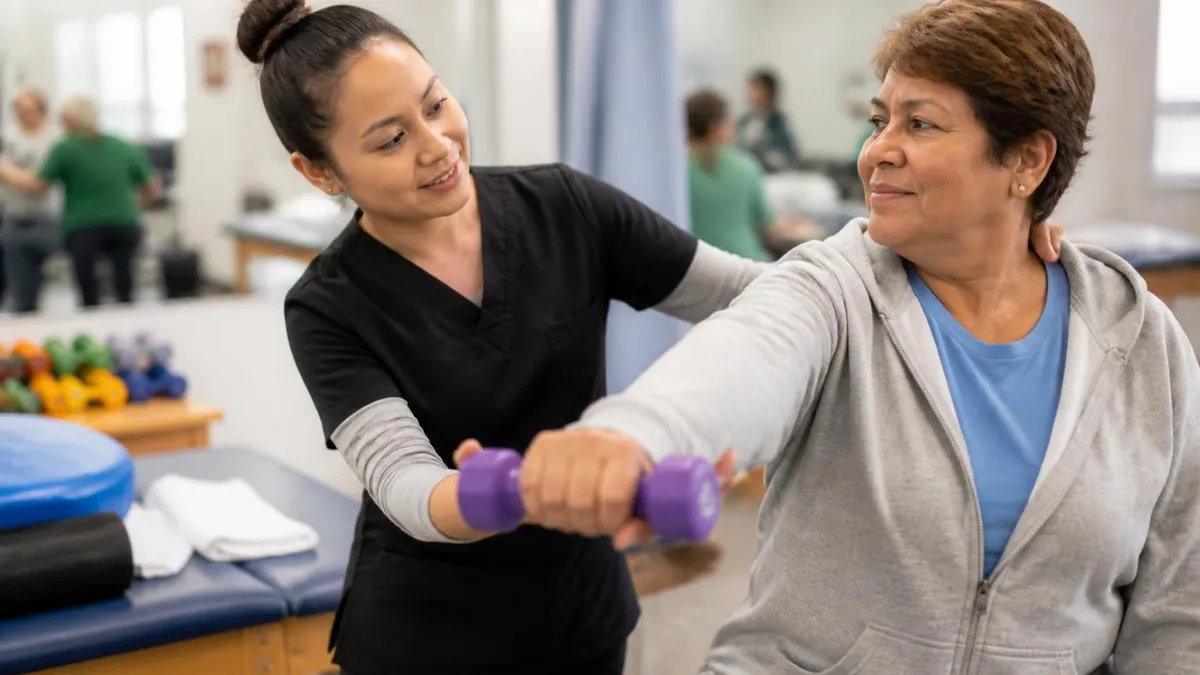
OTA Program: Complete Training Guide, Requirements & Career Path

Occupational Therapy Assistant (OTA): Role, Training & Career Guide

Pediatric Occupational Therapy Assistant: Training, Requirements & Career Guide
Pediatric Occupational Therapy Assistant Jobs: Complete Career Guide for 2026

Occupational Therapy Assistant Test
About the Author

Physical Therapist & Allied Health Licensing Exam Expert
University of Pittsburgh School of Health and Rehabilitation SciencesDr. Michelle Park holds a Doctor of Physical Therapy and a PhD in Physical Therapy from the University of Pittsburgh, a top-ranked PT program in the nation. With 13 years of orthopedic and neurological rehabilitation experience, she coaches physical therapy and occupational therapy graduates through the NPTE, NBCOT, and state allied health licensing board examinations.
Join the Discussion
Connect with other students preparing for this exam. Share tips, ask questions, and get advice from people who have been there.
View discussion (8 replies)