
OSHA Spill Kit Requirements: Complete Guide to Workplace Spill Preparedness and Compliance
Master OSHA spill kit rules: types, contents, placement & compliance tips. ✅ Keep your workplace safe and audit-ready.

An osha spill kit is one of the most fundamental pieces of safety equipment required in workplaces that handle hazardous chemicals, oils, fuels, or other potentially dangerous liquids. Under OSHA's Hazard Communication Standard (29 CFR 1910.1200) and the EPA's Spill Prevention, Control, and Countermeasure (SPCC) regulations, employers are legally obligated to have the proper spill response equipment readily available whenever workers handle substances that could pose environmental or health hazards.
Understanding what a spill kit is, what it must contain, and where it must be placed is essential for every safety officer, site supervisor, and frontline worker in the United States.
OSHA itself does not prescribe a single specific regulation titled "spill kit requirements" in a standalone rule, but the obligation to maintain spill response capability is woven throughout multiple standards. The General Duty Clause (Section 5(a)(1) of the OSH Act) requires employers to provide a workplace free from recognized hazards, and uncontrolled chemical spills represent exactly that kind of hazard. Additionally, standards covering flammable liquids (29 CFR 1910.106), hazardous waste operations (29 CFR 1910.120), and process safety management (29 CFR 1910.119) all contain provisions that effectively mandate spill containment and response preparedness for facilities handling regulated substances.
There are several distinct types of spill kits available on the market, each designed for a specific category of hazardous material. Universal spill kits handle a broad range of liquids including oils, coolants, solvents, and water-based fluids. Oil-only kits use hydrophobic absorbents that repel water while soaking up petroleum products, making them ideal for outdoor use near drains or waterways.
Chemical spill kits are built with acid-resistant materials capable of neutralizing aggressive substances like acids and bases. Selecting the correct type is not merely a purchasing preference — it is a compliance decision that directly affects worker safety and regulatory standing.
The contents of a properly assembled spill kit typically include absorbent pads, rolls, and socks or booms to contain and soak up spills; personal protective equipment such as gloves, goggles, and disposable coveralls; disposal bags and ties for contaminated materials; and an instruction card outlining the response procedure. The specific quantities and types of absorbent media must be matched to the volume and nature of the largest single container of hazardous liquid present in the work area. A facility storing 55-gallon drums of hydraulic fluid, for example, needs a kit rated to handle at least that volume without being overwhelmed.
Placement and accessibility rules are just as important as the kit's contents. OSHA requires that emergency response equipment be readily accessible, meaning it must not be locked behind barriers, hidden from view, or stored so far away that a worker cannot reach it in a timely manner.
Industry best practice, reinforced by OSHA inspection guidance, is to position spill kits within 10 to 50 feet of the hazard they are meant to address. Bright signage, clear aisle markings, and consistent training ensure that workers can locate and use the kit under the stress of an actual emergency, when seconds genuinely matter.
Regular inspection and maintenance of spill kits is an area where many facilities fall short during OSHA audits. A spill kit that was stocked two years ago and never replenished after a minor incident is not a compliant spill kit — it is a liability.
OSHA compliance officers will check whether kits have been inventoried, whether used components have been replaced, and whether the absorbent materials are still effective (some degrade over time when exposed to heat or humidity). Establishing a monthly inspection schedule, documented with sign-off sheets, demonstrates due diligence and can be the difference between a citation and a clean audit.
Training is the final critical pillar of a compliant spill response program. Simply having a kit on the floor is insufficient if workers do not know how to use it safely. OSHA's Hazardous Waste Operations and Emergency Response (HAZWOPER) standard (29 CFR 1910.120) requires that employees who are expected to respond to hazardous spills receive appropriate training commensurate with their role — from first-responder awareness level for incidental spills up to full hazmat technician certification for large-scale events. Annual refresher training keeps skills sharp and ensures that new employees are never left guessing during a real emergency.
OSHA Spill Kit Compliance by the Numbers
Three Primary Types of OSHA Spill Kits
Designed to absorb a wide range of liquids including oils, coolants, solvents, and water-based fluids. The most versatile option for general manufacturing, warehousing, and maintenance environments where multiple liquid types are present.
Use hydrophobic white polypropylene absorbents that repel water while capturing petroleum-based liquids. Ideal for outdoor applications near storm drains, waterways, or fueling stations where rain and standing water are common factors.
Contain chemically resistant materials, neutralizing agents, and enhanced PPE capable of handling aggressive acids, bases, solvents, and unknown substances. Required wherever corrosive or reactive chemicals are stored or transferred regularly.
Understanding the OSHA regulatory framework surrounding spill preparedness helps employers build a compliance program that holds up under inspection. While there is no single OSHA standard exclusively titled "spill kit," the legal obligation emerges from the intersection of several interconnected rules.
The General Duty Clause is the broadest umbrella, requiring employers to recognize and control hazards that could cause serious physical harm. Uncontrolled chemical releases meet that threshold unambiguously, which means any employer who handles hazardous liquids and lacks adequate spill response capability is, by definition, violating federal law — regardless of whether a specific subsection names the exact equipment required.
The OSHA Hazard Communication Standard (HazCom, 29 CFR 1910.1200) is another crucial layer. It requires that Safety Data Sheets (SDS) be maintained for every hazardous chemical in the workplace, and Section 6 of each SDS — titled "Accidental Release Measures" — specifies the recommended spill response procedures and equipment for that particular substance. Employers are obligated to follow those SDS recommendations, which effectively means the chemical manufacturer is telling you what kind of spill kit you need. Using a universal kit for a substance whose SDS calls for chemical-specific neutralization agents could constitute a HazCom violation during an OSHA inspection.
For facilities subject to the HAZWOPER standard (29 CFR 1910.120), the requirements become even more detailed. HAZWOPER distinguishes between incidental spills — those that do not pose a significant safety or health hazard and can be controlled by the employee in the immediate work area — and emergency releases that require evacuating non-essential personnel.
For incidental spills, trained employees may respond using a standard spill kit. For emergency releases, only properly trained HAZWOPER responders may take action. This distinction has significant implications for how employers classify their spill kits and train their workforce, and OSHA inspectors are trained to probe this distinction during facility walkthroughs.
The EPA's Spill Prevention, Control, and Countermeasure (SPCC) rule adds another regulatory dimension for facilities that store oil above threshold quantities — generally 1,320 gallons in aboveground containers or 42,000 gallons underground. SPCC plans must include provisions for secondary containment, spill response procedures, and adequate response equipment. Although the EPA administers SPCC independently of OSHA, the two agencies cooperate on inspections and enforcement, meaning a single incident can trigger scrutiny from both. Aligning your spill kit program with both sets of requirements simultaneously is the only fully defensible compliance posture.
State-plan states — those with OSHA-approved state occupational safety programs, such as California (Cal/OSHA), Michigan, and Washington — may have requirements that are at least as stringent as federal OSHA and sometimes more so. California's Title 8 regulations, for instance, include specific provisions about secondary containment and spill response equipment for facilities handling hazardous materials under the California Accidental Release Prevention (CalARP) program. Employers operating in multiple states must understand which rules apply in each jurisdiction and build their spill kit program to satisfy the most stringent standard across all locations.
Documentation is an often-overlooked but legally critical component of spill kit compliance. OSHA's recordkeeping requirements (29 CFR 1904) and the broader principle of demonstrating due diligence mean that simply having a spill kit on the shelf is not enough — you must be able to show inspectors that it has been inspected, maintained, and restocked after use.
A simple inspection log kept near each kit, dated and signed monthly by a designated safety representative, provides tangible evidence of an active compliance program. When OSHA citations are contested, documented maintenance records are among the most powerful evidence an employer can produce in their defense.
The financial consequences of non-compliance make investment in a strong spill kit program a straightforward business decision. OSHA's penalty structure for serious violations reached $15,625 per violation per day in 2024, and willful or repeated violations can reach $156,259 per occurrence. Beyond OSHA fines, an uncontrolled chemical spill can trigger EPA enforcement, state environmental agency penalties, workers' compensation claims, and civil litigation from injured workers or neighboring property owners. The total cost of a single significant spill incident routinely runs into the hundreds of thousands of dollars — making even the most comprehensive spill kit program look economical by comparison.
OSHA Spill Kit Contents, Sizing, and Placement
A compliant spill kit must include absorbent pads and rolls matched to the liquid being handled, absorbent socks or booms for perimeter containment, personal protective equipment including chemical-resistant gloves, splash goggles, and disposable coveralls, plus sealable disposal bags with twist ties for contaminated absorbents. An instruction card detailing the spill response procedure must also be included, along with a hazard label for the disposal bag identifying the waste material inside.
Chemical-specific kits add neutralizing agents appropriate for the substance — sodium bicarbonate for acid spills, citric acid granules for alkaline spills — and pH indicator paper to confirm neutralization is complete before cleanup continues. Some kits for particularly hazardous materials include a face shield or half-face respirator as standard equipment. The SDS for each chemical stored on-site should be cross-referenced against the kit's contents to confirm compatibility and completeness before finalizing your spill response program.

Pros and Cons of Pre-Assembled vs. Custom-Built Spill Kits
- +Pre-assembled kits save procurement time and arrive ready to deploy immediately upon delivery
- +Manufacturer-assembled kits often include instruction cards and SDS-compatible contents as a matched system
- +Standardized kits simplify training since every worker interacts with the same familiar layout
- +Pre-assembled options are easier to restock using replacement packs from the original supplier
- +Custom kits can be precisely tailored to the exact chemicals and volumes present at your facility
- +Building custom kits allows integration of specialty items like pH paper, neutralizers, or respirators not found in standard sets
- −Pre-assembled kits may include absorbents not rated for your specific chemicals, creating a false sense of compliance
- −Generic kits can be over-sized for small facilities, consuming valuable storage space unnecessarily
- −Custom-built kits require more procurement expertise and time to assemble and verify correctly
- −Custom kits lack a single authoritative instruction card, making training and consistent response harder
- −Pre-assembled kits have fixed capacities that may not match the exact volume of your largest chemical container
- −Both types require the same ongoing inspection, restocking, and documentation burden regardless of origin
Pros and Cons at a Glance
| Pros | Cons |
|---|---|
| Pre-assembled kits save procurement time and arrive ready to deploy immediately upon delivery | Pre-assembled kits may include absorbents not rated for your specific chemicals, creating a false sense of compliance |
| Manufacturer-assembled kits often include instruction cards and SDS-compatible contents as a matched system | Generic kits can be over-sized for small facilities, consuming valuable storage space unnecessarily |
| Standardized kits simplify training since every worker interacts with the same familiar layout | Custom-built kits require more procurement expertise and time to assemble and verify correctly |
| Pre-assembled options are easier to restock using replacement packs from the original supplier | Custom kits lack a single authoritative instruction card, making training and consistent response harder |
| Custom kits can be precisely tailored to the exact chemicals and volumes present at your facility | Pre-assembled kits have fixed capacities that may not match the exact volume of your largest chemical container |
| Building custom kits allows integration of specialty items like pH paper, neutralizers, or respirators not found in standard sets | Both types require the same ongoing inspection, restocking, and documentation burden regardless of origin |
OSHA Spill Kit Compliance Checklist
- ✓Identify every hazardous liquid present on-site and cross-reference the SDS Section 6 for each one.
- ✓Select the correct kit type (universal, oil-only, or chemical) for each hazard zone.
- ✓Size each kit to absorb at least 125% of the largest single container volume in that zone.
- ✓Position kits within 50 feet of the chemical storage or transfer point they protect.
- ✓Install high-visibility signage above or beside each kit readable from at least 30 feet.
- ✓Verify that PPE inside the kit (gloves, goggles, coveralls) is appropriate for the chemicals present.
- ✓Ensure disposal bags are chemical-compatible and include hazardous waste labels.
- ✓Conduct and document monthly inspections with dated sign-off by a designated safety rep.
- ✓Restock any used or degraded components immediately after a spill event or inspection.
- ✓Train all employees who may respond to incidental spills on proper kit use and waste disposal procedures.
Match Your Kit to the SDS, Not Just the Chemical Name
The Safety Data Sheet (SDS) Section 6 — "Accidental Release Measures" — is your authoritative guide to what spill response equipment OSHA expects for each specific chemical. Relying on a generic universal kit when the SDS calls for neutralizing agents or specialized respirators is a documentable HazCom violation. Always audit your kit contents against the SDS of every hazardous substance in the work area at least annually.
Training employees to respond correctly to chemical spills is not optional under OSHA standards — it is a legal requirement with specific content and frequency mandates. The HAZWOPER standard (29 CFR 1910.120) establishes a tiered training framework based on the expected role of each employee during a spill event.
First-responder awareness level is the entry tier, covering employees who may discover a spill but whose only duty is to notify others and evacuate non-essential personnel. This level requires no minimum number of training hours but must include specific competency outcomes including the ability to recognize hazardous substances and initiate emergency notifications.
First-responder operations level is the next tier, covering employees who are expected to respond defensively to incidental spills — meaning they will use spill kits to confine the release without actually stopping the source. OSHA requires a minimum of eight hours of training for this level, plus demonstrated competency in donning and using the appropriate PPE, operating the specific spill kit used at the facility, and understanding the emergency response plan. Annual refresher training is required to maintain this certification, and the refresher must address any procedural changes made to the facility's spill response program during the preceding year.
Hazmat technicians (the third tier) and hazmat specialists (the fourth) require progressively more advanced training — 24 hours and 24 hours respectively — and are the only personnel authorized to approach the source of an emergency release and attempt to stop it. Most manufacturing and warehousing facilities do not maintain in-house hazmat technicians; instead, they have mutual aid agreements with local fire departments or contract with commercial hazmat response companies. The facility's emergency response plan must clearly document who fills which role and how they will be contacted and mobilized during an actual incident involving a large-scale or uncontrolled release.
On-scene incident commander training (the fifth HAZWOPER tier) applies to the supervisory personnel who direct emergency response operations. These individuals must also have at least 24 hours of training equivalent to hazmat technician level plus additional competencies in command and control, resource management, and coordination with external agencies. In practice, this tier applies most commonly to emergency response team leaders at facilities with in-house response capabilities, as well as to plant managers or safety directors who would assume incident command before outside responders arrive and take over the scene.
Annual refresher training is a non-negotiable element of maintaining HAZWOPER compliance, and its content must be substantive rather than perfunctory. Simply reading through the emergency response plan once a year does not satisfy the refresher requirement.
Effective refreshers include hands-on practice with the actual spill kits used on the floor, tabletop exercises that walk through realistic spill scenarios, review of any incidents or near-misses from the past year, and updates on any changes to chemicals stored, procedures used, or emergency contacts maintained. OSHA inspectors will ask employees to demonstrate spill response skills during walkthroughs, not just confirm that they attended a training session.
New employee orientation must include spill response training before the employee begins working in any area where hazardous chemicals are present. This requirement catches many employers off guard, as it is tempting to defer training until the new hire's first formal safety training week.
OSHA's position is unambiguous: if the employee's work area contains a hazardous substance, they must be trained to recognize a spill and know their specific role in the response — even if that role is simply to evacuate and call for help — before they set foot in that area. Documenting this initial training separately from ongoing refresher records helps demonstrate compliance during OSHA inspections and internal safety audits.
Mock drill exercises, while not explicitly mandated for all HAZWOPER-covered facilities, are widely considered best practice and are required under some state-plan state regulations and facility-level emergency response plans. Conducting an unannounced spill drill twice a year reveals gaps in training, equipment placement, and communication that tabletop exercises routinely miss.
A drill that uncovers a problem — a missing disposal bag, a worker who cannot locate the nearest kit, a phone number that is no longer current — is far more valuable than a perfect drill that provides no actionable improvement data. Document every drill with a debrief report and track corrective actions to closure.
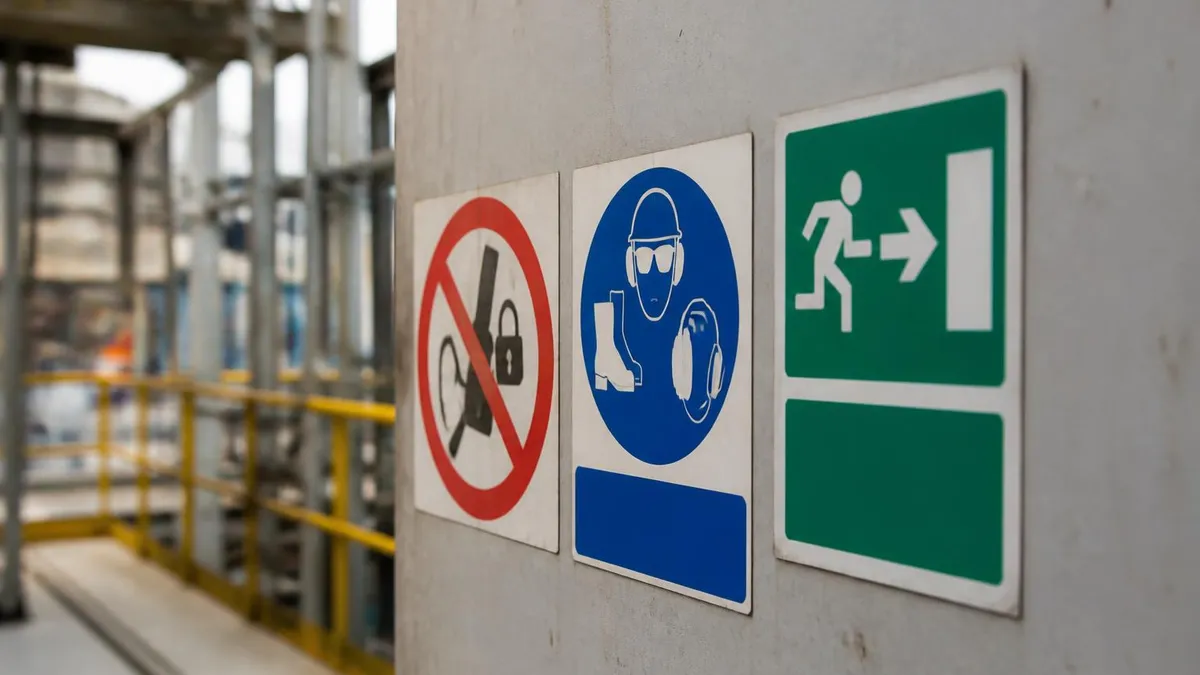
OSHA inspectors frequently cite facilities for having only one spill kit serving multiple chemical storage areas spread across a large floor space. If workers must travel more than 50 feet to reach the kit during an active spill, the response time gap can allow a small, controllable release to become an uncontrolled emergency event. Position dedicated kits within each distinct hazard zone and document their locations in your written emergency response plan to maintain full compliance.
Common OSHA spill kit violations fall into predictable patterns that safety professionals can easily prevent with a proactive approach. The most frequently cited issue is simply the absence of a spill kit in areas where hazardous liquids are stored or handled — a finding that is difficult to defend and results in an automatic serious citation.
Second most common is the presence of a kit that is inadequately sized for the volume of hazardous material in the area, typically because the kit was purchased years ago when smaller containers were used and was never upgraded when storage volumes increased. Regular reassessment of kit sizing whenever chemical inventories change is the straightforward fix.
Expired or degraded PPE inside the kit is another frequent finding. Chemical-resistant gloves have shelf lives, particularly when stored in environments with temperature fluctuations or UV exposure. Nitrile gloves stored in a hot warehouse for three years may be brittle and perforated — useless when a worker actually needs them during a spill. Including expiration dates on the kit's inspection log and replacing PPE on a schedule rather than waiting for visible deterioration eliminates this vulnerability. Splash goggles and disposable coveralls should be checked for packaging integrity at each monthly inspection.
Blocked or inaccessible kits represent a recurring operational failure rather than a one-time purchase mistake. Facilities that pass initial OSHA inspections with well-placed, properly stocked kits sometimes accumulate materials in front of those kits over subsequent months as production pressures increase and space becomes tight. Establishing a formal 5S or general housekeeping program that includes spill kit clearance zones — marked on the floor with safety tape and verified during regular inspections — addresses this creeping compliance drift before it results in a citation or, worse, a delayed spill response that causes a worker injury.
Failure to restock kits after use is a compliance failure that many employers overlook because it occurs at an operationally stressful moment — immediately after a spill has been cleaned up. Workers focused on getting production restarted may not think to flag that the kit is now partially depleted, and supervisors may not discover the shortage until the next monthly inspection or the next spill event.
Implementing a mandatory post-spill restocking protocol — making it part of the spill incident report form that the supervisor signs before returning the area to production — closes this gap reliably without depending on workers to self-report voluntarily.
Inadequate disposal of used spill kit materials is a related area where OSHA and EPA requirements overlap in ways that trip up even conscientious employers. Absorbent materials that have soaked up a hazardous substance are themselves hazardous waste under EPA Resource Conservation and Recovery Act (RCRA) rules.
They must be placed in appropriately labeled containers, stored in a compliant hazardous waste accumulation area, and disposed of through a licensed hazardous waste contractor. Simply placing used absorbents in the regular trash — even if the spill involved a small volume — can constitute both an OSHA violation and an EPA enforcement action simultaneously, compounding the facility's regulatory exposure.
Spill kit labeling deficiencies are a subtle but citable problem. The kit container itself should be clearly labeled to identify the type of kit (universal, oil-only, or chemical-specific), the substances it is designed to address, and the kit's maximum absorption capacity. If your kit was purchased without adequate labeling, add a laminated label that provides this information clearly.
During an OSHA walkthrough, the inspector may ask a randomly selected worker what the spill kit near their workstation is for and what chemicals it can handle. If the worker cannot answer correctly — either because the kit is unlabeled or because training was inadequate — the facility faces potential citations on both the equipment and training fronts simultaneously.
The most effective long-term strategy for maintaining spill kit compliance is integrating spill preparedness into the facility's broader safety management system rather than treating it as a standalone checklist. When spill kit inspections are part of the same monthly safety walkthrough that covers fire extinguisher inspections, eyewash station tests, and first aid kit inventories, they benefit from the same institutional momentum and documentation habits.
Safety committees that review spill response preparedness quarterly — including near-miss reports, training records, and kit inspection logs — catch emerging compliance gaps before OSHA does, which is the practical definition of a successful occupational safety program in any industry.
Building a practical, day-to-day spill kit management program requires moving beyond regulatory language and into operational systems that workers and supervisors can actually execute under real workplace conditions. The starting point is a chemical inventory audit — a complete list of every hazardous substance present on-site, including the maximum volume stored at any one time and the location of storage. This inventory becomes the foundation for every spill kit purchasing, placement, and training decision that follows, and it should be updated whenever a new chemical is introduced or storage volumes change significantly.
Assigning ownership of spill kit compliance to specific named individuals — rather than to a generic "safety department" — dramatically improves accountability. Each work area should have a designated spill response lead who is responsible for monthly kit inspections, reporting deficiencies, and ensuring that new employees in the area receive spill response training before working independently.
This person should also be the primary point of contact during an actual spill event, coordinating the response until qualified personnel take over if the release escalates beyond incidental level. Documenting these assignments in writing and posting them visibly in each work area gives workers a clear point of contact.
Vendor partnerships can simplify the ongoing restocking and maintenance burden considerably. Many spill kit suppliers offer managed restocking programs where a representative visits the facility on a scheduled basis, inventories all kits, replaces depleted or expired components, and provides a report documenting the condition of each kit. While this adds a recurring cost, it eliminates the internal burden of tracking individual component inventory levels and ensures that the facility always has a vendor-generated compliance record to present during OSHA inspections. For large multi-location employers, centralized procurement through a single vendor also drives down per-unit costs for replacement components.
Color-coding spill kits by type is a simple operational improvement that accelerates correct kit selection during an emergency. White kits for oil-only, yellow for chemical, and gray or mixed-color for universal are conventions used by many major suppliers. Posting a quick-reference laminated card near each kit identifying the chemicals it is rated for — rather than requiring workers to recall training from months earlier — provides a just-in-time reminder that functions reliably even under the stress of an actual emergency. These small human-factors improvements make the difference between a textbook response and a chaotic one when real pressure mounts.
Integrating spill kit locations into facility maps is a step that many employers overlook entirely. Your emergency response plan should include a floor plan showing the location of every spill kit, fire extinguisher, eyewash station, emergency shower, and first aid station on the property. This map should be posted in prominent locations throughout the facility and included in new employee orientation materials. When OSHA requests to see your emergency response plan — which they will during any inspection following a reportable incident — a facility map that clearly shows spill response equipment demonstrates systematic preparedness rather than reactive compliance.
Reviewing spill incidents and near-misses through a formal root cause analysis process generates continuous improvement in spill preparedness. Every time a spill occurs — even a small, easily controlled one — the post-incident review should ask whether the kit in the area was correctly sized, correctly positioned, and whether the responding worker felt confident using it.
Answers to these questions frequently reveal training gaps, placement problems, or sizing errors that no routine inspection would have surfaced. Capturing these findings in a corrective action system and tracking them to verified closure is the hallmark of a mature safety management program that OSHA recognizes and rewards with reduced scrutiny over time.
Finally, consider the intersection of spill kit preparedness with your facility's overall emergency response plan, which must be maintained in writing under OSHA's Emergency Action Plan standard (29 CFR 1910.38). The EAP must describe procedures for reporting fires and other emergencies, evacuation routes and procedures, accounting for employees after evacuation, and the duties of employees who perform rescue or medical duties.
Spill response is a natural part of this framework — the EAP should specify at what point a spill escalates from an incidental release handled internally to an emergency requiring outside responders, and that threshold should be communicated clearly to every employee in the facility through regular training and posted reminders.
Sample OSHA - OSHA Certified Crane Operator Practice Questions
Try these questions from our free OSHA - OSHA Certified Crane Operator practice tests. The correct answer and an explanation follow each question.
What code compliance requirement applies to code compliance?
- A. Codes are guidelines, not requirements
- B. All work must comply with applicable local, state, and national codes
- C. Code compliance only matters for commercial projects
- D. Follow codes only when inspectors are present
Answer: B. All work must comply with applicable local, state, and national codes
Code compliance is mandatory for all work, ensuring safety, quality, and legal adherence.
How should hazardous conditions be handled during code compliance work?
- A. Continue working if the hazard seems minor
- B. Stop work, secure the area, report the hazard, and follow safety protocols
- C. Report hazards only at the end of the day
- D. Let someone else deal with it
Answer: B. Stop work, secure the area, report the hazard, and follow safety protocols
All hazardous conditions require immediate action: stop work, secure the area, report the hazard, and follow established safety protocols.
What code compliance requirement applies to equipment operation?
- A. Codes are guidelines, not requirements
- B. All work must comply with applicable local, state, and national codes
- C. Code compliance only matters for commercial projects
- D. Follow codes only when inspectors are present
Answer: B. All work must comply with applicable local, state, and national codes
Code compliance is mandatory for all work, ensuring safety, quality, and legal adherence.
What code compliance requirement applies to safety procedures?
- A. Codes are guidelines, not requirements
- B. All work must comply with applicable local, state, and national codes
- C. Code compliance only matters for commercial projects
- D. Follow codes only when inspectors are present
Answer: B. All work must comply with applicable local, state, and national codes
Code compliance is mandatory for all work, ensuring safety, quality, and legal adherence.
Take the full OSHA - OSHA Certified Crane Operator practice test
OSHA Questions and Answers

How Long Does an OSHA 10 Card Last? Complete Guide to Validity, Renewal, and What Happens When It Expires

360 Training OSHA 10: Complete Guide to Online OSHA 10-Hour Construction and General Industry Certification Courses

In the OSHA Bloodborne Pathogens Standard, OPIM Stands For: Complete Guide to Other Potentially Infectious Materials

OSHA (OSHA Certified Crane Operator) Test Guide

OSHA Flammable Cabinet Rules: Complete Guide to Storage Requirements, Compliance, and Workplace Safety
About the Author

Certified Safety Professional & OSHA Compliance Expert
Indiana University of Pennsylvania Safety SciencesDr. William Foster holds a PhD in Safety Science from Indiana University of Pennsylvania and is a Certified Safety Professional (CSP) and Certified Hazardous Materials Manager. With 20 years of occupational health and safety management experience across construction, manufacturing, and chemical industries, he coaches safety professionals through OSHA certification, CSP, CHST, and safety management licensing programs.
Join the Discussion
Connect with other students preparing for this exam. Share tips, ask questions, and get advice from people who have been there.
View discussion (8 replies)