
OSHA Officer: Roles, Responsibilities, and How to Become One 2026 October
Learn what an OSHA officer does, their key responsibilities, and how to pursue this career in workplace safety. ✅ Complete US guide.
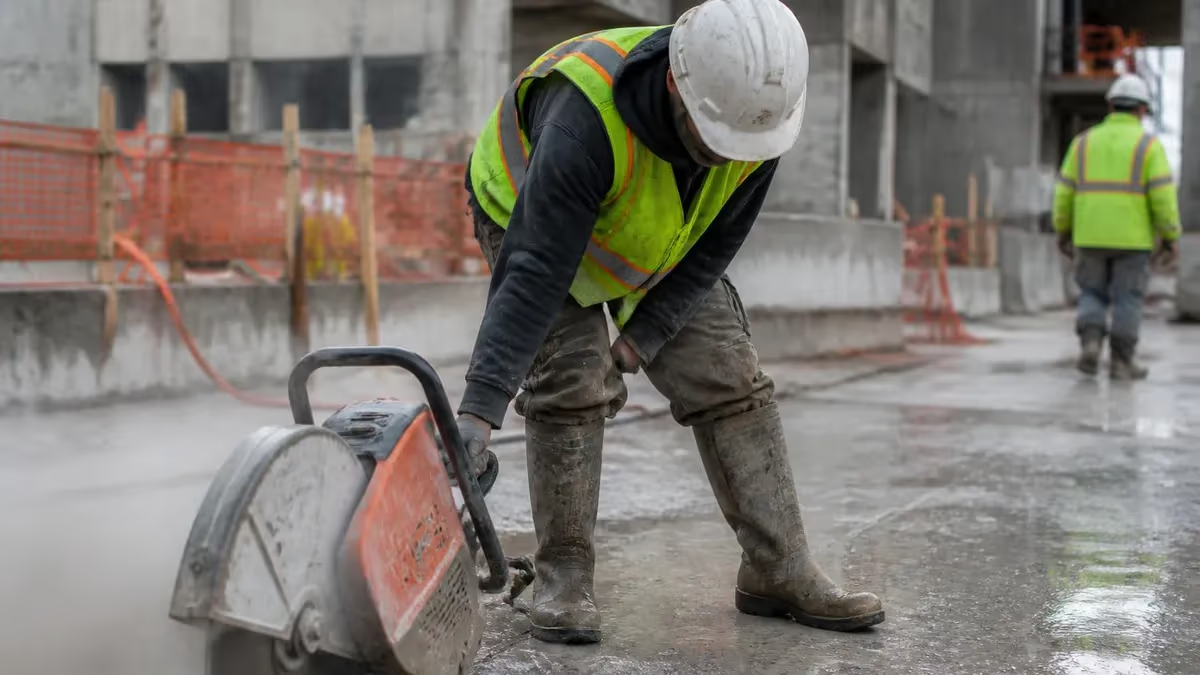
An osha officer plays a critical role in protecting workers across every industry in the United States. These professionals are responsible for enforcing federal and state workplace safety regulations, conducting inspections, and ensuring that employers maintain environments where employees can work without unnecessary risk of injury, illness, or death. Whether working directly for the Occupational Safety and Health Administration or serving as a company-level safety officer, these individuals are the frontline defenders of American worker rights and well-being.
The Occupational Safety and Health Administration was established under the Occupational Safety and Health Act of 1970, signed into law by President Nixon. Since its founding, OSHA has dramatically reduced workplace fatalities and injuries across the country. In 1970, approximately 14,000 workers died on the job each year. Today, that number has dropped by more than 60 percent, largely due to the sustained enforcement efforts of OSHA officers and compliance safety and health officers working throughout the nation.
OSHA officers carry significant authority. When a federal compliance officer arrives at a worksite, they have the legal right to inspect any area of the facility, review records, and interview employees without employer interference. They can issue citations, propose penalties, and require immediate correction of life-threatening hazards. Employers who fail to comply with OSHA standards risk fines that can reach tens of thousands of dollars per violation, with willful or repeated violations carrying even steeper consequences.
The role of an OSHA officer extends well beyond issuing fines. These professionals spend considerable time educating employers and workers about hazard recognition, proper safety practices, and regulatory compliance. Many inspections conclude with compliance assistance rather than penalties, particularly when employers demonstrate a genuine commitment to improving conditions. This educational dimension makes the OSHA officer position as much about prevention as enforcement, a balance that defines the agency's overall mission.
At the company level, safety officers perform many of the same functions but from within the organization. They develop internal safety programs, conduct regular workplace audits, train employees on hazard awareness, investigate accidents, and serve as the primary contact during any official OSHA inspection. Many industries now require dedicated safety officers as a condition of operating permits or insurance coverage, making this a growing and in-demand career field throughout the United States.
For individuals interested in pursuing careers related to crane operations, the OSHA officer framework is especially relevant. Crane operation is one of the most heavily regulated activities under OSHA standards, with specific requirements governing operator certification, equipment inspection, signal communication, and load handling. Safety officers working in construction, manufacturing, or maritime environments frequently work alongside crane operators to ensure full compliance with 29 CFR 1926.1400 and related standards that govern safe crane operation on American worksites.
Understanding what OSHA officers do, how they operate, and what authority they hold is essential knowledge for anyone working in a safety-sensitive industry. Whether you are preparing for a certification exam, considering a career in occupational safety, or simply trying to understand your rights during a workplace inspection, this comprehensive guide will walk you through everything you need to know about the OSHA officer role in the United States.
OSHA Officer Impact by the Numbers

Types of OSHA Officers and Their Distinct Roles
Employed directly by OSHA, these officers conduct inspections of workplaces covered by federal jurisdiction. They investigate complaints, referrals, and targeted inspections in high-hazard industries including construction, manufacturing, and maritime operations.
Twenty-two states operate their own OSHA-approved safety programs. State plan officers perform inspections under state law, which must be at least as effective as federal OSHA. States like California (Cal/OSHA) often have stricter standards than federal rules.
Hired internally by employers, corporate safety officers develop and manage workplace safety programs, conduct internal audits, train staff, investigate accidents, and represent the company during OSHA inspections. They are the employer's primary safety resource.
Specialized safety professionals focused on construction environments, often holding OSHA 30-hour construction certification or higher credentials. They oversee excavation safety, fall protection, crane operations, and tool use on active job sites every day.
Senior OSHA officials who supervise compliance officers within a geographic region. Area directors manage inspection priorities, review citations, coordinate enforcement actions, and serve as the public-facing representatives of OSHA in their jurisdiction.
Becoming an OSHA officer — whether at the federal agency level or within a private company — requires a combination of formal education, hands-on experience, and professional certification. Federal Compliance Safety and Health Officers typically hold at least a bachelor's degree in occupational safety, industrial hygiene, engineering, or a related scientific field. Many positions also accept substantial work experience in lieu of a degree, particularly when candidates can demonstrate deep expertise in high-hazard industries such as construction or manufacturing.
For those aiming to work as federal OSHA compliance officers, the hiring process involves applying through the federal government's USAJOBS portal, passing background checks, and completing OSHA's intensive training program at the OSHA Training Institute (OTI) in Arlington Heights, Illinois. New compliance officers spend their first year learning inspection techniques, OSHA standards, legal procedures for issuing citations, and the technical details of specific industries. This training is rigorous and ongoing throughout an officer's career.
Professional certifications significantly enhance an OSHA officer's credentials and marketability. The most recognized certifications include the Certified Safety Professional (CSP) offered by the Board of Certified Safety Professionals, the Associate Safety Professional (ASP) for those early in their careers, and the Certified Industrial Hygienist (CIH) credential for those specializing in chemical and environmental hazards. OSHA's own Outreach Trainer certification is also valuable, allowing individuals to teach the official OSHA 10-hour and 30-hour training courses.
OSHA's own training courses form an important foundation for many safety careers. The OSHA 10-hour course provides a general awareness of workplace hazards and workers' rights, while the 30-hour course is designed for supervisors and safety professionals who need deeper knowledge of compliance standards. Completing these courses does not make someone an official OSHA inspector, but they demonstrate a commitment to safety that employers value highly and that can serve as a stepping stone toward advanced credentials.
Continuing education is a non-negotiable aspect of maintaining OSHA officer status. Regulations change, new hazards emerge, and enforcement priorities shift over time. Federal compliance officers are required to complete ongoing training through OTI, while private-sector safety professionals typically maintain credentials through continuing education units (CEUs) required by their certifying organizations. Staying current with OSHA standards updates — particularly in high-risk areas like crane safety — is essential to effective enforcement and compliance work.
For crane-specific safety roles, additional certifications from organizations like the National Commission for the Certification of Crane Operators (NCCCO) are often expected or required. Under OSHA's crane standard (29 CFR 1926.1427), crane operators must be certified by an accredited third-party organization, and safety officers overseeing crane operations need enough technical knowledge to verify that operators hold proper credentials and that equipment is being used within rated capacities. The intersection of OSHA safety officer training and crane-specific knowledge creates a valuable and specialized professional profile in the construction industry.
State plan states often have their own pathways to becoming a safety officer within their programs. California's Division of Occupational Safety and Health (Cal/OSHA), for example, requires compliance officers to have engineering degrees or equivalent experience, and the state's training programs are among the most comprehensive in the country. Understanding the specific requirements in your state is important, since state plans can exceed federal OSHA's minimum requirements and may have unique certification expectations that differ from the national baseline for safety professionals.
How OSHA Inspections Work: A Step-by-Step Breakdown
When an OSHA compliance officer arrives at a worksite, they begin with a formal opening conference. The officer presents their credentials, explains the reason for the inspection (whether it is programmed, complaint-driven, or referral-based), and outlines the scope of what will be reviewed. The employer has the right to request that a warrant be obtained before the inspection begins, though most employers choose to cooperate voluntarily to avoid delays and demonstrate good faith to the agency.
During the opening conference, an employer representative — typically the company's safety officer or site supervisor — accompanies the compliance officer throughout the inspection. Employee representatives also have the right to accompany the inspector and raise concerns. The OSHA officer explains which records they need to review, including the OSHA 300 injury log, training documentation, equipment inspection logs, and any relevant certifications for specialized equipment operators such as crane operators covered under 29 CFR 1926.1427.
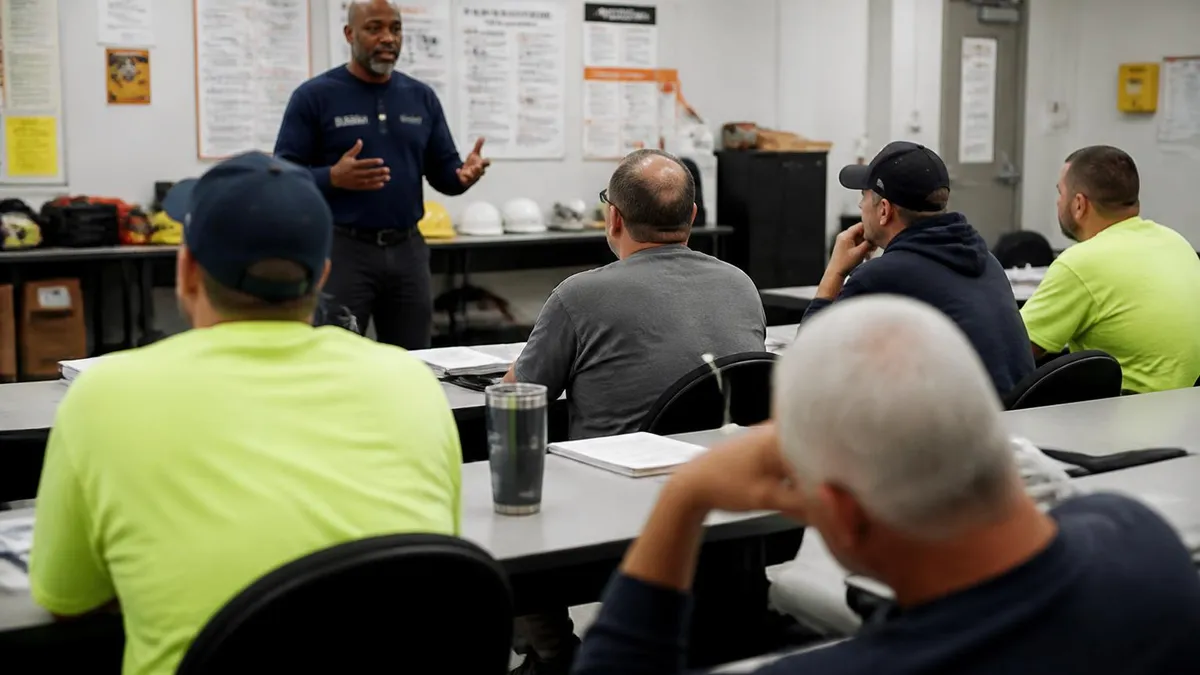
Pros and Cons of a Career as an OSHA Safety Officer
- +Strong job security with consistent demand across virtually every industry in the United States
- +Meaningful work that directly protects workers' lives and reduces preventable injuries and deaths
- +Competitive salaries, particularly for experienced officers and those with advanced certifications like CSP
- +Opportunities to specialize in high-paying industries such as oil and gas, construction, or maritime safety
- +Federal government positions offer excellent benefits packages including pension, health insurance, and job stability
- +Continuous learning through evolving regulations, new technology, and diverse industry environments
- −Federal compliance officer positions can involve extensive travel and irregular schedules during enforcement surges
- −Emotionally challenging work, particularly when investigating serious injury or fatality incidents at worksites
- −Employers and workers sometimes resist inspections, creating confrontational situations that require diplomatic skill
- −Regulatory complexity is high — officers must master hundreds of standards across multiple industry sectors
- −Budget constraints at federal and state OSHA offices can limit resources, staffing, and equipment available
- −Private-sector safety officers may face internal pressure to minimize violations or downplay hazards to protect costs
Pros and Cons at a Glance
| Pros | Cons |
|---|---|
| Strong job security with consistent demand across virtually every industry in the United States | Federal compliance officer positions can involve extensive travel and irregular schedules during enforcement surges |
| Meaningful work that directly protects workers' lives and reduces preventable injuries and deaths | Emotionally challenging work, particularly when investigating serious injury or fatality incidents at worksites |
| Competitive salaries, particularly for experienced officers and those with advanced certifications like CSP | Employers and workers sometimes resist inspections, creating confrontational situations that require diplomatic skill |
| Opportunities to specialize in high-paying industries such as oil and gas, construction, or maritime safety | Regulatory complexity is high — officers must master hundreds of standards across multiple industry sectors |
| Federal government positions offer excellent benefits packages including pension, health insurance, and job stability | Budget constraints at federal and state OSHA offices can limit resources, staffing, and equipment available |
| Continuous learning through evolving regulations, new technology, and diverse industry environments | Private-sector safety officers may face internal pressure to minimize violations or downplay hazards to protect costs |
OSHA Officer Worksite Compliance Checklist
- ✓Post the OSHA Job Safety and Health: It's the Law poster in a visible location accessible to all workers.
- ✓Maintain an up-to-date OSHA 300 Log of Work-Related Injuries and Illnesses for all recordable incidents.
- ✓Ensure all crane operators hold current certifications from an OSHA-accredited third-party organization.
- ✓Document pre-shift equipment inspections for cranes, forklifts, and other powered industrial equipment.
- ✓Verify that all workers have received required safety training in their primary language and documented it properly.
- ✓Confirm that fall protection systems are installed and inspected wherever work occurs at heights above six feet.
- ✓Review Hazard Communication (HazCom) compliance including current Safety Data Sheets (SDS) for all chemicals on site.
- ✓Check that emergency action plans are posted, practiced, and understood by all employees at the facility.
- ✓Audit personal protective equipment (PPE) availability, condition, and employee training on proper use and fit.
- ✓Confirm that all lockout/tagout procedures are written, posted, and being followed before equipment maintenance begins.
OSHA Officers Cannot Be Retaliated Against — And Neither Can Workers Who Talk to Them
Under Section 11(c) of the OSH Act, employers are strictly prohibited from retaliating against any employee who exercises their rights under OSHA, including speaking with an OSHA compliance officer during a workplace inspection. Workers who believe they have been retaliated against must file a complaint with OSHA within 30 days of the adverse action. Safety officers should make this protection clearly known to all employees during onboarding and safety training sessions.
The salary and career trajectory for OSHA officers varies depending on whether they work in the public or private sector. According to the U.S. Bureau of Labor Statistics, the median annual wage for occupational health and safety specialists was approximately $78,000 as of recent reporting periods. Federal OSHA compliance officers earn salaries based on the General Schedule (GS) pay system, typically starting at the GS-9 level and advancing to GS-12 or higher with experience, with salaries ranging from roughly $55,000 to over $100,000 annually depending on location and grade.
Private-sector safety officers often earn competitive salaries that can exceed federal pay rates, particularly in high-hazard industries. Safety professionals working in oil and gas extraction, nuclear power, offshore operations, or large-scale construction projects frequently command salaries well above the national median. In California and other high-cost-of-living states, total compensation packages for experienced safety directors regularly exceed $120,000 per year when bonuses, stock options, and benefits are included in the overall picture.
Career advancement in occupational safety typically follows a predictable progression from entry-level safety coordinator or technician roles to safety officer, safety manager, safety director, and eventually vice president or chief safety officer positions at larger organizations. Each step generally requires additional certifications, demonstrated leadership, and a track record of successfully reducing workplace injury rates. Some safety professionals move into consulting, where they work with multiple clients and can command premium hourly or project-based rates for their expertise.
The employment outlook for safety professionals is strong and expected to remain so in coming years. The Bureau of Labor Statistics projects above-average growth for occupational health and safety occupations, driven by an aging workforce, increasing regulatory complexity, expansion of high-hazard industries, and growing employer awareness that workplace safety programs generate positive financial returns. Every dollar invested in safety programs saves approximately four to six dollars in costs related to injuries, workers' compensation claims, and lost productivity, making safety officers valuable investments for any organization.
Geographic location plays an important role in both salary levels and job availability for OSHA officers. States with strong union representation, heavy construction activity, or large manufacturing bases — such as Texas, California, New York, Illinois, and Pennsylvania — tend to have the highest concentrations of safety officer positions. States running their own OSHA-approved programs also maintain their own compliance officer workforces, creating additional public-sector opportunities beyond what the federal agency alone can provide throughout the country.
Specialization can significantly accelerate career advancement in occupational safety. Officers who develop deep expertise in areas such as industrial hygiene, environmental compliance, ergonomics, process safety management (PSM), or crane and rigging safety are often able to command higher salaries and take on senior roles more quickly than generalists. Given OSHA's increased enforcement focus on crane safety in construction — reflected in cranes appearing consistently on OSHA's annual list of construction's Fatal Four — crane safety specialization is a particularly strategic career move for safety professionals working in the construction industry sector.
Professional networking through organizations like the American Society of Safety Professionals (ASSP), the American Industrial Hygiene Association (AIHA), and the National Safety Council (NSC) is essential for career development in this field. These organizations offer continuing education, certification maintenance opportunities, industry publications, and connections to employers seeking qualified safety professionals. Many safety officers also serve as OSHA Outreach Trainers, teaching official OSHA courses as a side career that both supplements income and keeps their regulatory knowledge current with ongoing practice and instruction.

OSHA's crane operator certification rule under 29 CFR 1926.1427 has been fully effective since November 2018, requiring all crane operators in construction to hold certification from an accredited organization like NCCCO, NCCER, or equivalent. Safety officers who allow uncertified operators to run cranes risk serious citations with penalties up to $15,625 per violation for each day the violation continues, and willful violations carry penalties up to $156,259 per instance under current federal penalty levels.
OSHA's regulatory framework for crane safety is among the most detailed and stringent in the entire body of workplace safety standards. The crane and derrick standard (29 CFR 1926.1400 through 1926.1442) covers everything from operator qualification and certification to equipment inspections, assembly and disassembly procedures, working near power lines, and materials handling requirements. Safety officers who oversee construction sites must have working knowledge of all these subparts, not just the operator certification provisions that receive the most public attention.
Pre-shift inspections are one of the most critical responsibilities that overlap between crane operators and safety officers. Under OSHA's standard, crane operators are required to conduct visual inspections before each shift to check for visible deficiencies that could create a safety hazard. Safety officers are responsible for ensuring these inspections are actually happening and that documentation is being completed and retained. A safety officer who discovers that pre-shift inspection records have been skipped or falsified faces both a compliance problem and a potential liability issue that requires immediate corrective action and retraining of affected staff.
Load charts are another area where safety officers and crane operators must work closely together. Every crane has a load chart specific to its configuration that defines maximum rated lifting capacities at various boom angles and radii. OSHA requires that load charts be accessible to operators in the crane cab at all times during operation. Safety officers conducting internal audits should physically verify that current, legible load charts are present in every crane cab — not just during formal OSHA inspections but as a routine component of the site's ongoing safety audit program that runs throughout the project lifecycle.
Signal communication protocols are heavily regulated under the crane standard and represent an area where violations frequently occur during OSHA inspections. OSHA requires that before any crane operation begins, the operator and signal person must use a common set of standard signals, whether hand signals, voice communication, or radio. Safety officers should ensure that all personnel who may serve as signal persons have been trained and evaluated, and that documentation of that training is maintained in the site's safety files. Unauthorized signal giving is a citation-generating violation that safety officers can easily prevent through proactive training programs.
Power line safety is one of the most life-threatening hazards associated with crane operations, and it is an area where OSHA officers apply particularly rigorous scrutiny during inspections. The standard requires that before any crane is assembled or operated, the site must determine whether any part of the equipment could come within 20 feet of a power line.
If so, specific notification, planning, and clearance procedures must be followed. Safety officers should conduct a power line hazard assessment before any crane is brought to a new site and document that assessment as part of the project's site-specific safety plan to demonstrate compliance.
Accident and near-miss investigation is a core responsibility of any site safety officer, and crane incidents receive particular attention due to their potential for catastrophic outcomes. When a crane incident occurs — whether a dropped load, a tip-over, a contact with a power line, or even a near-miss event — the safety officer must conduct a thorough investigation to identify root causes and implement corrective actions.
OSHA requires that fatalities be reported within eight hours and in-patient hospitalizations, amputations, or eye losses be reported within 24 hours. Failure to report is itself a separate citation that compounds the problems arising from the original incident at the worksite.
Documentation is the safety officer's most powerful protection during an OSHA inspection. When a compliance officer arrives and begins asking for records, a well-organized safety file demonstrates that the employer takes its obligations seriously and has a functioning safety management system. Safety officers should maintain organized records of all training, equipment inspections, hazard assessments, accident investigations, and corrective actions.
During any inspection involving crane operations, having complete documentation of operator certifications, pre-shift inspection logs, and signal person training records can be the difference between a letter of compliance and a stack of costly citations that create serious financial and reputational consequences for the organization.
Preparing for OSHA officer-level knowledge of crane safety requires a strategic approach that goes well beyond memorizing a list of regulations. The most effective safety professionals develop a deep conceptual understanding of why each standard exists — the specific hazard it addresses and the real-world accidents that prompted its creation. This context-based learning approach helps safety officers apply standards correctly in novel situations they haven't previously encountered and makes regulatory knowledge far more durable over the long arc of a career.
Practice tests are an invaluable tool for anyone pursuing OSHA-related certifications or preparing for crane safety responsibilities. Free online practice questions allow candidates to identify knowledge gaps, become familiar with question formats, and build the time-management skills needed to perform well on timed certification exams. The NCCCO crane operator certification exam, for example, consists of written tests covering core knowledge, equipment-specific knowledge, and specialty areas — all of which benefit from systematic practice and review against relevant OSHA standards and industry guidelines.
One practical tip experienced safety officers consistently share is to study OSHA standards in conjunction with the preambles and supplementary interpretive documents that OSHA publishes when issuing rules. The preamble to a rule explains the agency's reasoning, the evidence behind specific requirements, and how the standard should be applied in various workplace scenarios. Reading these documents transforms a safety officer's understanding from surface-level rule familiarity to the kind of deep regulatory literacy that allows confident decision-making in complex, ambiguous real-world situations that don't fit neatly into textbook examples.
Building relationships with your local OSHA area office is another strategy that experienced safety professionals strongly recommend. Area offices regularly offer free compliance assistance through consultation programs that are entirely separate from enforcement. Under OSHA's free and confidential on-site consultation program — available through a different visit process than enforcement inspections — safety officers can request a consultation visit during which a state consultant will identify hazards and provide recommendations without issuing citations. This is an underutilized resource that allows safety officers to get expert feedback on their programs before an enforcement inspection creates compliance pressure.
Industry-specific OSHA standards and letters of interpretation are essential reference materials for safety officers specializing in crane operations. OSHA publishes formal letters of interpretation in response to questions from employers, safety professionals, and industry associations. These letters clarify how the agency interprets its own standards in specific situations and carry significant weight during enforcement proceedings. A safety officer who can cite a relevant interpretation letter during an inspection closing conference demonstrates regulatory sophistication that often results in more productive and constructive conversations with the compliance officer about potential violations and abatement timelines.
Technology is rapidly transforming how safety officers carry out their work. Digital inspection platforms allow safety officers to conduct equipment inspections, record findings, assign corrective actions, and generate compliance reports from smartphones or tablets directly on the worksite. Some platforms integrate with OSHA's recordkeeping requirements, automatically generating the data needed for Form 300 and Form 300A submissions. For crane operations specifically, some systems track operator certifications and send automated alerts when renewals are approaching — the kind of proactive compliance management that prevents the lapse violations that trigger OSHA citations during scheduled or surprise inspections.
Finally, a safety officer's effectiveness ultimately depends on the workplace culture they help create and sustain. Rules and documentation matter, but a worksite where workers genuinely believe that safety is valued — where they feel empowered to report hazards without fear, where near-misses are treated as learning opportunities rather than embarrassments, and where supervisors model the safety behaviors they expect — is a worksite that will consistently outperform on safety metrics.
Building that culture requires consistent communication, visible leadership commitment, recognition of safe behavior, and a safety officer who approaches every interaction as an opportunity to reinforce the message that every worker deserves to go home safely at the end of every single workday.
Sample OSHA - OSHA Certified Crane Operator Practice Questions
Try these questions from our free OSHA - OSHA Certified Crane Operator practice tests. The correct answer and an explanation follow each question.
What is the role of a competent person in crane inspections?
- A. Records crane videos
- B. Inspects only ladders
- C. Recognizes hazards and corrects them
- D. Trains riggers
Answer: C. Recognizes hazards and corrects them
A 'competent person' in OSHA's definition is someone who is capable of identifying existing and predictable hazards in the surroundings or working conditions. They also have the authority to take prompt corrective measures to eliminate these hazards. This role is critical for proactive safety management, including during crane inspections.
Why are ground conditions important in crane operation?
- A. To reduce fuel use
- B. To improve visibility
- C. To prevent tipping
- D. To limit air pollution
Answer: C. To prevent tipping
Ground conditions are critically important in crane operation because they directly affect the crane's stability and ability to prevent tipping. Unstable, soft, or uneven ground can cause the crane to shift, settle, or overturn, leading to severe accidents. Proper site assessment and preparation, including ensuring adequate ground bearing capacity, are essential for safe lifting operations.
What is a key safety feature of most crane control panels?
- A. Fan switch
- B. Emergency stop button
- C. Horn toggle
- D. Crane seat adjuster
Answer: B. Emergency stop button
An emergency stop button is a critical safety feature on all machinery, including cranes, designed to immediately halt all operations in the event of a malfunction or unforeseen hazard. This allows the operator to quickly prevent accidents or further damage by cutting power to the crane's movements. It is a fundamental component of safe crane operation.
What is the most critical safety requirement in material selection?
- A. Speed of completion
- B. Following all applicable safety regulations and wearing required PPE
- C. Cost minimization
- D. Working alone to avoid delays
Answer: B. Following all applicable safety regulations and wearing required PPE
Safety regulations and proper PPE use are the most critical requirements in material selection to prevent injury and ensure compliance.
Take the full OSHA - OSHA Certified Crane Operator practice test
OSHA Questions and Answers

How Long Does an OSHA 10 Card Last? Complete Guide to Validity, Renewal, and What Happens When It Expires
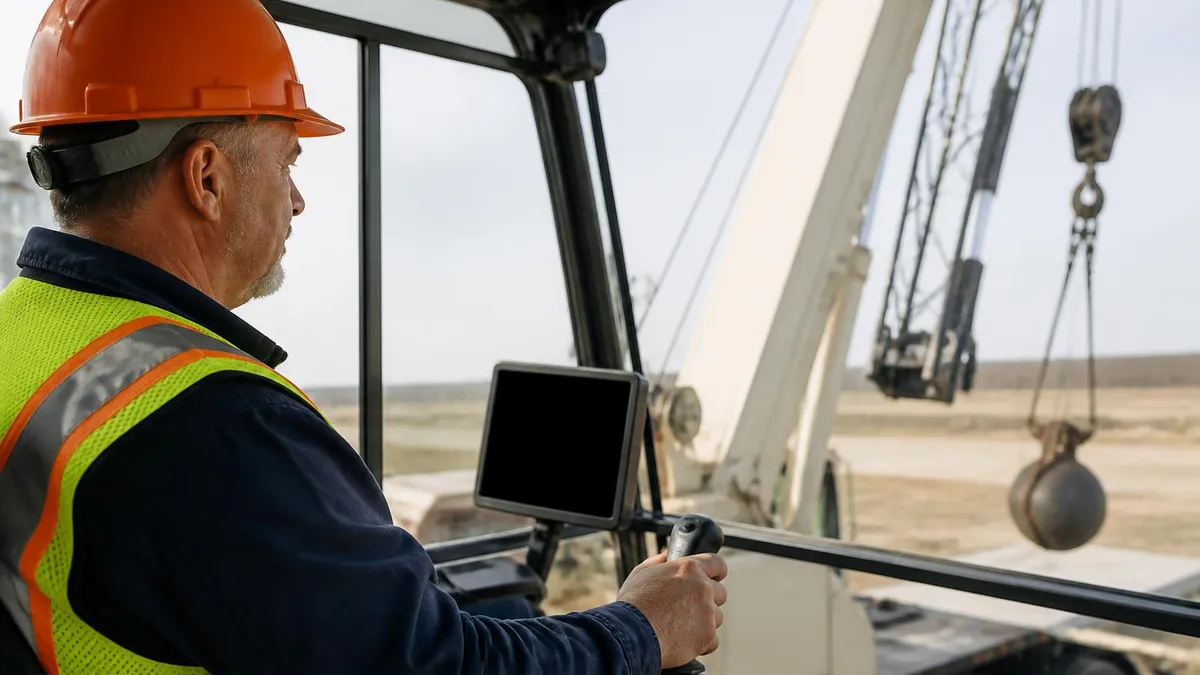
360 Training OSHA 10: Complete Guide to Online OSHA 10-Hour Construction and General Industry Certification Courses

In the OSHA Bloodborne Pathogens Standard, OPIM Stands For: Complete Guide to Other Potentially Infectious Materials
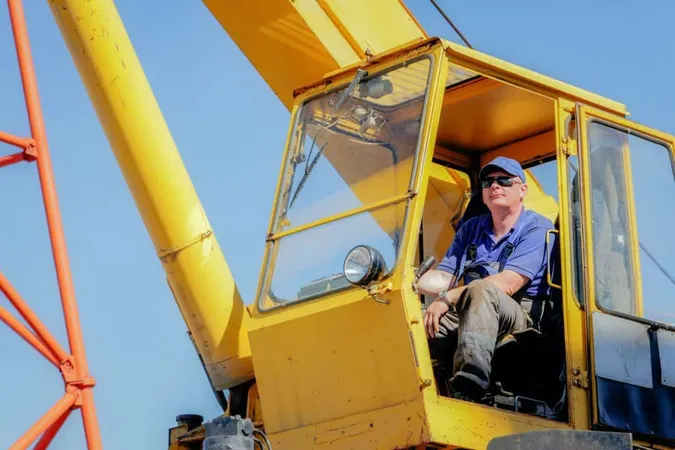
OSHA (OSHA Certified Crane Operator) Test Guide

OSHA Flammable Cabinet Rules: Complete Guide to Storage Requirements, Compliance, and Workplace Safety
About the Author

Certified Safety Professional & OSHA Compliance Expert
Indiana University of Pennsylvania Safety SciencesDr. William Foster holds a PhD in Safety Science from Indiana University of Pennsylvania and is a Certified Safety Professional (CSP) and Certified Hazardous Materials Manager. With 20 years of occupational health and safety management experience across construction, manufacturing, and chemical industries, he coaches safety professionals through OSHA certification, CSP, CHST, and safety management licensing programs.
Join the Discussion
Connect with other students preparing for this exam. Share tips, ask questions, and get advice from people who have been there.
View discussion (8 replies)