
OSHA Medical Courier Training: Complete Guide to Workplace Safety Requirements and Free Resources
Master osha medical courier training free resources, requirements & safety standards. Complete guide for US medical couriers. ✅
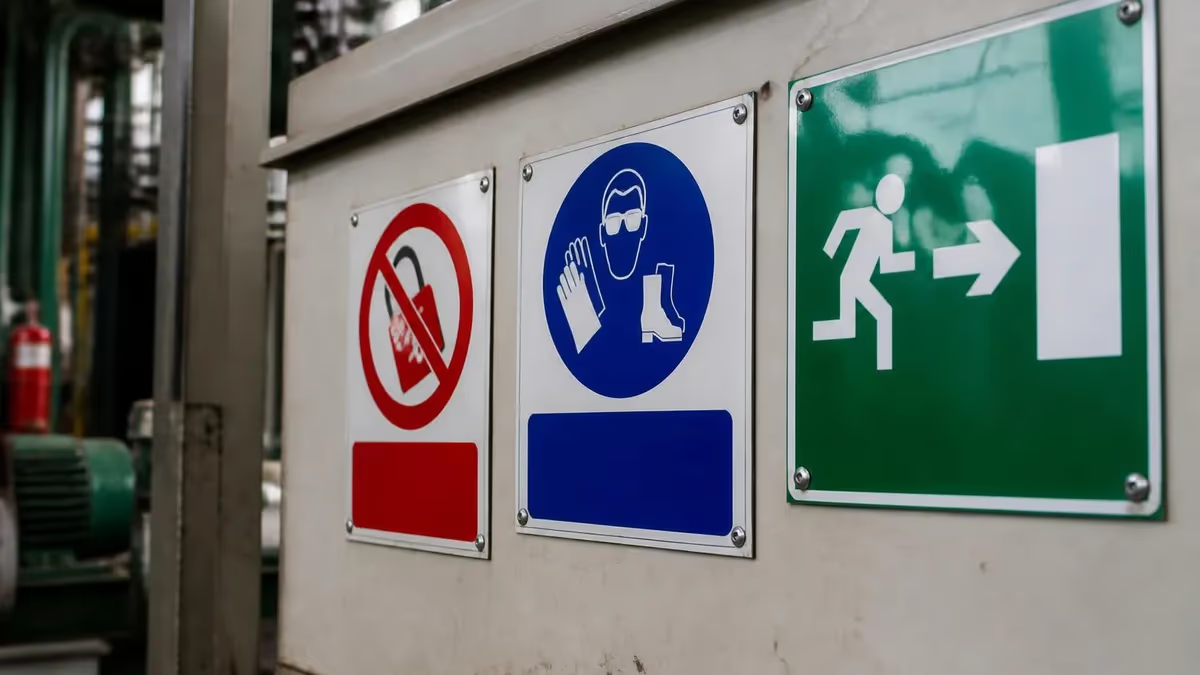
If you are searching for osha medical courier training free resources, you have come to the right place. Medical couriers transport biological specimens, prescription medications, blood products, and sensitive diagnostic samples every day across the United States. Because these workers handle hazardous biological materials, operate vehicles under time pressure, and frequently enter healthcare facilities, OSHA holds them to strict occupational safety standards that every courier must understand before stepping on the job.
The Occupational Safety and Health Administration enforces specific regulations that apply directly to medical courier operations. These include the Bloodborne Pathogens Standard (29 CFR 1910.1030), Hazard Communication Standard, and Department of Transportation requirements for transporting medical waste and biological substances. Employers in this industry are legally required to provide training on these standards before any employee begins transporting medical materials, and many of those training resources are available at no cost through federal and state programs.
Understanding what osha medical courier training covers helps you prepare for both the initial onboarding process and ongoing annual refresher requirements. Core topics include proper packaging and labeling of biohazardous materials, personal protective equipment (PPE) selection and use, emergency spill response procedures, exposure incident reporting, and vehicle safety protocols. Couriers who skip or rush through this training put themselves, the public, and their employers at serious legal and financial risk.
Free training options are more accessible than most people realize. OSHA's website offers downloadable fact sheets and compliance assistance resources at no charge. The CDC provides bloodborne pathogen training modules specifically designed for workers who handle clinical specimens. Many state health departments supplement these federal resources with region-specific guidance, particularly around medical waste disposal regulations that vary by jurisdiction. Community college continuing education departments frequently offer free or deeply discounted OSHA awareness courses to healthcare support workers.
Medical courier companies range from small independent operations to large national networks serving hospital systems, diagnostic laboratories, and pharmacy chains. Regardless of employer size, OSHA compliance is not optional. A single workplace inspection finding inadequate bloodborne pathogen training can result in fines starting at $16,131 per serious violation under 2024 penalty structures. Willful violations climb to $161,323 per instance. These numbers make investing time in proper free training not just smart but financially essential for any courier business.
This guide walks you through every layer of OSHA medical courier training requirements, identifies the best free resources currently available, explains what to expect from employer-provided training, and helps you understand how to document your compliance. Whether you are a new courier looking for orientation materials, a dispatcher building a training program, or a small business owner trying to stay compliant on a tight budget, the information here applies directly to your situation and gives you actionable next steps.
Beyond regulatory compliance, proper training genuinely protects your health. Medical couriers face real exposure risks including accidental needle sticks from improperly packaged sharps, skin contact with leaking specimen containers, and respiratory exposure when biological materials are transported without adequate containment. Workers who understand these hazards and know how to respond to them are measurably safer, healthier, and more confident on the job — outcomes that benefit everyone in the healthcare delivery chain.
OSHA Medical Courier Safety by the Numbers
Key Facts at a Glance
| Item | Value | Details |
|---|---|---|
| Minimum Fine Per Violation | $16K+ | Serious OSHA citation, 2024 rates |
| Required Refresher Frequency | Annual | Mandatory retraining every 12 months |
| Typical Initial Training Length | 3–8 Hours | Varies by employer and materials handled |

How to Complete OSHA Medical Courier Training Step by Step
Assess Your Regulatory Requirements
Complete Bloodborne Pathogen Training
Learn Proper Packaging and Labeling
Train on Spill Response and Emergency Procedures
Document Training and Obtain Employer Certification
Schedule Annual Refresher Training
Free OSHA medical courier training resources exist across several federal and state platforms, but knowing where to look saves enormous time. OSHA's official website maintains a comprehensive library called OSHA Publications, where you can download the Bloodborne Pathogens Fact Sheet, the Personal Protective Equipment Pocket Guide, and the Hazard Communication Quick Card at zero cost. These documents are written in plain English and designed for workers rather than legal professionals, making them genuinely useful for self-guided learning rather than just compliance theater.
The CDC's National Institute for Occupational Safety and Health (NIOSH) offers free online courses specifically covering healthcare transport safety. Their modules address proper handling of clinical specimens, sharps safety, and chemical hazard awareness. Completion certificates from NIOSH modules are widely recognized and can supplement employer-provided documentation. The training typically takes between two and four hours to complete and can be paused and resumed across multiple sessions, which works well for couriers with irregular schedules.
State OSHA programs, known as State Plans, often provide free consultation services to small businesses and independent workers. If your state operates its own OSHA plan — which 22 states and two territories do — you can request a free on-site consultation where a compliance officer reviews your operation and identifies gaps without issuing citations. This is one of the most underused free resources available, and it is especially valuable for courier companies that are growing and building training programs from scratch.
Community and technical colleges in most US metro areas offer continuing education courses in OSHA compliance, often at reduced or waived cost for healthcare support workers. These instructor-led formats provide opportunities to ask questions specific to your courier role, practice hands-on PPE donning and doffing procedures, and network with other workers navigating the same regulatory landscape. Check with your local community college's workforce development or continuing education department for current offerings and enrollment deadlines.
Professional associations also provide valuable free training content. The National Association of Medical Couriers (NAMC) and similar organizations publish guidance documents, webinar recordings, and best practice checklists that align with OSHA standards. Membership in these associations often grants access to member-only training libraries, but many introductory resources remain publicly available. Monitoring association websites for free webinars can supplement formal training at no cost.
YouTube and professional learning platforms have democratized access to safety training content. OSHA-authorized outreach trainers frequently upload explainer videos covering bloodborne pathogens, PPE procedures, and hazard communication topics. While video content alone does not satisfy the formal documentation requirement for OSHA compliance, it is an excellent supplementary resource for reinforcing concepts learned in formal training. Pair video content with written materials and employer-provided documentation for a well-rounded preparation approach.
Regardless of which free resources you use, the documentation requirement remains non-negotiable. OSHA inspectors do not simply ask whether training occurred — they ask to see records proving it. Maintain a training log that captures the date, duration, content covered, method of delivery, and the name and qualifications of any instructor involved. Self-directed online training should produce a completion certificate or screenshot confirming participation. If you are an independent contractor rather than an employee, this documentation responsibility falls entirely on you, which makes proactive record-keeping even more critical for your protection.
OSHA Bloodborne Pathogens, PPE, and HazCom Standards for Medical Couriers
The Bloodborne Pathogens Standard (29 CFR 1910.1030) is the single most important regulation for medical couriers. It requires employers to create a written Exposure Control Plan, offer the hepatitis B vaccine series at no cost to covered employees, provide training before initial assignment and annually thereafter, and establish post-exposure evaluation procedures following any accidental contact with potentially infectious materials. Couriers who handle specimens containing human blood or other potentially infectious materials (OPIM) are fully covered by this standard regardless of whether those materials are visibly present or sealed in containers.
Practical application of the Bloodborne Pathogens Standard means understanding universal precautions — treating every specimen as potentially infectious regardless of its origin or labeling. Medical couriers must know which items qualify as OPIM under OSHA's definition, which includes human blood, semen, vaginal secretions, cerebrospinal fluid, synovial fluid, pleural fluid, pericardial fluid, peritoneal fluid, amniotic fluid, saliva in dental procedures, any body fluid that is visibly contaminated with blood, and any unfixed tissue or organ from a human living or dead. This comprehensive list explains why even seemingly routine specimen transport requires full bloodborne pathogen precautions at all times.

Free vs. Paid OSHA Medical Courier Training: What You Actually Get
- +Zero out-of-pocket cost for federal and state OSHA compliance resources
- +CDC and OSHA materials are always current with latest regulatory changes
- +Self-paced online modules accommodate irregular courier shift schedules
- +Downloadable certificates from NIOSH and CDC provide documentation for OSHA records
- +State Plan free consultations identify compliance gaps without triggering citations
- +Broad topic coverage across bloodborne pathogens, PPE, HazCom, and DOT basics
- −Free resources rarely provide hands-on practice with actual spill kits or specimen packaging
- −No instructor available for questions specific to your courier route or employer policies
- −Self-directed learning requires personal discipline to complete all required modules
- −Free certificates may carry less employer recognition than paid OSHA outreach courses
- −Content quality varies widely across YouTube videos and unofficial training websites
- −Annual retraining still requires employer documentation even when using free materials
OSHA Medical Courier Training Compliance Checklist
- ✓Complete bloodborne pathogens training before your first day handling specimens.
- ✓Confirm your employer has a written Exposure Control Plan on file and accessible to you.
- ✓Review and sign documentation confirming you received hepatitis B vaccine or formally declined it.
- ✓Identify all personal protective equipment assigned to your role and confirm fit and availability.
- ✓Practice proper spill kit deployment before transporting biological materials on your route.
- ✓Learn the exact post-exposure reporting procedure your employer requires for accidental contact incidents.
- ✓Obtain and retain a certificate or signed record documenting your initial training date and content.
- ✓Verify DOT packaging requirements for every biological substance category you will transport.
- ✓Read the Safety Data Sheet for any chemical fixative or reagent included in your courier pickups.
- ✓Schedule your annual refresher training at least two weeks before your one-year training anniversary.
Annual Retraining Is Not Optional — Even With Free Resources
OSHA requires annual bloodborne pathogen retraining for every covered worker, and the clock resets based on your original training date — not the calendar year. If you completed training on March 15, your refresher is due by March 14 of the following year. Missing this deadline by even one day creates a compliance gap that can result in OSHA citations during an inspection. Set a recurring calendar reminder now and confirm your employer's retraining schedule matches your individual deadline.
Common OSHA violations in medical courier operations fall into predictable categories that thoughtful training can eliminate before an inspector ever arrives. The most frequently cited issue is the absence of a written Exposure Control Plan, which OSHA requires every employer with occupational exposure risks to maintain and review annually.
Many small courier companies either never created this document or created it once and never updated it, leaving them exposed to citations that are entirely preventable with a one-time documentation effort. Templates are available for free through OSHA's website and can be customized to fit virtually any courier operation within a few hours.
Inadequate training records are the second most common citation category. OSHA inspectors specifically look for records that document the date of training, the content covered, the name and qualifications of the person who conducted training, and the names of attending employees. A general statement that training was provided does not satisfy this requirement.
The records must be detailed enough that an inspector could reconstruct what was taught, to whom, and by whom, for every training session held within the past three years. Digital record-keeping systems, even simple spreadsheet logs, satisfy this requirement as long as they contain all required data fields.
Failure to offer the hepatitis B vaccine is another frequent finding. OSHA requires that employers make the hepatitis B vaccine series available to all employees with occupational exposure at no cost and at a reasonable time and place. The vaccine must be offered after training is completed but within ten working days of initial assignment. If an employee declines, they must sign a specific OSHA-mandated declination form. Employers who simply assume employees are vaccinated or who offer the vaccine without maintaining declination records are not in compliance, regardless of the employee's actual vaccination status.
Improper labeling of biohazardous containers during transport represents both an OSHA HazCom violation and a DOT HazMat violation simultaneously, creating compound liability exposure. Biological substance containers must bear the universal biohazard symbol along with the word BIOHAZARD in clearly legible text.
The outer packaging in a triple-packaging system must be labeled according to IATA or DOT regulations depending on the transport mode. Couriers who receive improperly labeled packages from healthcare facilities are not exempt from responsibility — they have an obligation to refuse improperly labeled biological materials and report the labeling issue to their dispatcher and the sending facility's safety officer.
Vehicle cleanliness and decontamination protocols are an area OSHA inspectors increasingly scrutinize in courier operations. The courier's vehicle is considered a workplace, and any biohazardous contamination within it must be addressed using documented decontamination procedures. Many couriers fail to maintain appropriate cleaning supplies in their vehicles or lack written procedures for decontaminating a vehicle interior after a spill event. Establishing and documenting a simple vehicle decontamination protocol — including what cleaning agents to use, contact time requirements, and how to dispose of contaminated cleaning materials — closes this gap completely.
Personal protective equipment availability failures round out the top five citation categories. OSHA requires that PPE not only be provided but that it be the correct type and size for each worker, that it be available in the work area (including the vehicle), and that workers have been trained in its use.
Inspectors may ask employees to demonstrate donning and doffing procedures during an audit. Couriers who cannot correctly explain or demonstrate proper PPE use reveal a training gap that reflects on the employer regardless of what any documentation says. Role-playing practice during training sessions closes this gap and builds genuine competence alongside paper compliance.
Proactive self-auditing is the most effective strategy for avoiding these common violations. Conduct an internal review of your training records, Exposure Control Plan, PPE inventory, and vehicle supplies at least quarterly. Compare your current practices against the OSHA Bloodborne Pathogens Compliance Directive (CPL 02-02-069) for a detailed regulatory interpretation that goes beyond the standard itself. Couriers and employers who treat compliance as an ongoing operational practice rather than a once-per-year checkbox consistently outperform those who scramble to prepare only when an inspection is anticipated.
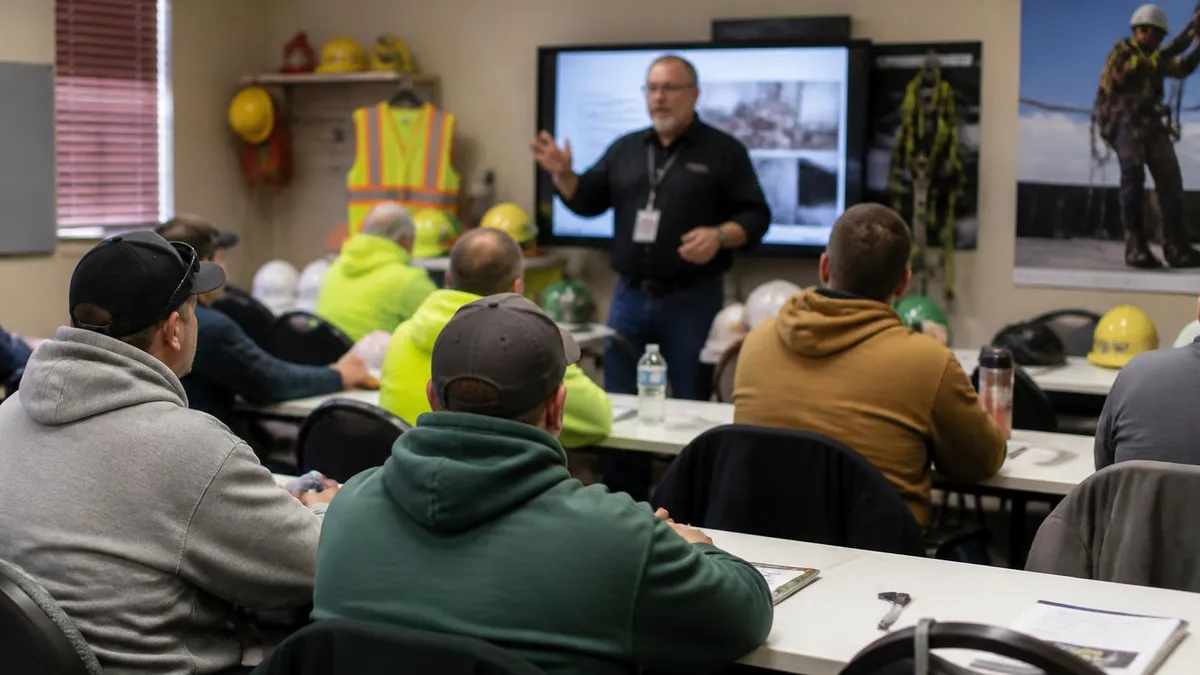
If you transport Category A biological substances (including cultures of Bacillus anthracis, Ebola virus, or other select agents) you are legally required to hold DOT HazMat Hazardous Materials Employee Training certification under 49 CFR 172.704. This is a separate requirement from OSHA training and must be completed every three years. Transporting Category A biological substances without valid HazMat employee training exposes both the courier and the employer to DOT fines up to $84,425 per violation per day. Verify with your employer which substance categories you carry before assuming OSHA training alone satisfies all legal requirements.
Building a complete OSHA medical courier training program requires thinking beyond the minimum compliance threshold to create a system that genuinely protects workers and sustains itself over time without constant manual intervention. The foundation of any effective program is a written Exposure Control Plan that accurately describes your specific operation — not a generic template pasted from the internet but a customized document that names the specific job classifications in your company, the biological substances your couriers actually handle, the specific engineering controls you have implemented, and the written schedule for updating the plan annually or whenever procedures change.
The training curriculum itself should be built around your actual workflow rather than generic safety topics. Walk new couriers through a simulated pickup from a hospital laboratory, showing exactly how specimens should be accepted, how to verify proper packaging, how to load them safely into transport coolers, and how to handle a container that appears damaged or improperly labeled before it ever leaves the facility. This applied approach, rooted in the real situations your couriers encounter, produces dramatically better retention than classroom lectures about abstract regulatory definitions. Record these training sessions when possible to create video resources for future onboarding.
Engage your healthcare facility clients as partners in your training program. Hospital laboratory managers, infection control nurses, and clinical compliance officers typically welcome conversations with courier services about safe specimen handling. Invite a hospital laboratory safety officer to speak at your next training session — they can explain what their facility expects from couriers and where they commonly see breakdowns in the chain of custody and packaging safety. This cross-organizational education strengthens the entire specimen transport ecosystem and positions your courier service as a preferred partner for facilities that take compliance seriously.
Technology tools have made training documentation dramatically more manageable for courier operations of all sizes. Learning management systems (LMS) like TalentLMS, Absorb, or even Google Classroom can host your training materials, track completion, send automatic reminders for annual retraining, and generate audit-ready reports at a moment's notice. Many LMS platforms offer free tiers that accommodate small teams of ten or fewer users, making digital record-keeping accessible even for solo operators or family-owned courier businesses that previously managed everything on paper binders that were perpetually incomplete.
Incentivize safety culture rather than just safety compliance. Compliance-focused programs teach couriers what they must do to avoid getting fired or fined. Culture-focused programs teach couriers why safety matters, connect those reasons to real incidents, and recognize workers who model safe behavior.
The difference shows up in how workers behave when no one is watching — whether they bother to put on gloves for a routine pickup when the dispatcher is not present, whether they report a packaging concern or quietly accept a poorly sealed specimen rather than causing delay. These daily micro-decisions determine actual safety outcomes more than any documentation ever will.
Conduct regular safety drills that simulate scenarios your couriers might actually face. Stage a mock spill in a vehicle and require couriers to walk through the response procedure in real time. Simulate receiving an improperly labeled package and require the courier to demonstrate the correct refusal protocol including who to call and what to document.
Practice the post-exposure incident reporting call so couriers know exactly what to say and who to contact if they sustain a needle stick or skin exposure in the field. These rehearsals build the automatic behavioral responses that protect workers when their adrenaline is high and their thinking is compromised by the stress of an actual incident.
Finally, integrate your training program with your hiring process. Make clear in job postings that OSHA bloodborne pathogen training will be required before any courier begins route work. Use the onboarding period to verify that any training a new hire claims to have from a previous employer is properly documented and current. Never allow a courier to transport medical specimens before completing your training program, even if they say they have done this work before.
The liability exposure from one improperly trained courier handling a biological exposure incident far exceeds any efficiency gained by rushing the onboarding timeline. A well-designed training program that takes two to three days to complete is an investment, not an obstacle — and it pays dividends in reduced incident rates, lower workers' compensation costs, and the kind of regulatory confidence that lets you grow your business without looking over your shoulder.
Practical tips for medical couriers in the field start with vehicle organization. Your transport cooler or insulated carry bag should have a designated zone for specimens, a separate sealed pocket for your PPE supplies, and easy access to your spill kit without having to move specimen containers to reach it. Organized vehicles reduce the likelihood of accidental package disturbance during transport and make it faster to respond to emergencies without fumbling through disorganized gear. Label your cooler zones clearly and brief any co-courier or substitute driver on the organizational system before they take over your route.
Temperature control is a frequently overlooked safety variable in medical courier training. Many biological specimens require specific temperature ranges to remain viable and safe during transport. Improper temperature management does not just compromise specimen integrity — it can accelerate microbial growth in a compromised container, increasing the biological hazard associated with the package. Understand the temperature requirements for every specimen type you regularly transport and verify your cooling system can maintain those temperatures for the full duration of your longest route. Carry a calibrated thermometer and log temperatures for high-value or temperature-sensitive shipments.
Communication with dispatch and receiving facilities is a safety tool as much as a logistical one. If you encounter a damaged package, an improperly labeled container, or a pickup location that cannot properly package materials before your arrival, you need a clear, fast communication pathway to report the issue and receive guidance.
Know your dispatcher's direct line, know the contact at each facility you serve, and know your company's chain of escalation when a situation requires a supervisor decision. Couriers who improvise workarounds to packaging or labeling problems because they did not know who to call are a major source of compliance failures and exposure incidents.
Personal health monitoring is an often-neglected component of medical courier safety. The bloodborne pathogen standard entitles you to a post-exposure evaluation and follow-up at no cost if you experience an accidental exposure. But you also have an interest in monitoring your own health status proactively. Maintain your hepatitis B vaccination if you accepted it.
Consider getting a tuberculosis skin test annually if you serve facilities that treat TB patients. Report any symptoms of illness that develop after a known exposure event immediately — early reporting allows for timely medical intervention and creates the documentation record you may need if a work-related illness claim arises later.
Route familiarity contributes to safety in ways that are easy to underestimate. Couriers who know their routes well are less likely to rush, less likely to make vehicle operation errors under time pressure, and better able to identify when something about a pickup or drop-off situation seems wrong before they are already committed to it.
When you start a new route, allow extra time for the first two weeks while you learn facility layouts, parking logistics, access codes, and the personalities of the staff you interact with. This investment pays dividends in smoother, safer operations for the months and years of that route's duration.
Stay current with regulatory updates even between annual refresher training cycles. OSHA publishes regulatory updates, enforcement guidance revisions, and new compliance resources throughout the year. Subscribe to OSHA's free email newsletter at osha.gov to receive updates directly in your inbox. Follow the DOT Pipeline and Hazardous Materials Safety Administration (PHMSA) for HazMat transport regulation changes. These update channels take only minutes to monitor and ensure you are not caught off guard by a regulatory change that affects your daily operations and training obligations.
Finally, advocate for yourself and your fellow couriers. If your employer is not providing mandatory training, not maintaining documentation, or not supplying required PPE, you have the right to file a confidential complaint with OSHA. Retaliation against workers who report safety violations is illegal under Section 11(c) of the OSH Act. Workers who speak up about training gaps are not troublemakers — they are protecting themselves, their coworkers, and ultimately the public that depends on safe, compliant medical specimen transport. Safety culture begins with individuals who take it seriously enough to act, even when it is uncomfortable to do so.
Sample OSHA - OSHA Certified Crane Operator Practice Questions
Try these questions from our free OSHA - OSHA Certified Crane Operator practice tests. The correct answer and an explanation follow each question.
What is the most critical safety requirement in safety procedures?
- A. Speed of completion
- B. Following all applicable safety regulations and wearing required PPE
- C. Cost minimization
- D. Working alone to avoid delays
Answer: B. Following all applicable safety regulations and wearing required PPE
Safety regulations and proper PPE use are the most critical requirements in safety procedures to prevent injury and ensure compliance.
Which OSHA standard governs crane and derrick operations in construction, including power line safety requirements?
- A. 29 CFR 1926.502
- B. 29 CFR 1926.1400 (Subpart CC)
- C. 29 CFR 1910.179
- D. 29 CFR 1926.550
Answer: B. 29 CFR 1926.1400 (Subpart CC)
29 CFR 1926.1400 (Subpart CC), effective 2010, is the comprehensive OSHA standard governing cranes and derricks in construction including electrical hazard requirements.
What inspection procedure is essential for safety procedures?
- A. Visual spot checks are sufficient
- B. Systematic inspection following established checklists and standards
- C. Inspection is only needed for final sign-off
- D. The client determines inspection requirements
Answer: B. Systematic inspection following established checklists and standards
Systematic inspections using established checklists and industry standards ensure quality and compliance at every stage.
What is the most critical safety requirement in material selection?
- A. Speed of completion
- B. Following all applicable safety regulations and wearing required PPE
- C. Cost minimization
- D. Working alone to avoid delays
Answer: B. Following all applicable safety regulations and wearing required PPE
Safety regulations and proper PPE use are the most critical requirements in material selection to prevent injury and ensure compliance.
Take the full OSHA - OSHA Certified Crane Operator practice test
OSHA Questions and Answers

OSHA 100: Complete Guide to Crane Safety Awareness Training and Certification

OSHA Train the Trainer Certification: Complete Guide for Workplace Safety Instructors

OSHA Restaurant Safety: Complete Guide to Workplace Compliance, Hazard Prevention, and Employee Training for Food Service Operations

360 Training OSHA 10: Complete Guide to Online OSHA 10-Hour Construction and General Industry Certification Courses

OSHA (OSHA Certified Crane Operator) Test Guide
About the Author

Certified Safety Professional & OSHA Compliance Expert
Indiana University of Pennsylvania Safety SciencesDr. William Foster holds a PhD in Safety Science from Indiana University of Pennsylvania and is a Certified Safety Professional (CSP) and Certified Hazardous Materials Manager. With 20 years of occupational health and safety management experience across construction, manufacturing, and chemical industries, he coaches safety professionals through OSHA certification, CSP, CHST, and safety management licensing programs.
Join the Discussion
Connect with other students preparing for this exam. Share tips, ask questions, and get advice from people who have been there.
View discussion (8 replies)