
Definition of Incident OSHA: What Crane Operators and Safety Professionals Need to Know
Learn the definition of incident OSHA uses for recordkeeping & crane safety. Covers near-misses, injuries, reporting rules & exam prep tips. ✅
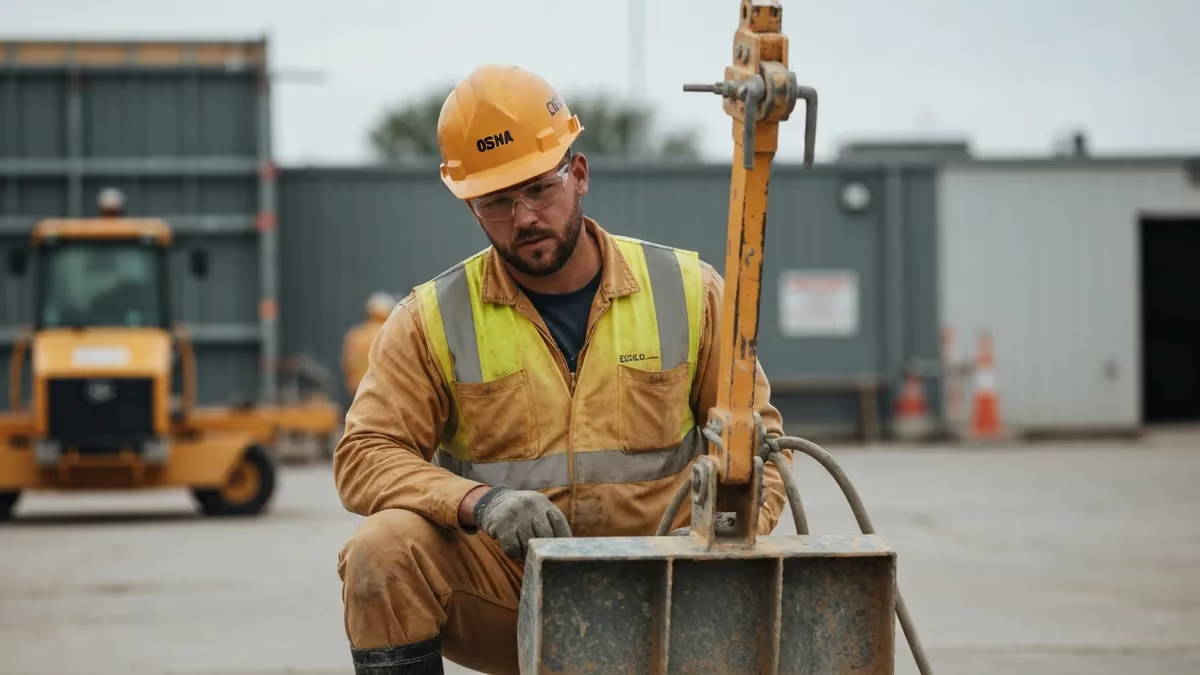
Understanding the definition of incident OSHA has established is one of the most foundational concepts in American workplace safety, and it carries enormous weight for crane operators, riggers, and anyone working under the OSHA Certified Crane Operator framework.
At its core, OSHA defines an incident as any unplanned, undesired event that results in — or has the potential to result in — injury to workers, damage to equipment, or harm to the surrounding environment. Knowing this definition is not merely academic; it directly shapes how job sites respond to events, what gets documented, and how liability is assessed after an accident.
OSHA separates incidents into two broad categories: those that result in actual harm — classified as accidents or injuries — and those that come dangerously close to causing harm without completing the causal chain, commonly called near-misses or close calls. Both types are treated seriously under federal regulation. Near-misses, in particular, are viewed as leading indicators of systemic hazard conditions. Ignoring them increases the probability that a future event will cross the threshold into a recordable injury or fatality.
For crane operators, the stakes of misunderstanding incident definitions are uniquely high. Cranes operate with loads weighing thousands of pounds, often over occupied workspaces and near energized power lines. A mechanical failure, a communication breakdown, or a rigging error can progress from a near-miss to a catastrophic accident in seconds. OSHA's incident framework gives crane crews a shared vocabulary and a structured approach to recognizing, reporting, and learning from dangerous events before they escalate.
The regulatory basis for incident definitions is spread across several OSHA standards, including 29 CFR 1926 Subpart CC (cranes and derricks in construction) and the General Duty Clause of the OSH Act itself. These rules obligate employers to maintain worksites free from recognized hazards, and that obligation begins with accurately identifying what constitutes a hazardous event. Misclassifying an incident — or failing to report it — can result in OSHA citations, financial penalties, and increased worker risk.
Many crane certification exam candidates encounter questions about incident classification and recordkeeping requirements. Reviewing the osha incident definition in detail not only prepares you for exam scenarios but also builds the situational awareness that separates a competent crane operator from an exceptional one. Real-world comprehension of when and how to report incidents reflects directly on your professional credibility and your employer's safety culture.
OSHA's recordkeeping rule (29 CFR Part 1904) requires employers with more than ten employees in most industries to maintain an OSHA 300 Log of work-related injuries and illnesses. Incidents that meet specific severity thresholds — days away from work, restricted duty, loss of consciousness, or diagnosis by a healthcare professional — must appear on this log. Employers must also file a separate OSHA 301 Incident Report within seven days of each recordable event. These forms create a paper trail that OSHA inspectors review when evaluating a site's safety performance.
This article provides a comprehensive breakdown of how OSHA defines incidents, how those definitions apply specifically to crane operations, how to distinguish a near-miss from a recordable injury, and how mastery of these concepts positions you for success on your crane operator certification exam. Whether you are studying for your first certification or refreshing your knowledge before a renewal cycle, the guidance here will sharpen your understanding of one of OSHA's most practically important regulatory frameworks.
OSHA Incident Reporting by the Numbers

OSHA Incident Classifications Explained
An unplanned event that did not result in injury, illness, or damage but had the potential to do so. OSHA strongly encourages near-miss reporting as a proactive tool to identify and eliminate hazards before they become recordable accidents.
An injury or illness that requires only one-time treatment and minor monitoring, such as a bandage or over-the-counter medication. First aid incidents are generally not OSHA recordable, but must be documented internally according to employer safety programs.
Any work-related injury or illness that results in days away from work, restricted duty, transfer to another job, medical treatment beyond first aid, loss of consciousness, or diagnosis of a significant condition by a healthcare professional.
A subset of recordable incidents requiring direct notification to OSHA. Fatalities must be reported within 8 hours. In-patient hospitalizations, amputations, and loss of an eye must be reported within 24 hours of learning of the event.
An event resulting in the hospitalization of three or more workers simultaneously, or a workplace fatality. These trigger mandatory OSHA investigations, potential site shutdown orders, and heightened scrutiny under the General Duty Clause.
Crane operations represent one of the highest-risk categories in the construction industry, and OSHA's incident framework reflects that elevated risk profile. Under 29 CFR 1926 Subpart CC — the primary federal standard governing cranes and derricks in construction — employers must document and investigate any unplanned event involving a crane, whether or not an injury resulted. This includes load drops, boom collapses, equipment tip-overs, wire rope failures, and collisions with structures or utility lines. Each of these constitutes an incident under OSHA's broad definition even when no one is physically hurt.
The reason OSHA casts such a wide net in its definition of incident for crane operations is straightforward: the mechanical complexity of crane systems means that one small failure rarely occurs in isolation. A worn sheave, an improperly torqued connection, or a degraded wire rope segment does not announce itself before a load drop — it compounds quietly until the system fails under stress. By treating every unplanned event as a reportable incident, OSHA creates a feedback loop that catches developing mechanical problems before they escalate into fatalities.
Signal communication failures also constitute incidents under OSHA standards. When a crane operator misreads or fails to receive a hand signal, a radio transmission, or a warning from a spotter, the resulting near-miss must be documented and investigated. The root cause might be inadequate training, environmental noise, equipment malfunction, or procedural gaps — all of which are correctable through proper incident investigation. Operators who dismiss near-misses as routine close calls undermine the entire purpose of OSHA's hazard identification system.
Ground conditions are another significant source of crane incidents. OSHA requires that outrigger pads be sized and positioned according to the crane manufacturer's specifications and the soil-bearing capacity at the work site. When a crane begins to tip or settle unexpectedly due to unstable ground, that constitutes an incident even if the operator successfully stabilizes the machine. The event signals that the pre-lift ground assessment was inadequate or that conditions changed after setup — both situations requiring formal documentation and corrective action.
Rigging failures are classified as incidents regardless of whether the load was successfully caught or the drop was controlled. An improperly spliced sling, an overloaded shackle, or an unbalanced lift point places crane operators, riggers, and ground workers in immediate danger. OSHA's incident definition captures these events to ensure that rigging practices are evaluated systematically rather than anecdotally. When a rigging component fails or shows signs of imminent failure during a lift, the crane must be immediately taken out of service for inspection per 29 CFR 1926.1412.
Post-incident inspections are a mandatory component of OSHA's crane safety protocol. After any incident involving a crane — including near-misses — the equipment must be inspected by a qualified person before returning to service. This inspection requirement exists because incidents often expose hidden damage not visible during routine pre-shift checks. A load drop, for example, might stress the boom structure or wire rope in ways that only become apparent through magnetic particle testing or other non-destructive evaluation techniques, which must be conducted by a qualified person under 29 CFR 1926.1413.
Understanding how OSHA defines and classifies crane incidents also prepares you to answer exam questions accurately. The OSHA crane operator certification exam frequently tests candidates on their knowledge of reporting thresholds, post-incident inspection requirements, and the distinction between near-misses and recordable incidents. Reviewing these concepts in the context of real-world crane scenarios — not just as abstract regulatory text — significantly improves retention and exam performance. Practicing with scenario-based questions is one of the most effective strategies for mastering the nuanced judgment calls that these definitions require.
Near-Miss vs. Recordable vs. Reportable: Key Differences
A near-miss is an unplanned event that had the potential to cause injury or property damage but did not complete the harm pathway. OSHA does not currently mandate near-miss reporting at the federal level, but strongly encourages it through its voluntary protection programs and safety management guidelines. Many state OSHA plans and corporate safety programs require internal near-miss documentation. The value of capturing near-misses lies in their predictive power: research consistently shows that for every major injury, there are dozens of near-miss events involving the same root causes.
For crane operators, common near-miss scenarios include load swings that narrowly miss workers, wire rope slippage that is caught before a drop, and outrigger pad settlement that is detected before the crane tips. Each of these events should trigger a formal investigation using tools like the Five Whys or a fishbone diagram to identify systemic root causes. Near-miss reports should be submitted without fear of blame, and safety managers should treat them as valuable data rather than signs of incompetence. A culture that rewards near-miss reporting consistently outperforms one that punishes it through discipline.
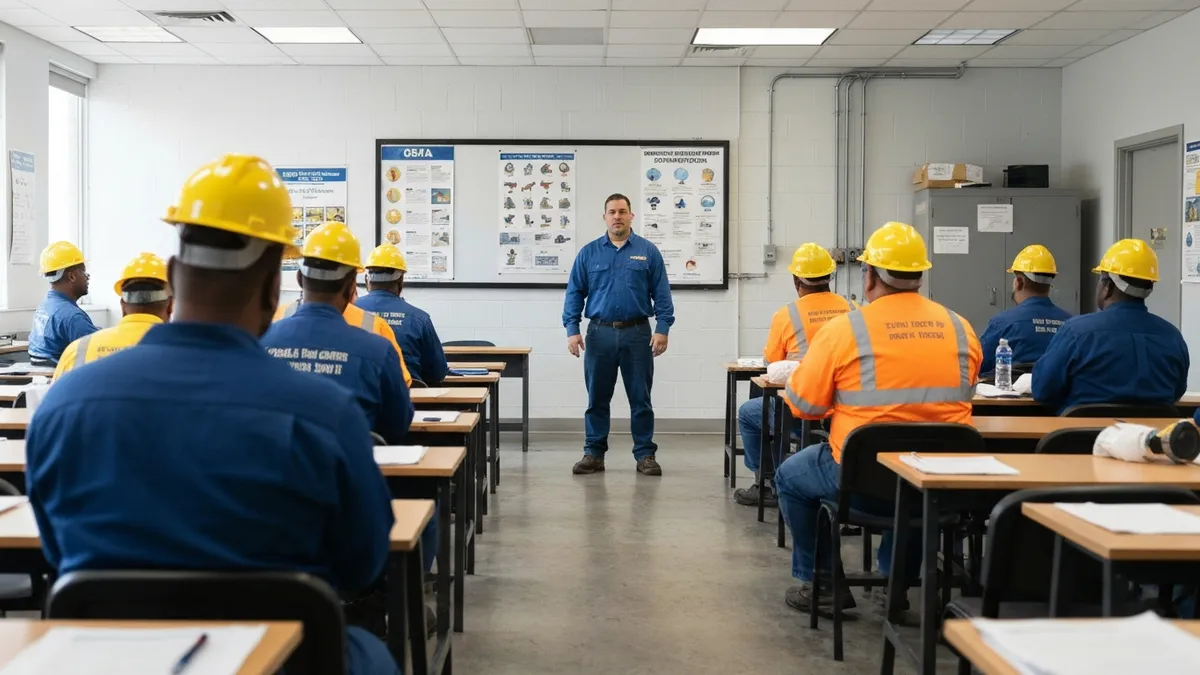
Pros and Cons of OSHA's Broad Incident Definition
- +Captures near-misses before they escalate into recordable injuries or fatalities
- +Creates a documented data trail that helps identify systemic safety hazards across job sites
- +Encourages a proactive safety culture where workers feel safe reporting close calls
- +Provides legal clarity for employers about what must be logged, reported, or investigated
- +Supports OSHA inspectors in evaluating safety performance patterns over time
- +Aligns with industry best practices used by construction safety management systems worldwide
- −Broad definitions can lead to over-reporting, burdening small employers with paperwork
- −Inconsistent interpretation of recordability thresholds across different OSHA regions
- −Fear of higher OSHA inspection frequency may discourage voluntary near-miss reporting
- −Complex multi-form recordkeeping (300, 300A, 301) creates administrative overhead for employers
- −Penalty structures may incentivize incident misclassification to avoid recordable status
- −Definitions may not keep pace with emerging crane technologies and hybrid work environments
Pros and Cons at a Glance
| Pros | Cons |
|---|---|
| Captures near-misses before they escalate into recordable injuries or fatalities | Broad definitions can lead to over-reporting, burdening small employers with paperwork |
| Creates a documented data trail that helps identify systemic safety hazards across job sites | Inconsistent interpretation of recordability thresholds across different OSHA regions |
| Encourages a proactive safety culture where workers feel safe reporting close calls | Fear of higher OSHA inspection frequency may discourage voluntary near-miss reporting |
| Provides legal clarity for employers about what must be logged, reported, or investigated | Penalty structures may incentivize incident misclassification to avoid recordable status |
| Supports OSHA inspectors in evaluating safety performance patterns over time | Definitions may not keep pace with emerging crane technologies and hybrid work environments |
OSHA Incident Reporting Checklist for Crane Operations
- ✓Immediately secure the scene and remove workers from the hazard zone following any crane incident.
- ✓Notify your site safety officer and project manager within minutes of an unplanned event.
- ✓Call OSHA's 24-hour hotline (1-800-321-OSHA) within 8 hours if the incident involves a fatality.
- ✓Report in-patient hospitalizations, amputations, and eye losses to OSHA within 24 hours.
- ✓Take photographs of all physical evidence, equipment positions, and ground conditions before anything is moved.
- ✓Collect written statements from all witnesses, including crane operators, riggers, and spotters.
- ✓Tag the involved crane and all rigging equipment out of service pending a qualified person inspection.
- ✓Complete the OSHA 301 Incident Report form within 7 calendar days of the recordable event.
- ✓Enter the incident on your OSHA 300 Log within 7 days and retain the record for five years.
- ✓Conduct a formal root cause analysis and document corrective actions with assigned deadlines and responsible parties.
The 1:29:300 Ratio — Why Near-Miss Reporting Saves Lives
Industrial safety pioneer Herbert Heinrich established that for every major injury on a worksite, there are approximately 29 minor injuries and 300 near-miss incidents sharing the same root causes. Modern research has refined these numbers, but the core principle holds: near-misses are the most abundant and most actionable data source for preventing catastrophic crane accidents. Organizations that build formal near-miss reporting programs reduce serious injury rates by an average of 50 percent over five years according to OSHA safety management studies.
OSHA's recordkeeping rules under 29 CFR Part 1904 create a detailed framework that determines exactly when and how employers must document work-related incidents. The first and most important threshold is the question of work-relatedness. An injury or illness is considered work-related if an event or exposure in the work environment caused or contributed to the condition, or if it significantly aggravated a pre-existing condition. For crane operators, this means that even conditions like hearing loss from prolonged engine noise exposure or musculoskeletal disorders from repeated crane cab vibration may qualify as recordable if they meet the work-relatedness criteria.
The recordkeeping standard contains several important exceptions. Injuries that result from personal grooming, self-medication, or voluntary participation in wellness programs are generally not recordable. Injuries that occur during the commute to or from work are excluded. Mental illness is recordable only when a licensed healthcare professional determines it is work-related. Motor vehicle accidents during work-related travel are recordable, but accidents during personal errands undertaken during a commute are not. For crane operations specifically, injuries sustained while traveling to a remote job site in a company vehicle may meet the work-relatedness threshold depending on the nature of the travel arrangement.
Medical treatment is one of the most consequential criteria for determining recordability. OSHA defines first aid as a specific list of treatments including: one-time wound care, use of non-prescription medication at non-prescription strength, hot or cold therapy, simple splinting, drilling a nail to relieve pressure, and use of bandages or eye patches.
Any treatment that goes beyond this list — including prescription medication, sutures, physical therapy, or use of a rigid splint — automatically makes the incident recordable. Crane operators who receive any medical evaluation after a job site event should be aware that the type of treatment administered, not the severity of the apparent injury, determines recordability.
Days away from work is the most straightforward recordability criterion. If a physician or licensed healthcare professional recommends that a worker stay home due to a work-related injury or illness, every day of absence — including weekends and holidays — counts toward the OSHA 300 Log entry. Employers are not permitted to contest or override this determination.
Similarly, restricted work activity — when a doctor advises reduced duties such as no overhead reaching or no operating of heavy machinery — generates a recordable entry even if the worker remains on the job site in a modified capacity. Both situations must be tracked on the OSHA 300 Log with specific day counts.
The privacy case rules in 29 CFR 1904.29 protect workers from unnecessary disclosure of sensitive medical information. When an incident involves a sensitive injury — including sexual assault, HIV infection, mental illness, or certain musculoskeletal conditions — employers must list the worker as a privacy case on the OSHA 300 Log and maintain the worker's identity in a separate confidential document.
This protection is important for crane operators dealing with repetitive stress injuries or mental health conditions arising from high-stress job site environments. Privacy protections do not eliminate the recordkeeping obligation; they merely restrict how personal identifiers are displayed on public-facing forms.
Electronic submission requirements apply to employers in high-hazard industries with 100 or more employees, who must electronically submit their OSHA 300A Summary data annually through OSHA's Injury Tracking Application. Employers in high-hazard industries with 250 or more employees must also submit case-specific 300 Log and 301 Incident Report data. The crane and rigging sector falls under high-hazard industry classifications, meaning that most large crane contractors face electronic submission mandates. Failure to submit electronically when required constitutes a separate violation from failure to maintain the underlying records — OSHA treats them as distinct obligations with distinct penalty exposure.
Retention and access requirements complete the recordkeeping framework. Employers must retain OSHA 300 Logs, 300A Summaries, and 301 Incident Reports for five years following the end of the calendar year they cover. During that retention period, the records must be made available to current and former employees, their personal representatives, and authorized employee representatives upon request.
OSHA compliance officers and state plan counterparts can also demand access during inspections. Crane operators should know that their own injury history is accessible to them upon request, and that they have the right to review the OSHA 300 Log for their establishment at any time during their employment.

Employers who fail to report a worker fatality to OSHA within the mandatory 8-hour window face separate citations and penalties on top of any violations discovered during the resulting inspection. The reporting clock starts when the employer learns of the death — not when the death is officially confirmed by medical personnel. If you are uncertain whether a hospitalization will become a fatality, OSHA recommends reporting immediately and updating your notification if circumstances change. Delayed reporting has resulted in penalties exceeding $10,000 for construction employers.
Preparing for the OSHA crane operator certification exam requires a nuanced understanding of incident definitions, because exam questions in this domain tend to test judgment rather than simple memorization. Rather than asking you to recite the definition of a recordable incident verbatim, exam scenarios might describe a situation — a rigger slips and receives a tetanus shot and a bandage, for instance — and ask you to classify the incident and explain the correct employer response. Building the analytical habit of walking through OSHA's decision tree for recordability is far more valuable than memorizing isolated regulatory text.
One of the most commonly tested distinctions on crane operator certification exams is the difference between a qualified person and a competent person under OSHA definitions. A qualified person has recognized training or professional credentials that demonstrate knowledge of the subject matter. A competent person has the training and authority to identify hazards and take corrective action.
Post-incident crane inspections must be conducted by a qualified person, while daily pre-shift inspections may be conducted by a competent person. Knowing when each designation applies — and how each relates to incident investigation — is a frequent exam topic covered under 29 CFR 1926.1401.
Incident investigation methodology is another key exam area. OSHA's guidelines describe a systematic approach that begins with scene preservation, proceeds through evidence collection and witness interviews, and culminates in root cause identification and corrective action planning.
Exam candidates should be familiar with the distinction between direct causes (the immediate physical action that produced harm) and root causes (the underlying systemic conditions that allowed the direct cause to occur). A crane tip-over, for example, might have a direct cause of outrigger pad failure and a root cause of inadequate ground assessment procedures — both of which must be addressed to prevent recurrence.
The exam also covers OSHA's multi-employer worksite policy, which is highly relevant for crane operations. On a construction site with multiple contractors, OSHA can cite any employer — creating, exposing, correcting, or controlling — for a given hazard. This means a crane operator's employer can be cited for a hazard created by another contractor if the operator was exposed to it. Understanding multi-employer liability is essential for knowing when to stop work, when to escalate a safety concern, and how incident reporting responsibility flows across organizational lines on a complex job site.
Practical incident scenario questions on the crane certification exam frequently involve the Subpart CC requirement that cranes be removed from service after certain events. Any contact with an energized power line requires immediate shutdown and inspection. Any structural failure requires shutdown. Any load drop requires shutdown. Knowing these mandatory shutdown triggers — and understanding that returning the crane to service without a qualified person inspection is itself a recordable violation — reflects a level of regulatory literacy that certification exams are specifically designed to measure.
Study strategies that combine regulatory text review with scenario-based practice questions consistently outperform rote memorization approaches. When you encounter a practice question about incident classification, try to identify which specific provision of 29 CFR Part 1904 or 1926 Subpart CC applies, rather than relying on general intuition. This regulatory anchoring helps you handle novel scenarios on the actual exam — situations you have not seen before but can analyze correctly because you understand the underlying rule structure rather than just the surface-level answer.
Time management is also an exam skill. The crane operator certification exam allocates a fixed time window across multiple domains, and incident-related questions may appear in several different sections. If you are confident in your understanding of OSHA's incident definition framework, you can answer these questions quickly and bank time for more challenging technical calculation questions. Reviewing the osha incident definition material within the broader context of your full certification study plan ensures that strong foundational knowledge carries over into exam performance.
Building a strong incident-awareness mindset begins long before an exam and extends well beyond passing your certification. Experienced crane operators develop an almost intuitive sensitivity to pre-incident conditions — subtle environmental changes, equipment behavior shifts, or crew communication patterns that signal elevated risk. This situational awareness cannot be fully taught in a classroom; it develops through deliberate reflection on near-misses and a disciplined habit of post-shift debriefing. OSHA's incident framework supports this development by giving operators a structured language for describing and categorizing the warning signs they observe.
Daily equipment inspections are the most direct interface between incident prevention and OSHA compliance for crane operators. Pre-shift inspections under 29 CFR 1926.1412(d) must cover wire ropes, hooks, hydraulic systems, outriggers, load indicators, and safety devices. Any deficiency that would affect the safe operation of the crane must be documented and corrected before the crane is put into service.
Treating these inspections as a genuine incident-prevention tool — rather than a compliance checkbox — fundamentally changes how operators approach the task. An operator who understands that a frayed wire rope strand is a near-miss in progress will document and escalate it differently than one who views the inspection as paperwork.
Tag line management is one of the most underappreciated incident risk factors in crane operations. When loads are not properly controlled during movement, they can swing unpredictably and strike workers, structures, or other equipment. OSHA standards require that loads be controlled by tag lines or other effective means whenever swinging the load could cause harm. Near-misses involving uncontrolled load movement should be formally documented and discussed in tool-box talks so that all crew members understand the hazard and the corrective measures being implemented. These discussions also serve as evidence of ongoing safety communication during OSHA inspections.
Lift plan documentation serves a dual function as both a pre-lift safety tool and a post-incident reference document. A well-prepared lift plan records the crane configuration, ground conditions, load weight, rigging specifications, exclusion zone boundaries, and signal communication protocols for a specific lift. If an incident occurs during or after that lift, the lift plan becomes critical evidence in the investigation.
Discrepancies between the planned and actual lift conditions are often among the first things OSHA investigators examine when reconstructing the circumstances of a crane accident. Maintaining complete and accurate lift plans is therefore both a safety best practice and a risk management necessity.
Safety stand-downs are a voluntary but highly effective incident prevention tool that OSHA actively promotes, particularly around fall hazards and crane operation risks. A safety stand-down temporarily halts production activities to focus crew attention on specific safety topics, often in response to a recent near-miss or industry-wide fatality trend. OSHA's national Safety Stand-Down to Prevent Falls in Construction, held annually each May, is the most prominent example. Crane operators and supervisors who participate in these stand-downs and document attendance demonstrate a proactive safety culture that OSHA looks favorably upon during inspections and when considering penalty mitigation.
Corrective action tracking is the final step in the incident reporting cycle and the one most often neglected under time pressure on active job sites. Once a root cause has been identified, corrective actions must be assigned to specific responsible parties with clear completion deadlines. These actions might include equipment repair, procedure revision, additional training, or physical hazard controls.
Progress on corrective actions should be reviewed at regular safety meetings and documented in writing. Incomplete or overdue corrective actions discovered during an OSHA inspection can significantly increase penalty exposure, because they demonstrate that the employer was aware of a hazard and failed to eliminate it within a reasonable timeframe.
The relationship between incident documentation and continuous safety improvement is cyclical and compounding. Each well-investigated and documented incident produces lessons that can prevent future events. Over time, a job site with a mature incident reporting culture accumulates a rich library of safety knowledge that benefits every worker on the crew. Crane operators who contribute to this culture — by reporting near-misses promptly, participating honestly in investigations, and implementing corrective actions rigorously — perform a professional function that extends far beyond operating a machine. They actively shape the safety environment that protects their coworkers, their employer, and themselves.
OSHA Questions and Answers

How Long Does an OSHA 10 Card Last? Complete Guide to Validity, Renewal, and What Happens When It Expires
360 Training OSHA 10: Complete Guide to Online OSHA 10-Hour Construction and General Industry Certification Courses

In the OSHA Bloodborne Pathogens Standard, OPIM Stands For: Complete Guide to Other Potentially Infectious Materials
OSHA (OSHA Certified Crane Operator) Test Guide

OSHA Flammable Cabinet Rules: Complete Guide to Storage Requirements, Compliance, and Workplace Safety
About the Author

Certified Safety Professional & OSHA Compliance Expert
Indiana University of Pennsylvania Safety SciencesDr. William Foster holds a PhD in Safety Science from Indiana University of Pennsylvania and is a Certified Safety Professional (CSP) and Certified Hazardous Materials Manager. With 20 years of occupational health and safety management experience across construction, manufacturing, and chemical industries, he coaches safety professionals through OSHA certification, CSP, CHST, and safety management licensing programs.
Join the Discussion
Connect with other students preparing for this exam. Share tips, ask questions, and get advice from people who have been there.
View discussion (8 replies)