
Can OSHA Enforce Vaccines? OSHA Establishment Search and General Regulations Explained
🔎 Can OSHA enforce vaccines? Learn the law, the 2026 Supreme Court ruling, and how to use OSHA establishment search to check employer inspection records.
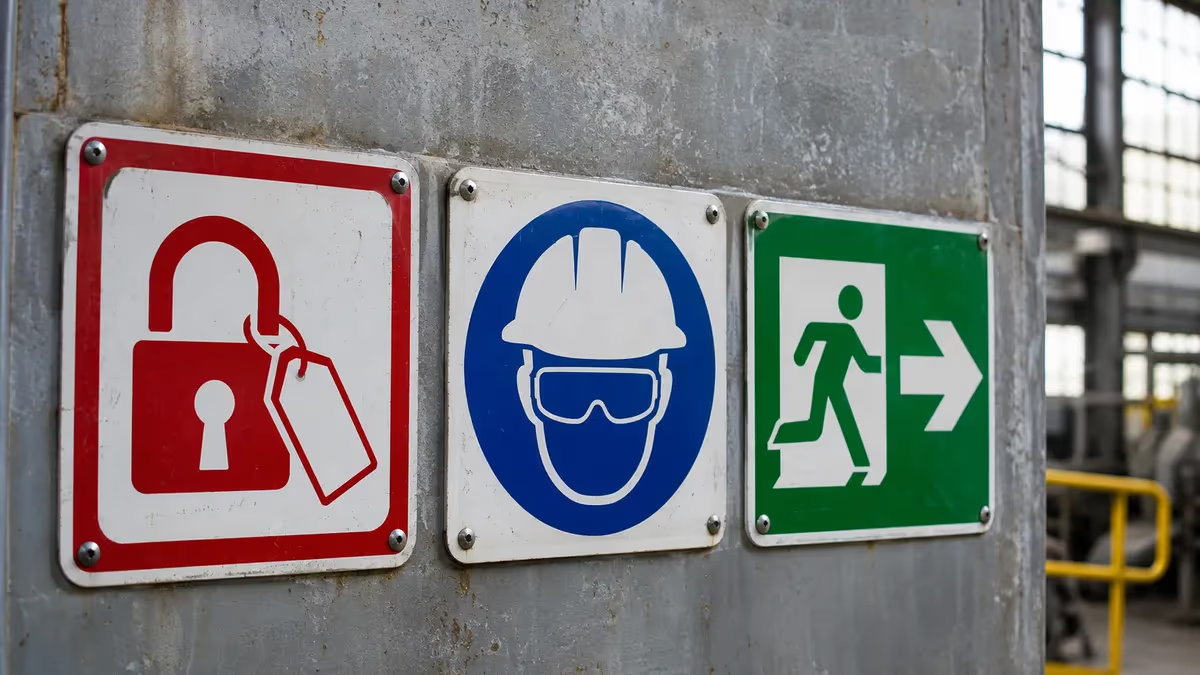
Can OSHA enforce vaccines? It is one of the most searched workplace-safety questions of recent years, and the answer is more nuanced than most headlines suggested. OSHA, the Occupational Safety and Health Administration, enforces the Occupational Safety and Health Act of 1970, but it can only enforce standards it has lawfully issued. This guide explains where that authority starts and stops, and how an OSHA establishment search lets you verify any employer's inspection history.
The short version is this: OSHA has no general power to order vaccination. In November 2021 it issued an Emergency Temporary Standard requiring employers with 100 or more employees to ensure workers were vaccinated or tested weekly. On January 13, 2022, the Supreme Court stayed that rule in NFIB v. OSHA, and OSHA withdrew it as an enforceable standard days later. Understanding why the Court acted reveals the real limits of agency power.
The Court reasoned that Congress gave OSHA authority to regulate occupational hazards, not to impose broad public-health measures that apply equally at home, at school, and at work. COVID-19, the majority said, is a universal risk rather than one tied specifically to the workplace. That distinction matters for every future rulemaking. A rule aimed at a hazard unique to a job, such as silica dust or fall exposure, stands on much firmer legal ground.
Still, the ruling did not strip OSHA of every tool. The agency can enforce existing standards, including the bloodborne pathogens standard at 29 CFR 1910.1030, which requires employers to offer hepatitis B vaccination at no cost to exposed employees within ten working days of assignment. Employees may decline by signing a declination form. So vaccination appears in OSHA law, but as a required offer for specific hazards, not a universal mandate.
Many readers arrive from another direction: they want to look up a specific company. That is where the OSHA establishment search comes in. The tool, hosted on osha.gov, lets anyone search inspection records by employer name, state, industry code, or inspection date. It reveals citations, penalties, and case status, which makes it valuable to job seekers, contractors, insurers, journalists, and crane operators evaluating a new site or general contractor.
Beyond vaccines and databases, this article covers the wider framework of osha general regulations: how standards are created, what the General Duty Clause demands, how inspections unfold, and what rights workers hold. Crane operators and riggers face the same legal structure as everyone else, plus the operator requirements in 29 CFR 1926 Subpart CC. Knowing the structure helps you answer exam questions and handle real jobsite situations with confidence.
Use the sections below as a study path. We begin with the legal sources of OSHA authority, then move to how enforcement actually works, the role of states, employer decisions about vaccination policy, and practical steps for using public data. Each section ends with action items you can apply immediately, and the quiz links let you test yourself on the compliance, inspection, and crane safety concepts most likely to appear on certification exams.
OSHA Vaccine Authority by the Numbers

Sources of OSHA Authority Over Workplace Health Rules
Congress required employers to provide a workplace free from recognized hazards and authorized OSHA to set and enforce standards. Every rule, citation, and inspection traces back to this statute, which is why courts examine its text whenever OSHA tries to expand its reach.
Section 6(c) lets OSHA skip normal rulemaking when workers face grave danger from a substance or hazard and an immediate rule is necessary. The 2021 vaccine-or-test rule used this route, and the Supreme Court found the statutory test was not met.
Section 5(a)(1) covers recognized serious hazards that no specific standard addresses. OSHA must prove the hazard, employer recognition, likelihood of serious harm, and a feasible fix. It has rarely been used to demand vaccination and would be difficult to stretch that far.
The bloodborne pathogens rule requires employers to offer hepatitis B vaccination to exposed workers at no cost. Other standards address respiratory protection, medical surveillance, and recordkeeping. These are narrow, hazard-specific rules that the courts have not questioned.
How OSHA Enforcement Works in Practice
OSHA enforcement begins with an inspection, and inspections follow a priority order. Imminent danger situations come first, followed by severe injury and fatality reports, worker complaints, referrals from other agencies, and programmed inspections of high-hazard industries such as construction and warehousing. Follow-up visits check whether previously cited hazards were corrected. Because resources are limited, with roughly 1,800 inspectors nationwide at federal and state levels, targeting decisions shape which employers ever see a compliance officer.
A typical inspection has three stages. The compliance officer presents credentials and holds an opening conference, then conducts a walkaround of the site with an employer representative and often an employee representative. A closing conference follows, where findings are discussed. Employers can demand a warrant before allowing entry, a right confirmed in Marshall v. Barlow's, Inc. in 1978, though refusing usually just delays the visit and invites closer scrutiny.
After the inspection, OSHA has six months from the date of a violation to issue a citation. Violations are classified as other-than-serious, serious, willful, repeat, or failure to abate. As of 2025, a serious violation carries a maximum penalty of about $16,550, while willful or repeat violations can reach $165,514 each. These figures are adjusted annually for inflation, so always confirm the current amounts on osha.gov before quoting them.
Employers who disagree with a citation have 15 working days from receipt to file a notice of contest with the Occupational Safety and Health Review Commission, an independent body. Many cases settle earlier at an informal conference with the area director, often reducing penalties or reclassifying violations in exchange for documented abatement. Missing the 15-day deadline makes the citation a final order, so employers treat that date as non-negotiable.
Recordkeeping and reporting rules operate alongside inspections. Under 29 CFR Part 1904, most employers with more than ten employees keep the OSHA 300 log, the 300A annual summary, and 301 incident reports, retaining them for five years. Employers must report a work-related fatality within eight hours, and an inpatient hospitalization, amputation, or loss of an eye within 24 hours. Failing to report on time is itself a citable violation.
Here is where vaccines connect to recordkeeping. OSHA has stated that if an employer requires vaccination as a condition of employment and a worker suffers an adverse reaction that meets general recording criteria, such as days away from work or medical treatment beyond first aid, the case is recordable. If vaccination is voluntary, the reaction generally is not. This is one of the few places where an employer's vaccine policy directly touches routine OSHA compliance.
All of this activity feeds the public record. Inspection results, citations, penalties, and abatement dates are entered into OSHA's Integrated Management Information System, which powers the establishment search tool. That means the enforcement process described above is not a black box. Anyone can later review which employers were inspected, what hazards were found, and how cases ended, which is exactly what makes the database such a useful research tool.
OSHA Establishment Search: Who Enforces What
Federal OSHA directly covers private-sector employers in states without an approved state plan, along with federal agencies and certain maritime and special industries. When you run an OSHA establishment search for a company in one of those states, you see inspections conducted by federal area offices, along with citations issued under 29 CFR 1910 for general industry or 29 CFR 1926 for construction. These records include inspection numbers, dates, and standards cited.
Federal OSHA's authority to act on vaccines is narrow. It can enforce the bloodborne pathogens standard's hepatitis B offer, and it can investigate complaints about hazards under the General Duty Clause. It cannot cite an employer for declining to mandate vaccines, or for failing to adopt a vaccine-or-test policy, because no such standard is currently in force. Searching a company's record will therefore never show a vaccine-mandate citation of that kind.

Should Employers Adopt Vaccine Requirements Without an OSHA Mandate?
- +Can reduce illness-related absences and keep critical crews staffed
- +May lower exposure risk in healthcare, lab, and congregate work settings
- +Supports customer or contract requirements that call for vaccinated staff
- +Documented policies show a good-faith effort under the General Duty Clause
- +Can reduce workers' compensation claims tied to preventable infections
- +Clear written rules give supervisors a consistent standard to apply
- −Requires handling religious and medical accommodation requests under federal law
- −Several states restrict or prohibit private employer vaccine requirements
- −Adverse reactions to a required vaccine may become OSHA-recordable injuries
- −May trigger union bargaining obligations or grievance disputes
- −Can reduce morale and increase turnover in tight labor markets
- −Administrative burden of tracking status and storing confidential records
OSHA Establishment Search Checklist for Employers and Workers
- ✓Open the OSHA establishment search page on osha.gov.
- ✓Enter the employer name, using a short version to catch variations.
- ✓Select the correct state and the full date range you want.
- ✓Filter by NAICS or SIC code to narrow similar company names.
- ✓Open each inspection number to read the violation details.
- ✓Note the citation type: serious, willful, repeat, or other.
- ✓Compare initial penalties with the current penalty after settlement.
- ✓Check whether the case is open, closed, or under contest.
- ✓Search parent companies and subsidiaries under their other names.
- ✓Cross-check state-plan agency sites for newer inspection records.
No Standard, No Citation
OSHA can only cite employers for violating a standard or the General Duty Clause. Since the 2021 vaccine-or-test rule was stayed and withdrawn, there is no OSHA standard requiring general workplace vaccination. Any vaccine requirement you encounter at work comes from your employer, a state or local rule, or another agency such as CMS.
Vaccines, Standards, and the Courts: What the Law Actually Says
To answer whether OSHA can enforce vaccines, start with how OSHA creates binding rules. Normally, the agency publishes a proposed standard, accepts public comments, holds hearings, and issues a final rule backed by findings of significant risk and technological feasibility. That process often takes years. The Emergency Temporary Standard shortcut exists for rare situations, and because it bypasses public input, courts review it with extra skepticism. This procedural context explains much of the 2022 outcome.
In NFIB v. OSHA, a divided Supreme Court granted a stay because challengers were likely to succeed on the merits. The majority held that OSHA's statute authorizes regulation of workplace hazards, not a sweeping vaccination mandate covering 84 million workers regardless of industry or job. The decision applied the major questions doctrine, which asks whether Congress clearly authorized an agency to make decisions of vast economic and political significance. Clear authorization was missing.
The same day, the Court reached the opposite result in Biden v. Missouri, allowing the Centers for Medicare and Medicaid Services to require vaccination for staff at facilities receiving Medicare or Medicaid funding. The difference was statutory: CMS has long regulated the health and safety of patients in those facilities, and vaccination fits that mission. The pairing of the two decisions shows that the question is always which agency, which statute, and which workforce, never simply whether vaccines are lawful.
After the stay, OSHA formally withdrew the ETS as an enforceable standard on January 26, 2022, and said it would not enforce the testing and vaccination provisions. The agency also continued work on a permanent healthcare rule for infectious disease, a separate effort from the general mandate. Employers who built compliance programs in late 2021 were left to decide whether to keep their policies voluntarily, and many did, particularly in healthcare and government contracting.
What about the General Duty Clause as a back door? In theory, OSHA could argue that a recognized hazard of infectious disease exposure requires feasible abatement, which might include vaccination. In practice, the agency would need to prove each element in front of the Review Commission and a court, and no vaccine-specific General Duty citation has become established precedent. Employers face far more realistic exposure from ordinary hazards: falls, struck-by incidents, electrical contact, and crane or rigging failures.
OSHA also addresses vaccination in guidance rather than regulation. Its materials on workplace infectious disease emphasize ventilation, hygiene, training, and personal protective equipment, and note that vaccination is one control among several. Guidance documents explain how the agency views compliance but do not carry the force of law. That distinction matters for exam preparation, because questions often ask whether something is an enforceable standard, an interpretation letter, or a recommended practice.
For practical purposes, remember three rules. First, OSHA enforces standards, not preferences, so a missing standard means no direct enforcement. Second, employer-imposed vaccine rules are governed mostly by employment, disability, religion, and state law rather than the OSH Act. Third, hazard-specific vaccination duties, such as hepatitis B for exposed healthcare and sanitation workers, remain fully enforceable. Keeping those three rules straight will resolve most vaccine-and-OSHA questions you meet on exams or the job.

Federal OSHA does not mandate vaccines, but state and local laws vary widely. Some states restrict private employers from requiring vaccination, while others allow it freely. Confirm current state law and your employer's written policy before acting on any general statement about vaccine requirements.
State Laws, Accommodations, and Crane Site Practice
Because OSHA does not mandate vaccines, the real rules for most employees come from elsewhere. Several states, including Texas, Florida, and Montana, have restricted private employers from requiring COVID-19 vaccination or from discriminating based on vaccination status, with varying exceptions for healthcare and federal contractors. Other states, such as New York and California, have allowed or encouraged requirements in certain settings. An employer operating in multiple states may need different policies for different sites.
Federal anti-discrimination law adds another layer. Under Title VII of the Civil Rights Act, employers must reasonably accommodate sincerely held religious beliefs unless doing so imposes more than a minimal cost, a standard the Supreme Court tightened in favor of employees in Groff v. DeJoy in 2023. Under the Americans with Disabilities Act, employers must consider reasonable accommodations for medical conditions. These obligations apply whether or not any OSHA rule exists, and the EEOC enforces them.
What does that look like on a construction or crane site? Imagine a general contractor with 150 employees and a subcontractor crane crew of eight. The general contractor adopts a vaccination requirement for all personnel on site, and the crane company must decide how to respond. The contractual requirement, not OSHA, creates the obligation. The subcontractor must evaluate accommodation requests, document decisions, and ensure the policy complies with applicable state law before enforcing it against its own workers.
Meanwhile, the safety duties OSHA does enforce on that same site remain unchanged. Under 29 CFR 1926 Subpart CC, employers must ensure crane operators are qualified or certified, usually through an accredited testing organization by crane type or by type and capacity, and must evaluate and document operator competence. Signal persons must be qualified, rigging must be inspected, and power line clearances must be maintained. These hazards cause fatalities far more often than infectious disease on most lift sites.
Workers' compensation is another practical issue. If an employer requires vaccination and an employee suffers a serious adverse reaction, workers' compensation may apply in some states, and OSHA recordkeeping may be triggered if the case meets criteria. Employers should consult counsel and their carrier before adopting a mandate, and should review how adverse events will be handled, documented, and reported. Clear procedures protect both the worker and the company from disputes later.
Retaliation protections also matter. Section 11(c) protects employees who raise safety complaints, including concerns about infectious disease controls, from being fired or disciplined for doing so. A worker who complains about inadequate ventilation, missing protective equipment, or unsafe crowding on a site is protected even if the employer has no vaccination policy at all. Employers should train supervisors to respond constructively, because a retaliation finding can cost more than the underlying hazard.
Finally, remember that policies change. Court decisions, state legislatures, and agency guidance have shifted repeatedly since 2021, and they may shift again. Build the habit of verifying the current rule on the agency's own website, whether you are studying for an exam or writing a company policy. Pair that habit with a regular OSHA establishment search of your own company and key partners, so you know what regulators see when they look at you.
Practical Tips and Final Prep Advice
Start your preparation by learning the vocabulary of OSHA law, because exam questions often hinge on a single word. Know the difference between a standard, a regulation, a directive, and an interpretation letter. Know that serious, willful, and repeat are classifications of violations, while imminent danger is a condition that triggers urgent inspection. Write each term on a flashcard with its definition and one real example, then review the cards for ten minutes every day.
Next, memorize the numbers that appear repeatedly. Eight hours to report a fatality. Twenty-four hours to report a hospitalization, amputation, or eye loss. Fifteen working days to contest a citation. Six months for OSHA to issue a citation after a violation. Thirty days to file a retaliation complaint. Five years to retain injury logs. A short numbers sheet pinned near your study area saves points on test day and prevents costly mistakes in the field.
Practice with the actual database. Spend thirty minutes running an OSHA establishment search on three companies you know, perhaps your employer, a local contractor, and a large national firm. For each, note how many inspections appear, which standards were cited most often, and how penalties changed after settlement. Reading real records teaches you which standards matter in practice, such as fall protection, hazard communication, and crane or rigging rules, better than any summary.
When studying vaccines specifically, build a simple decision tree. Ask first whether a hazard-specific OSHA standard applies, such as bloodborne pathogens. Then ask whether a state or local law governs the employer. Then ask whether anti-discrimination law requires accommodation. Finally ask whether the employer's contract or policy imposes the requirement. Walking a scenario through those four questions will keep you from the common error of assuming OSHA is the source of every workplace rule.
For crane operator candidates, connect the general regulations to the equipment. Review 29 CFR 1926 Subpart CC provisions on operator certification, assembly and disassembly, inspections, power line safety, and signal persons. Practice reading a load chart, calculating sling angles, and identifying when a lift becomes critical. Then take timed quizzes in each topic area, track your weakest category, and spend your next study session on that category before moving on.
Use a weekly rhythm to stay consistent. Early in the week, read one standard or guidance document and summarize it in five sentences. Midweek, take a practice quiz and review every wrong answer, writing down why the correct option is right. At the weekend, take a longer mixed set under time pressure. After three or four weeks of this cycle, most candidates see steady score improvements and noticeably better recall of regulatory details.
Finally, protect yourself on the job. Keep copies of training records, certifications, and inspection checklists. Report hazards in writing and keep a dated copy. If a supervisor asks you to operate beyond your qualification or ignore a safety rule, you have the right to refuse in narrow imminent-danger situations and to file a complaint with OSHA. Knowing the general regulations is not only exam preparation, it is practical protection for your career and your crew.
OSHA Questions and Answers
OSHA Establishment Search and Warehouse OSHA Requirements: A Complete Compliance Guide

OSHA Scaffolding Rules: Complete Guide to Construction Site Safety Standards and Compliance
OSHA (OSHA Certified Crane Operator) Test Guide

OSHA 1910 Crane Training Requirements: Complete Guide to Certification, Qualification, and Compliance
OSHA Outdoor Lighting Requirements: Foot-Candle Rules, Night Work, and Crane Site Compliance
How this page was made: written with AI tools and published by Nathan Beja, founder of Practice Test Geeks, who is responsible for its content. Exam facts are checked against the official sources listed below. Not reviewed by a subject-matter expert. Editorial policy
Sources & references
Exam facts on this page (fees, format, dates, passing scores) are checked against these official sources; the date is our last check. Editorial policy