
OSHA 1910 vs 1926: Understanding the Key Differences Between General Industry and Construction Standards
OSHA 1910 vs 1926 — learn which standard applies to your workplace, key differences, and how to stay compliant. ✅ Full 2026 guide.
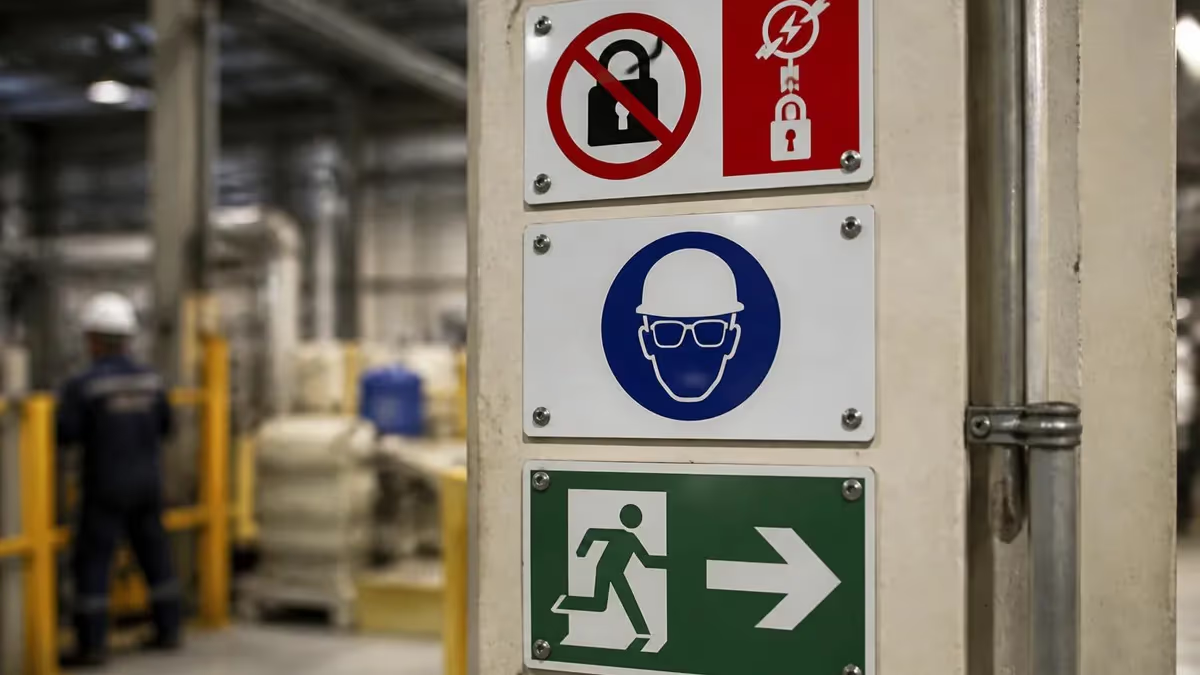
Understanding the difference between OSHA 1910 vs 1926 is one of the most fundamental skills any safety professional, supervisor, or worker can develop. These two parts of the Code of Federal Regulations govern workplace safety across the United States, but they apply to very different work environments. 29 CFR 1910 covers general industry — think manufacturing plants, warehouses, healthcare facilities, and retail operations — while 29 CFR 1926 is specifically designed for the construction industry, covering everything from excavation and scaffolding to electrical work and fall protection on job sites.
The distinction matters enormously in practice. If you are a safety officer at a factory, the standards in 1910 dictate your machine guarding requirements, your lockout/tagout procedures, and your hazard communication program. If you are a site superintendent building a new office tower, 1926 defines how you must protect workers from falls, how scaffolds must be erected and inspected, and how trenches must be shored. Applying the wrong standard — or not knowing which one applies — can result in OSHA citations, fines reaching tens of thousands of dollars per violation, and most importantly, preventable worker injuries or fatalities.
Many workers and employers are surprised to learn that the two standards sometimes address the same hazard but with different requirements. Fall protection is a classic example: under 1910, the general industry threshold for requiring fall protection is typically four feet in most situations, while under 1926, the construction threshold is six feet for most work activities. This seemingly small difference can have major compliance implications if you are unsure which standard governs your operations. Knowing the correct standard from the start saves both time and money.
It is also worth noting that some work environments blur the line between the two standards. Maintenance workers at a construction company may be performing tasks that fall under general industry rules rather than construction rules. Renovation work inside an occupied building can sometimes trigger questions about which standard applies. OSHA has issued letters of interpretation over the years to clarify many of these situations, and understanding the foundational differences between 1910 and 1926 gives you the analytical framework to make these determinations confidently.
For workers pursuing their OSHA 10-hour or 30-hour training cards, the distinction between these two standards is central to the curriculum. The OSHA 10 and 30 courses are offered in separate construction and general industry versions specifically because the regulatory requirements differ so substantially. Choosing the correct version of your OSHA training is not just a formality — it ensures you learn the regulations that actually govern your daily work. You can explore the relevant osha 1910 vs 1926 equipment requirements as part of your broader compliance strategy.
This article provides a comprehensive comparison of OSHA 1910 and 1926, covering their scope, key regulatory differences, how to determine which applies to your workplace, and what safety professionals need to know to maintain compliance under either standard. Whether you are preparing for an OSHA certification exam, conducting a workplace safety audit, or simply trying to understand which rules apply to your job site, this guide gives you the factual foundation you need to navigate both standards with confidence and clarity.
Free OSHA Safety Certificate Study Tools
Interactive OSHA Safety Certificate resources on PracticeTestGeeks, free to start:
- OSHA Safety Certificate flashcards — review key terms and concepts card by card
- OSHA Safety Certificate study guide — topic-by-topic overview of what the exam covers
- OSHA Safety Certificate cheat sheet — one-page printable summary for last-minute review
OSHA 1910 vs 1926 by the Numbers

Scope and Applicability of Each Standard
Applies to manufacturing, warehousing, healthcare, retail, utilities, and any permanent workplace that is not construction, agriculture, or maritime. Covers everything from machine guarding and electrical safety to hazardous chemicals and emergency action plans.
Applies to all construction, alteration, and repair work including painting, decorating, and demolition. Governs temporary job sites where structures are being built or modified, addressing scaffolding, excavation, crane operations, and more.
A separate standard for ship repair, shipbuilding, and ship-breaking operations. Often overlooked, but important for maritime employers who may mistakenly apply 1910 or 1926 to shipyard environments instead.
Maintenance staff at construction firms, demolition workers inside occupied buildings, and utility workers on active construction sites may face overlapping applicability. OSHA letters of interpretation help resolve ambiguous scenarios when the primary standard is unclear.
The most significant regulatory differences between OSHA 1910 and 1926 emerge when you examine specific hazard categories side by side. Take fall protection as the starting point: 29 CFR 1926 Subpart M requires fall protection for construction workers whenever they are working at heights of six feet or more above a lower level.
This standard mandates guardrail systems, safety net systems, or personal fall arrest systems depending on the specific work activity. In contrast, 29 CFR 1910 Subpart D sets a four-foot threshold for most general industry walking-working surfaces, with additional specific requirements for platforms, runways, and elevated work stations used in manufacturing and warehouse settings.
Scaffolding is another area where the two standards diverge significantly. The construction scaffolding rules under 29 CFR 1926 Subpart L are extensive and detailed, covering everything from the load-bearing capacity requirements for planking to the specific training obligations for scaffold erectors, users, and dismantlers. General industry workers who occasionally use scaffolding — say, maintenance technicians painting the interior of a factory — are still covered by the construction scaffolding standard in most interpretations, which underscores why knowing the standards is critical even for non-construction employers.
Electrical safety presents another clear divergence. OSHA 1910 Subpart S covers electrical safety for general industry, including wiring design, protection of employees working on or near electrical equipment, and lockout/tagout procedures. Construction electrical requirements are found in 1926 Subpart K, which addresses temporary power, grounding of equipment, and protection against electrical hazards specific to job sites where wiring configurations change constantly as the project progresses. The two sets of electrical rules share the same fundamental principles — preventing electrocution and arc flash — but differ in their specific technical requirements to accommodate the unique conditions of each work environment.
Hazard Communication, also known as HazCom, is one area where both 1910 and 1926 essentially reference the same underlying standard. OSHA's HazCom rule under 29 CFR 1910.1200 applies to general industry, and construction employers must also comply with it under 29 CFR 1926.59, which simply incorporates 1910.1200 by reference. This means that regardless of whether your employer builds buildings or operates them, the Safety Data Sheet requirements, labeling rules, and employee training obligations are essentially identical under the GHS-aligned HazCom standard that took full effect in 2016.
Personal Protective Equipment requirements differ between the two standards in scope and emphasis, though both demand that employers conduct hazard assessments and provide appropriate PPE at no cost to employees. General industry PPE rules under 1910 Subpart I are broad and apply to a wide range of workplaces, while 1926 Subpart E addresses PPE in the context of construction hazards — placing particular emphasis on head protection from falling objects, hearing protection in high-noise environments created by construction equipment, and eye and face protection during welding, cutting, and concrete work.
Respirator requirements under 1910.134 apply to both industries, as construction employers must meet the same medical evaluation, fit-testing, and training requirements as any other employer when respiratory hazards are present.
Excavation and trenching rules under 29 CFR 1926 Subpart P are among the most unique provisions of the construction standard, with no real analog in general industry. These regulations define soil classification systems, specify the slope angles and support systems required to prevent cave-ins, and mandate daily inspections by a competent person before workers enter any excavation deeper than five feet.
Cave-in fatalities remain one of the leading causes of construction deaths, and the detailed requirements in Subpart P reflect OSHA's effort to address this particularly deadly hazard. General industry workers essentially never encounter excavation requirements under 1910 because creating trenches and excavations is, by definition, construction work.
Record-keeping requirements under 29 CFR 1904 apply to both general industry and construction employers equally, requiring written logs of work-related injuries and illnesses, annual summaries, and timely reporting of fatalities and severe injuries to OSHA. This is one area where the distinction between 1910 and 1926 is irrelevant — all covered employers regardless of industry must maintain OSHA 300 logs, complete 301 incident reports, and post the 300A summary from February 1 through April 30 each year.
Fall Protection, PPE, and Hazard Communication: 1910 vs 1926 Compared
Under 29 CFR 1926 Subpart M, construction employers must provide fall protection whenever workers are exposed to fall hazards of six feet or greater. Acceptable methods include conventional fall protection systems such as guardrails, personal fall arrest systems using harnesses and lanyards, and safety nets. Leading edges, unprotected floor openings, ramps, and walkways are all specifically addressed, with the standard requiring employers to develop and implement a written fall protection plan when conventional methods are infeasible.
General industry fall protection under 29 CFR 1910 Subpart D triggers at four feet in most walking-working surface scenarios, with specific requirements for scaffolds, elevated platforms, and aerial lifts. The standard was significantly updated in 2017 to modernize requirements for ladders, dockboards, and rope descent systems. Unlike construction, general industry employers have more flexibility in selecting from a broader menu of fall protection options, including fall restraint systems that are not permitted in all construction scenarios. Both standards require training for workers exposed to fall hazards.

1910 General Industry vs 1926 Construction: Regulatory Advantages and Challenges
- +1910 offers broader flexibility in PPE and fall protection method selection compared to construction rules
- +1926 provides highly specific guidance for common construction hazards like excavations and scaffolding, reducing ambiguity
- +Both standards share unified HazCom requirements, simplifying chemical safety training across industries
- +1910 covers a wider range of workplace types, giving general industry employers more comprehensive regulatory guidance
- +1926's competent person requirements create clear accountability and improve site safety oversight on construction projects
- +Both standards are regularly updated through OSHA rulemaking, keeping requirements aligned with modern hazards and technology
- −The six-foot vs four-foot fall protection threshold creates confusion for employers whose workers move between construction and general industry settings
- −1926 does not address many facility-based hazards, leaving construction companies with ancillary offices or shops in a regulatory gray area
- −Overlapping jurisdiction between 1910 and 1926 for maintenance workers creates compliance uncertainty without clear OSHA guidance for every scenario
- −1910's broader scope means more regulations to track and comply with for general industry employers
- −1926's job-site-specific rules can be difficult to apply consistently as project conditions change daily
- −State-plan OSHA programs may adopt standards stricter than federal 1910 or 1926, adding another layer of complexity for multi-state employers
OSHA 1910 vs 1926 Compliance Checklist for Safety Professionals
- ✓Identify your primary industry classification (general industry vs construction) before selecting which standard applies.
- ✓Review OSHA letters of interpretation for any work activities that could fall under either 1910 or 1926.
- ✓Establish your fall protection program based on the correct height threshold — four feet (1910) or six feet (1926).
- ✓Conduct a written PPE hazard assessment and document it as required under both 1910.132 and 1926.95.
- ✓Maintain a complete chemical inventory and ensure Safety Data Sheets are accessible to all employees on every shift.
- ✓Designate competent persons for all construction operations requiring them, including excavation, scaffolding, and fall protection.
- ✓Ensure all employees receive training specific to the standard governing their work — OSHA 10 or 30 in the correct industry track.
- ✓Conduct regular inspections of scaffolding, excavations, and walking-working surfaces per the applicable standard's frequency requirements.
- ✓Update your written safety programs (lockout/tagout, respiratory protection, HazCom) whenever OSHA issues final rules amending 1910 or 1926.
- ✓Record all work-related injuries and illnesses on OSHA 300 logs and report fatalities and amputations within the required timeframes.
The Correct Standard Determines Your Entire Compliance Framework
Applying the wrong OSHA standard is not just a paperwork error — it means your fall protection thresholds, scaffolding inspection intervals, and PPE requirements may all be incorrect. Always confirm which CFR part governs your specific operations before writing your safety program, conducting inspections, or selecting PPE. When in doubt, consult an OSHA area office or a qualified safety professional who can review your specific work activities and workplace conditions.
Training and certification requirements differ meaningfully between the two standards, and understanding these differences is essential for safety professionals managing compliance programs. Under 29 CFR 1926, OSHA's construction training requirements frequently reference the concept of a competent person — an individual who is capable of identifying existing and predictable hazards in the surroundings or working conditions that are unsanitary, hazardous, or dangerous to employees, and who has authority to take prompt corrective measures to eliminate them. This designation appears throughout 1926, covering everything from scaffold inspections to excavation monitoring to fall protection planning.
The competent person requirement in construction reflects the dynamic nature of job sites, where conditions change daily as structures rise and project phases progress. A single job site might require multiple competent persons: one designated for scaffolding, another for excavation and trenching, and a third for crane and rigging operations. Each competent person must have the specific knowledge and authority relevant to their designated hazard area. Employers must be able to demonstrate through training records and site observations that designated competent persons have both the knowledge and the practical authority to stop unsafe work — not just identify it.
General industry training requirements under 1910, while less centralized around a single competent-person concept, are no less demanding in aggregate. Specific 1910 standards each carry their own training mandates: lockout/tagout under 1910.147 requires authorized and affected employee training; confined space entry under 1910.146 requires training for entrants, attendants, and entry supervisors; and powered industrial truck operation under 1910.178 requires formal evaluation-based training every three years or after an observed unsafe act.
The cumulative training burden under 1910 for a typical manufacturing facility can be substantial, often requiring a dedicated safety training calendar to track renewal deadlines across a dozen or more specific standards.
OSHA's 10-hour and 30-hour training programs, offered through OSHA Training Institute Education Centers and authorized outreach trainers, are available in two distinct versions: construction and general industry.
These courses are designed specifically around the relevant standard — a construction OSHA 10 course covers 1926 topics like scaffolding, fall protection, struck-by and caught-between hazards, and electrical safety on job sites, while a general industry OSHA 10 covers 1910 topics like machine guarding, lockout/tagout, and walking-working surfaces. Choosing the correct course is not just an administrative decision — it determines whether workers develop the hazard recognition skills relevant to their actual daily exposures.
State-plan OSHA programs add another dimension to the training landscape. Twenty-two states and two U.S. territories operate their own OSHA-approved state plans, which must be at least as effective as federal OSHA standards. Some state plans, such as California's Cal/OSHA program, impose additional training requirements beyond the federal baseline.
For example, Cal/OSHA requires specific heat illness prevention training for outdoor workers and imposes additional requirements for lead and silica exposure. Employers operating in state-plan states must track both federal and state requirements under the applicable standard — whether that is a state analog to 1910 or 1926 — and ensure their training programs meet the higher of the two.
Digital training platforms and online OSHA outreach courses have expanded access to both 1910 and 1926 training significantly in recent years. While OSHA has authorized online delivery of its 10-hour and 30-hour programs, the agency maintains that online training is not appropriate for all required OSHA training — for example, hands-on respirator fit-testing and certain first aid and CPR components cannot be conducted online. Safety managers should carefully review which training elements can be delivered virtually and which require in-person, hands-on components to ensure full compliance with the applicable standard's training requirements.
Documentation of training is equally important under both 1910 and 1926. OSHA inspectors routinely request training records during inspections, and the inability to produce written documentation of required training — including the date of training, the topics covered, the names and signatures of trainees, and the name and qualifications of the trainer — can result in citations even when training was actually conducted.
Best practice is to maintain training records for the duration of employment and for at least one year after an employee leaves, ensuring records are available if a former employee files a complaint or is involved in litigation related to a workplace injury.
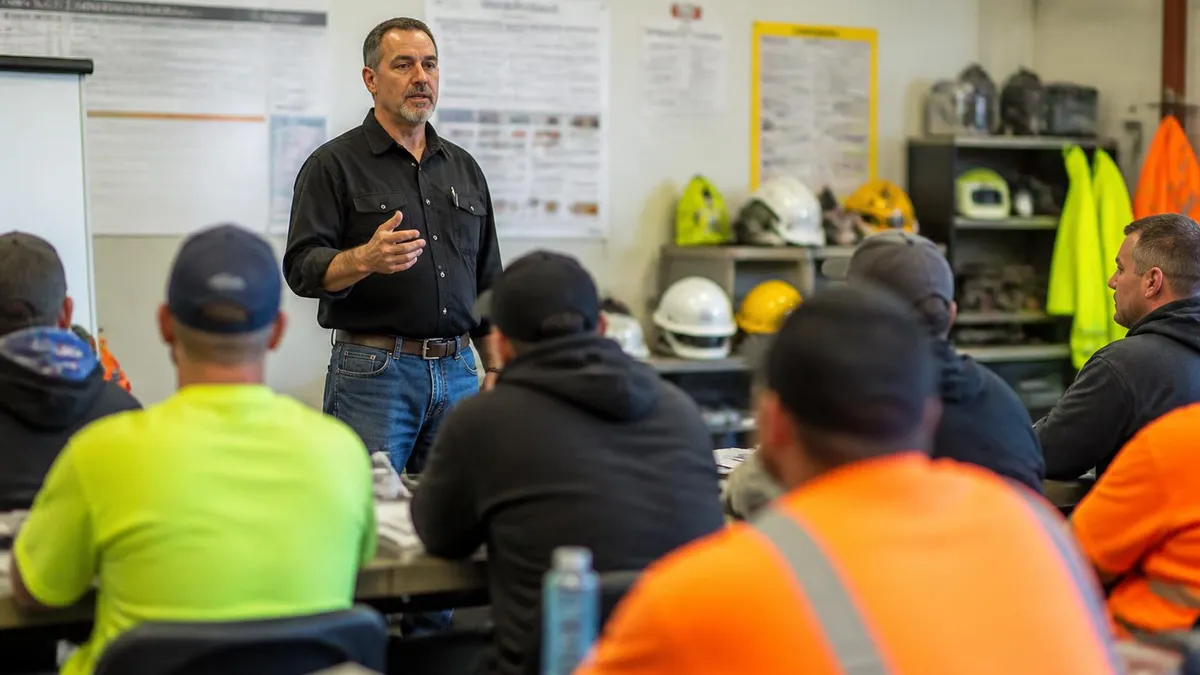
Completing the OSHA 10-hour or 30-hour course in the wrong industry track — for example, taking general industry training when you work in construction — means you may not learn the specific standards that govern your actual job site hazards. OSHA outreach cards identify the industry track completed. Always select the construction track if you work on active construction sites governed by 29 CFR 1926, and the general industry track if you work in manufacturing, warehousing, or other permanent facilities covered by 29 CFR 1910.
Choosing the right standard for your workplace requires a methodical approach, and OSHA has established clear guidance for making this determination. The primary question is straightforward: is the work being performed construction, alteration, repair, or demolition? If yes, 29 CFR 1926 applies. If the work involves operating a permanent facility — manufacturing products, providing healthcare, running a distribution center, or similar ongoing operations — then 29 CFR 1910 is the governing standard. The challenge arises in hybrid situations where both types of work occur at the same location or are performed by the same workforce.
Consider a scenario common in manufacturing: a plant shuts down for a one-week maintenance outage during which workers repair equipment, replace worn components, and make modifications to production lines. The maintenance work itself, if it involves altering or repairing structures, may trigger 1926 requirements. However, workers cleaning equipment, lubricating machinery, or replacing consumable parts without altering fixed structures are performing general industry maintenance covered by 1910. A competent safety manager must evaluate each task category during a maintenance outage independently, applying the correct standard to each type of work and ensuring workers are trained and protected accordingly.
OSHA's multi-employer worksite policy, which applies primarily in construction, adds complexity for general contractors managing subcontractors. Under 1926, creating employers, exposing employers, correcting employers, and controlling employers all have specific compliance obligations. A general contractor who controls the job site can receive OSHA citations for hazards created by subcontractors, even if the GC's own workers were not directly exposed. This multi-employer framework does not exist in the same form under 1910, where the focus is typically on the employer directly controlling the worker's activities and environment rather than the site-level controlling employer concept central to construction enforcement.
Geographic location also affects which version of OSHA rules applies. Federal OSHA enforces both 1910 and 1926 in states without approved state plans. In the 22 state-plan states and two territories, the state agency enforces its own standards, which parallel 1910 and 1926 but may differ in specific requirements.
California, for instance, enforces Title 8 of the California Code of Regulations rather than 29 CFR directly, though the structure mirrors the federal framework. Multi-state employers must track which states have state plans and ensure their safety programs meet the requirements of whichever jurisdiction — federal or state — has enforcement authority at each location.
Industry associations and OSHA consultation services are valuable resources when determining which standard applies to a specific operation. OSHA's free on-site consultation program, available through state-level partners, provides confidential safety and health reviews for small and medium-sized businesses without the threat of citations or penalties. A consultation visit can help an employer correctly identify the applicable standard, evaluate their compliance status, and prioritize improvements. This service is completely separate from OSHA enforcement, and requesting a consultation cannot be used against an employer in an enforcement action, making it a low-risk way to get clarity on regulatory applicability questions.
When enforcement actions do occur, OSHA's Area Offices investigate complaints and conduct inspections under the authority of whichever standard applies to the cited employer's operations. If an employer believes OSHA cited the wrong standard or misapplied a regulation, they have the right to contest the citation before the Occupational Safety and Health Review Commission within 15 working days of receiving the citation.
Legal challenges to OSHA citations on grounds of standard applicability — arguing that 1910 rather than 1926 should apply, or vice versa — have been litigated successfully in some cases, reinforcing why understanding the distinction between the two standards matters not just for proactive compliance but also for effectively defending against enforcement actions when they occur.
Ultimately, the best approach to navigating OSHA 1910 vs 1926 is to build a strong foundational understanding of both standards, know the specific provisions most relevant to your industry and operations, and develop a compliance management system that flags upcoming regulatory changes. OSHA regularly amends both 1910 and 1926 through the federal rulemaking process, and staying current with these changes — whether through OSHA's email notification system, industry association updates, or a qualified safety consultant — is a non-negotiable part of effective compliance program management in any industry.
Putting your knowledge of OSHA 1910 and 1926 into practice requires more than memorizing threshold numbers and subpart names. The most effective safety professionals approach compliance as a dynamic, ongoing process rather than a one-time checklist exercise. Start by conducting a thorough analysis of every type of work activity performed in your workplace, categorizing each by the standard that governs it. This activity-based compliance mapping is the foundation of any well-structured safety program and helps you identify gaps where current practices may not align with regulatory requirements under either standard.
For construction employers, the competent person designation is one of the most practical compliance tools available. Identify employees who have the education, training, and experience needed to serve as competent persons for the hazard areas most relevant to your projects. Invest in their development through formal training courses, manufacturer certification programs, and hands-on mentorship from experienced safety professionals.
Document their qualifications in writing and include their designation as competent persons in your safety plan for each project. Auditing whether designated competent persons are actually performing their required inspections and observations — not just carrying the title — is a key oversight function for safety managers on construction sites.
For general industry employers, the priority is often building a comprehensive written safety program library that covers every 1910 standard applicable to your operations. Core programs typically include hazard communication, lockout/tagout, emergency action plan, personal protective equipment, and any specific programs required by the chemicals, processes, or equipment present at your facility. Each written program should be reviewed at least annually, updated whenever OSHA issues final rules affecting the covered topic, and immediately revised if a near-miss, injury, or inspection reveals a gap between the written program and actual workplace conditions.
Cross-training workers on both 1910 and 1926 concepts is valuable in industries where the same workforce might perform both construction-type maintenance and ongoing operations. Electricians who both maintain equipment under 1910.147 lockout/tagout rules and occasionally work on electrical construction projects under 1926 Subpart K benefit from understanding both frameworks. Safety briefings that explicitly note which standard applies to the day's specific tasks — and why — help workers internalize the regulatory distinctions rather than treating safety rules as arbitrary requirements from above.
Mock inspections conducted by internal safety teams or external consultants are one of the most effective tools for identifying compliance gaps before OSHA does. Structure your mock inspection to evaluate compliance with the specific standard governing each area of your facility or job site. Use OSHA's Field Operations Manual and the applicable CPL (Compliance Policy Letter) directives as guides for what inspectors look for when evaluating 1910 or 1926 compliance. Documenting findings, assigning corrective actions, and tracking completion demonstrates good faith compliance efforts that can be valuable in any subsequent enforcement interaction.
Incident investigation procedures should also reflect which standard governs the work where an injury or near-miss occurred. A construction fall incident must be investigated through the lens of 1926 Subpart M requirements — was fall protection provided, was it the correct type, was it properly inspected, and was the worker trained? A machine amputation at a general industry facility must be investigated through the lens of 1910 Subpart O machine guarding requirements. The applicable standard defines the regulatory expectation against which the employer's actual conditions are measured, making it the essential reference point for every root cause analysis.
Finally, never underestimate the value of building a relationship with OSHA's compliance assistance specialists and consultation program staff before an inspection occurs. These resources exist specifically to help employers understand and comply with 1910 and 1926 requirements proactively.
Attending OSHA outreach events, participating in OSHA's Voluntary Protection Programs, and staying connected with local Area Office announcements about enforcement priorities in your industry all contribute to a compliance culture that goes beyond minimum requirements. The goal of both 1910 and 1926 is the same: ensuring that every worker returns home safely at the end of every shift. Understanding which standard governs your workplace is the essential first step toward achieving that goal every day.
Sample OSHA Safety Certificate Practice Questions
Try these questions from our free OSHA Safety Certificate practice tests. The correct answer and an explanation follow each question.
An employer is setting up a scaffold for general industry use. Which of the following OSHA standards must they comply with for the design, construction, and use of the scaffold?
- A. The requirements in 29 CFR 1910 Subpart D
- B. The manufacturer's recommendations only
- C. The requirements in 29 CFR 1926 Subpart L (Construction)
- D. The ANSI A10.8 scaffolding standard
Answer: C. The requirements in 29 CFR 1926 Subpart L (Construction)
OSHA's standard for Walking-Working Surfaces in general industry, 29 CFR 1910.27(a), explicitly states that scaffolds used in general industry must meet the requirements of the construction industry standards found in 29 CFR 1926, Subpart L.
What is the minimum height at which fall protection must be provided for workers in general industry under OSHA standards?
- A. 4 feet
- B. 6 feet
- C. 8 feet
- D. 10 feet
Answer: A. 4 feet
OSHA requires fall protection at 4 feet in general industry workplaces.
What is the minimum height at which OSHA's fall protection standard for the construction industry requires protective systems for workers on walking/working surfaces?
- A. 4 feet
- B. 6 feet
- C. 8 feet
- D. 10 feet
Answer: B. 6 feet
OSHA's construction standard (29 CFR 1926.502) requires fall protection — such as guardrails, safety nets, or personal fall arrest systems — at heights of 6 feet or more above a lower level.
Which OSHA standard specifically covers PPE requirements for general industry?
- A. 29 CFR 1926.100
- B. 29 CFR 1910.132
- C. 29 CFR 1904.7
- D. 29 CFR 1915.152
Answer: B. 29 CFR 1910.132
29 CFR 1910.132 establishes the general requirements for PPE in general industry workplaces, including hazard assessment and equipment selection.
OSHA Questions and Answers

OSHA Approved Safety Glasses: Complete 2026 Guide to ANSI Z87.1 Eye Protection Standards, Selection, and Workplace Compliance

OSHA Lightning Safety: Standards, Rules & Outdoor Worker Protection Guide for 2026

Is OSHA a Government Agency? The Federal Body Behind US Workplace Safety

How to Get OSHA Certified: Complete 2026 Guide to Training, Cards & Compliance

OSHA 10 Test Answers: Complete Study Guide & Practice Questions for 2026
About the Author

Certified Safety Professional & OSHA Compliance Expert
Indiana University of Pennsylvania Safety SciencesDr. William Foster holds a PhD in Safety Science from Indiana University of Pennsylvania and is a Certified Safety Professional (CSP) and Certified Hazardous Materials Manager. With 20 years of occupational health and safety management experience across construction, manufacturing, and chemical industries, he coaches safety professionals through OSHA certification, CSP, CHST, and safety management licensing programs.
Join the Discussion
Connect with other students preparing for this exam. Share tips, ask questions, and get advice from people who have been there.
View discussion (8 replies)