

OFA Practice Test
Updated October 2026Facts verified Oct 25, 2026 against WorkSafeBC
Emergencies can strike at any moment—whether it's a minor injury on a construction site or a sudden cardiac arrest in a corporate office. Quick and competent first aid response often determines whether an injury becomes fatal or manageable. For employers and workers alike, Occupational First Aid Certification is a vital component of workplace safety and legal compliance. Practice with the free Occupational First Aid Certification practice test on PracticeTestGeeks (9 questions with answer explanations).
This certification equips individuals with the knowledge and skills necessary to respond effectively to injuries and health emergencies in occupational settings. Recognized by health and labor authorities worldwide, Occupational First Aid Certification not only saves lives but also minimizes the impact of workplace accidents and reduces downtime.
- Intermediate first aid, which replaced OFA Level 2, is a two-day course for initial certification, down from five days.[1]
- With a valid advanced first aid certificate and a CPR/AED certificate from the past six months, an attendant can challenge the exam, which is the final 14 hours of the full course.[2]
- BC workplace first aid certificates are valid for three years.[2]
- An advanced first aid certificate that is still valid can be renewed with a 35-hour refresher course through an approved training provider.[2]
- To renew a basic first aid, intermediate first aid or transportation endorsement certificate in BC, you must take the course again.[2]
- To receive a BC workplace first aid certificate (formerly OFA), you must attend 100% of the course and pass written and practical exams.[2]
- No previous experience is necessary for the basic, intermediate or advanced first aid courses; the transportation endorsement requires a valid basic or intermediate certificate.[2]
Numbers in brackets link to the official sources listed under Sources & last verified. Dates that have passed are removed automatically.
OFA Exam at a Glance
| Item | Detail | Source · Verified |
|---|---|---|
| Number of questions (Intermediate first aid (formerly OFA Level 2)) | 2-day course (down from 5-day OFA 2)[1] | WorkSafeBC · Oct 25, 2026 |
| Retake policy (Advanced first aid (formerly OFA Level 3)) | Challenge exam = final 14 hours of the course; needs valid certificate and CPR/AED within 6 months[2] | WorkSafeBC · Oct 25, 2026 |
| Validity | 3 years[2] | WorkSafeBC · Oct 25, 2026 |
| Renewal (Advanced first aid (formerly OFA Level 3)) | 35-hour refresher while certificate still valid; full course if expired[2] | WorkSafeBC · Oct 25, 2026 |
| Renewal (Basic / Intermediate / Transportation endorsement) | Retake the full course[2] | WorkSafeBC · Oct 25, 2026 |
| Delivery | In-person course; 100% attendance, written and practical exams[2] | WorkSafeBC · Oct 25, 2026 |
| Eligibility | No previous experience necessary for basic, intermediate and advanced courses[2] | WorkSafeBC · Oct 25, 2026 |
What changed for OFA in 2026
- Oct 25, 2026: Delivery changed to In-person course; 100% attendance, written and practical exams (previously In-person course with written and practical exams; 100% attendance required).[2]
- Oct 25, 2026: Eligibility changed to No previous experience necessary for basic, intermediate and advanced courses (previously No previous experience necessary (basic, intermediate, advanced)).[2]
- Oct 25, 2026: Renewal (Advanced first aid (formerly OFA Level 3)) changed to 35-hour refresher while certificate still valid; full course if expired (previously 35-hour refresher while still valid).[2]
- Oct 25, 2026: Retake policy (Advanced first aid (formerly OFA Level 3)) changed to Challenge exam = final 14 hours of the course; needs valid certificate and CPR/AED within 6 months (previously Challenge exam = final 14 hours of the course (needs CPR/AED within 6 months)).[2]
- Oct 25, 2026: Other (update 2027-11-01) changed to Level 1, 2 and 3 first aid certificates issued before November 1, 2024 count as basic, intermediate or advanced only until their natural expiry, up to November 1, 2027. (previously Old OFA Level 1, 2 and 3 certificates issued before November 1, 2024 count as basic, intermediate and advanced only until they expire, and no later than November 1, 2027. After that, every attendant needs a CSA-aligned certificate.).[1]
Free Occupational First Aid Certification Study Tools
Interactive Occupational First Aid Certification resources on PracticeTestGeeks, free to start:
- OFA Emergency Response & Scene Assessment — 9 questions with answer explanations
- Occupational First Aid Certification flashcards — review key terms and concepts card by card
- Occupational First Aid Certification study guide — topic-by-topic overview of what the exam covers
- Occupational First Aid Certification cheat sheet — one-page printable summary for last-minute review
According to WorkSafeBC, “Intermediate first aid courses will be two days in duration for initial certification.”[1]
OFA Practice Test Questions
Prepare for the OFA - Occupational First Aid Certification exam with our free practice test modules. Each quiz covers key topics to help you pass on your first try.
OFA Clinical Procedures & Techniques
OFA Exam Questions covering Clinical Procedures & Techniques. Master OFA Test concepts for certification prep.
OFA CPR Techniques & Automated External De...
Free OFA Practice Test featuring CPR Techniques & Automated External Defibrillation (AED). Improve your OFA Exam score with mock test prep.
OFA Documentation & Legal Standards
OFA Mock Exam on Documentation & Legal Standards. OFA Study Guide questions to pass on your first try.
OFA Emergency Response & Scene Assessment
OFA Test Prep for Emergency Response & Scene Assessment. Practice OFA Quiz questions and boost your score.
OFA Injury Management & Workplace Safety P...
OFA Questions and Answers on Injury Management & Workplace Safety Procedures. Free OFA practice for exam readiness.
OFA Environmental & Toxicological Emergencies
OFA Mock Test covering OFA Environmental & Toxicological Emergencies. Online OFA Test practice with instant feedback.
OFA Musculoskeletal Injuries & Fracture Ma...
Free OFA Quiz on OFA Musculoskeletal Injuries & Fracture Management. OFA Exam prep questions with detailed explanations.
OFA Patient Assessment & Care Planning
OFA Practice Questions for Patient Assessment & Care Planning. Build confidence for your OFA certification exam.
OFA Respiratory Emergencies & Airway Manag...
OFA Test Online for Respiratory Emergencies & Airway Management. Free practice with instant results and feedback.
Worked examples: how to reason through OFA questions
These are practice questions written for this site, not questions from the real exam. Each explanation shows why the right answer is right and why the others are wrong.
Example 1
Question: What is the recommended first action when a worker dislocates their shoulder on the job?
- Attempt to manually relocate the shoulder immediately
- Immobilize the arm in the position found and arrange transport to medical care
- Apply ice and send the worker home
- Have the worker perform arm circles to reduce the dislocation
Answer: B. Immobilize the arm in the position found and arrange transport to medical care
Explanation:
The correct answer is to immobilize the arm in the position found and arrange transport to medical care. A dislocated joint can damage nearby nerves and blood vessels, and a responder cannot see what is happening inside it. Supporting the arm as it lies and getting the worker to proper care is the safe choice.
Attempting to relocate the shoulder is wrong because forcing a joint can make the injury worse, and relocation is outside what a first aid responder should try. Ice and sending the worker home is wrong because it skips both immobilization and medical assessment. Arm circles are wrong because moving the joint through its range can cause further damage and pain.
The rule to remember: for a suspected dislocation or fracture, support the limb as found, do not try to put it back, and get the person to medical care.
Example 2
Question: A victim is found face-down and unresponsive. Before beginning CPR, the rescuer should:
- Begin compressions with the victim prone
- Roll the victim onto their back as a unit while protecting the spine when possible
- Check for breathing without moving the victim
- Call for help and wait for EMS to reposition the victim
Answer: B. Roll the victim onto their back as a unit while protecting the spine when possible
Explanation:
The correct answer is to roll the victim onto their back as a unit while protecting the spine when possible. Effective chest compressions need the person lying face up on a firm surface, so a face-down victim has to be turned before CPR can start. Moving the head, neck and body together limits twisting of the spine.
Beginning compressions with the victim prone is wrong because compressions on the back do not work properly. Checking for breathing without moving the victim is wrong because you cannot assess the airway or start CPR properly in that position. Calling for help and waiting for EMS to reposition the victim is wrong because delay costs time the person may not have. Calling for help is still important, but it should not replace turning them.
The rule to remember: position first, then assess and start CPR, protecting the spine as far as the situation allows.
Example 3
Question: What role does calibration play in maintaining technical accuracy for Occupational First Aid Certification professionals?
- It is only necessary for new equipment
- It ensures instruments produce accurate, consistent results over time
- It is optional for advanced professionals
- It only matters during inspections
Answer: B. It ensures instruments produce accurate, consistent results over time
Explanation:
The correct answer is that calibration ensures instruments produce accurate, consistent results over time. Instruments drift with use, handling and age, so checking them against a known standard keeps readings trustworthy. Decisions made from those readings are only as reliable as the equipment.
Saying calibration is only necessary for new equipment is wrong because wear and drift happen later, not just at purchase. Calling it optional for advanced professionals is wrong because experience does not stop an instrument from drifting. Saying it only matters during inspections is wrong because accuracy matters every time the instrument is used, not just when someone is checking.
The rule to remember: equipment accuracy is maintained by routine checks, not by the user's seniority or by the timing of an audit. This question is general rather than specific to the course content, so treat it as a reminder to keep equipment in good working order.
How to use these practice tests
Start with the official material. Read what WorkSafeBC says about your certificate and your training provider's course outline, so you know what your written and practical exams will cover. Attend every session, since missing part of the course means you cannot receive a certificate.
Next, work through our topic sets one at a time, beginning with the areas you feel least sure of. Good places to begin are scene assessment style topics such as Emergency Response and Scene Assessment, then Patient Assessment and Care Planning. Follow with Wound Care and Bleeding Control and CPR Techniques and AED.
After each set, read the explanation for every question you missed and write down the rule behind it in your own words. Return to those notes before the next session. Practical skills cannot be learned from questions alone, so use class time to rehearse hands-on steps and ask your instructor about anything unclear. Finish with the full practice test a few days before your exam to see which topics still need work.
Key Takeaways
Free OFA Practice Test Online
Occupational First Aid Certification trains individuals to handle workplace health emergencies until professional medical help arrives.
It is often a legal requirement in industries such as construction, manufacturing, and transportation.
The training includes CPR, wound care, emergency response, and managing shock or unconsciousness.
Certification ensures compliance with Occupational Safety and Health standards (e.g., OSHA, ISO, local labor laws).
Employers benefit from improved safety culture, lower injury costs, and legal protection.
What is Occupational First Aid Certification?
Occupational First Aid Certification is a formal credential that validates an individual's ability to provide first aid treatment in workplace environments. Unlike general first aid training, occupational certification is tailored to address health emergencies that are more likely to occur on the job based on industry-specific risks.
The certification is regulated by occupational health and safety authorities and is aligned with national and international standards, such as:
OSHA (Occupational Safety and Health Administration) guidelines in the U.S.
ISO 45001 for occupational health and safety management systems
Regional laws from organizations like the Health and Safety Executive (HSE) in the UK or WorkSafe in Canada and Australia
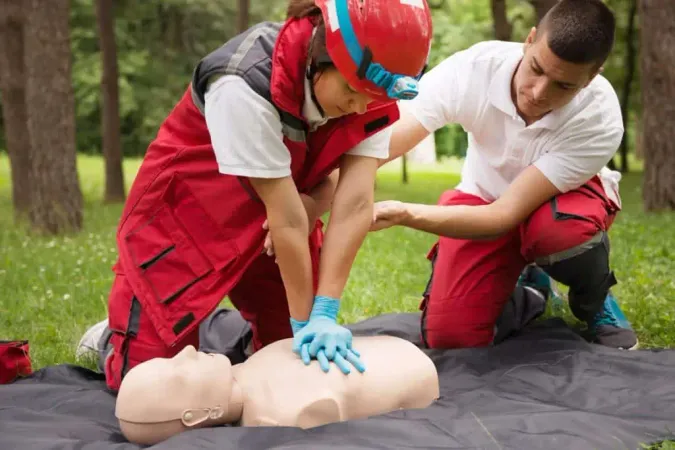
Occupational First Aid training ensures that designated personnel are equipped to manage critical incidents while maintaining composure and ensuring scene safety.
Who Needs Occupational First Aid Certification?
The certification is recommended—and often required—for professionals in high-risk and physically demanding industries. It is particularly important for:
Construction Workers
Warehouse and Logistics Personnel
Factory and Manufacturing Employees
Security and Safety Officers
Field Engineers and Technicians
Supervisors and Shift Managers
School and Daycare Staff
Office First Aid Coordinators
In many workplaces, regulatory compliance mandates a minimum number of certified first aiders per employee count or shift, depending on the type of work and inherent risks.
Levels of Occupational First Aid Certification
Different levels of Occupational First Aid Certification exist, based on the workplace risk level and regulatory requirements. Common levels include:
Ideal for low-risk environments such as offices or retail
Duration: 6–8 hours
Focus: Basic life support, CPR, wound care, minor injuries
For medium-risk environments like warehouses or schools
Duration: 16 hours
Includes: Fracture management, burns, asthma, diabetic emergencies
For high-risk industries such as construction or oil & gas
Duration: 24–40 hours
Includes: Advanced CPR, spinal injuries, multiple casualty management
Employers should assess workplace hazards to determine which level of certification is appropriate for their staff.
Core Curriculum and Training Topics
The Occupational First Aid Certification course is designed to provide both theoretical knowledge and practical skills through interactive sessions and simulations. Key topics typically include:
Assessing dangers and prioritizing safety
Calling for emergency services
Triage and casualty assessment
Cardiopulmonary Resuscitation (CPR)
Use of Automated External Defibrillator (AED)
Choking and airway management
Wound and bleeding control
Fractures and sprains
Burns, bites, and stings
Shock management
Seizures, strokes, and heart attacks
Diabetic and asthma attacks
Allergic reactions and anaphylaxis
Chemical exposure
Electrical injuries
Confined space incidents
Eye injuries and first-aid response
Incident documentation
Legal duties of first aiders
Confidentiality and consent
Certification Process and Validity
Offered by accredited organizations (e.g., Red Cross, American Heart Association, St. John Ambulance)
Delivered through a mix of classroom sessions, hands-on practice, and assessments
Multiple-choice test
Practical skills assessment (e.g., CPR demonstration)
Scenario-based drills
Most certifications are valid for 2 to 3 years
Refresher courses and recertification exams are required before expiration to stay compliant
Benefits of Occupational First Aid Certification
Life-Saving Skills: Confidence to respond effectively in emergencies
Professional Development: Enhances employability and workplace value
Legal Readiness: Awareness of legal responsibilities and best practices
Regulatory Compliance: Meets OSHA or local labor requirements
Risk Reduction: Lowers workplace injury rates and insurance costs
Emergency Preparedness: Builds a safety-first culture
Improved Morale: Employees feel safer and more valued
Having certified first aiders on-site can significantly improve response times during emergencies, often making the difference between life and death.
Conclusion
The Occupational First Aid Certification is a critical asset in any workplace safety program. It empowers individuals with the ability to respond calmly and competently in emergencies, ensuring immediate care for injured employees and contributing to a safer work environment.
As regulatory standards tighten and organizational accountability increases, investing in first aid training is not just smart—it's essential. Whether you're working on a construction site or managing an office floor, this certification enhances your readiness to act when every second counts.
- +Validates your knowledge and skills objectively
- +Increases job market competitiveness
- +Provides structured learning goals
- +Networking opportunities with other certified professionals
- −Study materials can be expensive
- −Exam anxiety can affect performance
- −Requires dedicated preparation time
- −Retake fees apply if you don't pass
Pros and Cons at a Glance
| Pros | Cons |
|---|---|
| Validates your knowledge and skills objectively | Study materials can be expensive |
| Increases job market competitiveness | Exam anxiety can affect performance |
| Provides structured learning goals | Requires dedicated preparation time |
| Networking opportunities with other certified professionals | Retake fees apply if you don't pass |
Sample Occupational First Aid Certification Practice Questions
Try these questions from our free Occupational First Aid Certification practice tests. The correct answer and an explanation follow each question.
In Occupational First Aid Certification practice, what is the FIRST step when a safety hazard is identified in the workplace?
- A. Continue working and report at end of shift
- B. Immediately secure the area and report the hazard
- C. Wait for a supervisor to notice the issue
- D. Document it for the next safety audit
Answer: B. Immediately secure the area and report the hazard
When a safety hazard is identified, the immediate priority is to secure the area to prevent injury and report the hazard through proper channels.
When communicating with EMS dispatch about a workplace emergency, which piece of information is MOST critical to provide first?
- A. The name of the injured worker
- B. The exact location of the emergency
- C. The worker's medical history
- D. The company's insurance policy number
Answer: B. The exact location of the emergency
Giving EMS the precise location first ensures help is dispatched to the correct address without delay.
Which of the following is a key part of workplace safety procedures?
- A. Avoid reporting hazards.
- B. Conduct regular safety drills
- C. Wait for an accident before taking action.
- D. Ignore minor injuries.
Answer: B. Conduct regular safety drills
Conducting regular safety drills is a key part of effective workplace safety procedures. These drills allow employees to practice emergency responses, understand evacuation routes, and become familiar with safety equipment and protocols. This preparation ensures that in a real emergency, employees can react quickly and appropriately, minimizing risks and potential harm.
When you find an unresponsive worker, after ensuring scene safety, your next step is to:
- A. Begin chest compressions
- B. Open the airway
- C. Tap the shoulder and shout to check responsiveness
- D. Call for an AED
Answer: C. Tap the shoulder and shout to check responsiveness
After confirming scene safety, stimulate the patient (tap and shout) to confirm unresponsiveness before proceeding with DRABC.
Take the full Occupational First Aid Certification practice test
(OFA) Occupational First Aid Certification Questions and Answers
Sources & last verified
- WorkSafeBC — number of questions, other (official source). “Intermediate first aid courses will be two days in duration for initial certification.” Verified Oct 25, 2026.
- WorkSafeBC — retake policy, validity, renewal, delivery (official source). “The exam is the final 14 hours of the full course.” Verified Oct 25, 2026.
How we verify: editorial & fact-checking policy. Report an error: contact us.
How this page was made: written with AI tools and published by Nathan Beja, founder of Practice Test Geeks, who is responsible for its content. Exam facts are checked against the official sources listed below. Not reviewed by a subject-matter expert. Editorial policy
Sources & references
Exam facts on this page (fees, format, dates, passing scores) are checked against these official sources; the date is our last check. Editorial policy
- worksafebc.com — Exam format, test delivery, eligibility, renewal, retake policy, score validity, exam information · verified Oct 2026