
Is the NYLE Open Book? Everything You Need to Know About the New York Law Exam
Is the NYLE open book? 📚 Learn what resources you can use, how to register, key test dates, and how to pass the New York Law Exam on your first try.

The NYLE is open book, but that does not make it easy. The exam presents 50 multiple-choice questions in 2 hours (120 minutes), and if you need to look up every answer, you will almost certainly run out of time before you finish. The format rewards candidates who know the material well enough to answer most questions quickly and who can find the rest by section, without relying on keyword search.
The NYLE is administered by the New York State Board of Law Examiners (BOLE) online through Examsoft. Because the exam is taken remotely on your own computer, there is no testing room and no physical materials to bring in. The Board's rules allow you to use the course materials, but they prohibit electronically searching a searchable version of them during the exam (Rule 6000.13(b)(18)). That makes it essential to learn how the materials are organized so you can turn to the right section quickly.
In this guide, we will walk through everything you need to know about the NYLE open-book format: what is permitted, how to use the materials strategically, what the exam looks like in terms of structure and timing, when new york law exam dates are scheduled, how to check nyle results, and how to practice with nyle practice questions under realistic conditions.
The stakes are real: you cannot be admitted to practice law in New York without passing the NYLE. A passing score is 30 of 50 correct (60%), and the exam costs $29, payable to Examsoft, after you complete the free New York Law Course.
NYLE facts verified against the NY Board of Law Examiners
- Format: the NYLE has 50 multiple-choice questions, all scored, and you get 2 hours (120 minutes), about 2.4 minutes per question. It is open-book and taken online on your own computer through Examsoft. (source: NY Board of Law Examiners FAQs)
- Passing score: 30 of 50 correct (60%). It is a raw score, not a scaled score. (source: Board Rules, amended Sept. 1, 2026)
- Exam dates (12:00 PM ET): December 17, 2026 (register by November 17, 2026); April 15, 2027; September 23, 2027; December 16, 2027. (source: Board exam dates)
- Registration from 2027: you must register at least 45 days before the exam, so by March 1, 2027 (April 15 exam), August 9, 2027 (September 23 exam) and November 1, 2027 (December 16 exam). (source)
- Cost: the NYLE fee is $29, payable to Examsoft. The New York Law Course (NYLC) is free. (source)
- Prerequisite: finish the NYLC first (about 17 hours of recorded lectures covering 12 subjects, with embedded questions you must answer correctly, watched at normal speed). Then register through your BOLE account. You may retake the NYLE without limit, but you must repeat the NYLC before each retake. A passing score is valid for 3 years and results post in your BOLE account about 3 weeks after the exam. (source)
- Open-book limit: you may use the course materials, but electronically searching a searchable copy during the exam is prohibited (Rule 6000.13(b)(18)). (source)
Last verified: October 9, 2026 against the New York State Board of Law Examiners.
NYLE Open Book Exam by the Numbers

NYLE Exam Format & Structure
| Section | Questions | Time | Notes |
|---|---|---|---|
| Administrative Law | — | — | State agency rulemaking, adjudication and judicial review (Article 78) |
| Business Relationships | — | — | Business Corporation Law, LLC Law, Partnership Law and agency |
| Civil Practice and Procedure | — | — | CPLR: jurisdiction, pleadings, motions, disclosure, appeals |
| Conflict of Laws | — | — | Choice of law, jurisdiction and recognition of judgments |
| Contracts | — | — | NY contract formation, performance, remedies and defenses, including sales of goods under the UCC |
| Criminal Law and Procedure | — | — | Penal Law offenses and Criminal Procedure Law |
| Evidence | — | — | NY evidence rules (Guide to New York Evidence) |
| Matrimonial and Family Law | — | — | Domestic Relations Law, Family Court Act, custody and support |
| Professional Responsibility | — | — | NY Rules of Professional Conduct (22 NYCRR Part 1200) |
| Real Property | — | — | Real Property Law, RPAPL, conveyancing and landlord-tenant |
| Torts and Tort Damages | — | — | NY negligence, intentional torts, liability and damages |
| Trusts, Wills and Estates | — | — | EPTL and SCPA: intestacy, wills, trusts and probate |
| Total | 50 | 2 hours |
The New York State Board of Law Examiners provides candidates with the official course materials for the New York Law Course and Exam, including an outline of the twelve tested subjects. These are the materials you may use during the open-book exam. Your exam is taken in Examsoft on your own computer, and the Board's rules prohibit electronically searching a searchable copy of the materials during the exam (Rule 6000.13(b)(18)).
You may not use outside websites, communicate with other people, or otherwise violate the Board's rules for the exam. Any attempt to use prohibited resources can result in your exam being invalidated and potential referral to the character and fitness committee. Read the Board's current rules and instructions before your exam date.
One of the most important skills to develop during your preparation is navigation speed by section. Because you cannot search the text electronically, the materials are only helpful if you can turn to the right subject and subsection in a minute or less. Many candidates find it helpful to review the structure of the nyle course materials before the exam so they can mentally map where major topics appear. Creating a personal index of where major topics appear, as a study aid during your prep, is an excellent strategy.
The questions are scenario-based. Questions will often present subtle factual variations that change which rule applies, or ask about exceptions to general principles. This is why rote memorization is a poor strategy, and conceptual understanding paired with familiarity with the materials is what actually produces a passing score.
With 50 questions in 2 hours, you have an average of about 2.4 minutes per question. If you spend four or five minutes looking through the materials for a single answer, you are already falling behind pace.
Checking nyle results after your exam is straightforward through your BOLE online account. Results are typically posted about three weeks after the exam. Understanding the open-book rules thoroughly before your test date is critical, because any confusion about what is and is not permitted can cost you valuable time during the exam and create unnecessary anxiety.
New York Law Exam Dates, Registration & NYLE Results
The NYLE is offered at least three times per year at 12:00 PM ET. The next dates are December 17, 2026 (registration deadline November 17, 2026), April 15, 2027 (register by March 1), September 23, 2027 (register by August 9) and December 16, 2027 (register by November 1).
From 2027, you must register at least 45 days before the exam. The registration deadline is strict, and late registrations are generally not accepted. Candidates who miss the deadline must wait for the next available administration.
Review the Board's current rules and instructions for any policy on changing your date, and plan your registration as soon as you know your intended bar admission timeline.
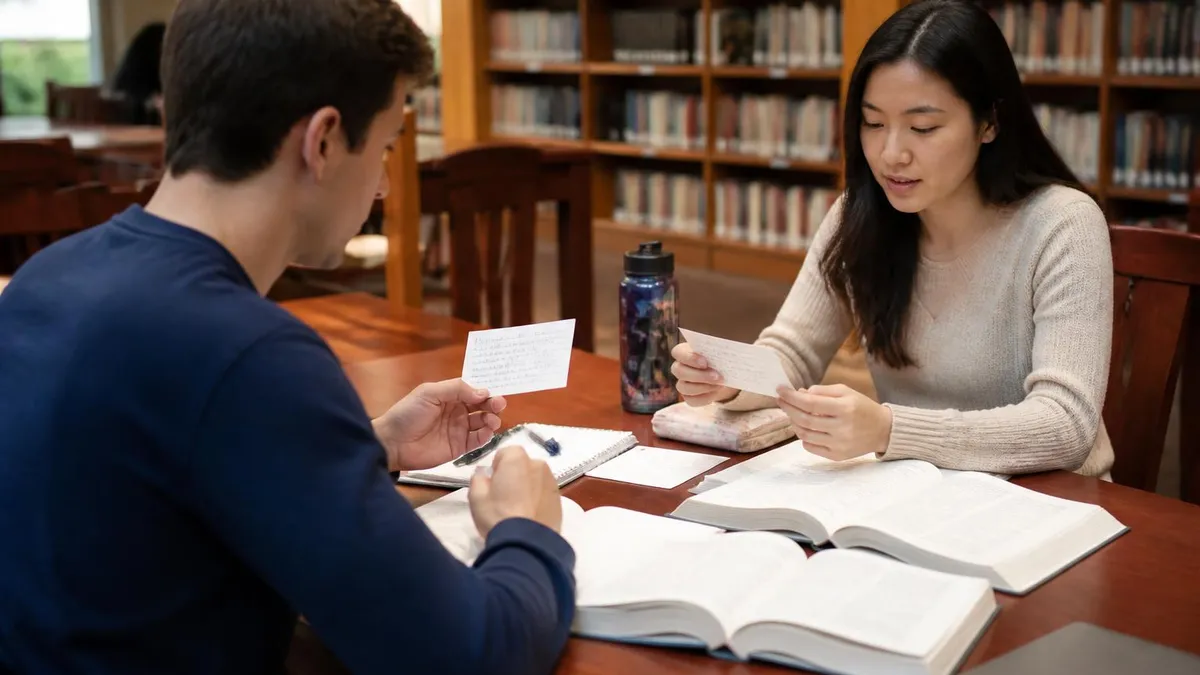
Open Book Format: Advantages and Challenges for NYLE Candidates
- +Eliminates pressure to memorize specific statutes, dollar thresholds, and procedural deadlines verbatim
- +Allows confirmation of rule details and reduces careless errors
- +Online delivery on your own computer means no travel to a test center
- +The fee is only $29 and the NYLC is free
- +Rewards candidates who study systematically and learn the structure of the materials
- −Navigating the materials by section requires its own preparation and practice to use efficiently under exam conditions
- −Time pressure is the dominant challenge: about 2.4 minutes per question leaves little room for lookups
- −Electronic searching of a searchable copy of the materials is prohibited, so you cannot rely on keyword search
- −Technical issues on your own computer can derail your exam day
- −The NYLC (about 17 hours) must be finished first and repeated before every retake
Pros and Cons at a Glance
| Pros | Cons |
|---|---|
| Eliminates pressure to memorize specific statutes, dollar thresholds, and procedural deadlines verbatim | Navigating the materials by section requires its own preparation and practice to use efficiently under exam conditions |
| Allows confirmation of rule details and reduces careless errors | Time pressure is the dominant challenge: about 2.4 minutes per question leaves little room for lookups |
| Online delivery on your own computer means no travel to a test center | Electronic searching of a searchable copy of the materials is prohibited, so you cannot rely on keyword search |
| The fee is only $29 and the NYLC is free | Technical issues on your own computer can derail your exam day |
| Rewards candidates who study systematically and learn the structure of the materials | The NYLC (about 17 hours) must be finished first and repeated before every retake |
NYLE Open Book Preparation Checklist
- ✓Complete every segment of the free New York Law Course (about 17 hours) and read through the full NYLE outline at least twice before your exam date
- ✓Create a personal topic index noting which section of the outline covers each major subject area (a study aid, not something to use as a substitute for the Board's materials)
- ✓Practice finding rules by section, not by keyword search, which is prohibited during the exam
- ✓Time yourself completing 50 practice questions in 2 hours to simulate real exam pace
- ✓Complete at least three full-length nyle practice test sessions before your scheduled exam date
- ✓Register through your BOLE account before the deadline and pay the $29 fee to Examsoft
- ✓Run the Examsoft system check on your exam computer at least one week before your test date
- ✓Confirm your exam date, 12:00 PM ET start time and login credentials 48 hours before the exam
2 Hours Is Not Enough Time to Look Up Every Answer
At about 2.4 minutes per question, candidates who pass the NYLE on the first attempt rely mostly on knowledge they already have. They use the open-book materials only to verify uncertain answers or confirm specific numerical thresholds. Build genuine subject-matter familiarity first, then use the materials as a safety net, not a crutch.
Navigating the NYLE course materials efficiently is a skill that separates high-scoring candidates from those who barely finish in time. The materials are structured by subject area, and each major section contains subsections covering specific rules, exceptions, and procedural requirements. Because electronically searching a searchable copy during the exam is prohibited, you should navigate by table of contents and headings.
If you are looking for the rule on pleading a cause of action for fraud, knowing that it sits under Civil Practice and Procedure (CPLR 3016) will get you to the relevant subsection in seconds. Learn the subject headings and the major rule numbers for each subject so that you can go directly to the right place.
One of the best training drills is the open-book-under-time-pressure drill. Set a timer for 2 hours, load a set of 50 practice questions, and keep the course materials open next to you. This drill accomplishes two things simultaneously: it tests your legal knowledge and it tests your navigation speed. Candidates who do this drill three or more times before their exam consistently report feeling more confident and finishing with time to spare.
Not all topics are equally easy to find. Professional responsibility rules are written in precise language and are organized by rule number. CPLR procedural rules involving specific time limits and numerical thresholds are also easy to locate by article and section, so you can confirm quickly whether a limitations period is three years or six years.
New York has adopted a modified version of the Model Rules with several significant differences, including unique rules about advertising, fee arrangements, and confidentiality exceptions. These differences are frequently tested precisely because candidates who studied only the Model Rules may not realize that New York follows a different standard. Knowing where to find them in the materials is extremely valuable on exam day.
For candidates retaking the NYLE after an initial failure, the open-book format offers a specific advantage during a second attempt: you now know which types of questions caused you to slow down and look through the materials extensively. Use that memory to guide your second-round preparation. Remember that you must repeat the NYLC before each retake.
BOLE deadlines are firm. The deadline for the December 17, 2026 exam is November 17, 2026, and from 2027 you must register at least 45 days before the exam. If you are planning to sit for a specific new york law exam administration, check the deadline as soon as you finish the NYLC and register immediately. Missing your intended exam date can delay your bar admission by several months, which may affect job start dates or court appearance eligibility.
A structured practice test strategy is the single most reliable path to passing the NYLE, regardless of whether you consider yourself a strong test-taker. The open-book format rewards candidates who have internalized the material well enough to answer quickly and use the materials only as a supplementary resource. This means your practice sessions should mirror the real exam conditions as closely as possible — timed, with the outline open but not relied upon heavily, and with genuine effort to recall answers before looking anything up.
Start your NYLE preparation at least four to six weeks before your scheduled exam date. In the first two weeks, focus on content review: read through each subject area covered by the NYLE, paying particular attention to New York-specific rules that differ from the general common law or federal standards you learned in law school. Use the outline as a study companion during this phase, reading it actively rather than passively. Annotate your understanding of each rule in a separate notebook, forcing yourself to translate the outline language into your own words.
In weeks three and four, shift to active practice. Complete sets of 10–15 practice questions per study session, organized by subject area. After each set, review every question you got wrong — even questions you got right by guessing. For wrong answers, go back to the outline and find the exact section that explains the correct rule. Reading the rule in context immediately after answering a question incorrectly is one of the most powerful learning techniques available, because your memory of the mistake creates a strong hook for the correct information.
In the final one to two weeks before your exam, focus on simulation. Complete full 50-question timed practice exams at least twice. After each simulation, analyze your performance by subject area: how many questions did you need to look up in the materials, how much time did you spend, and which topics caused the most hesitation. Use this analysis to identify whether your remaining prep time is better spent on content review or on navigation drills. Most candidates at this stage benefit more from navigation practice than from additional content review.
The question style on the NYLE is almost exclusively scenario-based. You will be presented with a fact pattern involving New York clients, New York courts, and New York-specific legal issues, followed by a question asking what the correct legal outcome or procedural requirement is. The wrong answer choices are carefully designed to reflect common misunderstandings or the rules from other jurisdictions. Do not let a plausible-sounding answer choice that reflects the general common law standard mislead you — always ask yourself whether New York follows a different rule before selecting your answer.
Using nyle test dates strategically is also part of your preparation plan. If you have flexibility in when you sit for the exam, choose an exam date that gives you adequate preparation time without letting too much time pass after your UBE preparation, when your legal reasoning skills and study habits are still sharp. Candidates who take the NYLE immediately after passing the UBE — at the first available administration — often perform better because they are already in exam preparation mode and their knowledge of general legal principles is current.
Community resources can also support your NYLE preparation. Online forums for New York bar candidates often include discussion threads about the exam experience, study materials, and strategies for navigating the outline efficiently. While you should not rely on unofficial information about specific exam questions — which is both unreliable and potentially an ethics violation — general discussions about study techniques, timing strategies, and which subjects feel most heavily tested can provide useful perspective as you build your preparation plan.
Finally, do not overlook the mental and logistical aspects of exam day preparation. Because the NYLE is taken on your own computer, make sure your testing environment is quiet, your internet connection is stable, and your device is fully charged or plugged in. Close all unnecessary applications before starting Examsoft. Have your BOLE login and Examsoft instructions ready.
Eat a proper meal beforehand. The open-book format means you have a resource available to help you, but only if you are calm, focused, and managing your time efficiently. Logging in relaxed and prepared is just as important for an online exam as it would be for an in-person test.
The final stretch of your NYLE preparation should focus on consolidating your knowledge and building exam-day confidence. Many candidates make the mistake of trying to learn new material in the final week before their exam — this is counterproductive. Your last week should be spent reinforcing what you already know, practicing under realistic conditions, and ensuring that your navigation skills are sharp and automatic. New material introduced too close to the exam tends to create confusion rather than clarity.
One of the most practical tips for the final week is to build a personal quick-reference index for the topics you find most challenging. This is NOT a document you bring into the exam — it is a study aid you use during your final preparation sessions.
Write down the top 15–20 topics that gave you the most trouble in practice, along with the exact section heading in the outline where each topic appears. Reviewing this index repeatedly in the days before your exam will hardwire those navigation pathways into your memory so they are automatic during the real test.
Sleep and cognitive function are genuinely important factors in exam performance, and this is particularly true for an open-book exam that requires active reading, judgment, and time management. Research consistently shows that sleep deprivation impairs the kind of higher-order thinking required to apply legal rules to fact patterns — exactly the skill the NYLE tests. Aim for seven to eight hours of sleep for at least the three nights before your exam. Avoid all-night cramming sessions in the final 48 hours; they are more likely to hurt your performance than help it.
On exam day itself, log into the BOLE testing platform early and do a final system check before your scheduled start time. Log in to Examsoft early and make sure your course materials are organized and within reach. Take a few minutes to mentally review your triage strategy: answer known questions immediately, flag uncertain ones, return to flagged items. Remind yourself that the open-book format is an asset, not a crutch, and that you have prepared specifically to use it efficiently.
During the exam, if you find yourself spending more than 90 seconds on a single question, make your best guess, flag it, and move on. You can always return if time permits. It is far better to answer 48 questions thoughtfully and guess on 2 than to leave 8 questions unanswered because you spent too long searching the outline for 3 difficult items. Every unanswered question is a guaranteed zero; every attempted question — even a guess — has at least some probability of being correct.
After completing the exam, resist the temptation to second-guess yourself excessively while waiting for nyle results. The weeks between the exam and results being posted can be anxious, but excessive rumination is unproductive. Use the time to research the next steps in your bar admission process so that you are ready to move quickly once results are confirmed. If you are confident in your preparation, trust your work — most first-time takers who prepare seriously with practice questions and navigation drills pass the NYLE successfully.
The NYLE open-book format is ultimately a thoughtful design choice by BOLE. It acknowledges that practicing attorneys in New York will always have access to legal resources when advising clients — they are never expected to memorize the entire CPLR from scratch. What matters is knowing how to find the right rule quickly and apply it correctly to real situations.
The exam tests exactly those skills. Candidates who prepare with that philosophy in mind — building genuine understanding supplemented by efficient resource use — are the ones who walk away with a passing score and one less obstacle between themselves and bar admission.
Sample NYLE - New York Law Exam Practice Questions
Try these questions from our free NYLE - New York Law Exam practice tests. The correct answer and an explanation follow each question.
In a civil proceeding concerning a decedent's estate, an interested party wishes to testify about a conversation she had with the decedent regarding a promise to bequeath a valuable painting. The estate's executor objects to this testimony. What is the primary effect of New York's Dead Man's Statute (CPLR 4519) on this proposed testimony?
- A. It allows the testimony but requires the judge to instruct the jury to view it with caution.
- B. It renders the interested witness incompetent to testify about personal transactions or communications with the decedent in her own interest.
- C. It bars the testimony only if it can be contradicted by a written document signed by the decedent.
- D. It shifts the burden of proof to the interested party to prove the conversation occurred by clear and convincing evidence.
Answer: B. It renders the interested witness incompetent to testify about personal transactions or communications with the decedent in her own interest.
New York's Dead Man's Statute, CPLR 4519, is a rule of witness competency. It prevents a person who is interested in the outcome of a civil case from testifying in their own interest about a personal communication or transaction with a deceased person when that testimony is offered against the decedent's estate or successor in interest. The purpose is to protect the decedent's estate from fraudulent or unverified claims that the decedent cannot refute.
A testator executes a holographic will in New York, signing and dating it entirely in her own handwriting but with no witnesses. Under New York law, this will is:
- A. Valid if it clearly expresses testamentary intent
- B. Valid only if notarized
- C. Invalid because New York does not recognize holographic wills
- D. Valid as long as it is filed with the Surrogate's Court within 30 days
Answer: C. Invalid because New York does not recognize holographic wills
New York EPTL § 3-2.2 does not generally recognize holographic wills except for those made by members of the armed forces during armed conflict or mariners at sea.
In New York, which of the following statements about the work-product doctrine is correct?
- A. It protects all documents prepared by a party's attorney from disclosure
- B. It protects materials prepared in anticipation of litigation, with qualified privilege for ordinary work product and absolute protection for opinion work product
- C. It is identical to the attorney-client privilege
- D. It applies only to documents prepared after a lawsuit is filed
Answer: B. It protects materials prepared in anticipation of litigation, with qualified privilege for ordinary work product and absolute protection for opinion work product
The work-product doctrine protects litigation-preparation materials: ordinary work product has qualified protection (can be overcome by substantial need), while opinion work product reflecting attorney mental impressions has near-absolute protection.
Two attorneys form a New York LLP. One partner commits malpractice. Under New York's LLP statutes, what is the other, non-negligent partner's personal liability?
- A. Jointly and severally liable for all partnership debts including the malpractice claim.
- B. Not personally liable for the malpractice claim but remains liable for ordinary contract debts of the partnership.
- C. Not personally liable for any debts of the partnership whatsoever.
- D. Liable only up to the amount of that partner's capital contribution.
Answer: B. Not personally liable for the malpractice claim but remains liable for ordinary contract debts of the partnership.
Under NY Partnership Law § 26, an LLP partner is shielded from personal liability for malpractice of co-partners but retains liability for the partnership's own contractual obligations.
NYLE Questions and Answers




About the Author

Educational Psychologist & Academic Test Preparation Expert
Columbia University Teachers CollegeDr. Lisa Patel holds a Doctorate in Education from Columbia University Teachers College and has spent 17 years researching standardized test design and academic assessment. She has developed preparation programs for SAT, ACT, GRE, LSAT, UCAT, and numerous professional licensing exams, helping students of all backgrounds achieve their target scores.