
What Is the NYLE? New York Law Exam Guide 2026 October
Get ready for your What Is the NYLE? New York Law certification. ⏳ Practice questions with step-by-step answer explanations and instant scoring.

What Is the NYLE?
The NYLE — New York Law Exam — is a mandatory component of admission to the New York State Bar. It tests an applicant's knowledge of New York-specific law on topics that the Uniform Bar Exam (UBE), which New York adopted in 2016, does not specifically assess. If you want to practice law in New York, you'll need to pass both the UBE and the NYLE. The two aren't taken together as one combined exam — they're separate tests, each with its own administration, registration, and passing requirements.
The NYLE exists because New York has its own distinct legal framework: the Civil Practice Law and Rules (CPLR), the Estates, Powers and Trusts Law (EPTL), the New York Rules of Professional Conduct, and other statutes that differ materially from other jurisdictions.
When the state adopted the UBE — a nationally portable exam — it retained the NYLE as a New York-specific supplement to ensure that all newly admitted attorneys understand the legal rules that govern practice in this state. The logic is that passing a uniform national exam demonstrates you can analyze legal problems generally; passing the NYLE demonstrates you understand New York's particular rules.
The exam is 50 multiple-choice questions administered over 2 hours. Questions are not grouped or labeled by topic during the exam itself — you receive a single question set and work through it within the time limit. The questions are drawn from twelve subject areas, each representing a core area of New York practice. A passing score is 30 correct answers out of 50, which is 60%. This is a lower threshold than many bar exam components, reflecting that the NYLE is meant to confirm foundational familiarity with NY law rather than to function as a high-difficulty screening exam.
The NYLE is administered by the New York Board of Law Examiners at least three times a year at 12:00 PM ET (2026: April 16, September 24 and December 17; 2027: April 15, September 23 and December 16), and it is taken online, so you do not travel to a test site. You must first complete the free New York Law Course (NYLC), and you may do the NYLC and NYLE up to one year before you first sit for the UBE or at any time after.
There's no requirement that you pass the UBE before taking the NYLE, or vice versa. You simply need to pass both before you can be admitted. The BOLE administers the NYLE online through Examsoft: you take it on your own computer, it is open-book, and you pay a $29 fee to Examsoft. The NYLC itself is free.
If you fail the NYLE, you can retake it at a later administration after repeating the NYLC. There is no limit on the number of NYLE attempts allowed (you must redo the NYLC before each retake), and your UBE score (if you've already passed) remains valid during the period it's portable. Nyle exam dates are published by the Board of Law Examiners each year — check the BOLE website directly for current registration deadlines and examination dates. Deadlines typically fall several weeks before the exam date, and late registration is generally not available, so marking calendar reminders well in advance is important.
You need a computer that meets the Examsoft technical requirements, a stable internet connection and a quiet room. You may use the NYLC/NYLE course materials, but electronically searching a searchable copy of them during the exam is prohibited. All reference materials, devices, and notes are prohibited. The NYLE is open-book, but with only about 2.4 minutes per question you cannot look up every answer, so thorough advance preparation is the most reliable strategy for passing on your first attempt.
For a fuller set of questions on this topic, see our nyle practice tests resource.
NYLE facts verified against the NY Board of Law Examiners
- Format: the NYLE has 50 multiple-choice questions, all scored, and you get 2 hours (120 minutes), about 2.4 minutes per question. It is open-book and taken online on your own computer through Examsoft. (source: NY Board of Law Examiners FAQs)
- Passing score: 30 of 50 correct (60%). It is a raw score, not a scaled score. (source: Board Rules, amended Sept. 1, 2026)
- Exam dates (12:00 PM ET): December 17, 2026 (register by November 17, 2026); April 15, 2027; September 23, 2027; December 16, 2027. (source: Board exam dates)
- Registration from 2027: you must register at least 45 days before the exam, so by March 1, 2027 (April 15 exam), August 9, 2027 (September 23 exam) and November 1, 2027 (December 16 exam). (source)
- Cost: the NYLE fee is $29, payable to Examsoft. The New York Law Course (NYLC) is free. (source)
- Prerequisite: finish the NYLC first (about 17 hours of recorded lectures covering 12 subjects, with embedded questions you must answer correctly, watched at normal speed). Then register through your BOLE account. You may retake the NYLE without limit, but you must repeat the NYLC before each retake. A passing score is valid for 3 years and results post in your BOLE account about 3 weeks after the exam. (source)
- Open-book limit: you may use the course materials, but electronically searching a searchable copy during the exam is prohibited (Rule 6000.13(b)(18)). (source)
Last verified: October 9, 2026 against the New York State Board of Law Examiners.
NYLE Subject Areas Tested
| Section | Questions | Time | Notes |
|---|---|---|---|
| Administrative Law | — | — | State agency rulemaking, adjudication and judicial review (Article 78) |
| Business Relationships | — | — | Business Corporation Law, LLC Law, Partnership Law and agency |
| Civil Practice and Procedure | — | — | CPLR: jurisdiction, pleadings, motions, disclosure, appeals |
| Conflict of Laws | — | — | Choice of law, jurisdiction and recognition of judgments |
| Contracts | — | — | NY contract formation, performance, remedies and defenses, including sales of goods under the UCC |
| Criminal Law and Procedure | — | — | Penal Law offenses and Criminal Procedure Law |
| Evidence | — | — | NY evidence rules (Guide to New York Evidence) |
| Matrimonial and Family Law | — | — | Domestic Relations Law, Family Court Act, custody and support |
| Professional Responsibility | — | — | NY Rules of Professional Conduct (22 NYCRR Part 1200) |
| Real Property | — | — | Real Property Law, RPAPL, conveyancing and landlord-tenant |
| Torts and Tort Damages | — | — | NY negligence, intentional torts, liability and damages |
| Trusts, Wills and Estates | — | — | EPTL and SCPA: intestacy, wills, trusts and probate |
| Total | 50 | 2 hours |
Who Must Take the NYLE and When
The NYLE is required for most applicants seeking admission to the New York Bar through the standard character and fitness process. This includes: law school graduates who are taking the UBE in New York; attorneys who passed the UBE in another jurisdiction and are seeking admission to the NY Bar by UBE score transfer (NY accepts transferred UBE scores with a minimum score of 266, but NYLE passage is still required before admission); and attorneys seeking admission through the NY attorney examination or other pathways where NYLE is a specified requirement.
Foreign-trained lawyers seeking NY admission through the foreign legal consultant or LL.M.-to-bar pathways should consult the BOLE's current requirements, as the applicability of the NYLE to their situation depends on the specific admission pathway they're pursuing. Rules for foreign-trained applicants have evolved, and the BOLE's published guidelines are the authoritative source for this population.
Timing-wise, many candidates finish the NYLC during or soon after UBE prep and take the NYLE at the next available administration. The NYLC and NYLE can be completed up to one year before you first sit for the UBE. Check the BOLE rules and your BOLE account to confirm when you may register.
For applicants who have already passed the UBE in another jurisdiction and are seeking NY admission by score transfer, the NYLE is typically the last remaining hurdle to admission. The transfer process involves submitting your UBE score (minimum 266 for NY), your character and fitness application, and completing the NYLE. The NYLE can be taken before, during, or after the character and fitness review process, though you cannot be admitted until all three are complete. Many transfer applicants take the NYLE at the next available administration after initiating their transfer application to minimize the overall timeline to admission.
One timing consideration that catches candidates off guard: NYLE results are released separately from UBE results, and the two result timelines don't always align. Nyle test scores are typically posted in your BOLE account about three weeks after the examination (the April 16, 2026 results were posted May 5, 2026), as pass or fail. UBE results in New York are released on the BOLE's published schedule, which varies by administration. The NYLE result may arrive before or after your UBE result. Neither result being available doesn't necessarily mean there is a problem with your application — it simply reflects the independent processing timelines for each component.
How to Prepare for the NYLE
Preparing for the NYLE is different from preparing for the UBE. The UBE requires mastery of multistate law across seven subjects and multi-hour written components. The NYLE is narrower: 50 questions testing twelve specific areas of New York law. Most candidates who perform well on the NYLE do so by focused, topic-specific review of NY-specific rules — not by repeating the same broad-based bar prep approach used for the UBE.
One of the most common mistakes candidates make is treating NYLE prep as an afterthought during July bar prep. The UBE dominates prep time — and it should, since it's the harder exam — but candidates who don't allocate dedicated weekly blocks to NYLE subjects often arrive under-prepared. The free New York Law Course alone runs about 17 hours of recorded lectures, and most candidates add 25–30 hours of focused review of the twelve NYLE subjects. Spreading that review across the final four to six weeks of bar prep, rather than cramming it into the final few days, leads to significantly better retention and exam performance.
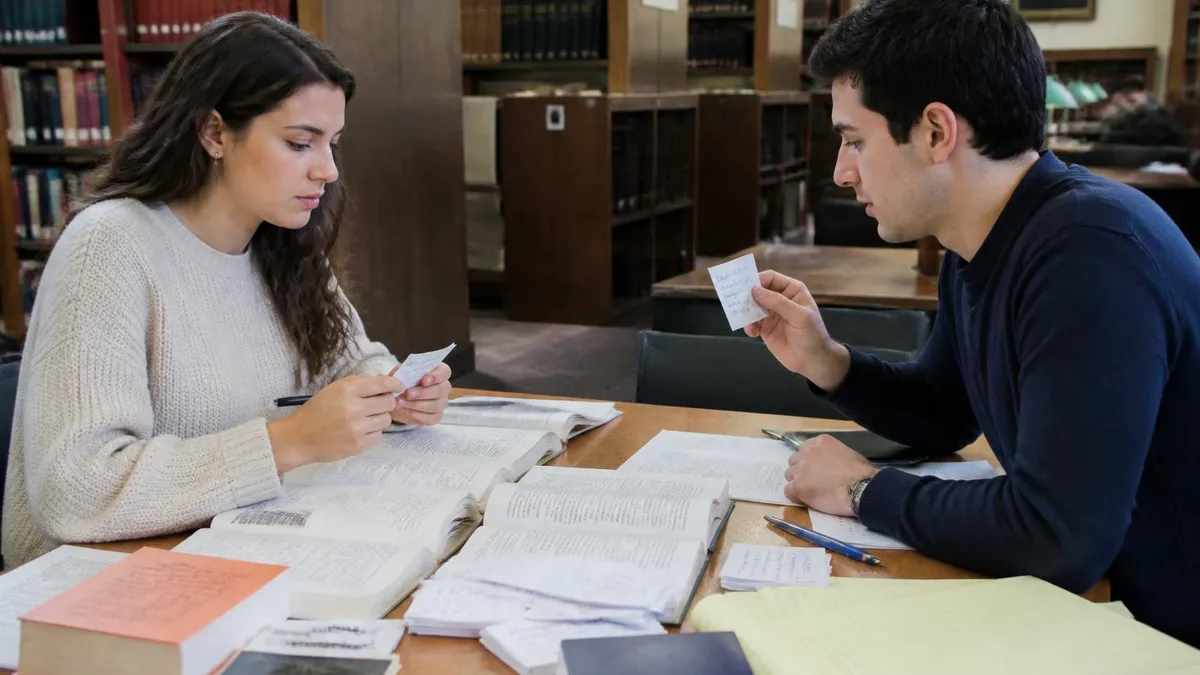
Active recall methods work especially well for NYLE prep. Rather than passively re-reading outlines, use the information: write down NY-specific rules from memory, explain them out loud, or quiz yourself using flashcards. The NYLE's multiple-choice format means you'll need to identify the correct rule quickly — passive reading doesn't build that speed.
Candidates who combine outline review with regular active recall exercises typically find that the rules stick more reliably than those who review outlines without testing themselves. The NYLE covers enough distinct content areas that spaced repetition — returning to each subject multiple times over several weeks rather than massing your review of each topic into a single session — produces the most durable retention heading into exam day.
The most important resource for NYLE preparation is the BOLE's own published guidance on the exam. The Board publishes a content outline detailing the subject areas tested and the relative weighting of questions across those areas. This outline tells you where to concentrate your study: some subjects carry more weight than others, and allocating your prep time proportionally is more efficient than studying each subject equally. Download the current content outline from the BOLE's website and build your study plan around it.
Commercial bar prep providers offer NYLE-specific supplements in addition to their standard UBE courses. Barbri, Themis, Kaplan, and other major providers include NY-specific content modules that cover the NYLE subject areas. These modules typically include outlines, practice questions, and flashcards targeted to the NYLE's format. Using a commercial supplement alongside the BOLE's content outline is a proven approach — the outlines give you the framework, and the practice questions reinforce retention and help you identify weak areas before the exam.
Your law school's bar prep resources may also include NYLE-specific materials. Many New York law schools offer supplemental NYLE review sessions during the bar prep period, particularly for students who are already in commercial bar prep programs and might otherwise underinvest in the NY-specific component. If your school offers these sessions, attend them — they often highlight the specific NY rules that diverge most meaningfully from the multistate rules you studied for the UBE.
For the twelve subject areas, pay particular attention to civil procedure (CPLR), professional responsibility (NY Rules), and estates and trusts (EPTL). These areas appear frequently on the NYLE, and their NY-specific rules differ enough from their federal or multistate counterparts to create genuine traps for candidates who studied the general rule but not the NY modification. CPLR, for instance, has specific timing rules, service-of-process rules, and motion practice requirements that differ from the Federal Rules of Civil Procedure. The NY Rules of Professional Conduct diverge from the Model Rules in several areas relevant to client confidentiality, advertising, and fee arrangements.
Practice questions are one of the most effective preparation tools for the NYLE's format. The exam is entirely multiple choice, which means you need to be comfortable choosing the best answer quickly — the 2-hour limit for 50 questions provides about 2.4 minutes (2 minutes 24 seconds) per question, which is generally sufficient but leaves little room for extended deliberation.
Practicing with timed multiple-choice sets builds the pattern recognition and decision speed that the format rewards. Nyle practice questions in PDF format are available from multiple sources, though always prioritize materials created specifically for the current NYLE content outline, as the subject weighting can change between exam cycles.
One week before the exam, focus on reviewing your weakest subject areas and doing light practice rather than intensive new learning. The NYLE tests retention and application, not deep research — by exam week, you want to be consolidating and refreshing what you know, not covering entirely new ground. Candidates who try to cram new material in the final days often find that it displaces rather than supplements their existing preparation.

NYLE Preparation Checklist
- ✓Download the BOLE's current NYLE content outline and build your study schedule around the subject weightings
- ✓Complete at least one NYLE-specific prep module from a commercial bar prep provider (Barbri, Themis, Kaplan, or equivalent)
- ✓Do timed multiple-choice practice sets — aim for 50-question timed sets in 2 hours or less
- ✓Focus extra review time on CPLR (civil procedure), EPTL (estates & trusts), and NY Professional Responsibility
- ✓Note where NY rules differ from the multistate rules you learned for the UBE — these differences generate NYLE-specific wrong answers
- ✓Attend any NY-specific NYLE review sessions offered by your law school or bar prep course
- ✓Register through the BOLE portal before the deadline — late registration is typically not available
- ✓Check the BOLE website for any changes to the content outline, format, or passing score before your exam administration
Preparation Focus: First-Time Takers vs. Retakers
Starting point: You're likely preparing for the UBE and NYLE simultaneously (at the same time of year)
Key challenge: Allocating enough focus to NYLE-specific NY law material without crowding out UBE prep
Recommended approach: Dedicate one focused hour per day for 4–6 weeks to NYLE subjects. Use a commercial NYLE supplement alongside your UBE prep. Prioritize CPLR, EPTL, and Professional Responsibility since these are heavily tested and differ most from multistate rules. Complete at least two full 50-question timed practice sets before exam day.
What to skip: Deep research into NY law history or detailed case law — the NYLE tests rules and their application, not doctrine development. Flashcards of NY-specific rule variations are more efficient than reading hornbooks.
Background: The NYLE and New York's Adoption of the UBE
The NYLE was introduced in 2016 when New York became one of several jurisdictions to adopt the Uniform Bar Exam (UBE) as its primary bar examination. The UBE — developed by the National Conference of Bar Examiners (NCBE) — is a three-part exam: the Multistate Bar Examination (MBE), the Multistate Essay Examination (MEE), and the Multistate Performance Test (MPT). Its defining feature is score portability — candidates who pass can transfer scores to any UBE jurisdiction without retaking the exam.
New York had previously administered its own bar exam with NY-specific essay questions that tested the CPLR, the EPTL, and other NY-specific statutes directly. When the UBE replaced those essays, the BOLE and New York's Court of Appeals created the NYLE to ensure that NY-specific legal knowledge was still assessed. Every attorney admitted to the NY bar — whether through taking the NY UBE or transferring a UBE score — must demonstrate working knowledge of New York law.
Since its introduction, the NYLE has remained structurally consistent. The twelve subject areas are defined in the Board's course outline, and the 50-question multiple-choice format has been maintained. The BOLE updates the content outline periodically to reflect statutory amendments and court decisions. Candidates should always review the current outline rather than relying on prior-cycle materials.
The exam's design reflects deliberate policy: broad familiarity at a 60% passing threshold, rather than narrow mastery at a higher bar. This acknowledges that newly admitted attorneys will develop deep expertise through practice — the NYLE confirms they understand the foundational NY rules well enough to recognize when those rules apply and when to research further.
NYLE Pros and Cons
- +NYLE has a publicly available content blueprint — you know exactly what to prepare for
- +Multiple preparation pathways accommodate different schedules and budgets
- +Clear score reporting shows specific strengths and weaknesses
- +Study communities share current insights from recent test-takers
- +Retake policies allow recovery from a difficult first attempt
- −Tested content scope requires substantial preparation time
- −No single resource covers everything optimally
- −Exam-day performance can differ from practice test performance
- −Registration, prep, and retake costs accumulate significantly
- −Content changes between versions can make older materials less reliable
Pros and Cons at a Glance
| Pros | Cons |
|---|---|
| NYLE has a publicly available content blueprint — you know exactly what to prepare for | Tested content scope requires substantial preparation time |
| Multiple preparation pathways accommodate different schedules and budgets | No single resource covers everything optimally |
| Clear score reporting shows specific strengths and weaknesses | Exam-day performance can differ from practice test performance |
| Study communities share current insights from recent test-takers | Registration, prep, and retake costs accumulate significantly |
| Retake policies allow recovery from a difficult first attempt | Content changes between versions can make older materials less reliable |
Sample NYLE - New York Law Exam Practice Questions
Try these questions from our free NYLE - New York Law Exam practice tests. The correct answer and an explanation follow each question.
In a New York grand jury proceeding, what is the minimum number of jurors required to be present for the proceedings to be valid (a quorum), and what is the minimum number of jurors who must concur to vote for an indictment?
- A. 12 present for a quorum; 9 to indict.
- B. 23 present for a quorum; 16 to indict.
- C. 16 present for a quorum; 12 to indict.
- D. 18 present for a quorum; 12 to indict.
Answer: C. 16 present for a quorum; 12 to indict.
According to New York's Criminal Procedure Law § 190.25(1), the proceedings of a grand jury are not valid unless at least sixteen members are present, which constitutes a quorum. The same section states that the finding of an indictment requires the concurrence of at least twelve members.
Three individuals attempt to form a corporation in New York. They properly draft the certificate of incorporation but, due to a clerical error at their law firm, the certificate is never filed with the Department of State. They proceed to conduct business as 'ABC Corp.' Under New York law, what is the likely status of their business?
- A. A de jure corporation, because they had the intent to incorporate.
- B. A corporation by estoppel, because they held themselves out as a corporation.
- C. A general partnership, because a de jure corporation was never formed.
- D. A de facto corporation, because they made a good faith attempt to comply with incorporation statutes.
Answer: C. A general partnership, because a de jure corporation was never formed.
In New York, corporate existence begins upon the filing of the certificate of incorporation with the department of state. Without filing, no corporation—neither de jure nor de facto—is formed. When individuals hold themselves out as a corporation without having actually formed one, they are typically treated as partners and are subject to personal liability for the business's obligations.
Under New York Penal Law, what is the classification of a Class A-1 felony, and what is the maximum sentence?
- A. The most serious felony classification, punishable by life imprisonment
- B. A mid-level felony punishable by up to 15 years
- C. A non-violent felony punishable by probation only
- D. An offense punishable by a maximum of 25 years
Answer: A. The most serious felony classification, punishable by life imprisonment
A Class A-1 felony is the most serious classification in New York's Penal Law, carrying a maximum sentence of life imprisonment.
Under New York law, what is a cooperative apartment (co-op) and how does ownership differ from a condominium?
- A. In a co-op, the buyer purchases shares in a corporation that owns the building and receives a proprietary lease; in a condo, the buyer owns the individual unit as real property
- B. Co-ops and condos are legally identical
- C. A co-op owner holds a deed to their apartment, while a condo owner holds shares
- D. Both co-ops and condos involve ownership of shares in a corporation
Answer: A. In a co-op, the buyer purchases shares in a corporation that owns the building and receives a proprietary lease; in a condo, the buyer owns the individual unit as real property
In a co-op, the purchaser buys shares of stock in the cooperative corporation and receives a proprietary lease for their unit. In a condominium, the purchaser owns the individual unit as real property with a deed.
NYLE Questions and Answers
About the Author

Educational Psychologist & Academic Test Preparation Expert
Columbia University Teachers CollegeDr. Lisa Patel holds a Doctorate in Education from Columbia University Teachers College and has spent 17 years researching standardized test design and academic assessment. She has developed preparation programs for SAT, ACT, GRE, LSAT, UCAT, and numerous professional licensing exams, helping students of all backgrounds achieve their target scores.