

NRA Practice Test
Updated October 2026Facts verified Oct 25, 2026 against National Rifle Association of America (NRA) Training Department
Becoming an NRA Certified Instructor is a rewarding path for individuals passionate about firearms safety and education. Through the NRA (National Rifle Association), prospective instructors can receive the training needed to effectively teach firearm safety, shooting fundamentals, and responsible gun handling. This guide covers everything you need to know about the NRA Certified Instructor Test, NRA certification requirements, course structure, and the benefits of becoming a certified instructor. Practice with the free NRA - National Rifle Association Certified Instructor practice test on PracticeTestGeeks (9 questions with answer explanations).
- NRA Training Counselors allow 60 to 90 minutes for NRA Rifle Instructor candidates to complete the instructor certification examination.[1]
- The NRA Pistol Instructor pre-course qualification is scored out of 100 points, with a minimum passing score of 80 points that must be met in each phase.[2]
- NRA Rifle Instructor candidates need a minimum grade of 90% on the instructor examination to be eligible for certification.[1]
- NRA instructor certification fees must be renewed every two years.[3]
- NRA instructor certification renewal costs $30 for two years for NRA members and $50 for two years for non-members.[3]
- NRA Certified Instructor training is delivered as an in-person, discipline-specific course run by an NRA Training Counselor, with a recommended minimum class size of four candidates who role-play teaching the basic course.[4]
- To become an NRA Certified Instructor, candidates must complete the NRA basic course in the discipline they want to teach, pass pre-course qualification exercises, and complete an NRA Instructor Training Course with the endorsement of the NRA Training Counselor who runs it.[4]
Numbers in brackets link to the official sources listed under Sources & last verified. Dates that have passed are removed automatically.
NRA Exam at a Glance
| Item | Detail | Source · Verified |
|---|---|---|
| Time limit (Rifle Instructor) | 60–90 minutes for the instructor exam[1] | nrainstructors.org · Oct 25, 2026 |
| Passing score (Pistol Pre-Course Qualification) | 80 of 100 points, with the minimum met in each phase[2] | nrainstructors.org · Oct 25, 2026 |
| Passing score (Rifle Instructor) | 90% on the instructor examination[1] | nrainstructors.org · Oct 25, 2026 |
| Validity | 2 years[3] | rtbav.nra.org · Oct 22, 2026 |
| Renewal | $30 per 2 years (NRA members); $50 per 2 years (non-members)[3] | rtbav.nra.org · Oct 22, 2026 |
| Delivery | In-person, discipline-specific instructor course run by an NRA Training Counselor; minimum 4 candidates[4] | National Rifle Association of America (NRA) Training Department · Oct 22, 2026 |
| Eligibility | Complete the NRA basic course in the discipline, pass pre-course qualification, then complete the Instructor Training Course with Training Counselor endorsement[4] | National Rifle Association of America (NRA) Training Department · Oct 22, 2026 |
| Registration deadline | Register and pay the credentialing fee at NRAInstructors.org within 30 days of the course report[1] | nrainstructors.org · Oct 25, 2026 |
Free NRA - National Rifle Association Certified Instructor Study Tools
Interactive NRA - National Rifle Association Certified Instructor resources on PracticeTestGeeks, free to start:
- NRA - National Rifle Association Certified Instructor flashcards — review key terms and concepts card by card
- NRA - National Rifle Association Certified Instructor study guide — topic-by-topic overview of what the exam covers
- NRA - National Rifle Association Certified Instructor cheat sheet — one-page printable summary for last-minute review
According to National Rifle Association of America (NRA) Training Department, “The NRA Pre-Course Qualification for Pistol will have a maximum score of 100 points and a minimum passing score of 80 points. Minimum passing requirement must be met in each phase.”[2]
NRA Practice Test Questions
Prepare for the NRA - National Rifle Association Certified Instructor exam with our free practice test modules. Each quiz covers key topics to help you pass on your first try.
NRA Course Development & Range Operations
NRA Exam Questions covering Course Development & Range Operations. Master NRA Test concepts for certification prep.
NRA Firearm Safety & Handling Procedures
Free NRA Practice Test featuring Firearm Safety & Handling Procedures. Improve your NRA Exam score with mock test prep.
NRA Instructional Techniques & Adult Learning
NRA Mock Exam on Instructional Techniques & Adult Learning. NRA Study Guide questions to pass on your first try.
NRA Policies, Ethics & Standards
NRA Test Prep for Policies, Ethics & Standards. Practice NRA Quiz questions and boost your score.
NRA Ballistics & Ammunition
NRA Questions and Answers on Ballistics & Ammunition. Free NRA practice for exam readiness.
NRA Code Compliance
NRA Mock Test covering Code Compliance. Online NRA Test practice with instant feedback.
NRA Environmental Standards
Free NRA Quiz on Environmental Standards. NRA Exam prep questions with detailed explanations.
NRA Equipment Operation
NRA Practice Questions for Equipment Operation. Build confidence for your NRA certification exam.
NRA Maintenance Protocols
NRA Test Online for Maintenance Protocols. Free practice with instant results and feedback.
NRA Material Selection
NRA Study Material on Material Selection. Prepare effectively with real exam-style questions.
NRA Quality Inspection
Free NRA Test covering Quality Inspection. Practice and track your NRA exam readiness.
Worked examples: how to reason through NRA questions
These are practice questions written for this site, not questions from the real exam. Each explanation shows why the right answer is right and why the others are wrong.
Example 1
Question: Why should eye protection be worn while cleaning firearms?
- Springs, solvent, and debris can strike the eyes
- It is only required on a live range
- It improves the view of the bore
- It is required by the manufacturer warranty
Answer: A. Springs, solvent, and debris can strike the eyes
Explanation:
The correct answer is that springs, solvent and debris can strike the eyes. Cleaning and disassembly put spring-loaded parts under tension, and they can release suddenly. Solvents can also splash when you apply or brush them. Both are real hazards for your eyes.
The option saying eye protection is only required on a live range is wrong because the hazard comes from the cleaning work itself, not from live fire. The option about improving the view of the bore is wrong because eye protection is for safety and does not help you see into a barrel. The option about the manufacturer warranty is wrong because protection is a safety practice, not a paperwork requirement.
Rule to remember: wear eye protection for any task that involves springs, solvents or flying debris, whether or not you are on a range.
Example 2
Question: What inspection procedure is essential for maintenance protocols?
- Visual spot checks are sufficient
- Systematic inspection following established checklists and standards
- Inspection is only needed for final sign-off
- The client determines inspection requirements
Answer: B. Systematic inspection following established checklists and standards
Explanation:
The correct answer is systematic inspection following established checklists and standards. A checklist makes the inspection repeatable. Different people get the same result, and nothing is skipped because someone forgot it.
Visual spot checks are wrong because they depend on what the inspector happens to notice, and they miss hidden wear or faults. Inspecting only at final sign-off is wrong because problems found late are harder to trace and fix, so checks belong throughout the process. Letting the client set inspection requirements is wrong because the standards come from recognised procedures and the organisation's own rules, not from whoever is paying.
Rule to remember: inspect against a written standard, at every stage, and record what you found.
Example 3
Question: An instructor needs to choose a firearm action type to demonstrate basic operation to novices. Which is often the simplest to start with?
- A semi-automatic with multiple controls
- A lever-action with a full magazine
- A pump-action with a tube magazine
- A single-shot firearm
Answer: D. A single-shot firearm
Explanation:
The correct answer is the single-shot firearm. A novice is learning what the parts do and how loading and unloading work. A single-shot firearm has few controls and no magazine, so there is little to confuse the demonstration.
The semi-automatic with multiple controls is wrong because it gives a beginner many things to learn at the same time. The lever-action with a full magazine is wrong because a loaded magazine adds risk and extra steps to a first demonstration. The pump-action with a tube magazine is wrong because the tube magazine and cycling add complexity that is better introduced later.
Rule to remember: when teaching beginners, start with the simplest action that shows the basic principle, and add complexity only after the basics are understood.
How to use these practice tests
Start with the official material for your discipline. Read the basic course content you completed, then the instructor course information at firearmtraining.nra.org. Note anything your Training Counselor says is covered, because the format differs between disciplines.
Then use our practice sets to find weak spots. Begin with NRA Firearm Safety & Handling Procedures, since safe handling underlies everything an instructor teaches. Move on to NRA Instructional Techniques & Adult Learning and NRA Course Development & Range Operations, which match the teaching and role-playing side of the course. Use NRA Policies, Ethics & Standards to review conduct and standards.
After each set, read the explanation for every question you missed and write down the general rule behind it. Do not just memorise the answer. Retake the set a few days later to see whether the rule stuck.
Because role-playing is a major part of the course, practise teaching a short lesson aloud to a friend or family member. Time yourself, and keep your explanations plain and in order. If you are preparing for the pistol pre-course qualification, spend range time on each phase, since the minimum must be met in all of them. When you are ready for a mixed check, try the full practice test.
Key Takeaways
Free NRA Practice Test Online
- NRA Certified Instructor certification provides individuals with the skills and knowledge needed to teach gun safety and proper firearm handling.
- Completing NRA certification offers credibility and resources for aspiring firearms instructors.
- Candidates must meet specific NRA requirements, including course completion, proficiency in gun safety, and knowledge of shooting fundamentals.
- NRA certification provides professional opportunities, community impact, and continual learning.
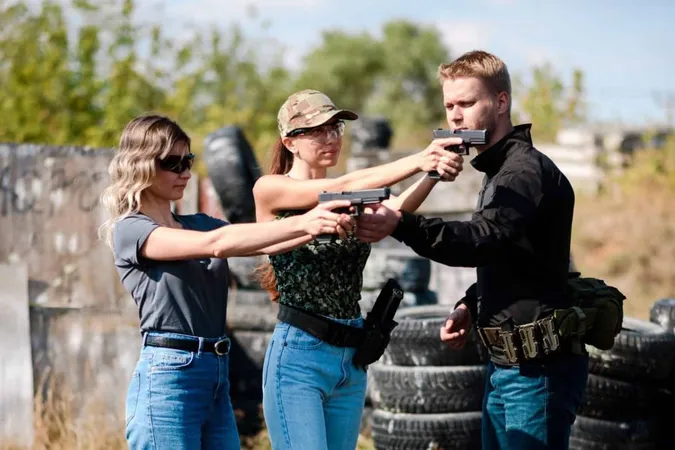
Understanding NRA Certification
NRA certification is a credential granted by the NRA to individuals who demonstrate proficiency in firearm handling and safety instruction. The certification process assesses a candidate’s ability to teach gun safety, shooting fundamentals, and responsible gun ownership to the public. Obtaining NRA certification not only builds credibility but also gives instructors access to NRA resources, such as teaching materials and support from the organization.
Candidates must pass the NRA Certified Instructor Test, which is part of a structured course designed to ensure that instructors are well-equipped to teach effectively.
- ✓Confirm your exam appointment and location
- ✓Bring required identification documents
- ✓Arrive 30 minutes early to check in
- ✓Read each question carefully before answering
- ✓Flag difficult questions and return to them later
- ✓Manage your time — don't spend too long on one question
- ✓Review flagged questions before submitting
NRA Gun Safety Rules
Gun safety is the foundation of NRA certification, and every NRA Certified Instructor is expected to be thoroughly familiar with NRA gun safety rules. These core principles ensure the safe handling of firearms and reduce the risk of accidents. The NRA’s rules for gun safety include:
- Always keep the gun pointed in a safe direction – This is the foremost rule to prevent accidental injury.
- Always keep your finger off the trigger until ready to shoot – Ensuring that your finger is only on the trigger when ready to fire minimizes accidental discharges.
- Always keep the gun unloaded until ready to use – Maintaining an unloaded firearm until actively prepared to shoot is essential for safety.
Preparing for the Shooting Instructor Course
The shooting instructor course is a comprehensive program designed to equip candidates with the skills required to train others in safe firearm use. This course includes both theoretical lessons and practical shooting exercises. Topics covered in the course typically include:
- Firearm handling techniques – Proper ways to load, unload, and handle different types of firearms.
- Teaching methods for gun safety – Strategies for instructing others in safe practices, such as NRA gun safety rules.
- Range safety and management – How to manage a shooting range safely and ensure all participants adhere to safety protocols.
- Lesson planning and instructional skills – Techniques for creating effective lesson plans and delivering engaging, informative classes.
Firearms Training: Theory and Practice
Firearms training is a critical part of the NRA certification process. To become certified, candidates must demonstrate not only their theoretical knowledge of firearms but also practical shooting skills. The NRA requires candidates to meet certain standards in terms of accuracy, control, and safety during practical assessments.
Instructors undergo hands-on training where they practice these skills under the guidance of experienced NRA trainers. This hands-on approach ensures that NRA Certified Instructors are comfortable with firearms and can teach others how to use them safely and effectively. Additionally, candidates are encouraged to continue their firearms training regularly to keep their skills sharp.
Meeting NRA Requirements for Certification
To qualify for the NRA Certified Instructor Test, candidates must meet specific NRA requirements. These requirements ensure that only qualified individuals are certified to teach gun safety. Key requirements include:
- Age and background requirements – Candidates must typically be at least 21 years old and pass a background check to ensure they have no legal restrictions regarding firearms.
- Completion of basic NRA courses – Most candidates must complete basic NRA courses to establish foundational knowledge before advancing to instructor training.
- Demonstrated firearm proficiency – Candidates are assessed on their shooting skills and must meet minimum accuracy and safety standards.
- Instructor aptitude assessment – Candidates must demonstrate effective teaching skills and the ability to convey complex concepts in an understandable manner.


Benefits of Becoming an NRA Certified Instructor
There are many NRA benefits to becoming a certified instructor, both personally and professionally. Some of the primary advantages include:
- Enhanced credibility – NRA certification is widely recognized, lending credibility to instructors who wish to teach firearm safety and shooting skills.
- Professional growth opportunities – NRA certification can lead to job opportunities in firearm training schools, law enforcement training programs, and private gun safety instruction.
- Access to NRA resources – Certified instructors have access to NRA-approved training materials, insurance options, and other resources that support effective teaching.
- Community impact – By teaching gun safety, NRA Certified Instructors contribute to a safer community by promoting responsible firearm use.
Conclusion
Becoming an NRA Certified Instructor involves a rigorous process of education, training, and assessment. Candidates who complete the NRA certification are equipped with the knowledge and skills to teach others how to handle firearms responsibly and safely. By promoting NRA gun safety rules and effective firearms training, certified instructors play an essential role in fostering a culture of responsible gun ownership. The path to certification may be challenging, but the benefits – both personal and professional – make it a rewarding endeavor.
- +Validates your knowledge and skills objectively
- +Increases job market competitiveness
- +Provides structured learning goals
- +Networking opportunities with other certified professionals
- −Study materials can be expensive
- −Exam anxiety can affect performance
- −Requires dedicated preparation time
- −Retake fees apply if you don't pass
Pros and Cons at a Glance
| Pros | Cons |
|---|---|
| Validates your knowledge and skills objectively | Study materials can be expensive |
| Increases job market competitiveness | Exam anxiety can affect performance |
| Provides structured learning goals | Requires dedicated preparation time |
| Networking opportunities with other certified professionals | Retake fees apply if you don't pass |
Sample NRA - National Rifle Association Certified Instructor Practice Questions
Try these questions from our free NRA - National Rifle Association Certified Instructor practice tests. The correct answer and an explanation follow each question.
How should instructors handle safety violations?
- A. Report it later
- B. Ignore small issues
- C. Correct them immediately
- D. Let peers address it
Answer: C. Correct them immediately
Instructors should correct safety violations immediately to prevent accidents and reinforce proper procedures. Prompt intervention is crucial because even minor deviations from safety rules can have serious consequences in firearm handling. Addressing violations on the spot ensures that the learner understands the gravity of the mistake and learns the correct behavior without delay.
What does ethical instruction require?
- A. Emphasizing personal beliefs
- B. Promoting sales
- C. Respecting integrity and safety
- D. Ignoring questions
Answer: C. Respecting integrity and safety
Ethical instruction requires instructors to uphold integrity and prioritize safety above all else. This means teaching accurate information, demonstrating responsible firearm handling, and ensuring a secure learning environment. An ethical instructor avoids bias, promotes responsible gun ownership, and acts as a trustworthy guide for students.
Which safety device blocks the firing mechanism of a firearm?
- A. Magazine release
- B. Trigger guard
- C. Manual safety
- D. Slide stop
Answer: C. Manual safety
A manual safety is a mechanical device specifically designed to prevent a firearm from firing by blocking the trigger, hammer, or firing pin mechanism. Engaging the manual safety adds an important layer of protection against unintentional discharges. It is a crucial component for safe handling and storage, though it should never replace adherence to the four primary firearm safety rules.
What is a benefit of using real-life scenarios in training?
- A. Slows the class
- B. Causes distraction
- C. Enhances practical learning
- D. Reduces creativity
Answer: C. Enhances practical learning
Using real-life scenarios in training significantly enhances practical learning by allowing students to apply theoretical knowledge in simulated situations. This approach helps bridge the gap between classroom instruction and actual firearm handling, improving decision-making skills and preparedness. It makes the learning more relevant and memorable, preparing students for real-world challenges.
Take the full NRA - National Rifle Association Certified Instructor practice test
Sources & last verified
- nrainstructors.org — time limit, passing score, registration deadline (official source). “Allow 60-90 minutes for candidates to complete examination.” Verified Oct 25, 2026 · source checked Oct 25, 2026.
- nrainstructors.org — passing score (official source). “The NRA Pre-Course Qualification for Pistol will have a maximum score of 100 points and a minimum passing score of 80 points. Minimum passing requirement…” Verified Oct 25, 2026 · source checked Oct 25, 2026.
- rtbav.nra.org — validity, renewal (official source). “Note: NRA instructor certification fees must be renewed every two years.” Verified Oct 22, 2026 · source checked Oct 22, 2026.
- National Rifle Association of America (NRA) Training Department — delivery, eligibility (official source). “Role-playing is a major part of an instructor course; therefore, the minimum class size should be at least four candidates, with 10-12 candidates being ideal.” Verified Oct 22, 2026 · source checked Oct 22, 2026.
How we verify: editorial & fact-checking policy. Report an error: contact us.
How this page was made: written with AI tools and published by Nathan Beja, founder of Practice Test Geeks, who is responsible for its content. Exam facts are checked against the official sources listed below. Not reviewed by a subject-matter expert. Editorial policy
Sources & references
Exam facts on this page (fees, format, dates, passing scores) are checked against these official sources; the date is our last check. Editorial policy
- nrainstructors.org — Passing score, registration deadline, time limit · verified Oct 2026
- firearmtraining.nra.org — Test delivery, eligibility · verified Oct 2026
- rtbav.nra.org — Renewal, score validity · verified Oct 2026