
Abbreviation for Nurse Practitioner: NP, APRN, FNP, and All NP Credentials
Abbreviation for nurse practitioner is NP. Learn APRN, FNP, PMHNP, ACNP and every NP credential format used in medical settings. 🔎

NP: The Primary Abbreviation for Nurse Practitioner
The abbreviation for nurse practitioner is NP. It's the standard short form used in clinical practice, on business cards, in electronic medical records, and after a provider's name. If you've ever wondered how to abbreviate nurse practitioner in a professional setting, NP is your answer — no periods, no variations, just two capital letters.
You'll see it written after a provider's full name: Jane Smith, NP. In hospital systems, outpatient clinics, urgent care centers, and private practices, the nurse practitioner acronym NP signals that this person holds an advanced nursing degree, a state license as an APRN, and the authority to diagnose, treat, and prescribe — depending on the state. It's a deceptively small abbreviation for a role that took years of graduate education and clinical training to earn.
The short form for nurse practitioner matters in ways that go beyond name badges. It shows up in DEA registrations, insurance credentialing packets, medical school referral networks, malpractice policy applications, and hospital privilege and credentialing requests. Each of those systems uses the NP abbreviation — or its longer APRN equivalent — to classify the provider, define their scope of practice, and determine what they're authorized to do. Get it wrong on a credentialing form or DEA application, and the process stalls. It's one of those details that seems minor until it's holding up your ability to prescribe or admit patients.
If you're studying for your boards, exploring an online nurse practitioner school, or just trying to decode a business card, this guide breaks down every NP abbreviation in use today.
One thing worth noting upfront: the core abbreviation for nurse practitioner is the same regardless of specialty or practice setting. Whether you're an FNP, PMHNP, ACNP, or NNP, you're all NPs at the base licensure level. The specialty prefix clarifies your population focus and practice setting, but the NP designation reflects the shared foundation of graduate nursing education, APRN licensure, and national board certification that all NPs hold.
APRN: The Broader Category That Includes NPs
The medical abbreviation for nurse practitioner — NP — sits within a larger designation: APRN, which stands for Advanced Practice Registered Nurse. APRN is the umbrella term that includes four types of advanced practice nurses: NP (Nurse Practitioner), CRNA (Certified Registered Nurse Anesthetist), CNM (Certified Nurse-Midwife), and CNS (Clinical Nurse Specialist).
So all NPs are APRNs, but not all APRNs are NPs. You'll often see both abbreviations on a single credential line — for example, Jane Smith, MSN, APRN, FNP-BC. The APRN signals the regulatory category recognized by state boards, while NP (or its specialty form like FNP) tells you the role and patient population.
In states with full practice authority for nurse practitioners, NPs operate independently without physician oversight. In those contexts, the APRN designation carries legal weight — it's what grants the provider authority to hold a DEA number, sign orders, and practice to the full scope of their training. Without APRN licensure, none of the NP specialty certifications (FNP-BC, PMHNP-BC, ACNP-BC) have practical effect.
It's also worth noting that APRN regulation is state-driven, not federally standardized across all jurisdictions. The Consensus Model for APRN Regulation — adopted by most states over the past decade — pushed for consistent use of the four APRN roles, but implementation varies. Some states still use older terminology like APN or ARNP. The underlying clinical role and scope are the same; only the label printed on the license differs.

APRN = Advanced Practice Registered Nurse (regulatory umbrella — all NPs are APRNs)
APN / ARNP / CRNP = state-specific variants of the APRN designation
FNP, PMHNP, ACNP = specialty NP abbreviations (see full list below)
-BC suffix = board certified via ANCC | -C suffix = certified via AANP
After-name format: Jane Smith, MSN, APRN, FNP-BC (degree → licensure → certification)
Specialty NP Abbreviations
The most common NP specialty. FNPs treat patients across the lifespan — from infants to elderly adults. Board certification suffix: FNP-BC (via ANCC) or FNP-C (via AANP).
Specializes in mental health diagnosis and psychiatric medication management. One of the fastest-growing NP specialties nationally. Credential: PMHNP-BC.
Works in high-acuity settings: ICUs, emergency departments, and hospitalist roles. Focused on adult patients with complex, unstable conditions. Credential: ACNP-BC.
Cares for patients from birth through young adulthood. Two tracks: PNP-PC (primary care) and PNP-AC (acute care). Credentials: CPNP-PC or CPNP-AC through PNCB.
Focuses on gynecologic and reproductive health across a woman's lifespan — prenatal care, contraception, and menopause management. Credential: WHNP-BC.
Covers adult and older adult populations. Two sub-tracks: AGPCNP (primary care) and AGACNP (acute care). Replaced the older ANP and GNP designations.
Specializes in the care of newborns, particularly premature or critically ill neonates in the NICU. Credential: NNP-BC through NCC.
ANP (Adult NP) and GNP (Gerontological NP) have largely been replaced by AGNP. Some credentialed providers still hold ANP-BC or GNP-BC, but new exams are no longer offered.
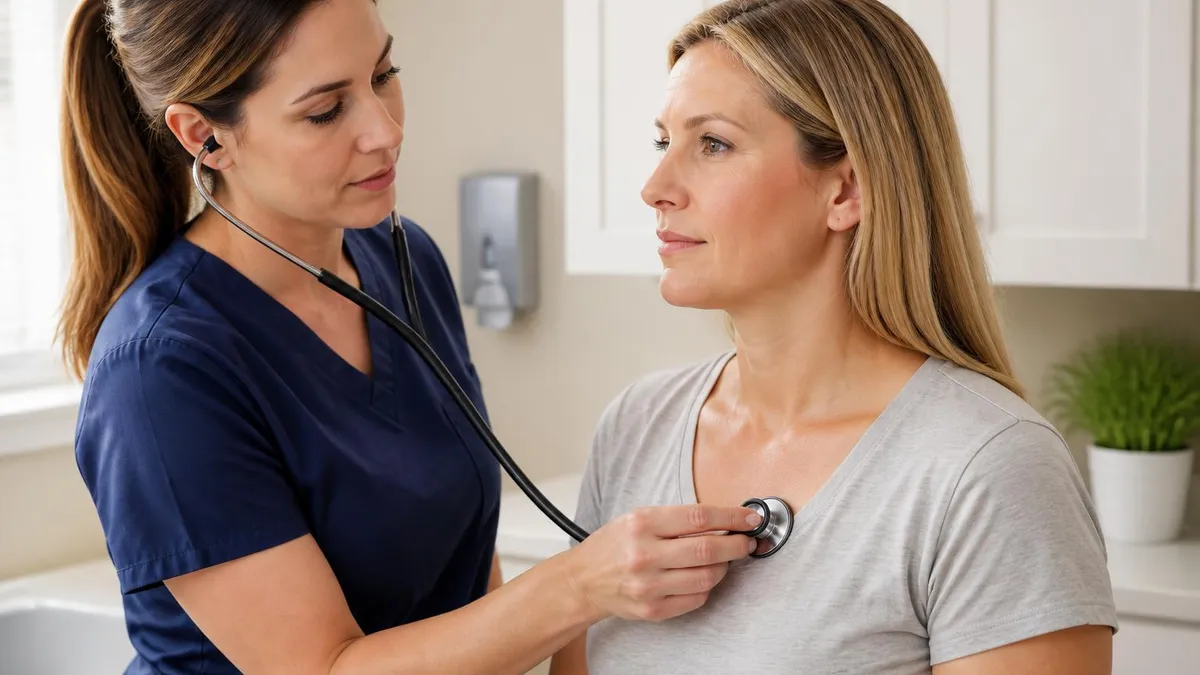
Full Credential Format After Your Name
One of the more confusing aspects of the nurse practitioner short form is how credentials actually appear after a name in professional contexts. There's a specific order — degree first, then licensure, then national certification — and it's not arbitrary.
The standard format is: [Name], [Highest Degree], [APRN License], [Specialty Certification]
For most NPs, that looks like one of these examples:
- Jane Smith, MSN, APRN, FNP-BC — master's degree, APRN license, family NP board-certified through ANCC
- Jane Smith, MSN, APRN, FNP-C — same role, certified through AANP instead
- Jane Smith, DNP, APRN, PMHNP-BC — doctoral degree, APRN license, psychiatric NP board-certified
- Jane Smith, NP-C — simplified version used in some clinical settings and on name badges
The degree component (MSN or DNP) reflects your academic preparation. MSN stands for Master of Science in Nursing — the minimum required for NP practice in all U.S. states. DNP stands for Doctor of Nursing Practice, the terminal clinical degree in nursing. Holding a DNP doesn't change your clinical title to "doctor" in most hospital settings, though some DNP-prepared NPs do use the title in academic contexts and sign as Jane Smith, DNP, APRN, FNP-BC.
The APRN component reflects your state license category — the actual regulatory authorization to practice. Not every NP lists APRN separately on a name badge. In formal documentation, credentialing applications, DEA registrations, and hospital privilege requests, the APRN designation appears explicitly because state boards require it.
The board certification suffix identifies both the specialty and the certifying body. -BC means board-certified through ANCC. -C means certified through AANP. Both reflect national board certification for the same specialty. FNP-BC and FNP-C are both family nurse practitioners — one took the ANCC exam, the other the AANP exam. Employers, hospitals, and payers accept both equally.
In medical charts and EHR systems, the nurse practitioner medical abbreviation NP appears in provider signatures, progress notes, and medication orders. Payers — Medicare, Medicaid, and private insurers — require NPs to bill under their own NPI numbers with the appropriate provider taxonomy code, which distinguishes NPs from RNs, MDs, and PAs in the billing system. Understanding NP vs PA distinctions matters here: both are mid-level providers, but they credential differently and the abbreviations signal different training backgrounds.
For those pursuing nurse practitioner independent practice, the credential string also matters in setting up a private practice. Business licenses, malpractice insurance policies, group NPI numbers, and hospital credentialing applications all require accurate credential documentation. A mismatch between your state APRN license category and what you list in a credentialing packet can trigger additional review or delays.
On written prescriptions, the NP abbreviation typically appears alongside the provider's name, license number, DEA number, and practice address. Most state boards specify exactly what must appear on a prescription — and the provider's APRN or NP designation is usually required. Some states mandate the full credential string; others allow just the license number. Either way, the abbreviation for nurse practitioner on a prescription is a legal identifier, not just a formality. Getting it right is as important as getting the medication name and dosage right.
NP Board Certifications by Organization
The American Nurses Credentialing Center (ANCC) offers board certification for multiple NP specialties. All ANCC certifications use the -BC suffix:
- FNP-BC — Family Nurse Practitioner, Board Certified
- PMHNP-BC — Psychiatric-Mental Health NP, Board Certified
- ACNP-BC — Acute Care NP, Board Certified
- AGACNP-BC — Adult-Gerontology Acute Care NP, Board Certified
- AGPCNP-BC — Adult-Gerontology Primary Care NP, Board Certified
- WHNP-BC — Women's Health NP, Board Certified
- ANP-BC — Adult NP, Board Certified (legacy; new exams no longer offered)
- GNP-BC — Gerontological NP, Board Certified (legacy)
ANCC certification requires an accredited graduate NP program, clinical hours, and a passing score on the specialty board exam. Renewal is every 5 years via continuing education or re-examination.
Using NP in Patient-Facing and Public Contexts
How you use the nurse practitioner short form shifts depending on your audience. In a clinical chart, J. Smith, NP is efficient and standard. On a patient-facing website or clinic brochure, spelling it out — Nurse Practitioner — often helps patients who aren't familiar with the abbreviation. Many NPs use both: the spelled-out title in a bio or introduction, then NP as shorthand afterward.
Patient confusion about these abbreviations is real. Studies on health literacy consistently show that many patients don't know what NP means compared to MD or DO. That's not a knock on NPs — it reflects how relatively recent and still-growing the role is in public awareness. When you introduce yourself as an NP, it's good practice to briefly explain what that means: a licensed clinician with a graduate degree who can diagnose, treat, and prescribe. That one-sentence explanation does more for building patient trust than any credential string on a name badge.
In telehealth platforms, the NP abbreviation shows up prominently in provider profiles and search filters. Patients searching for a provider often filter by credential type — and NP is a recognized, searchable category alongside MD, DO, and PA. Telehealth systems typically pull the credential data from the provider's NPI record, so having the correct APRN/NP designation properly registered in the NPI database affects visibility and searchability on those platforms.
In academic and research contexts, the abbreviation NP sometimes appears alongside RN to reflect the full clinical background — for example, Jane Smith, PhD, RN, FNP-BC. In that case, the PhD comes first as the highest academic degree, followed by RN (base licensure), then FNP-BC (clinical specialty). It follows the same underlying logic as clinical credential strings: most academic degree first, then licensure, then certification.
There's also the question of how to introduce yourself verbally in clinical settings. Most NPs say "I'm your nurse practitioner" or "I'm an NP." Some patients will ask if that's the same as a doctor — it's not, but the scope of care for most primary care visits is comparable. You can diagnose, prescribe, order labs and imaging, and manage chronic conditions. The nurse practitioner acronym NP, in the end, stands for a level of care that patients deserve to understand clearly. Taking the extra ten seconds to explain it builds the kind of rapport that keeps patients coming back.
Hospital credentialing committees also care about how NPs present their credentials. When you submit a privilege application, the committee reviews your APRN license, your board certification certificate, your DEA registration (if applicable), your malpractice history, and your NPI enrollment. Each of those documents uses the NP or APRN abbreviation in a specific way. Inconsistencies — say, your license says APRN but your application lists APN — can trigger a request for clarification. Keeping your credential abbreviations consistent across all documents avoids unnecessary friction in a process that's already time-consuming.
The same principle applies to online professional profiles. LinkedIn, Doximity, Healthgrades, and similar platforms all have dedicated credential fields. When patients or colleagues look you up, they're reading your credential string carefully. Using the correct nurse practitioner abbreviation — and listing it in the right order — signals that you understand the professional standards of your field. It's a small detail, but it matters for how you're professionally perceived before anyone meets you in person.
State Variations, Board Certification Suffixes, and Common Mistakes
While NP and APRN are the nationally used terms, some states use APN (Advanced Practice Nurse) instead of APRN as the official license category. In New Jersey, for instance, state licensure documents use APN. You might also encounter CRNP (Certified Registered Nurse Practitioner) in Pennsylvania, or ARNP (Advanced Registered Nurse Practitioner) in Florida and Iowa. These aren't different roles — they're the same NP role using state-specific terminology. Your national board certification transfers via endorsement when you move states; only the label on the state license may shift to match local statute.
The variation doesn't stop at the license label. Some states require NPs to list their supervising or collaborating physician on all prescriptions, billing records, and documentation — even in states that technically allow NPs to practice without a formal supervision agreement. In those states, the abbreviation on a prescription pad might include the collaborating physician's name alongside the NP's credential string. It's one more reason to understand exactly how your state frames the NP abbreviation and what documentation requirements come with it.
Common Credential Mistakes to Avoid
Using periods: Writing N.P. instead of NP is outdated. Current standards from ANCC and AANP don't use periods. Clean capital letters are the standard across all credential documentation.
Confusing NP with RN: RN means Registered Nurse — a different scope of practice. NPs hold RN licensure as their foundation, but the NP credential reflects graduate education and expanded clinical authority. An RN can't independently diagnose, treat, or prescribe; an NP can in all 50 states, with varying levels of practice independence.
Listing credentials out of order: Degree first, then licensure, then certification. MSN, APRN, FNP-BC is correct. Writing FNP-BC, APRN, MSN puts certification before degree — technically wrong in formal contexts, though you'll see it on informal materials.
Mixing up -BC and -C: Both suffixes mean board-certified. Neither is superior. Hospitals, credentialing bodies, and insurers accept both equally. Don't assume one carries more weight than the other — it doesn't.
Omitting APRN from formal documents: On a business card or email signature, NP or FNP-BC alone is fine. On a DEA application, hospital privilege form, or malpractice policy, APRN should appear explicitly. Leaving it out of formal documents can create a mismatch with your state license and slow credentialing.
How you handle the abbreviation for nurse practitioner affects real outcomes when you're applying for nurse practitioner jobs and submitting credentialing packets. Credentialing coordinators review these closely. Getting it right from the start reflects the same attention to detail that matters in clinical care.
The nurse practitioner acronym has evolved alongside the profession itself. What started as a relatively informal designation in the 1960s is now backed by national certification standards, state licensure frameworks, federal billing taxonomy codes, and DEA prescriptive authority structures.
The abbreviation NP — simple as it looks — carries a lot of professional and regulatory weight. Understanding exactly what it means, how it fits within the APRN framework, and how to use it correctly isn't just academic. It's part of practicing professionally and communicating clearly with patients, colleagues, payers, and the systems that credential and reimburse the care you provide every day.
Sample NP - Nurse Practitioner Practice Questions
Try these questions from our free NP - Nurse Practitioner practice tests. The correct answer and an explanation follow each question.
A nurse practitioner suspects a phishing email targeting the practice's EHR login credentials. What is the FIRST action to take?
- A. Click the link to verify if it is legitimate
- B. Report it to the IT/security team immediately without clicking any links
- C. Delete it and take no further action
- D. Forward it to colleagues as a warning
Answer: B. Report it to the IT/security team immediately without clicking any links
Phishing emails should be immediately reported to IT security without interacting with links or attachments to prevent credential compromise and a potential HIPAA breach.
A nurse practitioner reviews data showing that Hispanic patients in the practice have significantly lower rates of hypertension control than white patients. This disparity should trigger which QI action first?
- A. Exclude Hispanic patients from quality reporting denominators
- B. Conduct a disparity-focused root cause analysis to identify contributing factors
- C. Refer all Hispanic patients to specialists
- D. Report the disparity to the state health department immediately
Answer: B. Conduct a disparity-focused root cause analysis to identify contributing factors
Identifying a racial/ethnic disparity requires a structured root cause analysis to uncover system-level, social, and clinical factors driving the gap.
Under the ANA Code of Ethics, the primary commitment of the nurse practitioner is to:
- A. The employing institution
- B. The physician collaborator
- C. The patient
- D. The nursing profession
Answer: C. The patient
Provision 2 of the ANA Code of Ethics states that the nurse's primary commitment is to the patient, whether an individual, family, group, or community.
A nurse practitioner receives an alert from the clinical decision support system (CDSS) warning of a potential drug-drug interaction. What is the MOST appropriate next step?
- A. Dismiss the alert and proceed with the original order
- B. Review the alert, assess clinical context, and document the rationale for any override
- C. Automatically switch to an alternative medication without patient consultation
- D. Contact the pharmacy to disable future alerts for this medication pair
Answer: B. Review the alert, assess clinical context, and document the rationale for any override
Clinicians must review CDSS alerts in clinical context and document reasoning if overriding, as alert fatigue from dismissing without review is a patient safety hazard.
NP Questions and Answers

Difference Between a PA and a Nurse Practitioner: NP vs PA Career Comparison Guide
Online Nurse Practitioner School: The Complete 2026 Guide to Earning Your NP Degree Online

Full Practice Authority for Nurse Practitioners: Your Complete 2026 Guide to FPA States, Benefits, and Independent Practice

Nurse Practitioner Independent Practice: Complete 2026 Guide to Opening Your Own Clinic
About the Author

Registered Nurse & Healthcare Educator
Johns Hopkins University School of NursingDr. Sarah Mitchell is a board-certified registered nurse with over 15 years of clinical and academic experience. She completed her PhD in Nursing Science at Johns Hopkins University and has taught NCLEX preparation and clinical skills courses for nursing students across the United States. Her research focuses on evidence-based exam preparation strategies for healthcare certification candidates.