
Is Becoming a Nurse Practitioner Worth It? An Honest 2026 Look at Pay, Workload, Cost, and Career Satisfaction
🎯 Is becoming a nurse practitioner worth it? Compare NP salary, schooling cost, burnout, autonomy, and job outlook to decide if the path fits you.

Many registered nurses ask the same question at some point in their careers: is becoming a nurse practitioner worth it? For most nurses who want more autonomy, higher pay, and a wider scope of practice, the answer is yes, but with real caveats. NPs diagnose conditions, order tests, prescribe medications, and manage patients over time, which places them much closer to the provider side of care than the bedside. The tradeoff is years of extra school, student debt, and heavier clinical responsibility.
The numbers explain why so many nurses consider the jump. The Bureau of Labor Statistics reports a median annual wage of roughly $129,000 for nurse practitioners, compared with about $93,600 for registered nurses. Projected job growth of around 40 percent over the decade is among the fastest of any occupation in the country. Demand is strongest in primary care, mental health, and rural communities where physicians are scarce, so graduates rarely struggle to find work after certification.
Money is only one part of the equation, though. Whether the career is worth it depends on what you value most: schedule control, intellectual challenge, long-term patient relationships, leadership opportunities, or the ability to work independently. A nurse who loves fast-paced acute care may find a primary care role disappointingly slow, while a nurse burned out on twelve-hour floor shifts may find a clinic job life-changing. This guide helps you test the decision against your own situation instead of relying on salary headlines.
We will walk through what NPs actually do each day, what the education path costs in time and tuition, how pay compares across specialties, and where the profession has genuine downsides. You will also see how autonomy varies by state, why your certification choice matters, and which practice settings tend to produce the highest satisfaction. Think of it as a cost-benefit analysis written for working nurses, not a recruitment brochure for graduate programs trying to fill seats.
A fair evaluation also looks at opportunity cost. If you spend roughly $40,000 to $90,000 on tuition and reduce your hours during clinical rotations, you may give up $30,000 to $60,000 in wages along the way. Most NPs recoup that investment within three to five years because the typical raise from RN to NP is $30,000 or more annually. Employer tuition assistance, loan forgiveness programs, and part-time study can shorten the break-even point considerably.
Finally, passing your national board certification exam is the gateway to everything else. Whether you pursue family, adult-gerontology acute care, pediatric, or psychiatric-mental health tracks, you must demonstrate clinical competence on a standardized test. Practicing with realistic questions early helps you judge whether you enjoy the clinical reasoning that NP work demands. Use the free practice questions linked throughout this article as a low-risk way to test your readiness before committing to a program.
By the end, you should be able to name the two or three factors that matter most to you and weigh them honestly. Some readers will conclude the NP route is a clear win. Others will decide that a different advanced role, such as nurse anesthetist, nurse educator, or informatics specialist, fits better. Either outcome is a good one, because the worst decision is enrolling in a master's or doctoral program without a clear reason for doing so.
Nurse Practitioner Careers by the Numbers
What Nurse Practitioners Actually Do Every Day
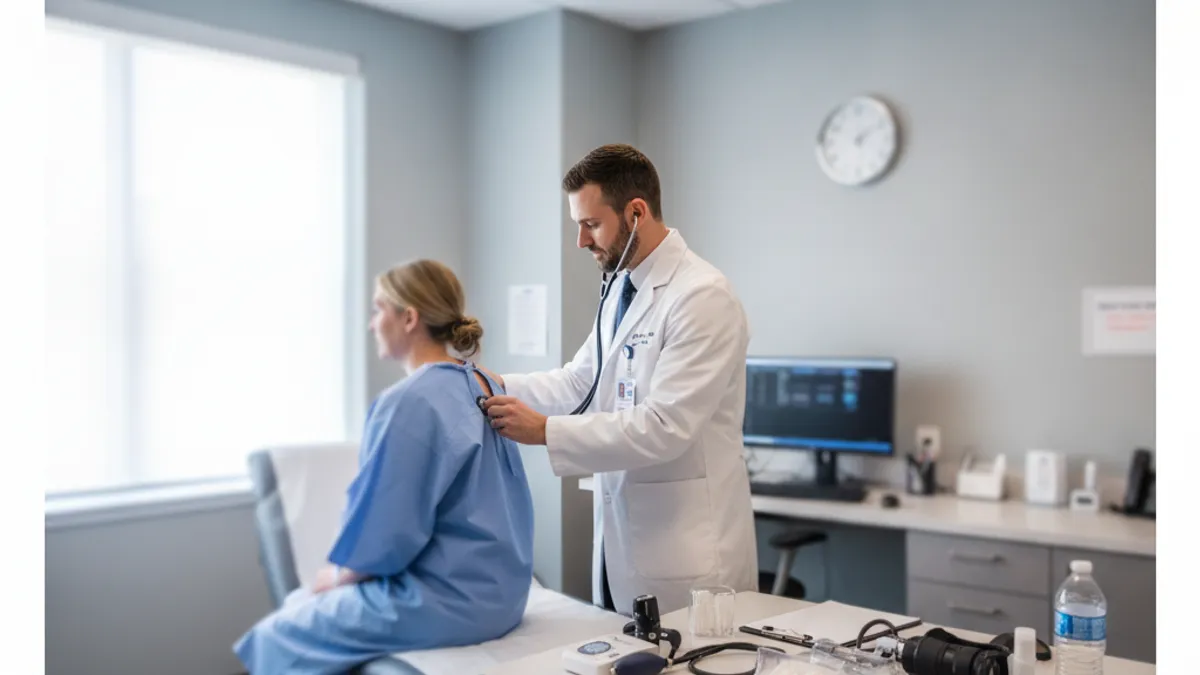
NPs take histories, perform physical exams, order labs and imaging, and interpret results to reach a diagnosis. In a typical clinic day, that means seeing 12 to 20 patients, each with a unique mix of acute complaints and chronic conditions.
Every state allows NPs to prescribe medications, though controlled substance rules vary. NPs build treatment plans for diabetes, hypertension, asthma, depression, and more, adjusting doses over time and monitoring outcomes at follow-up visits.
Patient teaching is central to the role. NPs explain diagnoses, set realistic health goals, coordinate referrals to specialists, and communicate with pharmacists, therapists, and case managers so patients do not fall through the cracks.
Experienced NPs mentor new graduates, supervise staff, join quality committees, and sometimes own practices. Documentation and billing are significant parts of the day, often consuming one to two hours of charting beyond direct patient time.
Start with pay, because it is the most common reason nurses ask whether the degree pays off. Bureau of Labor Statistics data puts the median NP wage near $129,000 per year, with the top ten percent earning above $168,000. Registered nurses earn a median of roughly $93,600. That gap of about $35,000 a year compounds quickly: over a 25-year career, it adds up to nearly $900,000 in additional gross earnings before raises, bonuses, and inflation are counted.
Pay varies sharply by specialty and location. Psychiatric-mental health NPs often earn $140,000 to $160,000, and acute care and cardiology NPs in hospital systems commonly land in a similar range. Family NPs in outpatient clinics tend to cluster between $115,000 and $130,000. California, Washington, New Jersey, and Massachusetts report some of the highest averages, while lower cost-of-living states pay fewer dollars but often stretch further in real purchasing power for housing and daily expenses.
Compensation structure matters as much as base salary. Many employers add sign-on bonuses of $5,000 to $20,000, productivity incentives tied to patient volume, loan repayment, and continuing education allowances of $1,000 to $3,000. Hospital-employed NPs often receive stronger benefits, while independent clinics may offer profit sharing. When you compare offers, calculate total compensation, including retirement matches, malpractice coverage, and paid time off, rather than focusing only on the headline annual number.
Consider a realistic example. An RN earning $85,000 enrolls in a part-time MSN program costing $55,000 over three years while continuing to work. After graduation and certification, she accepts a $125,000 NP position. Her raise is $40,000 before tax, so the tuition is recovered in roughly two years of higher pay, even after accounting for taxes and interest. Nurses who stop working to study full-time take longer, usually four to six years, to break even on the investment.
Debt can change the picture, so model it honestly. Federal graduate loans have carried interest rates above six percent in recent years, and borrowing $90,000 for a doctoral program can mean payments near $1,000 monthly on a standard plan. Public Service Loan Forgiveness can erase the remaining balance after ten years of qualifying payments for NPs working at nonprofit hospitals or government clinics, which makes employer type an important part of your overall financial planning.
There are also hidden financial risks worth knowing. Employers occasionally hire NPs at lower rates in saturated metropolitan markets, and some contracts include non-compete clauses that limit where you can work afterward. Productivity-based pay can fluctuate when patient volume drops during slow seasons. Before accepting a job, ask for the compensation formula in writing, learn how collaborative physician costs are handled, and confirm whether the employer pays for malpractice tail coverage if you eventually leave the organization.
Overall, the financial case is strong for most nurses who finish the program and secure a full-time role. The return on investment is rarely instant, but it is dependable, and the earning ceiling keeps rising as experience, specialty credentials, and leadership duties accumulate. If salary alone is your motivation, however, many nurses report that the thrill fades quickly. The strongest decisions combine financial logic with a genuine interest in the clinical work and the responsibility that comes with it.
Is Becoming a Nurse Practitioner Worth It? Three Career Lenses
From a purely financial view, the NP degree usually pays for itself. A raise of $30,000 to $45,000 over a registered nurse salary means most graduates recover tuition in two to five years, depending on whether they kept working during school. Over a full career, the added lifetime earnings can exceed $800,000, which funds retirement, housing, or children's education more comfortably than a bedside salary alone.
That said, the value depends on your specialty, state, and debt load. A graduate who borrows $120,000 for a private doctoral program and takes a $105,000 rural clinic job faces a slower payoff than someone with employer-funded tuition who moves directly into a $135,000 hospital role. Run your own numbers using real tuition quotes, local salary postings, and your current income before deciding.
Nurse Practitioner Career: Benefits vs. Drawbacks
- +Median pay around $129,000, well above typical RN wages
- +Very strong job growth and demand across nearly every state
- +Greater clinical autonomy, including diagnosing and prescribing
- +Many practice settings, from clinics and hospitals to telehealth
- +Clear paths to specialization, leadership, teaching, or ownership
- +Meaningful long-term relationships with patients and families
- −Two to four years of graduate study and significant tuition
- −Securing clinical preceptors can be difficult and time-consuming
- −Higher liability and diagnostic responsibility than RN roles
- −Heavy patient loads and documentation in many primary care jobs
- −Scope of practice limits remain in restrictive states
- −Burnout risk is real, especially in high-volume settings
Is Becoming a Nurse Practitioner Worth It for You? A Self-Check
- ✓Shadow an NP for at least one full shift before applying.
- ✓Interview three working NPs, including one in a different specialty.
- ✓Calculate total program cost, including lost wages and fees.
- ✓Check your state's full practice authority and prescribing rules.
- ✓Confirm your target program holds CCNE or ACEN accreditation.
- ✓Ask each school how clinical preceptor placement is handled.
- ✓Compare employer tuition reimbursement and any work commitments.
- ✓Choose a population focus that matches your real interests.
- ✓Estimate your post-graduation salary using local job postings.
- ✓Take free practice questions to gauge your clinical reasoning.
Most NPs recover tuition in two to five years
If your total cost, including lost wages, stays under roughly twice your expected annual raise, the degree usually pays for itself quickly. Nurses who keep working part-time during school and use employer reimbursement often break even fastest.
The education pathway is the largest barrier, so understand it before applying. Most NPs hold a Master of Science in Nursing, while a growing share complete a Doctor of Nursing Practice. Both require an active RN license, a bachelor's degree in nursing for most programs, and usually one to two years of clinical experience, which is mandatory for acute care tracks and strongly preferred in others. Bridge programs let ADN-prepared nurses move through an RN-to-MSN track.
Program length depends on format and intensity. Full-time MSN programs generally take two years, part-time tracks take three to four, and post-baccalaureate DNP programs run three to four years full-time. Clinical requirements start at 500 hours for many certifications and often reach 750 to 1,000 hours in DNP curricula. Online coursework is common, but clinical placements are in person, and securing preceptors is often the hardest logistical hurdle students face.
Tuition ranges widely. Public universities may charge $25,000 to $45,000 for an MSN, while private institutions can exceed $90,000 for MSN or DNP tracks. Add fees, books, certification exam costs of about $300 to $500, licensure fees, and background checks. Some programs charge placement fees or require travel for on-campus intensives. Ask each school for the full estimated cost of attendance, not only the per-credit price, so you can compare programs fairly.
Certification follows graduation. Family NPs sit for exams from the AANPCB or the ANCC, adult-gerontology acute care NPs take the ANCC or AACN exams, and pediatric NPs test with the PNCB. These are national, computer-based exams that evaluate clinical judgment across assessment, diagnosis, management, and professional issues. Well-prepared candidates often pass on the first attempt, which means preparation matters but the goal is very achievable with steady study over several months.
After certification, you apply for state licensure as an advanced practice registered nurse, obtain a DEA registration if you will prescribe controlled substances, and credential with hospitals and insurers. This administrative phase can take two to four months, so many new graduates start their job search before sitting for the exam. Employers sometimes allow a provisional start while paperwork is processed, but you cannot treat patients independently until your license is fully issued.
Choosing a population focus early reduces wasted effort. Family practice offers flexibility across ages, while pediatrics and women's health narrow your patient base. Adult-gerontology acute care prepares you for hospital, ICU, and specialty settings, and psychiatric-mental health addresses a significant workforce shortage. Because certification locks in your population, switching later requires a post-graduate certificate, typically 12 to 18 months. Shadow NPs in two or three specialties before committing to one track.
Think about timing as well. Nurses with strong clinical backgrounds often progress faster because they can connect coursework to cases they have already seen. Nurses with young children or demanding schedules may choose part-time study to protect their income and well-being. Neither choice is wrong. What matters is finishing, because dropout rates rise when students overextend, and an unfinished degree delivers the cost of the program without the pay raise that justifies the investment.
Certification boards require graduation from an accredited program, usually CCNE or ACEN. A school without proper accreditation can leave you unable to sit for boards or obtain licensure. Also confirm in writing whether the school guarantees clinical placements.
Practice authority is one of the biggest differences in daily NP life. Roughly half of states and Washington, DC grant full practice authority, allowing NPs to evaluate, diagnose, and prescribe without physician oversight. Other states require collaborative agreements or supervision, and a few impose strict limits on what NPs may do independently. If independence matters to you, check your state board of nursing before you enroll, because rules vary and can change with legislation each year.
Setting shapes satisfaction. Hospital NPs work in emergency departments, intensive care, surgery, and hospitalist teams, often on shift schedules with higher acuity. Outpatient NPs in primary care or specialty clinics usually keep weekday hours and a steadier patient panel. Urgent care, retail clinics, occupational health, and correctional facilities offer different paces. Ask to shadow in each setting, since a role that sounds ideal on paper may feel very different at 3 p.m. on a busy Monday.
Remote work has expanded in recent years. Telehealth NPs handle primary care visits, psychiatric medication management, dermatology follow-ups, and urgent care by video, and some positions are fully remote. Pay can be competitive, but licensure in every patient's state is required, and the work can feel isolating without a team around you. If flexibility is a priority, review the related guide on work-from-home nurse practitioner jobs listed at the end of this article.
Psychiatric-mental health NPs deserve special mention. With shortages of psychiatrists across the country, PMHNPs are in strong demand, often with flexible scheduling, telepsychiatry options, and salaries at or above the NP average. The work involves therapy-informed medication management, diagnostic assessment, and emotionally complex conversations. It suits clinicians who enjoy long-term relationships and can maintain boundaries, but it can also be draining without supportive supervision and manageable caseloads.
Prescriptive authority also differs from state to state. All states allow NPs to prescribe, but rules governing controlled substances, required physician involvement, and prescribing limits for Schedule II drugs vary. Some states restrict opioid prescriptions or mandate additional training. Learn these rules early, because they affect which specialties and employers are practical for you. A psychiatric or pain-related role in a restrictive state may involve more paperwork and oversight than the identical job elsewhere.
Be honest about the drawbacks. NPs routinely report heavy patient loads, documentation burdens, and pressure to see more patients per hour. Liability is higher than in RN roles, and malpractice insurance, though employer-provided in many cases, is a real consideration. Some physicians and patients still misunderstand the role, leading to occasional credential friction. Burnout surveys show NPs are not immune, particularly in high-volume primary care and emergency settings where schedules leave little breathing room.
Many of these issues are manageable with the right employer. Ask about panel size, appointment length, support staff ratios, call expectations, and mentoring for new graduates. Look for organizations that offer residency or fellowship programs, which typically last 12 months and ease the transition from student to independent clinician. A thoughtful first job can determine whether you stay in the profession for thirty years or leave within three, so treat the search as seriously as the degree itself.
If you decide to go forward, start with a realistic timeline. Spend the first three months researching programs, speaking with current NPs, and reviewing your finances. Spend the next three preparing applications, gathering transcripts, and requesting references. Most programs have fall and spring deadlines, and competitive ones fill early. Treat the process like a project with milestones rather than a vague plan, and you will avoid last-minute stress and missed deadlines that push your start date back a full year.
Strengthen your application with purposeful experience. If you aim for acute care, work in an ICU or step-down unit. If you aim for primary care, consider clinic, school nursing, or home health. Certifications such as CCRN or PCCN signal commitment and sharpen your clinical thinking. A GPA of 3.0 or higher is typical for admission, and a thoughtful personal statement describing patient care experiences often differentiates candidates who have similar academic records and similar years of nursing practice.
Network deliberately. Join professional organizations, attend local chapter meetings, and ask NPs you respect for fifteen-minute informational conversations. Many students find preceptors through personal relationships because formal placement is competitive and sometimes unavailable. Conferences can help as well, and our guide to nurse practitioner conferences explains how to earn CE credits while meeting potential mentors, employers, and future colleagues who can speak candidly about what daily work in each specialty actually looks like.
Build study habits early. Graduate coursework in advanced pathophysiology, pharmacology, and health assessment is cumulative, and you will use that knowledge on the certification exam. Use spaced repetition, review case-based questions weekly, and practice explaining your clinical reasoning aloud as if presenting to a preceptor. Free practice question banks help you identify weak areas, such as cardiology, endocrine disorders, or pediatric development, before they become problems during board preparation or clinical rotations.
Plan your finances with a spreadsheet. List tuition, fees, lost wages, living expenses, and expected post-graduation salary. Apply for scholarships, including the HRSA Nurse Corps and NHSC loan repayment programs, which can pay substantial amounts in exchange for service in underserved areas. Ask your employer about tuition reimbursement, which often ranges from $5,000 to $15,000 per year, and understand any work commitment attached to that benefit before you accept the money.
Protect your well-being during school. Set a weekly schedule that includes sleep, exercise, and time with family, and communicate your limits to your manager. Many students underestimate clinical hours, which can reach 16 to 24 per week in later semesters. Having a support network, reliable childcare, and flexible work arrangements often matters more than raw intelligence in determining who finishes the program successfully and who ends up pausing or withdrawing midway through.
Finally, give yourself permission to decide either way. Talk to at least three working NPs, including one who has mixed feelings about the move if you can find them. Shadow for a full shift. Then revisit the self-check list in this article. If your answers consistently point toward more autonomy, more clinical responsibility, and a higher income, the path is likely worth it. If not, there are other meaningful roles within nursing.
NP Questions and Answers

Work From Home Nurse Practitioner Jobs: Complete 2026 Guide to Remote NP Careers

Nurse Practitioner Conferences: The Complete 2026 Guide to CE Credits, Networking, and Career-Building Events

Can a Nurse Practitioner Write Prescriptions? Complete 2026 Guide to NP Prescriptive Authority, Schedules, and State Rules

Cardiac Nurse Practitioner Salary: Complete 2026 Pay Guide by State, Setting, and Experience

Psychiatric Nurse Practitioner Jobs: Roles, Salary, and How to Land One
About the Author

Registered Nurse & Healthcare Educator
Johns Hopkins University School of NursingDr. Sarah Mitchell is a board-certified registered nurse with over 15 years of clinical and academic experience. She completed her PhD in Nursing Science at Johns Hopkins University and has taught NCLEX preparation and clinical skills courses for nursing students across the United States. Her research focuses on evidence-based exam preparation strategies for healthcare certification candidates.