
Psychiatric Nurse Practitioner Jobs: Roles, Salary, and How to Land One
Complete guide to psychiatric nurse practitioner jobs: roles, salary ranges, top employers, settings, requirements, and steps to land your first ✏️
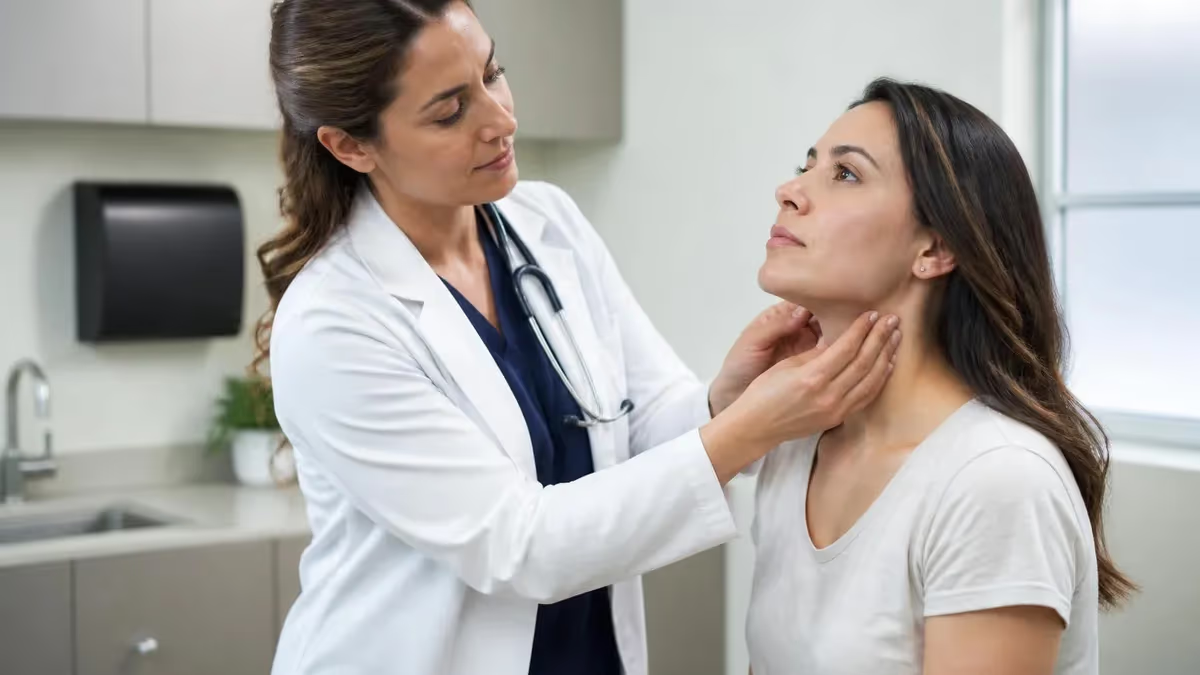
What Psychiatric nurse p Look Like
Psychiatric nurse nurse p, formally titled health nurse health nurse positions, represent one of the fastest-growing roles in advanced practice nursing. PMHNPs assess, diagnose, and treat patients across the lifespan for mental health conditions, prescribe psychotropic medications, provide therapy interventions, and coordinate care across inpatient, outpatient, and telehealth settings.
The demand for psychiatric care continues to outpace the supply of psychiatrists, creating sustained hiring pressure for qualified PMHNPs in virtually every market. Hospital systems, community mental health centers, addiction treatment facilities, private psychiatric practices, telepsychiatry platforms, school-based health centers, and Veterans Affairs medical centers all actively recruit PMHNPs with competitive compensation packages.
The role combines medical decision-making with sustained therapeutic relationships, making it distinct from both purely medical and purely counseling positions. PMHNPs spend significant time on differential diagnosis, medication management, monitoring for adverse effects, and conducting brief therapeutic interventions during routine medication visits. Many also build dedicated psychotherapy caseloads alongside medication management responsibilities.
The PMHNP role differs from related positions in important ways. Psychiatrists complete medical school plus four years of psychiatric residency and bring deep medical pathophysiology training but smaller caseloads typically. Licensed clinical social workers and licensed marriage and family therapists provide psychotherapy without prescribing authority. Psychiatric registered nurses provide medication administration, milieu management, and patient education without independent diagnostic or prescribing authority that PMHNPs hold under their advanced practice license.
Daily responsibilities for most PMHNPs include conducting initial psychiatric evaluations of new patients, reviewing prior treatment history and previously prescribed medications, formulating differential diagnoses, prescribing and titrating medications, monitoring for therapeutic response and adverse effects, providing supportive therapy or brief evidence-based interventions, coordinating with primary care and other specialists, documenting encounters in electronic health records, and completing prior authorizations for medications requiring insurance approval before dispensing.
PMHNP Jobs Quick Facts
Median annual salary ranges from one hundred twenty thousand to one hundred sixty thousand dollars depending on geography, setting, and years of experience. The Bureau of Labor Statistics projects forty percent growth for nurse practitioner roles over the next decade, with psychiatric subspecialty growth outpacing the overall NP category. Telehealth roles offer fully remote PMHNP positions paying similar to in-person practice.
Job postings consistently outnumber qualified applicants in most metropolitan markets, producing favorable conditions for new PMHNPs. Multiple sign-on bonuses, relocation assistance, and student loan repayment incentives commonly appear in offers from competitive employers seeking to fill open positions quickly.
Salary Ranges Across Settings
Salary varies significantly by setting, geography, employment model, and years of experience. Hospital-employed PMHNPs typically earn between one hundred twenty thousand and one hundred fifty thousand dollars in base salary plus benefits, with shift differentials for evening, overnight, and weekend coverage adding five to fifteen thousand dollars annually. Inpatient psychiatric units and emergency department crisis teams command the higher end of this range due to higher acuity demands.
Private practice and group practice PMHNPs earn through productivity models that often produce one hundred forty thousand to two hundred thousand dollars annually for established providers with full caseloads. The productivity model rewards efficiency and full schedule utilization but carries less predictable income than salaried positions, particularly during the first six to twelve months while building patient panels.
Locum tenens PMHNPs earn premium rates ranging from one hundred forty to two hundred forty dollars per hour for short-term coverage assignments at facilities with vacant positions. Telehealth platforms offering W-two employment typically pay one hundred forty thousand to one hundred seventy thousand dollars annually for full-time work, while independent contractor arrangements with platforms can produce higher earnings with the trade-off of self-employment tax responsibility and lack of benefits.
Beyond base salary and bonuses, total compensation includes employer-paid health insurance valued at twelve thousand to twenty-four thousand dollars annually for family coverage, retirement contributions typically matching three to six percent of salary, professional liability coverage that would cost three thousand to seven thousand dollars annually for individual policies, continuing medical education allowances of fifteen hundred to four thousand dollars, and licensure renewal reimbursement of two hundred to five hundred dollars annually.
Productivity bonuses tied to relative value units or patient visit counts can add ten to thirty percent on top of base salary for high performers in productivity-based settings. The structure typically pays a base salary plus bonus dollars for visits above a minimum threshold, encouraging full schedule utilization without penalizing the routine clinical days that fall short of bonus thresholds. Reviewing bonus formulas carefully prevents misunderstanding expectations versus actual earnings during the first year.
Related reading: psychiatric nurse practitioner jobs covers the next step in more detail.
If you want the full picture, the psychiatric mental health nurse practitioner jobs guide walks through it step by step.
For a deeper look at this topic, see our guide to psychiatric nurse practitioner jobs near me.

Top PMHNP Employer Types
Inpatient psychiatric units, consultation-liaison services, and emergency department crisis teams within large hospital networks offer stable employment with strong benefits. Researching specific employers in this category through current and former employee reviews helps identify cultures and compensation structures aligned with personal priorities.
Federally qualified health centers and community mental health agencies serve high-need populations with student loan repayment incentives often tied to underserved area service. Researching specific employers in this category through current and former employee reviews helps identify cultures and compensation structures aligned with personal priorities.
Companies such as Done, Cerebral successor platforms, Talkiatry, and Brightside offer fully remote PMHNP positions covering patients across multiple licensed states. Researching specific employers in this category through current and former employee reviews helps identify cultures and compensation structures aligned with personal priorities.
VA medical centers across the country recruit PMHNPs aggressively with federal benefits, pension eligibility, and student loan forgiveness through the Education Debt Reduction Program. Researching specific employers in this category through current and former employee reviews helps identify cultures and compensation structures aligned with personal priorities.
Geographic Compensation Differences
Coastal metropolitan areas including New York, San Francisco, Boston, Seattle, and Washington DC pay the highest absolute salaries, often reaching one hundred eighty thousand to two hundred ten thousand dollars for experienced PMHNPs in hospital or specialty practice settings. Cost of living adjustments mean that these higher salaries do not always produce higher disposable income compared to mid-cost markets.
Mid-cost markets such as Denver, Austin, Charlotte, Phoenix, and Minneapolis offer competitive salaries in the one hundred forty thousand to one hundred sixty-five thousand range with significantly lower housing costs that produce strong real earnings. Rural areas qualify for various federal and state loan repayment programs that can effectively add twenty thousand to fifty thousand dollars annually in tax-free benefits for PMHNPs willing to practice in designated shortage areas.
Sign-on bonuses ranging from ten thousand to fifty thousand dollars appear frequently in markets with persistent vacancies, particularly for inpatient and emergency psychiatric positions. Relocation allowances of five thousand to fifteen thousand dollars accompany many sign-on offers. Negotiating these components often produces more value than incremental base salary increases, particularly for early career PMHNPs without strong use on base compensation alone.
State income tax variations significantly affect take-home pay across markets. Texas, Florida, Washington, Nevada, and Tennessee charge no state income tax, producing meaningfully higher net earnings on similar gross salaries compared to California, New York, Hawaii, or Oregon where state taxes can exceed nine percent of income. Factoring state tax into compensation comparisons across markets prevents misleading apples-to-oranges salary discussions during job searches.
Health Professional Shortage Area designations open access to federal loan repayment programs including the National Health Service Corps and Indian Health Service repayment offerings. Awards can reach fifty thousand to one hundred forty thousand dollars in tax-free loan repayment over two to four year service commitments. State-level programs offer similar benefits in many states, often stacking with federal programs for eligible PMHNPs who plan their early career around shortage area service.
PMHNP Work Setting Comparison
Inpatient PMHNP roles involve daily rounds, admission assessments, medication management for acute decompensation, coordination with multidisciplinary teams, and discharge planning. Patient acuity is high but caseloads are smaller, typically eight to fifteen patients at any given time, allowing deeper clinical engagement than higher-volume outpatient settings.
Each setting offers distinct rewards and challenges that suit different personality types and career goals. Trying multiple settings during clinical rotations or early career years helps identify the best long-term fit for individual preferences.
Requirements to Qualify for PMHNP Jobs
Becoming eligible for psychiatric nurse nurse p requires a Master of Science in Nursing or Doctor of Nursing Practice with PMHNP specialization, registered nurse licensure in the practice state, advanced practice registered nurse licensure, national certification through the American Nurses Credentialing Center as a Psychiatric health nurse Practitioner across the lifespan, and federal Drug Enforcement Administration registration for controlled substance prescribing.
The PMHNP-BC credential from the American Nurses Credentialing Center serves as the universal national certification for the role. The certification exam covers psychiatric assessment across the lifespan, neurobiology and psychopharmacology, psychotherapy modalities, ethical and legal practice standards, and quality improvement in mental health care. Pass rates for first-time test takers exceed eighty percent at most accredited programs.
State licensure adds requirements that vary by jurisdiction. Some states grant full practice authority allowing PMHNPs to evaluate, diagnose, prescribe, and treat independently. Other states require collaborative practice agreements with physicians or supervision arrangements that affect employment options and earning potential. Reviewing state-specific scope of practice rules before relocating prevents unwelcome surprises about practice limitations after the move.
The Doctor of Nursing Practice degree continues spreading as the preferred terminal degree for nurse practitioners, with the nurse p of Colleges of Nursing recommending DNP as the entry-level credential for advanced practice. While master of science remains widely accepted in current hiring, candidates pursuing PMHNP education in the next several years should consider DNP programs to future-proof their credentials against potential credential expectations changes.
Prior nursing experience strengthens applications for PMHNP school admission and benefits clinical practice after graduation. Most programs require one to two years of registered nurse experience before admission, with psychiatric nursing experience particularly valued. Applicants with experience in emergency departments, inpatient psychiatric units, addiction treatment facilities, or correctional health bring valuable assessment skills and exposure to acute mental health presentations that academic training alone cannot replicate fully.
From graduation to first paycheck typically takes three to six months for new PMHNPs because of multiple sequential credentialing steps including national certification application processing, state licensure, DEA registration, employer credentialing through medical staff offices, and insurance panel enrollment for billing purposes. Starting credentialing applications before graduation accelerates the timeline significantly.
Insurance panel enrollment alone can take sixty to one hundred eighty days at major payers, which means patients cannot be seen and billed under certain insurance plans until enrollment completes. Some employers absorb this gap by paying salary regardless of revenue generation during the credentialing window.
How to Land Your First PMHNP Position
The job search process for new graduate PMHNPs benefits from starting six months before graduation. Identifying target employers, attending career fairs at the home institution, reaching out to alumni working in psychiatric settings, and exploring loan repayment programs that influence first job choice all take time and benefit from early action. Many large hospital systems hire new graduates pending certification with start dates set after exam passage.
Networking through professional organizations including the American Psychiatric Nurses Association, the American Association of Nurse Practitioners, and state-level psychiatric nursing associations produces job leads that never appear on public job boards. Attending the APNA annual conference connects new graduates directly with hiring managers from major health systems and specialty practices across the country in a single weekend.
Clinical rotation employers often extend job offers to strong students who performed well during placements. Building relationships during the final clinical year by demonstrating engagement, asking thoughtful clinical questions, and showing willingness to take initiative on patient care often converts into a job offer before graduation. This pathway eliminates the lengthy public application process for the lucky students who connect well with their rotation sites.
Application materials warrant careful preparation. The curriculum vitae should highlight clinical rotation experiences with specific population exposure, diagnostic encounters, and treatment modalities used during training. Letters of recommendation from clinical preceptors carry more weight than academic references for clinical positions. A professional headshot, polished LinkedIn profile, and clean digital presence round out the application portfolio that hiring managers review.
Interview preparation should cover clinical scenario questions about safety planning, medication selection rationale, handling difficult patient interactions, working with multidisciplinary teams, and managing crisis situations. Many systems use structured interviews with standardized clinical vignettes that test diagnostic reasoning and treatment planning. Practicing case presentations aloud with peers or mentors before interviews builds the verbal fluency that high-stakes clinical conversations require.
New Graduate PMHNP Job Search Checklist
- ✓Begin national certification application immediately upon receiving final degree conferral confirmation
- ✓Apply for state APRN licensure in target practice state with anticipated exam pass date
- ✓Schedule and prepare for the PMHNP-BC certification examination at a Prometric testing center
- ✓Build a curriculum vitae highlighting clinical rotation experiences and any relevant prior nursing work
- ✓Identify target employer list including hospital systems, telepsychiatry platforms, and community agencies
- ✓Network with clinical preceptors and alumni working in target practice settings or geographic areas
- ✓Apply early for federal Drug Enforcement Administration registration after state licensure issuance
- ✓Research target employers thoroughly using Glassdoor, Indeed, and direct outreach to current employees
- ✓Prepare professional references including clinical preceptors who can speak to patient care skills
Negotiating PMHNP Job Offers
Base salary often has less negotiation flexibility than other compensation components, particularly with large hospital systems that publish salary bands by experience level. Sign-on bonuses, relocation packages, continuing medical education allowances, additional paid time off, professional liability coverage tier upgrades, and student loan repayment contributions all offer more negotiation room and produce significant total value when secured.
Collaborative practice agreement terms in restricted-practice states warrant careful review and negotiation. The supervising physician relationship can dramatically affect daily autonomy, scheduling flexibility, and consultation availability for complex cases. New graduates particularly benefit from collaborators willing to provide active mentorship during the first year of practice rather than purely administrative supervision.
Productivity benchmarks for performance bonuses or partnership tracks in private practice deserve scrutiny before signing. Benchmarks set too high produce burnout and unmet bonus expectations, while benchmarks set realistically reward strong work without punishing reasonable patient care pace. Asking about average productivity of current providers in the practice grounds the conversation in actual practice patterns rather than theoretical targets.
Asking for the offer in writing before responding gives time for careful review and consultation with mentors, peers, or career advisors. A reasonable offer should include base salary with payment schedule, bonus structure with specific benchmarks, benefits summary including health coverage and retirement contribution rate, paid time off accrual, continuing education allowance, professional liability coverage tier, sign-on bonus amount and clawback terms, and any collaborative practice agreement requirements.
Restrictive covenants and non-compete clauses appear in many PMHNP contracts and warrant careful review with legal counsel familiar with healthcare practice agreements. These clauses can significantly limit practice options if leaving the position, with geographic radius and duration terms that vary widely. Some states limit enforceability of non-compete clauses in healthcare contexts, while others enforce them strictly. Understanding state-specific rules informs negotiation strategy and protects long-term career flexibility.
Remote and Hybrid PMHNP Opportunities
Telepsychiatry has transformed the PMHNP job market by enabling fully remote practice covering patients in states where the provider holds active licensure. Major platforms including Talkiatry, Brightside, Done, Cerebral successor companies, and SonderMind employ thousands of remote PMHNPs across the country. Multistate licensing through the APRN Compact, where available, simplifies multistate practice for telehealth providers.
Hybrid roles combining one to three days of in-person clinical work with remaining days of remote care attract many PMHNPs seeking work-life balance without giving up the clinical engagement of in-person practice. These roles often appear at academic medical centers, integrated health systems, and progressive group practices that recognize the recruiting advantage of flexibility.
Considerations specific to remote PMHNP work include reliable high-speed internet, a dedicated and HIPAA-compliant workspace, comfort with electronic health records platforms, ability to manage administrative work independently without on-site support staff, and willingness to handle crisis situations remotely with appropriate referral and safety planning protocols established in advance.
Liability considerations for telepsychiatry require attention beyond standard practice. Most major medical professional liability carriers cover telepsychiatry within the standard NP policy, though some require notification of telehealth practice and may charge modest premium adjustments. Confirming coverage details before starting telehealth work prevents gaps that could leave the provider personally liable in malpractice events arising from remote care delivery.
Multistate practice through the APRN Compact requires meeting compact eligibility requirements and applying for the multistate license through the home state board of nursing. The compact currently includes a limited but growing number of states, with more joining annually. Holding compact licensure simplifies practice across compact states without separate state-by-state applications, though prescribing controlled substances still requires state-specific DEA registration in each state of practice.

PMHNP Jobs By the Numbers
PMHNP Career Specializations
PMHNPs with addiction subspecialty training treat substance use disorders with medication-assisted treatment in clinic and residential settings. Researching specific employers in this category through current and former employee reviews helps identify cultures and compensation structures aligned with personal priorities.
Pediatric and adolescent PMHNPs treat young patients in school-based clinics, pediatric hospitals, and community mental health centers focused on youth. Researching specific employers in this category through current and former employee reviews helps identify cultures and compensation structures aligned with personal priorities.
Geriatric PMHNPs serve older adults in nursing homes, memory care facilities, and outpatient clinics specializing in dementia and late-life mental illness. Researching specific employers in this category through current and former employee reviews helps identify cultures and compensation structures aligned with personal priorities.
Forensic PMHNPs work in correctional settings, court evaluation services, and competency restoration programs for patients in the legal system. Researching specific employers in this category through current and former employee reviews helps identify cultures and compensation structures aligned with personal priorities.
Building Long-Term PMHNP Career Success
The first two years of PMHNP practice typically focus on building diagnostic confidence, refining medication management skills, developing therapeutic alliance capabilities, and adapting to the documentation and billing demands of full-time clinical work. Mentorship from experienced PMHNPs or psychiatrists during this period dramatically accelerates skill development compared to learning purely through experience.
Years three through seven typically involve specialization, with many PMHNPs pursuing additional certifications in specific patient populations, treatment modalities, or practice settings. Adding training in cognitive behavioral therapy, dialectical behavior therapy, motivational interviewing, or transcranial magnetic stimulation expands clinical capability and adds revenue streams beyond standard medication management.
Senior PMHNPs increasingly move into leadership roles including clinical supervision, program development, teaching at nursing schools, independent practice ownership, and consulting work for healthcare organizations. The pathway from clinician to leader typically involves additional training in business administration, healthcare quality improvement, or doctoral-level study through DNP completion programs available online from many institutions.
Burnout prevention deserves intentional attention throughout the PMHNP career. The emotional demands of psychiatric practice combined with administrative burdens of modern healthcare can deplete even highly motivated providers without active self-care practices. Successful long-term PMHNPs typically maintain personal therapy or peer consultation groups, take meaningful vacation time, limit administrative work to defined hours, set boundaries on after-hours patient contact, and engage in activities outside healthcare that restore energy and perspective.
Financial planning aligned with PMHNP earnings can produce significant wealth accumulation over a thirty-year career. Maximizing employer retirement match, contributing to backdoor Roth IRAs annually, opening a taxable brokerage account for additional savings beyond retirement accounts, and considering real estate investment provides multiple wealth-building pathways. Working with a financial advisor familiar with healthcare professional compensation helps optimize tax efficiency and savings rate appropriate to long-term goals.
PMHNP Career Path Pros and Cons
- + —
- + —
- + —
- + —
- + —
- − —
- − —
- − —
- − —
- − —
Sample NP - Nurse Practitioner Practice Questions
Try these questions from our free NP - Nurse Practitioner practice tests. The correct answer and an explanation follow each question.
Which ANCC Magnet standard most directly supports the NP role in a hospital setting?
- A. Structural Empowerment
- B. Empirical Quality Outcomes
- C. Exemplary Professional Practice
- D. New Knowledge, Innovations & Improvements
Answer: C. Exemplary Professional Practice
Exemplary Professional Practice encompasses the professional role expectations, including advanced practice roles, care delivery, and interdisciplinary relationships.
What role does peer review play in Nurse Practitioner practice?
- A. It creates unnecessary competition
- B. It provides quality assurance and professional development through collegial evaluation
- C. It replaces formal certification
- D. It is only for beginners
Answer: B. It provides quality assurance and professional development through collegial evaluation
This is fundamental to Nurse Practitioner practice. It provides quality assurance and professional development through collegial evaluation represents the professional standard for professional standards in the NP certification framework.
What role does active listening play in Nurse Practitioner practice?
- A. It wastes time
- B. It ensures accurate understanding, demonstrates respect, and improves outcomes
- C. It is only for counseling professionals
- D. It means staying silent
Answer: B. It ensures accurate understanding, demonstrates respect, and improves outcomes
This is fundamental to Nurse Practitioner practice. It ensures accurate understanding, demonstrates respect, and improves outcomes represents the professional standard for communication in the NP certification framework.
What is the role of professional journals in Nurse Practitioner practice?
- A. They are optional reading
- B. They disseminate current research, best practices, and professional developments
- C. They only benefit academics
- D. They are outdated by publication time
Answer: B. They disseminate current research, best practices, and professional developments
This is fundamental to Nurse Practitioner practice. They disseminate current research, best practices, and professional developments represents the professional standard for research in the NP certification framework.
NP Questions and Answers
About the Author

Registered Nurse & Healthcare Educator
Johns Hopkins University School of NursingDr. Sarah Mitchell is a board-certified registered nurse with over 15 years of clinical and academic experience. She completed her PhD in Nursing Science at Johns Hopkins University and has taught NCLEX preparation and clinical skills courses for nursing students across the United States. Her research focuses on evidence-based exam preparation strategies for healthcare certification candidates.