
North Carolina Notary Public Manual: Complete Training Guide & Requirements for 2026 October
Master the North Carolina notary public manual. Learn what is a notary public, exam requirements, seal rules & how to become certified. ✅

Understanding the north carolina notary public manual is the essential first step for anyone pursuing commission in the Tar Heel State. So what is a notary public, exactly? A notary public is a state-appointed official authorized to witness signatures, administer oaths, take acknowledgments, and perform other acts designed to deter fraud in legal and financial transactions. North Carolina's Secretary of State oversees the commissioning process and publishes the official manual that governs every notary's duties, training requirements, and ethical obligations throughout the state.
North Carolina is one of a handful of states that mandates formal education before a new applicant can be commissioned. Every first-time applicant must complete a state-approved six-hour notary education course taught by an approved vendor and pass a written examination with a score of at least 80 percent. This rigorous approach reflects the legal weight that notarized documents carry — a single improperly notarized deed or power of attorney can cloud a property title, delay a court proceeding, or expose a signer to financial harm that takes years to untangle.
The manual itself covers topics ranging from the legal definition of a notary act to the specific wording required on certificates, the proper use of a notary public seal and stamp, disqualifying conflicts of interest, and the record-keeping practices that protect both the notary and the public. Candidates who read the manual carefully before their education course consistently outperform those who rely solely on classroom slides or third-party summaries, because the exam tests the exact language and procedures described in the official document.
Many aspiring notaries also wonder how notarization intersects with other professional roles — for example, whether a notary public in Bank of America branch offices follows the same North Carolina rules as an independent mobile notary. The answer is yes: state law applies uniformly regardless of employer. Bank employees commissioned as notaries must comply with the manual in every respect, including the prohibition on charging fees above the statutory maximum and the requirement to refuse service if the signer lacks satisfactory identification.
Spanish-speaking communities across North Carolina frequently search for a notario publico, borrowing a term from Latin American legal tradition where notaries hold a much broader quasi-attorney role. It is critically important to understand that a North Carolina notary public does not hold that expanded authority — they may not provide legal advice, draft legal documents, or represent clients in any proceeding. Confusing the two roles can lead applicants and members of the public to expect services that North Carolina law simply does not authorize.
If you are looking for a free public notary near me or a free notary public near me, many libraries, credit unions, and UPS stores offer complimentary notarization for basic documents. However, if you are planning to become a commissioned notary yourself, the costs involved — education, exam, bonding, and supplies — are modest compared to the earning potential and the professional credibility the commission provides. Training programs for states like notary public florida share many structural similarities with North Carolina's approach, making cross-state comparisons a useful study tool.
This article walks you through every major section of the North Carolina notary framework: who qualifies, how to pass the exam, what the seal and stamp requirements entail, how to handle common notarial acts, and how to maintain your commission in good standing over its four-year term. Whether you are a first-time applicant, a paralegal refreshing your knowledge, or a real estate professional preparing for renewal, the information below draws directly from the official manual and current Secretary of State guidance so you always have an accurate, up-to-date reference.
North Carolina Notary Public by the Numbers
Key Facts at a Glance
| Item | Value | Details |
|---|---|---|
| Required Education | 6 hrs | Mandatory for first-time applicants |
| Passing Score | 80% | Minimum on the written exam |
| Max Fee Per Act | $10 | Statutory cap set by NC law |

NC Notary Exam Study Schedule
- ▸Read Chapters 1–2 of the NC Notary Public Manual cover-to-cover
- ▸Define key terms: acknowledgment, jurat, affirmation, oath
- ▸Complete a 25-question baseline practice quiz to identify gaps
- ▸Review the eligibility and disqualification rules in detail
- ▸Study all certificate forms and required statutory language verbatim
- ▸Practice completing sample acknowledgment and jurat certificates
- ▸Learn the rules for correcting errors on certificates without invalidating the act
- ▸Review journal entry requirements and record-keeping obligations
- ▸Memorize acceptable forms of ID under NC law and their hierarchy
- ▸Study notary public seal and stamp specifications from the manual
- ▸Review conflict-of-interest prohibitions and fee limitations
- ▸Work through ethics scenario practice questions
- ▸Take two full-length timed practice exams under realistic conditions
- ▸Review every missed question against the official manual page
- ▸Attend the six-hour approved education course if not already completed
- ▸Submit application materials to the NC Secretary of State office
Learning how to become a notary public in North Carolina begins with confirming you meet the baseline eligibility requirements spelled out in Chapter 1 of the official manual. You must be at least 18 years old, a legal resident of North Carolina or a resident of an adjoining state who is regularly employed in North Carolina, able to read and write English, and free from any felony conviction or conviction of a crime involving dishonesty or moral turpitude.
Meeting these criteria does not guarantee commission — the Secretary of State retains discretion to deny applicants whose records suggest a risk to public trust.
Once you confirm eligibility, the next step is enrolling in a state-approved six-hour education course. These courses are offered by community colleges, bar associations, and private vendors approved by the NC Department of the Secretary of State. The curriculum follows the official manual precisely and covers the history of notarial law, types of notarial acts, acceptable identification, proper certificate completion, seal and stamp requirements, recordkeeping, prohibited conduct, and fee rules. Attendance is mandatory, and providers must report your completion to the state before your application can proceed.
After completing the education course, you sit for the written examination administered by the course provider or at a state-approved testing site. The exam consists of multiple-choice and short-answer questions drawn directly from the manual. The 80 percent passing threshold means you can miss no more than two questions out of ten on a ten-question section — a tighter margin than many candidates expect.
Those who fail may retake the exam, but must pay the exam fee again and typically must wait a specified period before re-testing. Diligent study of the official manual, supplemented by quality practice questions, is the most reliable path to a first-attempt pass.
Applicants who pass the exam receive a Certificate of Completion that must be included with the notary commission application submitted to the Secretary of State. The application also requires proof of a surety bond — currently set at $10,000 — which protects the public against financial harm caused by a notary's errors or misconduct. The bond is not insurance for the notary; it compensates injured parties and the bonding company will then seek recovery from the notary personally. Understanding this distinction is important because it underscores the seriousness of every notarial act you perform.
Many candidates wonder how North Carolina's process compares to other states. Readers curious about how to become a notary public in texas will find that Texas requires no pre-commission education, relying instead on a shorter application process and a bond. North Carolina's education mandate reflects a deliberate policy choice to raise the baseline competency of commissioned notaries and reduce errors that generate complaints, litigation, and document rejections. This rigorous approach benefits both the public and the notary by reducing liability exposure from the outset.
After the Secretary of State approves your application and issues your commission certificate, you must take an oath of office before the clerk of superior court in the county where you reside or are regularly employed. This oath-taking is not a formality — it is a constitutional requirement under North Carolina law. You must appear in person, present your commission certificate, and swear or affirm that you will faithfully perform the duties of a notary public. Only after completing the oath may you begin performing notarial acts, purchasing your seal, and opening your journal.
Your commission is valid for four years from the date of issuance, not from the date you take your oath. This distinction matters for renewal planning: if there is a delay between your commission date and your oath date, your effective commission window is correspondingly shorter.
The manual recommends marking your expiration date on your calendar the day you receive your commission and setting renewal reminders at the 90-day and 60-day marks before expiration. A lapsed commission means any notarial act you perform is void — an error that can have serious downstream consequences for documents you notarize in good faith.
Notary Public Seal, Stamp & Certificate Requirements
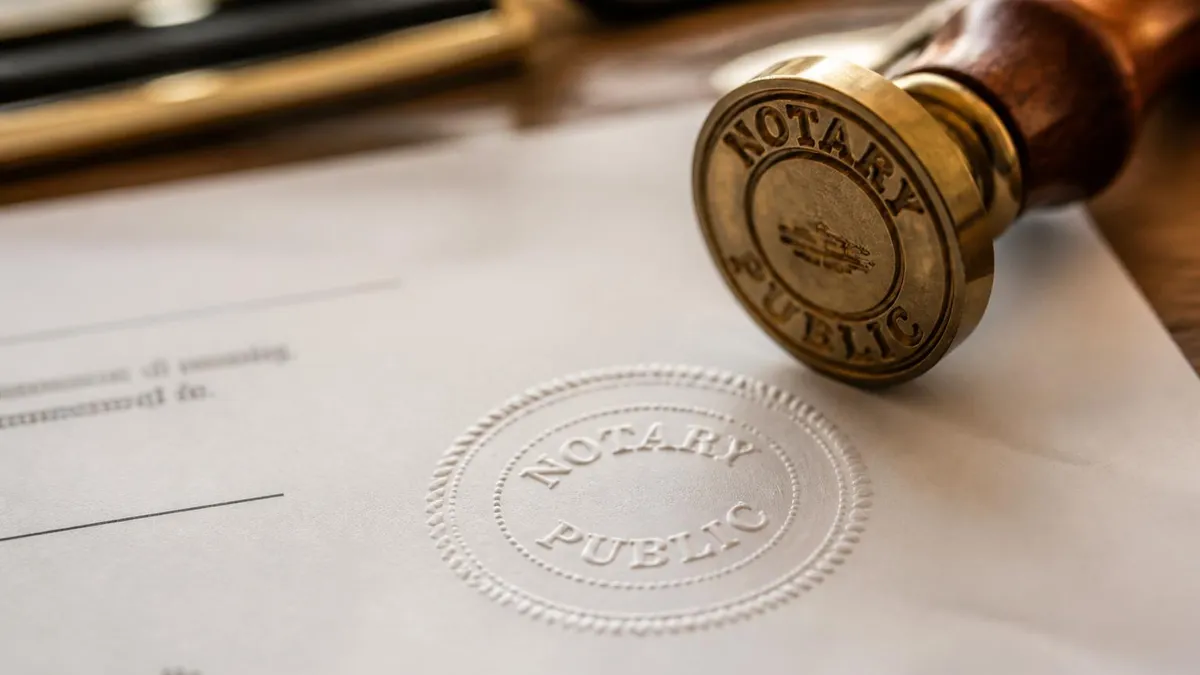
The notary public stamp and notary public seal are legally required elements of every notarial act performed in North Carolina. The seal must be a rubber stamp or embosser that produces a clear, legible impression containing your name exactly as it appears on your commission, the words "Notary Public," the words "North Carolina," and your county of commissioning. The seal impression must be capable of being photocopied without loss of detail, which is why ink stamps have become the standard over embossers for most document types.
The seal must be kept under the notary's exclusive control at all times and may never be surrendered to an employer or lender as a condition of employment. This rule exists because a notary's authority is personal — it is granted to the individual by the state, not to the business entity. If your employer insists on retaining your seal, that demand violates North Carolina law and you should report it to the Secretary of State. Upon expiration, resignation, or revocation of your commission, you must destroy or deface your seal and journal to prevent unauthorized use. You can learn more about notary public stamp and seal ordering requirements as part of the commission application process.
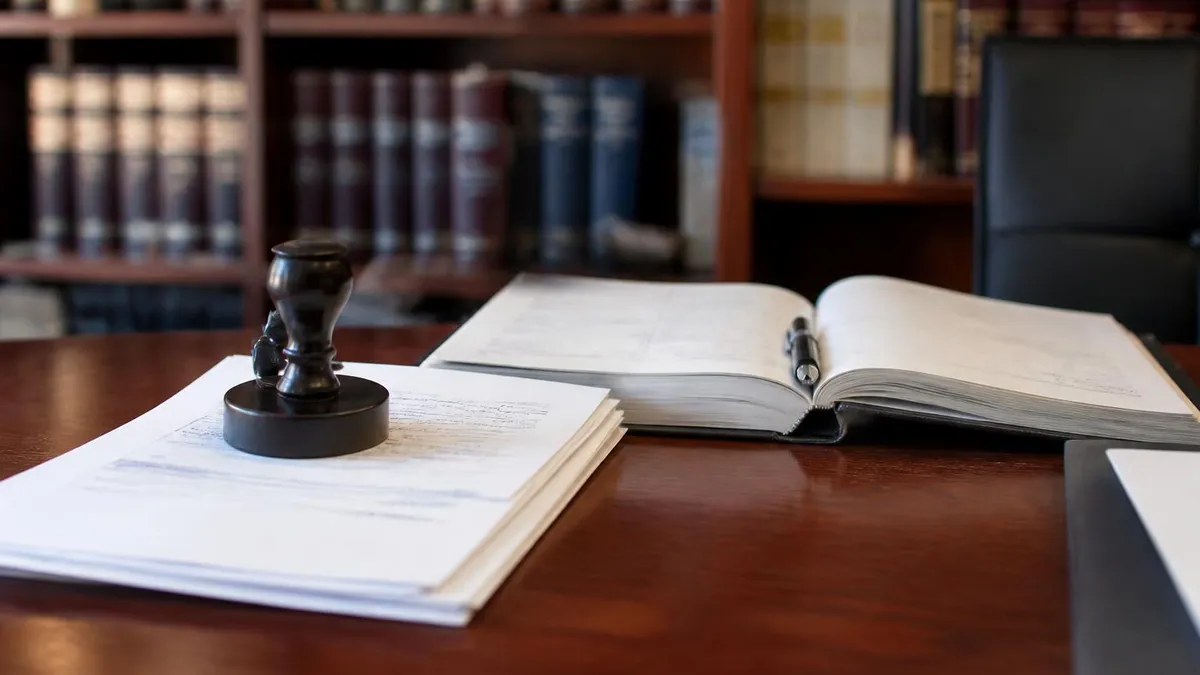
Becoming a North Carolina Notary Public: Pros and Cons
- +Steady demand: real estate, legal, and banking sectors continuously need commissioned notaries
- +Low barrier to entry: total startup costs typically under $200 including course, bond, and supplies
- +Flexible income: mobile notaries can earn $75–$200 per loan signing appointment
- +Professional credibility: commission signals trustworthiness to employers and clients
- +Remote notarization option: NC authorizes RON for added convenience and reach
- +Renewal is simpler than initial commission: only three hours of education required
- −Education mandate adds time and cost compared to states with no pre-commission requirements
- −Personal liability exposure if errors or omissions cause financial harm to a signer
- −Strict fee cap of $10 per act limits income for standard notarizations without appointment fees
- −Commission is personal and cannot be transferred or shared with a business entity
- −Mandatory journal maintenance and recordkeeping add administrative burden
- −Seal and commission void immediately upon expiration if renewal paperwork is late
North Carolina Notary Public Exam Prep Checklist
- ✓Download and read the current NC Notary Public Manual from the Secretary of State website before enrolling in any course
- ✓Confirm your eligibility: age 18+, NC resident or regularly employed in NC, no disqualifying criminal history
- ✓Register for a state-approved six-hour education course with a licensed vendor or community college
- ✓Study all approved certificate forms and memorize the required statutory wording for acknowledgments and jurats
- ✓Practice identifying acceptable forms of ID and know how to handle situations where a signer lacks standard credentials
- ✓Review the seal and stamp specifications to understand exactly what information must appear on your official stamp
- ✓Complete at least two full-length timed practice exams targeting the 80% passing threshold before exam day
- ✓Prepare your $10,000 surety bond through a licensed bonding agent before submitting your application
- ✓Assemble all application materials: Certificate of Completion, bond, application form, and applicable fees
- ✓Schedule your oath of office with the clerk of superior court immediately after receiving your commission certificate

The Manual Is the Exam — Read It Verbatim
North Carolina's written notary exam draws its questions directly from the official NC Notary Public Manual. Candidates who read the manual at least twice before their education course consistently score above 90 percent on the exam. Third-party summaries and study guides are helpful supplements, but they cannot replace the precision of the official text — especially for certificate wording, seal specifications, and the exact language of prohibited acts.
A North Carolina notary's core duties center on performing notarial acts with absolute impartiality, accuracy, and awareness of fraud risks. The most common act is the acknowledgment, in which a signer personally appears before the notary and acknowledges that they signed a document of their own free will. The notary does not verify the truth of the document's contents — only that the person appearing is who they claim to be and that they are signing voluntarily. This distinction is foundational and appears on virtually every version of the state exam.
The jurat is the second most common notarial act and is fundamentally different from an acknowledgment. In a jurat, the signer must sign the document in the notary's physical presence and must swear or affirm under oath that the contents of the document are true. Notaries must administer the oath or affirmation verbally — it is insufficient to simply ask the signer if they swear the document is true while presenting a pen. The manual provides specific sample oath language, and using it consistently protects you if the jurat is later challenged.
Administering oaths and affirmations without an accompanying document is another authorized notarial act in North Carolina. This act is common for witnesses being sworn before depositions, for official ceremonies, and in other contexts where a verbal oath is needed but no written instrument is involved. The notary must record the act in their journal just as they would any other notarial act, noting the name of the person who took the oath and the general purpose for which it was administered.
Certified copies of certain documents represent a fourth category of notarial act authorized under North Carolina law, but with important limitations. A North Carolina notary may certify a copy only of a document that is not a public record — meaning they may not certify copies of birth certificates, marriage records, or court judgments. They may certify copies of private documents such as a personal letter or a privately held contract. The certification process involves the notary comparing the copy to the original in the signer's presence and attesting that the copy is a true, accurate, and complete reproduction.
Fraud prevention is woven throughout the manual and reflects the core reason notaries exist. The primary fraud-prevention tool at a notary's disposal is thorough identity verification. Acceptable forms of identification under North Carolina law include a current state-issued driver's license or ID card, a current U.S. or foreign passport, a current U.S. military ID, or a current tribal ID.
The notary must examine the credential for signs of tampering, must verify that the photograph matches the person present, and must note the credential type and number in the journal. Accepting an expired credential or skipping ID verification — even at the request of a sympathetic signer — is a violation that can result in commission revocation.
Notaries must also recognize and refuse to perform notarial acts in coerced or pressured situations. If a signer appears fearful, confused, or unable to communicate freely, the notary must pause and assess the situation before proceeding. This obligation is especially important in real estate transactions, elder care contexts, and family financial matters where undue influence is a documented risk. The manual instructs notaries to err on the side of refusal when any doubt exists — a notarial act that is refused can always be rescheduled, but a coerced signature that is notarized may cause irreversible harm.
Prohibited conduct under the NC Notary Public Manual includes notarizing a document in which you have a financial or beneficial interest, notarizing your own signature, notarizing a document signed by a spouse or close relative in circumstances where impartiality could be questioned, and advertising notary services in a foreign language in a way that implies a broader legal authority than North Carolina law grants. The last prohibition is specifically designed to prevent the confusion between a North Carolina notary public and a notario publico — a critical distinction that the state enforces actively through its consumer protection framework.
Any notarial act performed after your North Carolina commission expires is void under state law, regardless of whether you have submitted a renewal application. Document recipients — including lenders, courts, and title companies — can reject notarizations performed by an expired notary, creating delays and potential legal liability. Always confirm your commission expiration date before each notarial act, especially if your renewal paperwork is pending.
Commission renewal in North Carolina follows a streamlined process compared to the initial application, but it still requires intentional preparation. Notaries seeking renewal must complete a three-hour state-approved refresher course — half the length of the initial six-hour requirement — and pass a written renewal exam with the same 80 percent minimum score. The renewal course updates notaries on any statutory changes, new guidance from the Secretary of State, and evolving best practices for document security and signer identification. Treating renewal as a genuine learning opportunity rather than a bureaucratic hurdle is the mark of a professional notary.
The renewal application window opens 90 days before your commission's expiration date. Filing early is strongly recommended because processing times can vary depending on application volume at the Secretary of State's office, and any gap between your old commission's expiration and your new commission's issuance leaves you unable to legally perform notarial acts. If you are a mobile notary who schedules loan signings weeks in advance, a lapsed commission at a critical moment could mean losing income and damaging professional relationships with signing services and title companies that depend on your availability.
Notaries who change their name or county of residence during their commission term must notify the Secretary of State within 45 days of the change. A name change requires updating your seal and journal header to reflect the new name, obtaining a new commission certificate reflecting the updated information, and taking a new oath in the appropriate county.
Failing to update your information is not merely an administrative oversight — using a seal or certificate with outdated information invalidates any notarial act performed after the change, which can create serious title and legal issues for documents you notarize during the gap.
Remote Online Notarization, commonly called RON, is now authorized in North Carolina under legislation that took effect in 2023. RON allows a notary to perform certain notarial acts over a secure two-way audiovisual connection rather than requiring the signer to be physically present. To become a RON-authorized notary, you must hold an active traditional commission and register with the Secretary of State as an electronic notary.
You must also use a state-approved RON platform that provides credential analysis, identity proofing, and a tamper-evident audit trail. Candidates curious about how remote processes work in other states can explore how can i become a notary public in california for a useful comparison, as California has one of the most developed RON frameworks in the country.
Notaries with questions about public notary what is in the context of their specific employer should consult both the official manual and their employer's internal policies. Employers — including banks, law firms, and title companies — may place additional requirements on notaries beyond the statutory minimums, such as requiring that notarizations be performed only for customers, maintaining separate employer-branded journals, or requiring approval before performing RON acts. These internal policies are permissible so long as they do not conflict with state law or compel the notary to violate the manual's ethical standards.
Disciplinary actions against North Carolina notaries are published by the Secretary of State and serve as valuable case studies for exam preparation and ongoing professional development. Common grounds for discipline include failure to personally appear with the signer, notarizing a document outside the notary's presence, falsifying a certificate, using an improper seal, charging fees above the statutory maximum, and failing to maintain a journal. Reviewing real disciplinary cases in the public record — which are available on the Secretary of State's website — gives candidates a concrete sense of how abstract manual rules translate into real-world errors with real-world consequences.
Understanding the full scope of a notary's role also means recognizing its limits. North Carolina notaries may not give legal advice, prepare legal documents, translate documents, or certify the accuracy of a translation. They may not act as an immigration consultant, draft a will or deed, or advise a signer on whether they should sign a particular document.
If a signer asks for advice beyond the scope of notarization, the appropriate response is to refer them to a licensed attorney. Staying within these boundaries protects the public, protects the notary from unauthorized practice of law charges, and maintains the integrity of the commission that the Secretary of State has entrusted to you.
Practical preparation for the notary public exam in North Carolina goes well beyond memorizing the manual's text. Experienced notaries and exam coaches consistently emphasize active recall over passive reading — meaning you should test yourself on the material repeatedly rather than simply re-reading chapters. Flashcards covering certificate wording, identification rules, prohibited acts, and fee limits are especially effective because these are the categories that generate the most exam questions and the most real-world errors among new notaries.
Time management during the written exam is a skill worth practicing. Many candidates spend too long on scenario-based questions that require applying multiple manual provisions simultaneously. A useful strategy is to answer all straightforward definitional questions first, flag any scenario questions that require more thought, and then return to the flagged items with the remaining time. This approach ensures you capture all the points you know with confidence before investing extra time in the harder questions — a technique that is particularly valuable given the 80 percent passing threshold leaves little room for error.
After passing the exam and receiving your commission, the single most important practical habit you can build is completing your notary journal entry before the signer leaves your presence. Many errors and fraud claims arise not from intentional misconduct but from reconstructed journal entries completed hours or days after the act, when memory has faded and details blur. The few minutes it takes to complete a thorough journal entry in real time is the most valuable investment you can make in your professional protection and in the evidentiary value of your records.
Building a network of fellow notaries — through the NC Bar Association's notary resources, local real estate professional groups, or online notary communities — provides an invaluable sounding board when unusual situations arise. The manual cannot anticipate every scenario: a signer who shows up with an expired passport and a utility bill, a document with blank spaces that the requester insists are intentional, or a power of attorney where the principal seems confused about what they are signing. Experienced peers can share how they have handled similar situations without crossing legal or ethical lines.
Mobile notaries serving the real estate and legal sectors should invest time understanding loan signing agent responsibilities beyond the basic notarial acts. Loan signing agents are not just notaries — they guide signers through complex mortgage packages, confirm that all signature and initial lines are completed, and return documents to the lender or title company within specified timeframes.
The NC Notary Public Manual covers the notarial acts within a loan package, but the full loan signing agent role involves additional training that is outside the manual's scope and is typically covered by loan signing agent certification programs offered by national organizations.
Aspiring notaries who want to specialize in serving elderly or disabled populations should pay particular attention to the manual's guidance on capacity and willingness. A notary must independently assess whether the signer understands the nature and consequences of the document they are signing — not just whether they can physically sign their name.
If a signer cannot communicate meaningfully, appears heavily medicated, or is being spoken for entirely by a third party in the room, these are red flags that warrant postponement and possibly a consultation with an elder law attorney before proceeding. The manual's ethical framework places the notary in the position of a last line of defense against fraud and exploitation in high-stakes transactions.
Finally, investing in quality supplies before you begin performing acts — a durable rubber stamp with crisp ink, a high-quality bound journal, a secure carrying case for mobile work, and a reliable method for verifying ID documents — sets a professional tone that builds client confidence and reduces errors. Notaries who cut corners on supplies often find that poor-quality seal impressions get rejected by county recorders or lenders, requiring costly re-notarizations that damage professional reputations. The upfront investment in proper equipment is genuinely one of the best returns in the notary profession.
Notary Public Questions and Answers

Notary Public Training: Complete 2026 Guide to Requirements, Certification & Exam Prep

Remote Notary Public: The Complete Guide to Online Notarization in 2026

Notary Public License: What It Is, How to Get One, and Everything You Need to Know

Notary Public Commission Application: Complete Step-by-Step Guide for 2026
What Is a Notary Public Office? Everything You Need to Know
About the Author

Notary Public Law Expert & State Notary Exam Specialist
Georgetown University Law CenterAttorney Sarah Williams is a licensed attorney and National Notary Association (NNA) certified notary with a Juris Doctor from Georgetown University Law Center. She has 13 years of experience in notarial law, document authentication, and real estate closings. Sarah coaches candidates through state notary public examinations, notary signing agent certification, and loan signing agent training programs.