
Notary Public Manual: The Complete 2026 September Guide to Duties, Laws, and Best Practices
🔎 The complete notary public manual covering duties, laws, seals, stamps, and exam prep. Learn what a notary public does and how to become one in 2026 September.

A notary public manual is the foundational reference every commissioned officer relies on to perform lawful, ethical, and legally binding notarizations across the United States. Whether you are wondering what is a notary public, preparing to take your state commission exam, or simply trying to understand the rules that govern signature witnessing, this comprehensive guide walks you through every duty, tool, statute, and best practice you need to know in 2026. The notary public manual remains the single most important document in the profession, second only to your state's notary statute.
Notaries public are state-appointed officials who serve as impartial witnesses to the signing of important documents, administer oaths and affirmations, and certify copies of records where authorized. Their role dates back centuries, but the modern American notary has evolved into a specialized fraud-prevention officer charged with verifying identity, ensuring willingness, and confirming awareness of the document being signed. Every notarization a commissioned officer performs becomes part of a permanent legal record that courts, banks, and government agencies rely upon.
If you have ever searched free public notary near me after needing a deed, power of attorney, or affidavit notarized, you have already experienced the practical importance of this profession. From real estate closings to immigration affidavits to mobile signing agent appointments, notaries touch nearly every major financial and legal transaction in American life. Understanding the manual is therefore essential not just for aspiring notaries but for any consumer who wants to know their rights at the signing table.
This guide covers the core duties listed in every state notary public manual: identity verification, completing acknowledgments and jurats, maintaining the journal, applying the notary public stamp and notary public seal, recognizing fraud, and refusing improper requests. We will also explore state-specific differences such as notary public Texas rules, fee caps, electronic notarization laws, and the rapidly expanding world of remote online notarization that became standard practice across more than 40 states by 2026.
Across the Spanish-speaking community, the term notario publico carries a very different meaning than its American counterpart, and confusion between the two has led to costly legal mistakes. A U.S. notary public is not an attorney and cannot give legal advice, draft contracts, or represent clients before immigration courts. The manual is explicit on this boundary, and every commissioned notary must learn to communicate this limitation clearly, especially to bilingual clients who may expect attorney-level services.
Whether you work at a UPS Store, serve customers as a notary public in Bank of America branches, run a mobile notary business, or volunteer at your local library, the principles in this manual apply uniformly. The standards of impartiality, accurate record-keeping, and personal appearance of the signer have not changed in over a century, even as the tools have moved from quill pens to tamper-evident digital certificates.
By the end of this guide you will have a working command of the notary public manual, a clear roadmap for the notary public exam, and concrete checklists you can apply on day one of your commission. Bookmark this page, return to it before every appointment, and treat it as the operational companion to your state-issued handbook.
The Notary Profession by the Numbers

Core Duties Every Notary Performs
Confirm each signer's identity using satisfactory evidence such as a current government-issued photo ID, credible witnesses, or personal knowledge as defined by state law.
Certify that a signer personally appeared, was identified, and acknowledged signing a document voluntarily for the purposes it contains. The most common notarial act in real estate.
Administer a verbal oath or affirmation, then certify the signer swore to the truth of a document signed in your presence. Required for affidavits and depositions.
Maintain a sequential record of every notarization including date, document type, signer name, ID used, fee, and signature. Required in most states, recommended in all.
Decline to notarize when the signer cannot be identified, appears coerced, lacks awareness, or when the document is incomplete or contains blanks.
So what is a notary public, exactly? A notary public is an unbiased public officer commissioned by a state government to serve as an official witness for the signing of legal documents and to administer oaths. The notary's primary mission is fraud deterrence: by verifying identity, confirming willingness, and creating a contemporaneous record of the signing, the notary makes it far harder for forged signatures or coerced agreements to slip into the public record. This is why courts give notarized documents a presumption of authenticity.
The role is rooted in centuries of common law tradition but operates today under state-specific statutes. Every state publishes its own notary public manual or handbook, and while the core duties are remarkably consistent, the details differ dramatically. Notary public Texas rules, for example, set the maximum fee at $10 for acknowledgments and require a four-year commission term, while California limits the term to four years but requires a six-hour education course and a proctored written exam.
One of the most common public misconceptions is that a notary is the same thing as a notario publico. In Spanish-speaking countries, a notario publico is a highly trained attorney with broad authority to draft contracts, give legal advice, and prepare immigration filings. A U.S. notary public has none of these powers and is explicitly prohibited from claiming them. Every state manual contains strict language requiring bilingual notaries to disclose this difference, and several states require Spanish-language signage in any notary office serving immigrant communities.
The notary's authority is also strictly limited geographically. A commission issued by Florida is valid only within Florida's borders. If you accept an appointment to perform a notarization across state lines without a commission in that jurisdiction, the notarization is void and you may face criminal charges. The same applies to notarizing documents by phone, fax, or email unless your state has authorized remote online notarization and you have completed the additional registration and training required.
Notaries also serve as gatekeepers against elder financial abuse, real estate fraud, and identity theft. The manual emphasizes that the notary must observe the signer's mental awareness, willingness, and understanding of the document. If grandma is being pressured by a relative to sign a quitclaim deed transferring her home, the notary has both the right and the duty to refuse the notarization. This judgment call is one of the most important responsibilities discussed in every state manual.
For an excellent overview of the role from a consumer perspective, visit our companion article on public notary what is covered in plain English. Understanding what a notary does and does not do protects both the public and the officer. Mistakes in this area are the single largest source of notary commission revocations nationwide.
Finally, the notary is not an investigator. You are not required to read the document, verify the truth of its contents, or research the parties involved. Your duty is to verify identity, willingness, and personal appearance, and to record the act accurately. This narrow but critical scope is what allows notaries to handle high volumes of documents efficiently while still providing meaningful legal protection.
Notary Public Practice Test Questions
Prepare for the Notary Public Exam exam with our free practice test modules. Each quiz covers key topics to help you pass on your first try.
Notary Public Basic Notary Public
Notary Public Exam Questions covering Basic Notary Public. Master Notary Public Test concepts for certification prep.
Notary Public Duties & Responsibilities of...
Free Notary Public Practice Test featuring Duties & Responsibilities of a Notary. Improve your Notary Public Exam score with mock test prep.
Notary Public Ethics & Professional Conduct
Notary Public Mock Exam on Ethics & Professional Conduct. Notary Public Study Guide questions to pass on your first try.
Notary Public Fraud Prevention & Security
Notary Public Test Prep for Fraud Prevention & Security. Practice Notary Public Quiz questions and boost your score.
Notary Public Identification & Credential ...
Notary Public Questions and Answers on Identification & Credential Verification. Free Notary Public practice for exam readiness.
Notary Public Jurats & Acknowledgments
Notary Public Mock Test covering Jurats & Acknowledgments. Online Notary Public Test practice with instant feedback.
Notary Public Notarial Acts & Procedures
Free Notary Public Quiz on Notarial Acts & Procedures. Notary Public Exam prep questions with detailed explanations.
Notary Public Notary Laws & Regulations
Notary Public Practice Questions for Notary Laws & Regulations. Build confidence for your Notary Public certification exam.
Notary Public MCQ
Notary Public Test Online for MCQ. Free practice with instant results and feedback.
Notary Public
Notary Public Study Material on Notary Public. Prepare effectively with real exam-style questions.
Notary Public Oaths & Affirmations
Free Notary Public Test covering Oaths & Affirmations. Practice and track your Notary Public exam readiness.
Notary Public Recordkeeping & Journal Entries
Notary Public Exam Questions covering Recordkeeping & Journal Entries. Master Notary Public Test concepts for certification prep.
Notary Public Exam Basic Notary Public
Free Notary Public Practice Test featuring Exam Basic Notary Public. Improve your Notary Public Exam score with mock test prep.
Notary Public Exam Duties & Responsibiliti...
Notary Public Mock Exam on Exam Duties & Responsibilities of a Notary. Notary Public Study Guide questions to pass on your first try.
Notary Public Exam Ethics & Professional C...
Notary Public Test Prep for Exam Ethics & Professional Conduct. Practice Notary Public Quiz questions and boost your score.
Notary Public Exam Fraud Prevention & Secu...
Notary Public Questions and Answers on Exam Fraud Prevention & Security. Free Notary Public practice for exam readiness.
Notary Public Exam Identification & Creden...
Notary Public Mock Test covering Exam Identification & Credential Verification. Online Notary Public Test practice with instant feedback.
Notary Public Exam Jurats & Acknowledgments
Free Notary Public Quiz on Exam Jurats & Acknowledgments. Notary Public Exam prep questions with detailed explanations.
Notary Public Exam Notarial Acts & Procedures
Notary Public Practice Questions for Exam Notarial Acts & Procedures. Build confidence for your Notary Public certification exam.
Notary Public Exam Notary Certificates & W...
Notary Public Test Online for Exam Notary Certificates & Wording. Free practice with instant results and feedback.
Notary Public Exam Notary Laws & Regulations
Notary Public Study Material on Exam Notary Laws & Regulations. Prepare effectively with real exam-style questions.
Notary Public Exam Notary Public
Free Notary Public Test covering Exam Notary Public. Practice and track your Notary Public exam readiness.
Notary Public Exam Notary Public MCQ
Notary Public Exam Questions covering Exam Notary Public MCQ. Master Notary Public Test concepts for certification prep.
Notary Public Exam Notary Seal & Stamp Req...
Free Notary Public Practice Test featuring Exam Notary Seal & Stamp Requirements. Improve your Notary Public Exam score with mock test prep.
Stamps, Seals, and the Notary Public Stamp Requirements
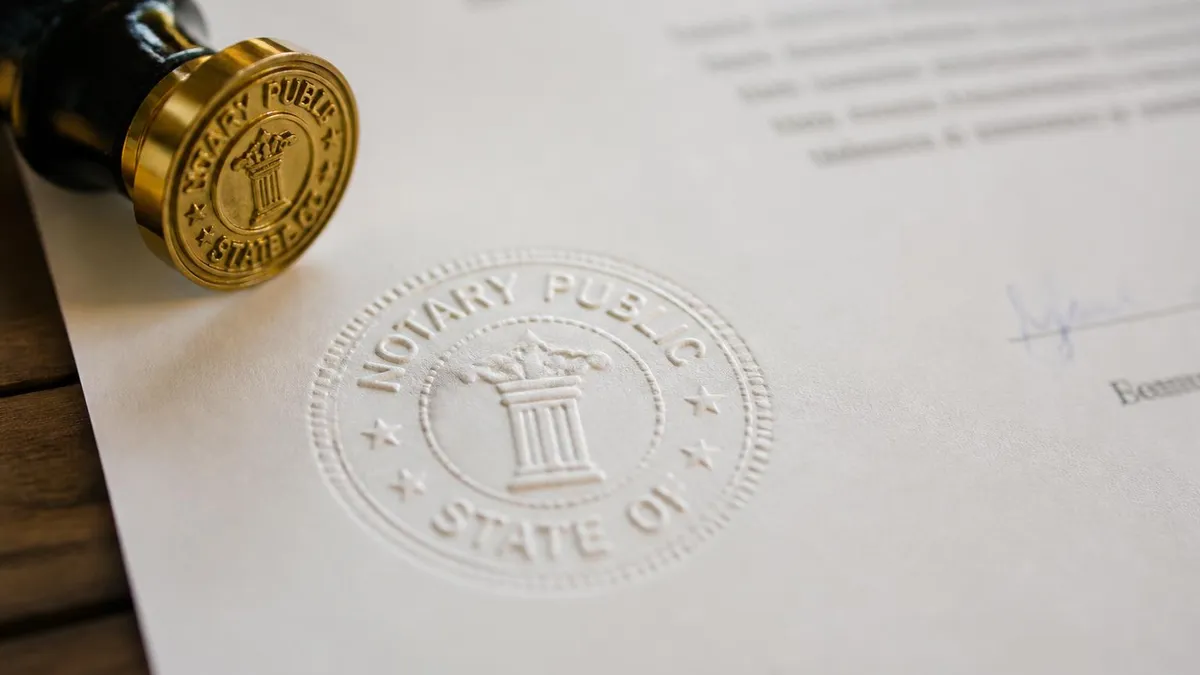
The notary public stamp is a rubber or pre-inked device that imprints the notary's name, commission number, expiration date, and state on every notarized document. Most states require the stamp to produce a photographically reproducible impression in black, blue, or purple ink. The dimensions, shape, and required elements vary by state, and using a non-compliant stamp can invalidate the entire notarization.
Care for your notary public stamp like a passport. Store it in a locked drawer when not in use, never lend it to anyone including family members or coworkers, and report theft immediately to your commissioning authority. When your commission expires or is revoked, the manual requires you to destroy the stamp by defacing the die or returning it to the state, depending on jurisdiction.
Should You Become a Notary Public? Weighing the Decision
- +Low barrier to entry with most states requiring only a short application and modest fee
- +Excellent supplemental income for real estate agents, paralegals, and bank employees
- +Mobile notary work can pay $75 to $200 per signing appointment in many markets
- +Flexible side business that pairs well with full-time employment
- +Strong demand from banks, title companies, hospitals, and law firms
- +Remote online notarization opens nationwide client opportunities from a home office
- +Builds credibility and trust within professional and community networks
- −Personal liability if you make errors, often requiring an errors and omissions policy
- −Bond requirement in many states adds upfront cost without protecting the notary
- −Strict statutory rules mean small mistakes can void documents and expose you to claims
- −Income from walk-in notarizations alone is rarely enough to live on
- −Must remain impartial even with friends, family, and employer pressure
- −State fee caps limit pricing for traditional in-person work in most jurisdictions
- −Commission can be revoked for misconduct, ending your ability to work in the role
Daily Notary Public Best Practices Checklist
- ✓Verify the signer is physically present at the moment of notarization, never before or after
- ✓Examine the photo ID for tampering, expiration, and matching name against the document
- ✓Confirm the signer appears mentally aware, willing, and free from coercion or duress
- ✓Read the notarial certificate to determine whether an acknowledgment or jurat is required
- ✓Administer a verbal oath or affirmation when performing any jurat
- ✓Complete the journal entry before applying the stamp to the document
- ✓Apply the notary public stamp clearly in black ink without overlapping signatures or text
- ✓Refuse to notarize incomplete documents containing blank spaces or missing pages
- ✓Decline notarizations where you have a financial interest or are a party to the transaction
- ✓Lock your stamp, seal, and journal in a secure location at the end of every business day
Personal appearance is non-negotiable
Every state notary public manual contains the same foundational requirement: the signer must personally appear before the notary at the moment of notarization. No exceptions for trusted clients, no notarizations over the phone, no pre-signed documents brought in by a third party. Violating this rule is the most common cause of commission revocation, civil liability, and criminal prosecution in the United States.
Even experienced notaries make mistakes, and the most common errors are entirely preventable with discipline and a good checklist. The first category is identity verification failures. A notary who accepts an expired driver's license, fails to compare the photo carefully to the signer, or relies on a copy of an ID rather than the original has set the stage for a lawsuit. The manual is unambiguous: only current, government-issued, photographic identification or properly sworn credible witnesses satisfy the standard in most states.
The second category is improper certificate completion. The acknowledgment certificate must match the act performed. If you use an acknowledgment form when a jurat was required, the document is defective. Crossing out and rewriting venue information, leaving the date blank, forgetting to include the signer's name in the certificate, or using the wrong state form all create defects. Always read the certificate before completing it, and never copy and paste language from one document into another without confirming the legal effect.
The third category is journal errors. Failing to obtain the signer's signature in the journal, omitting the type of ID, leaving the fee column blank, or skipping entries entirely creates evidentiary gaps that plaintiffs exploit. A complete journal entry takes about 90 seconds and is the single best insurance policy against fabricated claims. If you ever face a deposition or court testimony about a notarization you performed three years ago, your journal will be your only reliable memory.
The fourth category involves unauthorized practice of law. A notary who tells a client what type of document to use, drafts language for a power of attorney, or advises on the legal effect of signing is practicing law without a license. This is especially common with notario publico confusion in immigrant communities, where well-intentioned bilingual notaries cross the line by helping fill out immigration forms. Several states impose criminal penalties on notaries who hold themselves out as immigration consultants without separate accreditation.
The fifth category is fee violations. Most states set strict maximum fees for each type of notarial act. Texas caps acknowledgments at $10, California allows $15, and Florida permits $10. A notary who overcharges, fails to disclose fees in advance, or charges for travel without the proper disclosure language risks both civil liability and commission discipline. Always post your fee schedule, itemize charges on receipts, and document any agreed travel fees in writing.
The sixth category involves stamp and seal misuse. Lending your stamp to a coworker, leaving it unattended in a shared workspace, or continuing to use it after your commission expires are all serious violations. Some states make stamp misuse a third-degree felony. Treat the device as personally as you would a firearm or a prescription pad: locked, logged, and never delegated.
Finally, many notaries fail to recognize the warning signs of fraud. A signer who avoids eye contact, lets a companion answer questions for them, presents a freshly issued ID that does not match the address on the document, or asks you to backdate or alter dates is showing classic red flags. The manual gives you authority to refuse any notarization for any lawful reason. Use that authority.

Backdating a notarial act is fraud, full stop. No matter how sympathetic the signer's story, no matter how routine the request seems, recording an incorrect date on a certificate or journal entry can result in immediate commission revocation, civil liability, and criminal charges in every state. If a deadline was missed, that is the client's problem to resolve through legal channels — not yours to solve with a pen.
Understanding how to become a notary public is the natural next step after mastering the manual. The exact process varies by state but generally follows a predictable sequence: confirm eligibility, complete required education, pass any required exam, file an application with the secretary of state or equivalent commissioning authority, post a surety bond, take the oath of office, and purchase your stamp and journal. The entire process typically takes four to eight weeks and costs between $100 and $500 depending on your state and whether you choose to add errors and omissions insurance.
Eligibility requirements are straightforward in most states: be at least 18 years old, be a legal resident of the state, have no disqualifying criminal convictions, and be able to read and write English. Some states add residency duration requirements, fingerprint background checks, or character references. California, New York, and Louisiana have the most rigorous requirements, including mandatory education courses and proctored exams. Florida, Texas, and Pennsylvania are among the easier states with no exam requirement in most cases.
Education is where the notary public exam separates serious candidates from casual applicants. States that require an exam typically test on statutory duties, prohibited acts, fee schedules, identification standards, and proper certificate completion. Taking a structured course and working through practice questions dramatically improves first-time pass rates. Our free notary public near me directory connects you to approved providers in every state with exam requirements.
The surety bond is one of the most misunderstood elements of becoming a notary. The bond protects the public, not the notary. If you make an error that causes financial harm, the bonding company pays the claimant up to the bond amount and then sues you to recover. This is why most professionals add separate errors and omissions insurance, which actually defends the notary and covers legal costs. The bond is required by statute; the E&O policy is optional but strongly recommended.
After your application is approved, you will receive your commission certificate and can purchase your stamp and journal. Order these from a reputable vendor that verifies your commission status before shipping. The stamp must include all elements required by your state, in the correct order, with the correct dimensions. A cheap online stamp that omits a required element is a costly mistake when you have to discard it and order a replacement.
Once you receive your commission, take time to set up your workspace and processes before accepting your first paid signing. Create a checklist for each appointment, draft a fee schedule, design intake forms, and practice completing certificates on sample documents. Many new notaries lose their first month of potential income simply because they were not ready to handle a real appointment when the first call came in.
Finally, plan your renewal from day one. Commissions expire on a fixed schedule, and continuing to notarize even one day past expiration is a crime in every state. Calendar your renewal six months in advance, set reminders, and begin the renewal application at least 90 days before expiration to avoid any gap in your authority. A lapsed commission disrupts client relationships and can permanently damage a mobile notary business.
Practical tips separate the merely commissioned from the genuinely professional. The first tip is to always carry a complete go-bag if you do any mobile work. Your bag should include your stamp, journal, multiple black pens, a portable fingerprint pad if your state requires thumbprints, blank acknowledgment and jurat forms in case the document lacks proper certificates, a printed copy of your state fee schedule, and a power bank to keep your phone charged for remote online notarization backup.
The second tip is to confirm appointments twice. Send a confirmation message the day before and another the morning of the appointment. Verify the signer's full legal name, the type of document, and that all required signers will be physically present with valid photo identification. This 60-second habit eliminates the majority of wasted trips and frustrated clients in mobile notary work.
The third tip is to handle high-volume locations with structured intake. Notaries who work at UPS Store locations, FedEx Office, AAA branches, or as a notary public in Bank of America offices often see dozens of clients per day. Use a single intake form that captures the signer's name, document type, ID type and number, and signature in one pass. This reduces journal entry time and ensures nothing is missed during a rush.
The fourth tip is to develop scripts for common refusals. When a client asks you to backdate, notarize a document without the signer present, or provide legal advice, you need a polite, firm, rehearsed response. Something like, "I understand the urgency, but state law requires me to date the certificate today and have the signer present. I can help you reschedule for tomorrow morning," defuses tension while protecting your commission.
The fifth tip is to invest in remote online notarization capability if your state allows it. The upfront cost of platform subscriptions and additional registration ranges from $200 to $600 annually, but RON appointments typically pay two to four times more than in-person walk-ins and can be scheduled across multiple time zones from your home office. By 2026, more than 40 states had enacted permanent RON laws, making this the fastest-growing segment of the notary profession.
The sixth tip is to network strategically. Title companies, estate planning attorneys, hospitals, assisted living facilities, and small business CPAs all have ongoing notary needs. A short introduction email, a printed business card, and a clean LinkedIn profile open more doors than expensive advertising. Build relationships with three to five referral partners and most of your appointment volume will come through warm leads rather than cold marketing.
The final tip is to keep learning. Statutes change, technology evolves, and best practices continue to mature. Subscribe to your secretary of state's notary newsletter, join the National Notary Association, and refresh your knowledge of the manual every renewal cycle. The notaries who treat their commission as a profession rather than a side gig consistently earn more, face fewer complaints, and enjoy multi-decade careers in the field.
Notary Public Questions and Answers

Notary Public Handbook: State-by-State Guide and Free Downloads

Notary Public Directory: How to Find, Verify, and Use a Trusted Notary in 2026
NPT

Notary Public Classes: Complete 2026 Guide to Training, Certification, and Exam Prep

Notary Public Meaning: What Is a Notary Public and What Do They Actually Do in 2026?
About the Author

Notary Public Law Expert & State Notary Exam Specialist
Georgetown University Law CenterAttorney Sarah Williams is a licensed attorney and National Notary Association (NNA) certified notary with a Juris Doctor from Georgetown University Law Center. She has 13 years of experience in notarial law, document authentication, and real estate closings. Sarah coaches candidates through state notary public examinations, notary signing agent certification, and loan signing agent training programs.