
How to Become a Florida Notary Public: Complete 2026 Training Guide
Learn how to become a Florida notary public in 2026. Requirements, costs, exam prep & stamp rules. ✅ Start your notary career today.
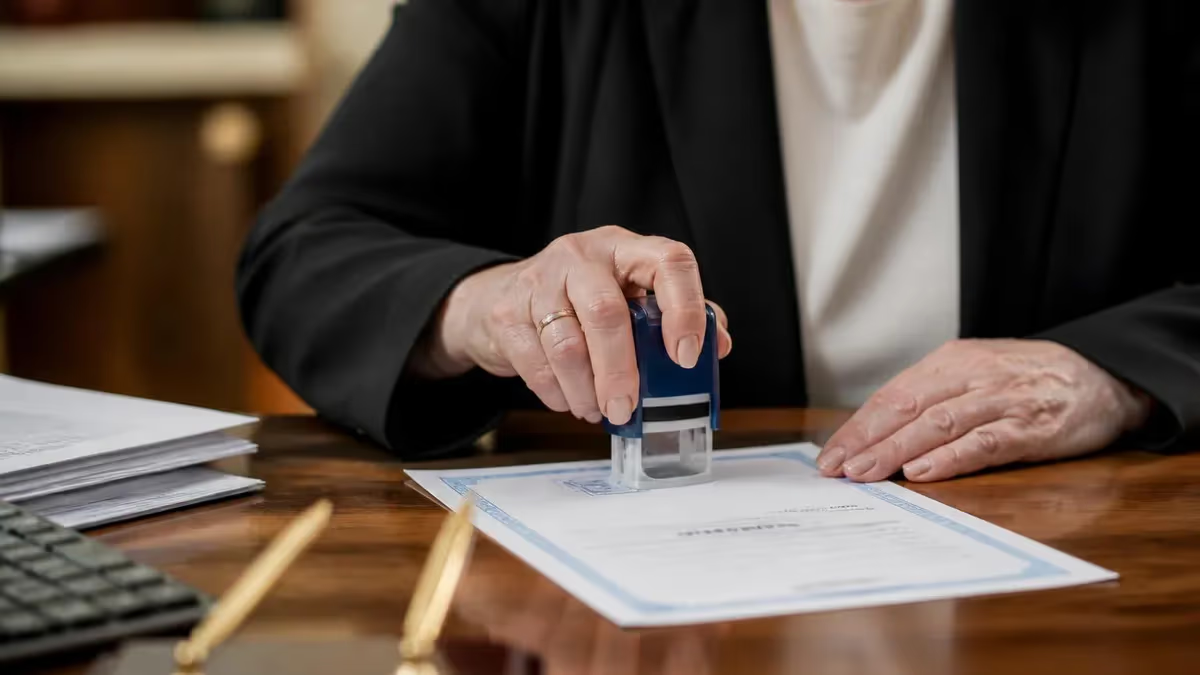
If you have ever asked what is a notary public and wondered whether this career path is right for you, Florida is one of the best states to begin. A notary public is a state-commissioned official authorized to witness signatures, administer oaths, certify copies of documents, and perform other acts that help deter fraud in legal and financial transactions. Florida notaries serve a population of more than 22 million residents, making the demand for commissioned professionals exceptionally high across every industry from real estate to healthcare. Practice with the free Notary Public practice test on PracticeTestGeeks (300+ questions with answer explanations).
To become a Florida notary public, you must meet the state's eligibility requirements, complete a mandatory three-hour education course, submit a commission application with a $39 state fee, and purchase a four-year surety bond of at least $7,500. Once your application is approved by the Florida Department of State, you receive your commission certificate and are legally enabled to begin notarizing documents throughout the state. The entire process typically takes two to four weeks from start to finish.
Many people confuse the term notario publico — a Spanish-language phrase that in some Latin American countries refers to a licensed attorney with broad legal powers — with the limited-authority role of a U.S. notary public. In Florida, a notary is not a lawyer and cannot provide legal advice. However, Spanish-speaking communities rely heavily on notaries for bilingual document services, and Florida's Department of State specifically warns against unauthorized practice of law by individuals who mislead clients about the scope of notarial authority.
The demand for a mobile notary public has surged since 2020 as remote work and digital transactions became standard. Florida allows notaries to perform remote online notarizations (RON) using approved audiovisual technology, which means a commissioned Florida notary can serve clients anywhere in the world who need Florida-law documents authenticated. RON-enabled notaries typically earn significantly more per appointment than traditional in-person notaries.
Understanding the notary public exam and education requirements before you apply is essential for a smooth commissioning experience. Florida requires all first-time applicants to complete a Board of Executive Clemency-approved three-hour course before submitting their commission application. This course covers Florida statutes governing notarial acts, proper use of the notary public stamp and seal, oath administration, journal-keeping best practices, and how to identify and prevent fraud in notarial transactions.
Florida's notary commission lasts four years, after which you must complete a renewal application and another education course to maintain your status. Whether you are seeking a part-time income stream, a credential to enhance your existing professional role, or a full-time mobile notary business, understanding every step of the commissioning process gives you a decisive advantage. This guide walks you through every requirement, cost, and exam tip you need to succeed in 2026.
Free Notary Public Exam Study Tools
Interactive Notary Public Exam resources on PracticeTestGeeks, free to start:
- Free Notary Public Questions and Answers 1 — 11 questions with instant scoring and answer explanations
- Notary Public Exam flashcards — review key terms and concepts card by card
- Notary Public Exam study guide — topic-by-topic overview of what the exam covers
- Notary Public Exam cheat sheet — one-page printable summary for last-minute review
Florida Notary Public by the Numbers

How to Become a Notary Public in Florida: Step-by-Step
Confirm Eligibility Requirements
Complete the 3-Hour Education Course
Purchase Your Surety Bond
Submit Your Commission Application
Receive Your Commission Certificate
Purchase Your Stamp, Seal & Journal
The three-hour education course required to become a Florida notary public is not just a formality — it is your primary defense against making costly errors in the field. Florida Statutes Chapter 117 governs every aspect of notarial practice, and the course is specifically designed to give you a working knowledge of these rules before you ever stamp your first document. Topics include the types of notarial acts permitted in Florida, how to properly complete a jurat versus an acknowledgment, how to identify acceptable forms of identification, and what to do when a signer appears incapacitated or under duress.
The notary public exam is not a separate standalone test in Florida the way it is in some states. Instead, your education provider may include a short assessment at the end of the course to verify comprehension. However, many aspiring notaries choose to supplement their coursework with practice questions that mirror real-world notarial scenarios. Practicing these scenarios helps you internalize the rules quickly and builds the confidence you need to handle unusual or ambiguous situations on the job without hesitation.
One of the most critical concepts covered in any Florida notary course is the difference between a jurat and an acknowledgment. A jurat requires the signer to swear or affirm the truthfulness of a document's contents in the notary's presence — common in affidavits and sworn statements. An acknowledgment simply verifies that the signer appeared before the notary and voluntarily signed the document — common in deeds, mortgages, and powers of attorney. Confusing these two acts is one of the most frequent errors new notaries make, and it can render a document legally unenforceable.
Identification verification is another cornerstone of notary education. Florida law requires notaries to verify a signer's identity through satisfactory evidence, which typically means a current government-issued photo ID such as a driver's license, state ID card, or passport. The ID must not be expired. For remote online notarizations, platforms use credential analysis and knowledge-based authentication to verify identity electronically, adding an extra layer of fraud prevention that traditional in-person notarizations cannot provide.
For applicants seeking public notary near me free services in their initial research phase, it is worth noting that many banks, credit unions, public libraries, and UPS stores offer free or low-cost notarizations to customers. Understanding how these services work helps you appreciate your competitive positioning as a commissioned notary — especially if you plan to offer mobile or after-hours services that these institutions cannot match. Knowing your market is as important as knowing the law.
Florida also has specific rules about notarizing documents for family members or in transactions where you have a direct financial interest. While Florida law does not outright prohibit notarizing for relatives, best practices and professional ethics strongly discourage it to avoid conflicts of interest. If a client later challenges a document's validity and claims the notary had a personal stake in the transaction, your commission and personal liability are at serious risk. Your education course will walk you through these ethical gray areas in detail.
After you pass your education course and receive your commission, continuing education becomes a matter of professional habit rather than legal mandate. Staying current with legislative changes, court interpretations, and industry standards is what separates a competent occasional notary from a trusted professional who builds a lasting book of business. Subscribing to updates from the Florida Notary Association and reviewing the Florida Department of State's notary bulletin on a quarterly basis takes less than an hour per month but can save you from costly errors that might cost you your commission.
Notary Public Stamp, Seal & Essential Tools
Florida law requires every commissioned notary to use an official notary public stamp on all notarial acts performed in the state. The stamp must be a rubber stamp or embosser that includes your name exactly as it appears on your commission, the words "Notary Public – State of Florida," your commission expiration date, and your commission number. The ink must be permanent and clearly legible in photocopies, as many notarized documents are submitted to courts, title companies, or government agencies that scan or copy them.
Stamps must be kept secure at all times. Florida law prohibits anyone other than the commissioned notary from using the stamp, and you are personally liable if your stamp is used fraudulently after loss or theft. If your stamp is lost or stolen, you must report it to the Florida Department of State immediately and order a replacement with a new sequential serial number. Failing to secure your stamp is a Class 2 misdemeanor under Florida Statute 117.05 and can result in commission suspension or revocation.

Is Becoming a Florida Notary Public Worth It?
- +Low startup cost — total investment under $200 for bond, application, stamp, and course
- +High demand across real estate, legal, medical, and financial industries statewide
- +Flexible schedule — work part-time, full-time, or as an add-on to an existing career
- +Florida permits Remote Online Notarization, expanding your market to clients nationwide
- +Loan signing agents can earn $75–$200 per signing appointment on a flexible schedule
- +Four-year commission provides long-term professional credential with simple renewal
- −Florida notaries are personally liable for errors and omissions during notarial acts
- −The $7,500 surety bond does not protect the notary — it protects the public from your mistakes
- −Cannot provide legal advice or act as a notario publico with attorney-level authority
- −Income is variable and depends heavily on marketing, networking, and platform reputation
- −Must keep up with legislative changes; outdated practices can result in commission loss
- −High competition in metro areas like Miami, Orlando, and Tampa requires active business development
Pros and Cons at a Glance
| Pros | Cons |
|---|---|
| High demand across real estate, legal, medical, and financial industries statewide | Florida notaries are personally liable for errors and omissions during notarial acts |
| Flexible schedule — work part-time, full-time, or as an add-on to an existing career | Cannot provide legal advice or act as a notario publico with attorney-level authority |
| Florida permits Remote Online Notarization, expanding your market to clients nationwide | Income is variable and depends heavily on marketing, networking, and platform reputation |
| Four-year commission provides long-term professional credential with simple renewal | Must keep up with legislative changes; outdated practices can result in commission loss |
Florida Notary Public Commission Checklist
- ✓Confirm you meet all eligibility requirements: age 18+, Florida resident, English literacy, no disqualifying felony convictions.
- ✓Enroll in and complete a Florida Department of State-approved three-hour notary education course.
- ✓Obtain your certificate of course completion from your education provider.
- ✓Purchase a $7,500 surety bond from a licensed Florida bonding or insurance company.
- ✓Complete the Notary Commission Application on the Florida Department of State's online portal.
- ✓Pay the $39 state application fee using an accepted payment method.
- ✓Submit your application, bond documentation, and education certificate together.
- ✓Wait for commission certificate to arrive by mail (allow one to three weeks for processing).
- ✓Order your official notary public stamp and seal from a licensed Florida notary supply vendor.
- ✓Purchase a notary journal and record your commission details as the first entry.
Your Surety Bond Protects the Public — Not You
Many first-time applicants mistakenly believe the $7,500 surety bond covers their own mistakes. It does not. The bond compensates members of the public who suffer financial harm due to your notarial errors or misconduct — and the bonding company will then seek reimbursement from you. Consider purchasing a separate Errors and Omissions (E&O) insurance policy for $50–$100 per year to protect your personal finances.
One of the most common questions aspiring Florida notaries ask is how much they can realistically earn. The answer depends almost entirely on how you structure your notary business. A part-time notary who handles two to three general notarizations per week at the Florida statutory maximum fee of $10 per signature will net modest supplemental income. However, loan signing agents — notaries who specialize in witnessing mortgage closing packages — typically earn $75 to $200 per appointment and can complete multiple signings per day when properly networked with title companies and signing service platforms.
The real income potential for Florida notaries lies in the loan signing market. Florida consistently ranks among the top five states for real estate transaction volume, and every mortgage closing requires a notary to witness the borrower's signatures on dozens of documents. Loan signing agents who complete a certification program such as the Notary Signing Agent course from the National Notary Association (NNA) can access premium signing assignments that general notary platforms do not offer. Certification typically costs $65–$125 and includes a background screening that many title companies require.
Beyond loan signings, Florida notaries find consistent work in several high-demand niches. Estate planning attorneys frequently need notaries for will signings, trust documents, and healthcare surrogates. Immigration attorneys rely on notaries to certify translated documents and witness client affidavits. Hospitals and assisted living facilities hire on-call notaries for advance directive and medical power of attorney signings. Each of these niches offers steady, relationship-based work that is far less competitive than the general loan signing marketplace.
Understanding Florida's fee schedule is essential for pricing your services competitively. Florida Statute 117.05 sets the maximum fee at $10 per notarial act — meaning each individual signature or oath, not each document. A mortgage closing package with 30 signatures could theoretically generate $300 in notarial fees alone, though in practice loan signing agents negotiate a flat per-appointment rate with signing services. For free notary public near me searches, note that many banks including Bank of America offer complimentary notarizations to account holders — a factor to consider when competing in retail or walk-in notary markets.
The question of notary public in Bank of America branches is one of the most frequently searched notary topics online, and with good reason. Major banks routinely offer free notary services to account holders, which creates price competition for independent notaries targeting the same general document market. The smart response is differentiation: mobile availability, evening and weekend hours, multilingual services, and specialized expertise in loan signings or legal document packages command premium fees that bank notaries cannot match.
For texas notary public comparisons, it is worth noting that Florida's requirements are slightly more demanding — requiring a pre-commission education course that Texas does not mandate — but Florida also offers significantly more flexibility through its Remote Online Notarization framework. Florida's RON law, active since January 2020, is among the most mature in the country and allows notaries to serve clients in all 50 states, dramatically expanding the addressable market for a commissioned Florida notary.
Building a sustainable notary business in Florida requires treating your commission as a professional credential rather than a side gig. Invest in a professional website, maintain profiles on platforms like Notary Rotary, 123Notary, and Snapdocs, collect client reviews consistently, and join local real estate networking groups where title companies and attorneys can get to know you personally. Notaries who combine technical competence with strong professional relationships consistently out-earn those who rely solely on platform algorithms for assignment distribution.
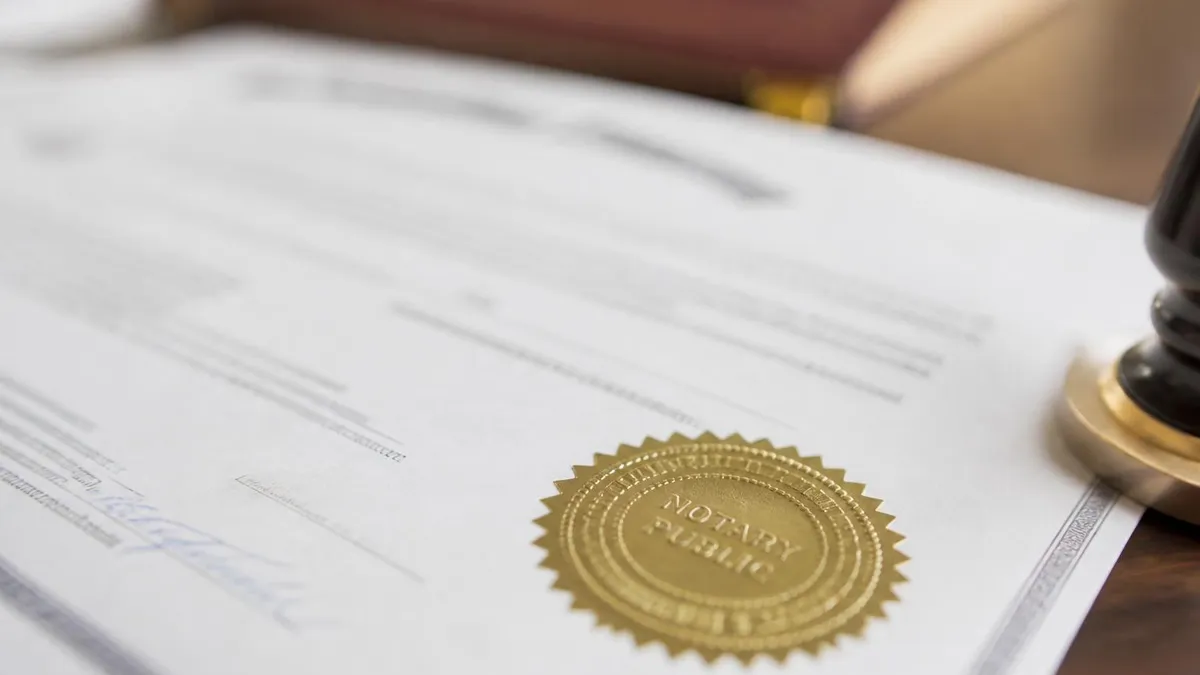
Your Florida notary commission expires exactly four years from its issue date. Florida does not send automatic renewal reminders — it is entirely your responsibility to track your expiration date and begin the notary public renewal process at least 60 days before expiration. Performing notarial acts after your commission expires is a third-degree felony under Florida law. Set a calendar reminder the moment you receive your commission certificate.
Remote Online Notarization (RON) represents the most significant expansion of Florida notary authority in the past two decades, and understanding how it works is essential for any notary who wants to maximize their earning potential. Under Florida Statute 117.265, commissioned Florida notaries may perform notarial acts via audiovisual communication technology, provided they use a platform that has been approved by the Florida Department of State. Approved platforms include DocVerify, Notarize (now Proof), NotarizationStation, and more than 50 others as of 2026.
To perform RON, you must register as a RON notary with the Department of State, complete a short RON-specific training, and maintain an active account on an approved platform. RON appointments can be conducted from your home office with a computer, webcam, and reliable internet connection. The audiovisual session must be recorded and the recording retained for at least ten years. Because identity verification for RON relies on credential analysis and knowledge-based authentication rather than physical ID inspection, the technology layer adds strong fraud protection that enhances the legal durability of RON-completed documents.
The financial case for RON adoption is compelling. Standard in-person notarizations in Florida earn a maximum of $10 per act. RON platforms typically charge a per-session fee of $25–$50 to the end client, with the notary keeping a platform-dependent commission. Notaries who specialize in RON for real estate closings, estate documents, or international business contracts can process multiple appointments per day without traveling, dramatically reducing the time cost per dollar earned. Several full-time RON notaries in Florida report annual revenues exceeding $80,000 working entirely from home.
One of the most important practical advantages of RON is the ability to serve Florida clients who are located abroad. Snowbirds who have relocated temporarily, Floridians working overseas, or international buyers purchasing Florida real estate frequently need documents notarized under Florida law from a remote location. A Florida RON notary is uniquely positioned to serve this market because Florida's RON statute explicitly authorizes cross-border sessions, provided the notary remains physically located in Florida at the time of the notarization.
For notaries interested in building a notary public renewal pipeline, RON platforms provide a natural client retention mechanism. When a client uses your RON services for a real estate closing in 2026, the platform stores your contact information and often prompts the same client to rebook you for future transactions. This platform-driven retention is something traditional in-person notaries rarely benefit from, making RON adoption a smart long-term strategy for any Florida notary serious about building recurring revenue.
Florida's regulatory environment for RON continues to evolve. The Department of State issues periodic guidance updates on approved platforms, technology standards, and journal requirements for electronic records. Staying current with these updates is not optional — using a de-listed platform or failing to maintain records in the required format can expose you to commission disciplinary action. The Florida Notary Association's email newsletter and the Department of State's notary public webpage are the two most reliable sources for real-time regulatory updates affecting RON practitioners.
Whether you plan to focus on traditional in-person signings, remote online notarizations, or a hybrid model that maximizes flexibility, the foundation of your success is the same: thorough knowledge of Florida notary law, impeccable professional standards, and consistent marketing effort. Florida's strong real estate market, large professional services sector, and growing population ensure that demand for skilled, reliable notaries will remain strong for the foreseeable future. Your commission is not just a credential — it is the foundation of a genuine professional practice.
Preparing for your Florida notary education course and the assessment that often follows it requires a focused, strategic approach rather than passive reading. Start by downloading a current copy of Florida Statute Chapter 117 from the Florida Legislature's official website. Read through each section at least twice — once for general comprehension and once while taking notes on specific rules, fees, prohibited acts, and required certificate language. The statute is surprisingly readable for a legal document, and firsthand familiarity with the source material gives you an enormous advantage over applicants who rely solely on course summaries.
Practice with scenario-based questions before your course assessment. Notary education assessments tend to emphasize practical situations rather than pure memorization: What do you do if a signer cannot produce a qualifying ID? Can you notarize a document written in a language you do not understand? What is the correct procedure when a signer appears intoxicated? Working through these scenarios in advance — using free practice resources like those available on PracticeTestGeeks — helps you answer confidently under the time pressure of an actual assessment.
Build a strong pre-launch supply kit before you receive your commission. Order your notary public stamp from a vendor that specializes in Florida-compliant products — many general office supply stores sell stamps that do not meet Florida's exact dimension and wording requirements, which can render your notarizations technically defective. Verify that your stamp includes all required elements: your name, commission number, expiration date, and the exact statutory wording. Keep a spare ink pad and a backup stamp order confirmation in your kit so you are never caught unable to perform a notarization due to equipment failure.
Network with other Florida notaries before and after you receive your commission. The Florida Notary Association holds regional meetings and maintains online forums where experienced notaries share practical tips, warn about common fraud schemes, and post assignment opportunities. Newer notaries consistently report that their first paying clients came through personal referrals from established notaries who had more work than they could handle. Professional community engagement accelerates your business development timeline by months compared to going it alone.
Create a simple marketing system from day one. At a minimum, set up a Google Business Profile listing with your name, service area, hours, and contact information. Solicit your first reviews from friends, family members, or colleagues for whom you have legitimately performed notarizations.
A Google Business Profile with even five to ten positive reviews ranks dramatically better in local search results than a profile with no reviews — and most free public notary near me searchers will call the top three results without scrolling further. Ranking in that top three for your city or neighborhood is a realistic, achievable goal within your first 90 days of operation.
Consider specialization early in your career rather than trying to serve every possible notary need equally. Notaries who develop deep expertise in one area — loan signings, apostille facilitation, estate document witnessing, or immigration-related certifications — build reputations that generate premium referrals. Title companies and law firms pay significantly more per appointment to notaries with documented specialization and a strong track record than they pay to generalists competing on price alone. Specialization is the fastest path from a supplemental income stream to a full professional practice.
Finally, treat your notary commission as a long-term professional investment that rewards consistent, ethical practice over time. The notaries who build the most successful Florida practices are not necessarily the ones who processed the most volume in their first year — they are the ones who never had a document challenged, never received a disciplinary complaint, and built a reputation for reliability and professionalism that generates automatic referrals year after year. Your integrity is your most valuable business asset, and no marketing strategy can substitute for it.
Many readers pair this guide with the notary test questions and answers to check their readiness before exam day.
Sample Notary Public Exam Practice Questions
Try these questions from our free Notary Public Exam practice tests. The correct answer and an explanation follow each question.
Who authorizes the appointment of a Notary Public?
- A. County Clerk
- B. Secretary of State
- C. Town judge where the Notary resides
- D. The name appointed under and no other.
Answer: B. Secretary of State
In New York, the Secretary of State is the governmental body responsible for commissioning Notaries Public. This office oversees the application process, issues the official commission, and maintains records of all authorized notaries. This ensures that individuals performing notarial acts meet the legal qualifications and adhere to state regulations.
May a notary permit a colleague or employer to use their official notary seal?
- A. No, the seal is the notary's exclusive official tool and may not be used by anyone else
- B. Yes, with the employer's written authorization
- C. Yes, if the notary is temporarily unavailable and the colleague is also a notary
- D. Yes, as long as the actual notarial act is performed by the seal's owner at a later date
Answer: A. No, the seal is the notary's exclusive official tool and may not be used by anyone else
A notary seal is personal to the commissioned notary; allowing anyone else to use it is a serious violation that could constitute fraud.
What is the main purpose of an oath administered by a notary public?
- A. To authorize a document for legal use
- B. To confirm the signer’s identity
- C. To promise truthfulness or faithful performance
- D. To certify a copy of a document
Answer: C. To promise truthfulness or faithful performance
The main purpose of an oath administered by a notary public is to compel truthfulness or faithful performance from the signer. By taking an oath, the individual solemnly swears or affirms that the statements they are making are true, or that they will faithfully perform the duties outlined. This adds a legal and moral weight to their declaration, making them accountable for their words or actions.
What is the typical length of a notary public commission in the United States?
- A. 1 year
- B. 10 years
- C. Varies by state, typically 4 years, but ranges from 2 to 10 years
- D. Lifetime commission with periodic review
Answer: C. Varies by state, typically 4 years, but ranges from 2 to 10 years
Commission terms vary significantly by state, with the most common term being 4 years. Some states use 2-year terms, others 6 or 10 years.
Notary Public Questions and Answers

How to Become a Notary Public: Complete State-by-State Training Guide

NC Notary Public Course: Complete Training Guide for North Carolina

Notary Public Commission Application: Complete Step-by-Step Guide for 2026

What Is a Notary Public Office? Everything You Need to Know

Notary Public Signature: Examples, Email Format, and How to Sign
How this page was made: written with AI tools and published by Nathan Beja, founder of Practice Test Geeks, who is responsible for its content. Exam facts are checked against the official sources listed below. Not reviewed by a subject-matter expert. Editorial policy
Sources & references
Exam facts on this page (fees, format, dates, passing scores) are checked against these official sources; the date is our last check. Editorial policy
- sos.ca.gov — Eligibility, score release, fees, retake policy, renewal · verified Oct 2026
- sos.la.gov — Fees, test delivery, passing score, renewal, score validity, registration · verified Oct 2026
- coraweb.sos.la.gov — Registration deadline · verified Oct 2026
- static.sos.la.gov — Exam information · verified Oct 2026
- dos.ny.gov — Score validity, time limit, fees, exam dates, registration · verified Oct 2026
- cpshr.us — Exam format, retake fee, passing score, time limit, registration, test dates · verified Oct 2026