
What Is a Notary Public? Free Notary Public Study Guide for 2026
📚 Use this free notary public study guide to learn how to become a notary public, pass your notary public exam, and practice with free quiz questions.
This free notary public study guide walks you from the basics of what is a notary public to a passed exam and your first stamped document. A notary public is a state-commissioned official who witnesses signatures, confirms signer identity, and helps deter fraud. Because every state writes its own rules, strong preparation blends universal principles with your state handbook. Treat this page as your hub, then branch into free practice questions, handbooks, and state guides as you work through each stage.
People search for notary help in many ways: a notary public stamp, a free notary public near me, or a notario publico who speaks Spanish. Behind each search is the same need, understanding what the job allows and what it forbids. This guide answers those questions in plain English, using realistic fee ranges, term lengths, and exam formats so you can plan your time and budget before you apply or pay for any course.
Not every state tests new notaries. Roughly a dozen, including California, New York, Connecticut, Oregon, and Pennsylvania, require a written exam, an approved course, or both. Others only ask for an application, a bond, and an oath of office. Even where no test exists, a signing mistake can void a document or expose you to liability, so studying still pays off. Knowing the material cold is the cheapest insurance a new notary can buy.
Here is what you will find below. First comes a snapshot of key numbers, then a four-week study schedule you can adapt. Next come the core duties, identification rules, and notarial acts, followed by comparisons of commission paths, a preparation checklist, and common mistakes. Throughout, you will see links to free quizzes so you can test yourself after each topic. Active recall beats rereading, and short daily sessions outperform one long weekend of cramming.
A quick word on notary types. A traditional notary meets signers in person and signs paper documents. Remote online notaries use audio-video technology where state law allows it. A mobile public notary travels to homes, hospitals, and offices, usually charging a travel fee on top of the notarial fee. All three roles rest on the same foundations: verifying identity, confirming willingness, and keeping accurate records. Learn those foundations first and the specialties become easy to add.
Be realistic about the money, too. Commission costs vary widely, from roughly $20 in some states to well over $300 once you add training, fingerprinting, a bond, and supplies. Notaries earn mostly from per-signature fees capped by state law, often between $2 and $15. Many people notarize as a side service for an employer instead of a full-time income. Knowing that upfront helps you decide how much to spend on exam preparation and supplies.
Finally, set a target date. Pick an exam or application date, then work backward. Most candidates need between two and four weeks of part-time study, about 15 to 25 hours in total, when they start from zero. If you already handle contracts, banking, or legal paperwork, you may need less. Whatever your timeline, take the free practice quizzes early to find weak spots, and revisit them in the final week to confirm real progress.
Notary Public Basics by the Numbers
Four-Week Free Notary Public Study Schedule
- ▸Download your state notary handbook and skim every chapter
- ▸Define notary public, commission, venue, and notarial act in your own words
- ▸Take the basic notary questions quiz and note missed topics
- ▸Build a comparison chart of acknowledgments, jurats, oaths, and copy certifications
- ▸Practice reading sample certificates and naming the act each one performs
- ▸Take the jurats and acknowledgments quiz
- ▸List acceptable ID types and credible witness rules for your state
- ▸Review conflicts of interest and reasons you must refuse a notarization
- ▸Take the ethics and fraud prevention quizzes
- ▸Memorize fee limits, bond amount, term length, and journal rules
- ▸Retake every quiz and aim for 85 percent or higher
- ▸Confirm exam logistics, ID requirements, and testing location
What a Notary Public Does: Duties and Core Concepts
At its core, a notary public serves as an impartial witness. The state trusts you to screen signers, not to judge a document's content. When someone appears before you, you confirm who they are, check that they understand what they are signing, and make sure nobody is pressuring them. Then you complete a notarial certificate and apply your official seal. Memorize this sequence, because nearly every exam question traces back to one of those steps.
The most common notarial acts are acknowledgments, jurats, oaths and affirmations, signature witnessing, and copy certifications. In an acknowledgment, the signer declares that they signed willingly, and the signature may have been made earlier. In a jurat, the signer swears or affirms that the contents are true and signs in your presence. Mixing these up is the single most frequent error on practice tests, so build a comparison table and review it daily.
Identification is the next pillar. Most states accept a current government-issued photo ID with a signature or physical description, such as a driver's license, passport, or military ID. Expired documents are usually unacceptable. When a signer has no ID, many states allow a credible witness who knows both the signer and the notary, or personal knowledge. Study your state's exact list, since acceptable forms and the number of witnesses differ from one jurisdiction to the next.
Impartiality rules protect the public and you. Never notarize your own signature, and avoid documents in which you hold a direct financial or beneficial interest. Many states also bar notarizing for close relatives, though the definition differs. You cannot refuse service based on race, religion, or similar protected traits, but you must refuse when the signer is unidentified, appears coerced, or seems unable to understand. Those refusals are duties, not choices, and exams test them heavily.
Record keeping varies, yet the best habit is universal: log every act. A journal entry typically lists the date, type of act, document title, signer name, ID details, and fee charged. Some states require a journal, others merely recommend one, but a complete log can save you in a dispute years later. Store journals securely, since they contain personal data. When your commission ends, follow your state's rules about retaining or transferring those records.
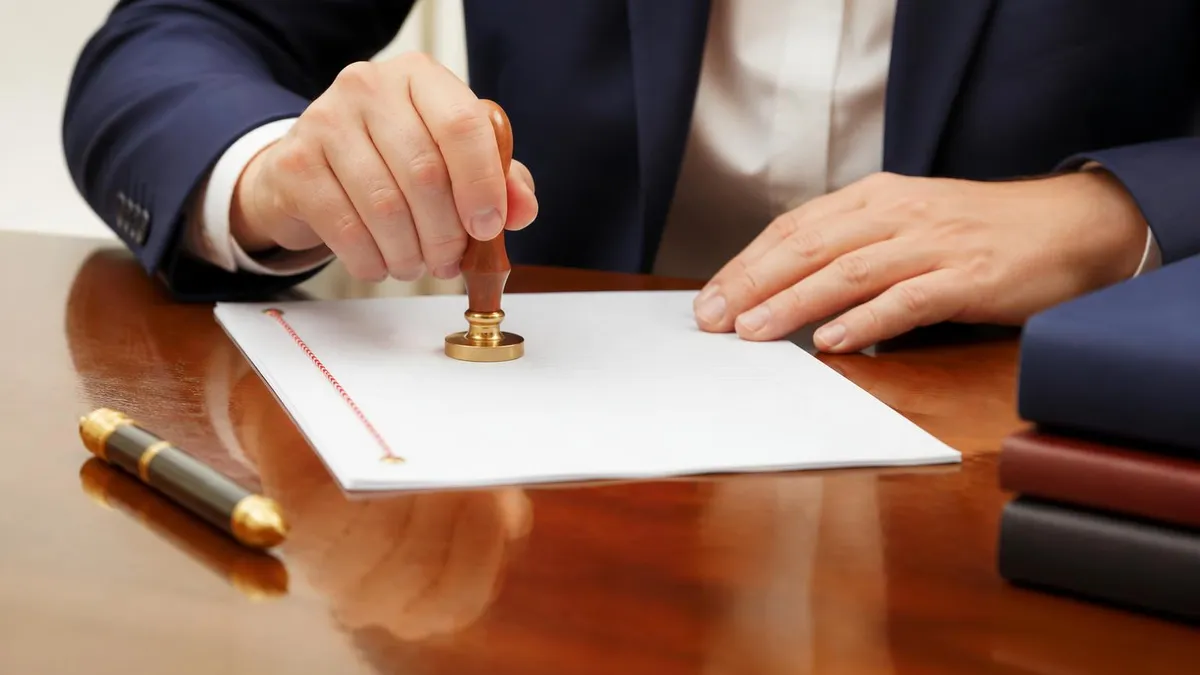
Your seal matters as well. People often ask about a notary public stamp versus a notary public seal. The terms are used interchangeably, but states regulate the exact content. Required elements usually include your name, the words Notary Public, your state, and your commission number or expiration date. Order supplies only from vendors that follow state specifications, and keep the tool locked away. A lost or stolen seal must be reported promptly to the proper state office.
Fees and employment status round out the basics. Each state caps what you may charge, and a notary public state of florida commission, for instance, carries different fee ceilings and bond amounts than other states do. Employers may pay your costs and keep the fees. Never charge more than the legal maximum, and post a fee schedule if your state requires it. Review fee limits before exam day, since numeric questions are easy points.
Notary Public Exam Paths: Which Route Applies to You?
Several states make you pass a notary public exam before commissioning. California requires a six-hour approved course plus a proctored test, while New York uses a 40-question exam with a 70 percent passing score. Connecticut, Oregon, Pennsylvania, and Colorado also test applicants. Exams usually cover notarial acts, identification, journals, fees, and ethics, drawn directly from the state handbook, so that document is your primary textbook.
Plan for registration deadlines and testing fees, which commonly run between $15 and $65 per attempt. Schedule early, since popular testing centers fill up weeks ahead. Bring the exact ID your testing agency requires, and arrive early. If you fail, most states let you retake after a waiting period, but each retake costs money, so thorough preparation with free practice quizzes is far cheaper than repeating the test.
Is Becoming a Notary Public Worth It?
- +Low startup cost compared with most professional credentials
- +Quick path in many states, often just weeks from start to commission
- +Flexible side income through mobile, evening, or weekend appointments
- +Valuable skill for banks, law offices, title companies, and schools
- +Remote online options expand your client reach where permitted
- +Strong foundation for related careers such as loan signing or paralegal work
- −Per-signature fees are capped by law, limiting income
- −Personal liability follows you if you notarize improperly
- −Some states add courses, exams, and background checks
- −Bonds, supplies, and insurance create recurring costs
- −Demand varies widely by location and season
- −Commissions expire, so renewal paperwork is your responsibility
Notary Public Exam Prep Checklist
- ✓Download the current official handbook from your state notary office.
- ✓Confirm whether your state requires an exam, a course, or neither.
- ✓Write definitions for acknowledgment, jurat, oath, and affirmation.
- ✓List every acceptable ID type and credible witness rule.
- ✓Memorize fee limits, bond amount, and commission term length.
- ✓Review conflict of interest and refusal scenarios.
- ✓Take each free practice quiz and record your score.
- ✓Retake missed questions until you can explain the right answer.
- ✓Confirm exam date, location, ID, and arrival time in advance.
- ✓Prepare your seal, journal, and bond purchase for after you pass.
The signer must appear in person and be identified by you
Nearly every serious notarial error starts with skipping personal appearance or identity checks. Never notarize a signature on behalf of someone who is not physically present, or present by approved remote technology. If any doubt remains about who the signer is, stop and refuse.
How to Become a Notary Public Step by Step
Learning how to become a notary public follows a predictable pattern. Confirm you meet eligibility, which usually means being at least 18, a legal resident of the state, and free of disqualifying felony convictions. Complete any required education, pass the exam if your state has one, and submit an application with the fee. Then obtain a surety bond or insurance if required, take the oath, and file your documents with the county or state office.
Texas is a good example of a lighter-touch state. A notary public texas applicant applies online with the Secretary of State, pays an application fee around $21, purchases a $10,000 surety bond, and takes an oath of office. No exam is required, though optional education is available. The commission lasts four years. Always confirm current figures on the official website, because fees and procedures change, and third-party sites sometimes show outdated numbers.
California sits at the opposite end. Applicants complete a state-approved six-hour course, pass a proctored exam, submit fingerprints through Live Scan for a background check, buy a $15,000 bond, and file the oath with the county clerk. The exam covers duties, acknowledgments, jurats, ID rules, and journal requirements. Expect to budget roughly $200 to $350 for everything, and plan several weeks because background checks can take time.
New York applicants typically pass a 40-question exam with a 70 percent passing score and pay a $60 application fee for a four-year commission. Other states differ again, so compare requirements before you spend money. If you are researching a notary public nj commission or another specific state, use a state-by-state guide and then verify every detail with the government website that issues commissions in that state.
Searches for notario publico deserve a clear explanation. In many Latin American countries, a notario público is a highly trained lawyer who drafts and authenticates legal instruments. In the United States, a notary has no such authority. Notaries here cannot give legal advice, draft documents, or represent anyone in immigration matters. Misleading clients by calling yourself a notario can be illegal in some states and is a serious ethical violation, so exams often test this distinction.
Bonds, insurance, and errors-and-omissions coverage are frequently confused. A surety bond protects the public, not you, and the insurer may seek repayment if it pays a claim. Errors-and-omissions insurance covers your legal defense and certain losses from honest mistakes, and it is optional in most states. Many notaries buy a low-cost policy of $10,000 to $25,000 for a modest annual premium. Compare these coverages before deciding what to purchase.
After commissioning, keep timelines in mind. Most terms run four years, but some states grant six or ten. Mark your expiration date and begin renewal early, since gaps in commission make every notarization invalid. Update your seal if you change your name or address as required, and notify your state office of changes. These administrative details seem small, yet they appear often as scenario questions on both exams and quizzes.
Fees, bond amounts, course rules, and exam formats change often, and many websites repeat outdated numbers. Before paying for training or filing an application, confirm every requirement on your state's official notary page. Only pay vendors that your state approves.
Free Notary Public Near Me and Free Study Resources
Free resources are plentiful if you know where to look. Start with your state's official handbook, which is usually a free PDF from the Secretary of State or equivalent agency. Add free practice quizzes, flashcards, and the statute text itself. Official sources always win when they conflict with a blog or video. Download the handbook, highlight definitions, and tag every page that lists fees, ID rules, or journal requirements for quick review.
Many readers also want a free notary public near me for their own documents. Banks and credit unions often notarize for account holders at no charge, and a notary public in Bank of America branches is commonly offered to customers, though availability varies by location, so call ahead. Public libraries, city halls, real estate offices, and some insurance agencies also help. Bring a valid photo ID and leave the document unsigned until the notary instructs you.
If you search for a free public notary near me, you will usually find the same sources, and free does not mean unlimited. Banks may restrict service to customers, limit the number of signatures, or refuse documents that are incomplete. Some will not notarize for non-account holders at all. Libraries may offer notary hours only on certain days. If you need weekend or evening service, a traveling notary may be easier, though you will pay an added travel charge.
Illinois shows how local rules influence both studying and service. A notary public illinois applicant must be at least 18, be a resident or work in the state, and be able to read and write English, with a four-year term and a $5,000 bond. Rules on testing and education can change, so confirm them with the state. Renewal follows the same cycle, so mark your expiration date early.
Video and audio resources help with abstract topics. Watch official or reputable explainers on acknowledgments versus jurats, then immediately take a quiz to lock in the difference. Podcasts work during commutes, but nothing replaces writing your own summary. Consider creating flashcards with certificate wording on one side and the act it represents on the other. Spaced repetition over three weeks consistently beats a single marathon session for retention.
Be cautious with paid upsells. Some sites sell expensive packages with guarantees that cannot be honored, and a few imitate government agencies. Official application fees go only to your state, and courses must be state-approved where required. Check the approved vendor list on the government site before paying. If a program promises a commission without a background check or exam in a state that requires both, walk away, because the claim is likely false or deceptive.
Finally, pair free materials with a simple tracking sheet. List topics down the side, such as identification, journals, fees, jurats, and ethics, and record your quiz score each time. Any topic below 80 percent deserves another review session. Within two weeks you will see patterns in the questions you miss. That data-driven approach turns free resources into a structured course and keeps you from over-studying topics you already know.
Final Prep Tips Before Your Notary Exam
Simulate real conditions at least twice before test day. Sit somewhere quiet, set a timer that matches your exam length, and answer a full set of practice questions without looking at notes. Afterward, review every miss and write a one-sentence rule explaining the correct answer. This builds the habit of applying principles rather than recalling isolated facts, which is exactly what scenario-based exam questions demand from candidates.
Read each scenario twice before choosing an answer. Exam writers love details that change the outcome: a signer who is not present, an expired ID, a blank space in a document, or a notary who is also a named party. Underline those details mentally. If two choices look right, ask which one protects the public and follows the handbook most strictly. The safer, more cautious action is correct far more often than not.
Memorize the short list of things a notary must never do. Never notarize without the signer present, never backdate, never notarize a document with blank spaces that could be filled in later, never give legal advice, and never certify a document you have not examined for completeness. Also never pre-sign or pre-stamp certificates. Practice listing these from memory each morning, because they form the backbone of ethics and fraud questions.
Numbers deserve their own flashcard deck. Write down your state's maximum fees, bond amount, term length, minimum age, and any deadlines for reporting a lost seal or change of address. Many candidates lose easy points by confusing figures between states. Keep only your own state's numbers in that deck, and quiz yourself with the answers hidden. A five-minute number drill before bed is surprisingly effective for long-term recall.
Manage logistics so stress does not erase your preparation. Confirm the exam location, parking, start time, and accepted ID the day before. Get a full night of sleep, and eat a normal meal beforehand. Skip last-minute cramming of new topics, and instead skim your summary sheet. If your exam is online and proctored, test your camera, internet connection, and room setup early, and remove anything the proctor might consider unauthorized.
During the exam, pace yourself. Answer the questions you know first, flag harder ones, and return with the remaining time. Avoid changing answers unless you can name a specific reason, since first instincts are usually correct when they come from solid preparation. Use elimination aggressively: removing two clearly wrong choices raises your odds dramatically on tricky items. Keep an eye on the clock so you never leave questions blank.
After you pass, move quickly. File your application and oath promptly, buy your bond if required, and order a compliant seal and journal. Practice a few mock notarizations with a friend, speaking the identification and willingness questions aloud until they feel natural. Keep your handbook nearby for the first few months. The goal is not just to pass, but to notarize correctly from the very first signature you witness.
Notary Public Questions and Answers

What Is a Notary Public? Meaning, Duties, and How They Work
Notary Public Salary: How Much Notaries Really Earn in 2026

What Is Needed to Renew a CA Notary Public License: Complete 2026 Guide

Notary Public Exam: Requirements, Study Tips, and State-by-State Guide

Notary Public Handbook: State-by-State Guide and Free Downloads
How this page was made: written with AI tools. Exam facts are checked against the official sources listed below. Not reviewed by a subject-matter expert. Editorial policy
Sources & references
Exam facts on this page (fees, format, dates, passing scores) are checked against these official sources; the date is our last check. Editorial policy
- sos.ca.gov — Eligibility, score release, fees, retake policy, renewal · verified Oct 2026
- sos.la.gov — Fees, test delivery, passing score, renewal, score validity, registration · verified Oct 2026
- coraweb.sos.la.gov — Registration deadline · verified Oct 2026
- static.sos.la.gov — Exam information · verified Oct 2026
- dos.ny.gov — Score validity, time limit, fees, exam dates, registration · verified Oct 2026
- cpshr.us — Exam format, retake fee, passing score, time limit, registration, test dates · verified Oct 2026