NJ Boating License: Requirements, Age Rules & How to Get Certified 2026

Get your NJ boating license fast. Compare age rules, costs & NASBLA online courses for NJ, VA, CT, NH, MD & MA. Interstate reciprocity explained.

Boating License TestBy Captain David HarringtonApr 2, 202614 min read
NJ Boating License: Requirements, Age Rules & How to Get Certified 2026

NJ Boating License Requirements and Why the Northeast Is Different

If you're wondering do you need a license to drive a boat in New Jersey or anywhere in the Northeast, the answer is almost certainly yes — and the rules vary sharply by state. In New Jersey, anyone born on or after January 1, 1978 must hold a valid boating license requirements — formally called the Boating Safety Certificate — before operating any motorized vessel on state waters. That birth-year cutoff is one of the broadest in the region, capturing the majority of active boaters today.

What makes the Northeast uniquely complex is that no two neighboring states use the same rules. New Jersey, Virginia, Connecticut, New Hampshire, Maryland, and Massachusetts each enforce distinct birth-year thresholds, with some requiring certification for all adult operators and others limiting mandates to younger boaters or rental users only. Crossing a state line on the water means crossing into a different compliance framework.

Three facts apply uniformly across all six states:

  • All accept NASBLA-approved online courses, so you can complete certification before your first launch
  • A boating license in these states is a one-time requirement — no periodic renewal, unlike a driver's license
  • Certificates issued in one state are generally honored under reciprocity when boating in another

The sections below break down each state's exact requirements, fees, and age rules so you know exactly what's required before you cast off.
NJ boating license requirements — New Jersey Marine Police 2026

Quick Facts: NJ Boating License Requirements and Why the Northeast Is Different

  • Getting your nj boating license is required for anyone born after January 1, 1978 who operates a motorized vessel on New Jersey waters — one of the broadest age mandates in the region
  • NJ, VA, CT, NH, MD, and MA each enforce distinct birth-year cutoffs — some require certification for all adults, others only for younger operators or rental users
  • All six states accept NASBLA-approved online courses, so you can complete certification before launching your first trip
  • Unlike a driver's license, boating certification in these states is typically a one-time requirement with no periodic renewal

Who Needs a Boating License? Age Rules in NJ, VA, CT, NH, MD & MA

Who needs an NJ Boating Safety Certificate?
Anyone born on or after January 1, 1978 must carry a valid NJ Boating Safety Certificate to legally operate any motorized vessel on New Jersey waters. This covers the vast majority of active boaters in the state today.
What is the minimum age for PWC operators in NJ?
Personal watercraft (jet ski) operators must be at least 16 years old. There are no exceptions — operators under 16 may not legally operate a PWC regardless of supervision status.
Are there exceptions for boats without motors?
Yes. The birth-year requirement applies only to motorized vessels. Paddleboards, kayaks, canoes, and non-motorized sailboats are exempt from the certification mandate.
How do you get certified in NJ?
Complete a NASBLA-approved boating safety course — online or in-person — and pass the state exam. The NJ Marine Police issues the Boating Safety Certificate, which is a one-time, lifetime credential with no renewal required.
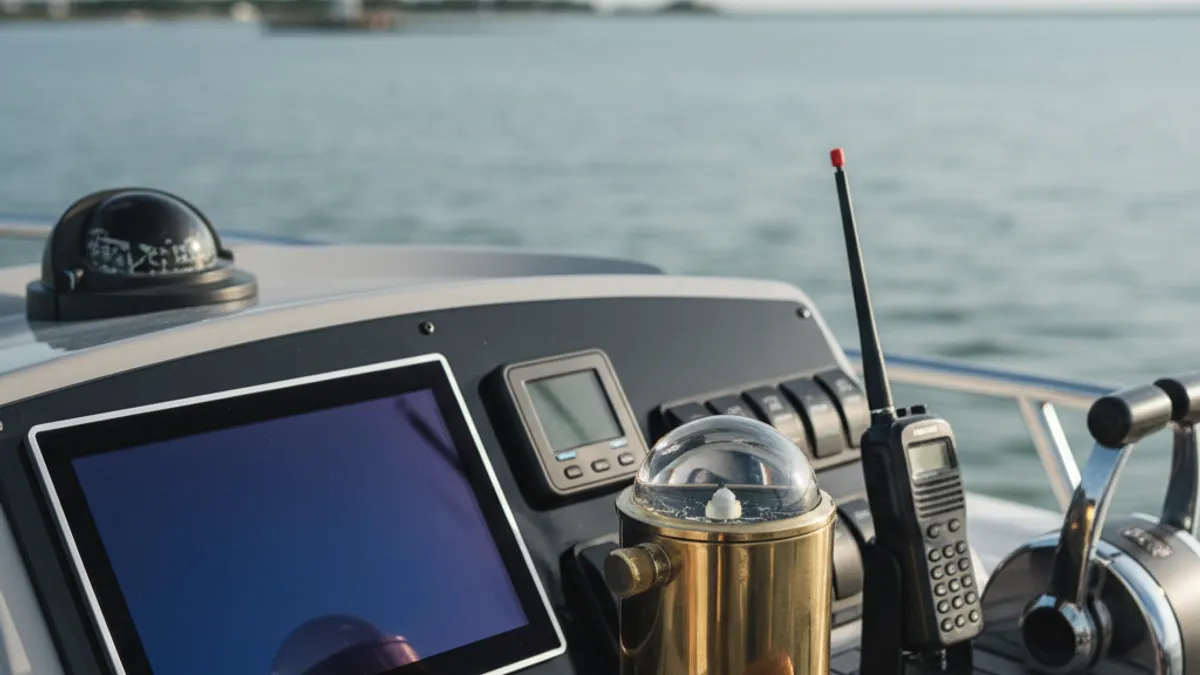
How to Get Your Boating License: Step-by-Step for Any Northeast State

📋
Day 1

Confirm Your State's Birth-Year Cutoff

Boating license requirements in the Northeast are not uniform, and assuming you're exempt can result in a fine on the water. New Jersey requires certification for anyone born after January 1, 1978. Connecticut mandates it for operators born on or after January 1, 1985 who are 16 or older. Massachusetts applies to those born on or after January 1, 1988. Virginia's cutoff is July 1, 1972. Maryland doesn't use a birth-year rule but instead requires all operators under 18 to be certified. New Hampshire has no birth-year exemption at all — every operator of a motorized vessel must hold a valid certificate. Spend five minutes on your state's official boating agency website before you enroll in any course.
🖥️
Day 1–3

Choose a NASBLA-Approved Online Course

The National Association of State Boating Law Administrators (NASBLA) certifies boating safety courses that are accepted across all participating states, including all six covered here. Online course options — offered through providers such as Boat-Ed, BoaterExam, and SafeBoatingCourse — typically take between 3 and 8 hours to complete at your own pace. Always select the state-specific version of the course rather than a generic national edition; state versions include locally applicable laws, speed limits, right-of-way rules, and registration requirements that are directly tested on the final exam. Course fees generally range from $25 to $45 and include unlimited exam retakes.
Day 2–4

Pass the Proctored Final Exam

After completing the course material, you'll take a proctored final exam — 'proctored' here means identity-verified, not necessarily in-person. Minimum passing scores vary by state: New Jersey and New Hampshire require 70%, while Massachusetts and Connecticut require 80%. Virginia and Maryland generally align with the 70–75% range depending on the provider. If you don't pass on your first attempt, most platforms allow you to review the questions you missed and retake the exam immediately without additional fees. Focus extra study time on navigation rules (COLREGS), required safety equipment by vessel length, and your state's specific PWC age and endorsement requirements, as these are the most commonly tested topics.
📄
Day 2–4

Receive Your Certificate

Once you pass the final exam, most online providers generate a printable temporary boating safety certificate within minutes. This document is fully valid and legally accepted in all six Northeast states while your permanent card is in transit. Your official laminated wallet card typically arrives by mail within 7 to 14 business days. Store a digital photo of both your temporary and permanent certificate in your phone's photo library as a backup — but confirm your state's policy on digital copies before launch day, as some enforcement officers may require a physical document. Massachusetts, for example, recommends carrying the physical card.
Ongoing

Carry Proof Every Time You're on the Water

Certification doesn't sit in a drawer — every one of the six states covered in this guide (NJ, VA, CT, NH, MD, and MA) legally requires you to have your boating safety certificate or an accepted form of proof accessible during any vessel operation. This applies whether you're the registered owner or a guest operator. If you're crossing state lines, NASBLA reciprocity means your home-state certificate is recognized in the other five states, but the physical-versus-digital-copy rules may differ. Keep your certificate in a waterproof case or sleeve, and check the boating authority website for each state you plan to visit to confirm their current proof-of-certification requirements before departure.
Barnegat Bay NJ boating certification and Northeast state rules

How Much Is a Boating License? Costs Across the Northeast

Getting your boating license in the Northeast is affordable — costs vary by state but are driven almost entirely by the approved course provider, with no separate state exam or certificate fees in any of these six states.
💵$34.95–$49.95New Jersey Course FeeNJ-approved online provider; state Boating Safety Certificate issued at no additional DMV or agency charge
🚤$25–$49Virginia Course FeeDGIF-approved online course; Virginia Safe Boating Card issued free by DGIF upon completion
$25–$45Connecticut Course FeeDEEP-approved online providers; CT Safe Boater Certificate issued at no additional state cost
🌊$25–$50New Hampshire Course FeeNH-approved online course; NH Marine Patrol processes the certificate at no state fee beyond course cost
🦀$30–$50Maryland Course FeeDNR-approved online providers; Maryland issues the boating safety certificate free after course completion
🐟$25–$50Massachusetts Course FeeMA-approved online course; Environmental Police issue the MA Boating Safety Certificate at no additional charge

Most providers bundle the course and exam in one flat price — there is no separate exam fee for online completions in any of these six states. Prices may vary by provider; always confirm current pricing on the approved provider's website before enrolling.

Fastest NASBLA-Approved Online Boating Courses for Mid-Atlantic & Northeast States

🏛️Boat-ed.com — State-Partnered ProviderOfficial Partner: NJ, VA, MD, MA

Boat-ed.com holds official state partnerships with New Jersey, Virginia, Maryland, and Massachusetts, meaning course content is tailored to each state's specific laws and regulations. After passing, you can download a temporary certificate immediately — no waiting required to get on the water.

nj boating license onlinestate-specific contentinstant certificate
  • States Covered: NJ, VA, MD, MA
  • Certificate: Downloadable immediately after passing
  • Course Type: State-specific content, not generic NASBLA
  • Best For: Boaters who want the official state-endorsed experience
SafeBoater.com — Fastest Completion OptionUnder 3 Hours: NJ & CT

SafeBoater.com is the fastest-track option for New Jersey and Connecticut residents, with many users completing the full course in under 3 hours. Your certificate is downloadable the same day you pass — ideal if you need proof quickly before a planned trip.

online boating licensefast coursesame-day certificate
  • States Accepted: NJ and CT
  • Avg. Completion: Under 3 hours for most users
  • Certificate Delivery: Same-day digital download upon passing
  • Best For: Last-minute certification before a trip
📱Kalkomey / BOATsmart — Best Regional CoverageAccepted in All 6 States

Kalkomey (also marketed as BOATsmart) is accepted across all six Mid-Atlantic and Northeast states — NJ, VA, CT, NH, MD, and MA. The course is mobile-optimized and averages 4–6 hours to complete, with a digital card available the same day you pass.

nys boating license onlinehow to get boating licensemobile course
  • States Accepted: NJ, VA, CT, NH, MD, MA
  • Avg. Completion: 4–6 hours
  • Certificate Delivery: Digital card issued same day
  • Best For: Boaters who may boat across multiple states
⚠️Verify State Approval Before You EnrollCritical Step — Don't Skip

NASBLA endorsement does not automatically guarantee acceptance in every state. Before paying for any course, confirm the provider explicitly lists your state as officially approved on their enrollment page. BoatUS Foundation's free course, for example, is accepted in CT and NH but issues certificates by mail — allow 10–14 business days before your trip.

how to get boating licenseNASBLA approvedBoatUS Foundation
  • BoatUS Foundation: Free course; accepted in CT and NH only
  • Certificate Delivery: Mail only — allow 10–14 business days
  • Common Mistake: Assuming NASBLA endorsement = state acceptance
  • Action Required: Check provider's state-approval list before enrolling
NJ vs PA vs CT boating license reciprocity and age rules

Boating Across State Lines: Interstate Reciprocity on Coastal Waterways

Boating License Test Questions and Answers

More Boating License Test Resources
About the Author

Captain David HarringtonBS Marine Transportation, Master Mariner License, STCW

Master Mariner & Maritime Certification Specialist

Massachusetts Maritime Academy

Captain David Harrington is a US Coast Guard licensed Master Mariner with a Bachelor of Science in Marine Transportation from Massachusetts Maritime Academy. He has 22 years of deep-sea and coastal navigation experience aboard commercial vessels and specializes in preparing maritime candidates for USCG licensing exams, STCW certification, dynamic positioning (DPO), and officer-of-the-watch qualifications.