
Ohio Boating License 2026 October — Requirements, Age & How to Get One
Prepare for the Ohio Boating License 2026 October certification. Practice questions with answer explanations covering all exam domains. 📗
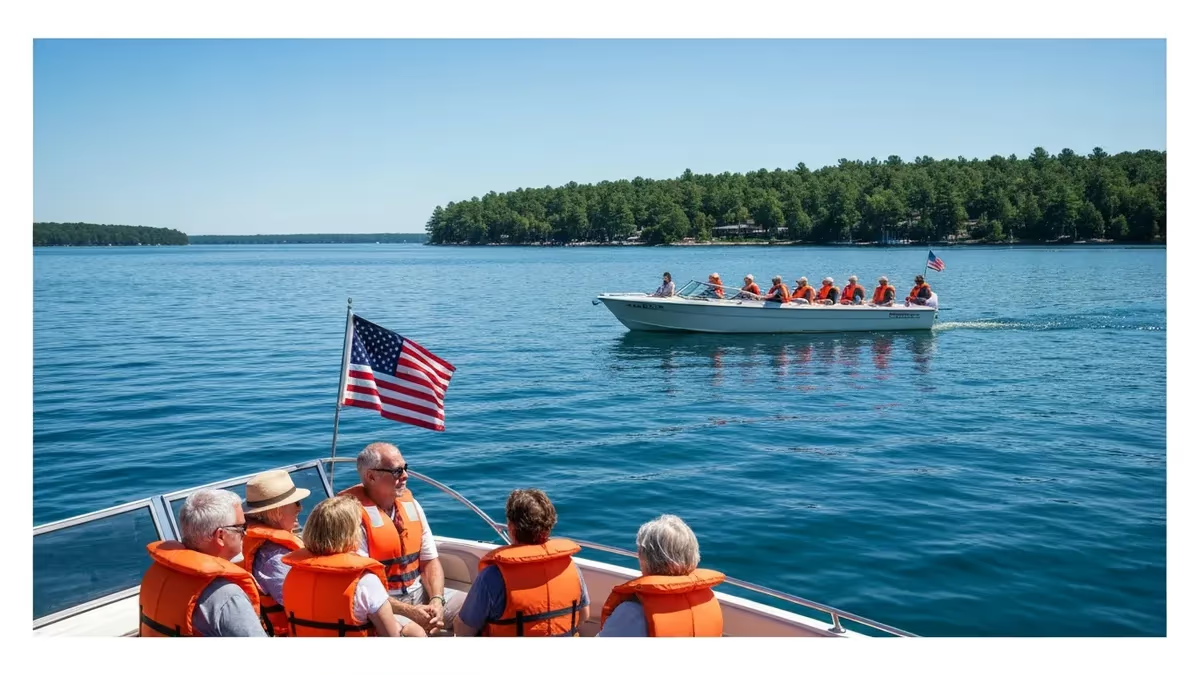
Who Needs an Ohio Boating License?
In Ohio, a Boater Education Card (the state's boating certification issued by ODNR) is required for anyone who:
- Was born on or after January 1, 1982, AND
- Operates a personal watercraft (jet ski, WaveRunner) or a motorboat with an engine of 10 horsepower or more on Ohio public waters
Ohio does not require a boating license for operating non-motorized vessels such as canoes, kayaks, or sailboats without auxiliary motor power. If you were born before January 1, 1982, you are exempt from the certification requirement — though understanding boating safety is always recommended.
The Ohio boating license (formally the Boater Education Card) does not expire — once you complete an ODNR-approved course and receive your card, it is valid for life. You must carry the physical card while operating on Ohio waters.
For a comparison across states, see our guide on boating license by state — a full state-by-state breakdown of boating certification requirements.
Ohio Boating Age Requirements
Ohio has specific age restrictions for operating motorized vessels:
- Under 12 years old: Not permitted to operate any powerboat with more than 10 horsepower, regardless of supervision.
- Ages 12–15: May operate a motorboat of 10 HP or more or a personal watercraft only under the direct supervision of a person who is 18 or older and aboard the vessel. The supervising adult must hold a valid Boater Education Card if born on/after January 1, 1982.
- Ages 16 and older: May operate independently after completing an ODNR-approved boating safety course and obtaining a Boater Education Card, provided they were born on or after January 1, 1982.
Ohio's horsepower threshold (10 HP) is an important distinction — operating a small electric trolling motor boat does not require a boating certificate regardless of age. Compare these rules with neighboring states: our pa boating license guide covers Pennsylvania's age and certification requirements, and the mn boating license guide details Minnesota's rules for cross-state boaters.
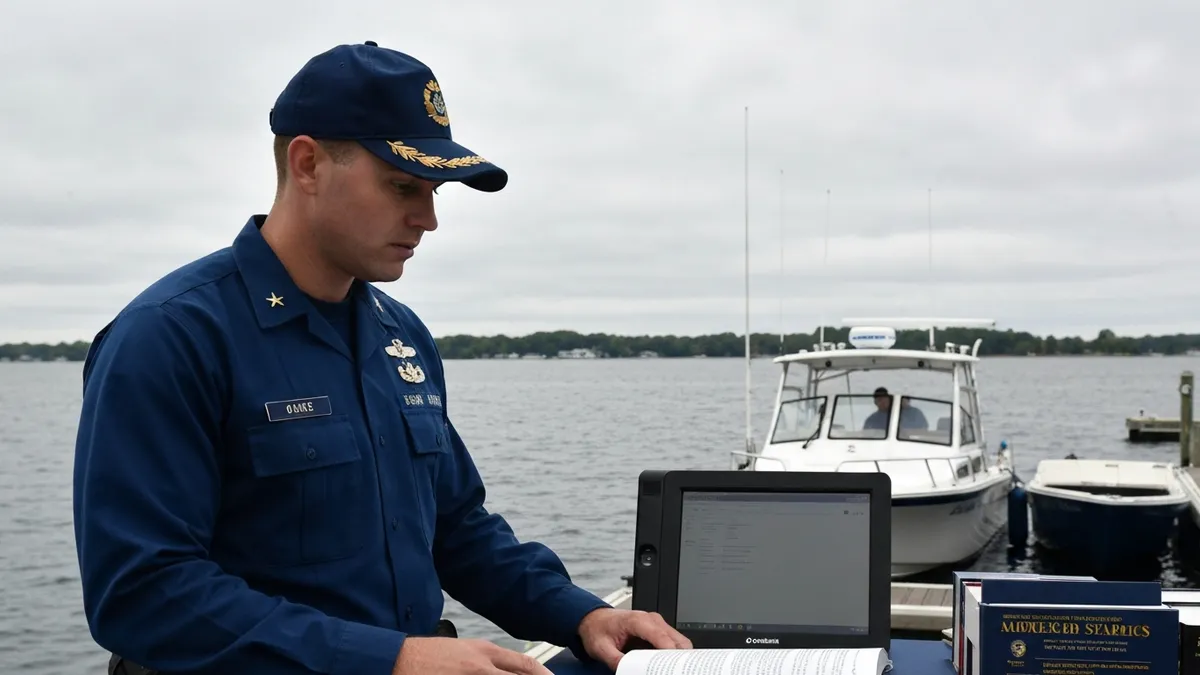
How to Get Your Ohio Boating License
Getting your Ohio Boater Education Card requires completing an ODNR-approved boating safety course. There are two ways to complete this requirement:
Option 1 — Online Course (Most Common):
- Go to Boat-Ed.com (an official ODNR-approved online course provider) or the ODNR website at ohiodnr.gov
- Create an account and enroll in the Ohio Boating Safety Course
- Complete the online modules (approximately 3–5 hours of content)
- Pass the final exam (minimum passing score: 70%, depending on provider)
- Print your temporary certificate immediately after passing
- Your permanent Boater Education Card arrives by mail within 2–4 weeks
Option 2 — In-Person Classroom Course:
- Find an ODNR-sponsored classroom course near you at ohiodnr.gov (many are offered free of charge)
- Attend the one-day classroom instruction session
- Pass the written exam on-site
- Receive your card from ODNR directly or by mail
Both options produce the same NASBLA-approved Boater Education Card, recognized in all participating US states. Take a boating license test practice quiz before your final exam to sharpen your knowledge and pass on the first attempt.
What the Ohio Boating Safety Course Covers
The ODNR-approved course covers topics required by the National Association of State Boating Law Administrators (NASBLA). You will learn:
- Navigation rules: Right-of-way on the water, channel markers, buoy colors and shapes, and Ohio waterway navigation
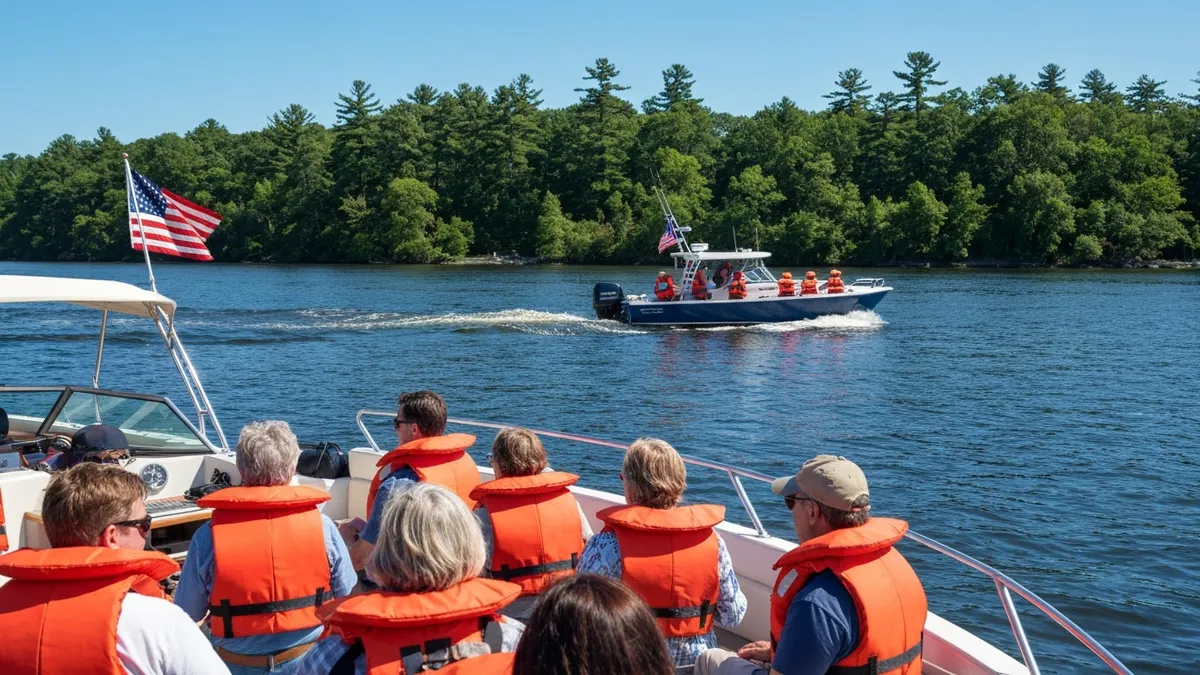
- Safety equipment: Life jackets (PFDs) — required types by vessel and age, fire extinguishers, flares, and sound-producing devices
- Ohio-specific laws: Speed limits, no-wake zones, age restrictions, alcohol regulations (Ohio enforces BUI with serious penalties)
- Emergency procedures: Capsizing, man overboard, fire on board, and distress signals
- Environmental responsibility: Discharge rules, clean water requirements, protecting Ohio's Lake Erie and river ecosystems
- Anchoring and docking: Safe mooring practices for Ohio's lakes, rivers, and Lake Erie marinas
The final exam tests all of these topics. Most students who complete the full course pass on the first attempt. For region-specific guidance, our nj boating license guide and nc boating license guide offer useful comparisons for boaters traveling along the East Coast and into Ohio.
Required Safety Equipment for Ohio Boats
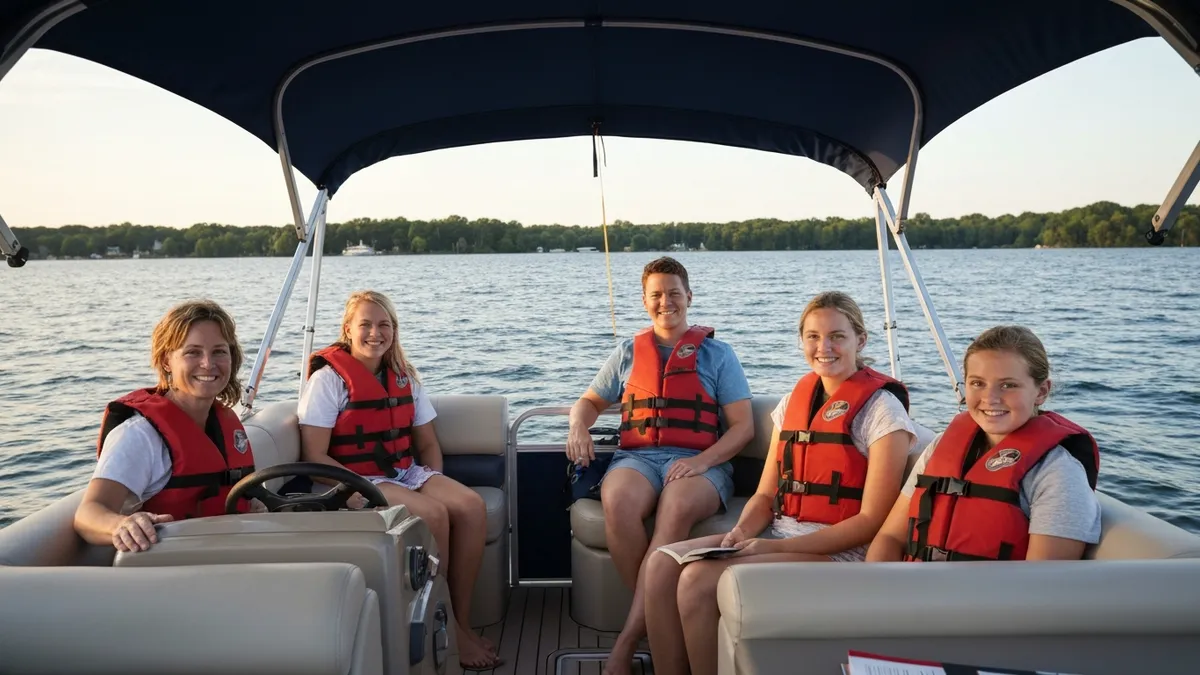
- ✓USCG-approved life jacket (PFD) for every person on board — must fit properly and be accessible
- ✓Children under 10 must wear a PFD at all times while underway on Ohio waters
- ✓Working fire extinguisher (required for enclosed engine and fuel compartments)
- ✓Sound-producing device: horn or whistle audible for at least one-half mile
- ✓Navigation lights for operating between sunset and sunrise or in restricted visibility
- ✓Visual distress signals for boats operating on Lake Erie and other open waters
- ✓Current Ohio registration with OH numbers displayed on the hull bow
- ✓Boater Education Card carried while operating (if born on/after January 1, 1982)
Ohio Boating Pros and Cons
- +Boating certification is recognized across employers as evidence of verified competency, often required for specific roles
- +Certification provides a structured framework for professional knowledge that benefits daily work, not just the credential itself
- +Many certified professionals report salary increases of 10–20% compared to non-certified peers in the same role
- +Certification maintenance requirements create ongoing professional development that keeps knowledge current
- +The certification credential differentiates candidates in competitive hiring processes and promotion decisions
- −Boating certification fees can be substantial — exam costs, study materials, and renewal fees add up over a career
- −Certification requirements change over time; candidates who delay testing may face updated content requirements
- −Not all employers or markets equally value or require certification — the salary return varies significantly by geography and industry
- −Exam preparation requires significant time investment alongside existing work and personal responsibilities
- −Certification does not guarantee competency in practice — it validates knowledge at a point in time, not ongoing performance
Pros and Cons at a Glance
| Pros | Cons |
|---|---|
| Boating certification is recognized across employers as evidence of verified competency, often required for specific roles | Boating certification fees can be substantial — exam costs, study materials, and renewal fees add up over a career |
| Certification provides a structured framework for professional knowledge that benefits daily work, not just the credential itself | Certification requirements change over time; candidates who delay testing may face updated content requirements |
| Certification maintenance requirements create ongoing professional development that keeps knowledge current | Not all employers or markets equally value or require certification — the salary return varies significantly by geography and industry |
| The certification credential differentiates candidates in competitive hiring processes and promotion decisions | Exam preparation requires significant time investment alongside existing work and personal responsibilities |
Sample Boating License Test Practice Questions
Try these questions from our free Boating License Test practice tests. The correct answer and an explanation follow each question.
Under what authority can US Coast Guard officers board and inspect a vessel?
- A. Only with a valid warrant
- B. Only in federal waters beyond 3 miles
- C. At any time without a warrant for safety inspections
- D. Only during daylight hours on weekdays
Answer: C. At any time without a warrant for safety inspections
The US Coast Guard has broad authority under federal law to board and inspect vessels at any time without a warrant to conduct safety inspections.
How can you tell if your propeller may be damaged?
- A. Excessive vibration and reduced performance
- B. The horn sounds louder
- C. The battery charges faster
- D. The navigation lights dim
Answer: A. Excessive vibration and reduced performance
A bent or dinged propeller causes vibration and reduces speed and fuel efficiency.
Which PFD type is designed for calm inland water where rescue is quick and the wearer is conscious?
- A. Type I — Offshore Life Jacket
- B. Type III — Flotation Aid
- C. Type V — Special Use Device
- D. Type II — Near-Shore Buoyant Vest
Answer: B. Type III — Flotation Aid
Type III flotation aids are comfortable for active water sports in calm water where fast rescue is likely and the person can stay face-up on their own.
What equipment is required by the US Coast Guard on recreational vessels?
- A. PFDs for each person, fire extinguisher, visual distress signals, sound-producing device, and navigation lights
- B. Only life jackets
- C. No equipment is required on recreational boats
- D. Only a radio and anchor
Answer: A. PFDs for each person, fire extinguisher, visual distress signals, sound-producing device, and navigation lights
USCG requirements include a PFD for each person aboard, appropriate fire extinguishers, visual distress signals (vessels 16ft+), sound-producing device, navigation lights, and proper ventilation for enclosed fuel areas.
Ohio Boating License Questions and Answers

About the Author

Educational Psychologist & Academic Test Preparation Expert
Columbia University Teachers CollegeDr. Lisa Patel holds a Doctorate in Education from Columbia University Teachers College and has spent 17 years researching standardized test design and academic assessment. She has developed preparation programs for SAT, ACT, GRE, LSAT, UCAT, and numerous professional licensing exams, helping students of all backgrounds achieve their target scores.
Join the Discussion
Connect with other students preparing for this exam. Share tips, ask questions, and get advice from people who have been there.
View discussion (6 replies)