
NFPA Hazard Diamond Explained: How to Read the NFPA 704 Fire Diamond
nfpa hazard diamond guide: 📗 learn to read the NFPA 704 fire diamond's color codes, number ratings, and special symbols for hazardous materials safety.

The nfpa hazard diamond is one of the most recognizable safety symbols in the United States, appearing on chemical storage tanks, laboratory doors, drums, and the walls of countless industrial buildings. Officially defined in NFPA 704, the diamond-shaped placard tells first responders, in a single glance, exactly what dangers wait inside a container or a room. For firefighters approaching a burning warehouse at 3 a.m., that small colored square can mean the difference between a controlled response and a catastrophic mistake.
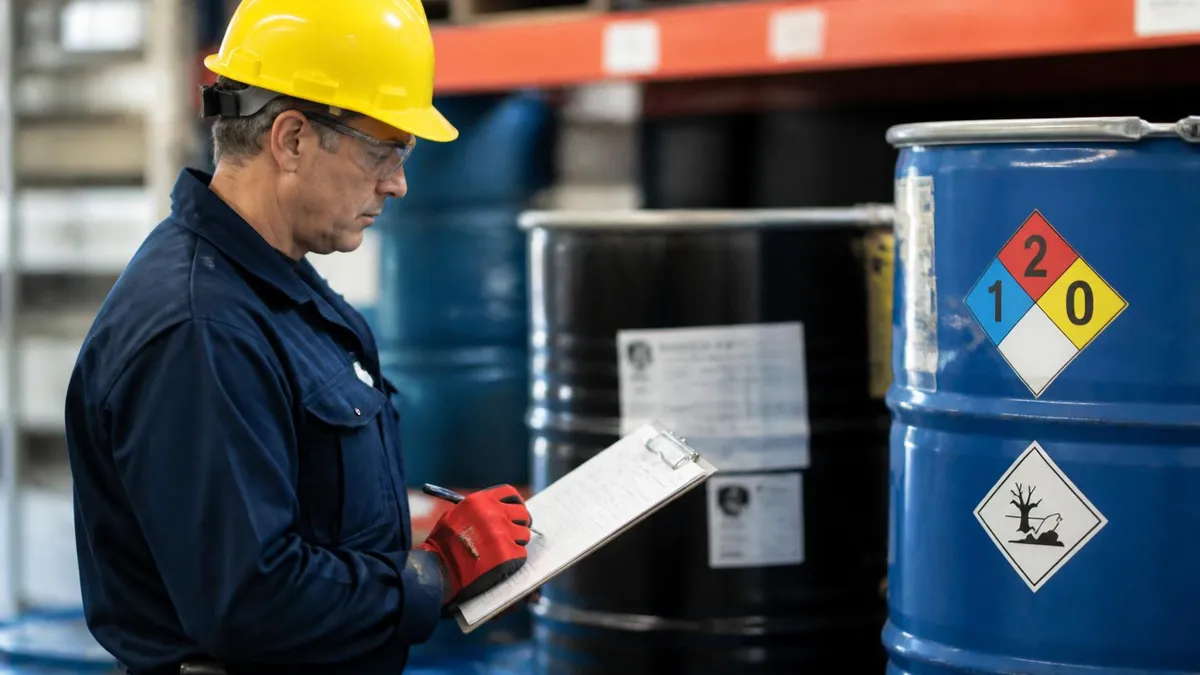
What makes the symbol so powerful is its simplicity. The diamond is split into four smaller diamonds, each painted a specific color and stamped with a number from zero to four. Blue sits on the left and rates health hazards. Red sits at the top and rates flammability. Yellow sits on the right and rates instability or reactivity. White sits at the bottom and carries special codes. Once you learn the system, you can decode any placard in seconds without consulting a reference manual.
The standard was first published in 1960 and has been revised many times since, with the current edition reflecting decades of fire-service experience and chemical research. NFPA 704 is a voluntary consensus standard, but many state and local fire codes adopt it by reference, which gives it real legal weight. The system works alongside, not in place of, OSHA's Hazard Communication Standard and the United Nations GHS labels you find on shipping containers and consumer products.
People often confuse the NFPA 704 diamond with the GHS pictograms or the DOT placards used on trucks and rail cars. They serve overlapping but distinct purposes. The fire diamond is designed for fixed facilities and emergency response, prioritizing the moment a responder arrives on scene. It answers the urgent questions: Will this material hurt me if I breathe it? Will it catch fire easily? Could it explode or react violently? Is there anything special I absolutely must know before acting?
For students preparing for fire-service exams, hazmat technician certifications, or industrial safety roles, mastering the diamond is essential. Test questions frequently ask you to interpret a sample placard, identify which color corresponds to which hazard, or explain what a specific number rating means in practical terms. This guide breaks down every element of the system, walks through real examples, and connects the concepts to the broader world of fire protection standards that govern American workplaces.
Whether you are a new firefighter, a chemistry lab manager, a warehouse supervisor, or a student studying for a certification exam, this complete guide will give you the confidence to read any fire diamond accurately. We will cover the colors, the numbers, the white-square symbols, common mistakes, how the diamond differs from related systems, and exactly how to apply this knowledge in real emergency and workplace situations.
The NFPA Hazard Diamond by the Numbers

The Four Quadrants of the Fire Diamond
The left quadrant rates the danger to human health from exposure. A higher number means a shorter, more severe exposure can cause harm, ranging from minor irritation up to a few breaths being lethal.
The top quadrant rates how easily the material ignites. It considers flash point and the conditions needed for combustion, from materials that will not burn to gases that ignite at normal temperatures.
The right quadrant rates reactivity and the potential to explode or react violently. It reflects whether the material is stable, reacts with water, or can detonate at normal temperatures and pressures.
The bottom quadrant uses letters and symbols rather than numbers. It flags unique dangers like oxidizers, water reactivity, or simple asphyxiants that responders must know before acting.
The numeric scale at the heart of the fire diamond runs from zero to four, with zero indicating no special hazard and four indicating extreme danger. This rating appears in the blue, red, and yellow quadrants. Learning what each number means in concrete terms is the key to reading any placard quickly. The scale is intentionally coarse so that a responder under stress can make a fast judgment without needing precise chemical data or laboratory measurements at the scene.
For the blue health quadrant, a zero means the material poses no hazard beyond that of ordinary combustible matter. A one indicates that exposure could cause irritation but only minor residual injury. A two means intense or continued exposure could cause temporary incapacitation. A three signals that short exposure could cause serious injury, and a four warns that a very short exposure could be lethal. Materials like hydrogen cyanide carry a health rating of four.
The red flammability quadrant follows similar logic. Zero means the material will not burn under normal conditions. One indicates it must be preheated before ignition. Two means moderate heating is required. Three means the material can ignite at almost all ambient temperatures, like gasoline. A four warns of rapid vaporization that burns readily in air, such as propane or hydrogen gas, demanding extreme caution from anyone nearby.
Yellow instability ratings describe reactivity. Zero indicates a normally stable material, even under fire conditions. One means the material becomes unstable when heated. Two indicates a violent chemical change is possible at elevated temperature and pressure. Three means a strong shock or heat source could trigger detonation, and four warns that the material can detonate at normal temperatures, like certain organic peroxides or trinitrotoluene under specific conditions.
Many of these rating principles connect directly to the response-time and deployment expectations laid out in the nfpa hazard diamond family of standards that govern how career fire departments staff and respond to incidents. A material rated three or four across multiple categories changes the entire tactical approach, often triggering a defensive posture, evacuation zones, and specialized hazmat team activation rather than a routine interior attack on the fire.
When you study these numbers for an exam, focus on the threshold examples. Knowing that gasoline is a red three, that water is essentially a zero across the board, and that a chemical with a blue four can kill in a single breath gives you anchor points. From those anchors you can reason your way through unfamiliar materials, estimating where they likely fall on each scale based on their physical and chemical properties and the way they behave in real fires.
It is worth remembering that the diamond rates the material as it normally exists, not necessarily every form it could take. Particle size, concentration, and mixture with other substances can all change real-world behavior. The placard is a starting point for assessment, not the final word, and trained responders always combine it with shipping papers, safety data sheets, and direct observation of conditions on the ground before committing to a plan of action.
Reading the White Square Special Hazard Symbols
The letters OX in the white square identify a material that is an oxidizer. Oxidizers supply their own oxygen, which means they can intensify a fire dramatically and allow combustion to continue even in environments where it would normally be smothered. Ammonium nitrate and many pool chemicals carry this designation, and responders must avoid treating these materials as ordinary combustibles.
For firefighters, an OX symbol is a serious warning. Standard suppression tactics like oxygen exclusion become ineffective because the material feeds the reaction internally. Storing oxidizers near flammables is especially dangerous, and many warehouse fires have escalated rapidly because of unrecognized oxidizer involvement. Recognizing the OX marker instantly shapes both the suppression strategy and the safety perimeter established around the incident.
Strengths and Limitations of the NFPA 704 System
- +Communicates four critical hazards in a single glance
- +Color and position coding works even when numbers fade
- +Designed specifically for emergency responders at fixed sites
- +Simple zero-to-four scale requires minimal training to read
- +Widely adopted by state and local fire codes nationwide
- +Special symbols flag dangers that numbers alone cannot convey
- +Recognizable across decades of fire-service experience
- −Not intended for transportation, where DOT placards apply
- −Does not identify the specific chemical by name
- −Ratings reflect normal form, not every possible condition
- −Can be confused with GHS pictograms by untrained workers
- −Provides no quantity or concentration information
- −Requires the placard to be visible and well maintained
How to Read an NFPA Hazard Diamond Step by Step
- ✓Locate the diamond and confirm it follows the NFPA 704 layout.
- ✓Identify the blue quadrant on the left for health hazards.
- ✓Read the red quadrant at the top for flammability rating.
- ✓Read the yellow quadrant on the right for instability.
- ✓Note the number from zero to four in each colored square.
- ✓Check the white bottom quadrant for special symbols.
- ✓Interpret OX as oxidizer requiring non-smothering tactics.
- ✓Interpret the crossed-W as a warning against using water.
- ✓Interpret SA as a simple asphyxiant displacing oxygen.
- ✓Cross-reference the placard with safety data sheets on site.
- ✓Adjust your response plan based on the highest hazard ratings.
- ✓Re-verify the placard is current and legible before acting.
Position is permanent, even when color fades.
If a placard is weathered and the colors are no longer clear, you can still read it by position. Health is always left, flammability always top, instability always right, and special hazards always bottom. Memorizing the fixed layout means you are never dependent on color alone in an emergency.
One of the most common points of confusion for students and new safety professionals is how the NFPA 704 fire diamond relates to the other hazard communication systems they encounter daily. The diamond does not exist in isolation. It works alongside OSHA's Hazard Communication Standard, the Globally Harmonized System of classification and labeling, and the Department of Transportation placarding rules. Each system was designed for a different audience and a different moment.
The DOT placards you see on tanker trucks and rail cars are also diamond-shaped, which causes endless mix-ups. However, DOT placards use a completely different numbering scheme based on UN hazard classes, along with four-digit identification numbers that name the specific material being transported. The NFPA 704 diamond, by contrast, is meant for fixed facilities and never travels on a vehicle. It tells responders about the worst-case hazard present at a location rather than identifying a particular shipped chemical.
GHS labels, required under OSHA's updated Hazard Communication Standard, use a different visual language entirely. They feature white diamonds with red borders containing black pictograms, such as a flame, a skull, or a corroding hand. GHS labels also include signal words like Danger or Warning and standardized hazard statements. These labels appear on individual containers and are aimed at workers handling the material, not first responders arriving at a fire from outside the building.
Understanding which system you are looking at matters because the same chemical can be marked three different ways. A drum of acetone might carry an NFPA 704 diamond on the storage room wall, a GHS label on the drum itself, and a DOT placard if it is loaded onto a truck. Each marking is correct for its context, and each conveys partially overlapping but distinct information. Misreading one as another could cause a responder to apply the wrong tactic.
The principles of fixed-facility marking also intersect with broader fire protection requirements such as alarm and detection coverage. A building storing high-hazard materials often needs detection and notification systems engineered to the requirements of related standards, and the hazard ratings on the diamond help designers understand the risk environment. This integrated approach, where marking, detection, and suppression all reinforce one another, is the foundation of modern industrial fire safety in the United States.
For certification exams, you should be prepared to compare and contrast these systems directly. Questions often present a scenario and ask which marking applies, or describe a placard and ask you to identify the governing standard. The reliable shortcut is to remember context: NFPA 704 for fixed buildings and emergency response, GHS for container labels and worker handling, and DOT for materials in transit on public roads, rails, water, or air.
Finally, it helps to appreciate why this layered approach exists at all. No single system could serve a chemist mixing reagents, a truck driver hauling fuel, and a firefighter entering a smoke-filled structure equally well. By specializing each system for its audience, the overall safety ecosystem becomes more robust. The fire diamond's job is narrow but vital: give the person arriving from outside, with no prior knowledge of the building, the fastest possible read on the danger inside.

A placard that is missing, painted over, or illegible does not mean a location is hazard-free. Always treat unmarked storage areas as potentially dangerous until verified through safety data sheets or facility records. Many serious incidents have resulted from responders assuming the absence of a diamond meant the absence of hazard.
Knowing how to read the fire diamond is only valuable when you can apply it under real conditions. In the field, the diamond is the first piece of information a responder gathers, often from a safe distance using binoculars before approaching a scene. A high rating in any quadrant immediately shapes the size of the initial isolation zone, the personal protective equipment selected, and whether the incident escalates to a full hazardous materials response with specialized teams and equipment staged nearby.
Consider a practical example. An engine company arrives at a small manufacturing plant with smoke showing from a storage room. The crew spots a 704 diamond reading blue three, red two, yellow one, with an OX symbol in the white square. In seconds they know the material can cause serious injury on short exposure, requires moderate heat to ignite, becomes unstable when heated, and is an oxidizer that will feed the fire. That single read transforms their entire tactical plan.
The same skill applies in non-emergency settings. Laboratory managers use the diamond to organize chemical storage, keeping high-flammability and high-instability materials separated and away from incompatible substances. Warehouse supervisors use it during inventory audits to confirm that placards match current contents. Insurance inspectors and fire marshals reference the diamonds during facility surveys to verify that a building's marking accurately reflects what is actually stored on the premises that day.
Training is where this knowledge becomes instinctive. Live-fire and hazardous materials drills reinforce diamond recognition under stress, which is exactly why the discipline of realistic training carries its own dedicated standards. The principles governing how departments conduct safe, controlled training evolutions ensure that recruits practice reading placards and making decisions before they ever face a real high-hazard incident, building muscle memory that holds up when adrenaline is running high.
Documentation is another practical dimension. Facilities are often required to maintain a hazardous materials inventory that corresponds to the diamonds posted throughout the building. When the inventory changes, the placards must be updated to match. A diamond that no longer reflects current contents is worse than no diamond at all, because it actively misleads responders. Regular audits catch these discrepancies before they become a problem during an actual emergency.
Workers who handle chemicals daily also benefit from diamond literacy even though the symbol is aimed primarily at responders. A maintenance technician who recognizes a yellow three on a tank understands instantly that mechanical shock or heat could be catastrophic, and adjusts their work accordingly. This shared visual language creates a culture of awareness, where everyone from the loading dock to the front office can recognize and respect the most dangerous materials in their environment.
Ultimately, the value of the fire diamond comes from consistency. Because the same colors mean the same things in every facility across the country, a firefighter who transfers from one city to another can read a placard in an unfamiliar building exactly as they would at home. That nationwide standardization, maintained and refined by NFPA over decades, is what makes the small colored diamond such a quietly powerful tool for protecting lives and property.
If you are preparing for a fire-service, hazmat, or industrial safety exam, a few focused study strategies will help you master the fire diamond efficiently. Start by drilling the four positions until recall is automatic: blue left for health, red top for flammability, yellow right for instability, and white bottom for special hazards. Most exam questions begin with this layout, and getting it instantly correct frees up mental energy for the harder interpretive questions that follow on a timed test.
Next, build a small set of anchor materials with memorable ratings. Gasoline as a red three, propane as a red four, water as a near-total zero, and a deadly gas like hydrogen cyanide as a blue four give you reference points. When an exam presents an unfamiliar chemical, you can reason from these anchors and estimate where it likely falls. This relative-reasoning approach is far more reliable under pressure than trying to memorize the exact rating of every possible substance.
Spend dedicated time on the white-square symbols, because they appear disproportionately often in scenario questions. Memorize OX for oxidizer, the crossed-W for water reactivity, and SA for simple asphyxiant, along with one concrete example of each. Examiners love to test whether you understand that a water-reactive material rules out your most basic suppression tool, so be ready to choose an alternative agent when a question presents that situation in a realistic emergency context.
Practice with realistic sample placards rather than just reading text descriptions. Visual recognition is a different skill from verbal recall, and the actual exam may show you a diamond and ask you to interpret it. Working through practice questions that display sample diamonds trains your eye to extract all four pieces of information quickly and accurately, which is exactly the skill you will need both on the test and later in real field conditions.
Do not neglect the comparison material on how NFPA 704 differs from DOT and GHS systems. These distinctions are favorite exam topics because they reveal whether a candidate truly understands the purpose of each system or has merely memorized one in isolation. Be ready to explain that the fire diamond is for fixed facilities and emergency response, while DOT placards govern transportation and GHS labels target workers handling individual containers of material.
Finally, use spaced repetition and frequent self-testing rather than cramming. The fire diamond rewards over-learning to the point of instinct, because in a real emergency you will not have time to deliberate. Short, regular practice sessions with quizzes that give you immediate feedback and explanations will cement the material far more effectively than a single long study marathon. Consistent practice builds the automatic recognition that both exams and real-world safety demand from you.
As your exam date approaches, simulate test conditions by completing full practice sets under time pressure. Review every question you miss and trace the reasoning back to the underlying principle, whether it is a color position, a number threshold, or a special symbol. This deliberate review of mistakes is where the deepest learning happens, turning isolated facts into a connected understanding of how the hazard diamond protects people in the buildings and facilities all around us.
NFPA Questions and Answers

NFPA 1710: Complete Guide to the Standard for Career Fire Department Operations, Deployment, and Response Times

NFPA 1403: Complete Guide to the Standard on Live Fire Training Evolutions

NFPA 1971: Complete Guide to the Standard on Protective Ensembles for Structural and Proximity Fire Fighting

NFPA 70 NEC Explained: Complete Guide to the National Electrical Code

NFPA 72: National Fire Alarm and Signaling Code Guide
About the Author

Certified Safety Professional & OSHA Compliance Expert
Indiana University of Pennsylvania Safety SciencesDr. William Foster holds a PhD in Safety Science from Indiana University of Pennsylvania and is a Certified Safety Professional (CSP) and Certified Hazardous Materials Manager. With 20 years of occupational health and safety management experience across construction, manufacturing, and chemical industries, he coaches safety professionals through OSHA certification, CSP, CHST, and safety management licensing programs.
Join the Discussion
Connect with other students preparing for this exam. Share tips, ask questions, and get advice from people who have been there.
View discussion (8 replies)