
NFPA 1403: Complete Guide to the Standard on Live Fire Training Evolutions 2026
NFPA 1403 explained: ⏳ live fire training requirements, instructor ratios, safety officer duties, acquired structures, and burn building protocols.
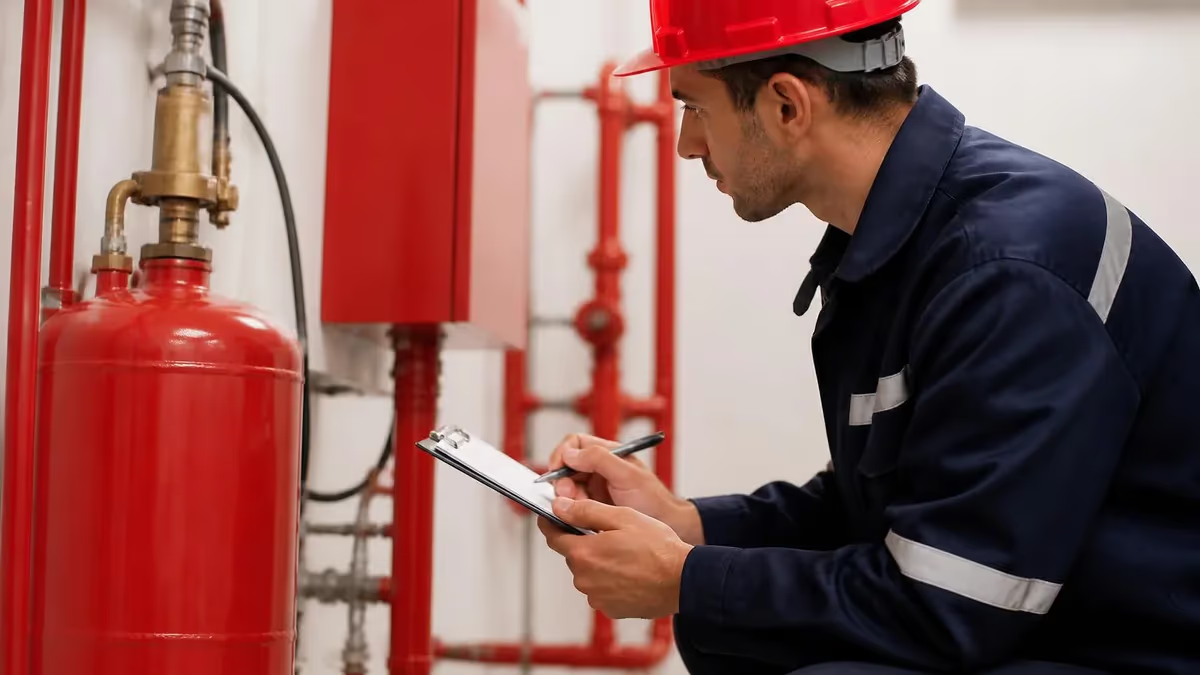
NFPA 1403 is the National Fire Protection Association's Standard on Live Fire Training Evolutions, and it exists for one reason: to prevent firefighter deaths during training exercises that involve real fire. Adopted in 1986 after a string of preventable tragedies, the standard establishes minimum requirements for conducting live fire training in acquired structures, gas-fired buildings, non-gas burn buildings, exterior props, and mobile units. Every fire academy, department training division, and certified instructor in the United States is expected to comply with its mandates. Practice with the free NFPA - National Fire Protection Association practice test on PracticeTestGeeks (100+ questions with answer explanations).
The standard addresses every phase of a live burn, from preplanning and fuel selection to instructor-to-student ratios, safety officer authority, water supply, and post-evolution accountability. While some agencies treat NFPA 1403 as a recommendation, courts and insurers increasingly treat it as the legal benchmark for reasonable care. Failing to follow it after a line-of-duty death has resulted in criminal charges against instructors, civil verdicts in the millions, and revocation of training credentials across multiple states.
The current edition, NFPA 1403 (2024), reflects more than three decades of lessons learned from training fatalities, including the deaths of recruits in Pennsylvania, New York, Florida, and Maryland. Each revision has tightened fuel restrictions, clarified the role of the safety officer, and reinforced the requirement that students complete prerequisite training before participating in any interior live fire evolution. The 2024 edition also expands guidance on flashover simulators, fixed-facility burn props, and the use of pallets and straw.
For aspiring firefighters and recruits, understanding NFPA 1403 is not optional. The same principles tested on the nfpa 1001 standard for firefighter professional qualifications show up in academy live burn evaluations, and instructors are expected to demonstrate competency in 1403 procedures before being authorized to conduct evolutions. Recruits who arrive at the burn building familiar with the standard's vocabulary and expectations perform better and stay safer.
Live fire training is one of the most valuable experiences in a firefighter's career. It is also one of the most dangerous activities a department conducts. The heat, smoke, and unpredictability of real combustion cannot be fully replicated in any classroom or virtual simulator, which is why the burn building remains a fixture in every credentialed fire academy. NFPA 1403 exists to make sure the people inside that building come out alive, every single time, without exception or compromise.
This guide walks through what NFPA 1403 covers, who must comply, what prerequisite training looks like, how acquired structures are prepared, and what instructors and students need to know before the first match is struck. We will also examine recent fatality reports, common citation findings, and the differences between acquired structures and permanent burn buildings. By the end, you will understand why 1403 is treated as gospel in modern fire service training and how to recognize a non-compliant evolution before it puts lives at risk.
Whether you are a recruit preparing for your first interior burn, a company officer asked to serve as ignition officer, or a training chief building a department's annual live fire program, the information here will help you align with the standard and the spirit behind it. Live fire training done right produces confident, capable firefighters. Done wrong, it produces funerals. NFPA 1403 is the line between the two.
Free NFPA - National Fire Protection Association Study Tools
Interactive NFPA - National Fire Protection Association resources on PracticeTestGeeks, free to start:
- Free NFPA Life Safety Questions and Answers — 11 questions with instant scoring and answer explanations
- NFPA - National Fire Protection Association flashcards — review key terms and concepts card by card
- NFPA - National Fire Protection Association study guide — topic-by-topic overview of what the exam covers
- NFPA - National Fire Protection Association cheat sheet — one-page printable summary for last-minute review
NFPA 1403 by the Numbers

Scope and Purpose of NFPA 1403
Chapter 4 governs the use of donated or condemned buildings. Includes inspection, hazard removal, neighbor notification, environmental permits, asbestos and lead surveys, and structural verification before any fuel is introduced.
Chapter 5 covers permanent props fueled by natural gas or propane. Requires factory inspection, emergency shutoffs, gas leak detection, and operator certification for the burn building's control systems and ventilation.
Chapter 6 addresses concrete or masonry burn props fueled by Class A combustibles. Includes thermal monitoring requirements, fuel package limits, and post-burn cooldown procedures before reuse for additional evolutions.
Chapter 7 covers outdoor evolutions such as car fires, dumpster fires, flammable liquid pits, and prop trees. Includes spill containment, ignition standoff distances, and weather restrictions for wind speed and visibility.
Chapter 8 addresses portable trailer-mounted burn props used by traveling instructors and regional academies. Covers transport inspection, setup verification, ventilation hardware, and emergency egress routes.
Understanding the difference between an acquired structure and a permanent burn building is the foundation of NFPA 1403 compliance. An acquired structure is a building donated, condemned, or otherwise made available for one-time use as a live fire training site. These are real homes, garages, and small commercial buildings that will be destroyed by the evolution. A burn building, by contrast, is a purpose-built concrete or masonry facility designed to be burned repeatedly across many training cycles. Both have value, but they carry vastly different risk profiles and preparation demands.
Acquired structures require the most extensive preparation. Before a single fire is lit, the authority having jurisdiction must verify the building is structurally sound, free of unauthorized hazards, and properly permitted. The standard mandates a written permission letter from the legal owner, removal of all utilities, abatement of asbestos and lead-based paint, and notification of adjacent property owners. Environmental permits must be obtained where required, and the local air quality authority is typically consulted. Skipping any of these steps has led to lawsuits, criminal indictments, and the loss of training privileges.
Burn buildings are engineered for repeat use, with steel reinforcement, thermal lining systems, ventilation hatches, and rated egress doors. They are inspected annually for thermal damage, spalling concrete, and structural fatigue. Many include thermocouples that record temperatures in real time so instructors can stop an evolution if conditions exceed safe thresholds. The trade-off is that burn buildings produce a different fire behavior than real residential occupancies, since the heat-absorbing properties of concrete differ from gypsum and wood framing.
NFPA 1403 does not favor one type of facility over the other. Instead, it sets minimum requirements for each and demands that the training plan match the venue. A burn in an acquired single-family home requires different fuel loads, escape routes, and instructor positioning than a burn in a four-story concrete tower. The instructor in charge must document this match in a written preburn plan that the safety officer reviews and signs before ignition.
One persistent challenge is the temptation to reuse acquired structures for multiple burns. The standard permits this only when the building's structural integrity has been verified after each evolution. Many departments have found, painfully, that what looks structurally sound after one burn often collapses during the second. Roof systems, in particular, fail unpredictably once their sheathing has been weakened by fire and water. The 2024 edition tightens documentation requirements for reinspection between successive burns.
Insurance coverage is another distinguishing factor. Acquired structure evolutions typically require a separate rider, since the building will be destroyed and the surrounding area is at elevated risk for ember-driven exposure fires. Burn buildings are usually covered under standard municipal property policies. Departments should always confirm coverage in writing before scheduling evolutions, and the training chief should keep the policy declarations attached to the burn plan in case of post-incident review.
For recruits, the practical takeaway is to ask which type of facility you will be working in and to read the preburn plan when it is presented at the safety briefing. The same general principles from nfpa 1582 standard on medical requirements for firefighters govern your medical fitness to participate in either environment, and you should never enter an acquired structure for a live burn if any preburn step appears to have been skipped or rushed by instructors.
NFPA Practice Test Questions
Prepare for the NFPA - National Fire Protection Association exam with our free practice test modules. Each quiz covers key topics to help you pass on your first try.
NFPA Life Safety
NFPA Exam Questions covering Life Safety. Master NFPA Test concepts for certification prep.
NFPA 10 Portable Fire Extinguishers
NFPA Mock Exam on NFPA 10 Portable Fire Extinguishers. NFPA Study Guide questions to pass on your first try.
NFPA 13 Sprinkler Systems
NFPA Test Prep for NFPA 13 Sprinkler Systems. Practice NFPA Quiz questions and boost your score.
NFPA 1 Fire Code General Requirements
NFPA Questions and Answers on NFPA 1 Fire Code General Requirements. Free NFPA practice for exam readiness.
NFPA 25 Water-Based Fire Protection Inspec...
NFPA Mock Test covering NFPA 25 Water-Based Fire Protection Inspection. Online NFPA Test practice with instant feedback.
Prerequisite Training for NFPA 1403 Evolutions
Before any student can participate in an interior live fire evolution under NFPA 1403, they must complete prerequisite training equivalent to the Firefighter I level objectives covering self-contained breathing apparatus use, hose handling, ladder operations, fire behavior, building construction, and personal protective equipment. This is not negotiable. Every fatality investigation since the standard's adoption has identified gaps in prerequisite training as a contributing factor in recruit deaths.
Students must also demonstrate SCBA proficiency, including emergency procedures such as buddy breathing, low-air alarm response, and entanglement escape. Many academies require students to pass a confidence course in full structural turnout gear and on air before they are permitted near an active burn. Documentation of these prerequisites must be retained by the agency for the duration required by state law, typically a minimum of three to seven years.
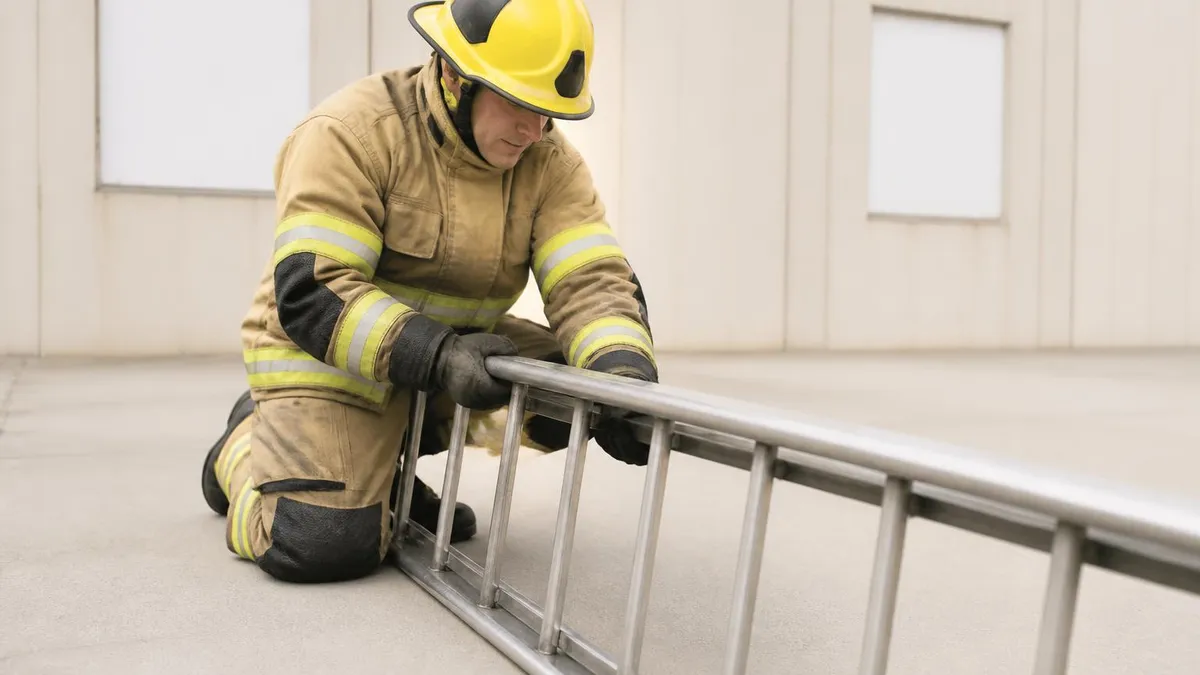
Acquired Structures vs Burn Buildings: A Comparison
- +Acquired structures provide the most realistic representation of residential fire behavior
- +Burn buildings allow repeated evolutions without environmental abatement headaches
- +Permanent props include built-in thermal monitoring and emergency shutoffs
- +Acquired structures expose students to authentic building construction features
- +Burn buildings can be used in nearly any weather with predictable fuel behavior
- +Both venues, when compliant, satisfy state firefighter certification requirements
- −Acquired structures require extensive permitting, abatement, and neighbor notification
- −Burn buildings produce concrete-influenced fire behavior that differs from real homes
- −Acquired structures cannot reliably be reused after one significant burn
- −Permanent props require costly annual inspections and thermal sensor maintenance
- −Acquired structures carry higher liability exposure for the agency and instructors
- −Burn buildings may lack realistic interior layouts compared to actual residences
Pros and Cons at a Glance
| Pros | Cons |
|---|---|
| Acquired structures provide the most realistic representation of residential fire behavior | Acquired structures require extensive permitting, abatement, and neighbor notification |
| Burn buildings allow repeated evolutions without environmental abatement headaches | Burn buildings produce concrete-influenced fire behavior that differs from real homes |
| Permanent props include built-in thermal monitoring and emergency shutoffs | Acquired structures cannot reliably be reused after one significant burn |
| Acquired structures expose students to authentic building construction features | Permanent props require costly annual inspections and thermal sensor maintenance |
| Burn buildings can be used in nearly any weather with predictable fuel behavior | Acquired structures carry higher liability exposure for the agency and instructors |
| Both venues, when compliant, satisfy state firefighter certification requirements | Burn buildings may lack realistic interior layouts compared to actual residences |
NFPA 1403 Pre-Burn Compliance Checklist
- ✓Confirm written permission letter from the legal property owner is on file
- ✓Verify asbestos and lead-based paint surveys have been completed and abated
- ✓Document removal of all utilities including gas, electric, water, and sewer
- ✓Obtain required environmental and air quality permits from local authorities
- ✓Notify adjacent property owners and the public safety dispatch center in writing
- ✓Inspect the structure for unauthorized hazards and remove any prohibited materials
- ✓Verify roof, floor, and stair systems are structurally sound for planned operations
- ✓Designate an instructor in charge and a separate safety officer with stop authority
- ✓Confirm fuel loads use only Class A combustibles and meet quantity limitations
- ✓Establish a charged backup hoseline and dedicated water supply before ignition
Stop Means Stop — No Exceptions
Under NFPA 1403, the safety officer is empowered to halt any evolution at any moment for any safety concern. This authority cannot be overridden by the instructor in charge, the training chief, or even the fire chief. Every fatality investigation since the standard's adoption has identified moments when a clear stop order could have prevented death. If you serve as safety officer and feel pressured to keep going, the standard and the courts have your back.
The roles and responsibilities defined in NFPA 1403 are deliberately separated to create redundancy. The instructor in charge owns the overall evolution, including planning, briefing, and coordination. The safety officer owns risk and has independent authority to stop the burn. The ignition officer is responsible for setting the fire, monitoring fuel behavior, and communicating fire conditions to the instructor in charge. Backup instructors, accountability officers, and rapid intervention crew members each have distinct duties spelled out in writing before the evolution begins.
The instructor in charge is the senior official responsible for the burn. This person prepares the written preburn plan, conducts the safety briefing, walks every participant through the structure, and authorizes ignition. The instructor in charge must be visible and accessible throughout the evolution and cannot also serve as the safety officer or the ignition officer. Trying to combine these roles is one of the most common findings in post-incident reviews of training fatalities.
The safety officer is the second-most senior position and arguably the most consequential. This person inspects the structure before each evolution, verifies fuel placement, confirms hoselines are charged, monitors weather, and watches for warning signs of flashover or structural failure. The safety officer's authority to halt operations is absolute and unreviewable in the moment. Departments that have ignored a safety officer's call to abort have buried recruits as a result.
The ignition officer is the only person authorized to start the fire. This person controls fuel loading, ignites the fuel package on order, and reports observed fire behavior to the instructor in charge. The ignition officer must wear full structural PPE including SCBA on air, must have a charged hoseline immediately available, and must have a clear escape route. Many departments require ignition officers to complete supplemental training beyond the basic instructor qualification.
Accountability is another critical function. NFPA 1403 requires that every person entering the hot zone be tracked by name, assignment, and air supply. Most agencies use a passport or tag system at a designated accountability point outside the structure. The accountability officer must be able to report immediately who is inside, who is outside, and the air status of every interior crew. This information becomes essential if a Mayday is called during the evolution.
A dedicated rapid intervention crew must be in place for every interior evolution, fully geared and on air, ready to deploy in seconds. The RIC cannot be assigned other duties and cannot include students participating in the training. The crew must be staffed by experienced firefighters or instructors with current RIC training. This requirement was added after a recruit became disoriented during an evolution and the rescue effort was delayed because no dedicated crew had been assigned.
Communication is the thread that ties these roles together. Every participant must have a portable radio or a clear line-of-sight to a designated communicator. Emergency signals, evacuation tones, and chain-of-command relationships must be reviewed during the safety briefing and tested before ignition. When communication breaks down, the standard requires that the evolution be immediately suspended until reliable communication is restored. This rule exists because lost communication has preceded nearly every modern training fatality.

Class B fuels including gasoline, kerosene, diesel, and flammable liquids are strictly prohibited inside acquired structures and most burn buildings. Pressure-treated wood, rubber tires, plastics, and foam are also banned. Using prohibited accelerants has been the direct cause of multiple recruit deaths and has resulted in instructor manslaughter convictions. If you see an unauthorized fuel being staged for a burn, you have both a moral and legal obligation to stop the evolution.
Fuel selection and ignition procedures sit at the heart of NFPA 1403 compliance. The standard restricts fuel inside acquired structures to Class A combustibles such as untreated lumber, wooden pallets, straw, hay, and excelsior. These materials produce predictable heat release rates and predictable smoke characteristics, allowing instructors to anticipate fire behavior. Synthetic furnishings, mattresses, tires, and pressure-treated wood are banned because their combustion products are unpredictable, often toxic, and can produce flashover conditions far faster than recruits can react.
Quantity matters as much as type. The standard limits fuel loads to amounts that produce manageable fire conditions and do not exceed the structural capacity of the building. Most fatalities involving fuel issues have stemmed from over-fueling rather than from using the wrong material. A burn room stacked with too many pallets and bales of straw can transition from training fire to deadly flashover in seconds, and recruits with limited experience may not recognize the warning signs in time to escape.
Ignition itself is tightly controlled. Only the designated ignition officer may light the fuel, and only on the explicit order of the instructor in charge. Ignition devices must be appropriate for the fuel and must allow the ignition officer to maintain a safe standoff distance. Many departments use a propane torch or fusee, both of which produce a quick ignition without lingering accelerant residue. Liquid fuel ignition is prohibited inside acquired structures and is restricted even in many permanent burn buildings.
Once fire is established, the ignition officer monitors fuel behavior and reports conditions to the instructor in charge. If the fire grows faster than expected, produces unexpected smoke conditions, or if any participant shows signs of distress, the evolution is halted. The standard requires that water be applied to immediately reduce heat conditions, that the structure be ventilated, and that all personnel be accounted for before any further evolution is considered. This is not a pause — it is a full stop, with documentation required.
Water supply is non-negotiable. NFPA 1403 requires a dedicated water source capable of supplying the attack lines, the backup line, and a separate exposure protection line if conditions warrant. Hydrant supply is preferred, but tanker shuttle operations or static water sources are acceptable when properly engineered. Pump operators must be qualified and dedicated to the evolution; they cannot be reassigned to support other operations while a burn is in progress.
The 2024 edition addresses concerns about repeated evolutions in the same room. After a single significant burn, the room's structural lining may be compromised, and reignition can produce unpredictable fire growth. The standard now requires a cooldown period and a structural reassessment between evolutions in the same compartment. Many departments build their training plans around moving to a new room for each successive evolution, both for student exposure variety and for compliance with this requirement.
Recruits should pay attention to where the fuel package is staged, how it is lit, and how the room behaves once fire is established. Reading fire behavior is one of the most important skills a firefighter can develop, and the controlled environment of a burn building is the ideal classroom — provided the instructors are following NFPA 1901: Complete Guide to the Standard for Automotive Fire Apparatus for apparatus support, NFPA 1403 for the burn itself, and the agency's standard operating procedures for accountability and emergency response.
For recruits and new instructors preparing to participate in NFPA 1403 evolutions, the most useful preparation is reading the standard itself. The full text is available through NFPA's online subscription service and through most fire academy libraries. Read Chapter 4 if you are working in acquired structures, Chapters 5 and 6 for burn buildings, and the entirety of Annex A for explanatory material that clarifies why each requirement exists. The annex is not enforceable but is invaluable for understanding the standard's intent.
Bring a notebook to your first safety briefing and write down every step the instructor describes. Note the location of escape routes, the staging area for rehab, the accountability point, and the rapid intervention crew's position. If anything is unclear, ask before the evolution begins. Instructors expect questions during the briefing and consider them a sign of professionalism rather than weakness. Asking after ignition is too late.
During the evolution, focus on your assigned role and stay aware of fire conditions. Watch the smoke at the ceiling — color, volume, velocity, and density all communicate something important about the fire's stage. If you see rollover, dark turbulent smoke, or feel sudden heat changes, communicate immediately with your team and prepare to retreat. Do not freeze, do not isolate, and do not lose contact with your hoseline or partner. These are the basic survival rules that keep recruits alive.
After the evolution, participate fully in the post-burn debrief. This is where the most learning happens, and it is also where the instructor in charge documents what worked, what failed, and what needs to be corrected for the next evolution. Be honest about what you experienced, including any moment when you felt unsafe or confused. Honest debriefs improve the program and protect the next class of recruits who will go through the same building.
Long term, every firefighter who plans to instruct should pursue formal Fire Service Instructor certification through their state and complete a live fire instructor program. These programs typically include classroom instruction, supervised burn experience, and a final evaluation conducted by senior instructors. Annual refresher training is now mandated in many states, and most insurance carriers require documented refresher attendance to maintain coverage for the agency's training operations.
Departments that take NFPA 1403 seriously build a culture where everyone, from the chief to the newest recruit, feels empowered to stop a burn that does not look right. That culture takes years to develop and one bad day to destroy. Cultivating it begins with reading the standard, internalizing its principles, and refusing to compromise on the protections it establishes. There is no glory in finishing an evolution that should have been halted, and there is no shame in calling for a stop.
NFPA 1403 will continue to evolve as fire service science advances and as new fatality reports identify additional improvements. The 2024 edition is not the last word, and future editions will incorporate lessons learned from training operations conducted between now and the next revision cycle. Stay current, read NIOSH fatality reports, attend regional instructor symposiums, and bring back what you learn to your own department. The standard works because firefighters take it seriously — make sure you are one of them.
Sample NFPA - National Fire Protection Association Practice Questions
Try these questions from our free NFPA - National Fire Protection Association practice tests. The correct answer and an explanation follow each question.
According to NFPA 13, which occupancy classification applies to offices, schools, and churches?
- A. Extra hazard
- B. Ordinary hazard Group 1
- C. Ordinary hazard Group 2
- D. Light hazard
Answer: D. Light hazard
Offices, schools, and churches are classified as light hazard occupancies under NFPA 13.
According to NFPA 30, what is the minimum distance between a flammable liquid dispensing station and any ignition source?
- A. 5 feet
- B. 10 feet
- C. 20 feet
- D. 25 feet
Answer: C. 20 feet
NFPA 30 requires a minimum separation of 20 feet between flammable liquid dispensing operations and potential ignition sources.
According to NFPA 10, what type of fire extinguisher is NOT acceptable for use on Class C (energized electrical) fires?
- A. CO2 extinguisher
- B. Dry chemical extinguisher
- C. Halon extinguisher
- D. Water extinguisher
Answer: D. Water extinguisher
NFPA 10 prohibits the use of water extinguishers on Class C fires because water conducts electricity and creates an electrocution hazard.
According to NFPA 72, what signal must a fire alarm control unit transmit when a detector or device is removed for maintenance?
- A. Alarm signal
- B. Supervisory signal
- C. Trouble signal
- D. No signal required
Answer: C. Trouble signal
NFPA 72 requires that removal of a detector or initiating device from its base generate a trouble signal at the control unit.
Take the full NFPA - National Fire Protection Association practice test
NFPA Questions and Answers
NFPA 1582: Complete Guide to the Standard on Medical Requirements for Firefighters
NFPA 1001 Explained: Firefighter Professional Qualifications Standard Guide
NFPA 1901: Complete Guide to the Standard for Automotive Fire Apparatus
NFPA 13D Explained: Complete Guide to Sprinkler Systems in One- and Two-Family Dwellings and Manufactured Homes
NFPA 70E: Electrical Safety Standard Guide for the Workplace
How this page was made: written with AI tools and published by Nathan Beja, founder of Practice Test Geeks, who is responsible for its content. We have not yet matched this exam's facts to an official source, so confirm fees, dates and rules with the exam body. Not reviewed by a subject-matter expert. Editorial policy