
NFPA 70E: Electrical Safety Standard Guide for the Workplace 2026 October
Understand NFPA 70E, the electrical safety standard for the workplace. 📚 Covers arc flash, PPE requirements, training, and compliance essentials.

NFPA 70E: Electrical Safety Standard Guide for the Workplace
NFPA 70E is the standard for Electrical Safety in the Workplace, published by the National Fire Protection Association. It provides the framework that U.S. employers and electrical workers must follow to protect against arc flash, electric shock, and other electrical hazards. The standard isn't a regulation on its own — but OSHA uses it as the benchmark for enforcing electrical safety under the General Duty Clause, making compliance effectively mandatory in practice.
Arc flash is one of the most dangerous hazards in industrial and commercial electrical work. When an unintended arc occurs between energized conductors, it releases an explosive burst of energy — temperatures can reach 35,000°F, hot enough to vaporize copper and cause severe burns instantly. The pressure wave from an arc blast can throw workers across a room. NFPA 70E's arc flash protection requirements exist specifically to prevent these injuries and fatalities, which kill approximately 400 workers annually in the United States.
The standard is updated every three years by the NFPA's technical committee, with the most recent cycle producing the 2024 edition. Updates typically reflect new research on arc flash physics, changes in electrical equipment, and lessons learned from incident investigations. Facilities following the 2018 or 2021 edition should review the 2024 changes to determine whether their hazard analysis, labeling practices, and PPE selection require updates.
NFPA 70E applies broadly — manufacturing facilities, utilities, hospitals, data centers, commercial buildings, and any workplace where employees may be exposed to energized electrical equipment. It's not just for journeyman electricians. Maintenance technicians, HVAC workers, process engineers, and anyone who interacts with electrical panels or equipment over 50 volts can face arc flash and shock hazards. Compliance protects workers across these roles, not just dedicated electrical staff.
This guide covers the core requirements of NFPA 70E: arc flash hazard analysis, PPE categories, lockout/tagout requirements, training obligations, and how the standard interacts with OSHA regulations. Whether you're an electrical safety professional, a facility manager, or a worker studying for a certification, you'll find a grounded explanation of what the standard requires and how it's applied in real workplaces.
NFPA 70E sets minimum electrical safety requirements for the workplace, covering shock hazards and arc flash hazards separately.
- Scope: Any workplace with exposure to energized electrical equipment (≥50V)
- Key requirement: Arc Flash Hazard Analysis (AFHA) — determine incident energy and PPE requirements for each task
- PPE system: Four Arc Flash PPE Categories based on cal/cm² exposure
- Preferred approach: De-energize equipment before work — energized work requires written justification
- Training: All qualified persons must be trained on both electrical safety and the specific hazards of their work
- Update cycle: Revised every 3 years (current edition: 2024)
NFPA 70E Compliance: Key Steps for Employers
Conduct an Arc Flash Hazard Analysis
Label All Electrical Equipment
Establish an Energized Electrical Work Policy
Select and Provide PPE
Implement Lockout/Tagout Procedures
Train All Affected Workers
Document and Audit
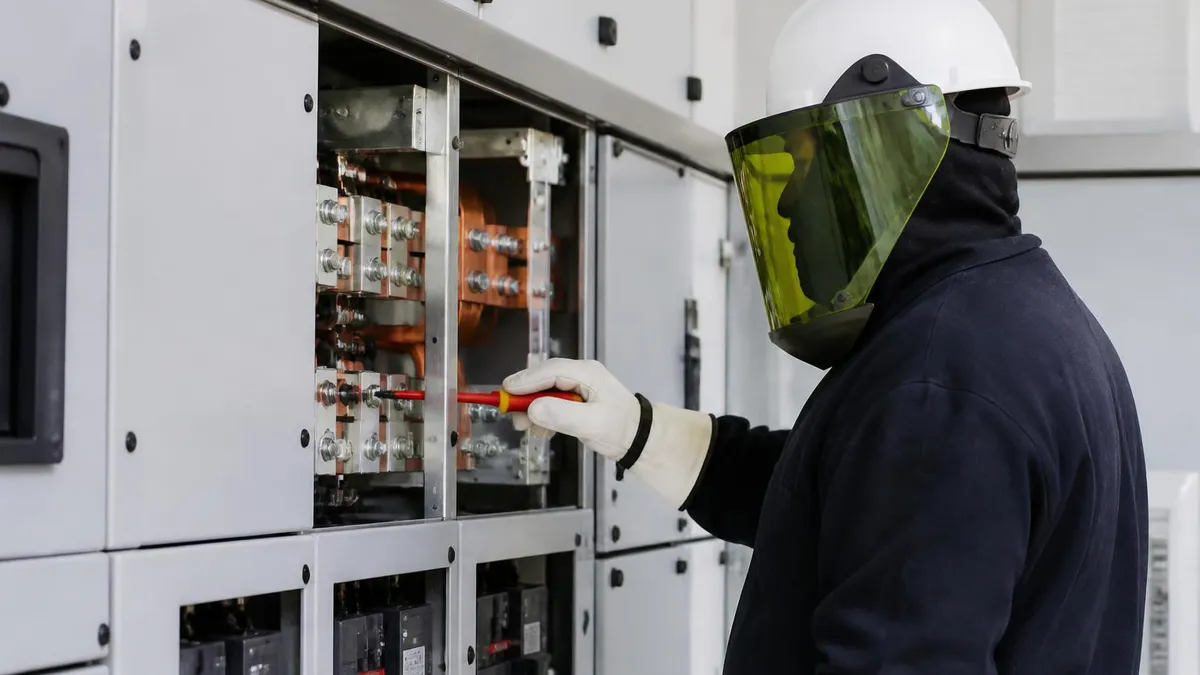
Arc Flash Hazard Analysis: What It Requires
The arc flash hazard analysis (AFHA) is the technical core of NFPA 70E compliance. It's an engineering study that models the energy a potential arc flash would release at each electrical work location, calculated in calories per square centimeter (cal/cm²). This incident energy number determines the arc flash boundary — the distance within which a worker could receive a second-degree burn — and the PPE category required for the task.
Two methods are accepted under NFPA 70E for determining PPE requirements. The first is the incident energy analysis method: an engineer performs detailed power system modeling (using software like SKM, EasyPower, or ETAP) to calculate actual incident energy values at each piece of equipment. Equipment-specific labels are generated from this data. The second is the Arc Flash PPE Category method: the standard's tables are used to assign PPE categories based on system voltage, available fault current, and upstream overcurrent protection — without performing a full engineering study.
The incident energy method is more accurate and is strongly preferred for complex facilities, high-fault-current systems, and equipment where the table method's assumptions don't apply cleanly. The table-based category method is faster and acceptable for simpler systems, but it can be overly conservative (requiring more PPE than necessary) or fail to account for facility-specific conditions that affect actual arc energy.
Arc flash boundaries matter practically. Any worker within the arc flash boundary must wear appropriate PPE. Workers outside the boundary but within the limited approach boundary still face shock hazard. Understanding both boundaries — and requiring all personnel near energized work to stay outside the arc flash boundary unless PPE-equipped — is a day-to-day supervisory responsibility, not just a compliance checkbox. Study the boundary system further with the NFPA life safety practice questions, which cover boundary determination and PPE selection scenarios.
Updating your arc flash analysis is required whenever the electrical system changes in ways that affect available fault current, system impedance, or protective device settings. Adding a transformer, changing a breaker, reconfiguring a bus — all of these can shift the incident energy at downstream equipment. Many facilities treat the hazard analysis as a one-time project, then fail to update it for years. This creates a serious compliance gap and a real safety hazard, because outdated labels may require less PPE than the current system actually demands.
NFPA 70E Arc Flash PPE Categories
- Minimum Arc Rating: 4 cal/cm²
- Arc-Rated Clothing: Arc-rated shirt and pants OR arc-rated coverall
- Face Protection: Arc-rated face shield or arc flash suit hood
- Typical Tasks: Reading panelboard voltmeters, low-energy panel work
- Minimum Arc Rating: 8 cal/cm²
- Arc-Rated Clothing: Arc-rated shirt and pants + arc-rated coverall
- Face Protection: Arc-rated face shield (≥8 cal/cm²) or hood
- Typical Tasks: 600V panelboard work, switchgear operations
- Minimum Arc Rating: 25 cal/cm²
- Arc-Rated Clothing: Arc flash suit (jacket + pants + hood)
- Face Protection: Arc flash suit hood (25 cal/cm² rated)
- Typical Tasks: Medium-voltage switchgear (1–15kV) operations
- Minimum Arc Rating: 40 cal/cm²
- Arc-Rated Clothing: Arc flash suit (40+ cal/cm²) with multi-layer system
- Face Protection: Arc flash suit hood with arc-rated face shield
- Typical Tasks: High-energy switchgear, utility equipment, >15kV work
Key NFPA 70E Requirements
Arc flash protection is the central focus of NFPA 70E. The standard requires that before any electrical work begins, the arc flash hazard be assessed and appropriate PPE be selected and worn within the arc flash boundary.
The standard strongly prefers de-energizing equipment before work. Energized electrical work is only permitted when the employer can demonstrate that de-energizing would create greater hazards (e.g., continuous process equipment), is infeasible due to equipment design, or when minor tasks like voltage testing require it. Energized work requires a signed Energized Electrical Work Permit.
Flame-resistant (FR) clothing is not the same as arc-rated clothing. FR clothing resists ignition but may not provide sufficient protection against the thermal energy of an arc flash. NFPA 70E requires arc-rated clothing — rated in cal/cm² — that equals or exceeds the incident energy level on the equipment label.
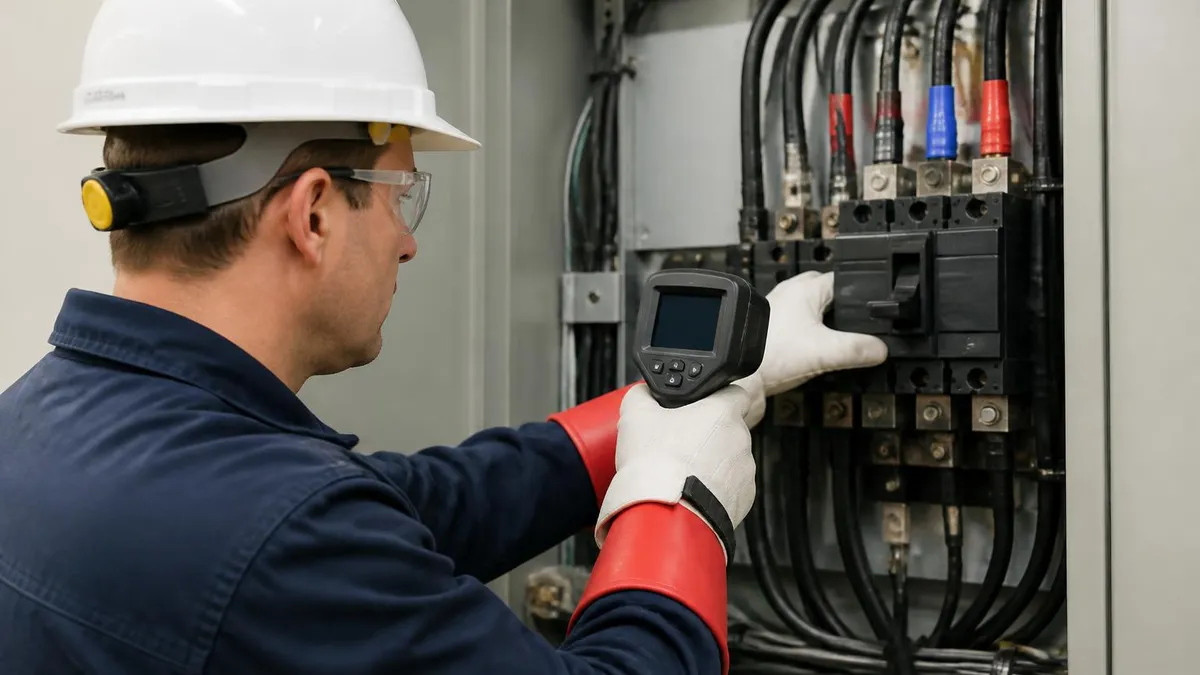
NFPA 70E Training: What Qualified Persons Must Know
A qualified person under NFPA 70E is someone who has demonstrated skills and knowledge related to the construction and operation of electrical equipment and installations, and has received safety training to recognize and avoid the hazards involved. The standard intentionally leaves room for employers to define the specifics of what qualifies someone — but the training must demonstrably prepare them for the actual work they perform, not just check a box.
Training requirements distinguish between classroom knowledge and demonstrated competence. A worker who completes an NFPA 70E course and passes a written exam has met the knowledge requirement — but NFPA 70E also requires that workers demonstrate the ability to apply that knowledge safely on the job. Supervisors must observe work practices and verify compliance, and must document these observations. Self-certification without observable follow-through doesn't meet the standard's intent.
Retraining triggers are defined clearly: whenever the employer has reason to believe a qualified person does not understand the hazards involved, or when procedures change. This means retraining isn't just for new employees or after accidents — it's required any time a supervisor observes unsafe practices, even for experienced workers. Some facilities implement quarterly field observations specifically to catch drift from safe procedures before it leads to an incident.
The NFPA NEC practice questions complement 70E training by reinforcing the electrical code requirements that underpin many of NFPA 70E's safety rules — including proper installation of overcurrent protection, equipment grounding, and panel configuration. Workers who understand the NEC provisions better understand why NFPA 70E requires the safety measures it does, rather than following them as arbitrary rules.
Third-party training providers, community colleges, and industry associations like IEEE, NECA, and IBEW all offer NFPA 70E courses. Some lead to certificates of completion; others are part of broader electrical apprenticeship curricula. The Certified Electrical Safety Worker (CESW) credential from the Electrical Safety Foundation International (ESFI) is one of the more recognized practitioner-level credentials specifically focused on NFPA 70E competency and electrical workplace safety.
Employer NFPA 70E Compliance Checklist
- ✓Arc Flash Hazard Analysis completed and updated within the past 5 years (or after system changes)
- ✓Arc flash warning labels installed on all electrical equipment where a hazard exists
- ✓Written Electrical Safety Program (ESP) documents all policies, procedures, and responsibilities
- ✓Energized Electrical Work Permit process established and used for all energized work exceptions
- ✓Equipment-specific lockout/tagout procedures written and accessible to all affected workers
- ✓Arc-rated PPE inventoried and matched to incident energy levels on facility labels
- ✓Training records maintained for all qualified and unqualified persons with electrical exposure
- ✓Annual program review conducted and documented, including any incidents and near-misses
NFPA 70E vs Relying on OSHA Standards Alone
- +NFPA 70E provides specific arc flash PPE requirements that OSHA standards lack
- +Equipment-specific hazard analysis and labeling gives workers task-specific safety information
- +PPE category tables simplify selection decisions at the point of work
- +Regular update cycle (every 3 years) keeps the standard current with electrical safety research
- +Alignment with OSHA's General Duty Clause reduces regulatory risk significantly
- −Full compliance requires significant upfront investment in hazard analysis and labeling
- −Arc flash analysis must be updated every time electrical systems change — ongoing cost
- −Training requirements for qualified persons are substantial and must be documented rigorously
- −The standard is complex enough that many facilities need a dedicated electrical safety professional
- −NFPA 70E is not a regulation — OSHA enforcement is indirect, creating compliance ambiguity in some cases
Pros and Cons at a Glance
| Pros | Cons |
|---|---|
| Equipment-specific hazard analysis and labeling gives workers task-specific safety information | Full compliance requires significant upfront investment in hazard analysis and labeling |
| PPE category tables simplify selection decisions at the point of work | Arc flash analysis must be updated every time electrical systems change — ongoing cost |
| Alignment with OSHA's General Duty Clause reduces regulatory risk significantly | Training requirements for qualified persons are substantial and must be documented rigorously |
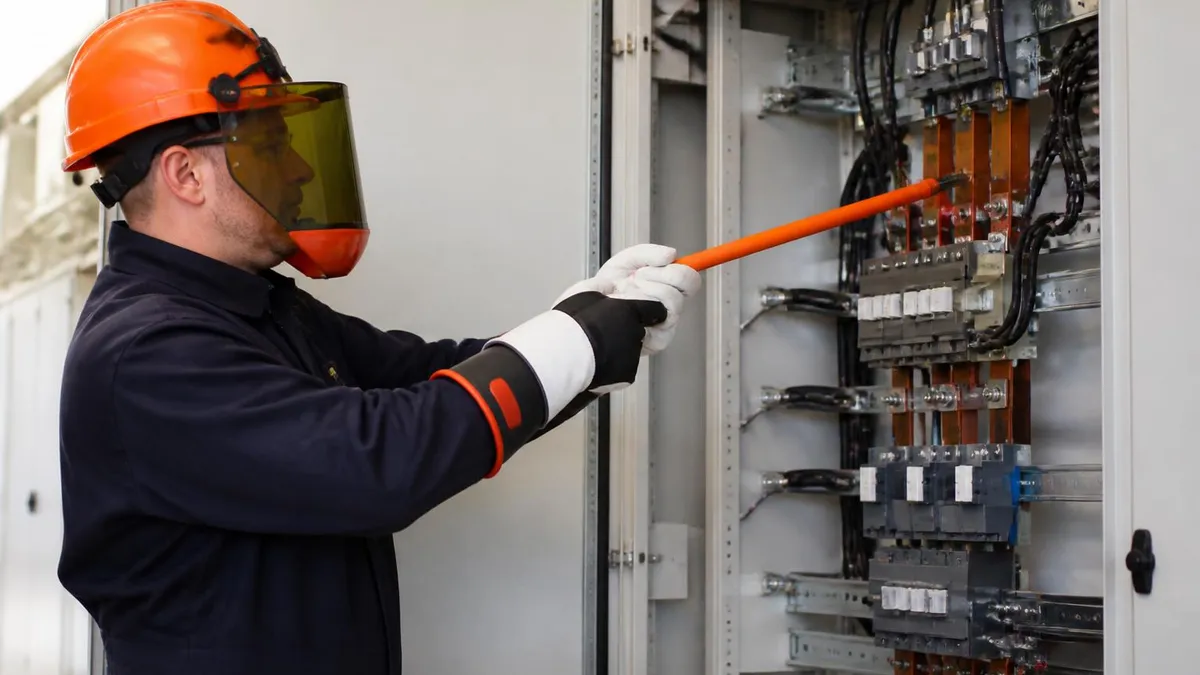
NFPA 70E and OSHA: How They Interact
NFPA 70E is a voluntary consensus standard, not a federal law. OSHA doesn't directly cite NFPA 70E in its citations. However, OSHA's General Duty Clause (Section 5(a)(1) of the OSH Act) requires employers to provide a workplace free from recognized hazards that cause or are likely to cause death or serious harm. When OSHA investigates an electrical injury or fatality, it evaluates whether the employer was following NFPA 70E as the recognized industry standard — and if they weren't, a General Duty Clause citation typically follows.
OSHA 1910.332 and 1910.333 — the electrical safety work practice standards — are the specific OSHA regulations most closely aligned with NFPA 70E. These regulations require employers to de-energize equipment before work where possible, to use safe work practices when energized work is necessary, and to train qualified and unqualified workers appropriately. NFPA 70E provides the detailed, technically specific guidance that fills in where the OSHA regulations are silent — particularly on arc flash PPE and quantitative hazard analysis.
State plans matter here. States that operate their own OSHA plans (Cal/OSHA, Michigan MIOSHA, Washington WISHA, and others) may have electrical safety requirements that differ from federal OSHA. Some state plans have adopted NFPA 70E requirements more explicitly, creating direct regulatory obligations where federal OSHA's approach is more indirect. Check your state's specific requirements if you operate in a state-plan jurisdiction.
Review the related electrical code requirements with the NFPA 72 fire alarm systems practice test — understanding fire alarm system installation requirements from NFPA 72 complements 70E electrical safety knowledge, especially for facilities where fire alarm panel work intersects with live electrical systems. Many facilities see inspection and maintenance of fire alarm control panels as lower-risk than power distribution work, but NFPA 70E's shock and arc flash requirements apply there too.
Documentation is where many compliance programs fall short. NFPA 70E requires written records of the hazard analysis, the electrical safety program, energized work permits, training completions, and audit findings. OSHA investigators reviewing an electrical incident will request this documentation. Verbal policies and informal practices — even if followed consistently — don't provide the evidentiary protection that written, dated, signed records do. Build the documentation habit into your program from the start, not as an afterthought when an incident occurs.
Electrical Safety by the Numbers
Who Must Comply with NFPA 70E
NFPA 70E applies to any employer whose workers may be exposed to electrical hazards — specifically, exposure to energized electrical conductors or circuit parts. This is broader than most people initially assume. It's not limited to licensed electricians or electrical contractors. Industrial maintenance workers who open motor control centers, facilities managers who reset breakers, HVAC technicians who work near electrical disconnect switches — all are potentially covered.
The standard defines exposure based on whether a worker may need to cross an approach boundary or work within the arc flash boundary. If a worker's normal tasks could ever bring them within these boundaries — even infrequently — they need appropriate training and PPE. This is why a facilities-focused interpretation of NFPA 70E compliance often covers a much larger workforce than just the dedicated electrical team.
Small businesses sometimes assume NFPA 70E doesn't apply to them because they're too small to attract OSHA attention. This is both factually incorrect (OSHA has no minimum-size exemption for General Duty Clause enforcement) and practically dangerous. Electrical incidents don't discriminate by employer size, and a fatality at a five-person shop carries the same investigation scrutiny as one at a multinational manufacturer. The cost of a proper arc flash analysis and basic PPE is a fraction of the cost of a single serious injury claim.
Contractors working at a host employer's facility have joint compliance obligations. The host employer must inform the contractor of known electrical hazards before work begins, including providing access to arc flash analysis data and labels. The contractor is responsible for ensuring their employees follow appropriate safety practices. Failure of either party creates liability — host employers have been cited when contractor employees were injured at their facilities due to inadequate hazard communication. Establish a formal contractor management process that includes electrical hazard briefings and verification of contractor PPE adequacy before work begins.
Arc flash labels don't have an expiration date — but they become inaccurate (and potentially dangerous) whenever the electrical system changes. Adding or removing a transformer, changing a circuit breaker's rating, reconfiguring a main distribution board — all of these can change the incident energy at downstream equipment. Outdated labels may specify less PPE than the current system requires. Facilities must have a process to trigger label review whenever electrical system modifications are made, not just on a fixed calendar schedule.
Implementing NFPA 70E: Getting Started
For facilities starting a new NFPA 70E compliance program, the most important first step is a gap assessment. Compare your current electrical safety practices against the standard's requirements — PPE availability, training status, hazard analysis completion, LOTO procedures, and documentation. This gap assessment tells you where you are and prioritizes what to address first. It doesn't need to be a formal audit; a structured walkthrough with your safety team using the standard as a checklist is a legitimate starting point.
Hiring a qualified electrical engineer to perform or review your arc flash hazard analysis is a worthwhile early investment. DIY arc flash analysis using simplified table methods may underestimate or overestimate incident energy significantly for complex systems. An engineer with power systems analysis software produces more accurate results, which means PPE requirements are calibrated correctly — protecting workers without requiring unnecessarily burdensome PPE for low-energy tasks. The analysis cost is typically recovered in reduced PPE expenses and avoided incident costs within a few years.
Develop your electrical safety program as a living document rather than a static policy. NFPA 70E requires an annual review — use that requirement as an opportunity to update procedures when the standard changes, when you acquire new equipment, when incidents or near-misses reveal gaps, or when employees report that current procedures don't match field conditions. Electrical safety programs that get written once and filed away don't protect anyone; programs that evolve with operational reality do.
For electrical workers who want to deepen their knowledge beyond NFPA 70E, the NFPA 13 sprinkler systems practice test covers fire suppression code requirements that often interact with electrical system planning in industrial and commercial facilities. Understanding both standards — electrical safety and fire suppression — is valuable for maintenance professionals who work across facility systems, particularly in manufacturing, data centers, and healthcare environments where both types of systems are present and interconnected.
Long-term, the goal of NFPA 70E compliance isn't just regulatory defensibility — it's a culture where electrical workers genuinely understand the hazards they face and have the skills, tools, and procedures to work safely. Programs that achieve this see measurable reductions in near-misses and incidents over time. Programs that treat compliance as a documentation exercise often see continued incidents despite having binders full of policies.
The difference is whether training and procedures are embedded in daily practice or remain on paper in the safety office. Electrical safety culture takes time to build and consistent leadership to maintain — but the investment is measured in lives and avoided injuries, not just audit scores or OSHA recordable rates.
Sample NFPA - National Fire Protection Association Practice Questions
Try these questions from our free NFPA - National Fire Protection Association practice tests. The correct answer and an explanation follow each question.
According to NFPA 30, what type of electrical equipment is required in a flammable liquid storage room classified as a Division 1 hazardous location?
- A. Standard commercial grade
- B. Explosion-proof or intrinsically safe
- C. GFCI-protected only
- D. Weatherproof only
Answer: B. Explosion-proof or intrinsically safe
NFPA 30 requires explosion-proof or intrinsically safe electrical equipment in Division 1 hazardous locations where flammable vapors may be present.
What is the NEC requirement for receptacles installed in bathrooms?
- A. They must be protected by a GFCI
- B. They must be 15-ampere rated
- C. They must be installed at least 5 feet away from water sources
- D. They must have a switch built-in
Answer: A. They must be protected by a GFCI
To prevent electrical shock, the NEC requires that all bathroom receptacles be protected by ground-fault circuit interrupters (GFCIs).
Which of the following is required for all kitchen countertop outlets according to the NEC?
- A. Ground-Fault Circuit Interrupters (GFCIs)
- B. Arc-Fault Circuit Interrupters (AFCIs)
- C. Surge protectors
- D. 20-ampere breakers
Answer: A. Ground-Fault Circuit Interrupters (GFCIs)
GFCIs are required to prevent electrical shock in areas where water is present, such as kitchen countertops.
In the NEC, what does the term "ampacity" refer to?
- A. The current-carrying capacity of a conductor
- B. The voltage rating of a conductor
- C. The resistance of a conductor
- D. The length of a conductor
Answer: A. The current-carrying capacity of a conductor
Ampacity is the maximum amount of electrical current a conductor or device can carry before sustaining immediate or progressive deterioration.
Take the full NFPA - National Fire Protection Association practice test
NFPA 70E Questions and Answers
About the Author

Certified Safety Professional & OSHA Compliance Expert
Indiana University of Pennsylvania Safety SciencesDr. William Foster holds a PhD in Safety Science from Indiana University of Pennsylvania and is a Certified Safety Professional (CSP) and Certified Hazardous Materials Manager. With 20 years of occupational health and safety management experience across construction, manufacturing, and chemical industries, he coaches safety professionals through OSHA certification, CSP, CHST, and safety management licensing programs.
Join the Discussion
Connect with other students preparing for this exam. Share tips, ask questions, and get advice from people who have been there.
View discussion (8 replies)