
NFPA 70E News: Updates, Changes, and What Workers Should Track 2026 October
🎯 NFPA 70E news, recent updates, arc flash changes, job briefing requirements, and what to watch in the next cycle. Stay current and exam-ready.

What NFPA 70E News Means for Workers in 2026
NFPA 70E news matters. Period. If you handle energized equipment, troubleshoot panels, or run a maintenance crew, the latest cycle of changes from the National Fire Protection Association reshapes how you plan, document, and execute work. The 2024 edition introduced a tighter risk-assessment process, and the lead-up to the next cycle is already producing technical committee drafts that signal where the standard is heading. You shouldn't wait until your employer prints a new policy binder. Read the news, ask questions, and bring updates into your morning toolbox talk.
Here's the blunt truth. Most electrical incidents that injure workers are not exotic. They're routine tasks done with stale procedures. NFPA 70E news has shifted, over the past three cycles, toward owning that fact. The 2024 edition leaned harder on human performance. The next round looks like it'll lean harder still, with stronger language about hierarchy of risk control, expanded job briefings, and clearer expectations for arc flash labeling. If you want to be ready, you have to track the updates as they roll out, not after they're printed.
You're probably here because something changed at your facility, or a regulator showed up, or a colleague got hurt. Whatever the reason, this guide walks you through the recent updates, the practical implications, and how to prep for your NFPA 70E exam with the new material in mind. We'll also cover where to find legitimate news sources, how to read a Tentative Interim Amendment, and what the next cycle is shaping up to include.
NFPA 70E by the Numbers
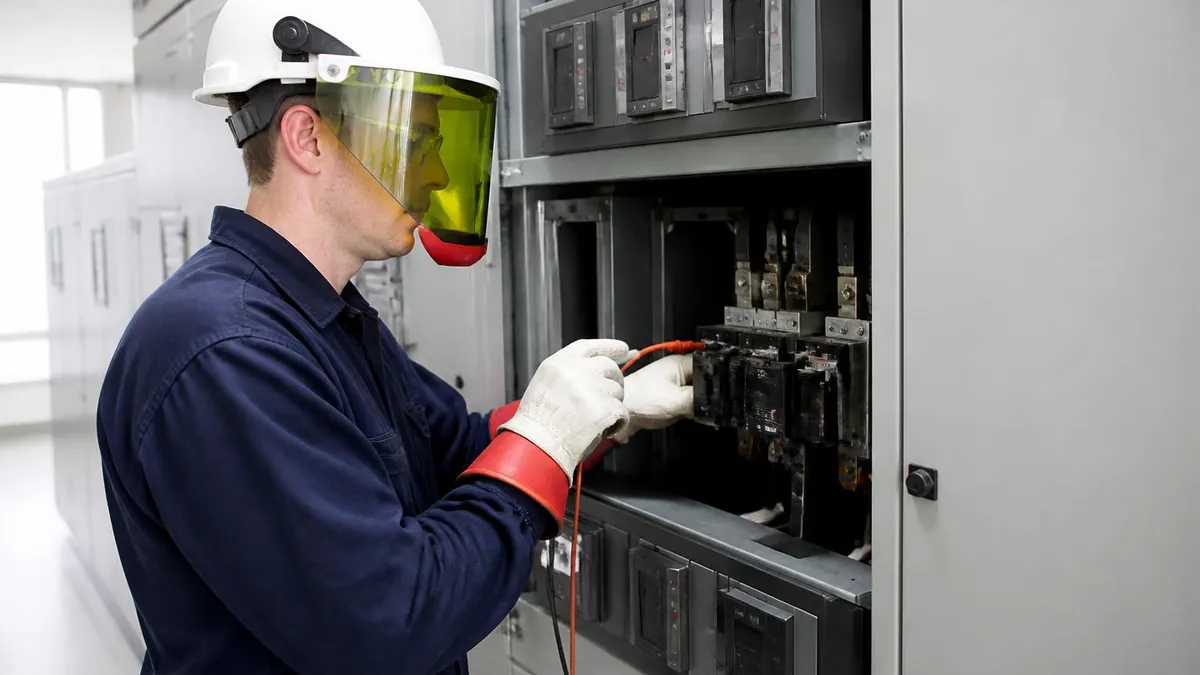
The 2024 edition tightened risk assessment, expanded job briefings, and raised expectations around arc flash labels. The next cycle is already producing technical committee drafts that will push the bar higher. Workers who track NFPA 70E news ahead of publication walk into audits and incidents with a real advantage. The cost of being current is small. The cost of being out of date can be enormous, both in regulatory penalties and in human terms. Track changes the same way you track equipment maintenance. Set a calendar reminder. Read primary sources. Bring updates back to your crew during weekly toolbox talks. Habits beat heroics in any safety program worth running.
Recent Changes Driving the Headlines
The 2024 edition was a big one. Article 105 was rewritten to emphasize the hierarchy of risk controls. The job safety planning requirements were expanded. PPE category tables were updated with new guidance on arc-rated clothing. And the language around energized work permits tightened. These changes weren't cosmetic. They changed how qualified persons document tasks, how supervisors approve work, and how training programs need to be structured.
The news cycle that followed the 2024 release focused on three areas. First, hierarchy of controls. Eliminating the hazard, not just protecting against it, became the explicit top priority. Second, job briefings. The standard now expects a documented briefing for every shift, every task change, and every new crew member. Third, arc flash labels. Equipment owners are expected to keep labels current, and the news around enforcement has been sharper.
What's brewing for the next cycle? Technical committee drafts have circulated proposals on incident energy analysis methods, on remote racking, and on the role of supervisory controls. Nothing is final until the standard is published, but the direction is clear. More documentation. More engineering controls. More accountability. If you're studying for certification or refreshing your knowledge, check our NFPA practice tests for question sets aligned with the most current expectations.
Arc Flash Updates You Should Track
Arc flash news drives a huge portion of NFPA 70E coverage. Why? Because arc flash incidents are spectacular, well-documented, and preventable. The 2024 edition kept the incident energy analysis method and the PPE category method, but it made clear that incident energy analysis is preferred for higher-risk equipment. News articles since then have hammered on label accuracy. If your facility's labels are older than five years, or if equipment has been modified, those labels may be wrong. Wrong labels lead to wrong PPE choices. Wrong PPE choices lead to burns.
What's coming? Expect to see more emphasis on label review cycles. Expect tighter language about who can perform the incident energy analysis. And expect more discussion of remote operation devices, which let workers operate breakers from outside the arc flash boundary. Manufacturers have been pushing these tools, and the standard is catching up.
Recent Update Themes
Elimination of the hazard is preferred over PPE-only controls in the 2024 edition language.
Documented briefings are now required every shift, task change, and crew rotation event.
Tighter expectations for label currency, accuracy, and review cycle frequency across equipment.
Qualified persons must demonstrate practical decision-making in addition to theoretical knowledge.
Job Briefings and the Human Factor
Job briefings used to be a checkbox. Not anymore. The current standard expects a real conversation before work starts. Hazards identified. Controls reviewed. Crew roles assigned. Emergency response confirmed. If the scope changes mid-job, you brief again. If a new person joins the crew, you brief again. This isn't bureaucratic. It's the single most effective control after eliminating the hazard.
NFPA 70E news in the past year has highlighted several incidents where post-incident reviews showed the job briefing was skipped or rushed. The lesson keeps repeating. A two-minute conversation at the start of a task catches more errors than a fifty-page procedure document. Bring it up in your next safety meeting.
What a Real Job Briefing Looks Like
Walk through the task out loud. Name the equipment. Name the hazards. Confirm the energy isolation steps. Confirm PPE. Confirm the rescue plan. Ask the newest person on the crew to repeat back what they heard. If they can't, you haven't briefed yet. Document the briefing. Sign it. Move on.
Where to Get Reliable NFPA 70E News
The news ecosystem around electrical safety is noisy. Vendors push product news as if it were standards news. Bloggers misread draft language. Social posts amplify partial quotes. So where do you go for real updates?
Start with NFPA itself. The association publishes Tentative Interim Amendments, technical committee reports, and public input summaries. These are the primary sources. Then add a few trusted secondary sources. Industry magazines that have been covering electrical safety for decades. Training providers that publish technical analysis rather than marketing fluff. And professional associations like the IEEE Industry Applications Society, which produces peer-reviewed work that often informs the next cycle of changes.

How to Track Updates
Read NFPA-published TIAs, technical committee reports, and public input summaries directly. These are the only authoritative sources for upcoming changes. Subscribe to email notifications from NFPA and visit the standards page for the 70E document at least monthly. Save the committee roster so you know who's voting on what. The public input and public comment periods give field workers an opportunity to influence the next revision before it ships, and that influence matters.
Arc flash labels older than five years, or labels on equipment that's been modified, may be incorrect. Wrong labels lead to wrong PPE choices. Review your labels on a defined cycle, and update them whenever equipment changes. Build label review into your annual maintenance plan, not just into one-off projects. Train field staff to flag suspicious labels rather than trust them blindly. A label that doesn't match the equipment in front of you is a warning sign, not a minor discrepancy.
Reading a Tentative Interim Amendment
TIAs are how the standard gets emergency updates between cycles. When you see news about a TIA, slow down. Read the actual document. A TIA has a problem statement, a substantiation, and the proposed text. The problem statement tells you what real-world issue prompted the change. The substantiation explains why the change is justified. The proposed text shows the exact words being added or modified.
Most TIAs are short. You can read one in fifteen minutes. Doing so beats reading a thousand-word summary that may be wrong. If your job involves compliance, you should track TIAs as they're balloted. If you're studying for an exam, know that TIAs in force on the test date are fair game.
How the News Affects Your Training Program
Training has to keep up. The 2024 edition expanded what qualified persons must know. Hazard identification. Risk assessment. Specific procedures for the equipment they work on. Use of test instruments. Decision-making under uncertainty. Your training program needs to cover all of that, and it needs to be refreshed when the standard updates.
Some employers treat training as a once-every-three-years box check. That's not enough anymore. News-driven refreshers, tied to TIAs and high-profile incidents, are increasingly common. Annual practical assessments are becoming standard practice. If your training program hasn't updated in the past two years, it's overdue.
Practical Refresher Topics
Build short refreshers around real news. A TIA dropped on arc flash labels? Spend twenty minutes walking through your label review process. A high-profile incident in your industry? Run a tabletop exercise on what would happen at your site. The news isn't a distraction. It's free training material if you use it well.
Stay-Current Checklist
- ✓Subscribe to NFPA updates and TIA notifications
- ✓Review job briefing process every quarter
- ✓Confirm arc flash labels are within review cycle
- ✓Refresh qualified person training annually
- ✓Audit energized work permits monthly
- ✓Track technical committee drafts before next cycle
- ✓Document every briefing, permit, and review
- ✓Run an annual sample audit of past year's records
- ✓Brief contractors with site-specific hazards before work
- ✓Update procedures whenever a TIA is issued
Documentation That Survives an Audit
Auditors love documentation. NFPA 70E news has, repeatedly, emphasized the documentation trail. Energized work permits. Job briefings. Risk assessments. Label reviews. Training records. If you can't produce them, you can't prove compliance. And in a post-incident investigation, missing documentation is treated as missing compliance.
Build a system. Paper or digital, your call. Make sure every required document gets created, signed, and stored. Set up an annual review where you sample documents from the past year and check them for completeness. If you find gaps, fix the system, not just the gaps.
The Cost of Ignoring NFPA 70E News
Companies that ignore standards updates pay a price. Sometimes the price is a citation. Sometimes it's a higher insurance premium. Sometimes it's an injured worker. The math always tips toward staying current. A few hours per quarter spent tracking changes will save your organization money, time, and people.
What about individual workers? If you're a journeyman, a maintenance tech, or an apprentice, the news affects you directly. The PPE you wear. The permits you fill out. The training you receive. Knowing what's coming gives you the language to push back when something on site doesn't match the standard.
Looking Ahead: What to Watch in the Next Cycle
The next edition is in development. Public input has closed for several proposals, and the technical committee is balloting changes. Watch for tighter language on engineering controls, more guidance on supervisory and remote operation technology, and possible expansion of the qualified person definition. None of this is final until publication, but the direction is set.
Stay engaged. Read the public input summaries when they're released. Comment on proposals during the public comment phase if you have field experience that's relevant. The standard gets better when working electricians and safety professionals push back on academic language. Your voice counts.
Staying Current vs Falling Behind
- +Audits go smoothly with documented compliance
- +Workers wear the right PPE for actual hazards
- +Insurance premiums stay competitive
- +Incident rates fall over multi-year windows
- +Training stays aligned with current expectations
- +Contractors trust your safety culture
- −Citations and fines from regulators
- −Higher likelihood of preventable injuries
- −Outdated training leaves gaps in qualified persons
- −Insurance and liability costs rise after incidents
- −Audit findings stack up year over year
- −Workforce loses confidence in safety program
Pros and Cons at a Glance
| Pros | Cons |
|---|---|
| Audits go smoothly with documented compliance | Citations and fines from regulators |
| Workers wear the right PPE for actual hazards | Higher likelihood of preventable injuries |
| Insurance premiums stay competitive | Outdated training leaves gaps in qualified persons |
| Incident rates fall over multi-year windows | Insurance and liability costs rise after incidents |
| Training stays aligned with current expectations | Audit findings stack up year over year |
| Contractors trust your safety culture | Workforce loses confidence in safety program |
OSHA, States, and How They Reference NFPA 70E
OSHA doesn't publish NFPA 70E, but it routinely references the standard in citations. The General Duty Clause is the bridge. If a hazard exists, and an industry consensus standard like NFPA 70E provides feasible controls, OSHA can cite an employer for failing to implement those controls. That's why NFPA 70E news matters even in states without a specific electrical safety regulation that mirrors it.
Several states have adopted the standard explicitly through state plans or workers' compensation rules. Others reference it indirectly through insurance carrier expectations. The practical upshot is the same. You're expected to comply, whether the line of authority runs through federal OSHA, a state plan, or an insurer audit. Treat the news as if every word will eventually become enforceable, because in many states, it already has.
Energy Isolation: The Quiet Workhorse
You'll see less news about energy isolation than about arc flash, but it remains the single most powerful safety control in the standard. Lock-out, tag-out, verify. Then test for absence of voltage with a meter you've checked on a known live source. The 2024 edition kept this principle and tightened expectations around test instruments. Use the wrong meter for the voltage class, and you've created a hazard rather than confirmed safety.
NFPA 70E news often covers incidents where workers skipped the verification step. They assumed the circuit was dead because the breaker was off. Then they touched a wire. The lesson, repeated for the hundredth time, is that assumption kills. Verify with a tested instrument every time. No exceptions.
Contractor and Multi-Employer Sites
If your site brings in contractors, the news around host-employer responsibilities is worth tracking. The standard expects communication between host and contract employers. Hazards. Procedures. Permit requirements. The host can't just hand a contractor a hard hat and walk away. Both parties have obligations, and a failure on either side can result in citations and incidents.
Build a contractor onboarding process. Walk them through the site's electrical hazards. Share your energized work permit format. Confirm their qualified persons are trained. And document the handoff. When auditors arrive, you want to show that communication happened, not just that work happened.
Special Equipment Considerations
Different equipment classes carry different expectations. Switchgear behaves differently from a panelboard. Motor control centers carry their own risks. Battery rooms, capacitor banks, and renewable energy systems each have unique hazards that the standard addresses with specific guidance. As renewables expand into commercial and industrial settings, expect more NFPA 70E news around solar arrays, battery energy storage, and DC fault behavior.
If your facility added solar or battery storage in the past few years, your electrical safety program needs a review. The hazards are different. The PPE may be different. The lockout procedures definitely are. Don't assume a procedure written for traditional switchgear covers a battery bank.
Bringing It All Together
NFPA 70E isn't a static document. It evolves. The news around it is, in many ways, the live operating manual for electrical safety in North America. Treat it that way. Read primary sources. Track TIAs. Refresh your training. Document everything. And when in doubt, eliminate the hazard rather than just protecting against it.
One last point. The news is not the standard. The published standard is. Use the news to stay alert, to anticipate, to plan budgets and training calendars. But when you make a decision in the field, make it against the current published text and any TIAs in force. That's the rule that keeps you defensible, and more importantly, that keeps your crew safe.
If you're preparing for certification or just want to test what you know, work through our NFPA 70E practice questions. Knowing the headlines is one thing. Knowing the technical details is what gets you through the exam and through a long career without an incident. Build the habit. Read one update a week. Run one briefing better than the last. Audit one document monthly. Small habits compound. So does compliance. So does safety.
One more habit worth building. Share what you learn. The crew next to yours might not read the news. The contractor walking through your gate this week probably hasn't seen the latest TIA. A short conversation, a quick email, a printed summary on the breakroom wall. Pick one. Spread it. The standard improves when more workers know it.
Sample NFPA - National Fire Protection Association Practice Questions
Try these questions from our free NFPA - National Fire Protection Association practice tests. The correct answer and an explanation follow each question.
Under NFPA 30, what is the definition of a 'flammable liquid' based on flash point?
- A. Flash point at or above 200°F
- B. Flash point below 100°F
- C. Flash point between 100°F and 140°F
- D. Flash point above 140°F
Answer: B. Flash point below 100°F
NFPA 30 defines a flammable liquid as one with a flash point below 100°F, distinguishing it from combustible liquids which have higher flash points.
Under NFPA 72, which initiating device is classified as a spot-type smoke detector?
- A. Linear beam detector
- B. Duct smoke detector
- C. Ionization smoke detector
- D. Air sampling detector
Answer: C. Ionization smoke detector
An ionization smoke detector is a spot-type detector that responds to products of combustion in its immediate vicinity.
According to NEC Article 110, what is the required working clearance in front of electrical panels?
- A. 36 inches
- B. 24 inches
- C. 30 inches
- D. 48 inches
Answer: A. 36 inches
The NEC requires a minimum working clearance of 36 inches in front of electrical panels for safe operation and maintenance.
According to NFPA 25, which valve must be tested by partially closing it and verifying the waterflow alarm activates?
- A. OS&Y gate valve
- B. Control valve tamper switch
- C. Check valve
- D. Butterfly valve
Answer: B. Control valve tamper switch
NFPA 25 requires the control valve supervisory (tamper) switch to be tested by partially closing the valve and verifying the supervisory alarm is received.
Take the full NFPA - National Fire Protection Association practice test
NFPA Questions and Answers
About the Author

Certified Safety Professional & OSHA Compliance Expert
Indiana University of Pennsylvania Safety SciencesDr. William Foster holds a PhD in Safety Science from Indiana University of Pennsylvania and is a Certified Safety Professional (CSP) and Certified Hazardous Materials Manager. With 20 years of occupational health and safety management experience across construction, manufacturing, and chemical industries, he coaches safety professionals through OSHA certification, CSP, CHST, and safety management licensing programs.
Join the Discussion
Connect with other students preparing for this exam. Share tips, ask questions, and get advice from people who have been there.
View discussion (8 replies)