
NFPA 211 Explained: Complete Guide to the Standard for Chimneys, Fireplaces, Vents, and Solid Fuel-Burning Appliances
NFPA 211 explained: chimney inspections, clearances, liners, and solid fuel appliance installation rules. Complete guide with FAQs and study tools. 📝
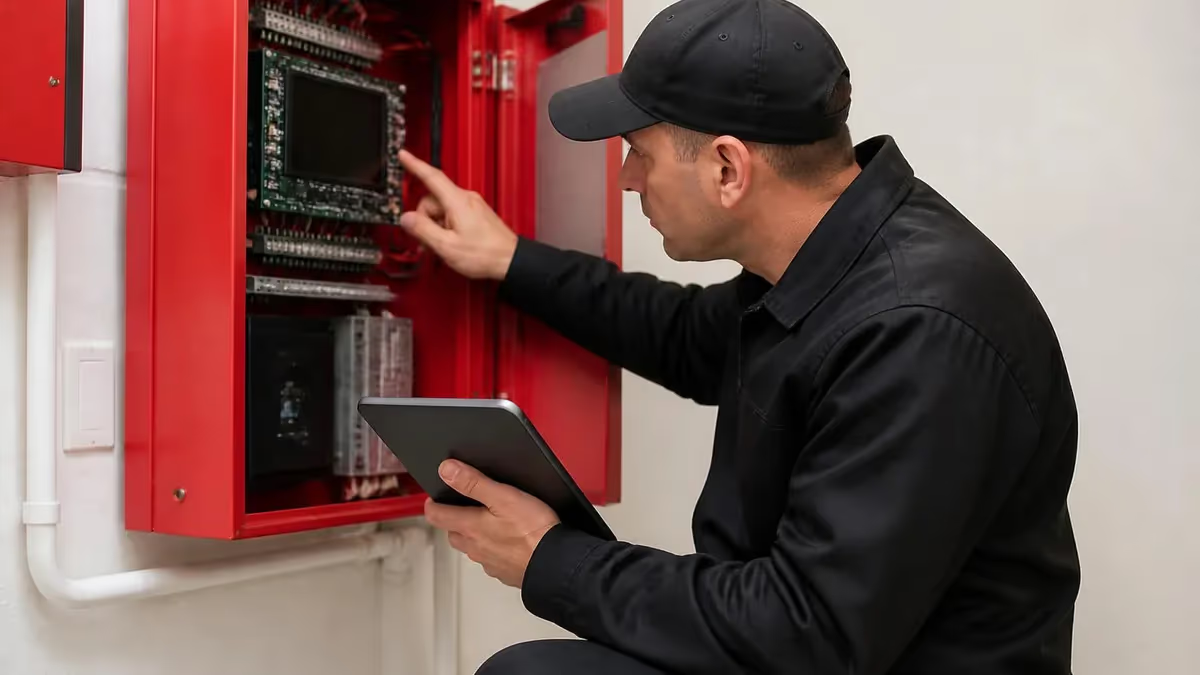
NFPA 211 is the foundational fire safety document governing chimneys, fireplaces, vents, and solid fuel-burning appliances in the United States. Officially titled the Standard for Chimneys, Fireplaces, Vents, and Solid Fuel-Burning Appliances, it provides detailed construction, installation, maintenance, and inspection requirements that protect lives and property from the leading cause of home heating fires. Whether you are a homeowner with a wood stove, a chimney sweep performing annual cleanings, a code official reviewing plans, or a builder installing a masonry fireplace, this standard sets the benchmark for safe practice.
The standard is published by the National Fire Protection Association and updated on a three-year revision cycle, with the 2024 edition representing the most current consensus on best practices. NFPA 211 addresses everything from clearance to combustibles and chimney liner specifications to creosote management, factory-built chimney systems, and the three-level inspection framework that chimney professionals follow nationwide. Its adoption by states, municipalities, and insurance carriers makes it one of the most widely referenced fire codes in residential construction.
Understanding NFPA 211 matters because solid fuel appliances generate intense heat, corrosive byproducts, and combustible deposits that can ignite catastrophically if systems are not designed and maintained correctly. The U.S. Fire Administration consistently identifies chimney and heating equipment failures as a top cause of structure fires, with thousands of incidents reported each year. By following NFPA 211, owners and contractors dramatically reduce the risk of chimney fires, carbon monoxide poisoning, and structural damage caused by improperly vented appliances.
This guide walks through the scope of NFPA 211, its inspection levels, key clearance requirements, chimney liner rules, and the responsibilities it places on installers, sweeps, and property owners. We will look at how the standard interacts with related documents like NFPA 54 for fuel gas, NFPA 70 for electrical, and the International Residential Code adopted by most U.S. jurisdictions. You will also find practical checklists, common pitfalls, and answers to the questions homeowners and exam candidates ask most often.
If you are studying for a Certified Chimney Sweep credential, a fire inspector exam, or a home inspector certification, NFPA 211 will appear on your test. The Chimney Safety Institute of America bases its CCS exam directly on this standard, and many state fire marshal offices reference it in licensing tests. The depth of detail in the document — covering masonry chimneys, metal chimneys, connector pipe, hearth extensions, and appliance clearances — means that mastering its structure pays off both on exam day and in the field.
This article is designed for U.S. readers and reflects current code language as of the 2024 edition. Where local amendments may apply, we note the importance of checking with the authority having jurisdiction. By the end, you will understand what NFPA 211 covers, how to comply with it, and how to use practice resources to lock in the technical details that show up on certification exams and real-world inspections.
NFPA 211 by the Numbers
Core Requirements of NFPA 211
Establishes minimum airspace distances between chimneys, vents, connectors, and combustible building materials such as framing, insulation, and finishes to prevent pyrolysis ignition.
Specifies acceptable liner materials including clay tile, listed metal liners, and cast-in-place systems, with rules for sizing relative to the connected appliance's flue outlet.
Defines Level 1, Level 2, and Level 3 inspections so chimney professionals, real estate transactions, and post-incident evaluations follow a consistent, documented procedure nationwide.
Covers wood stoves, pellet stoves, fireplace inserts, and factory-built fireplaces — including hearth extension dimensions, floor protection, and wall shielding requirements.
Requires annual inspection at minimum and creosote removal when accumulation reaches 1/8 inch or when glazed deposits develop on flue surfaces inside the chimney.
NFPA 211 has a longer history than most fire safety standards in active use. Its earliest predecessor traces back to 1927, when the National Fire Protection Association issued recommended practices for chimney construction in response to a sharp rise in residential fires caused by coal and wood stoves.
Over the decades the document evolved through several designations before settling under the NFPA 211 number, and each cycle has incorporated lessons from field investigations, materials testing, and changes in how Americans heat their homes — from coal to oil, then natural gas, and back to wood and pellet appliances during energy crises.
The current 2024 edition reflects nearly a century of refinement. It is developed by the NFPA Technical Committee on Chimneys, Fireplaces, and Venting Systems for Heat Producing Appliances, a consensus body that includes manufacturers, chimney sweeps, fire investigators, building officials, and insurance representatives. Public input periods allow any stakeholder to propose changes, and the committee resolves comments through documented votes that become part of the standard's permanent record. This transparent process is one reason the document carries so much weight with code adopters across the United States.
Adoption pathways vary by state. Some jurisdictions reference NFPA 211 directly in their fire or mechanical codes, while others incorporate it through the International Residential Code, which cites portions of NFPA 211 in chapters covering chimneys and fireplaces. A handful of states adopt the standard wholesale through their fire marshal's office. Regardless of the pathway, when a building official or inspector cites NFPA 211, they are pointing to specific section numbers that carry the force of law within that jurisdiction.
The standard intersects with several other NFPA documents and is part of the broader ecosystem detailed in the NFPA Standards Explained: Codes, Categories, and How They Shape Fire Safety overview. NFPA 54 governs fuel gas piping and gas appliance venting, NFPA 31 addresses oil-burning equipment, and NFPA 31 and NFPA 211 sometimes apply to the same installation when an appliance burns multiple fuels. Understanding where each standard begins and ends prevents the common mistake of applying gas-appliance rules to a wood-burning chimney or vice versa.
Insurance carriers have become major drivers of NFPA 211 compliance. After a chimney fire claim, adjusters routinely request documentation of a recent Level 2 inspection, photographs of the flue, and proof that any repairs followed the standard. Homeowners who cannot produce such documentation may face denied claims or significant premium increases. This insurance pressure has elevated NFPA 211 from a technical reference to a practical business requirement for anyone who sells, services, or insures property with solid fuel appliances.
For exam candidates, the historical context helps explain why certain provisions exist. The 2-inch clearance rule, for example, was refined after laboratory testing showed that wood framing begins to pyrolyze at sustained surface temperatures below the ignition point of fresh lumber. The three-level inspection system was added in the late 1990s to standardize a previously chaotic marketplace. Knowing the reasoning behind requirements makes it far easier to remember the specific numbers and apply them correctly during inspections or test questions.
NFPA Practice Test Questions
Prepare for the NFPA - National Fire Protection Association exam with our free practice test modules. Each quiz covers key topics to help you pass on your first try.
NFPA Life Safety
NFPA Exam Questions covering Life Safety. Master NFPA Test concepts for certification prep.
NFPA 10 Portable Fire Extinguishers
NFPA Mock Exam on NFPA 10 Portable Fire Extinguishers. NFPA Study Guide questions to pass on your first try.
NFPA 13 Sprinkler Systems
NFPA Test Prep for NFPA 13 Sprinkler Systems. Practice NFPA Quiz questions and boost your score.
NFPA 1 Fire Code General Requirements
NFPA Questions and Answers on NFPA 1 Fire Code General Requirements. Free NFPA practice for exam readiness.
NFPA 25 Water-Based Fire Protection Inspec...
NFPA Mock Test covering NFPA 25 Water-Based Fire Protection Inspection. Online NFPA Test practice with instant feedback.
Three Levels of NFPA 211 Inspection
A Level 1 inspection is the baseline annual evaluation required when the chimney and venting system have been in continuous service under unchanged conditions. The inspector examines readily accessible portions of the chimney exterior, interior, and connections, looking for soundness, freedom from deposits, and correct clearances. No special tools beyond a flashlight and basic measuring devices are needed, and no disassembly of the system occurs during this inspection level.
Level 1 applies to chimneys serving appliances that have been operated normally with no known performance problems. The technician verifies that the chimney is structurally sound, that combustion deposits are within acceptable limits, and that no obvious defects threaten safe operation. This is the most common inspection homeowners encounter and is recommended once per year for any active wood-burning, pellet, or oil-fired system as a minimum maintenance benchmark.
Following NFPA 211 — Benefits and Trade-offs
- +Substantially reduces the risk of chimney fires and structure loss from solid fuel appliances
- +Provides clear, defensible inspection documentation for insurance and real estate transactions
- +Establishes uniform expectations between homeowners, contractors, and code officials nationwide
- +Helps technicians qualify for CSIA and other industry certifications recognized across states
- +Improves indoor air quality by ensuring proper draft and complete combustion venting
- +Protects resale value by demonstrating that heating equipment meets a recognized national standard
- −Requires annual professional inspections, adding ongoing maintenance cost for owners
- −Some provisions are stricter than older local codes, forcing retrofits during renovations
- −Video scanning equipment and certified labor are not available in every rural area
- −Misinterpretation between editions can cause confusion during permit and plan reviews
- −Compliance costs for full chimney relining can reach several thousand dollars per system
- −Standard references multiple other NFPA documents, making solo study challenging without resources
NFPA 211 Compliance Checklist for Homeowners
- ✓Schedule a Level 1 chimney inspection at least once each year before the heating season begins
- ✓Request a Level 2 inspection before buying or selling a home with a wood-burning appliance
- ✓Burn only well-seasoned hardwood with moisture content below twenty percent to limit creosote
- ✓Have the flue swept whenever creosote deposits reach one-eighth inch or any glaze appears
- ✓Verify two inches of clearance from masonry chimneys to nearby wood framing members
- ✓Confirm hearth extensions meet minimum width and depth dimensions for your fireplace opening
- ✓Install carbon monoxide alarms on every level of the home with solid fuel or fossil fuel appliances
- ✓Keep printed inspection reports and dated photographs for insurance documentation purposes
- ✓Inspect the chimney crown, cap, and flashing each spring for cracking or water intrusion damage
- ✓Hire only CSIA-certified or state-licensed chimney professionals familiar with the current NFPA 211 edition
Creosote is the silent threat behind most chimney fires.
NFPA 211 mandates flue cleaning when creosote accumulation reaches 1/8 inch. Third-stage glazed creosote can reach temperatures above 2,000°F during a chimney fire — hot enough to crack clay liners and ignite framing through tiny cracks in mortar joints. Annual inspection is the single most effective preventive measure available to any wood-burning homeowner.
Clearances to combustibles are arguably the most tested topic in NFPA 211 because the numbers are specific, the science behind them is solid, and the consequences of getting them wrong are severe. The standard's general rule for masonry chimneys is two inches of airspace between the outer chimney surface and any combustible material when the chimney is located inside the building, and one inch when located on an exterior wall.
These distances allow heat to dissipate and prevent the slow chemical breakdown of wood — pyrolysis — that creates a fuel ready to ignite at temperatures far below ordinary kindling points.
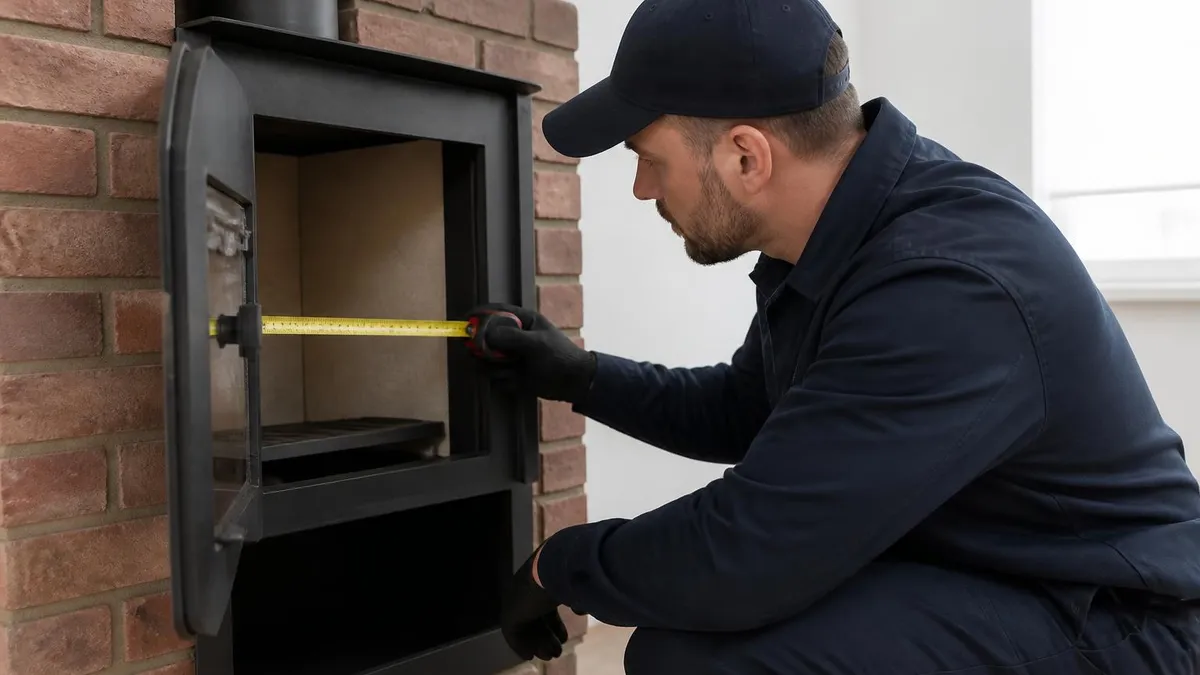
Factory-built metal chimneys follow clearances established by the listing of the specific product, which usually means two inches for residential Type HT (high temperature) chimneys tested to UL 103 HT. The listing label on the chimney section is the authoritative source — NFPA 211 defers to the manufacturer's instructions when those instructions are more restrictive than the general code. Inspectors carry tape measures specifically to verify these distances at every floor and ceiling penetration, where insulation, drywall, or framing often crowds against the chimney sleeve.
Connector pipe — the single-wall or double-wall pipe between a wood stove and the chimney — requires its own clearance treatment. Single-wall connectors typically demand 18 inches of clearance to combustibles, while listed double-wall pipe can reduce this to 6 inches or less depending on the product. NFPA 211 also allows clearance reductions when approved heat shields are installed, but only when the shielding configuration matches a tested arrangement documented in the standard's appendix tables.
Chimney liner requirements have tightened over recent revision cycles. Every masonry chimney serving a heat-producing appliance must have a liner. Acceptable options include clay flue tile sized to the appliance, listed metal liners (often stainless steel for wood and aluminum for some gas applications), and cast-in-place ceramic systems poured against an inflatable form. Liner sizing follows a manufacturer-by-manufacturer set of tables, and oversized liners are nearly as dangerous as undersized ones because they slow draft and accelerate creosote formation.
Hearth extensions and floor protection round out the residential clearance picture. A masonry fireplace with an opening less than six square feet requires a hearth extension at least 16 inches in front of the opening and 8 inches on each side. Larger openings demand 20 inches in front and 12 inches on each side. Wood stoves placed on combustible floors must sit on an approved floor protector that extends at least 18 inches in front of the loading door and a stated distance to each side, depending on the appliance listing.
For exam candidates and field inspectors, the practical takeaway is to memorize the small handful of repeating numbers — 2 inches, 1 inch, 18 inches, 6 inches, 1/8 inch creosote, 16 by 8 hearth, 20 by 12 hearth — and to verify them against the current edition before issuing a final inspection report. Most NFPA 211 enforcement cases involve simple clearance failures, not exotic structural defects. A flashlight, a tape measure, and disciplined attention to the standard's exact language resolve the majority of disputes between inspectors and contractors on real projects.
NFPA 211 requires a Level 2 inspection after every known or suspected chimney fire — even brief ones. Heat from a chimney fire can crack flue tiles, warp metal liners, and damage mortar joints in ways invisible from the firebox or roof. Operating a damaged chimney can lead to a far more destructive second fire that breaches concealed framing. Do not relight an appliance until a certified professional has documented system integrity in writing.
Real-world application of NFPA 211 begins the moment a homeowner decides to install a wood stove, a pellet appliance, or a factory-built fireplace. The permit process — handled by the local building department — requires a plan submission identifying the appliance make and model, the chimney system, the clearances proposed, and any heat shield or floor protector products. Plan reviewers cross-check the application against current NFPA 211 sections and the appliance's UL listing. Skipping the permit is the single most common mistake DIY installers make, and it nearly always surfaces during a future home sale or insurance review.
Chimney sweeps operating professionally rely on NFPA 211 to scope their work. Annual cleaning contracts reference Level 1 inspections, while pre-sale evaluations call for Level 2 work with full video documentation. The Chimney Safety Institute of America's Certified Chimney Sweep credential is built around mastery of NFPA 211, and sweeps who maintain that certification can charge meaningfully more for their services because real estate agents, insurance adjusters, and code officials trust the documentation that follows the standard's format.
Fire investigators apply NFPA 211 retroactively when determining the origin and cause of structure fires linked to heating equipment. They examine clearances, look for evidence of repeated creosote ignitions, and document liner damage that may have allowed superheated gases to escape into framing cavities. NFPA 921 — the Guide for Fire and Explosion Investigations — references NFPA 211 throughout its chimney-fire investigation section, creating a tight feedback loop between field investigation and prevention standards. Lessons from major losses feed into the next revision cycle within a few years.
Builders and remodelers encounter NFPA 211 when integrating fireplaces or wood stoves into new construction or additions. The standard intersects with framing, insulation, drywall, and roofing decisions in ways that surprise contractors unfamiliar with solid fuel systems. Coordinating with the chimney installer early — before walls close up — prevents the costly tear-out required when clearances cannot be verified later.
Detailed records produced during this stage become invaluable a decade later when an inspector wants proof of compliance. For broader context on how NFPA documents shape construction work, see the NFPA.org Explained: Your Complete Guide to the National Fire Protection Association's Codes, Standards, and Resources reference.
Insurance carriers have made NFPA 211 part of their underwriting playbook. Many policies covering homes with wood stoves or supplemental wood heat now require proof of annual inspection along with WETT (Wood Energy Technology Transfer) or CSIA certification of the installing contractor. After any chimney fire claim, adjusters look for the inspection paper trail before authorizing repairs. Homeowners who cannot produce documentation often discover that policy exclusions for negligence apply, leaving them paying out of pocket for substantial restoration work.
Education programs for fire inspectors, home inspectors, and ASHI/InterNACHI members include dedicated modules on NFPA 211 because the standard appears in every solid fuel installation a typical inspector encounters. Continuing education credits often hinge on demonstrating familiarity with the latest edition. As wood and pellet heating remain popular in rural and energy-conscious households, mastery of NFPA 211 has become a durable skill — one that delivers value year after year regardless of how energy prices or housing markets shift.
Studying NFPA 211 effectively means combining the document itself with hands-on context. Start by downloading or borrowing the current edition through the NFPA's free public access portal — the entire standard is viewable online without charge, which makes it accessible to homeowners, students, and professionals who do not need a printed copy. Read the chapters in order at least once to build a mental map, then revisit individual sections as questions arise during installations, inspections, or exam preparation. The table of contents and chapter intros are themselves a useful study guide.
Build a personal cheat sheet of the recurring numbers: clearances, hearth dimensions, creosote thresholds, inspection level triggers, and liner sizing relationships. Most exam questions on NFPA 211 turn on these specifics rather than on conceptual judgment. Quiz yourself by covering the answer column and reproducing each value from memory. Spaced repetition over two or three weeks is far more effective than a single cram session, and writing the numbers by hand cements them better than rereading the same page repeatedly.
Pair the standard with field experience whenever possible. Spend time with a working chimney sweep, even informally, and watch how Level 1 and Level 2 inspections unfold. Look at real flue tile cracks, real creosote, and real liner installations rather than relying only on textbook photos. The patterns you notice in person — how brick chimneys settle, how flashing fails, how third-stage creosote looks under a camera — translate directly into faster, more accurate answers on certification exams and more confident decisions during paid work.
For homeowners, practical action matters more than memorization. Find a CSIA-certified sweep through the institute's online locator, schedule an annual Level 1 inspection, and keep the printed report in a permanent home file. Walk through the standard's basic clearance rules at your own fireplace and stove, measure what you can see, and ask your inspector about anything that looks marginal. Most chimney professionals welcome informed clients because clear conversations reduce callbacks and liability for everyone involved.
For exam candidates studying for CCS, fire inspector, or home inspector certifications, supplement NFPA 211 with the related documents you will see referenced in test questions. NFPA 54, NFPA 31, NFPA 70 (the National Electrical Code), and NFPA 1 all touch on installations involving heating equipment. Knowing which standard governs which scenario — gas appliance versus oil burner versus solid fuel — prevents the trap of applying the wrong rules to a multi-fuel system. Practice questions from reputable providers are invaluable for surfacing the cross-reference traps that frequently appear on professional exams.
Finally, treat code adoption as part of your study plan. Look up your state's fire code or mechanical code online and identify exactly which edition of NFPA 211 it adopts. Some states are several editions behind the current NFPA release, which means the rules enforced at your job site may differ slightly from what you study in the newest edition. Document your jurisdiction's adopted version on your personal cheat sheet and verify before quoting code section numbers to clients or in inspection reports. Precision here separates seasoned professionals from beginners.
NFPA Questions and Answers
NFPA 1001 Explained: Firefighter Professional Qualifications Standard Guide
NFPA 1901: Complete Guide to the Standard for Automotive Fire Apparatus

NFPA 70E: Electrical Safety Standard Guide for the Workplace
NFPA Standards Explained: Codes, Categories, and How They Shape Fire Safety

NFPA.org Explained: Your Complete Guide to the National Fire Protection Association's Codes, Standards, and Resources
Join the Discussion
Connect with other students preparing for this exam. Share tips, ask questions, and get advice from people who have been there.
View discussion (8 replies)