
NFPA 1851: The Complete Guide to Selection, Care, and Maintenance of Structural and Proximity Firefighting Protective Ensembles
✍🏼 NFPA 1851 explained: how fire departments select, clean, inspect, repair, and retire structural firefighting PPE. Plain-English guide with checklists and FAQs.
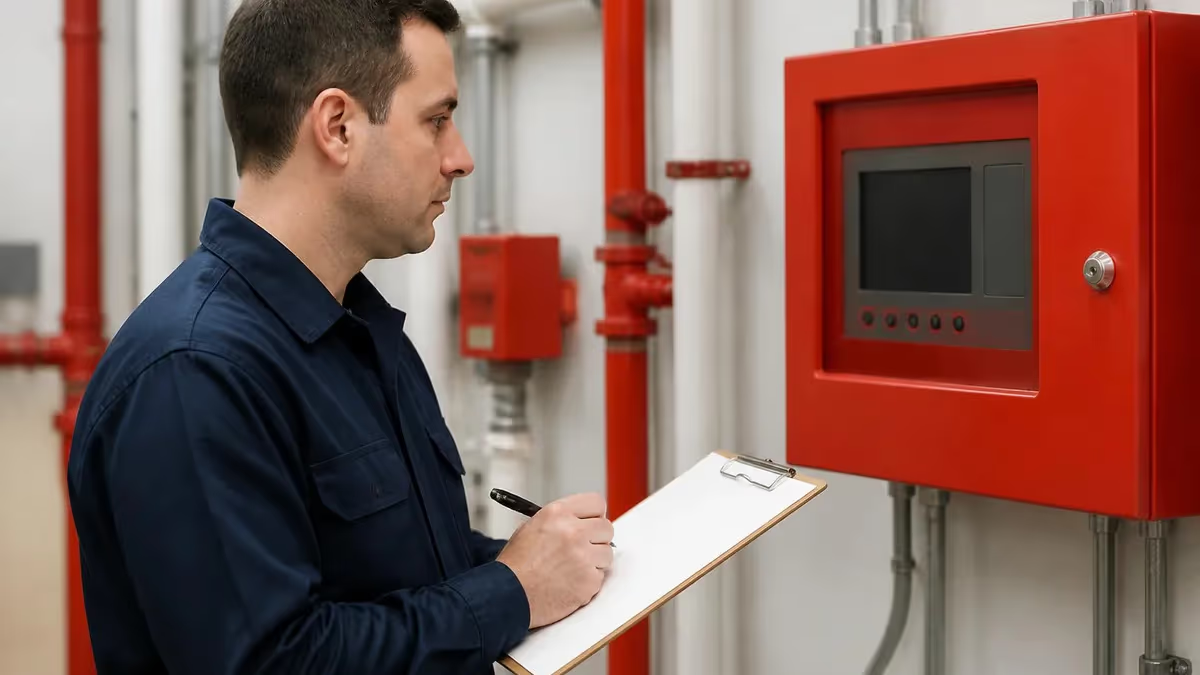
NFPA 1851 is the standard that tells fire departments exactly how to take care of the protective gear firefighters wear into burning buildings. Officially titled the Standard on Selection, Care, and Maintenance of Structural Fire Fighting Protective Ensembles and Proximity Fire Fighting Protective Ensembles, it governs the entire lifecycle of turnout gear from the moment a department buys it to the day it is retired. If NFPA 1971 sets the rules for how gear is built, NFPA 1851 sets the rules for keeping it safe to wear.
Why does a maintenance standard matter so much? Because firefighting gear absorbs more than heat. Modern fireground smoke contains carcinogens, polycyclic aromatic hydrocarbons, and toxic combustion byproducts that cling to fabric, soak into liners, and re-expose firefighters long after the fire is out. A jacket that is never cleaned becomes a chronic exposure hazard. NFPA 1851 exists to break that exposure cycle through structured cleaning, inspection, and recordkeeping that protects firefighters from the cancers that now kill more of them than flames.
The standard applies to nearly every organization that issues structural turnout gear in the United States, including municipal fire departments, volunteer companies, industrial fire brigades, and military firefighting units. It covers the full ensemble: coats, pants, helmets, gloves, footwear, and protective hoods. Each element has its own selection criteria, cleaning frequency, inspection routine, and retirement trigger. Understanding how these pieces fit together is the first step toward building a compliant care program that actually keeps people safe.
One of the most important concepts in the standard is the idea of routine versus advanced cleaning and routine versus advanced inspection. Firefighters perform quick routine checks themselves, while trained personnel or verified independent service providers handle the deeper work. This two-tier model spreads responsibility across the department and ensures that small problems get caught before they become catastrophic failures during an interior attack. The result is a system of shared accountability rather than a single overworked gear officer.
This guide breaks down NFPA 1851 in plain English. We will walk through how gear is selected, how often it must be cleaned, what inspectors look for, when repairs are allowed, and the precise rules for retirement. We will also explain how the standard connects to related documents like nfpa 1851 and the broader family of NFPA fire protection standards that shape modern firefighting safety practice across departments of every size.
Whether you are a probationary firefighter studying for a department exam, a company officer building a compliance program, or a gear technician learning the inspection process, this article gives you the foundation. NFPA 1851 is dense, technical, and frequently updated, but its core message is simple: clean gear, well-maintained gear, and properly retired gear save lives. By the end of this guide you will understand not just what the standard requires, but why each requirement exists and how to apply it day to day.
NFPA 1851 by the Numbers
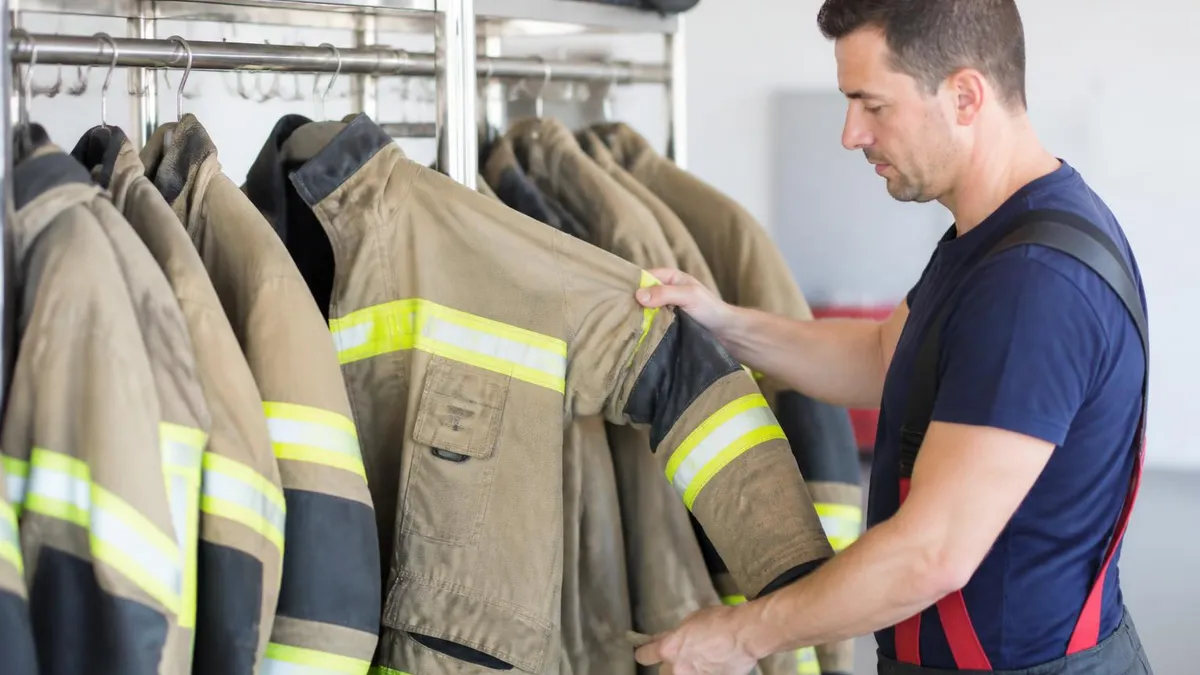
Selecting the Protective Ensemble and Its Elements
Coats and trousers form the core of structural turnout gear, built from an outer shell, a moisture barrier, and a thermal liner. Selection considers fit, mobility, and the hazards a department actually faces in its response area.
Helmets protect against impact and radiant heat while hoods shield the neck, ears, and face. Particulate-blocking hoods are now common selections because they reduce carcinogen exposure to the most vulnerable skin on the body.
Gloves must balance protection with dexterity so firefighters can still operate tools and tie knots. Boots provide puncture, crush, and thermal protection while supporting long periods of standing on unstable surfaces.
Before buying anything, departments perform a documented risk assessment covering response types, climate, and frequency of exposure. This drives smart selection so gear matches the real job rather than a generic specification.
Cleaning is the heart of NFPA 1851 and the area where most departments have changed their practices the most over the past decade. The standard divides cleaning into two tiers. Routine cleaning is the light, frequent maintenance that firefighters can do themselves, such as brushing off dry debris, gently spot-rinsing soiled areas, and air-drying gear in the shade. Advanced cleaning is a thorough machine wash performed by trained personnel or a verified independent service provider, and it is where deep contaminants are actually removed from the fabric.
The standard sets clear frequency expectations. Advanced cleaning and advanced inspection must each occur at least once every twelve months, and an advanced cleaning is also required after any exposure to products of combustion or hazardous contamination. In practice, this means a working structure fire should trigger a wash. Many progressive departments now perform on-scene gross decontamination, rinsing gear before it ever leaves the fireground, to keep carcinogens out of the apparatus cab and the firefighter's skin.
Decontamination is treated as a serious safety function, not housekeeping. Sanitization addresses biological hazards such as bloodborne pathogens, while cleaning targets the chemical soils that build up from smoke. Gear contaminated with body fluids, asbestos, or hazardous materials may require specialized handling beyond ordinary advanced cleaning. The standard is explicit that contaminated gear must never be brought into living quarters, taken home, or laundered in a household washing machine where it can contaminate family clothing.
Water temperature, detergent pH, and mechanical action all matter. NFPA 1851 directs that gear be washed at temperatures and with agents that will not degrade the protective materials, which is why ordinary hot household cycles and bleach are prohibited. Front-loading commercial extractors are preferred because they clean thoroughly without the harsh agitation of top-loaders. Drying must also be controlled, since excessive heat from a dryer or direct sunlight can break down the moisture barrier and shorten the gear's usable life.
Recordkeeping ties the whole cleaning program together. Every advanced cleaning and every advanced inspection must be documented, creating a history that follows each garment through its service life. These records prove compliance, support warranty claims, and help a department spot patterns, such as a particular member whose gear is repeatedly heavily soiled. The same documentation discipline appears throughout the broader NFPA standards family, including nfpa 1851, where careful records underpin credibility and accountability.
Verified independent service providers, often called ISPs, play a growing role. An ISP is an outside organization that has demonstrated it can clean, inspect, and repair gear in accordance with the standard. Many departments outsource advanced cleaning to ISPs because they lack the commercial extractors, trained staff, or time to do it in-house. When using an ISP, the department remains responsible for ensuring the work meets the standard, so choosing a verified provider and reviewing their documentation is essential to staying compliant.
Routine vs Advanced Inspection Under NFPA 1851
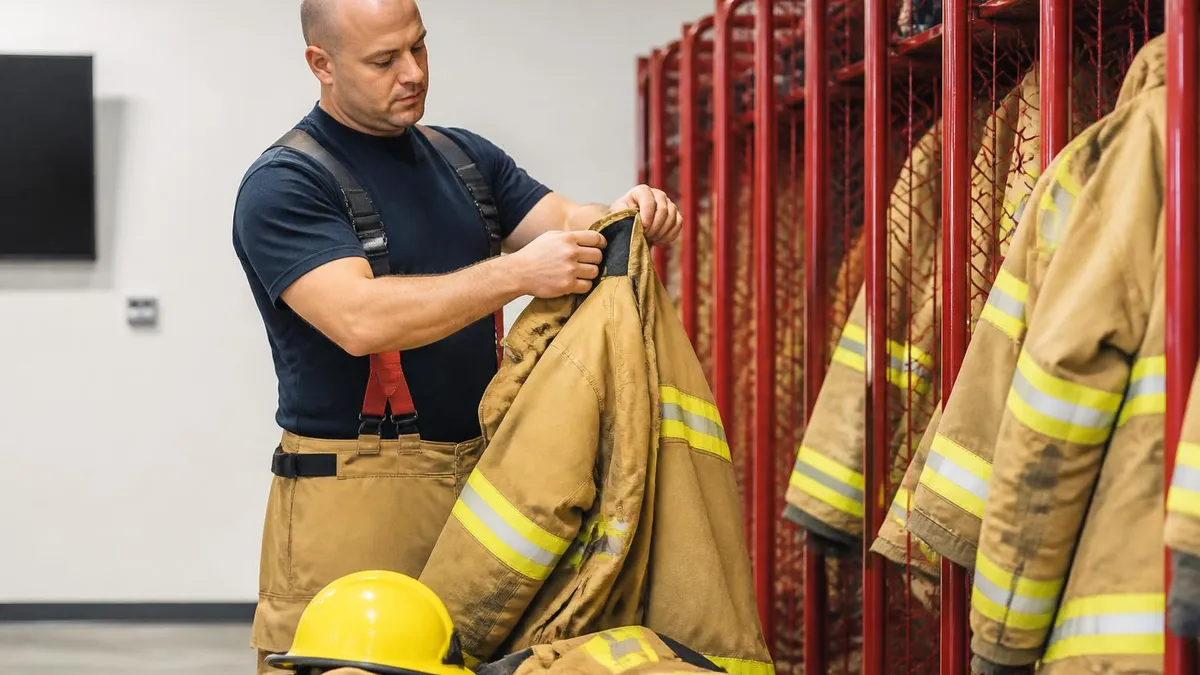
Routine inspection happens after every use and is performed by the member who wears the gear. It is a quick visual and hands-on check for obvious problems: soiling, charring, rips, broken closures, missing trim, and damaged thermal protection. The firefighter looks the gear over, feels for stiffness or brittleness, and confirms that hardware works.
The goal of routine inspection is speed and frequency. Because it happens constantly, it catches damage early, before a small tear becomes a burn injury. If a member finds anything beyond minor surface soil, the gear is pulled from service and routed to advanced inspection so trained personnel can evaluate whether repair or retirement is needed.
In-House Program vs Outsourcing to a Verified ISP
- +ISPs have commercial extractors and controlled drying built for turnout gear
- +Outsourcing frees department staff from time-consuming advanced cleaning
- +Verified ISPs are trained on current edition criteria and procedures
- +Documentation is handled professionally and stored consistently
- +Specialized contamination like hazmat can be managed by experts
- +Reduces liability when work is verified against the standard
- −Outsourcing has recurring per-garment costs that add up over time
- −Gear is out of service longer when shipped off-site for cleaning
- −Departments still bear ultimate responsibility for compliance
- −Building in-house capability requires capital for extractors and space
- −In-house staff need ongoing training as editions change
- −Spare gear sets are needed so members are never left unprotected
Pros and Cons at a Glance
| Pros | Cons |
|---|---|
| ISPs have commercial extractors and controlled drying built for turnout gear | Outsourcing has recurring per-garment costs that add up over time |
| Outsourcing frees department staff from time-consuming advanced cleaning | Gear is out of service longer when shipped off-site for cleaning |
| Verified ISPs are trained on current edition criteria and procedures | Departments still bear ultimate responsibility for compliance |
| Documentation is handled professionally and stored consistently | Building in-house capability requires capital for extractors and space |
| Specialized contamination like hazmat can be managed by experts | In-house staff need ongoing training as editions change |
| Reduces liability when work is verified against the standard | Spare gear sets are needed so members are never left unprotected |
NFPA 1851 Compliance Checklist for Departments
- ✓Document a written selection risk assessment before purchasing gear
- ✓Issue a complete ensemble to every member who needs protection
- ✓Train members to perform routine inspection after each use
- ✓Train designated staff or contract a verified ISP for advanced work
- ✓Perform advanced cleaning at least once every twelve months
- ✓Perform advanced inspection at least once every twelve months
- ✓Trigger advanced cleaning after any exposure to combustion products
- ✓Never launder contaminated gear in household machines or take it home
- ✓Maintain individual cleaning, inspection, and repair records per garment
- ✓Retire all elements no later than ten years from manufacture date
Gear has a hard expiration date
NFPA 1851 requires that structural firefighting garments, helmets, gloves, footwear, and hoods be retired and destroyed no more than ten years from their date of manufacture, regardless of condition. Even a jacket that looks brand new must be removed from service once it hits the ten-year mark, because materials degrade in ways inspection cannot always detect.
Repairs under NFPA 1851 are tightly controlled because a poorly executed repair can be as dangerous as the damage it tried to fix. The standard requires that repairs be performed by trained personnel, the original manufacturer, or a verified independent service provider, and that all repairs restore the element to a condition meeting the original design requirements. Materials used for repair must be the same as, or equivalent to, those in the original construction, so substituting a random patch of fabric is never acceptable on a protective garment.
Different repairs carry different complexity. Replacing a snap or repairing a small seam in the outer shell may be relatively straightforward, but repairs involving the moisture barrier or thermal liner are far more demanding because those layers are sealed and tested. A botched moisture barrier repair can let steam and chemicals reach the firefighter's skin, so the standard insists this work follow manufacturer procedures. When damage is too extensive to repair safely, the element is retired instead, which is always the safer default.
Recordkeeping deserves its own discipline. NFPA 1851 expects organizations to maintain records for each ensemble element covering the date issued, manufacturer, model, cleaning history, inspection results, repairs, and retirement. Many departments use barcoded or RFID tags so a quick scan pulls up a garment's complete life story. These records are not bureaucratic busywork; they prove the gear protecting a firefighter has been maintained, and they become critical evidence if an injury or warranty dispute ever occurs.
Storage and handling round out the maintenance picture. Gear should be stored clean, dry, and away from direct sunlight, which degrades fabrics and reflective trim through ultraviolet exposure. It must also be kept away from ozone sources like electric motors, from contact with petroleum products, and from extreme temperatures. Storing gear in a sealed personal vehicle trunk, a common bad habit, exposes it to heat cycling and ultraviolet light that quietly shorten its life and undermine the protection it is supposed to provide.
Contamination control connects storage to firefighter health. Soiled gear off-gasses and transfers carcinogens to skin, seats, and shared spaces, which is why the standard and modern best practice keep dirty gear out of cabs, dorms, and homes. Departments increasingly designate clean and dirty zones, use sealed bags for transporting contaminated gear, and stock spare sets so a member is never forced to choose between wearing soiled gear and going without protection. These habits turn the written standard into daily behavior.
Finally, the program needs ownership. Someone, usually a health and safety officer or a designated gear technician, must own the NFPA 1851 program, track due dates, schedule advanced cleanings, audit records, and keep training current as new editions publish. Without an owner, frequencies slip, documentation gaps appear, and compliance erodes quietly until an incident exposes the problem. A named, accountable owner with command support is the single most reliable predictor of whether a department's care program actually works in practice.
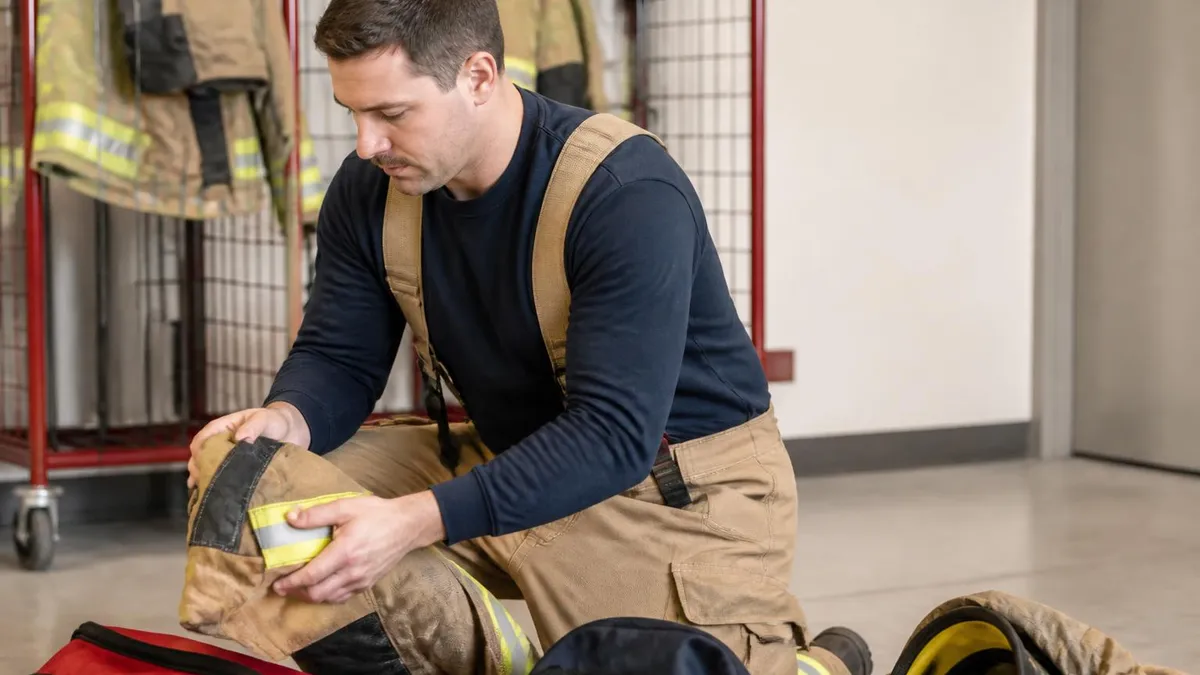
Firefighter occupational cancer is now a leading cause of line-of-duty death, and unwashed turnout gear is a documented contributor. Gear that is never advanced-cleaned holds smoke residues that re-expose firefighters with every wear. Treat dirty gear as a hazardous material, not a badge of honor, and clean it promptly after every working fire.
NFPA 1851 has evolved significantly since it was first issued, and understanding that evolution helps explain why current practice looks the way it does. The standard is revised on roughly a five-year cycle through the NFPA consensus process, with technical committees of fire service experts, manufacturers, and researchers weighing the latest science. Each edition has pushed the fire service toward more rigorous cleaning, better contamination control, and a sharper focus on the link between gear hygiene and occupational cancer prevention.
Earlier editions established the basic framework of selection, care, and maintenance, but later revisions sharpened the cleaning and decontamination requirements as research on carcinogen absorption matured. Concepts such as preliminary exposure reduction, on-scene gross decontamination, and the heightened attention to particulate-blocking hoods reflect this scientific progress. When a department adopts the standard, it should always reference the specific edition required by its authority having jurisdiction, since requirements and frequencies can shift between versions.
It is important to understand how NFPA 1851 relates to its sibling standards. NFPA 1971 governs how the protective ensemble is designed, tested, and certified at manufacture, while NFPA 1851 governs everything that happens after the gear is delivered. The two are read together: 1971 defines what compliant gear is, and 1851 keeps it compliant and safe throughout its service life. A department that buys excellent 1971-certified gear but ignores 1851 maintenance will still end up with unsafe equipment.
The NFPA has also been consolidating its emergency responder standards. Many individual standards, including those covering protective gear, have been merged into combined documents to reduce duplication and make requirements easier to navigate. Even as standard numbers and groupings change, the substantive requirements for selecting, cleaning, inspecting, repairing, retiring, and documenting structural firefighting gear continue to carry forward. The technical expectations endure even when the cover page changes, so the knowledge in this guide remains durable.
For exam candidates and program managers, the practical takeaway is to always confirm which edition and which document number applies in your jurisdiction. Adoption is not automatic; a standard becomes mandatory only when a state, locality, or AHJ adopts it or when a department voluntarily commits to it. Once adopted, however, it sets a defensible benchmark for care that protects both firefighters and the organization. Aligning with the current consensus standard is widely regarded as the floor for responsible gear management.
This lifecycle thinking connects to the wider world of fire protection standards. Just as nfpa 1851 emphasizes methodical process and documentation, the entire NFPA ecosystem rewards departments that treat safety as a managed system rather than a one-time purchase. Gear is not a commodity you buy and forget; it is a protective system you select deliberately, maintain rigorously, document faithfully, and retire responsibly. That mindset is the real lesson behind every clause in the standard.
If you are preparing for a department promotional exam or a certification test that covers NFPA 1851, a few practical study strategies will serve you well. Start by mastering the vocabulary, because the standard lives and dies on precise terms. Know the difference between routine and advanced cleaning, between routine and advanced inspection, between cleaning and decontamination, and between a trained organization member and a verified independent service provider. Exam writers love to test whether you can match the right task to the right person and the right tier.
Next, memorize the key frequencies and limits, since these are the most testable facts in the entire standard. Advanced cleaning and advanced inspection each occur at least every twelve months. Advanced cleaning is also required after exposure to products of combustion. Mandatory retirement occurs no later than ten years from the date of manufacture. These numbers come up constantly, so commit them to memory and be ready to apply them to scenario questions rather than just recite them in isolation.
Use scenario thinking to deepen your understanding. Instead of memorizing in a vacuum, picture a real situation: a firefighter returns from a working structure fire with heavily soiled gear. What must happen? The gear needs advanced cleaning, it must not go home or into living quarters, the cleaning must be documented, and an advanced inspection may follow. Walking through cases like this trains you to reason the way the standard intends, which is exactly how good exams frame their questions.
Practice questions are the fastest way to find your gaps. Working through realistic items reveals which frequencies, roles, and procedures you have not truly internalized. After each practice set, review every miss and trace it back to the underlying rule rather than just memorizing the answer. This habit converts wrong answers into permanent knowledge and builds the pattern recognition that lets you move quickly and confidently through a timed exam without second-guessing yourself.
Connect NFPA 1851 to the bigger picture so the details stick. Remember that 1971 builds the gear and 1851 maintains it, that the whole program exists to fight firefighter cancer, and that documentation is the thread tying everything together. When you understand the why behind a requirement, the specific clauses become far easier to recall under pressure. Rote memorization fades fast; conceptual understanding anchored to firefighter safety tends to stay with you long after the exam is over.
Finally, manage your preparation like a project. Give yourself a realistic timeline, study in short focused sessions rather than cramming, and revisit the highest-yield facts repeatedly using spaced repetition. Mix reading the standard, working practice questions, and explaining concepts aloud to a colleague, because teaching is one of the most powerful ways to confirm you truly understand the material. Walk into the exam having rehearsed both the facts and the reasoning, and the test will feel like a review rather than a surprise.
Sample NFPA - National Fire Protection Association Practice Questions
Try these questions from our free NFPA - National Fire Protection Association practice tests. The correct answer and an explanation follow each question.
According to NFPA 72, what is the maximum allowable supervisory signal response time from the control unit to the supervising station?
- A. 30 seconds
- B. 60 seconds
- C. 90 seconds
- D. 5 minutes
Answer: D. 5 minutes
NFPA 72 requires that supervisory signals be received at the supervising station within 5 minutes of occurrence.
According to NFPA 10, how frequently must stored-pressure dry chemical extinguishers be subjected to a 6-year internal examination?
- A. Every 3 years
- B. Every 6 years
- C. Every 10 years
- D. Every 12 years
Answer: B. Every 6 years
NFPA 10 requires stored-pressure dry chemical extinguishers to be emptied and internally examined every 6 years.
According to NFPA 25, what condition requires replacement of a sprinkler head without testing?
- A. Sprinkler is more than 25 years old
- B. Sprinkler is a fast-response type
- C. Sprinkler has a painted finish from factory
- D. Sprinkler is more than 50 years old in a wet system
Answer: D. Sprinkler is more than 50 years old in a wet system
NFPA 25 requires that sprinklers 50 years or older in wet systems be replaced or sample-tested; replacement is required if they fail testing.
What is the minimum clearance required between the deflector of a sprinkler head and the top of storage under NFPA 13?
- A. 6 inches
- B. 12 inches
- C. 18 inches
- D. 36 inches
Answer: C. 18 inches
NFPA 13 requires a minimum 18-inch clearance between the sprinkler deflector and the top of storage.
Take the full NFPA - National Fire Protection Association practice test
NFPA Questions and Answers
NFPA 921 Explained: The Complete Guide to the Guide for Fire and Explosion Investigations
NFPA 24: Complete Guide to the Standard for Private Fire Service Mains and Their Appurtenances
NFPA 1971: Complete Guide to the Standard on Protective Ensembles for Structural and Proximity Fire Fighting
NFPA 704 Diamond: Complete Guide to Hazard Identification Ratings

NFPA 70 National Electrical Code: Complete Guide to Understanding and Applying the NEC
About the Author

Certified Safety Professional & OSHA Compliance Expert
Indiana University of Pennsylvania Safety SciencesDr. William Foster holds a PhD in Safety Science from Indiana University of Pennsylvania and is a Certified Safety Professional (CSP) and Certified Hazardous Materials Manager. With 20 years of occupational health and safety management experience across construction, manufacturing, and chemical industries, he coaches safety professionals through OSHA certification, CSP, CHST, and safety management licensing programs.
Join the Discussion
Connect with other students preparing for this exam. Share tips, ask questions, and get advice from people who have been there.
View discussion (8 replies)