

MRSO Practice Test
Updated November 2026Facts verified Nov 1, 2026 against International Board of Magnetic Resonance Safety
In the world of radiology, the MRSO (Magnetic Resonance Safety Officer) plays a key role. They make sure patients, staff, and the public are safe in MRI settings. This guide covers what MRSOs do, what they need to know, and where they can go in their careers. Practice with the free MRSO - Magnetic Resonance Safety Officer practice test on PracticeTestGeeks (7 questions with answer explanations).
- The IBMRS exam is composed of 100 multiple-choice, true-false and multi-answer questions.[1]
- The MRSO certification is valid for 10 years.[1]
- The MRSO is renewed by re-certification examination, and continuing education is not required.[1]
- Delivery: Computer-based at Prometric test centers.[1]
- Anyone may sit for the MRSO exam; there are no prerequisites.[1]
- MRSO candidates learn immediately whether they passed and receive a detailed exam report by email within a few hours.[2]
Numbers in brackets link to the official sources listed under Sources & last verified. Dates that have passed are removed automatically.
MRSO Exam at a Glance
| Item | Detail | Source · Verified |
|---|---|---|
| Number of questions | 100 multiple-choice, true-false and multi-answer questions[1] | International Board of Magnetic Resonance Safety · Oct 25, 2026 |
| Validity | 10 years[1] | International Board of Magnetic Resonance Safety · Oct 25, 2026 |
| Renewal | Re-certification by exam; no CE required[1] | International Board of Magnetic Resonance Safety · Oct 25, 2026 |
| Delivery | Computer-based at Prometric test centers[1] | International Board of Magnetic Resonance Safety · Oct 25, 2026 |
| Eligibility | Open to anyone; no prerequisites[1] | International Board of Magnetic Resonance Safety · Oct 25, 2026 |
| Score release | Pass/fail shown immediately; detailed report by email within a few hours[2] | International Board of Magnetic Resonance Safety · Oct 25, 2026 |
| Late registration deadline | Free reschedule ≥30 days out; $35 at 5–29 days; fee forfeited <5 days[2] | International Board of Magnetic Resonance Safety · Oct 25, 2026 |
What changed for MRSO in 2026
- Oct 25, 2026: Delivery changed to Computer-based at Prometric test centers (previously Computer-based at Prometric test centers (US, Canada, UK, EU, Brazil, Argentina, Australia, New Zealand)).[1]
- Oct 25, 2026: Number of questions changed to 100 multiple-choice, true-false and multi-answer questions (previously 100 multiple-choice, true-false and multi-answer questions across 7 domains).[1]
- Oct 25, 2026: Late registration deadline changed to Free reschedule ≥30 days out; $35 at 5–29 days; fee forfeited <5 days (previously Free reschedule ≥30 days out; $35 fee at 5–29 days; fee forfeited <5 days).[2]
- Oct 25, 2026: Renewal changed to Re-certification by exam; no CE required (previously Re-certification by exam every 10 years; no CE required).[1]
- Oct 25, 2026: Validity changed to 10 years (previously 10 years from the date of passing).[1]
Free MRSO - Magnetic Resonance Safety Officer Study Tools
Interactive MRSO - Magnetic Resonance Safety Officer resources on PracticeTestGeeks, free to start:
- MRSO - Magnetic Resonance Safety Officer flashcards — review key terms and concepts card by card
- MRSO - Magnetic Resonance Safety Officer study guide — topic-by-topic overview of what the exam covers
- MRSO - Magnetic Resonance Safety Officer cheat sheet — one-page printable summary for last-minute review
According to International Board of Magnetic Resonance Safety, “The exam will be composed of 100 multiple choice, True-False and Multi-Answer questions.”[1]
MRSO content outline and where to practise each area
The content areas below are copied from the official MRSO content outline published by International Board of Magnetic Resonance Safety. The right-hand column shows which of our practice sets covers it.
| Official content area | Practice on this site |
|---|---|
| Basic underlying MR safety principles[3] | MRSO Basics Practise the physics behind the static field, gradient fields and RF fields, and link each to the hazard it creates for patients and staff. |
| Medicolegal implications in MR safety[3] | MRSO Safety Standards Practise who is responsible for what under safety standards, screening and documentation, and what a reasonable policy looks like after an incident. |
MRSO Practice Test Questions
Prepare for the MRSO - Magnetic Resonance Safety Officer exam with our free practice test modules. Each quiz covers key topics to help you pass on your first try.
MRSO ASTM F2503 Device Labeling
MRSO Exam Questions covering ASTM F2503 Device Labeling. Master MRSO Test concepts for certification prep.
MRSO Basics
Free MRSO Practice Test featuring Basics. Improve your MRSO Exam score with mock test prep.
MRSO Cryogen Safety
MRSO Mock Exam on Cryogen Safety. MRSO Study Guide questions to pass on your first try.
MRSO Emergency and Quench Procedures
MRSO Test Prep for Emergency and Quench Procedures. Practice MRSO Quiz questions and boost your score.
MRSO GBCA Safety & NSF Screening
MRSO Questions and Answers on GBCA Safety & NSF Screening. Free MRSO practice for exam readiness.
MRSO Magnetic and RF Shielding Concepts
MRSO Mock Test covering Magnetic and RF Shielding Concepts. Online MRSO Test practice with instant feedback.
MRSO MRI Safety Protocols
Free MRSO Quiz on MRI Safety Protocols. MRSO Exam prep questions with detailed explanations.
MRSO MR Zones and Facility Design
MRSO Practice Questions for MR Zones and Facility Design. Build confidence for your MRSO certification exam.
MRSO Patient Screening and Implants
MRSO Test Online for Patient Screening and Implants. Free practice with instant results and feedback.
MRSO Radiofrequency Field Bioeffects
MRSO Study Material on Radiofrequency Field Bioeffects. Prepare effectively with real exam-style questions.
MRSO Radiofrequency (RF) Field Bioeffects ...
Free MRSO Test covering Radiofrequency (RF) Field Bioeffects and Specific Absorption Rate (SAR). Practice and track your MRSO exam readiness.
MRSO Risk Management
MRSO Exam Questions covering Risk Management. Master MRSO Test concepts for certification prep.
MRSO Safety Policies for Pregnant Patients...
Free MRSO Practice Test featuring Safety Policies for Pregnant Patients and Healthcare Personnel. Improve your MRSO Exam score with mock test prep.
MRSO Safety Standards
MRSO Mock Exam on Safety Standards. MRSO Study Guide questions to pass on your first try.
MRSO Static Magnetic Field (B0) Bioeffects...
MRSO Test Prep for Static Magnetic Field (B0) Bioeffects and Exposure Limits. Practice MRSO Quiz questions and boost your score.
MRSO Static Magnetic Field Safety
MRSO Questions and Answers on Static Magnetic Field Safety. Free MRSO practice for exam readiness.
MRSO Time-Varying Gradient Field Bioeffect...
MRSO Mock Test covering Time-Varying Gradient Field Bioeffects (PNS and Acoustic Noise). Online MRSO Test practice with instant feedback.
Worked examples: how to reason through MRSO questions
These are practice questions written for this site, not questions from the real exam. Each explanation shows why the right answer is right and why the others are wrong.
Example 1
Question: According to IEC 60601-2-33, what is the whole-body averaged Specific Absorption Rate (SAR) limit for the 'Normal Operating Mode'?
- 0.4 W/kg
- 2.0 W/kg
- 4.0 W/kg
- 8.0 W/kg
Answer: B. 2.0 W/kg
Explanation:
The correct answer is 2.0 W/kg. IEC 60601-2-33 sets the whole-body averaged SAR limit for the Normal Operating Mode at that level, the mode that is not expected to cause physiological stress. 4.0 W/kg is wrong because it belongs to the First Level Controlled Operating Mode, which requires medical supervision. 0.4 W/kg is wrong because it is below the Normal Operating Mode limit, and 8.0 W/kg is wrong because it is above it. The rule to remember: each operating mode has a ceiling, and moving to a higher mode means more supervision. Learn the modes in order and attach each limit to its mode, not to the standard as a whole.
Example 2
Question: According to the International Electrotechnical Commission (IEC) 60601-2-33 standard, gradient system operation is categorized into modes based on the potential to induce physiological effects. The 'First Level Controlled Operating Mode' is defined as the level where:
- The acoustic noise exceeds 99 dBA.
- Mild peripheral nerve stimulation is expected for some patients.
- The rate of change (dB/dt) is sufficient to cause cardiac stimulation.
- No perceptible physiological effects are expected.
Answer: B. Mild peripheral nerve stimulation is expected for some patients.
Explanation:
The correct answer is that mild peripheral nerve stimulation is expected for some patients. That describes the First Level Controlled Operating Mode in IEC 60601-2-33. Saying no perceptible physiological effects are expected describes the Normal Operating Mode, so that option is wrong. Saying dB/dt is sufficient to cause cardiac stimulation describes a level the standard exists to keep systems away from, so it is wrong. Acoustic noise above 99 dBA is a separate hazard and not how gradient operating modes are defined. The rule to remember: the modes are defined by the physiological effect the gradients may cause, rising from none, to mild and tolerable, to significant discomfort.
Example 3
Question: Peripheral Nerve Stimulation (PNS) is primarily caused by the induction of currents in tissue. Which parameter directly relates to the rate of change of the magnetic field and is the primary determinant of PNS?
- Static magnetic field strength (B0)
- Specific Absorption Rate (SAR)
- The rate of change of the magnetic field (dB/dt)
- The slew rate divided by the gradient amplitude
Answer: C. The rate of change of the magnetic field (dB/dt)
Explanation:
The correct answer is the rate of change of the magnetic field, dB/dt. Rapidly switching gradients induce an electric field in tissue, following Faraday's law, and that induced field is what stimulates nerves. Static magnetic field strength (B0) is wrong because a constant field does not induce current in stationary tissue. SAR is wrong because it measures RF heating, not nerve stimulation. The slew rate divided by the gradient amplitude is wrong because it is not the parameter that determines stimulation. The rule to remember: heating is an RF and SAR issue, nerve stimulation is a switching gradient and dB/dt issue, and these two should never be mixed up.
How to use these practice tests
Start with the official IBMRS material so you know what the exam body expects, then use these practice sets to find gaps. Take the Basics set and answer without looking anything up. For every miss, write a short note on the rule behind the right answer, not just the answer itself.
Next, work through the topic sets that match your weakest notes: static field, gradient fields, RF and SAR, zones and facility design, screening and implants, cryogens and quench procedures, and risk management. Keep each sitting short and focused on one topic, then return to earlier sets after a few days to see what stuck.
Because the real exam includes multi-answer and true-false items, practise reading every option on its own merit before choosing. Look closely at questions where you picked a plausible but wrong option, and ask which hazard it really belongs to: static field, gradients or RF.
Before booking, read the IBMRS registration pages so you know the rescheduling terms. In the final days, take the full practice test and review only the explanations for questions you missed. Remember that our questions are written by us and are not real exam questions, so treat them as a way to test your understanding.
Key Takeaways
FREE MRSO Practice Test Online
- The MRSO is in charge of making sure MRI machines work safely and keeping people safe from harm.
- To become an MRSO, you usually need a bachelor's degree in something like physics, healthcare, or engineering.
- Before becoming an MRSO, you must get special training and a certification to show you know how to follow MRI safety rules.
- Being an MRSO can lead to bigger jobs in hospitals, government agencies, or schools.
- Good attention to detail, strong communication skills, and a focus on keeping patients and staff safe are key for MRSOs.
Role and Responsibilities
What is an MRSO (Magnetic Resonance Safety Officer)?
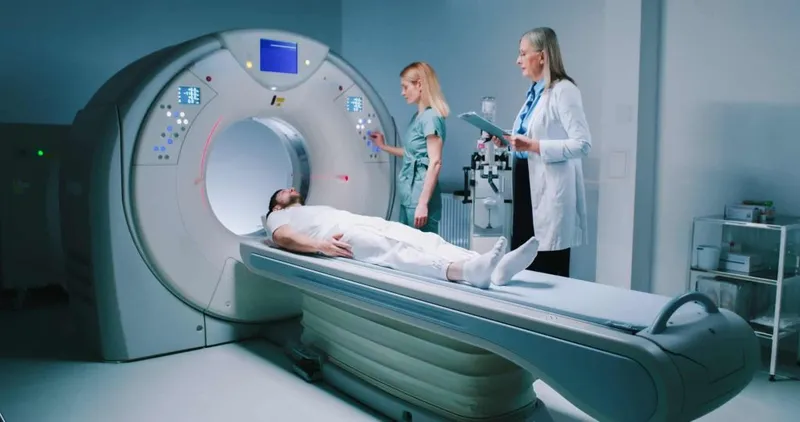
An MRSO, or Magnetic Resonance Safety Officer, is key to keeping MRI equipment and places safe. They make sure safety rules are followed and everything meets standards.
MRSOs watch the mri zone to keep it safe. They handle mri equipment compliance and report any mri incidents quickly. They also check patients for safety before scans, especially for those with implants.
Educational Requirements
To be an MRSO, you need special training and certifications. This includes learning about mri safety expert practices and getting an ACR accreditation. MRSOs learn how to keep MRI areas safe and follow all rules.
Training and Certification
The MRSO (Magnetic Resonance Safety Officer) Career Path
To become an MRSO, you need special training and a certification. You'll learn about mri technologist training, site planning, and electromagnetic compatibility. You'll also study mri suite design, mri incident prevention, and mri quality assurance. This training helps MRSOs keep MRI equipment safe and protect everyone around it.
The American Board of Magnetic Resonance Safety (ABMRS) has the top certification for MRSOs. To get certified, you must pass a tough exam. It checks your knowledge of MRI safety, managing risks, and what to do in emergencies. Many places also offer more training to keep MRSOs current with new rules and ways to work better.
Career Prospects and Advancement
The need for skilled mrso (magnetic resonance safety officer) workers is rising. This is because MRI technology is getting more common in healthcare and safety is more important. MRSOs work in hospitals, imaging centers, and research places. They make sure MRI machines work safely and well.
With more experience, MRSOs can move up in their careers. They might become a lead MRSO, a regional safety coordinator, or a safety consultant for MRI makers or health groups.

- +Industry-recognized credential boosts your resume
- +Higher earning potential (10-20% salary increase on average)
- +Demonstrates commitment to professional development
- +Opens doors to advanced career opportunities
- −Exam preparation requires significant time investment (4-8 weeks)
- −Certification fees can be $100-$400+
- −May require continuing education to maintain
- −Some employers may not require certification
Sample MRSO - Magnetic Resonance Safety Officer Practice Questions
Try these questions from our free MRSO - Magnetic Resonance Safety Officer practice tests. The correct answer and an explanation follow each question.
What is the primary role of a Magnetic Resonance Safety Officer (MRSO)?
- A. To operate MRI scanners
- B. To interpret MRI scans
- C. To ensure the safety of patients, staff, and equipment in the MRI environment
- D. To design MRI protocols
Answer: C. To ensure the safety of patients, staff, and equipment in the MRI environment
The primary role of a Magnetic Resonance Safety Officer (MRSO) is to ensure the safety of everyone and everything within the MRI environment. This includes protecting patients and staff from potential hazards associated with powerful magnetic fields and radiofrequency energy, as well as safeguarding the expensive MRI equipment. The MRSO develops, implements, and enforces safety policies and procedures.
An MRSO is conducting an annual safety audit and inspects the cryogen vent pipe. What is the primary safety function of this component?
- A. To safely route oxygen-displacing cryogen gases to the exterior of the building during a magnet quench.
- B. To vent normal, slow cryogen boil-off during routine operations.
- C. To act as an emergency fire escape route from the magnet room.
- D. To provide a conduit for refilling the cryogens without entering Zone IV.
Answer: A. To safely route oxygen-displacing cryogen gases to the exterior of the building during a magnet quench.
During a quench, a large volume of liquid helium rapidly boils into a gas, which would displace oxygen and create an immediate asphyxiation hazard if released into the magnet room. The quench pipe is a dedicated, robust ventilation system designed to safely channel these super-cooled, expanding gases outside the building.
What is the primary safety concern related to the static magnetic field (B0) in MRI?
- A. Radiation exposure
- B. Projectile hazards from ferromagnetic objects
- C. Electrical shock
- D. Acoustic noise
Answer: B. Projectile hazards from ferromagnetic objects
The primary safety concern related to the static magnetic field (B0) in MRI is the projectile hazard from ferromagnetic objects. The B0 field is continuously present and extremely powerful, capable of attracting ferromagnetic items with immense force. This 'missile effect' can cause severe injury or death to individuals in the scan room and significant damage to the MRI equipment.
An MRSO is reviewing the architectural plans for a new imaging center. The plans show the MR control room (Zone III) is accessible directly from a general outpatient waiting area (Zone I) through a single, unlocked door. Why does this design present a significant safety flaw according to ACR guidelines?
- A. RF noise from the waiting area will interfere with image quality.
- B. The acoustic noise from the scanner will be too loud for the waiting area.
- C. It fails to establish a properly supervised Zone II as a buffer for screening and to control access.
- D. The static magnetic field will not be adequately contained within the magnet room.
Answer: C. It fails to establish a properly supervised Zone II as a buffer for screening and to control access.
ACR guidelines require a Zone II to act as an interface between the uncontrolled Zone I and the strictly controlled Zone III. This area is where patients are screened and supervised by MR personnel before entering Zone III. Direct, uncontrolled access from Zone I to Zone III bypasses this critical safety step.
Take the full MRSO - Magnetic Resonance Safety Officer practice test
MRSO Exam Flashcards
🧲 Who offers the MRSO certification exam?
The MRSO (Magnetic Resonance Safety Officer) credential is awarded by the International Board of Magnetic Resonance Safety (IBMRS), formerly the American Board of Magnetic Resonance Safety (ABMRS). Passing the exam lets you use the title MRSO (MRSC™), meaning MR Safety Certified.
START MRSO BASICS PRACTICE TEST💵 How much does the MRSO exam cost?
The U.S. MRSO exam fee is $350, the same as the MRMD, MRSE and MRST exams. It is taken at Prometric testing centers, and rescheduling 5-29 days before your date costs $35.
START MRSO BASICS PRACTICE TEST📝 How many questions are on the MRSO exam?
IBMRS exams have 100 multiple-choice, true-false and multi-answer questions. They cover seven domains, including static, gradient and RF fields, gadolinium/pregnancy, facilities/cryogens, standards/regulatory and clinical applications.
START MRSO BASICS PRACTICE TEST🎓 Do you need a degree or prerequisite to take the MRSO exam?
No. IBMRS says anyone may sit for the MRSO exam; only the MRMD exam requires a licensed physician. In practice most MRSOs are MR technologists with a supervisory safety role at the point of care.
START MRSO BASICS PRACTICE TEST🔁 How long is MRSO certification valid?
An IBMRS MRSO certification is valid for 10 years from the date you pass. Renewal is by re-taking the exam, and continuing education hours are not required to renew.
START MRSO BASICS PRACTICE TEST🔄 How many times can you retake the MRSO exam?
You get three attempts to pass, with at least 60 days between attempts. You learn pass or fail right after the exam, and a domain-by-domain score report arrives by email within a few hours.
START MRSO BASICS PRACTICE TEST🚪 What are the four MRI safety zones?
The ACR four-zone model runs from Zone I (freely accessible public areas) to Zone II (the screening and patient interface area) to Zone III (restricted, controlled by MR personnel) to Zone IV (the magnet room itself). Access gets stricter at each step toward the scanner.
START MR ZONES PRACTICE TEST🏷️ What do MR Safe, MR Conditional and MR Unsafe mean?
These ASTM F2503 labels classify items for the MR environment. MR Safe items pose no known hazards in any MR environment, MR Conditional items are safe only under specified conditions, and MR Unsafe items pose hazards in all MR environments.
START MR LABELING PRACTICE TEST❄️ What happens during an MRI magnet quench?
In a quench the superconducting magnet loses superconductivity and its liquid helium boils off rapidly as gas, which should exit through the quench vent pipe. If the vent fails, helium can displace oxygen in the magnet room and build pressure that makes the door hard to open.
START QUENCH SAFETY PRACTICE TEST🔥 What is SAR in MRI safety?
SAR (specific absorption rate) measures RF energy absorbed by the body, in watts per kilogram. Under IEC 60601-2-33 the whole-body limit is 2 W/kg in Normal Operating Mode and 4 W/kg in First Level Controlled Mode; excess RF heating can cause burns.
START RF & SAR PRACTICE TEST(MRSO) Magnetic Resonance Safety Officer Questions and Answers
Sources & last verified
- International Board of Magnetic Resonance Safety — number of questions, validity, renewal, delivery (official source). “The exam will be composed of 100 multiple choice, True-False and Multi-Answer questions.” Verified Oct 25, 2026.
- International Board of Magnetic Resonance Safety — score release, late registration deadline (official source). “You will receive a more detailed exam report by email within a few hours.” Verified Oct 25, 2026.
- International Board of Magnetic Resonance Safety — other (official source). “basic underlying mr safety principles” Verified Nov 1, 2026.
How we verify: editorial & fact-checking policy. Report an error: contact us.

Official Resources
- International Board of Magnetic Resonance Safety (IBMRS) – the board (formerly ABMRS) that runs the MRSO exam and publishes its fees, syllabus and credential search.
- American College of Radiology – MR Safety – the ACR Manual on MR Safety and guidance on safe MR practices that IBMRS recommends for exam study.
- U.S. FDA – MRI (Magnetic Resonance Imaging) – the FDA overview of MRI benefits, risks and device safety information.
How this page was made: written with AI tools and published by Nathan Beja, founder of Practice Test Geeks, who is responsible for its content. Exam facts are checked against the official sources listed below. Not reviewed by a subject-matter expert. Editorial policy
Sources & references
Exam facts on this page (fees, format, dates, passing scores) are checked against these official sources; the date is our last check. Editorial policy
- ibmrs.org — Test delivery, eligibility, exam format, renewal, score validity, fees, late registration, score release · verified Oct 2026