

MRAB Practice Test
Updated October 2026Facts verified Oct 21, 2026 against Edison Electric Institute
Candidates applying for utility positions that require reading meters and recording data take the Meter Reader Aptitude Battery. This page provides free practice questions, worked problem explanations, and clear details on the battery format. Use these materials to review basic test skills, understand how hiring electric companies evaluate results, and prepare before taking the assessment administered by your prospective employer.
- The Coding test of the EEI Meter Reader Aptitude Battery (MRAB) has 18 items with four problems each, for 72 problems in total.[1]
- The Using Tables test of EEI's Meter Reader Aptitude Battery (MRAB) contains 85 items.[1]
- EEI's Meter Reader Aptitude Battery (MRAB) has two aptitude tests, Using Tables and Coding, and can be given in less than 20 minutes.[1]
- The Coding test of the EEI Meter Reader Aptitude Battery (MRAB) has a 5-minute time limit.[1]
- Scores on the MRAB tests are combined into one overall score, and EEI does not publish a passing cut score.[1]
- If you already took an EEI test such as the MRAB elsewhere, EEI asks you to tell the new employer, which handles any questions with EEI.[2]
- EEI does not give the Meter Reader Aptitude Battery directly to applicants; the hiring electric company runs it as a pre-employment test.[2]
- EEI's Meter Reader Aptitude Battery (MRAB) is used to select candidates for jobs that involve reading meters and recording data.[3]
- EEI does not release Meter Reader Aptitude Battery results to applicants; candidates get them through the hiring electric company.[2]
Numbers in brackets link to the official sources listed under Sources & last verified. Dates that have passed are removed automatically.
MRAB Exam at a Glance
| Item | Detail | Source · Verified |
|---|---|---|
| Number of questions (Coding) | 18 items, 72 problems[1] | corporate.pseg.com · Oct 21, 2026 |
| Number of questions (Using Tables) | 85 items[1] | corporate.pseg.com · Oct 21, 2026 |
| Time limit | Under 20 minutes (2 tests)[1] | corporate.pseg.com · Oct 21, 2026 |
| Time limit (Coding) | 5 minutes[1] | corporate.pseg.com · Oct 21, 2026 |
| Time limit (Using Tables) | 6 minutes[1] | corporate.pseg.com · Oct 21, 2026 |
| Passing score | Combined overall score; no published cut score[1] | corporate.pseg.com · Oct 21, 2026 |
| Validity | Prior scores may carry over; tell the new employer[2] | Edison Electric Institute · Oct 21, 2026 |
| Delivery | Given by the hiring utility, not EEI[2] | Edison Electric Institute · Oct 21, 2026 |
| Eligibility | Applicants for meter reading jobs[3] | Edison Electric Institute · Oct 21, 2026 |
| Score release | Results come from the hiring employer, not EEI[2] | Edison Electric Institute · Oct 21, 2026 |
What the MRAB is and how it works
According to Edison Electric Institute, “The test consists of 18 items that each have four problems to answer, for a total of 72 problems.”[1]
The Meter Reader Aptitude Battery is used by electric companies for job applicants seeking positions that require reading meters and recording data. The test battery is administered directly by the hiring utility rather than Edison Electric Institute. Edison Electric Institute develops the testing materials but does not administer tests or provide score results directly to candidates.
Administration takes less than 20 minutes across 2 aptitude tests: Using Tables and Coding. Using Tables includes 85 items with a 6-minute time limit, measuring how quickly and accurately you locate numbers within a table. Coding consists of 18 items, totaling 72 problems, with a 5-minute time limit.
Scores from the tests are combined into an overall score. Edison Electric Institute does not publish a universal cut score, and specific qualification standards or retake policies vary by hiring company. Candidates receive their results directly from the employer. If you have taken an Edison Electric Institute test with another utility, notify the hiring company, as prior scores may carry over. Check with your prospective employer for company-specific testing schedules and procedures.
MRAB content outline and where to practise each area
The content areas below are copied from the official MRAB content outline published by Edison Electric Institute. The right-hand column shows which of our practice sets covers it.
| Official content area | Practice on this site |
|---|---|
| Coding[1] | MRAB Clerical Skills Practise converting and recording coded data quickly and accurately under timed conditions. |
| Using Tables[1] | MRAB Number Facility Practise locating numerical values rapidly within complex data tables. |
MRAB Practice Test Questions
Prepare for the MRAB - Meter Reader Aptitude Battery Test exam with our free practice test modules. Each quiz covers key topics to help you pass on your first try.
MRAB Clerical Skills
MRAB Exam Questions covering Clerical Skills. Master MRAB Test concepts for certification prep.
MRAB Number Facility
Free MRAB Practice Test featuring Number Facility. Improve your MRAB Exam score with mock test prep.
MRAB Reading Comprehension
MRAB Mock Exam on Reading Comprehension. MRAB Study Guide questions to pass on your first try.
MRAB Route Planning
MRAB Test Prep for Route Planning. Practice MRAB Quiz questions and boost your score.
MRAB Customer Service
MRAB Questions and Answers on Customer Service. Free MRAB practice for exam readiness.
MRAB Data Recording and Documentation
MRAB Mock Test covering Data Recording and Documentation. Online MRAB Test practice with instant feedback.
MRAB Mathematical Reasoning
Free MRAB Quiz on Mathematical Reasoning. MRAB Exam prep questions with detailed explanations.
MRAB Meter Reading Techniques
MRAB Practice Questions for Meter Reading Techniques. Build confidence for your MRAB certification exam.
Worked examples: how to reason through MRAB questions
These are practice questions written for this site, not questions from the real exam. Each explanation shows why the right answer is right and why the others are wrong.
Example 1
Question: Proper body mechanics when lifting a heavy meter vault cover include:
- Bending at the waist and using your back
- Squatting down, keeping your back straight, and lifting with your legs
- Twisting your body to one side while pulling
- Lifting with one hand only
Answer: B. Squatting down, keeping your back straight, and lifting with your legs
Explanation:
Option B is correct because squatting with a straight back recruits strong leg muscles and protects the spine from strain. Option A is incorrect because bending at the waist places excessive stress directly onto lower back ligaments and spinal discs. Option C is incorrect because twisting while pulling increases shear forces on the spine and causes acute injuries. Option D is incorrect because lifting with one hand creates uneven strain and destabilizes posture. The general rule for handling heavy utility equipment is to maintain a neutral spine, keep loads close, and power the lift through the legs.
Example 2
Question: When completing a meter reading route sheet at the end of the day, why is it important to record both the start time and the end time of the route?
- To determine how fast the reader is working for performance reviews only
- To provide an accountability record and help verify that all stops were visited within the expected window
- Because the time of reading affects the meter's measurement accuracy
- To calculate overtime pay automatically
Answer: B. To provide an accountability record and help verify that all stops were visited within the expected window
Explanation:
Option B is correct because documenting route start and end times establishes a verifiable operational record, confirming that meter stops occurred within designated utility service windows. Option A is incorrect because route logs serve broader audit purposes rather than solely measuring worker speed for reviews. Option C is incorrect because physical meters record consumption continuously, meaning route hours do not influence measurement accuracy. Option D is incorrect because payroll calculations depend on formal timekeeping systems rather than route logs. The general rule is that field documentation primarily provides operational verification and an audit trail for customer billing disputes.
Example 3
Question: When reading an analog dial meter with 5 dials, you should read the dials in which order?
- Right to left
- Left to right
- Top to bottom
- Bottom to top
Answer: B. Left to right
Explanation:
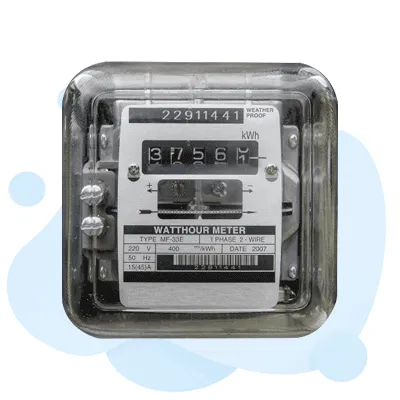
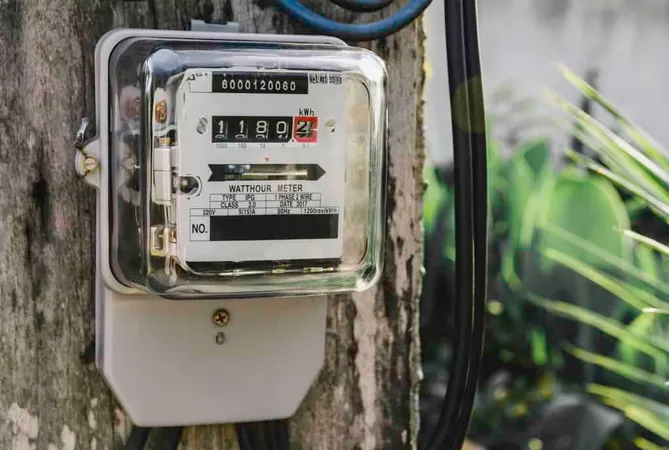
Option B is correct because standard utility procedure requires reading analog dials from left to right, beginning with the dial representing the largest place value. Option A is incorrect because reading from right to left reverses the numerical sequence, creating erroneous consumption data. Option C is incorrect because the 5 dials are positioned horizontally across the face rather than stacked vertically. Option D is incorrect because the dials do not follow a vertical bottom-to-top alignment. The general rule for reading analog dial meters is to record dials from left to right, noting the numeral each pointer has most recently passed.
How to use these practice tests
To prepare effectively for the battery, focus on speed and perceptual accuracy across the official testing areas. Start by reviewing official sample materials from your prospective utility to familiarize yourself with the format. The battery consists of 2 aptitude tests administered in under 20 minutes, making pacing important.
Structure your preparation by targeting core competencies:
- Build table-scanning speed by working through MRAB Number Facility. Practise locating numerical values quickly, matching the pace required for the 85 items in the 6-minute Using Tables test.
- Strengthen coding accuracy with MRAB Clerical Skills and MRAB Data Recording and Documentation to prepare for the 72 problems across 18 items in the 5-minute Coding test.
- Broaden practical knowledge using MRAB Safety Procedures and MRAB Meter Reading Techniques.
Review mistakes immediately to identify error patterns, such as misreading table headings or rushing code transcription. Timed practice helps maintain accuracy under short deadlines.
MRAB FAQ
Sources & last verified
- corporate.pseg.com — number of questions, time limit, passing score, other (official source). “The test consists of 18 items that each have four problems to answer, for a total of 72 problems.” Verified Oct 21, 2026.
- Edison Electric Institute — validity, delivery, score release (official source). “If you have applied for a position with a company that requires an EEI test that you have already taken elsewhere, please be sure to…” Verified Oct 21, 2026 · source checked Oct 18, 2026.
- Edison Electric Institute — eligibility (official source). “Meter Reader Aptitude Battery (MRAB): Used for those positions in which an employee would be required to read meters and record data.” Verified Oct 21, 2026.
How we verify: editorial & fact-checking policy. Report an error: contact us.
How this page was made: written with AI tools and published by Nathan Beja, founder of Practice Test Geeks, who is responsible for its content. Exam facts are checked against the official sources listed below. Not reviewed by a subject-matter expert. Editorial policy
Sources & references
Exam facts on this page (fees, format, dates, passing scores) are checked against these official sources; the date is our last check. Editorial policy
- corporate.pseg.com — Exam format, passing score, time limit, exam information · verified Oct 2026
- eei.org — Test delivery, score release, score validity, eligibility · verified Oct 2026