

MOT Practice Test
Updated October 2026Facts verified Oct 31, 2026 against Florida Department of Transportation (FDOT) MOT training program, delivered by the UF Transportation Technology Transfer
Work zones are essential for maintaining and improving infrastructure, but they also pose significant hazards to motorists, pedestrians, and workers. To reduce risks and promote safety, the Maintenance of Traffic (MOT) Certification is required for individuals involved in planning, setting up, and supervising temporary traffic control (TTC) operations.
MOT Certification, also known as Temporary Traffic Control (TTC) training in some states, ensures that professionals follow the standards and guidelines established by the Federal Highway Administration (FHWA) and local Departments of Transportation (DOTs). This certification is vital for engineers, contractors, flaggers, inspectors, and traffic control supervisors who are responsible for roadway safety during construction or maintenance activities.
- The Advanced Maintenance of Traffic course ends with a 60-question proctored exam.[1]
- The Intermediate Maintenance of Traffic course ends with a 50-question proctored exam.[2]
- The Intermediate MOT exam is listed at 2.0 hours within a 16-hour course, typically delivered over two 8-hour days.[2]
- To pass an MOT course exam, students must score at least 70% and complete the class exercises.[3]
- The UF T2 Center requires at least 70% of Intermediate MOT exam questions to be answered correctly.[2]
- The UF T2 Center Advanced Maintenance of Traffic course costs $425 virtual or $469 in person.[1]
- The UF T2 Center Intermediate Maintenance of Traffic course costs $325 virtual or $469 in person.[2]
- A student who fails an MOT course exam must retake that same course before retesting.[4]
- MOT qualification expires four years after the date of successful course completion.[1]
Numbers in brackets link to the official sources listed under Sources & last verified. Dates that have passed are removed automatically.
MOT Exam at a Glance
According to Florida Department of Transportation (FDOT) MOT training program, delivered by the UF Transportation Technology Transfer, “pass the course exam with a score of 70% or greater and successfully complete the class exercises.”[3]
MOT content outline and where to practise each area
The content areas below are copied from the official MOT content outline published by Florida Department of Transportation (FDOT) MOT training program, delivered by the UF Transportation Technology Transfer. The right-hand column shows which of our practice sets covers it.
| Official content area | Practice on this site |
|---|---|
| Construction project administration[2] | MOT Regulations Compliance & Documentation Practise the documentation and compliance duties that go with running a work zone. |
| Flagging operations[2] | MOT Flagging Operations & Procedures Practise flagger positioning, sight distance, signalling and end-of-shift equipment handling. |
| Policy and manuals[2] | MOT Traffic Control Devices & Placement St... Practise recognising which device or placement standard applies to a given situation. |
| Practical problem solving[2] | MOT Incident Management & Response Practise choosing a sensible response when conditions in the work zone change or an incident occurs. |
| Standard plans review[2] | MOT Temporary Traffic Control Plans Practise reading a traffic control plan and spotting what each element is meant to do. |
| Transportation management plans[2] | MOT Work Zone Planning & Design Principles Practise how planning and design choices reduce the effect of work zones on traffic. |
| TTC pay items[2] | Mixed practice tests above Use the official course material to learn how temporary traffic control items are measured and paid, since we have no dedicated set for it. |
MOT Practice Test Questions
Prepare for the MOT - Maintenance of Traffic Certification exam with our free practice test modules. Each quiz covers key topics to help you pass on your first try.
MOT Advanced Warning Sign Placement
MOT Exam Questions covering Advanced Warning Sign Placement. Master MOT Test concepts for certification prep.
MOT Flagging Operations & Procedures
Free MOT Practice Test featuring Flagging Operations & Procedures. Improve your MOT Exam score with mock test prep.
MOT Incident Management & Response
MOT Mock Exam on Incident Management & Response. MOT Study Guide questions to pass on your first try.
MOT Lane Closure & Detour Planning
MOT Test Prep for Lane Closure & Detour Planning. Practice MOT Quiz questions and boost your score.
MOT Nighttime Work Zone Operations
MOT Questions and Answers on Nighttime Work Zone Operations. Free MOT practice for exam readiness.
MOT Pedestrian & Cyclist Safety Measures
MOT Mock Test covering Pedestrian & Cyclist Safety Measures. Online MOT Test practice with instant feedback.
MOT Quality Assurance & Inspections
Free MOT Quiz on Quality Assurance & Inspections. MOT Exam prep questions with detailed explanations.
MOT Regulations Compliance & Documentation
MOT Practice Questions for Regulations Compliance & Documentation. Build confidence for your MOT certification exam.
MOT Safety Protocols & Incident Management
MOT Test Online for Safety Protocols & Incident Management. Free practice with instant results and feedback.
MOT Temporary Traffic Control Plans
MOT Study Material on Temporary Traffic Control Plans. Prepare effectively with real exam-style questions.
MOT Traffic Control Devices & Placement St...
Free MOT Test covering Traffic Control Devices & Placement Standards. Practice and track your MOT exam readiness.
Worked examples: how to reason through MOT questions
These are practice questions written for this site, not questions from the real exam. Each explanation shows why the right answer is right and why the others are wrong.
Example 1
Question: A flagger's shadow station should ideally be positioned so the flagger can see at least how far in each direction?
- 100 feet
- 250 feet
- 500 feet
- 1,500 feet
Answer: C. 500 feet
Explanation:
The correct answer is 500 feet. A flagger needs enough clear view in both directions to see traffic coming and to give drivers time to react to a signal. A shorter distance such as 100 feet or 250 feet leaves too little time for a driver to notice the flagger and slow down. The 1,500 foot option goes beyond what the question treats as the ideal minimum, and a station is not normally judged by the longest view possible. The rule to remember: choose a flagger position that gives a long, clear sight line in both directions, then check whether the sight line is blocked by curves, crests or parked equipment.
Example 2
Question: What should flaggers do at the end of their shift regarding equipment?
- Leave paddles and signs in place for the next shift's flaggers
- Return all flagging equipment to the designated storage and report any damage
- Dispose of worn flags and paddles in the nearest dumpster
- Keep personal equipment for use on future assignments
Answer: B. Return all flagging equipment to the designated storage and report any damage
Explanation:
The correct answer is to return all flagging equipment to the designated storage and report any damage. That keeps equipment accounted for and lets someone replace damaged items before the next shift needs them. Leaving paddles and signs in place is wrong because unattended devices can mislead drivers and may be lost or moved. Throwing worn flags and paddles in a dumpster is wrong because damage should be reported first so the item can be replaced and tracked. Keeping personal equipment for future assignments is wrong because the gear belongs to the operation. The rule to remember: equipment is accounted for at the end of the shift, and problems are reported rather than hidden.
Example 3
Question: Under ANSI/ISEA 107, which garment TYPE designation is specifically designed for workers exposed to roadway traffic?
- Type O
- Type R
- Type P
- Type H
Answer: B. Type R
Explanation:
The correct answer is Type R. Under ANSI/ISEA 107, Type R is the Roadway designation for workers exposed to roadway traffic. Type O is the off-road designation, for work away from traffic, so it does not fit a worker near moving vehicles. Type P is the public safety designation, used by emergency and similar responders, which is a different purpose. Type H is not the designation for roadway workers. The rule to remember: match the garment type to where the worker is exposed, and for work next to moving traffic the letter is R, which stands for Roadway.
How to use these practice tests
Start with the official material. Read the FDOT training handbook and your course outline so you know which content areas the exam body lists. Then use the blueprint table on this page to find the practice set for each area.
Take one set at a time, and read the explanation for every question, including the ones you got right. When you miss a question, write down the rule behind it in your own words rather than only the answer. Return to that set a few days later and see whether the rule holds.
Spend extra time on the areas where you are weakest, and use the official course notes for pay items, since we have no separate set for that area. Near the end of your preparation, take the full practice test in a single sitting without looking anything up, to get used to working through questions steadily.
Before test day, check the registration details, the format you chose (virtual or in person) and any ID or equipment requirements with the UF Transportation Technology Transfer. Our questions are written by us and are not real exam questions, so treat them as practice for the ideas, not a preview of the wording.
Key Takeaways
Free MOT Practice Test Online
MOT Certification is legally required in many states for individuals working in or near public roads and highways.
Training covers safety practices, work zone setup, flagging techniques, signage placement, and compliance with MUTCD standards.
Certification types typically include Basic, Intermediate, and Advanced levels.
The certification enhances job safety, legal compliance, and employment opportunities in construction and infrastructure sectors.
Recertification is often required every four years, with refresher training mandated to stay compliant.
What is Maintenance of Traffic (MOT) Certification?
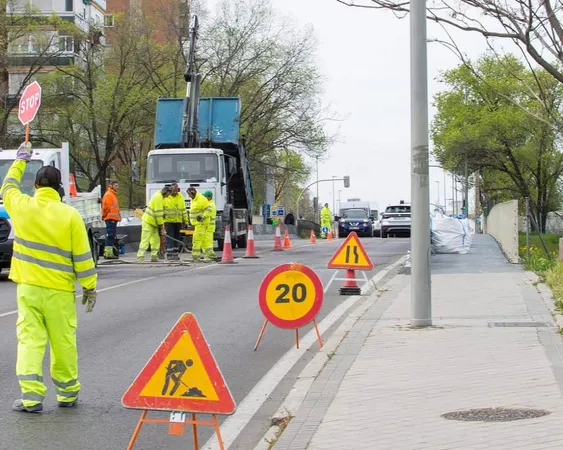
Maintenance of Traffic (MOT) refers to the methods and practices used to manage traffic safely and efficiently through or around construction zones. The MOT Certification program ensures workers understand the principles of work zone safety and are equipped to implement proper traffic control measures.
This certification is governed by the Manual on Uniform Traffic Control Devices (MUTCD) and may be enforced at the federal or state level. For example, the Florida Department of Transportation (FDOT) mandates MOT training for various personnel involved in highway projects.
The core objective is to protect workers, maintain smooth traffic flow, and reduce crashes and injuries associated with roadwork.
Who Needs MOT Certification?
MOT Certification is typically required for:
Road Construction Workers
Flaggers
Field Engineers and Inspectors
Traffic Control Supervisors
Project Managers
Utility Contractors
Maintenance Crews
Even law enforcement officers and municipal employees involved in traffic redirection may need MOT training, depending on jurisdictional policies.
Types of MOT Certification
Most training providers and DOTs offer tiered certification levels based on job responsibilities:
Designed for workers installing or removing temporary traffic control devices.
Topics include personal protective equipment (PPE), signage, cones, barricades, and flagging techniques.
For those involved in supervisory roles or who work near open travel lanes.
Covers advanced work zone setup, traffic flow principles, lane closures, and mobile operations.
Required for professionals designing traffic control plans or supervising entire work zones.
Involves interpretation of engineering drawings, complex detour planning, and legal accountability.
Some regions also offer Refresher Courses for individuals whose certifications are expiring, typically every four years.
Course Structure and Content
Courses for MOT Certification vary by provider but generally include:
Introduction to Work Zone Safety
Roles and Responsibilities of MOT Personnel
Standards from the MUTCD and State DOT
Flagging Operations and Communication
Signage and Device Placement
Roadway Configuration for Lane Closures
Night Work and High-Speed Road Considerations
Pedestrian and Bicycle Accommodation
Emergency Procedures and Incident Management
Training Formats:
In-person classes with hands-on demonstrations and classroom instruction.
Online courses with interactive modules, videos, and downloadable study materials.
Hybrid options that combine online theory with in-person practical assessments.
Most courses conclude with a written exam, and passing scores typically range from 70% to 80%.
Benefits of MOT Certification
Earning MOT Certification offers numerous professional and public safety advantages:
Legal Compliance: Meets OSHA and DOT safety requirements for working in or near roadways.
Reduced Risk: Promotes safer work environments by minimizing accidents and liability.
Employment Qualification: Required by many employers and government contracts.
Career Advancement: Certification can lead to supervisory roles or specialized traffic safety positions.
Public Trust: Enhances the professionalism of construction projects and improves public perception of work zones.
Employers also benefit by reducing insurance costs and improving compliance ratings on government projects.
Recertification and Continuing Education
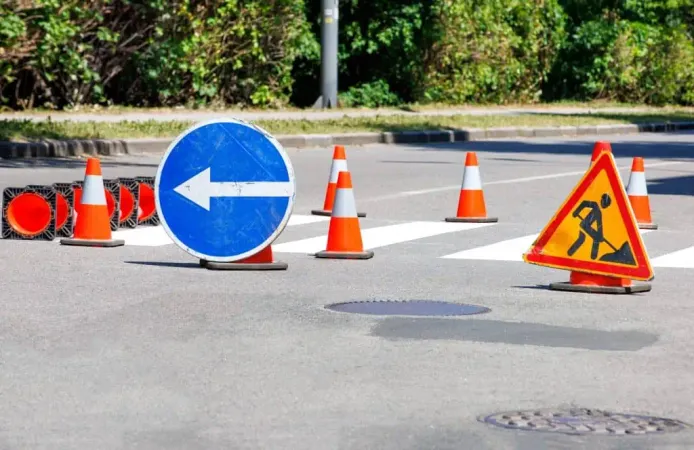
To maintain an active MOT Certification, recertification is required every four years in most jurisdictions. Recertification typically involves:
Completing a refresher course approved by the state DOT.
Passing an updated exam reflecting changes to traffic laws and MUTCD guidelines.
Providing documentation of previous certification and current work experience.
Failing to renew on time can result in being removed from job sites or facing project penalties for non-compliance.
Conclusion
The Maintenance of Traffic (MOT) Certification is a cornerstone of road construction and safety compliance. It ensures that traffic control personnel are well-trained, compliant with regulatory standards, and equipped to safeguard lives in work zones.
Whether you’re a contractor, supervisor, engineer, or flagger, MOT Certification strengthens your credentials and contributes to the overall safety and efficiency of road operations. As infrastructure projects continue to grow in scope and complexity, certified professionals will remain essential to their success.
- +Industry-recognized credential boosts your resume
- +Higher earning potential (10-20% salary increase on average)
- +Demonstrates commitment to professional development
- +Opens doors to advanced career opportunities
- −Exam preparation requires significant time investment (4-8 weeks)
- −Certification fees can be $100-$400+
- −May require continuing education to maintain
- −Some employers may not require certification
(MOT) Maintenance of Traffic Certification Questions and Answers
Sources & last verified
- Florida Department of Transportation (FDOT) MOT training program, delivered by the UF Transportation Technology Transfer — number of questions, exam fee, validity (official source). “60-question proctored exam” Verified Oct 25, 2026.
- Florida Department of Transportation (FDOT) MOT training program, delivered by the UF Transportation Technology Transfer — number of questions, time limit, passing score, exam fee (official source). “50-question proctored exam” Verified Oct 31, 2026 · source checked Oct 25, 2026.
- fdot.gov — passing score, eligibility (official source). “pass the course exam with a score of 70% or greater and successfully complete the class exercises.” Verified Oct 25, 2026.
- Florida Department of Transportation (FDOT) MOT training program, delivered by the UF Transportation Technology Transfer — retake policy, renewal, score release (official source). “A failing grade on any course exam requires the student to retake that same course prior to retesting.” Verified Oct 25, 2026 · source checked Oct 25, 2026.
How we verify: editorial & fact-checking policy. Report an error: contact us.
How this page was made: written with AI tools and published by Nathan Beja, founder of Practice Test Geeks, who is responsible for its content. Exam facts are checked against the official sources listed below. Not reviewed by a subject-matter expert. Editorial policy
Sources & references
Exam facts on this page (fees, format, dates, passing scores) are checked against these official sources; the date is our last check. Editorial policy
- fdot.gov — Eligibility, passing score · verified Oct 2026
- techtransfer.ce.ufl.edu — Test delivery, eligibility, fees, exam format, passing score, time limit, renewal, retake policy, score release, score validity · verified Oct 2026