
Millwright Trade: What Is a Millwright, Career Duties, and How the Trade Works
What is a millwright? 🎯 Learn the trade, job duties, pay, career path, and how to become a certified millwright in the US.

The millwright trade is one of the most technically demanding and financially rewarding skilled trades in American industry. A millwright is an industrial mechanic who specializes in the installation, alignment, maintenance, and repair of heavy industrial machinery and mechanical equipment. If you have ever wondered about what is a millwright and why the trade commands strong wages, the answer lies in the unique combination of mechanical aptitude, mathematical precision, and physical capability the work requires. Millwrights keep factories, power plants, and manufacturing facilities running every single day.
Understanding the millwright trade begins with recognizing the sheer breadth of systems these professionals work with. On any given shift, a millwright might be precision-aligning a 50,000-pound turbine generator, troubleshooting a hydraulic press that has stopped cycling, rebuilding a gearbox on a conveyor drive, or interpreting a set of engineering blueprints to lay out a brand-new production line. The trade sits at the intersection of mechanical engineering knowledge and hands-on craft skill, which is exactly what makes certified millwrights so valuable to employers across dozens of industries.
The millwright trade has deep historical roots in North America. Originally, millwrights were craftsmen who built and maintained grain mills, sawmills, and textile mills during the 18th and 19th centuries. As industrialization accelerated through the 20th century, the trade evolved to encompass the installation of steam-powered machinery, electrical motor systems, precision pumps, and eventually computer-controlled manufacturing equipment. Today's millwright draws on that long tradition of mechanical mastery while also understanding modern technologies like laser alignment systems, vibration analysis tools, and programmable logic controllers.
One of the most appealing aspects of the millwright trade is job stability. Industries ranging from automotive manufacturing and chemical processing to food production, paper mills, and energy generation all rely on millwrights to maintain uptime and prevent costly breakdowns. When a production line stops, every minute costs money — in some facilities, downtime is measured in thousands of dollars per hour. Employers pay competitive wages and offer strong benefits precisely because they cannot afford to lose skilled millwrights to competitors or downtime.
Entry into the millwright trade typically happens through a formal apprenticeship program registered with the United States Department of Labor or through a state-approved apprenticeship council. Most apprenticeship programs run four to five years and combine on-the-job training with classroom instruction covering mathematics, blueprint reading, rigging, hydraulics, pneumatics, and welding. Apprentices earn wages from the very first day on the job, which distinguishes the trade from traditional two- or four-year college degrees that require tuition payments before any income is earned.
Certification plays an increasingly important role in the modern millwright trade. While journeyman certification requirements vary by state and local union jurisdiction, many employers now expect millwrights to hold or be working toward a nationally recognized credential. Organizations like the National Center for Construction Education and Research (NCCER) and the United Brotherhood of Carpenters (UBC) both offer rigorous millwright certification examinations that test knowledge across all core competencies. Passing these exams demonstrates to employers that a millwright has mastered the full scope of trade knowledge, not just on-the-job habits from a single facility.
Whether you are a high school graduate exploring skilled trade careers, an apprentice preparing for your journeyman exam, or an experienced mechanic looking to formalize your credentials, understanding the full scope of the millwright trade is the essential first step. This guide covers what millwrights do, what the job market looks like, the requirements for certification, the pros and cons of the career, and the practical study strategies that help candidates pass their exams on the first attempt.
Millwright Trade by the Numbers

Core Duties of a Millwright in the Trade
Millwrights position and anchor heavy industrial equipment using precision tools such as dial indicators, laser alignment systems, and optical levels. Shaft alignment tolerances are often measured in thousandths of an inch, requiring extraordinary care and technical skill on every installation job.
Scheduled maintenance tasks include inspecting bearings, replacing seals, lubricating drive systems, and testing safety interlocks. Corrective maintenance involves diagnosing unexpected failures and returning equipment to service as quickly as possible to minimize costly production downtime.
Millwrights interpret engineering drawings, piping and instrumentation diagrams, and equipment manuals to plan installations and modifications. Rigging skills — including crane hand signals, sling ratings, and load calculations — are essential whenever heavy equipment must be lifted and positioned.
Industrial presses, clamps, lifts, and actuators rely on hydraulic and pneumatic circuits. Millwrights troubleshoot pressure drops, cylinder drift, valve failures, and contamination issues by reading schematics and using pressure gauges, flow meters, and specialized diagnostic equipment.
While millwrights are not always certified welders, basic welding knowledge is essential for fabricating equipment supports, repairing frames, and modifying mounting hardware. Many journeyman millwrights hold supplemental welding certifications that expand their value on any job site.
Millwright jobs exist across a remarkably diverse range of industries, which provides workers with both employment stability and career flexibility. The automotive manufacturing sector employs some of the largest concentrations of millwrights in the United States, particularly in states like Michigan, Ohio, Indiana, Tennessee, and Alabama. Assembly plants depend on hundreds of miles of conveyors, robotic welding cells, stamping presses, and paint booths — all of which require constant attention from skilled millwrights to maintain production rates and quality standards. A single automotive stamping plant might employ 30 to 60 millwrights working in rotating shifts around the clock.
The energy sector offers another major source of millwright jobs, spanning coal and natural gas power plants, nuclear generating stations, hydroelectric facilities, and the rapidly growing wind and solar energy industries. Power generation facilities run continuously and cannot afford unexpected outages, which means millwrights in these settings often work on extremely tight maintenance windows during scheduled plant outages. The precision required to reinstall a turbine bearing or realign a boiler feed pump within a 12-hour outage window demonstrates why experienced millwrights command premium wages in the energy sector.
Paper and pulp mills, food processing plants, chemical refineries, steel mills, and mining operations all represent significant employers of millwrights. Each industry has its own specialized equipment and safety requirements. In the food industry, millwrights must comply with sanitary equipment standards and work around strict hygiene protocols.
In chemical plants, they must follow process safety management procedures and understand hazardous material handling. In mining, they deal with crushers, conveyors, and hoisting equipment under physically demanding conditions. This cross-industry versatility is a genuine advantage of the millwright trade — a skilled journeyman millwright can relocate to virtually any industrial region and find well-paying work.
Union membership plays a major role in millwright employment conditions for many workers. The United Brotherhood of Carpenters and Joiners of America (UBC) represents the largest share of organized millwrights in the United States through its Millwright Regional Council. Union millwrights typically receive negotiated wage scales, defined benefit pension plans, employer-funded health insurance, and structured apprenticeship opportunities. Non-union millwrights, known as merit shop workers, are also common and can earn competitive compensation, though benefits vary widely by employer. Both paths lead to skilled journeyman status, but union apprenticeships tend to offer more standardized training quality.
Geographic location significantly impacts millwright earnings and job availability. The highest-paying states for millwrights consistently include Illinois, Alaska, Hawaii, Washington, and Massachusetts, where strong union presence and high industrial activity drive wages above national averages. The Midwest and Gulf Coast regions offer some of the highest concentrations of millwright employment due to petrochemical facilities, automotive plants, and heavy manufacturing corridors. However, the rise of renewable energy projects has created new millwright job clusters in previously less-active states, including Texas, Iowa, and California.
Contract and traveling millwright work deserves special mention as a distinct career path within the trade. Industrial construction millwrights travel from project to project — commissioning new manufacturing facilities, upgrading power plants, installing wind turbines, or refurbishing processing equipment during major plant turnarounds. Travel millwrights can earn significantly above local wage scales due to per diem payments, travel reimbursements, and project completion bonuses. While the lifestyle involves extended time away from home, many millwrights find that the combination of variety, adventure, and premium pay makes traveling work an attractive long-term career strategy.
Understanding the full landscape of millwright jobs helps candidates make strategic decisions about their training, certification focus, and geographic flexibility. Whether working as a plant maintenance millwright with a stable schedule at a local manufacturer or as a traveling industrial construction specialist, the underlying technical skills remain the same. Building a strong foundation in all core millwright competencies — mechanical systems, hydraulics, pneumatics, blueprint reading, precision measurement, and rigging — creates the broadest possible set of career options throughout a 30- to 40-year working life in the trade.
Millwrights: Apprenticeship, Training, and Certification Paths
Registered apprenticeship programs are the primary entry point into the millwright trade for most workers in the United States. These programs are administered through joint labor-management apprenticeship committees affiliated with the United Brotherhood of Carpenters or through employer-sponsored programs registered with the Department of Labor. A standard millwright apprenticeship runs four to five years and requires at least 8,000 hours of on-the-job training alongside 576 or more hours of related technical instruction covering mathematics, physics, blueprint reading, rigging, hydraulics, pneumatics, welding, and safety regulations.
Applicants to millwright apprenticeships typically must be at least 18 years of age, hold a high school diploma or GED, and demonstrate basic mechanical aptitude through an entrance assessment. Many programs also require applicants to pass a drug screening and physical examination, since the work involves heavy lifting, confined space entry, and work at heights. Apprentices earn progressive wages starting at 50–60 percent of journeyman scale in their first year, increasing incrementally each year as skills develop. By the final year of apprenticeship, most apprentices earn 90 percent or more of journeyman scale, making the pathway financially accessible even for workers who cannot afford college tuition.

Pros and Cons of a Career in the Millwright Trade
- +Strong wages with median pay above $64,000 annually and journeyman top wages exceeding $85,000 in unionized markets
- +Earn income from day one of an apprenticeship — no tuition debt before entering the workforce
- +High job stability driven by industrial sector demand across automotive, energy, food processing, and chemical industries
- +Career portability — millwright skills transfer across dozens of industries and geographic regions nationwide
- +Structured career advancement from apprentice to journeyman to foreman, general foreman, and superintendent roles
- +Intellectual challenge — every piece of equipment presents a unique diagnostic puzzle that rewards problem-solving skill
- −Physically demanding work involving heavy lifting, awkward postures, confined spaces, and extended standing on hard surfaces
- −Rotating shift work is common in plant maintenance roles, which can disrupt sleep schedules and family routines
- −Travel requirements for industrial construction millwrights can mean weeks or months away from home on remote project sites
- −Initial apprenticeship wages are modest — starting at 50–60 percent of journeyman scale for the first one to two years
- −Exposure to industrial hazards including high-voltage electrical systems, pressurized hydraulic lines, and chemical environments
- −Continuing education and recertification requirements demand ongoing time investment beyond the formal apprenticeship period
Pros and Cons at a Glance
| Pros | Cons |
|---|---|
| Earn income from day one of an apprenticeship — no tuition debt before entering the workforce | Physically demanding work involving heavy lifting, awkward postures, confined spaces, and extended standing on hard surfaces |
| High job stability driven by industrial sector demand across automotive, energy, food processing, and chemical industries | Rotating shift work is common in plant maintenance roles, which can disrupt sleep schedules and family routines |
| Career portability — millwright skills transfer across dozens of industries and geographic regions nationwide | Travel requirements for industrial construction millwrights can mean weeks or months away from home on remote project sites |
| Structured career advancement from apprentice to journeyman to foreman, general foreman, and superintendent roles | Exposure to industrial hazards including high-voltage electrical systems, pressurized hydraulic lines, and chemical environments |
| Intellectual challenge — every piece of equipment presents a unique diagnostic puzzle that rewards problem-solving skill | Continuing education and recertification requirements demand ongoing time investment beyond the formal apprenticeship period |
Millwright Certification Preparation Checklist
- ✓Verify your apprenticeship hours meet minimum requirements for the certification exam you are targeting.
- ✓Obtain the official NCCER or UBC millwright competency framework and use it as your study outline.
- ✓Complete at least two full-length timed practice exams before your scheduled test date.
- ✓Review bearing types, failure modes, and installation tolerances using both textbooks and hands-on practice.
- ✓Study hydraulic schematic symbols until you can identify every component without a reference chart.
- ✓Practice converting between metric and imperial measurements for all precision measurement exercises.
- ✓Memorize wire rope and sling load ratings for the most common rigging configurations used in the trade.
- ✓Work through at least 20 blueprint reading exercises covering isometric, orthographic, and detail views.
- ✓Review OSHA 1910 and 1926 standards relevant to millwright work, including lockout/tagout and confined space entry.
- ✓Join a study group or find a study partner to quiz each other on technical terminology and calculations.
Precision Alignment Is the Core Differentiator
In surveys of millwright employers, precision shaft alignment consistently ranks as the skill most often cited when distinguishing average mechanics from top-performing millwrights. Machines with misaligned shafts consume 10–15 percent more energy, generate excessive vibration, and fail bearings and seals two to five times faster than properly aligned equipment. Mastering both dial indicator and laser alignment techniques before your certification exam signals to evaluators that you understand the fundamental economics of machinery reliability.
Millwright pay is among the strongest in the skilled trades sector, and understanding the full compensation picture helps workers make informed career decisions. According to Bureau of Labor Statistics data, the median annual wage for millwrights in the United States was approximately $64,700 in 2024. However, median figures tell only part of the story.
The top 10 percent of millwrights earned more than $97,000 per year, reflecting the premium placed on highly experienced journeymen with specialty certifications or leadership responsibilities. Entry-level workers in the lower 10 percent earned around $42,000, typical for early apprenticeship stages where skills and experience are still developing.
Union membership has a measurable positive impact on millwright earnings. Organized millwrights covered by collective bargaining agreements consistently earn 15 to 25 percent more in base wages than their non-union counterparts working similar hours in the same metropolitan area, according to Bureau of Labor Statistics union membership surveys. Beyond wages, union contracts typically include employer-paid health insurance, defined benefit pension contributions, annuity fund contributions, vacation pay, and apprenticeship training programs that collectively add $15,000 to $25,000 in annual compensation value on top of base wages.
Geographic variation in millwright pay is substantial. The highest mean wages for millwrights are found in Illinois, where the average exceeds $90,000 annually, driven by concentrated heavy industrial activity in the Chicago metropolitan area and strong local union contracts. Alaska and Hawaii also report high average wages, partly reflecting cost-of-living adjustments and the premium placed on skilled trades workers willing to work in remote or island locations. States in the Gulf Coast petrochemical corridor — Louisiana, Texas, and Mississippi — offer strong wages during major plant turnarounds when demand for skilled millwrights spikes sharply above available local supply.
Career advancement opportunities within the millwright trade translate directly into higher compensation. A journeyman millwright who takes on a working foreman role can expect an hourly premium of $3 to $6 above the standard journeyman rate. General foremen and superintendents on large industrial construction projects can earn $100,000 to $130,000 or more annually, particularly on oil refinery turnarounds, power plant outages, or greenfield manufacturing facility installations. Some experienced millwrights transition into maintenance management, reliability engineering, or industrial training roles that offer salaried positions with benefits packages comparable to professional engineering careers.
The employment outlook for millwrights reflects steady demand tied to ongoing industrial activity. The Bureau of Labor Statistics projects roughly stable employment for millwrights through 2032, with several thousand job openings per year resulting from retirements and workforce attrition. An important structural factor supporting demand is the aging infrastructure of American manufacturing. Many factories built in the 1960s through 1980s are undergoing significant capital investment in equipment upgrades and automation retrofits, all of which require millwrights to install and commission new machinery alongside maintaining existing systems.
The transition to clean energy is also generating meaningful new demand for millwright skills. Wind turbine installation and maintenance requires millwrights to assemble large gearboxes, align shaft couplings, install pitch and yaw drives, and maintain hydraulic systems — all core millwright competencies. The Solar Energy Industries Association and American Wind Energy Association both report significant skilled trades workforce shortages as project pipelines grow faster than the available supply of qualified workers. Millwrights who add wind turbine technician endorsements to their credentials are well-positioned to capitalize on this growing segment of the energy market.
When considering the full financial picture of a millwright career — strong journeyman wages, generous benefit packages in unionized settings, overtime and travel pay opportunities, and a clear progression to high-earning supervisory roles — the trade compares favorably with many college degree pathways that require four or more years of tuition investment before generating income. For workers with strong mechanical aptitude and a preference for hands-on problem solving over desk work, the millwright trade represents one of the most financially rewarding and intellectually engaging career paths available in the American economy today.

Millwright apprenticeship programs typically require applicants to be at least 18 years of age, hold a high school diploma or GED, and pass a mechanical aptitude test. Some programs have a physical examination requirement due to the demanding nature of the work. Application windows at union apprenticeship councils often open only once or twice per year, and waitlists can be long in competitive markets. Contact your local UBC millwright council at least six months before you intend to start training to confirm current eligibility requirements and application timelines.
Preparing for a millwright certification exam requires a structured, disciplined approach that covers all competency areas systematically rather than studying only the topics that feel comfortable. Many candidates make the mistake of focusing exclusively on mechanical systems because it is the largest content area, while underinvesting in blueprint reading, precision measurement, and rigging — subjects that consistently appear on certification exams and trip up otherwise well-prepared candidates. A balanced study plan allocates preparation time proportionally across all tested domains, with extra attention given to any subject where practice test scores reveal consistent weakness.
Understanding what does a millwright do at the certification exam level means going beyond task familiarity to develop genuine conceptual understanding. For example, knowing that bearings must be installed with the correct interference fit is not enough — a certification exam will ask you to calculate the interference fit for a specific shaft diameter, select the correct installation method, and identify the failure mode that results from improper fit. This depth of knowledge requires working through calculation problems, not just reading definitions, which is why practice tests that include worked solution explanations are far more valuable than simple flashcard memorization.
Hydraulic and pneumatic systems deserve concentrated study effort for the certification exam. Hydraulic system questions frequently test candidates on Pascal's Law calculations, the relationship between pump displacement and flow rate, cylinder force and speed calculations, and the interpretation of ISO schematic symbols for directional control valves, pressure relief valves, and flow control valves.
Pneumatic system questions follow a parallel pattern but add considerations unique to compressible gas behavior, such as receiver sizing calculations and pressure drop through air lines. Working through 50 to 100 practice problems in each of these areas before exam day builds both the calculation fluency and the schematic reading speed needed to perform well under timed conditions.
Blueprint reading is another subject that rewards dedicated practice over passive review. Many millwright apprentices develop their blueprint reading skills on the job, where they are always reading the same types of drawings for the same facility. Certification exams, however, test a much broader range of drawing types — including isometric pipe drawings, structural steel details, weld symbols, geometric dimensioning and tolerancing (GD&T) callouts, and assembly drawings for unfamiliar equipment.
Candidates who regularly work through blueprint reading exercises using drawings from different industries and equipment types will perform significantly better on this portion of the exam than those who study only drawings from their own workplace.
Time management during the exam itself is a frequently overlooked aspect of preparation. Most millwright certification exams allow roughly one to two minutes per question, which sounds generous but becomes very tight when complex calculations are involved.
Practicing under timed conditions with full-length simulated exams teaches candidates to allocate time wisely — answering confident questions quickly, flagging uncertain ones for review, and avoiding the common mistake of spending ten minutes on a single difficult calculation problem while leaving easier questions unanswered. Setting up a simple exam day routine — arriving early, eating a proper meal, bringing required identification and approved calculator — reduces anxiety and helps candidates perform at their genuine ability level.
Study resources for the millwright certification exam span a wide range of formats and price points. The NCCER publishes official millwright textbooks and workbooks for each module of the apprenticeship curriculum, and these remain the gold standard reference materials for candidates targeting NCCER certification. UBC-affiliated candidates can access the union's own study materials through their local training center.
Online practice test platforms like PracticeTestGeeks provide hundreds of categorized practice questions that can be worked through at any time and on any device, which is particularly valuable for shift workers whose study time comes in unpredictable windows between work and family responsibilities.
The final weeks before your exam should shift from learning new material to consolidating and testing existing knowledge. Resist the temptation to cram new topics in the last few days — the cognitive load of processing new information competes with the confident retrieval of material you have already mastered.
Instead, use this period to take two or three full timed practice exams, review every question you got wrong, and re-read any chapter summaries on topics where practice exam performance was below 80 percent. Going into the exam with confidence built on demonstrated practice test performance is the single most reliable predictor of first-attempt success.
Developing a long-term career strategy within the millwright trade pays dividends that compound over a 30- to 40-year working life. Workers who approach the trade as a craft to be continuously refined — rather than a job to be performed — consistently reach the highest wage tiers and the most desirable positions.
This means investing in additional certifications, volunteering for unfamiliar equipment assignments, seeking out experienced journeymen as mentors, and staying current with evolving industrial technology. The millwrights who command $90,000 and above in wages are almost always those who made deliberate career investments in the early journeyman years when the temptation was simply to settle into a comfortable routine.
Networking within the trade opens doors that technical skill alone cannot. Attending local union meetings, participating in NCCER craft championship competitions, joining the Society for Maintenance and Reliability Professionals (SMRP), or connecting with millwright communities on professional forums puts you in contact with people who know about job openings before they are publicly posted, contractors who are building traveling crews for upcoming turnarounds, and training opportunities that may not be widely advertised.
The millwright trade has a genuine culture of mentorship and craft pride — leaning into that culture accelerates career development in ways that are difficult to quantify but consistently cited by successful journeymen and foremen.
Safety competence is a non-negotiable foundation for any long millwright career. The trade involves working around stored energy in forms that can cause catastrophic injury or death — hydraulic pressure, electrical systems, suspended loads, compressed gas, steam, and rotating machinery. OSHA's lockout/tagout standard (29 CFR 1910.147), confined space entry standard (29 CFR 1910.146), and rigging and material handling standards must be thoroughly understood and consistently applied, not just memorized for an exam.
Millwrights who develop a genuine safety culture — looking out for co-workers, stopping work when something does not look right, and refusing to take shortcuts under production pressure — build reputations that protect both their physical health and their professional standing in the trade.
The millwright what is question extends beyond a simple job description to encompass a professional identity built on craft mastery, technical knowledge, problem-solving ability, and commitment to the safe and reliable operation of industrial equipment.
Whether working for a plant maintenance department, an industrial construction contractor, or a specialty service company, millwrights share a common identity rooted in the ability to look at a complex piece of machinery, understand how every component interacts, and restore or improve its performance. That identity — and the skills behind it — is what makes the millwright trade one of the most respected and financially rewarding paths in American industry today.
Technology continues to reshape the millwright trade without eliminating the fundamental skills that make it valuable. Computerized maintenance management systems (CMMS), predictive maintenance platforms using vibration and infrared sensors, augmented reality tools for guided maintenance procedures, and remote monitoring systems all represent technologies that modern millwrights must understand and work within.
However, these tools augment human skill rather than replacing it — a vibration analysis software package can tell you that a bearing is deteriorating, but it takes an experienced millwright to determine the root cause, specify the replacement bearing, and install it correctly so the machine runs for another five years without repeat failure. Technology literacy is increasingly a differentiator, but it supplements rather than supplants core mechanical mastery.
The millwright trade also offers a degree of intellectual variety that many office and technology careers cannot match. No two machines are exactly alike, no two breakdowns have exactly the same cause, and no two installations present exactly the same logistical challenges. A millwright who has worked for 20 years will encounter familiar problems regularly but will also face genuinely novel situations that require creative problem-solving.
This combination of mastered fundamentals applied to fresh challenges keeps experienced millwrights engaged in their work in a way that purely repetitive jobs — whether physical or intellectual — struggle to sustain over a full career. The trade rewards curiosity, continuous learning, and the quiet pride that comes from watching a machine you installed, aligned, and commissioned running smoothly at full production speed.
For anyone weighing a career in the skilled trades, the millwright trade stands out as a strong choice for workers who enjoy mechanical complexity, want to earn competitive wages without a four-year degree, value job security across multiple industries, and take satisfaction in hands-on craftsmanship. The combination of solid entry wages, structured apprenticeship training, nationally recognized certification pathways, and clear advancement opportunities makes the millwright trade one of the few career choices that delivers on its promises across the full arc of a working life.
Sample Millwright Certification Practice Questions
Try these questions from our free Millwright Certification practice tests. The correct answer and an explanation follow each question.
What should a millwright do before operating any unfamiliar machinery?
- A. Start the machine and observe its functions
- B. Refer to the manufacturer’s manual and receive proper training
- C. Rely on coworkers for guidance
- D. Test the machine for faults
Answer: B. Refer to the manufacturer’s manual and receive proper training
Before operating any unfamiliar machinery, a millwright must prioritize safety and proper procedure. This involves thoroughly reviewing the manufacturer's manual to understand the equipment's operation, safety features, and maintenance requirements. Additionally, receiving proper training ensures they have the necessary skills and knowledge to operate it safely and efficiently.
When performing lockout/tagout (LOTO) on electrical equipment, what is the FIRST step a millwright must complete?
- A. Apply the lockout hasp to the disconnect switch
- B. Notify affected employees that equipment will be shut down
- C. Identify all energy sources associated with the equipment
- D. Test equipment with a voltmeter to verify de-energization
Answer: C. Identify all energy sources associated with the equipment
OSHA LOTO procedures require identifying all hazardous energy sources first so that none are overlooked during isolation, preventing unexpected energization.
A millwright notices porosity in a completed weld bead. What is the most likely cause?
- A. Excessive preheat temperature
- B. Contamination or moisture in the weld zone
- C. Too slow a travel speed
- D. Electrode diameter too large for the joint
Answer: B. Contamination or moisture in the weld zone
Porosity (gas pockets trapped in the solidified weld) is almost always caused by contaminants such as oil, moisture, rust, or paint releasing gases into the molten pool faster than they can escape before solidification.
When troubleshooting a three-phase motor that fails to start, what should a millwright verify first?
- A. Rewind the motor stator windings
- B. Check for correct voltage at the motor terminals
- C. Rebuild the motor bearings immediately
- D. Perform a megohmmeter test on the windings
Answer: B. Check for correct voltage at the motor terminals
Confirming voltage is present at the motor terminals ensures power is reaching the motor before performing more invasive or time-consuming diagnostic steps.
Millwright Questions and Answers

Millwright Contractor: What Is a Millwright and How Contractors Work in the Trade

Millwright Certification Test: Your Complete Guide

Millwright Salary: Pay by State, Experience, and Trade

Millwright Certification Practice Test PDF (Free Printable 2026)
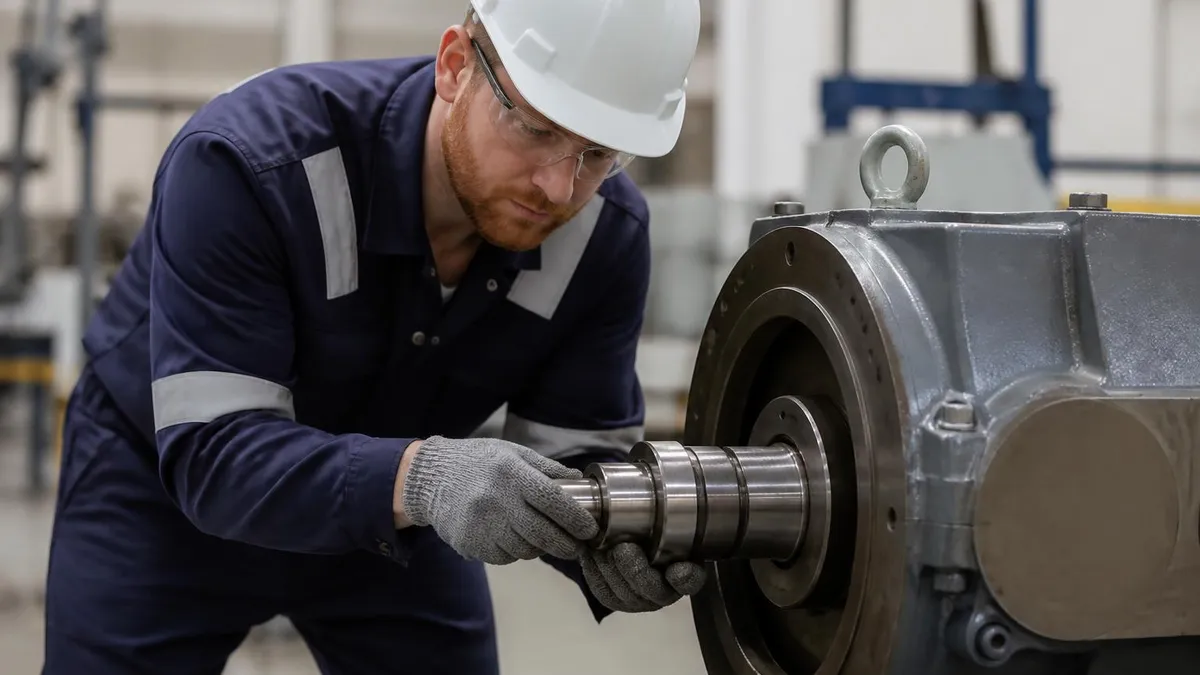
What is a Millwright? Trade, Duties, Pay, and How to Become One
About the Author

Educational Psychologist & Academic Test Preparation Expert
Columbia University Teachers CollegeDr. Lisa Patel holds a Doctorate in Education from Columbia University Teachers College and has spent 17 years researching standardized test design and academic assessment. She has developed preparation programs for SAT, ACT, GRE, LSAT, UCAT, and numerous professional licensing exams, helping students of all backgrounds achieve their target scores.