
Millwright Jobs: What Is a Millwright, FIFO Work, and How to Build a Career in the Trade
Learn what is a millwright, explore FIFO millwright jobs, salary ranges, and how to launch your trade career. 🎯 Complete 2026 October guide.

If you have been searching for fifo millwright jobs or trying to understand what this skilled trade actually involves, you have landed in the right place. Millwrights are industrial machinery specialists who install, maintain, align, and repair the heavy equipment that keeps manufacturing plants, mining operations, power stations, and construction sites running.
FIFO — fly-in fly-out — arrangements are especially common in remote mining and energy projects across the United States, where experienced millwrights are flown to a site for a set rotation, then return home for an equal rest period. These schedules often pay significantly higher wages than traditional day-shift positions.
Understanding what is a millwright is the first step toward deciding whether this career path fits your goals, your lifestyle, and your appetite for technical challenge. The trade blends mechanical theory with precision hands-on work: millwrights read engineering blueprints, use laser alignment systems, operate cranes, and diagnose vibration faults in rotating machinery. No two days look the same, and that variety is one reason the trade attracts people who get bored easily in repetitive jobs. From cement plants in Texas to pulp mills in the Pacific Northwest, millwrights are everywhere heavy industry operates.
Demand for millwrights has remained consistently strong over the past decade, driven by aging industrial infrastructure, the renewable energy boom, and a wave of retirements thinning the journeyman ranks. The U.S. Bureau of Labor Statistics projects continued need for industrial machinery installation specialists throughout the 2020s. FIFO millwright jobs in particular command premium pay — rotations on Alaskan pipeline projects or Nevada lithium processing facilities can push annual earnings well above $90,000, even for workers who are still completing their apprenticeships.
The path into millwright work typically runs through a four- or five-year registered apprenticeship program administered by the United Brotherhood of Carpenters (UBC) and its affiliated Mill and Industrial Councils. Apprentices earn wages from day one while learning on the job and attending technical classes. Graduating an apprenticeship earns you journeyman status, which is the credential most FIFO contractors require before they will consider placing you on a remote rotation. Some states and provinces also require or strongly favor candidates who hold a Red Seal or equivalent national certification.
Millwright jobs span an enormous range of industries. In a typical week you might service conveyor systems in a grain elevator on Monday, align a pump and motor assembly in a chemical plant on Wednesday, and troubleshoot a hydraulic press at an automotive stamping facility on Friday. This breadth means millwrights must master multiple technical domains simultaneously — fluid power, precision measurement, mechanical drives, rigging, and welding are all part of the trade's core curriculum. Workers who invest in cross-training and certification exams consistently earn more and find it easier to land high-paying FIFO contracts.
Geographic flexibility is a defining feature of FIFO millwright work. Unlike a residential electrician who stays in one metro area, a FIFO millwright may travel to remote resource extraction sites, offshore platforms, or major industrial construction projects that are nowhere near a major city.
This lifestyle suits people who value earning power over stability of location, and it pairs well with a partner or family structure that can accommodate extended absences. Many FIFO workers bank large sums during their on-rotation weeks, then enjoy genuinely free time at home during their off weeks rather than commuting every day to a local job.
Whether you are fresh out of high school exploring trades, a current apprentice considering a FIFO contract, or a journeyman wanting to understand your certification options, this guide covers every dimension of millwright jobs — from what the work looks like day to day, to salary data, to the credentials that unlock the highest-paying opportunities in the field.
Millwright Jobs by the Numbers

Types of Millwright Jobs in the US
Based permanently at a single manufacturing or processing facility. Responsible for scheduled preventive maintenance, emergency breakdowns, and equipment upgrades. Common in automotive, food processing, paper, and chemical plants. Offers stability, predictable schedules, and comprehensive benefits packages.
Travels to new build and major capital project sites to install machinery before a plant goes live. Work is project-based, often lasting six to eighteen months per assignment. Higher pay than plant roles but requires flexibility to relocate frequently as projects start and wrap up.
Flies to remote mining, energy, or resource extraction sites on a set rotation — commonly two weeks on, two weeks off or four weeks on, four weeks off. Premium pay, remote allowances, and employer-provided accommodation are standard. Requires journeyman certification and strong independent work ethic.
Specializes in planned plant shutdowns where entire facilities go offline for intensive maintenance and upgrades. Work is intense and time-compressed, often running twelve-hour shifts for two to six weeks. Exceptional earning potential per project, though employment gaps occur between shutdowns.
Employed directly by an equipment manufacturer or specialty service company. Travels to client sites to install, commission, and repair specific product lines — gearboxes, conveyors, pumps, or turbines. Combines deep product expertise with broad travel, and often includes manufacturer training and certification pathways.
FIFO millwright jobs are structured around a simple economic reality: remote project sites need skilled tradespeople but cannot attract them with location alone. The solution is a rotation system where workers fly in, live in employer-provided camp accommodation on-site, and work concentrated shifts — typically ten to twelve hours per day, seven days a week during the rotation. Then they fly home and enjoy a fully paid-off rest period before the next rotation begins. This model compresses a full month of work into two weeks and delivers substantial take-home pay without the daily commute that erodes time in city-based jobs.
Understanding what millwright what is in the context of a FIFO arrangement means recognizing that the technical skills are identical to any other millwright role — alignment, rigging, mechanical troubleshooting — but the logistical and interpersonal demands are higher. You live and work alongside the same crew for weeks at a time, often in austere conditions, with limited access to outside social support. Successful FIFO millwrights develop strong routines around sleep, fitness, and communication with family, because burnout is a genuine risk when the boundary between work and home disappears for weeks at a stretch.
Pay structures for FIFO millwright work in the US vary by industry and project type. Oil and gas projects in states like North Dakota, Texas, and Alaska tend to offer the highest base rates, sometimes combined with per-diem allowances that are tax-advantaged. Lithium and copper mining projects in Nevada and Arizona are increasingly competitive as demand for battery materials grows.
Renewable energy construction — particularly large-scale wind and solar installations — creates FIFO opportunities that are geographically more accessible than traditional extractive industries, with sites spread across the Midwest and Southwest. Each sector has its own dominant contractors, and building relationships with those companies is one of the fastest ways to access FIFO contracts.
The financial math of FIFO work rewards discipline. A millwright earning $42 per hour on a two-weeks-on, two-weeks-off rotation and working eighty-four hours per week (with overtime after forty hours) can gross more than $3,500 per week before allowances. Over a full year with two rotations per month, that produces gross income exceeding $85,000 — and that figure rises sharply with supervisory roles or specialist premium rates. Many FIFO millwrights use their off weeks to run side businesses, complete continuing education, or simply spend quality time with family, creating a life cadence that traditional shift workers rarely achieve.
Scheduling fairness has improved substantially in the last decade as competition for skilled millwrights has intensified. Early FIFO operations were notorious for extending rotations without notice, requiring workers to stay on-site well beyond the agreed schedule. Today, most reputable contractors provide written rotation agreements, specify a maximum extension clause, and offer bonuses for workers who agree to stay longer. If you are evaluating a FIFO position, asking specific questions about rotation extension policies and what happens when flights are cancelled or weather delays occur is essential due diligence before signing a contract.
Health and safety on FIFO sites has also evolved significantly. Remote sites are subject to OSHA jurisdiction regardless of their location, and large contractors typically have safety performance records that are publicly audited by their clients. As a millwright considering a FIFO assignment, you have every right to review the site's incident rate history and to ask about the safety officer-to-worker ratio. Sites with strong safety cultures also tend to have better camp conditions, more reliable equipment, and supervisors who support workers who raise concerns — all indicators that predict a better overall experience.
Building a reputation in FIFO millwright work is largely a word-of-mouth process. Foremen and superintendents move between projects and contractors, and a millwright known for showing up reliably, working safely, and communicating problems early will find that job offers arrive without requiring much active searching. Conversely, workers who develop a reputation for shortcuts or poor attitude find that the tightly networked contractor community closes doors quickly. Treating every rotation as an audition for the next one is a mindset that consistently pays dividends over a long FIFO career.
Millwright Work Environments: Mining, Manufacturing, and Energy
Mining operations represent the largest source of FIFO millwright jobs in North America. Sites processing copper, gold, lithium, coal, and potash require massive crushing, grinding, conveying, and hoisting systems that demand constant expert attention. Millwrights on mining sites work across the full equipment lifecycle — installing new mills during capital expansion phases, maintaining aging crushers during production, and rebuilding entire conveyor systems during planned shutdowns. The remoteness of most mines means on-site mechanics must be self-sufficient; waiting for outside expertise to travel to a fly-in-only site is simply not an option.
Compensation on mining sites consistently ranks among the highest available to millwrights in the US and Canada. Base rates of $38 to $48 per hour are common, and overtime kicks in after eight or ten hours depending on the site agreement, quickly pushing weekly earnings above $2,500. Some mining companies also offer retention bonuses for completing multiple rotations, profit-sharing tied to production targets, and employer-funded RRSP or 401(k) contributions that compound the total compensation package well beyond the headline hourly rate.

FIFO Millwright Jobs: Advantages and Drawbacks
- +Premium pay rates that are 15–30% above local plant positions for the same skill level
- +Employer-provided accommodation and meals eliminate major living expenses during rotations
- +Genuine time off during rest periods — no commute, no obligations, full personal time
- +Accelerated skill development through exposure to diverse equipment and industries
- +Networking opportunities with experienced millwrights from across the country
- +Strong demand means qualified workers rarely experience extended unemployment between contracts
- −Extended separation from family and friends during on-rotation weeks creates relationship strain
- −Remote site living conditions can be cramped, monotonous, and mentally taxing over long rotations
- −Work schedules may extend without much notice due to project delays or equipment failures
- −Physical demands are high — long daily shifts in harsh outdoor conditions cause cumulative fatigue
- −Healthcare access is limited on remote sites; serious medical issues require evacuation
- −Income can be lumpy between contracts, requiring strong financial planning and savings discipline
How to Land a Millwright Job: 10 Action Steps
- ✓Complete or enroll in a registered millwright apprenticeship through the United Brotherhood of Carpenters (UBC) or an equivalent state-approved program.
- ✓Obtain your journeyman millwright certificate before applying to any FIFO or remote project contractor.
- ✓Build a professional resume that lists specific equipment types you have installed, aligned, or maintained — generic descriptions lose to specifics every time.
- ✓Pass a current First Aid and CPR certification course, since remote sites require this credential before any worker is cleared to start.
- ✓Obtain your OSHA 10 or OSHA 30 card to demonstrate baseline safety knowledge required by most industrial contractors.
- ✓Research the top FIFO millwright contractors operating in your target sector — mining, energy, or construction — and apply directly through their workforce portals.
- ✓Join the UBC or relevant local union and tell your business agent you are available for out-of-area travel work, which puts you on FIFO assignment lists.
- ✓Acquire rigging and signalperson certification through an ASME B30.9-compliant program, since crane work is ubiquitous on millwright job sites.
- ✓Prepare for technical interviews by reviewing precision alignment procedures, bearing installation sequences, and hydraulic troubleshooting frameworks.
- ✓Practice millwright exam questions regularly to stay sharp on the theoretical knowledge that written trade tests and employer assessments will evaluate.
Journeyman Status Is the FIFO Entry Ticket
The vast majority of FIFO millwright contracts specify journeyman certification as a minimum requirement — not a preference. Contractors operating on remote sites cannot afford to mentor apprentices without adequate journeyman supervision ratios, and client companies audit workforce qualifications. Complete your apprenticeship and earn your journeyman ticket before targeting FIFO work; applying without it will close more doors than it opens.
Millwright certifications directly determine your earning ceiling and your access to the most competitive job opportunities. The foundational credential is journeyman status earned through a completed registered apprenticeship, but the millwrights who command the highest wages typically hold several additional credentials layered on top of their journeyman ticket. Understanding which certifications provide the best return on your time investment is one of the most important strategic decisions you will make in this career.
Precision alignment certification is one of the highest-value credentials available to millwrights seeking premium positions. Laser alignment equipment such as systems from PRÜFTECHNIK, Easy-Laser, or VibrAlign is now standard on modern industrial sites, and millwrights who can operate these tools confidently, interpret the results, and correct soft foot and angular misalignment problems independently are routinely paid $3 to $6 per hour above the base rate. Many equipment manufacturers offer training and certification programs that take just a few days to complete, making the return on time investment exceptionally high relative to most other trade certifications.
Vibration analysis certification through the Vibration Institute or the International Machinery Vibration Analysis Association (IMVAC) opens doors to predictive maintenance roles that blend office-based analysis with field inspection work. Category I and Category II vibration analysts earn salaries in the $70,000 to $95,000 range and are increasingly employed directly by large industrial corporations rather than through contracting agencies. The certification exams require a solid understanding of machinery dynamics, signal processing, and fault frequency identification — areas where formal study and millwright jobs experience compound each other effectively.
Welding qualifications significantly expand a millwright's scope of work and compensation. A millwright who holds both a journeyman millwright ticket and a certified welding inspector (CWI) or certified welder (CW) credential can take on structural repair, equipment modification, and weld inspection duties that are entirely outside the reach of a millwright with installation skills alone. On construction and shutdown sites, this dual capability allows you to solve problems on the spot rather than waiting for a welding subcontractor — a characteristic that superintendents actively reward with preferred assignment and overtime allocation.
Rigging and crane operator certifications from the National Commission for the Certification of Crane Operators (NCCCO) are increasingly demanded on heavy industrial projects. Most millwright apprenticeship programs include basic rigging instruction, but the NCCCO Rigger Level I and Level II certifications formalize that knowledge with a standardized national credential. On mining and power generation sites where lifts routinely involve loads exceeding fifty tons, only NCCCO-certified personnel are permitted to direct crane operations. Adding this credential alongside your journeyman ticket positions you as someone who can lead a lift plan from start to finish.
Confined space entry and rescue certification is another credential that appears on virtually every FIFO contractor's preferred qualifications list. Industrial equipment frequently requires maintenance inside tanks, vessels, hoppers, and ducting that qualify as permit-required confined spaces under OSHA 1910.146. Millwrights who hold current confined space entry and atmospheric monitoring training are deployable to a wider range of tasks on-site, which increases your value to project supervisors managing complicated work schedules across multiple concurrent activities.
Fall protection and improved work platform certification rounds out the core credential package for FIFO millwrights. Working on improved grating, inside conveyor towers, or during wind turbine installations requires documented training in personal fall arrest systems, rescue planning, and safe anchor point selection. Contractors who place workers on projects with significant height exposure — which describes almost every major industrial installation or shutdown — must be able to demonstrate that their workforce holds current fall protection training. Keeping this certification current and documented is straightforward but must not be neglected.

Many millwright credentials — including First Aid, OSHA cards, confined space entry, and fall protection — have expiry dates ranging from one to three years. FIFO contractors conduct workforce credential audits before mobilization, and workers with a single expired certification may be pulled from a rotation at the last minute. Build a personal credential tracker with renewal dates and schedule refresher training at least sixty days before any expiry to avoid losing a high-paying contract over an administrative oversight.
Career advancement for millwrights does not follow a single rigid path, and that flexibility is one of the trade's genuine strengths. Unlike some professions where advancement means moving into management and abandoning hands-on work entirely, millwrights have multiple parallel trajectories available — some of which allow you to remain primarily technical while still commanding a senior wage. Mapping out which path aligns with your interests early in your career lets you target the right certifications, the right industry sectors, and the right employer relationships from the beginning rather than discovering your options by accident.
The most direct advancement route is moving from journeyman millwright to maintenance foreperson or shift supervisor. In this role you still carry a tool belt but also coordinate the work of a team, manage parts and materials requisitions, develop preventive maintenance schedules, and interface with operations and engineering departments. Forepersons on large industrial sites often earn an additional $5 to $10 per hour above journeyman rates, and the managerial exposure positions you for further advancement into maintenance superintendent or plant engineering roles over time.
Reliability engineering is an increasingly popular destination for experienced millwrights who want to transition partly or fully out of direct hands-on work. Reliability engineers use data from vibration analysis, thermal imaging, oil analysis, and historical maintenance records to identify patterns that predict equipment failures before they happen. Many industrial companies actively prefer to fill reliability engineer positions with experienced millwrights rather than mechanical engineering graduates, because field knowledge of how equipment actually behaves under real conditions is more practically valuable than theoretical training alone.
For millwrights with strong communication skills and an interest in training others, the trade instructor or apprenticeship coordinator path offers a rewarding career transition. Vocational schools, union training centers, and large industrial companies all employ experienced journeyman millwrights to teach apprenticeship curriculum, develop training materials, and assess competency. Trade instructor positions typically offer regular hours, summers off at educational institutions, and the satisfaction of directly growing the next generation of millwright craftspeople in a trade that desperately needs them.
Entrepreneurial millwrights have a strong foundation for launching independent maintenance contracting businesses. A millwright with journeyman status, a diversified credential portfolio, and five or more years of contacts across multiple industries has the technical credibility and professional network to win service contracts directly from industrial clients. The overhead for a small millwright contracting operation is relatively low — tools, transportation, liability insurance, and business registration — and project margins can substantially exceed what you earn as an employee even before accounting for the tax advantages of business ownership.
Learn more about what does a millwright do on a daily basis by visiting what does a millwright do — this resource breaks down the specific tasks, tools, and responsibilities that define the trade across different industry sectors and experience levels, helping you calibrate what career stage you are currently at and what skills to prioritize next.
International opportunities represent another dimension of career advancement that FIFO millwrights are uniquely positioned to pursue. Australian mining projects, Middle Eastern industrial facilities, and South American copper and lithium operations all regularly recruit North American millwrights when local labor markets cannot supply enough qualified workers. International FIFO contracts frequently include additional expatriate allowances, housing stipends, and tax-advantaged compensation structures that push total annual earnings well above $100,000 for journeyman-level workers with the right credentials and track record.
Preparing effectively for millwright certification exams and employment tests requires a systematic approach that goes well beyond reading a textbook. The technical scope of the millwright trade is genuinely broad — blueprint reading, hydraulic systems, pneumatics, precision measurement, bearing maintenance, and mechanical drives are all examined, and weakness in any single area can prevent you from achieving the passing score required for journeyman certification or contractor qualification testing. Building a structured study plan that allocates time proportionally to each domain is more effective than random review.
Practice exams are among the most efficient preparation tools available to millwright candidates. Working through realistic multiple-choice questions under timed conditions forces you to recall information under the same cognitive pressure you will experience during the actual exam. It also reveals knowledge gaps that feel invisible when you are passively re-reading notes — you might believe you understand pump cavitation until a question asks you to identify the specific symptom that differentiates it from air entrainment, and discover you cannot answer confidently. Targeted practice in weak areas after each mock exam session accelerates improvement far faster than general review.
Blueprint reading is consistently one of the most challenging areas for millwright exam candidates who have strong hands-on skills but limited formal drafting education. The ability to interpret isometric drawings, read tolerance stackups, understand geometric dimensioning and tolerancing (GD&T) symbols, and extract installation dimensions from multi-view engineering drawings is tested heavily on journeyman exams. Spending dedicated time with a blueprint reading workbook and cross-referencing your practice against the actual components you encounter at work is the combination that produces the fastest improvement in this domain.
Hydraulic and pneumatic systems theory is another area where exam questions frequently demand more precision than field experience alone provides. Knowing how to swap a hydraulic cylinder is different from being able to calculate the force output of a cylinder with a known bore diameter and supply pressure, or identifying the component in a schematic responsible for maintaining back pressure on the rod side of the cylinder during extension. Exam questions are written to differentiate workers who understand the principles from those who merely recognize the components, so studying the underlying physics alongside the practical procedures is essential.
Time management during the actual certification exam deserves deliberate practice. Most millwright certification tests allocate between ninety minutes and three hours for one hundred to two hundred questions. Workers who spend too long on difficult questions early in the exam risk running out of time on questions they could answer easily. The recommended strategy is to answer every question you know immediately, mark uncertain ones for review, and return to difficult questions only after ensuring that all straightforward questions are answered. This approach maximizes your score relative to your actual knowledge level.
Study groups formed with other apprentices or journeymen preparing for the same exam provide accountability, expose you to questions and perspectives you would miss studying alone, and often accelerate learning through the act of explaining concepts to others. Explaining how a torque converter works to a study partner who is confused requires you to organize your own understanding more rigorously than simply reviewing a diagram privately. Many millwright apprenticeship programs help study groups, but even informal arrangements with two or three colleagues from your jobsite can meaningfully improve exam outcomes.
Finally, maintaining physical and mental wellness in the weeks before a certification exam is not a soft afterthought — it has measurable impact on cognitive performance. Millwrights working physically demanding FIFO rotations who attempt to study during their rest period after an exhausting rotation often find their retention and focus significantly impaired. If possible, schedule major certification exams for periods when you are well-rested, eating regularly, and not under unusual work or personal stress. The credential is a long-term career asset that justifies protecting the conditions under which you pursue it.
Millwright Questions and Answers

Millwright Certification Test: Your Complete Guide

Construction Millwright: What Is a Millwright, Job Duties, and Career Path

Millwright Salary: Pay by State, Experience, and Trade
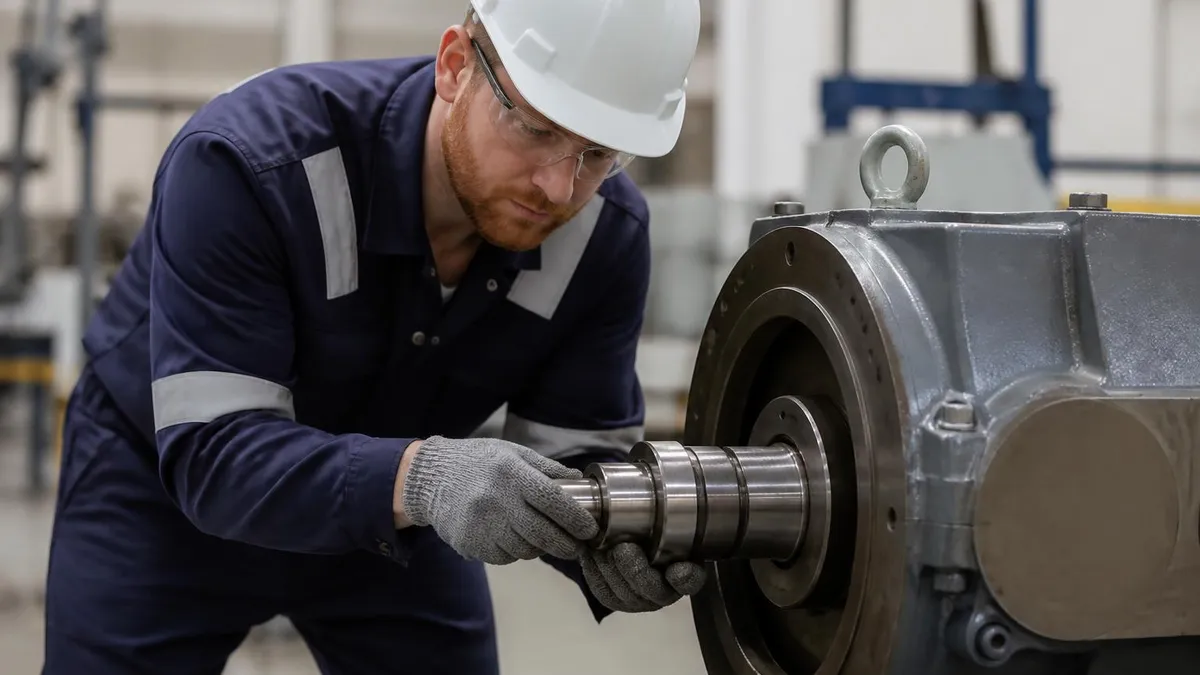
What is a Millwright? Trade, Duties, Pay, and How to Become One

Millwright Apprentice Wage: What Is a Millwright and How Much Do Apprentices Earn?
About the Author

Educational Psychologist & Academic Test Preparation Expert
Columbia University Teachers CollegeDr. Lisa Patel holds a Doctorate in Education from Columbia University Teachers College and has spent 17 years researching standardized test design and academic assessment. She has developed preparation programs for SAT, ACT, GRE, LSAT, UCAT, and numerous professional licensing exams, helping students of all backgrounds achieve their target scores.