
San Jose MEPS: Complete Guide to Your Processing Day 2026 September
San Jose MEPS guide covering location, 2-day process, 💯 ASVAB, medical exam, lodging, dress code, and insider tips for applicants.
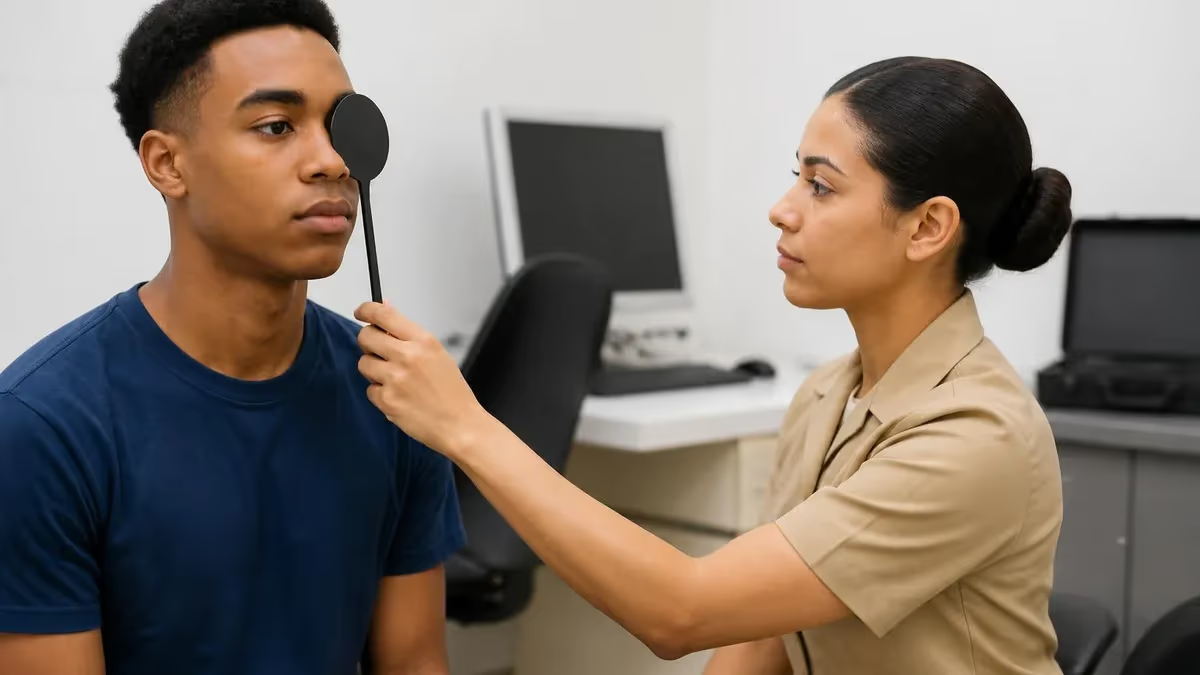
Heading to the San Jose MEPS soon? You're probably feeling a mix of excitement and nerves — and that's completely normal. Every future service member walks through those doors with the same butterflies you're carrying right now. The good news? Once you know what to expect, the whole process becomes a lot less intimidating. We're going to break it all down piece by piece, so by the time you finish reading, you'll have a clear mental map of every station, every line, every form, and every moment.
San Jose MEPS — which is officially located at 546 Vernon Avenue, Building 99, Mountain View, CA 94043 — serves applicants from the greater Bay Area, the Central Coast, and parts of Northern California. Yes, it says "Mountain View" on the address, but the station has long been known as the San Jose MEPS because it's the closest major military entrance processing station for San Jose-area applicants. The drive from downtown San Jose takes roughly 25 minutes without traffic. With Bay Area traffic? Plan for more. A lot more, honestly, if you're hitting 101 or 280 during commute hours.
This guide walks you through everything — the address, the branches served, what happens on day one and day two, the medical exam, drug testing, the security interview, lodging, transportation, dress code, and a stack of insider tips that'll help you breeze through. Whether you're going Army, Navy, Air Force, Marines, Coast Guard, or Space Force, the MEPS experience follows the same general structure. There are small differences between branches — the Marines do a bit of extra screening, the Navy has its own paperwork flow — but the bones of the day are identical. Let's get into it.

San Jose MEPS by the Numbers
One thing worth saying upfront — MEPS isn't a test you can fail in the traditional sense. It's a verification process. The military is making sure you're physically, mentally, and legally qualified to serve. Your recruiter has already done preliminary screening, so by the time you arrive, you're mostly confirming what's already on paper. Most disqualifications come from medical surprises or honesty issues during the security interview — both of which you can prepare for if you're proactive about it.
Now, here's something a lot of applicants don't realize. The San Jose MEPS processes hundreds of applicants per week across all six service branches. You'll be sharing the building with Marine Corps poolees, Air Force selectees, Navy DEP members, Army recruits, and even Space Force candidates. The vibe is genuinely interesting — you're surrounded by people from totally different backgrounds, all chasing the same goal. Make friends. Some of those folks might end up in your boot camp company. Others you'll probably never see again, but the shared experience creates instant common ground.
The staff at San Jose MEPS see thousands of applicants come through every year, so don't take it personally if a counselor or medical tech seems brusque. They're moving fast because the line behind you is long. Follow instructions, ask questions when you genuinely don't understand something, and don't volunteer extra information that wasn't requested. Be polite, be ready, be honest. Those three things get you through MEPS faster than anything else.
Exact Location & Contact
San Jose MEPS
546 Vernon Avenue, Building 99
Mountain View, CA 94043
Hours: Monday through Friday, with most applicants arriving the night before via recruiter-arranged lodging. Saturday processing is occasionally scheduled during high-volume enlistment periods. The station sits on Moffett Field — a former Naval Air Station now operated as a federal airfield — so expect a security checkpoint at the gate where you'll need to show a valid government-issued photo ID. The shuttle driver handles the entry procedure for grouped applicants, but if you're driving yourself you'll be directed to visitor parking.
Let's talk about how you actually get there. You won't be driving yourself in most cases. Your recruiter arranges everything — the night-before hotel stay, the shuttle in the morning, and the ride home after you're done. This is one of the things people don't expect: MEPS handles the logistics so you can focus on the process. You'll meet your recruiter at the recruiting station the day before, get briefed, hand over your paperwork, and then head to the contracted hotel for the night.
Speaking of the hotel — applicants from the San Jose area are typically lodged at places like the Hilton Garden Inn Sunnyvale, the DoubleTree by Hilton San Jose, or a similar contracted property close to Moffett Field. The hotels rotate based on availability and current MEPS contracts, so don't be surprised if you end up somewhere slightly different.
You'll get a room (often shared with another applicant of the same gender), a meal voucher for dinner, and very specific instructions about lobby call time. That call is usually 0400 — yes, four in the morning. The bus rolls out shortly after, and you do NOT want to be the person who oversleeps. Set two alarms. Maybe three. Ask the front desk for a wake-up call as a backup.
Dinner at the hotel is usually a buffet or a sit-down with limited menu options. Eat well but don't go crazy. Heavy, spicy, or unfamiliar food the night before MEPS is a recipe for stomach issues during the medical. Skip the alcohol entirely — alcohol use within 24 hours of MEPS can affect blood pressure readings, dehydrate you, and in some cases show up on tests. Stick to water, get to your room, and start winding down by 2100.
Two Days at MEPS — Step by Step
Check-in around 0500 with paperwork verification, then breakfast at the chow hall. Medical screening follows: vision, color blindness, hearing in a soundproof booth, blood pressure, pulse, blood draw, urinalysis (drug test), height and weight, and the full physical exam with a MEPS doctor in a private consultation.
If you medically qualify, day two covers your job counseling session with a service liaison, contract review and signing, electronic fingerprinting, the security background interview with a counselor, and finally the Oath of Enlistment ceremony in front of a commissioned officer.
Most applicants take the ASVAB at a satellite testing site or MET location before arriving at MEPS. If your score is already verified and on file, this step is brief paperwork only. If you're testing at MEPS itself, expect a 3 to 4 hour block in the computer test room covering all nine subtests.
Each military branch has its own liaison office inside MEPS staffed by service members from that branch. Once your medical clears, you'll meet your liaison to discuss available jobs (MOS, AFSC, or rate depending on branch), training pipelines, ship dates, and select your contract.

The medical exam is where most applicants get nervous, and honestly — it's the part that takes the longest. You'll start in your underwear (yes, really) for the basic measurements: height, weight, body fat if needed. Then you'll move through stations. Vision check. Color blindness test. Hearing test in a soundproof booth. Blood pressure. Pulse. Reflexes. They'll have you do the famous "duck walk" to check your knees, hips, and ankles. It looks ridiculous, you'll feel ridiculous, but everyone does it. Just commit to the squat, walk the line, and don't fall over.
After the basic stations comes the doctor's exam. One-on-one with a MEPS physician. They'll go through your entire medical history — everything you and your recruiter submitted on your medical pre-screen forms. Honesty matters here. A lot. If you lie or omit something and it's discovered later, you can be discharged from the military with serious consequences, including criminal charges in some cases.
If you have a condition that needs a waiver, your recruiter should already be working on it. The doctor will physically examine you, check joints, look for scars, tattoos (they get documented for the record), and ask follow-up questions about anything that catches their eye.
Vision is one area where applicants stumble unnecessarily. If you wear contacts, do NOT wear them to the eye exam — the test measures uncorrected vision first, and contacts will throw off your baseline. Bring your glasses instead. Also bring your prescription paperwork if you have it.
Color blindness can disqualify you from certain jobs (pilot, aviation, some technical fields) but not from service entirely. Hearing tests are done in a soundproof booth with headphones; raise your hand or push the button every time you hear a beep, even if it's faint. Concentrate hard during this one — failing the hearing test can be a real problem.
Inside the MEPS Stations
Includes vision, hearing, blood pressure, pulse, blood draw, urinalysis, height and weight measurements, body composition if needed, and a full physical with a MEPS doctor. You'll do the duck walk and a complete range-of-motion assessment in a group setting. The doctor reviews your medical history one-on-one in a private room. Bring documentation for any past conditions, surgeries, broken bones, or medications you've taken in the last five years. The whole medical block typically takes four to six hours.
The drug test is non-negotiable. Every applicant gets tested, no exceptions. A failure here doesn't just delay your enlistment — it can permanently disqualify you depending on the branch and the substance. THC is the most common cause of positive results, and a lot of applicants underestimate how long it stays in your system.
For occasional users, it's roughly two to three weeks. For heavier users, it can be 30 to 60 days or longer. Stop. Well. In. Advance. And don't fall for the "detox drinks" or "flush kits" — they don't work, and MEPS labs are sharp enough to flag dilute or adulterated samples.
Prescription medications need paperwork. If you take anything regularly — even something seemingly minor like an inhaler, ADHD medication, or an antidepressant — bring the prescription bottle and a note from your doctor. Anything that shows up unexplained in your urinalysis triggers extra scrutiny, and some medications are disqualifying on their own. Talk to your recruiter early so any necessary waivers can be processed before you arrive. ADHD meds in particular need careful handling — many branches require you to be off them for a year or more before enlisting, so plan accordingly with your physician's guidance.
Supplements and over-the-counter products can also cause headaches. Some pre-workout powders contain stimulants that flag on broader screening panels. Certain weight-loss supplements have hidden ingredients. CBD products, even legal hemp-derived ones, can produce a positive THC result depending on the batch. The rule of thumb: in the weeks leading up to MEPS, take nothing except what your doctor prescribed and what you've cleared with your recruiter. Keep it simple — water, real food, regular sleep.
The single biggest piece of advice from every MEPS counselor, recruiter, and prior-service member: tell the truth. About your medical history, your legal history, your drug use, your finances — everything. Disclosed issues are often waiverable. Hidden issues, when discovered, lead to fraudulent enlistment charges that follow you for years. The cost of honesty is paperwork. The cost of dishonesty is your career.
What you wear to MEPS matters more than you'd think. The dress code isn't crazy strict — but it's also not the place for ripped jeans, crop tops, or your favorite band T-shirt. Aim for business casual. Khakis or nice jeans without holes, a collared shirt or modest blouse, closed-toe shoes you can slip on and off quickly (you'll be doing it a lot during the medical). Avoid offensive graphics, profanity, drug references, or political slogans. They'll send you home to change.
One thing that catches people off guard — bring extra socks. You'll be barefoot for parts of the medical exam, and depending on how warm or cold the building runs that day, you may want fresh ones. Layers are smart. The processing floor can get chilly in the morning and warm by afternoon. A light jacket or sweater works well. Skip jewelry, hats indoors, and anything you'd hate to lose. There are lockers, but they're not high-security vaults.

What to Bring to San Jose MEPS
- ✓Government-issued photo ID such as a driver's license or state-issued ID card, plus your original Social Security card
- ✓Original birth certificate or certified copy from the county clerk — photocopies will not be accepted at the check-in desk
- ✓Glasses with current prescription, or contact lenses with case and solution — do NOT wear contacts to the eye exam
- ✓Prescription bottles for all current medications labeled in your name, plus a doctor's note explaining each prescription
- ✓Business casual outfit — no ripped clothes, no offensive graphics, no profanity, closed-toe shoes you can slip on and off easily
- ✓Cash or debit card for incidentals such as vending machines, snacks at the hotel, or unexpected expenses
- ✓Phone charger and a small bag — your phone will be checked in during processing but you'll need it before and after
Female applicants have a few extra things to know. The medical exam includes a brief gynecological history discussion with a medical professional — not a pelvic exam, just questions. If you're on hormonal birth control or have a history of irregular periods, bring documentation. Pregnancy testing is part of the standard female workup; pregnancy is disqualifying at the time of enlistment, so this is verified. If you've had any reproductive surgeries or chronic conditions, your recruiter should have already submitted documentation, but bring copies to be safe.
Modesty during the medical is a real concern for a lot of applicants, and it's worth saying — MEPS staff are professionals who do this every day. You'll be in your underwear in a group setting for some stations, but exams that require more privacy are conducted one-on-one in private rooms. If anything ever feels inappropriate or you have concerns, you have the right to request a different examiner or to have a chaperone present. Use that right if you need it.
For everyone — bring snacks if you can. Granola bars, jerky, something with protein. The day is long, the chow hall provides meals, but there are stretches where you're waiting in lines and your blood sugar can crash. A snack in your pocket is gold. Just don't whip out a sandwich in the middle of the processing floor.
San Jose MEPS Pros and Cons
- +Lodging, meals, and transportation fully covered by MEPS
- +All six military branches processed in the same facility
- +Close to major Bay Area airports and population centers
- +Branch liaisons available on-site for job counseling
- +Professional staff experienced with thousands of applicants
- −Very early start — 0400 lobby call is standard
- −Long days with significant waiting between stations
- −Mountain View location means Bay Area traffic for drivers
- −Hotel quality varies based on current MEPS contracts
- −Limited cell phone access during processing hours
Let's talk timing one more time, because new applicants always underestimate it. You'll likely arrive at your recruiting station the afternoon before processing. Briefing, paperwork review, shuttle to the hotel. Dinner around 1800-1900. Lights out early because that 0400 lobby call comes fast. Day one at MEPS runs from roughly 0500 to 1500 or later, depending on how busy the medical floor is. Day two, if needed, is usually shorter — most applicants who complete medical on day one finish job selection and the oath by early afternoon on day two.
Some applicants finish in a single day if their paperwork is clean and the medical floor isn't backed up. Others need a return visit if they require a consult, specialty exam, or waiver determination. Either way, your recruiter handles the logistics. You just need to show up, follow instructions, and stay patient. The waiting is real — you'll sit. A lot. Bring a book or download a podcast for the hotel room. The processing floor doesn't allow phones out, but downtime in the hotel is yours.
One final tip — sleep. The night before MEPS is the night you most need to sleep, and it's the night you'll most struggle to. Get to bed by 2200 at the latest. Don't drink caffeine after noon. Don't eat anything heavy at dinner. Don't bring a friend who'll keep you up. Pack the night before so you're not scrambling at 0345. Your medical numbers — blood pressure, pulse, even some lab values — can be affected by lack of sleep. Give yourself the best chance.
Once you've completed processing at the San Jose MEPS, you've crossed a major threshold. You're not just an applicant anymore — you're a future service member with a contract, a job, and a ship date. Whether that ship date is in three weeks or three months, the work shifts now. Stay in shape. Keep your nose clean — and we mean that literally; random drug screens can happen even after MEPS. Stay in touch with your recruiter. Show up for any DEP functions or pre-ship meetings.
If you bombed the ASVAB or aren't medically cleared today, that's not necessarily the end. ASVAB retests are allowed (with waiting periods — 30 days for the first retest, 30 days for the second, six months for any subsequent attempts). Medical issues can sometimes be resolved with waivers, additional consults, or time. Your recruiter is your advocate here, but you have to be the one who follows up, gathers paperwork, and pushes the process forward.
For applicants going to the San Jose MEPS specifically, you're stepping into a station with a long history of processing some of the most diverse, talented recruits in the country. The Bay Area produces engineers, linguists, medics, and operators who go on to do incredible things in uniform. You're joining that pipeline. Take a breath, trust the process, and remember — every single person in uniform you've ever met or admired walked through a MEPS door just like you're about to. Good luck.
MEPS Questions and Answers
About the Author
Retired Military Officer & Armed Forces Test Preparation Specialist
United States Army War CollegeColonel Steven Harris (Ret.) served 28 years in the US Army, earning a Master of Arts in Military Science from the Army War College and a Bachelor of Science in Criminal Justice. He has coached thousands of military enlistment and officer candidate program applicants through the ASVAB, AFQT, AFCT, OAR, and officer selection assessment processes across all military branches.
Join the Discussion
Connect with other students preparing for this exam. Share tips, ask questions, and get advice from people who have been there.
View discussion (8 replies)