
El Paso MEPS: Complete Guide to Military Entrance Processing in El Paso, Texas
Everything about El Paso MEPS: what MEPS means, what happens on processing day, ASVAB tips, and how to prepare. ✅ Full guide inside.

The Military Entrance Processing Station — commonly called MEPS — is the federal gateway every aspiring service member must pass through before enlisting in the United States Armed Forces. For recruits in West Texas and southern New Mexico, the El Paso MEPS is the designated processing facility.
Many recruits and their families search for the El Paso MEPS Facebook page to get real-time updates, hours of operation, and first-hand accounts from other applicants — and connecting with that community early can reduce a lot of anxiety before your appointment day. Understanding meps what is it from the outset will help you walk in confident rather than confused.
MEPS stands for Military Entrance Processing Station, and El Paso's facility serves recruits from all branches of the military — Army, Navy, Marine Corps, Air Force, Space Force, and Coast Guard all process applicants through the same doors. The station is staffed by a combination of active-duty military personnel and Department of Defense civilians who evaluate every applicant's physical, mental, and moral fitness for service. This centralized model ensures consistency across branches and prevents any single service from lowering standards to meet recruiting quotas. Your recruiter will schedule your MEPS date, but the station itself is a joint-service operation.
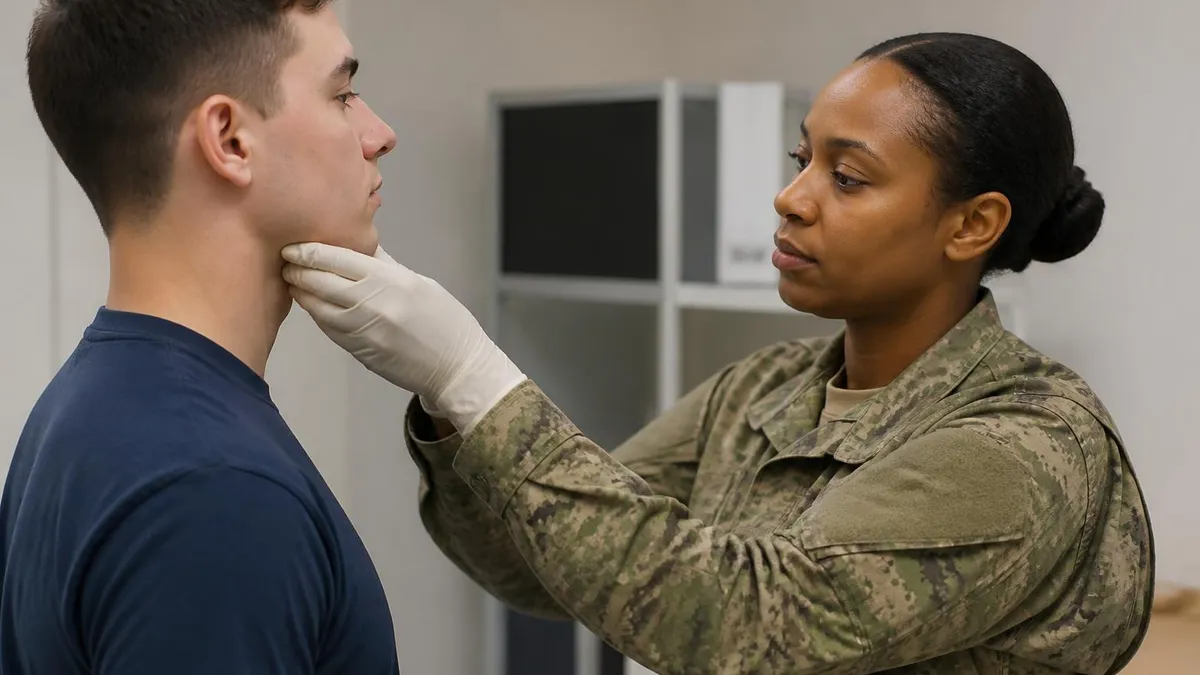
Understanding what MEPS meaning encompasses is crucial for every recruit. It is not just a medical exam — it is a comprehensive screening that examines your blood chemistry, vision, hearing, orthopedic health, mental aptitude via the ASVAB, and your moral background through a review of legal history and prior drug use.
Each of these evaluations carries real consequences: failing any one of them can result in a temporary disqualification, a requirement for a waiver, or in some cases a permanent bar to enlistment. Knowing the process in advance gives you the best possible chance of walking out with a contract in hand.
The El Paso MEPS processes hundreds of applicants every week, drawing from recruits who live across the sprawling El Paso metropolitan area, Ciudad Juárez border communities (U.S. citizens), Las Cruces, Alamogordo, Midland, Odessa, and even as far east as Pecos and as far north as Ruidoso. The sheer geographic diversity of this region means the station is one of the busier MEPS locations in the southwestern United States. Recruits are generally advised to arrive the evening before their appointment and stay at a designated hotel contracted by the government — transportation is typically provided at no cost to the applicant.
One of the most common questions recruits type into search engines is "what is MEPS" — and the answer reveals a process far more involved than a simple doctor's visit. From the moment you arrive at the hotel the night before until you raise your right hand for the Oath of Enlistment (if everything goes smoothly), the entire MEPS experience can span 12 to 18 hours across two days.
Day one is typically the ASVAB if you have not taken it yet, followed by a medical pre-screen. Day two is the full physical, job selection counseling, and for those who pass, the oath ceremony.
The MEPS military system is designed to be thorough precisely because the stakes are high — both for the recruit and for the branch of service making the investment. Mistakes in screening can result in service members being deployed into physically demanding environments with undetected conditions, creating risk for the individual and the unit. That is why the medical examination is conducted by licensed physicians, and why the ASVAB is a proctored, standardized test rather than a simple questionnaire. El Paso MEPS upholds these national standards while also reflecting the unique demographic profile of the border region it serves.
Whether you are a first-time applicant nervous about your physical, a parent trying to understand what your child will experience, or a prior-service applicant navigating re-enlistment, this guide covers every phase of the El Paso MEPS process in detail. We will walk through ASVAB preparation, the medical examination sequence, what disqualifies applicants, how waivers work, and practical tips for making the most of your processing day. Read on for a comprehensive look at what MEPS is and exactly how to succeed at the El Paso station.
El Paso MEPS by the Numbers

El Paso MEPS Processing Steps: From Arrival to Oath
Hotel Check-In (Night Before)
ASVAB Testing (If Not Pre-Tested)
Medical Pre-Screen and Paperwork
Full Physical Examination
Job Counseling and Contract Signing
Oath of Enlistment Ceremony
The ASVAB — Armed Services Vocational Aptitude Battery — is one of the most consequential tests you will ever take, and El Paso MEPS administers it using the computerized adaptive testing (CAT-ASVAB) format. Unlike a paper test where every applicant sees the same questions, the CAT-ASVAB adapts in real time: answer a question correctly and the next one gets harder; answer incorrectly and the difficulty steps down.
This adaptive model produces a highly accurate score using fewer questions than the paper version, typically completing in 1.5 to 3 hours depending on your pace. If you want to understand what does meps stand for in the context of ASVAB scoring, the answer ties directly into the four subtests — Arithmetic Reasoning, Word Knowledge, Paragraph Comprehension, and Mathematics Knowledge — that combine to form your all-important AFQT score.
Your AFQT score is expressed as a percentile from 1 to 99 and determines basic eligibility for each branch. The Army currently requires a minimum AFQT of 31; the Marine Corps requires 32; the Navy requires 35; the Air Force and Space Force require 36; and the Coast Guard sets the bar at 40 for active duty.
These minimums can shift based on recruiting conditions — during high-demand periods, branches may temporarily lower thresholds, while during recruiting surpluses they may raise them. Regardless of current minimums, a higher AFQT gives you more negotiating use on job selection, enlistment bonuses, and other contract terms.
Beyond the AFQT, the ASVAB produces ten composite scores — called line scores — that determine which specific jobs you qualify for. For example, the Army's Skilled Technical (ST) line score draws from General Science, Word Knowledge, Paragraph Comprehension, and Mechanical Comprehension. If you want to qualify as a linguist, an intelligence analyst, or a cyber operations specialist, you need strong scores in these verbal and scientific subtests. El Paso recruits who understand the line score structure before their MEPS appointment can target their preparation more strategically than those who study the ASVAB as a single undifferentiated test.
MEP testing at El Paso also includes a confirmatory test if your recruiting-station ASVAB score was significantly higher than your practice scores — MEPS uses this to flag potential scoring irregularities. If your MEPS ASVAB score differs from your pre-enlistment test score by more than a predetermined threshold, you may be required to retest.
For this reason, it is essential that your recruiting station score genuinely reflects your preparation rather than being inflated by coaching that exceeds the actual content of the exam. Honest, thorough preparation is both ethically correct and practically beneficial because it avoids the stress of a retest day.
MEP English comprehension is a specific area that trips up recruits who grew up in bilingual households in the El Paso-Juárez border region. The Paragraph Comprehension and Word Knowledge subtests require strong English reading skills, and applicants who are dominant in Spanish may find these subtests disproportionately challenging. The good news is that these are the most directly trainable sections of the ASVAB — vocabulary drilling, daily reading at a college-prep level, and timed practice with standardized passages can produce measurable score gains in four to eight weeks of dedicated study.
MEP engineering-adjacent jobs — including military intelligence, signal corps, and cyber specialties — typically require high scores on the Electronics Information and General Science subtests in addition to the core AFQT components. If your career goal involves a technical MOS, plan your ASVAB preparation to cover physics fundamentals, basic electronics concepts, and scientific reasoning. The El Paso MEPS counselors can advise you on the specific line score requirements for jobs you are targeting, but it is far better to arrive having already researched those requirements so you can advocate effectively during the job selection counseling session.
After your ASVAB at El Paso MEPS, scores are typically available the same day for the CAT-ASVAB. The military liaison officer reviews your results and uses them, in combination with your physical examination outcome and security eligibility, to build your job options list.
You are under no obligation to take the first job offered — this is a negotiation, and applicants who understand their scores and the demand for their top-choice MOS are better positioned to secure assignments that align with their long-term career goals. Prepare hard, know your numbers, and walk into that counseling session ready to advocate for the career you want.
MEPS Military Medical Exam: What Each Phase Tests
Vision testing at El Paso MEPS measures both corrected and uncorrected visual acuity, depth perception, color vision, and peripheral vision. Many military jobs — especially aviation, special operations, and law enforcement — require specific uncorrected acuity standards that glasses or contacts cannot satisfy. Applicants with color vision deficiency may be disqualified from certain MOSs but can still serve in many non-color-critical roles. Bring your corrective lenses and a current prescription to avoid any administrative delays during the vision station.
Hearing tests are conducted in a soundproofed booth using pure-tone audiometry at multiple frequencies. The standard measures hearing thresholds at 500, 1000, 2000, 3000, 4000, and 6000 Hz, and excess hearing loss at key frequencies results in an H-profile that limits your job options. Recruits who work around loud machinery, attend regular concerts, or use personal audio devices at high volume should take hearing conservation seriously in the weeks before their MEPS appointment. Temporary hearing threshold shifts from recent noise exposure can cause a borderline result even in recruits with otherwise normal hearing.

Enlisting Through El Paso MEPS: Advantages and Challenges
- +Centralized processing means all branches use the same facility, simplifying the experience for recruits exploring multiple service options
- +Government-contracted hotel and transportation are provided at no cost, removing a financial barrier for low-income recruits
- +Bilingual staff availability at El Paso MEPS reflects the region's demographics, reducing language-barrier stress for heritage Spanish speakers
- +Job counseling sessions at MEPS allow recruits to negotiate MOS assignments with full knowledge of their ASVAB scores
- +Same-day ASVAB results for the CAT-ASVAB format mean you can proceed directly to job counseling without waiting days for scores
- +Passing MEPS confirms your eligibility across all six branches simultaneously, giving you maximum flexibility if you change service preference
- −The process can last 12–18 hours across two days, which is physically and mentally exhausting even for healthy, well-prepared recruits
- −A single disqualifying medical finding — even a minor one — can delay enlistment by weeks or months pending waiver review
- −The El Paso MEPS facility is not located directly on a major bus route, making it difficult to reach without the government-contracted shuttle
- −Body composition failures are common and result in same-day dismissal, even after recruits have traveled from distant parts of West Texas
- −Marijuana disqualifications are a growing issue in El Paso given legalization in neighboring New Mexico, creating confusion among recruits about federal standards
- −Limited appointment slots mean processing day backlogs can cause recruits to wait hours between examination stations, increasing fatigue and stress
Pros and Cons at a Glance
| Pros | Cons |
|---|---|
| Centralized processing means all branches use the same facility, simplifying the experience for recruits exploring multiple service options | A single disqualifying medical finding — even a minor one — can delay enlistment by weeks or months pending waiver review |
| Government-contracted hotel and transportation are provided at no cost, removing a financial barrier for low-income recruits | The El Paso MEPS facility is not located directly on a major bus route, making it difficult to reach without the government-contracted shuttle |
| Bilingual staff availability at El Paso MEPS reflects the region's demographics, reducing language-barrier stress for heritage Spanish speakers | Body composition failures are common and result in same-day dismissal, even after recruits have traveled from distant parts of West Texas |
| Job counseling sessions at MEPS allow recruits to negotiate MOS assignments with full knowledge of their ASVAB scores | Marijuana disqualifications are a growing issue in El Paso given legalization in neighboring New Mexico, creating confusion among recruits about federal standards |
| Same-day ASVAB results for the CAT-ASVAB format mean you can proceed directly to job counseling without waiting days for scores | Limited appointment slots mean processing day backlogs can cause recruits to wait hours between examination stations, increasing fatigue and stress |
El Paso MEPS Day-of Checklist: What to Bring and Do
- ✓Bring your Social Security card, birth certificate, and government-issued photo ID — all three are required for identity verification.
- ✓Pack your selective service registration confirmation if you are a male applicant between 18 and 25 years old.
- ✓Bring all medical records for any prior surgery, hospitalization, or diagnosed condition disclosed on your medical history form.
- ✓Carry your corrective lenses prescription and bring both glasses and contact lenses so the vision technician can measure both.
- ✓Wear comfortable, loose-fitting clothing that allows easy movement for the orthopedic duck walk and range-of-motion assessments.
- ✓Avoid caffeine, energy drinks, and heavy meals the evening before — eat a light, nutritious dinner and fast after midnight for accurate lab work.
- ✓Get at least seven hours of sleep at the government hotel — fatigue impairs ASVAB performance and can affect blood pressure readings.
- ✓Leave all prohibited items at home: jewelry, belts with large buckles, underwire bras, and any item that would slow security screening.
- ✓Disclose every prior medical condition honestly on your paperwork — omissions discovered later can result in fraudulent enlistment charges.
- ✓Save the MEPS liaison phone number in your phone before you leave home in case your recruiter is unreachable on processing day.
Your MEPS Physical Profile Follows You for Life
The physical profile assigned to you at El Paso MEPS — expressed as a PULHES rating covering Physique, Upper extremities, Lower extremities, Hearing, Eyes, and psychiatric Status — becomes a permanent part of your service record. A temporary disqualification waiver does not erase the underlying condition from your file. Future re-enlistment, promotion boards, and special duty assignments may all reference your original MEPS profile, so it is worth ensuring every documented condition is accurately represented from the start.
Waivers are one of the most misunderstood aspects of the MEPS military process. A waiver is a formal request — submitted by your recruiter and reviewed by the branch's medical review authority — to accept an applicant who does not fully meet the standard physical or moral requirements for enlistment.
Waivers are neither automatic nor guaranteed, and the approval rate varies significantly by branch, by the nature of the disqualifying condition, and by current recruiting demand. Understanding when a waiver is available — and how long it takes — is essential for any El Paso recruit who encounters a disqualification at MEPS.
Medical waivers are the most common type processed through El Paso MEPS. Conditions that frequently trigger waiver requests include asthma (especially exercise-induced asthma diagnosed before age 13), attention deficit hyperactivity disorder (ADHD) with prior medication use, prior fractures or joint surgeries, corrected vision beyond branch thresholds, and a history of mental health treatment.
The waiver package must include supporting documentation — physician notes, surgical reports, specialist evaluations — and the more thorough and current that documentation is, the better your chances of approval. Waiver packages submitted with gaps or outdated records are routinely returned for supplementation, adding months to the timeline.
Moral waivers cover applicants with a history of civilian arrests, convictions, juvenile adjudications, or drug use beyond marijuana. The severity and recency of the offense matters enormously. A single minor traffic infraction from years ago is treated very differently than a recent misdemeanor assault conviction.
Each branch maintains its own moral waiver policy, and the Army — the largest branch — tends to have more flexibility than the Marine Corps or Coast Guard in granting waivers for non-violent offenses. Full transparency with your recruiter about your legal history is not just ethically correct; it is strategically necessary, because MEPS will conduct a background check that is likely to surface records you thought were sealed or expunged.
The waiver timeline at El Paso MEPS can range from two weeks to six months depending on the complexity of the case and the branch's current backlog. The tampa meps guide offers a detailed look at how waiver timelines compare across different MEPS locations, which can help set realistic expectations while you wait.
During the waiver review period, you are in a kind of limbo — not yet enlisted, but with a processing record open at MEPS. Your recruiter should be providing regular status updates, and if more than 30 days pass without any communication, it is appropriate to ask your recruiter to request a status check with the medical review authority.
Disqualifications that cannot be waived are defined in Department of Defense Instruction 6130.03 and include conditions such as HIV-positive status, certain chromosomal disorders, active psychotic disorders, insulin-dependent diabetes, and specific cancers. These are true permanent bars — no amount of advocacy, documentation, or political intervention will change the outcome. If a MEPS physician informs you that your disqualification is non-waiverable, it is worth requesting a second opinion through your recruiter, because medical examiners occasionally miscategorize conditions, but you should also begin mentally preparing for the possibility that military service may not be available to you through the standard enlistment pathway.
The relationship between the El Paso MEPS disqualification process and the broader military career landscape is important to understand. Some applicants who are disqualified for active-duty enlistment are still eligible to serve in the National Guard or Army Reserve, which may have different waiver standards or physical profile accommodations.
Others pursue Officer Candidate School routes where medical standards, while similar, are applied by different reviewing authorities with slightly different criteria. The key takeaway is that a single MEPS disqualification is not necessarily the end of your military career aspiration — but pursuing alternatives requires expert guidance from a knowledgeable recruiter rather than internet speculation.
If you receive a temporary disqualification at El Paso MEPS, ask the examining physician to explain exactly which Department of Defense regulation applies to your condition and what documentation would be needed to support a successful waiver. Get this information in writing before you leave the facility. Many applicants receive verbal explanations that they later misremember or misinterpret, leading to wasted months gathering the wrong documentation. A clear, written understanding of the waiver pathway is the single most valuable thing you can leave El Paso MEPS with on a day when the physical did not go as planned.

Marijuana is legal for adult use in New Mexico and decriminalized in many Texas jurisdictions, but it remains a Schedule I controlled substance under federal law. A positive THC result at El Paso MEPS typically results in immediate disqualification and may bar you from re-applying for a full processing cycle (six to twelve months). THC metabolites are detectable in urine for up to 30 days in occasional users and longer in daily consumers. Stop all use immediately upon beginning the enlistment process — no exceptions.
The Oath of Enlistment ceremony at El Paso MEPS is the formal culmination of everything you have worked toward — the studying, the physical training, the medical appointments, the paperwork. It takes place in a dedicated ceremony room at the facility, typically in the late afternoon after all processing is complete.
A commissioned officer administers the oath, and recruits raise their right hand to swear allegiance to the Constitution of the United States. Family members are permitted to attend in most cases; your recruiter can coordinate guest passes in advance, and bringing a parent or spouse to witness this moment is something many recruits describe as one of the most meaningful experiences of their early military life.
Understanding the structure of Delayed Entry Program (DEP) — sometimes called the Future Soldiers Program — is essential for recruits who take the oath at El Paso MEPS but have a ship date months in the future. After the oath, you are technically a member of the Inactive Ready Reserve, which means you have legal obligations but are not yet on active duty.
DEP violations — such as gaining significant weight, incurring new legal charges, or failing to maintain contact with your recruiter — can result in DEP discharge, which voids your contract and forces you to renegotiate (or disqualifies you entirely). The period between your MEPS oath and your ship date is not a vacation; it is a continuation of the enlistment process.
For recruits shipping directly to basic training, El Paso MEPS coordinates your transportation to the airport through the government travel office. You will receive a packet of documents — your orders, medical records summary, and reporting instructions — that you must hand-carry to your receiving unit. Do not pack these documents in checked luggage. Losing your orders in transit is a logistical nightmare that can delay your check-in and create an administrative record of non-compliance that follows you into basic training. A waterproof document holder or a dedicated carry-on pouch is a worthwhile investment before your ship date.
The French MEP and the Statue of Liberty connection is an interesting historical footnote for recruits who want to understand the global context of military service and the ideals behind the Oath of Enlistment. The Statue of Liberty was designed by French sculptor Frédéric Auguste Bartholdi and given to the United States as a symbol of the shared democratic values between France and America — a gift from a nation whose military aid was instrumental in American independence.
When you swear to defend the Constitution at El Paso MEPS, you are, in a very real sense, pledging to protect the ideals that monuments like the Statue of Liberty represent: liberty, democratic governance, and the rule of law.
The Fort Jackson MEPS and Columbia SC processing experience offers useful context for El Paso recruits wondering how processing varies by location. You can read about fort jackson meps columbia sc to see how another major processing hub handles high-volume applicant days. While the standards and procedures are federally standardized, each MEPS location has its own physical layout, staffing culture, and regional context that shapes the day-to-day experience. El Paso's bilingual staff and awareness of border-region demographics make it distinctive within the national MEPS network.
After shipping to basic training, your MEPS records follow you electronically through the Defense Manpower Data Center. Your physical profile, ASVAB scores, and signed contract are all accessible to your training cadre and, later, your unit leadership. This means the job you negotiated at El Paso MEPS and the physical limitations documented in your profile have real, downstream consequences for every assignment, deployment, and promotion board throughout your career.
Recruits who take the El Paso MEPS process seriously — preparing for the ASVAB, managing their health proactively, and being fully honest in their disclosures — set themselves up for a career built on a solid administrative foundation.
Whether your enlistment is in the Army, Navy, Marine Corps, Air Force, Space Force, or Coast Guard, your El Paso MEPS experience is the first chapter of your military story. It is demanding by design — the military needs to know you can handle stress, bureaucracy, and physical evaluation before you ever put on a uniform.
Recruits who approach MEPS as an obstacle to endure often find it harder than it needs to be; recruits who approach it as a structured process to prepare for and navigate intelligently consistently report smoother experiences and better outcomes. Use this guide, practice with the free quizzes below, and walk into that facility with confidence.
Practical preparation for El Paso MEPS begins weeks before your appointment, not the night before. The single most impactful thing you can do in the 30 to 60 days before your processing date is to focus on four parallel tracks: physical fitness, ASVAB content review, medical record organization, and lifestyle discipline. Neglecting any one of these tracks creates a vulnerability that can derail an otherwise strong application. Recruits who arrive at El Paso MEPS fully prepared in all four areas consistently report the fastest, least stressful processing days.
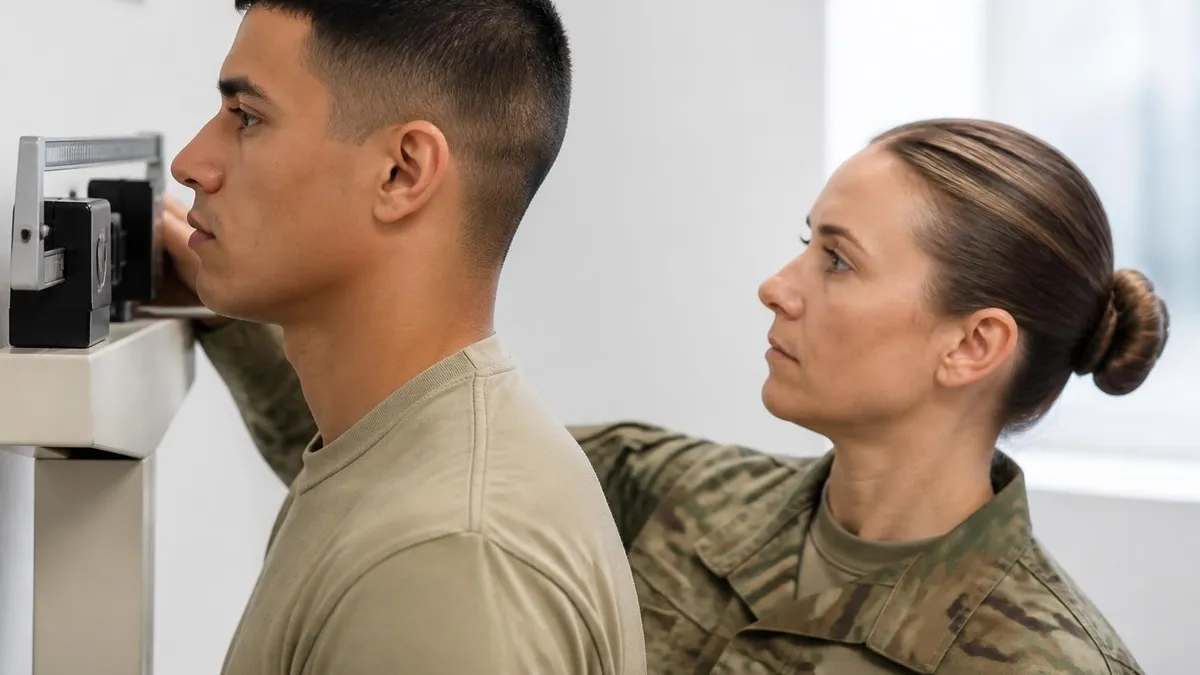
On the physical fitness front, your goal is not to peak for a performance test at MEPS — the physical examination does not measure aerobic capacity or strength directly. What it does measure is body composition, joint health, and cardiovascular baseline (blood pressure and resting heart rate). If your weight is near the branch screening table limit, begin a disciplined calorie management program immediately.
Even 10 to 15 pounds of loss in six to eight weeks can move you from a tape-test zone to a clean pass. Recruit trainers in El Paso often see applicants dismissed on body composition alone after driving four to six hours to the facility — do not let that be you.
For ASVAB preparation, use official practice tests and structured study materials rather than random internet quizzes of variable quality. The eight subtests cover Word Knowledge, Paragraph Comprehension, Arithmetic Reasoning, Mathematics Knowledge, General Science, Electronics Information, Auto and Shop Information, and Mechanical Comprehension. The four AFQT-counting subtests (WK, PC, AR, MK) should receive the most study time for recruits who are borderline on the minimum score. Recruits targeting technical jobs should additionally invest in Electronics Information and General Science, where dedicated study can produce 10 to 20 percentile-point gains in four to six weeks.
Medical record organization is a step that many recruits underestimate. If you have ever been hospitalized, had surgery, been prescribed psychiatric medication, or been diagnosed with a chronic condition, you need those records in hand before your MEPS date — not requested after. The process of obtaining records from hospitals, specialists, or school health offices can take two to four weeks depending on the institution's responsiveness.
Start immediately. A recruiter who tells you not to worry about old records is giving you dangerous advice; MEPS medical examiners are trained to probe disclosures and will notice inconsistencies between what you report and what your medical history form reveals.
Lifestyle discipline in the weeks before MEPS covers sleep, nutrition, hydration, and substance avoidance. Blood pressure readings at MEPS are often improved in nervous recruits, and chronic sleep deprivation makes this worse — aim for seven to nine hours per night in the two weeks before your appointment. Stay well-hydrated but avoid excessive fluid intake immediately before the urine sample to avoid a dilute specimen flag. Eat balanced, low-sodium meals in the days before MEPS to support accurate blood chemistry results. And as discussed throughout this guide, avoid all controlled substances without exception.
On the day of your hotel check-in, take the opportunity to speak with other recruits waiting for the same processing day. Informal peer networks among MEPS applicants can be surprisingly valuable — veterans of prior attempts (either successful or requiring a return visit) often share specific insights about the El Paso facility's layout, the typical wait times between stations, and which examining physicians are known for thoroughness in specific areas. This is not about gaming the system; it is about reducing the cognitive load of an unfamiliar environment so you can focus your energy on performing well.
Finally, approach the job counseling session with a prepared list of MOS options ranked by priority, along with the ASVAB line score requirements for each. Many recruits walk into the counseling session without this preparation and end up accepting whatever the counselor first offers — which may not align with their skills, interests, or long-term career goals.
The liaison officer's job is to fill available vacancies; your job is to advocate for the assignment that best matches your aptitude and ambition. Research your top three to five MOSs before MEPS, know the minimum line scores required, and be ready to ask specifically whether those jobs have current vacancies with ship dates that work for your timeline.
Sample MEPS - Military Entrance Processing Stations Practice Questions
Try these questions from our free MEPS - Military Entrance Processing Stations practice tests. The correct answer and an explanation follow each question.
When an applicant at MEPS receives a TDRL (Temporary Disqualification) rather than a PDQ (Permanent Disqualification), what does this mean?
- A. The applicant can never re-apply to any branch of the military
- B. The condition may resolve or be waived in the future, and the applicant can return after the disqualifying factor is addressed
- C. The applicant is sent directly to a military hospital for treatment
- D. The disqualification applies only to combat roles, not support positions
Answer: B. The condition may resolve or be waived in the future, and the applicant can return after the disqualifying factor is addressed
A temporary disqualification means the condition is treatable or time-limited, and the applicant may re-apply once they meet medical standards or obtain a waiver.
Which of the following documents serves as the legally binding enlistment contract that specifies an applicant's term of service, pay grade, and any guaranteed incentives like enlistment bonuses?
- A. SF-86, Questionnaire for National Security Positions
- B. ASVAB Score Report
- C. DD Form 2807-2, Medical Prescreen Report
- D. DD Form 4, Enlistment/Reenlistment Document
Answer: D. DD Form 4, Enlistment/Reenlistment Document
The DD Form 4 is the official, legally binding contract between the enlistee and the U.S. government. It, along with its annexes, details the specifics of the enlistment agreement, including the length of service, job, and any financial incentives promised.
During MEPS processing, who is authorized to grant a medical waiver for a disqualifying condition?
- A. The MEPS physician
- B. The recruiter's commanding officer
- C. The respective military service headquarters (e.g., Army G-1, Navy BUMED)
- D. The MEPCOM Surgeon General
Answer: C. The respective military service headquarters (e.g., Army G-1, Navy BUMED)
Medical waivers are granted by the individual service's headquarters medical authority, not by MEPS staff — MEPS only documents and forwards the waiver request.
What is the minimum AFQT score required for enlistment in the US Army for non-prior service applicants (as a general standard)?
- A. 25
- B. 31
- C. 36
- D. 50
Answer: B. 31
The Army generally requires a minimum AFQT score of 31 for non-prior service applicants without a high school diploma waiver.
Take the full MEPS - Military Entrance Processing Stations practice test
MEPS Questions and Answers



About the Author

Retired Military Officer & Armed Forces Test Preparation Specialist
United States Army War CollegeColonel Steven Harris (Ret.) served 28 years in the US Army, earning a Master of Arts in Military Science from the Army War College and a Bachelor of Science in Criminal Justice. He has coached thousands of military enlistment and officer candidate program applicants through the ASVAB, AFQT, AFCT, OAR, and officer selection assessment processes across all military branches.
Join the Discussion
Connect with other students preparing for this exam. Share tips, ask questions, and get advice from people who have been there.
View discussion (8 replies)