
MBLEx Pocket Prep: The Complete Guide to MBLEx Practice Tests and Study Apps
Master the MBLEx with free practice tests, pocket prep apps, and study strategies. 🏆 Boost your score with 100s of real exam questions.

MBLEx pocket prep has become the go-to strategy for massage therapy students who want structured, efficient study sessions on their own schedule. The Massage and Bodywork Licensing Examination — better known as the mblex — is the primary licensing test for massage therapists across most U.S. states, and passing it is a non-negotiable requirement before you can legally practice. With the right pocket prep tools and a well-designed study plan, you can walk into your exam with confidence and dramatically improve your first-attempt pass rate.
The MBLEx is administered by the Federation of State Massage Therapy Boards (FSMTB) and covers a broad range of content including anatomy and physiology, kinesiology, pathology, client assessment, and ethics. Because the exam draws from seven distinct content domains, many candidates underestimate how wide the net truly is. A good mblex practice test strategy doesn't just focus on memorizing muscles — it builds pattern recognition across every content area so nothing on test day catches you off guard.
Free and premium pocket prep apps have transformed how massage therapy students prepare for licensure. Rather than sitting through hours of passive review with a textbook, pocket prep platforms deliver bite-sized question sets you can work through during a lunch break, a commute, or a few minutes between clients at your school clinic. Research consistently shows that active recall through practice questions outperforms passive reading by a wide margin, making these tools far more efficient for long-term retention.
One of the biggest misconceptions among mblex candidates is that simply completing massage school is sufficient preparation. In reality, FSMTB data shows that a significant percentage of first-time test-takers do not pass on their initial attempt. The gap between knowing massage therapy and being able to demonstrate that knowledge in a timed, multiple-choice format is real, and it requires deliberate practice to close. Simulated exams that mirror the actual test format are the single best tool for bridging that gap before you sit for the real thing.
In this guide, we walk you through everything you need to know about mblex test prep, from choosing the best study apps and free practice exam resources to building a week-by-week study schedule that works for your timeline. We will cover the exam structure, the content domains you must master, and the study techniques that top-scoring candidates use consistently. Whether you are just starting your prep journey or retaking the exam after a previous attempt, these strategies will help you maximize your score.
PracticeTestGeeks offers hundreds of free MBLEx practice questions organized by content domain, so you can identify weak areas quickly and focus your energy where it counts most. Our question bank is regularly updated to reflect the current FSMTB content outline, and every answer includes a detailed explanation to reinforce learning rather than just giving you the right answer. You don't need to pay for a premium subscription to access high-quality, exam-aligned practice questions — free resources are genuinely enough to prepare effectively when used consistently.
By the time you finish reading this guide, you will have a clear, actionable roadmap for your mblex test prep journey. You will know which topics to prioritize, how to use practice tests strategically, what to do in the final week before your exam, and how to stay motivated throughout a preparation process that can feel overwhelming at first. Let's dive in.
MBLEx by the Numbers
Key Facts at a Glance
| Item | Value | Details |
|---|---|---|
| Exam Questions | 100 | Multiple choice, computer-adaptive |
| Time Limit | 2 hrs | Roughly 72 seconds per question |
| Exam Fee | $265 | FSMTB application + Pearson VUE |
| Content Domains | 7 | Anatomy to ethics and more |

MBLEx Exam Format Overview
| Section | Questions | Time | Weight | Notes |
|---|---|---|---|---|
| Anatomy & Physiology | 11 | ~13 min | 11% | Body systems, tissues, homeostasis |
| Kinesiology & Biomechanics | 12 | ~14 min | 12% | Muscles, joints, movement planes |
| Pathology, Contraindications & Endangerment Sites | 14 | ~17 min | 14% | High-yield safety content |
| Benefits & Physiological Effects of Techniques | 15 | ~18 min | 15% | Circulatory, lymphatic, nervous system effects |
| Client Assessment, Reassessment & Treatment Planning | 17 | ~20 min | 17% | Intake, SOAP notes, goal setting |
| Ethics, Boundaries & Regulations | 16 | ~19 min | 16% | Professional conduct, scope of practice |
| Guidelines for Professional Practice | 15 | ~18 min | 15% | Business, draping, hygiene standards |
| Total | 100 | 2 hours | 100% |
Understanding how to use pocket prep apps strategically is just as important as using them at all. Many students download a study app, answer a few random questions, and assume the exposure alone is enough. But effective mblex practice test preparation requires a more intentional approach — one that cycles through spaced repetition, timed simulation, and targeted weakness review in a deliberate sequence. The students who see the biggest score gains are those who treat every practice session as diagnostic data, not just quiz entertainment.
Start by taking a full-length diagnostic practice exam before you do any focused studying. This baseline assessment reveals exactly where your knowledge gaps are, so you don't spend valuable study hours on content you already know well. Most pocket prep apps — including the free question sets here on PracticeTestGeeks — allow you to filter by content domain, which means you can immediately pivot to drilling anatomy after a diagnostic that shows your pathology score is strong but your anatomy score needs work. This kind of data-driven prioritization is the hallmark of efficient exam prep.
Spaced repetition is the scientific backbone of effective memorization. Rather than reviewing all of your flashcards or practice questions every single day, spaced repetition systems schedule each item to reappear just before you are likely to forget it. This approach is far more effective than cramming because it forces your brain to actively retrieve information at increasing intervals, which strengthens the memory trace each time. Good pocket prep apps build this scheduling into their algorithm automatically, but you can replicate it manually by flagging questions you got wrong and returning to them two, four, and seven days later.
Timed practice is a skill that most students underestimate. On the real MBLEx exam, you have 120 minutes to answer 100 questions, which averages out to 72 seconds per question. That sounds generous until you encounter a dense scenario question about a client with multiple contraindications, where you need to evaluate four treatment options against both pathology knowledge and ethics principles simultaneously. Without timed practice, many candidates find themselves rushing through the final 20 questions or leaving items unanswered entirely. Building timed endurance through simulated full-length practice exams is essential preparation.
One underused feature of many pocket prep platforms is the answer explanation. Most students check whether they got a question right or wrong, then move on. But the explanation is where the actual learning happens. A well-written explanation doesn't just tell you the correct answer — it walks you through the clinical reasoning that eliminates the wrong answers, which is exactly the cognitive process the exam is testing. Training yourself to read every explanation carefully, even for questions you answered correctly, builds a deeper conceptual framework that helps on novel question types you have never seen before.
Weekly review sessions are an important complement to daily question practice. Set aside one to two hours per week to review your cumulative performance data, identify any domains where your accuracy is declining rather than improving, and adjust your study plan accordingly. It is common for students to make early gains in anatomy and kinesiology — the content-heavy domains they covered extensively in massage school — while plateauing on ethics and guidelines for professional practice, which require more nuanced judgment. Recognizing this pattern early allows you to rebalance before test day.
Study groups can accelerate your pocket prep progress significantly. Discussing tricky question scenarios with peers who are also preparing for the mblex exam helps you encounter perspectives and clinical reasoning patterns you might not have developed on your own. Consider forming a small group of three to five candidates and committing to a weekly session where each person brings their most challenging questions from that week's practice. Teaching content to someone else is one of the most effective ways to solidify your own understanding, and the accountability of a group keeps momentum going through the inevitable dips in motivation.
MBLEx Study Strategies by Domain
Anatomy and physiology is the content domain that most massage therapy students feel most comfortable with coming out of school, but the MBLEx tests it at a level of specificity that surprises many candidates. You need to know the origin, insertion, and action of major muscles — particularly those involved in common clinical complaints like shoulder impingement, low back pain, and carpal tunnel syndrome. Memorizing these facts is only the start; the exam will ask you to apply them in clinical scenarios where you must identify which muscle is likely involved based on a client's symptoms and movement limitations.
Physiology content on the MBLEx goes well beyond surface-level definitions. You need to understand how massage techniques affect specific physiological systems — how effleurage influences venous return, how deep tissue work modulates the autonomic nervous system, and how lymphatic drainage techniques differ from circulatory massage in their mechanism of action. Practice questions in this domain should focus on application rather than definition, because the exam rarely asks you to define a term directly — instead, it gives you a scenario and asks you to identify the most appropriate technique or the expected physiological response.

Free vs. Paid MBLEx Prep Apps: Which Is Right for You?
- +Free platforms like PracticeTestGeeks provide hundreds of exam-aligned questions at zero cost
- +No subscription commitment means you can use multiple free resources simultaneously without budget strain
- +Free question sets are often updated to reflect current FSMTB content outlines as the exam evolves
- +Immediate access with no account required lets you start practicing within minutes of deciding to study
- +Free resources cover all seven MBLEx content domains with domain-specific question filtering available
- +Detailed answer explanations on free platforms are often just as thorough as those on paid apps
- −Free apps typically lack the adaptive algorithm that adjusts question difficulty based on your performance history
- −Progress tracking features are usually limited on free platforms, making it harder to visualize improvement over time
- −Some free question banks have smaller total question counts, which increases the chance of seeing repeated questions
- −Premium apps often include simulated full-length timed exams that more closely replicate the real testing interface
- −Paid platforms may offer offline access, allowing study without an internet connection during commutes
- −Customer support and personalized study coaching are generally only available through paid subscription tiers
MBLEx Test Prep Checklist: 10 Steps Before Exam Day
- ✓Download or bookmark a free MBLEx practice test platform and complete a full diagnostic exam in the first week.
- ✓Review the official FSMTB content outline to confirm your study materials align with the current exam blueprint.
- ✓Create a domain-by-domain score tracker to monitor accuracy trends across all seven content areas weekly.
- ✓Dedicate at least three focused study sessions per week to your lowest-scoring content domains.
- ✓Complete at least three full-length timed practice exams under real testing conditions before your scheduled date.
- ✓Review every answer explanation thoroughly — including questions you answered correctly — to deepen conceptual understanding.
- ✓Build a contraindications quick-reference sheet covering all absolute and relative massage contraindications by condition.
- ✓Memorize origin, insertion, and action for the 40 most commonly tested muscles and their clinical relevance.
- ✓Practice identifying endangerment sites on an anatomy diagram until you can locate all major areas without prompting.
- ✓Schedule your exam at a Pearson VUE testing center at least two weeks in advance to lock in your preferred date and time.
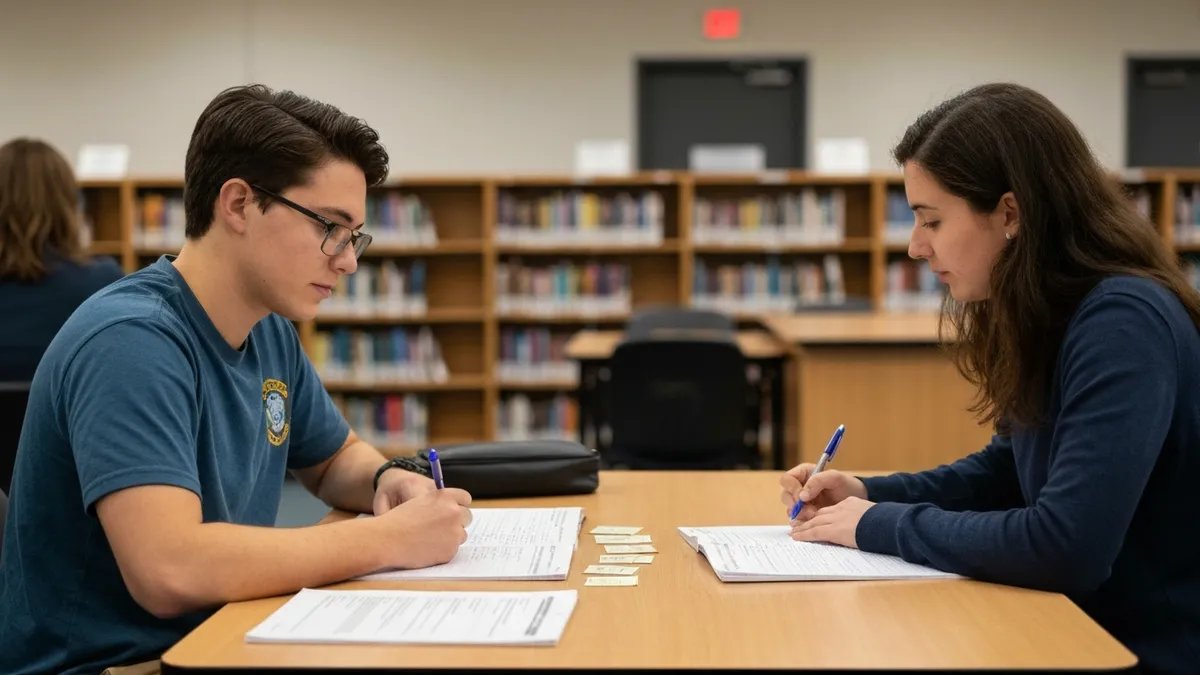
Active Recall Outperforms Passive Review by 2-3x
Studies in cognitive science consistently show that students who practice active recall through quiz questions retain information two to three times more effectively than students who reread notes or highlight textbooks. For MBLEx prep specifically, this means spending the majority of your study time answering practice questions and reviewing explanations — not rereading your massage school textbooks. Aim for at least 70% of your total study time in active question practice mode.
Choosing the right MBLEx practice exam resource is a decision that can meaningfully affect your preparation quality and ultimately your pass rate. Not all practice question banks are created equal — some are outdated, some are poorly written, and some test trivia rather than the clinical judgment and applied knowledge the real exam demands.
When evaluating any mblex study guide or practice platform, the first thing to check is whether the question bank explicitly states it aligns with the current FSMTB content outline. The FSMTB periodically updates the content specifications, and practice questions written before a major revision may not accurately reflect what you will see on your actual exam.
Question quality matters as much as quantity. A well-written MBLEx practice question presents a realistic clinical scenario — a client with a specific complaint, medical history, or presenting condition — and asks you to make a professional decision based on that context. Questions that test pure definition recall ("What is the term for inflammation of a tendon?") are less valuable than scenario-based questions because the real exam skews heavily toward applied knowledge and professional judgment. When you evaluate practice resources, look for scenario-heavy question sets that challenge your reasoning rather than just your memorization.
The answer explanation quality is another critical factor. The best practice resources don't just identify the correct answer — they explain why each incorrect option is wrong, which helps you understand the diagnostic reasoning process the question is testing. This is especially important for ethics and pathology questions, where the difference between answer choices can be subtle and the underlying principle is more important than any single fact. If a practice resource only tells you that option B is correct without explaining why options A, C, and D are incorrect, you are missing most of the learning value.
Domain-specific filtering is a feature worth prioritizing in your practice platform selection. Early in your prep, you want to drill specific content areas in isolation to build targeted competency. Later, you want to mix domains in randomized full-length exams to simulate the unpredictable flow of the real test. A platform that allows you to switch between these modes gives you the flexibility to adapt your practice strategy as your preparation progresses. PracticeTestGeeks organizes its free question sets by topic, making it easy to focus on kinesiology one session and ethics the next.
Peer reviews and community feedback are valuable signals when evaluating paid MBLEx prep apps. Look for candidate reviews that specifically mention whether the practice questions felt representative of the actual exam difficulty and style. Avoid apps that have a high percentage of reviews describing the practice questions as significantly easier than the real exam, as this is a red flag that the content is not well-calibrated to FSMTB standards. Conversely, reviews that describe the practice exam as harder than the real thing but note it helped candidates feel over-prepared are a strong positive signal.
Free trial periods offered by paid platforms are worth using strategically. Most premium MBLEx prep apps offer a free trial of three to seven days, which is long enough to assess the interface, question quality, and explanation depth before committing to a subscription. Use these trial periods during a high-intensity week when you can actually evaluate the platform under real study conditions rather than just browsing the interface.
If the platform's questions consistently challenge you and the explanations teach you something new, it is likely worth the subscription fee. If you find yourself breezing through without learning, the free resources on PracticeTestGeeks may serve you equally well.
The most important principle in selecting and using any practice resource is consistency. The best mblex study test platform in the world delivers zero benefit if you only open it twice before your exam. Commit to a daily minimum — even 20 minutes of focused practice questions on a busy day — and you will build the knowledge base and test-taking fluency that consistent candidates develop over weeks of deliberate preparation. Consistency compounds, and the candidates who make steady daily progress almost always outperform those who cram intensively in the week before their exam.
Before scheduling your MBLEx exam, confirm that your massage therapy program meets your state's hour requirements — most states require between 500 and 1,000 clock hours of approved education. You must also submit your FSMTB application and receive an Authorization to Test (ATT) letter before you can book your Pearson VUE appointment. Applying without verifying your state's specific requirements can result in your application being rejected and a delay in your testing timeline.
The final week before your mblex exam should look very different from the weeks preceding it. This is not the time to introduce new content or try to cram entire domains you haven't studied. Instead, your final week should be devoted to consolidation — reinforcing what you already know, maintaining your confidence, and preparing your mind and body to perform at their best under the mild pressure of a professional licensing examination. Students who spend their final week frantically reviewing unfamiliar material tend to underperform relative to their actual knowledge level because anxiety interferes with recall on test day.
Two to three days before your exam, take your final full-length timed practice exam and treat it as a true simulation. Sit in a quiet room, set a two-hour timer, and work through 100 questions without pausing to look anything up. When you finish, review your results objectively.
If your score is in the range of 70% or higher, you are very likely prepared to pass the real exam — the passing score on the MBLEx is set using a criterion-referenced standard that does not require a specific raw score percentage, but consistently hitting 70%+ on quality practice exams is a strong positive indicator. If your score is lower, identify the two or three domains pulling you down and do a focused review session the following day.
Sleep is the single most underestimated performance variable in exam preparation. Your brain consolidates memory during sleep, particularly during the REM cycles that occur in the later hours of the night. Getting seven to nine hours of sleep in the three nights before your exam is a legitimate performance optimization strategy, not just self-care advice. Candidates who sleep poorly the night before their exam report significantly higher test anxiety and more difficulty with recall on complex scenario questions. Prioritize sleep aggressively in the final week, even if it means cutting study sessions short in the evenings.
The morning of your exam, eat a balanced meal with adequate protein and complex carbohydrates to stabilize your blood sugar throughout the two-hour test session. Avoid heavy, unfamiliar foods that might cause discomfort, and limit caffeine to your normal baseline intake — this is not the day to dramatically increase your coffee consumption, as excess caffeine increases anxiety and can disrupt your concentration. Arrive at the Pearson VUE testing center at least 30 minutes early so you have time to check in, store your belongings, and settle your nerves before the exam begins.
During the exam itself, use a disciplined question approach. Read each question stem carefully before looking at the answer choices, and try to formulate your expected answer before you see the options. This approach prevents the answer choices from biasing your initial reasoning and makes it easier to identify the clearly correct option when it appears.
If a question is genuinely stumping you, use process of elimination to remove any options that are clearly incorrect, then make your best judgment among the remaining choices. Do not leave any questions unanswered — there is no penalty for guessing, and an educated guess is always better than a blank.
Flag challenging questions and return to them after you have worked through the full exam. The computer-adaptive format of the MBLEx means that each question's difficulty is calibrated in real time based on your previous responses, but you can still skip forward and return to flagged items within the same section.
When you revisit a flagged question with fresh eyes, you often find that your initial instinct was correct or that a later question provided contextual information that helps you reason through the challenging item more effectively. Trust the preparation you have done and resist the urge to second-guess your answers excessively.
After your exam, regardless of the immediate result, take time to acknowledge the work you put into your preparation. The MBLEx is a rigorous professional examination that tests a broad base of clinical knowledge, and preparing for it thoroughly is an accomplishment in itself. If you pass, you will be joining a licensed profession where your education and ethics training directly protect the clients you serve.
If you need to retake, you can reapply after a 30-day waiting period, and the diagnostic data from your first attempt will make your second preparation even more targeted and effective. Either way, your investment in thorough mblex pocket prep preparation has made you a more knowledgeable and capable massage therapist.
Practical study tips for the MBLEx go beyond just answering practice questions — they involve structuring your entire learning environment to support retention, reducing cognitive load during study sessions, and building the mental stamina required to stay focused for a full two-hour exam. One of the most effective structural changes you can make is designating a consistent study space. Your brain forms contextual associations between environments and cognitive states, so studying in the same place at the same time each day makes it easier to enter a focused, productive mindset quickly rather than spending the first 15 minutes settling in.
The Pomodoro Technique — 25 minutes of focused study followed by a 5-minute break — is particularly well-suited to MBLEx practice question sessions. Each Pomodoro is just long enough to work through 15 to 20 questions with careful explanation review, and the built-in breaks prevent the mental fatigue that causes accuracy to drift downward in longer uninterrupted sessions.
After four Pomodoros, take a longer 20 to 30 minute break and use it for something genuinely restorative — a short walk, a snack, or a few minutes of stretching — rather than scrolling through your phone, which does not give your working memory a true rest.
Color-coded note organization is a surprisingly effective strategy for MBLEx content with lots of interrelated categories. Use one color for muscles (origin, insertion, action), another for pathology contraindications, another for endangerment sites, and another for ethical principles. When you review your notes visually, the color coding activates spatial memory alongside verbal memory, creating an additional retrieval pathway that makes recall faster and more reliable under exam pressure. Digital note-taking apps that support color tagging can replicate this system if you prefer typing to handwriting.
Teaching content out loud is one of the most underused study techniques among MBLEx candidates. After completing a set of practice questions on a specific domain, close your notes and explain the key concepts out loud as if you were teaching them to a beginning massage therapy student.
This technique — sometimes called the Feynman Method — forces you to identify and close gaps in your own understanding because you cannot bluff your way through an explanation you don't actually understand. The gaps you struggle to explain are exactly the gaps that will cost you points on the exam if left unaddressed.
Mnemonics and memory tricks are legitimate, effective tools for high-volume memorization content like muscle attachments and the layers of the skin. The investment of a few minutes to create a vivid, memorable association for a complex fact pays dividends every time that fact appears on a practice question. For example, many candidates use the mnemonic "Never In A Hurry, The Acronym Makes Sense" to remember the layers of the epidermis from deep to superficial. Create your own mnemonics for content that isn't sticking, because personalized associations are always more memorable than generic ones.
Practice questions work best when they are followed by active error analysis. When you get a question wrong, don't just read the explanation and move on — write down in your own words why you got it wrong. Were you confusing two similar terms? Did you misread the question stem? Did you choose an answer that seemed clinically correct but ignored a stated contraindication in the scenario? Categorizing your errors over time reveals systematic reasoning mistakes that you can correct through targeted practice, rather than random knowledge gaps that appear unpredictably across sessions.
Finally, remember that MBLEx preparation is a marathon, not a sprint. Most candidates who prepare consistently over eight to twelve weeks perform significantly better than those who attempt to compress all their studying into two or three intense weeks. Give yourself enough runway to build genuine clinical knowledge and exam fluency, not just superficial familiarity with question formats. The investment of consistent, quality preparation is the most reliable predictor of first-attempt success on the MBLEx, and every quality practice session moves you measurably closer to your license.
Sample Massage and Bodywork Licensing Examination Practice Questions
Try these questions from our free Massage and Bodywork Licensing Examination practice tests. The correct answer and an explanation follow each question.
Which of the following actions falls outside the established scope of practice for a massage therapist?
- A. Performing a general postural assessment.
- B. Suggesting the client try alternating hot and cold packs at home.
- C. Diagnosing a client's chronic shoulder pain as 'adhesive capsulitis'.
- D. Documenting subjective complaints of pain using a 1-10 scale.
Answer: C. Diagnosing a client's chronic shoulder pain as 'adhesive capsulitis'.
A massage therapist's scope of practice is focused on the assessment and manipulation of soft tissues. Diagnosing a specific medical condition, such as adhesive capsulitis, is a function reserved for licensed medical professionals like physicians or physical therapists. While a therapist can assess tissues and note findings, they cannot provide a medical diagnosis.
Which action by a therapist most clearly demonstrates cultural competency in professional practice?
- A. Treating all clients identically regardless of background
- B. Asking a client about cultural preferences or sensitivities that may affect treatment
- C. Avoiding clients from cultures the therapist is unfamiliar with
- D. Using only Western massage techniques to maintain consistency
Answer: B. Asking a client about cultural preferences or sensitivities that may affect treatment
Asking about cultural preferences shows respect and ensures treatment is adapted to the client's individual background and comfort.
The ethical principle of fidelity in massage therapy practice refers to:
- A. Maintaining accurate financial records and billing practices
- B. Keeping promises, honoring commitments, and being trustworthy to clients
- C. Adhering strictly to the techniques taught in certification programs
- D. Faithfully following the treatment plan prescribed by a referring physician
Answer: B. Keeping promises, honoring commitments, and being trustworthy to clients
Fidelity means being faithful to one's professional commitments and maintaining trustworthiness in all aspects of the therapeutic relationship.
A client visits you complaining of neck pain and vertigo while turning their head; they believe the pain may be related to a minor motor vehicle accident last week. Extreme muscle weakness is evident throughout your ROM tests, and they complain of having trouble swallowing. What ought you to do?
- A. Send them to a physical therapist
- B. Refer them to another MT
- C. Treat them for whiplash and refer them to a chiropractor
- D. Thoroughly document the initial assessment and refer client to a physician for assessment before massage treatment
Answer: D. Thoroughly document the initial assessment and refer client to a physician for assessment before massage treatment
The best course of action is to first get a doctor's opinion to prevent aggravation of any potential fractures or dislocations. Vehicle collision (MVA).
Take the full Massage and Bodywork Licensing Examination practice test
Mblex Questions and Answers

MBLEx Exam Format: How Many Questions Are on the MBLEx and What to Expect

What Is the MBLEx? Complete Guide to the Massage & Bodywork Licensing Exam

MBLEx Exam Dates 2026: How to Schedule, Reschedule & Prepare for Test Day
MBLEx Study Guide: The Complete 2026 Roadmap to Passing on Your First Attempt

MBLEx California: Complete Licensing Guide for Massage Therapists in CA
About the Author

Board Certified Massage Therapist & MBLEx Exam Specialist
Pacific College of Health and ScienceChristine Lee is a Board Certified Therapeutic Massage and Bodywork professional (BCTMB) and Licensed Massage Therapist with a Bachelor of Science in Massage Therapy from Pacific College of Health and Science. With 14 years of clinical practice and exam coaching experience, she specializes in helping massage therapy graduates pass the MBLEx, NCBTMB, and state massage therapy licensing examinations.
Join the Discussion
Connect with other students preparing for this exam. Share tips, ask questions, and get advice from people who have been there.
View discussion (6 replies)