
AFOQT Scoring Explained: How the Air Force Officer Qualifying Test Works
Get ready for your asvab certification exam. Practice questions with step-by-step answer explanations and instant scoring. ⏳

The Air Force Officer Qualifying Test (AFOQT) stands between you and a commission as an Air Force officer. It's a multi-aptitude battery that measures your readiness across verbal, quantitative, and spatial domains — and AFOQT scoring determines which career fields open up to you. Whether you're aiming for a pilot slot or a non-rated position, understanding how this test works gives you a real edge.
Unlike enlisted entrance exams, the Air Force Officer Qualifying Test AFOQT produces five composite scores rather than a single overall number. Each composite pulls from different subtests, so your preparation strategy matters. You can't just cram one subject and hope for the best. You need a targeted plan that addresses all 12 subtests — from Verbal Analogies to Table Reading — and that plan starts with knowing what scores you actually need. Check out our breakdown of AFOQT minimum scores to see where the bar sits for different commissioning sources.
This guide walks you through every aspect of AFOQT scoring, from how composites are calculated to what makes a competitive score for pilot selection boards. You'll find practical study strategies, score comparisons with the ASVAB, and tools to help you benchmark your progress. If you're serious about earning your commission, this is where you start.

So how does the Air Force Officer Qualifying Test AFOQT actually work? The test contains 470 questions spread across 12 timed subtests. Your raw scores on these subtests feed into five composite scores: Pilot, Combat Systems Officer (CSO), Academic Aptitude, Verbal, and Quantitative. Each composite draws from a specific combination of subtests — the Pilot composite, for instance, pulls from six different sections including Instrument Comprehension and Table Reading.
Understanding AFOQT minimum scores is critical before you sit down to study. Most ROTC detachments and OTS boards require at least 15 on the Verbal composite and 10 on the Quantitative composite. But here's the thing — meeting minimums won't make you competitive. Selection boards look at your full score profile, and higher composites translate directly to stronger applications. The difference between a 40 and a 60 on the Pilot composite can determine whether you get your top career pick. For a detailed look at how AFOQT stacks up against enlisted testing, see our AFOQT vs ASVAB comparison.
Scores are reported as percentiles, meaning a score of 70 on the Verbal composite means you outperformed 70% of test-takers in the norming sample. The norming group consists of officer candidates who've taken the test over several years. Your percentile ranking — not your raw score — is what boards evaluate. This means a slight improvement in raw performance can sometimes bump you several percentile points if you're near a dense part of the distribution curve. Small gains matter more than you'd think.
Let's talk about AFOQT passing scores in concrete terms. The Air Force sets minimum qualifying scores that vary by commissioning source and career field. OTS candidates generally need Verbal 15+ and Quantitative 10+. Pilot candidates face steeper requirements — most competitive boards want a Pilot composite of 25 or higher, though the official minimum is lower. Some units informally set their cutoffs even higher.
The AFOQT vs ASVAB comparison trips up a lot of people. Both tests measure aptitude, but they serve completely different populations. The ASVAB qualifies enlisted service members and uses AFQT percentiles. The AFOQT targets officer candidates and produces five composite scores with different percentile calculations. The scoring scales aren't interchangeable. A 90 on the ASVAB doesn't predict your AFOQT performance. For career-level implications, check out how scores shape your options in our ASVAB vs AFOQT career guide.
You can retake the AFOQT after a 150-day waiting period. There's no limit on attempts, but some commissioning programs only look at your most recent scores. Others take the highest from any attempt. Confirm your program's policy before deciding to retake — a lower second score could actually hurt you.
ASVAB Study Tips
What's the best study strategy for ASVAB?
Focus on weak areas first. Use practice tests to identify gaps, then study those topics intensively.
How far in advance should I start studying?
Most successful candidates begin 4-8 weeks before the exam. Create a structured study schedule.
Should I retake practice tests?
Yes! Take each practice test 2-3 times. Focus on understanding why answers are correct, not memorizing.
What should I do on exam day?
Arrive 30 min early, bring required ID, read questions carefully, flag difficult ones, and review before submitting.
AFOQT Composite Score Breakdown
The Pilot composite draws from six subtests: Math Knowledge, Table Reading, Instrument Comprehension, Aviation Information, Verbal Analogies, and Arithmetic Reasoning. The CSO composite uses Math Knowledge, Table Reading, Verbal Analogies, Block Counting, and Word Knowledge. Both composites demand strong spatial reasoning and quick processing speed — Table Reading alone has 40 questions in just 7 minutes.
When people ask about the ASVAB vs AFOQT, they usually want to know which one is harder. The honest answer? They test different things at different levels. The ASVAB covers 10 areas including Auto & Shop Information and Electronics — topics absent from the AFOQT. The Air Force AFOQT instead tests Aviation Information, Instrument Comprehension, and Block Counting, which have no ASVAB equivalent. The academic sections overlap somewhat, but the AFOQT's math and verbal content skews toward college-level difficulty.
Timing pressure separates the two exams sharply. AFOQT subtests move fast — the Table Reading section gives you just 7 minutes for 40 items. That's roughly 10 seconds per question. Self-Descriptive Inventory (175 questions, 40 minutes) and Situational Judgment (50 questions, 35 minutes) round out the non-cognitive sections. You can't afford to get stuck on any single question. Practice with strict time limits or you'll run out of clock on test day.
One advantage the AFOQT has over the ASVAB: predictability. The test format has stayed consistent for years, and study guides cover the question types accurately. If you put in the work, you'll walk into the testing center knowing exactly what to expect. The ASVAB's adaptive format (CAT-ASVAB) adjusts difficulty in real-time, which makes it harder to predict what you'll face.
Let's get specific about AFOQT score breakdown numbers. Each composite is reported as a percentile from 1 to 99. There's no pass/fail in the traditional sense — just minimum qualifying thresholds and competitive benchmarks set by individual programs. A Pilot composite of 50 means you scored higher than half the norming population. For pilot selection boards, scores in the 70s and 80s make you competitive. Anything below 25 makes you a long shot.
How is the AFOQT scored at the raw level? Each correct answer earns one point. There's no penalty for guessing — never leave a question blank. Your raw subtest scores are converted to percentile composites using statistical tables maintained by the Air Force Personnel Testing division. These tables get updated periodically as new test-taker data comes in, which means the same raw score might yield slightly different percentiles over time.
The AFOQT score breakdown matters most when you're applying to specific programs. Pilot boards weigh the Pilot composite heavily, obviously. But they also look at PCSM (Pilot Candidate Selection Method) scores, which factor in your Pilot composite, TBAS results, and flying hours. You can't control all variables — but you can absolutely control your AFOQT preparation.
AFOQT Pros and Cons
- +Multiple composite scores let you qualify for various career fields with one test
- +No penalty for guessing — answer every question to maximize your score
- +Predictable format with well-documented question types and timing
- +Scores remain valid indefinitely once you pass minimum thresholds
- +Retakes allowed after 150 days with no limit on total attempts
- +Strong study materials available including official Air Force prep guides
- −Extremely tight time limits on several subtests make pacing critical
- −Some programs only accept your most recent score, not your highest
- −No official AFOQT score calculator provided by the Air Force
- −Pilot composite requires strong spatial reasoning that's hard to train quickly
- −Test centers have limited availability and scheduling can take weeks
- −Self-Descriptive Inventory section can't be studied for — it's personality-based
If you're chasing a pilot slot, the AFOQT score calculator question comes up constantly. Unfortunately, the Air Force doesn't provide a public calculator that converts raw scores to composites. You won't know your exact percentiles until your official score report arrives, usually 8-10 business days after testing. Third-party calculators exist online, but they're estimates based on older norming data — take them with a grain of salt.
Your AFOQT Pilot score carries the most weight for rated boards, but it's not the only factor. The PCSM score — Pilot Candidate Selection Method — combines your Pilot composite with TBAS (Test of Basic Aviation Skills) results and any logged flight hours. A mediocre AFOQT Pilot score can be offset somewhat by strong TBAS performance and private flight experience. That said, most selected candidates have Pilot composites above 50, and the average for selectees typically sits in the 60-80 range.
Here's something most guides won't tell you: the Pilot composite is heavily influenced by your Table Reading and Instrument Comprehension subtest performance. These sections test rapid information extraction, and they're skills you can train. Download or print Table Reading practice sheets and work through them daily. Aim to get each item down to 8-10 seconds. That kind of targeted prep moves the needle more than generic math review. Also consider practicing Block Counting with 3D visualization exercises — apps and YouTube tutorials can help train this spatial skill quickly.
AFOQT Study Checklist
- ✓Confirm your commissioning program's minimum composite requirements
- ✓Take a full-length diagnostic test under timed conditions
- ✓Identify your two weakest subtests and build focused study plans
- ✓Practice Table Reading drills daily — aim for under 10 seconds per item
- ✓Review aviation terminology and instrument reading fundamentals
- ✓Work through at least 200 arithmetic reasoning problems
- ✓Study verbal analogies using GRE-style prep materials
- ✓Complete three full practice tests before your test date
- ✓Schedule your test at least 3 weeks early to lock in availability
- ✓Review test-day procedures: what to bring, what's prohibited, check-in process
Wondering about AFOQT score lookup options? Once you've taken the test, your scores are maintained in your military personnel record. Active duty members can access scores through their Education Office or via vMPF (virtual Military Personnel Flight). ROTC cadets typically receive scores through their detachment commander. OTS candidates get results mailed or emailed. There's no central public portal — you can't just log in and check scores online like the SAT.
A common question: how long are AFOQT scores good for? Your scores never expire. Once recorded, they stay in your file permanently. However, some programs have informal recency preferences — a score from 8 years ago might raise eyebrows even though it's technically valid. If you scored well, there's no pressure to retake. If you scored poorly, the 150-day retake window gives you time to prepare properly.
Keep copies of your score report. Seriously. Military records systems aren't perfect, and scores occasionally get lost during PCS moves or system migrations. Having a personal copy means you can provide documentation if your record ever gets questioned. Save a digital copy in cloud storage and keep a paper copy with your important documents. Some cadets also request an official transcript from their testing center — it's worth the extra step for peace of mind.
People search for an AFOQT calculator hoping to predict their scores before testing. While no official tool exists, you can estimate your standing by tracking practice test performance. If you're consistently scoring 80%+ on arithmetic reasoning practice and 75%+ on verbal sections, you're likely in solid shape for the Quantitative and Verbal composites. The non-academic subtests — Table Reading, Block Counting, Instrument Comprehension — are harder to benchmark because few practice resources match the exact format and timing.
Is AFOQT harder than ASVAB? In terms of content difficulty, yes. The AFOQT's math questions reach college algebra and some trigonometry. The ASVAB tops out around high school math. Verbal content on the AFOQT uses more complex analogies and higher-level vocabulary. But "harder" is relative — the AFOQT is designed for college students and graduates, while the ASVAB targets high school seniors. You're being compared against different peer groups.
The biggest difference isn't difficulty but structure. The ASVAB adapts to your ability level in real-time (CAT format). The AFOQT is a fixed-form paper test — everyone gets the same questions. This means AFOQT prep is more straightforward. You know what's coming. The challenge is pacing yourself through 12 sections over three and a half hours without burning out. Mental stamina is genuinely a factor — by subtest nine or ten, fatigue chips away at your processing speed and accuracy.
Check whether your commissioning program accepts your highest score or your most recent score. Some programs — particularly OTS — use the most recent attempt only. A retake that produces lower scores could replace your previous results and weaken your application. Confirm the policy with your program advisor before scheduling.
The difference between ASVAB and AFOQT goes beyond just content level. The ASVAB funnels you toward enlisted MOSs based on line scores. The AFOQT determines your eligibility for officer commissioning and specific rated career fields. They serve fundamentally different purposes in the military pipeline. You'll never take both for the same application — enlisted candidates take the ASVAB, officer candidates take the AFOQT.
Is the AFOQT harder than the ASVAB? Most people who've taken both say yes, particularly on the verbal and math sections. The AFOQT assumes you've completed at least two years of college. Vocabulary questions feature graduate-level words. Math problems require comfort with algebraic manipulation, not just basic computation. And the spatial/aviation subtests have no ASVAB parallel — you're either prepared for them or you're not.
Study timeline matters here. Don't plan on cramming for the AFOQT in a weekend. Most successful test-takers spend 4-8 weeks preparing. Start with a diagnostic test, identify your weak composites, then build a daily study schedule that targets those specific areas. Thirty minutes of focused practice daily beats six-hour weekend sessions. Consistency builds the pattern recognition and processing speed you need on test day. Block out time each morning before classes or work — your brain performs best early when it hasn't been drained by other tasks.
ASVAB Practice Test Questions
Prepare for the ASVAB - Armed Services Vocational Aptitude Battery exam with our free practice test modules. Each quiz covers key topics to help you pass on your first try.
ASVAB Arithmetic Reasoning Test
ASVAB Exam Questions covering Arithmetic Reasoning Test. Master ASVAB Test concepts for certification prep.
ASVAB Arithmetic Reasoning Word Problems
Free ASVAB Practice Test featuring Arithmetic Reasoning Word Problems. Improve your ASVAB Exam score with mock test prep.
ASVAB Assembling Objects Test
ASVAB Mock Exam on Assembling Objects Test. ASVAB Study Guide questions to pass on your first try.
ASVAB Automotive Information Test
ASVAB Test Prep for Automotive Information Test. Practice ASVAB Quiz questions and boost your score.
ASVAB Electronics Fundamentals and Circuits
ASVAB Questions and Answers on Electronics Fundamentals and Circuits. Free ASVAB practice for exam readiness.
ASVAB Electronics Practice Test
ASVAB Mock Test covering Electronics Practice Test. Online ASVAB Test practice with instant feedback.
ASVAB Electronics Practice Test 1
Free ASVAB Quiz on Electronics Practice Test 1. ASVAB Exam prep questions with detailed explanations.
ASVAB General Science Biology and Ecology
ASVAB Practice Questions for General Science Biology and Ecology. Build confidence for your ASVAB certification exam.
ASVAB General Science Practice Test
ASVAB Test Online for General Science Practice Test. Free practice with instant results and feedback.
ASVAB General Science Practice Test 1
ASVAB Study Material on General Science Practice Test 1. Prepare effectively with real exam-style questions.
ASVAB Mathematics Knowledge Test
Free ASVAB Test covering Mathematics Knowledge Test. Practice and track your ASVAB exam readiness.
ASVAB Mechanical Comprehension Principles
ASVAB Exam Questions covering Mechanical Comprehension Principles. Master ASVAB Test concepts for certification prep.
ASVAB Mechanical Comprehension Test
Free ASVAB Practice Test featuring Mechanical Comprehension Test. Improve your ASVAB Exam score with mock test prep.
ASVAB Paragraph Comprehension and Inference
ASVAB Mock Exam on Paragraph Comprehension and Inference. ASVAB Study Guide questions to pass on your first try.
ASVAB Paragraph Comprehension Test
ASVAB Test Prep for Paragraph Comprehension Test. Practice ASVAB Quiz questions and boost your score.
Is the AFOQT the same as the ASVAB? Not even close. They share some surface-level similarities — both are military aptitude batteries, both include math and verbal sections. But the target populations, scoring systems, career implications, and test formats are completely different. The ASVAB uses computer-adaptive testing. The AFOQT uses a fixed paper format. The ASVAB produces line scores for enlisted jobs. The AFOQT produces composites for officer career tracks.
You'll find plenty of discussion about how hard is the AFOQT compared to the ASVAB Reddit threads — and the consensus is clear. Test-takers who scored well on the ASVAB often struggle with the AFOQT's pacing and spatial sections. The Instrument Comprehension subtest in particular catches people off guard. It shows you aircraft instruments and asks you to determine heading, pitch, and bank — skills that require either flight experience or dedicated study.
Don't let that discourage you though. The AFOQT is absolutely beatable with proper preparation. Start early, practice under realistic timing conditions, and focus your energy on the composites that matter for your career goals. If you're going for pilot, hammer Table Reading and Instrument Comprehension. If you're going non-rated, focus on boosting your Verbal and Quantitative composites above the 50th percentile. Every point above the minimum makes your application stronger. The officers who earn their top picks are the ones who treated AFOQT prep like a job — consistent, focused, and strategic. You've absolutely got this — start today.
ASVAB Questions and Answers
About the Author
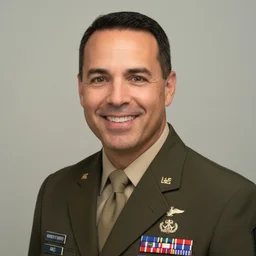
Retired Military Officer & Armed Forces Test Preparation Specialist
United States Army War CollegeColonel Steven Harris (Ret.) served 28 years in the US Army, earning a Master of Arts in Military Science from the Army War College and a Bachelor of Science in Criminal Justice. He has coached thousands of military enlistment and officer candidate program applicants through the ASVAB, AFQT, AFCT, OAR, and officer selection assessment processes across all military branches.
Join the Discussion
Connect with other students preparing for this exam. Share tips, ask questions, and get advice from people who have been there.
View discussion (5 replies)