
LPN Classes Online: Hybrid Programs and What to Expect 2026 September
LPN classes online: 🟢 hybrid programs combining online theory with required clinical hours, accreditation, costs, and what employers accept.

LPN classes online have grown substantially in availability over the past decade, but understanding what online means in this context is crucial. Becoming a licensed practical nurse (LPN) — also called a licensed vocational nurse (LVN) in California and Texas — requires hands-on clinical training that cannot be completed entirely through online coursework.
What's available online is the theory and didactic portion of LPN programs; the clinical training portion (typically 400-700 hours of supervised practice with real patients) requires physical attendance at clinical sites. Programs marketed as "online LPN" are actually hybrid programs combining online theory with in-person clinical experiences, never fully online programs.
Recognizing this reality matters because programs marketing themselves as "100% online LPN" or similar are misleading or fraudulent. State boards of nursing require specific clinical hour minimums for licensure eligibility; these can't be earned online. Legitimate hybrid LPN programs honestly describe themselves as combining online theory with clinical components. Beware programs that suggest you can become an LPN entirely through online study — these either don't lead to actual licensure or graduate students who fail boards because they lack required clinical preparation.
LPN Online Programs Quick Facts
Reality check: No fully online LPN programs exist. Hybrid programs combine online theory with in-person clinical hours. Duration: 12-18 months typical. Cost: $5,000-$25,000 depending on program type and state. Accreditation: Must be approved by state board of nursing for licensure eligibility. NCLEX-PN: Required exam after program completion. Clinical hours: 400-700 hours typical, vary by state.
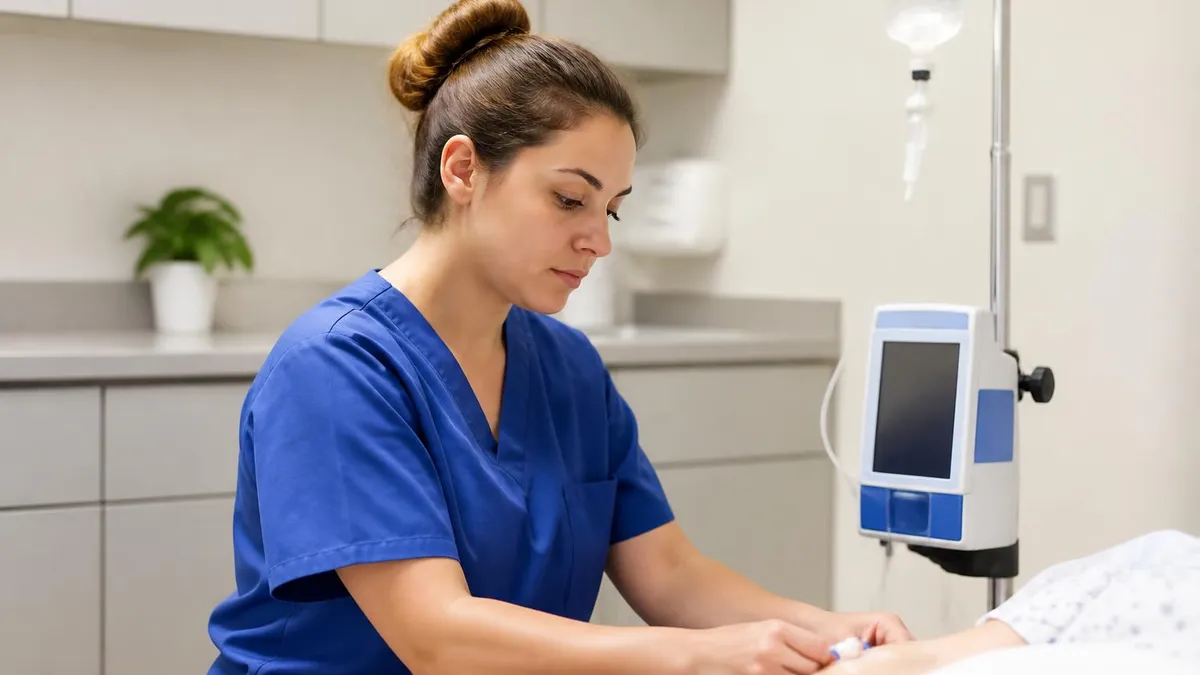
The structure of hybrid LPN programs typically organizes online theory courses (anatomy and physiology, pharmacology, nursing fundamentals, medical-surgical nursing, pediatric nursing, gerontological nursing, mental health nursing) with progressive clinical experiences at affiliated healthcare facilities. Online portions may include video lectures, interactive modules, virtual simulations, online discussions with classmates and instructors, and proctored examinations. Clinical portions involve scheduled days or weeks at hospitals, long-term care facilities, clinics, or other healthcare settings under direct supervision of program faculty and facility nurses. Students cycle through different specialties to build comprehensive clinical experience.
What Online LPN Programs Include
Anatomy/physiology, pharmacology, nursing fundamentals, specialty nursing topics. Available through video lectures, interactive modules, online textbooks.
Computer-based scenarios let students practice clinical decision-making before facing real patients. Increasingly sophisticated in modern programs.
Required hands-on practice with manikins and equipment to develop physical nursing skills. Cannot be replaced with online learning.
Hands-on experience at actual healthcare facilities under supervision. 400-700 hours required, varying by state nursing board.
Most programs include preparation for the national licensure exam. Exam pass rates are key program quality indicator.
Job placement assistance, resume preparation, interview practice. Quality varies dramatically across programs.
State approval is the critical requirement that distinguishes legitimate LPN programs from scams. Each state board of nursing maintains a list of approved programs that qualify graduates to take the NCLEX-PN exam in that state. Programs without state approval cannot lead to LPN licensure regardless of marketing claims or program quality.
Before enrolling in any LPN program, verify the program is approved by the state board of nursing where you intend to practice. Most state boards publish lists online; the National Council of State Boards of Nursing (NCSBN) provides links to state boards. Programs operating without state approval are essentially scams — the credential they offer doesn't qualify graduates for actual nursing practice.
Accreditation is separate from state approval but also matters. The Accreditation Commission for Education in Nursing (ACEN) accredits nursing education programs, including practical nursing programs. ACEN accreditation provides quality assurance beyond state approval and supports transferability of credits to other programs (important for LPN-to-RN transitions later). Not all approved programs are ACEN-accredited, and programs without accreditation may still produce licensure-eligible graduates. However, accreditation indicates additional rigor and quality assurance worth considering when comparing programs.
Cost considerations for online/hybrid LPN programs vary tremendously. Community college programs typically cost $5,000-$10,000 for in-state residents — the most economical pathway for most students. Vocational school programs run $10,000-$25,000 typically, with for-profit institutions tending toward the higher end. Hospital-based programs (less common but some still exist) sometimes offer reduced or free tuition in exchange for employment commitments. Online program providers may charge anywhere in this range. Beyond tuition, expect costs for textbooks ($500-$1,000), uniforms and supplies ($200-$500), background checks and drug tests ($100-$300), NCLEX-PN exam fee ($200), and licensure application fees varying by state.
Selecting an LPN program: Verify state board of nursing approval (essential — without this, the program doesn't lead to licensure). Check ACEN accreditation status. Compare NCLEX-PN pass rates (programs publish these; high pass rates indicate quality). Verify clinical site availability in your area or whether travel is required. Review faculty qualifications and student-to-faculty ratios. Check graduate employment outcomes and average time-to-employment. Compare total program costs including tuition, fees, books, and incidental expenses. Read recent reviews from students who completed the program.
NCLEX-PN exam preparation deserves attention because passing this national licensure exam is required for actual practice as an LPN. The exam tests knowledge across nursing topic areas through computer adaptive testing — the exam adjusts difficulty based on your performance, providing the most efficient assessment of your competence.
Pass rates for first-time test takers vary dramatically across programs, ranging from below 50% at low-quality programs to over 95% at high-quality programs. Pass rates are publicly reported and are perhaps the single most important quality indicator when comparing programs. Programs with consistently low pass rates often have systemic issues with curriculum, faculty, or admissions standards.
NCLEX-PN preparation typically intensifies in the final months of the program. Most programs include test preparation as part of the curriculum, often using specialized prep materials like ATI, Kaplan, HESI, or UWorld. These supplemental resources cost $300-$600 typically and are sometimes included in program tuition. Independent prep before the exam date typically involves 4-8 weeks of focused study using practice questions, content review, and adaptive learning systems. The exam itself costs $200, with retake fees if needed. Most graduates pass on first attempt with adequate preparation; those who don't can retake after 45 days.
Working as an LPN after completing the program offers various employment settings and progression paths. Long-term care facilities and nursing homes employ the largest share of LPNs in the United States. Hospitals employ LPNs in some specific roles though declining numbers — many hospitals have shifted entirely to RNs. Home health agencies employ LPNs for in-home care. Physician offices, clinics, dialysis centers, and similar outpatient settings round out employment options. Pay varies by setting and region — typically $48,000-$60,000 annual base salary in 2026, with overtime, shift differentials, and specialty premiums adding to total compensation.
Avoid programs that: claim to be 100% online (impossible for LPN), aren't approved by your state's nursing board, have NCLEX-PN pass rates below 70%, charge tuition substantially above community college rates without justifying value, use high-pressure enrollment tactics, can't provide clear clinical site information, lack accreditation. Verify before enrolling: state board approval status, ACEN accreditation, recent NCLEX pass rates, graduate employment data, total cost.
The LPN-to-RN bridge programs are a common career progression for LPNs who want to expand their scope of practice. Many community colleges and universities offer LPN-to-RN programs that recognize prior LPN training and license, allowing completion of RN credentials more quickly than starting from scratch.
Typical LPN-to-RN bridge programs take 12-18 months to complete, building on existing LPN knowledge to add the additional theory and clinical experiences required for RN licensure. Working as an LPN while completing the bridge program is common, providing income during the additional study. Pay increases substantially after RN credentialing, with RN salaries typically $30,000-$50,000+ above LPN salaries.
Career stability for LPNs depends on the broader healthcare workforce trends. Demand for LPNs in long-term care and home health is generally strong and growing as the population ages. Hospital LPN roles have declined as hospitals shift toward all-RN staffing, but this trend has plateaued in many regions. Outpatient settings (clinics, dialysis centers, surgery centers) continue to employ LPNs for various roles. Geographic variation matters — some regions have strong LPN demand while others have shifted significantly toward RN-only models. Researching local employment markets before committing to LPN training helps verify reasonable employment prospects.
The LPN scope of practice is more limited than RN scope, varying by state but generally including direct patient care under RN supervision, medication administration (with some restrictions on IV medications and certain drug categories), patient assessment, wound care, vital signs, patient education, and similar nursing tasks. LPNs typically work under direction of RNs or physicians rather than completely independently. Some states allow LPNs more autonomy than others, particularly in long-term care settings. Understanding scope of practice limits in your state helps clarify what LPN work actually involves versus the more independent practice of RNs.
Before Enrolling in LPN Program
- ✓Verify program is approved by state board of nursing where you'll practice
- ✓Check ACEN accreditation status if program claims accreditation
- ✓Review NCLEX-PN pass rates from recent years
- ✓Confirm clinical sites are accessible from your location
- ✓Calculate total program cost including books, fees, and incidentals
- ✓Verify financial aid eligibility if needed
- ✓Review program schedule fits with work and family obligations
- ✓Read recent reviews from program graduates
Financial aid availability for LPN programs varies by program type. Federal financial aid (Pell Grants, Direct Loans, work-study) is available at programs with federal aid eligibility, primarily community colleges and accredited vocational schools. State aid programs vary. Some private scholarships specifically support nursing students, including practical nursing students. Healthcare employers sometimes offer scholarships or tuition assistance for prospective LPNs in exchange for employment commitments — typically 1-3 year commitments after graduation in exchange for tuition coverage. Workforce development programs in some states provide partially or fully funded LPN training for residents meeting eligibility criteria.
Working in healthcare while completing LPN training is common but creates scheduling challenges. Many students work as certified nursing assistants (CNA), patient care technicians, or medical assistants while studying — gaining healthcare experience and income simultaneously. The flexibility benefits depend heavily on employer support — some employers actively support employees pursuing LPN credentials with flexible scheduling and reduced hours during demanding clinical rotations. Other employers offer no flexibility, making part-time work necessary. Financial planning before enrolling should account for likely income reduction during program intensity.
For prospective students considering whether LPN training is right for them, several factors matter. Genuine interest in patient care is essential — nursing work is physically demanding, emotionally taxing, and requires strong commitment to patient welfare. Tolerance for healthcare environment elements (bodily fluids, illness, mortality, suffering) is necessary; people who can't handle these aspects shouldn't pursue nursing.
Physical stamina supports the work — nursing involves substantial physical activity, lifting, and being on your feet. Communication skills with patients, families, and colleagues across diverse backgrounds matters daily. Honest self-assessment about fit with these demands prevents costly mistakes of pursuing nursing without genuine commitment.
Comparing LPN programs requires looking beyond marketing materials to verify substantive quality indicators. Recent NCLEX-PN pass rates (ideally 80%+) indicate program effectiveness in preparing students for licensure. Graduate employment rates within 6 months of completion show market reception of program graduates. Time-to-completion data reveals whether students actually finish in advertised timeframes or experience program extensions. Faculty qualifications including current nursing licenses, advanced degrees, and clinical experience inform teaching quality. Student-to-faculty ratios in clinical settings affect actual learning experience. Student satisfaction surveys (often available from accreditation agencies) provide insight into program experience.
Accelerated LPN programs that promise shorter completion times than typical 12-18 months exist but warrant scrutiny. Genuine accelerated programs (8-12 months) achieve faster completion through intensive scheduling rather than reduced content — students attend longer hours per week and more weeks per year. Programs promising LPN completion in less than 8 months typically don't actually meet state board requirements or are misleading about what they provide. Verify total clinical hours, total instructional hours, and program approval status carefully before enrolling in any unusually short program.
Returning to school after years out of formal education presents unique challenges for adult LPN students. Study skills may need refresh after long absence from academic environment. Technology use for online portions can be intimidating for students less comfortable with computers. Time management while balancing family and work responsibilities requires deliberate planning. Test-taking under pressure may feel unfamiliar. Many programs offer support services for adult learners including study skills workshops, technology orientation, tutoring, and academic counseling. Taking advantage of these support services improves success rates substantially compared to trying to navigate program independently.
LPN Program Quick Stats
LPN Career Settings
Largest LPN employer. Nursing homes, assisted living, rehabilitation centers. Stable demand growing with aging population.
Declining LPN roles as hospitals shift to all-RN staffing. Some specialties still employ LPNs in specific roles.
Growing sector with strong LPN demand. Travel between patient homes, varied schedule, more autonomy than facility settings.
Outpatient clinical work in various specialties. Often more predictable schedules than hospital or LTC. Varied employer types.
Specialized care for kidney disease patients. Requires additional specialty training but offers good pay and stable hours.
School nurse roles in K-12 and college settings. School-year schedules with summers off appeal to many. Often part-time.
Looking at long-term healthcare workforce trends, LPN demand is generally projected to grow through 2030 and beyond, particularly in long-term care, home health, and outpatient settings as the U.S. population continues aging. The Bureau of Labor Statistics projects 5-9% LPN employment growth over the coming decade — modest growth but stable. Geographic variation matters substantially; some regions will see substantial growth while others may see decline depending on local healthcare market dynamics. Total LPN employment in the United States is approximately 720,000, with strong long-term stability even as specific roles shift between settings.
The LPN credential serves as an excellent stepping stone for those interested in eventual RN, BSN, or beyond. Many nurses build long careers staying as LPNs by choice, valuing the work and avoiding the additional time and expense of further education. Others use LPN credentials as initial entry into healthcare while completing further education. The flexibility of multiple pathways makes LPN training valuable both as terminal credential for satisfying career-long work and as foundational credential for further career development. Either approach is legitimate and rewarding for the right person.
State-by-state licensure variations matter for LPN graduates because licensure is granted by individual states rather than nationally. Some states have higher application fees, additional examination requirements, or stricter background check standards than others. The Nurse Licensure Compact allows nurses licensed in compact states to practice in other compact states without additional licensure (currently 41 states participate). Non-compact states require separate licensure for each state where you practice. Plan your training and licensure strategy around your intended practice locations, particularly if you anticipate working in multiple states or relocating during your career.
Continuing education requirements maintain LPN licensure throughout your career. Most states require 15-30 hours of continuing education every renewal cycle (typically every 2 years). Many employers cover continuing education costs for staff. Some employers provide continuing education hours through in-house training programs. Online continuing education providers offer convenient course completion. Specialty topic continuing education (gerontology, wound care, IV therapy, mental health) supports practice in specific settings while meeting general continuing education requirements. Plan to invest 8-15 hours per year in ongoing education throughout your nursing career.
Specialty certifications beyond initial LPN licensure can enhance career options and earning potential. The National Association for Practical Nurse Education and Service (NAPNES) offers various LPN specialty certifications including pharmacology and IV therapy. The National Federation of Licensed Practical Nurses (NFLPN) offers specialty certifications in gerontology, hospice and palliative care, and other specialties. State-specific certifications may add additional credentials valuable for particular employer types. Certifications generally require both LPN licensure and demonstrated specialty experience plus passing specialty examinations. Certified specialists often command modest pay premiums and access to specialty roles unavailable to general LPNs.
For internationally educated nurses considering U.S. LPN licensure, the pathway differs from U.S.-trained candidates. Foreign nursing programs may not exactly match U.S. LPN training requirements, requiring evaluation by Commission on Graduates of Foreign Nursing Schools (CGFNS) or similar credential evaluation services. Additional coursework or clinical experiences may be required to fill gaps between foreign training and U.S. requirements. English language proficiency examinations are typically required (TOEFL, IELTS) before licensure eligibility. The full pathway from foreign nursing credentials to U.S. LPN licensure can take 12-24 months including credential evaluation, gap-filling education, and licensing examinations.
Online/Hybrid LPN Programs: Pros and Cons
- +Online theory portion fits around work and family schedules
- +Faster completion than RN programs (12-18 vs 24+ months)
- +Lower total cost than RN programs
- +Strong demand in long-term care and home health
- +Foundation for LPN-to-RN bridge programs later
- +Direct patient care work for those who want it
- −Cannot be entirely online — clinical hours required
- −Quality varies dramatically across providers
- −NCLEX pass rates indicate program quality variation
- −Long-term care work has demanding physical and emotional aspects
- −Hospital LPN roles declining as hospitals shift to RN-only
- −Lower pay ceiling than RN credentials
LPN Questions and Answers
About the Author

Registered Nurse & Healthcare Educator
Johns Hopkins University School of NursingDr. Sarah Mitchell is a board-certified registered nurse with over 15 years of clinical and academic experience. She completed her PhD in Nursing Science at Johns Hopkins University and has taught NCLEX preparation and clinical skills courses for nursing students across the United States. Her research focuses on evidence-based exam preparation strategies for healthcare certification candidates.
Join the Discussion
Connect with other students preparing for this exam. Share tips, ask questions, and get advice from people who have been there.
View discussion (7 replies)