
Free LPN Course: Complete Training Guide & Requirements for 2026 September
Find a free LPN course near you. Learn requirements, training options, and how to prepare for the NCLEX-PN. 🎓 Start your nursing career today.
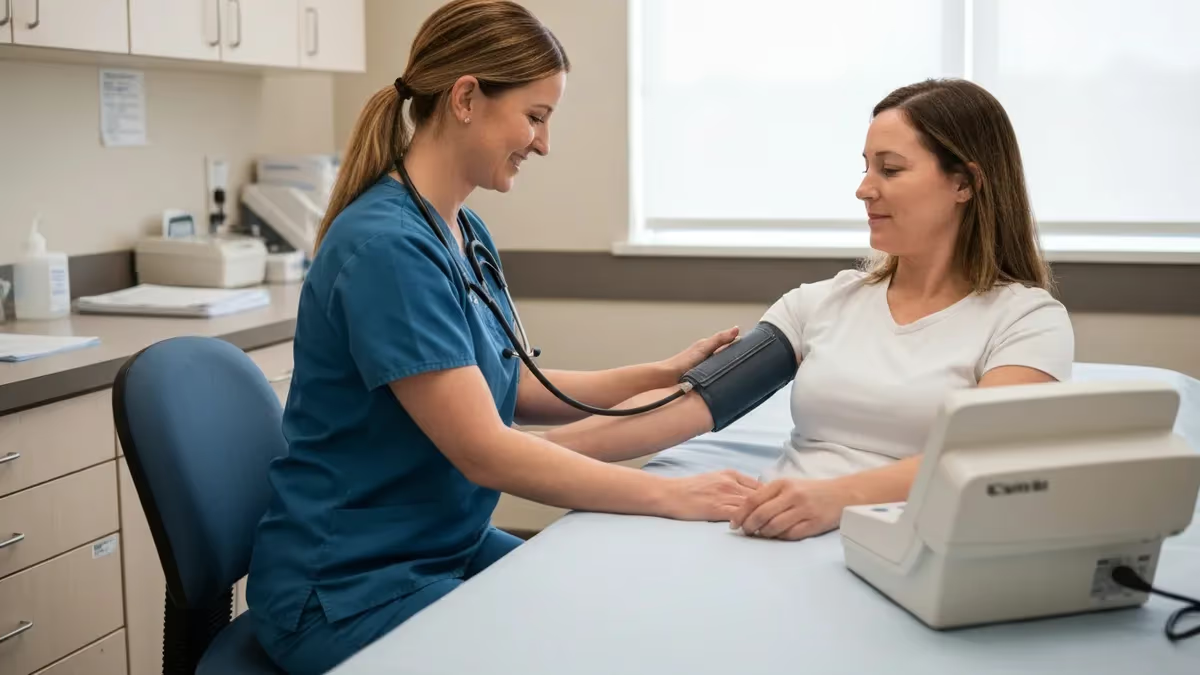
A free lpn course might sound too good to be true, but thousands of aspiring nurses across the United States access fully funded or low-cost LPN training every year through workforce development grants, employer sponsorships, community college waivers, and state-funded programs. Understanding where these opportunities exist and how to qualify for them is the first step toward launching a rewarding healthcare career without drowning in student debt.
Licensed Practical Nurses — also called Licensed Vocational Nurses (LVNs) in California and Texas — are essential members of the healthcare team. They monitor patient vitals, administer medications, assist with wound care, and communicate critical changes to registered nurses and physicians. The role is in high demand, with the Bureau of Labor Statistics projecting steady growth in LPN employment through the end of the decade.
The typical LPN program runs between 12 and 18 months, covering foundational subjects like anatomy and physiology, pharmacology, maternal and newborn nursing, mental health concepts, and clinical practicum hours. While private vocational schools often charge $10,000–$20,000 for these programs, community colleges, technical schools, and workforce programs frequently offer the same curriculum at a fraction of the cost — or entirely free for qualifying students.
Federal financial aid is one of the most accessible routes to zero-cost LPN training. Pell Grants, which do not need to be repaid, can cover community college tuition for students who demonstrate financial need. Many students combine Pell Grants with state-level grants, resulting in full coverage of tuition, fees, and even textbooks. Completing the FAFSA is a non-negotiable first step for anyone exploring this path.
Workforce development boards funded by the Workforce Innovation and Opportunity Act (WIOA) sponsor LPN training for unemployed, underemployed, and career-changing workers. Local American Job Centers can connect you with these funds, which often cover not just tuition but also uniforms, testing fees, and transportation assistance. Eligibility requirements vary by state, but most programs prioritize candidates who can demonstrate a clear career pathway into healthcare employment.
Employer-sponsored LPN programs are another powerful avenue. Hospitals, long-term care facilities, and home health agencies frequently partner with local schools to offer tuition reimbursement or prepayment in exchange for a work commitment after graduation. These earn-while-you-learn arrangements let you maintain income during training, eliminating the financial gap that prevents many aspiring nurses from enrolling in the first place.
This guide walks you through every realistic pathway to free or drastically reduced-cost LPN training, the admission requirements you need to meet, what to expect during coursework and clinicals, and how to prepare effectively for the NCLEX-PN licensing exam. Whether you are a recent high school graduate, a CNA looking to advance, or a career-changer entering healthcare for the first time, the information below will help you map out your most affordable route to licensure.
LPN Training & Career by the Numbers
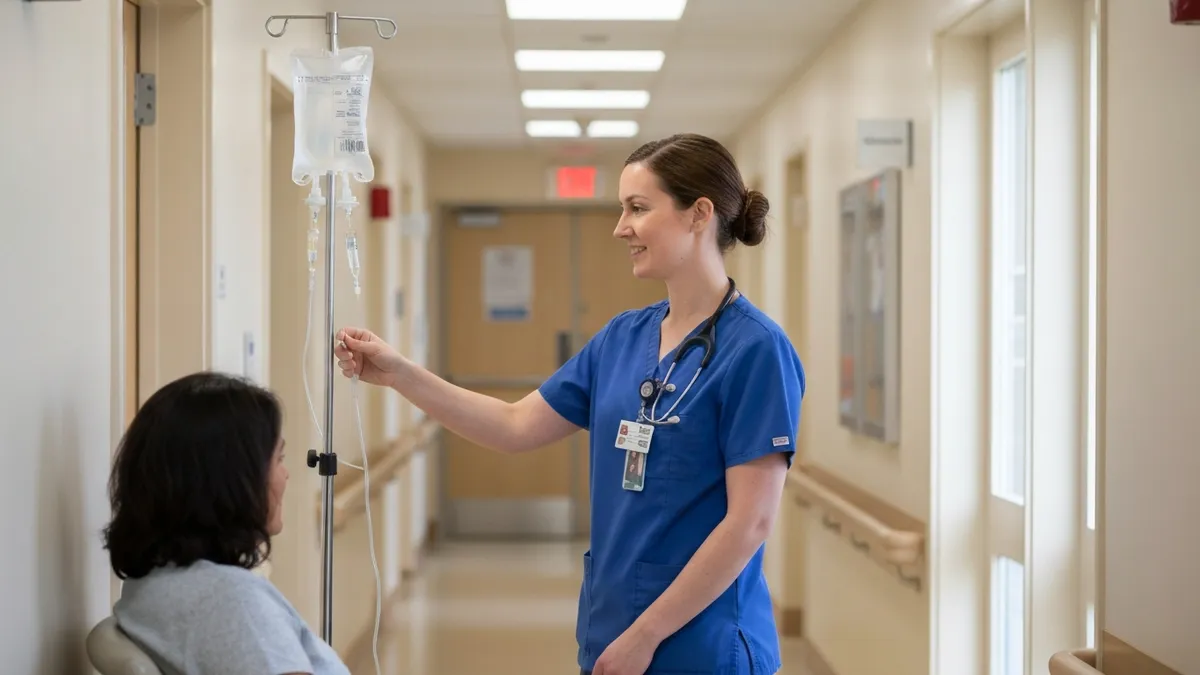
Free LPN Training Pathways: Step by Step
Complete Your FAFSA
Contact Your Local American Job Center
Research Employer Tuition Programs
Apply to a CCNE or ACEN-Accredited Program
Complete Coursework and Clinical Hours
Pass the NCLEX-PN and Apply for Licensure
Understanding the admission requirements for LPN programs is essential before you invest time in applications. While requirements differ between schools, most accredited programs share a consistent set of prerequisites that help ensure students are academically and physically prepared for the rigors of nursing training. Meeting these requirements early gives you a competitive advantage in cohort-limited programs that fill up months in advance.
Most LPN programs require applicants to hold a high school diploma or GED equivalent. Some programs also require documented completion of specific high school coursework, particularly in biology, chemistry, and mathematics. If your high school transcript lacks these courses, many community colleges offer non-credit preparatory classes that satisfy the requirement without adding to your official academic load or cost burden.
A minimum GPA is a common threshold — typically 2.5 to 3.0 on a 4.0 scale. Programs with competitive admissions may weigh your GPA in science courses more heavily than your overall average. If your GPA falls below the cutoff, consider retaking a biology or anatomy course at a community college to demonstrate academic improvement. A strong recent grade can outweigh an older low grade in many admissions formulas.
Standardized entrance testing is required by many LPN programs. The most common exams are the TEAS (Test of Essential Academic Skills) and the HESI A2. These assessments evaluate reading comprehension, mathematics, science, and English language proficiency. Preparation resources for both exams are widely available online, and many community college testing centers offer the exams for under $75. Scoring in the 70th percentile or higher significantly strengthens most applications.
Health and immunization requirements are non-negotiable for clinical placement. Programs universally require proof of MMR (measles, mumps, rubella), varicella, Hepatitis B series, annual influenza vaccination, and a current negative tuberculosis test or chest X-ray. Many programs also require CPR certification at the BLS level from the American Heart Association. These health screenings protect both you and the patients you will care for during clinical rotations.
Background checks and drug screening are standard across virtually all LPN programs and are repeated at clinical placement sites. Certain criminal convictions — particularly those involving abuse, theft from vulnerable populations, or controlled substance violations — may affect your ability to obtain clinical placements or ultimately receive licensure. If you have a prior conviction, consult your state board of nursing about their character review process before applying to programs, as many boards offer advisory opinions before you invest in training.
Documentation requirements for free or grant-funded programs often go beyond standard admissions paperwork. WIOA-sponsored students typically need to provide proof of unemployment or underemployment, tax returns or pay stubs demonstrating financial need, and a written Individual Employment Plan. Employer-sponsored applicants may need to sign a binding tuition repayment agreement. Organizing all required documents before your first application deadline reduces stress and ensures you do not miss funding windows due to incomplete paperwork.
What You Will Learn in a Free LPN Course
LPN programs begin with foundational sciences that underpin every clinical decision you will make. Anatomy and physiology teaches body systems from the cellular level through organ integration. Microbiology covers infection control principles, pathogen identification, and the mechanisms behind common hospital-acquired infections. Medical terminology builds the professional vocabulary that allows nurses to communicate precisely with physicians, pharmacists, and other members of the care team.
Pharmacology is one of the most intensive components of LPN training, covering drug classifications, mechanisms of action, common side effects, and safe administration routes. Students learn to calculate medication dosages using dimensional analysis and weight-based formulas. Many programs integrate pharmacology labs where students practice preparing IV solutions, drawing up injections, and verifying medication orders against the five rights of medication administration: right patient, right drug, right dose, right route, and right time.
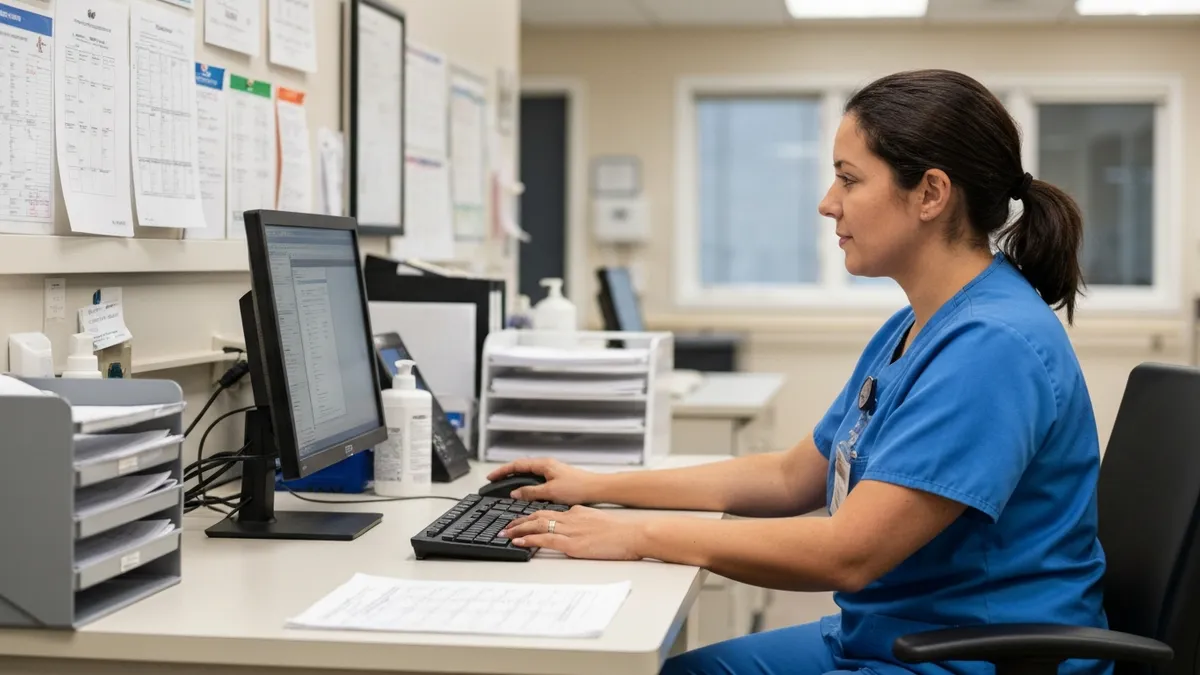
Free LPN Programs: Advantages and Trade-Offs
- +Zero or near-zero tuition cost through Pell Grants, WIOA funding, or employer sponsorship eliminates the primary barrier to nursing education
- +Community college programs are often located close to home, reducing transportation costs and allowing students to maintain part-time work
- +Employer-sponsored pathways provide income during training and a guaranteed job offer upon licensure, reducing post-graduation uncertainty
- +WIOA-funded programs frequently include wraparound support such as childcare assistance, transportation stipends, and career counseling
- +Pell Grant-eligible programs often have open or rolling admissions compared to highly competitive private school programs
- +Graduating with no student loan debt dramatically accelerates your financial stability as a new LPN earning a starting salary in the $45,000–$55,000 range
- −Free programs often have waitlists of 6–18 months, requiring careful planning and patience before enrollment begins
- −WIOA and workforce grants have eligibility criteria that not every applicant will meet, particularly those currently employed full-time
- −Employer tuition agreements typically include repayment clauses — leaving the job early can result in owing the full tuition amount
- −Community college programs may have fewer simulation lab resources or clinical site variety than private vocational schools
- −Free programs funded by grants may have stricter attendance and GPA continuation requirements to maintain funding eligibility
- −Some rural areas have limited access to free LPN programs, requiring longer commutes or temporary relocation to participate
NCLEX-PN Preparation Checklist for LPN Students
- ✓Download the official NCLEX-PN Test Plan from NCSBN.org and highlight the highest-weighted content areas
- ✓Complete a minimum of 1,500 practice questions before your exam date, tracking weak content areas in a study log
- ✓Take at least one full-length timed NCLEX-PN practice exam under real testing conditions to build pacing skills
- ✓Review pharmacology flashcards for the top 50 most commonly tested drug classes, including side effects and nursing considerations
- ✓Study the normal lab value ranges for CBC, BMP, CMP, and coagulation panels until recall is automatic
- ✓Practice Next Generation NCLEX (NGN) question formats including extended drag-and-drop and matrix-style items
- ✓Join a structured NCLEX-PN study group or online forum to discuss difficult questions and share mnemonics
- ✓Schedule your Pearson VUE exam date within 45 days of program completion to maintain content retention
- ✓Verify your state board of nursing ATT (Authorization to Test) eligibility requirements at least 30 days before your target exam date
- ✓Plan a 48-hour low-stress period before exam day — avoid intensive studying the night before to prevent fatigue-related errors
Students Who Practice 1,500+ Questions Pass at Higher Rates
Research consistently shows that LPN students who complete at least 1,500 NCLEX-PN style practice questions before their exam date pass at significantly higher rates than those who rely on textbook review alone. Starting practice question sets during your first semester — not just the final weeks — builds clinical reasoning habits that carry through both your program and the licensing exam.
Maximizing a free LPN course requires more than simply showing up to class and completing assignments. Students who earn the highest outcomes from subsidized programs approach their training with the same intentionality as those paying full tuition out of pocket. The zero-cost structure is an opportunity, not a signal to treat the experience casually — your license, your career, and potentially your repayment obligation to a sponsor are all on the line.
Time management is the single biggest predictor of success in accelerated nursing programs. A full-time LPN program demands roughly 30–40 hours per week of combined class, lab, and clinical time, plus an additional 15–20 hours of independent study. Students who map their weekly schedule at the start of each semester — blocking study time as firmly as class time — consistently outperform those who study reactively around competing obligations. Free productivity tools like Google Calendar and Notion make this straightforward even for students without prior planning experience.
Building relationships with clinical instructors and facility preceptors pays dividends that extend far beyond the program itself. Preceptors who observe your work ethic and clinical judgment during rotations are your most direct pipeline to job offers. Many LPN graduates receive their first job offer from a facility where they completed a practicum rotation, often before they have even sat for the NCLEX-PN. Treating every clinical shift as a professional audition, not just a class requirement, positions you ahead of the competition in a tight local hiring market.
Resource utilization separates strong students from struggling ones. Most LPN programs, including free community college programs, offer tutoring services, skills labs with open practice hours, and access to online question banks through platforms like ATI or HESI. Students who use these resources regularly are far less likely to fall behind during intensive pharmacology or medical-surgical units. If your program does not provide a question bank, free alternatives like the NCSBN Learning Extension trial and open-access NCLEX resources can supplement your preparation at no cost.
Financial planning during training is critical, even when tuition is covered. Books and uniforms for LPN programs typically cost $500–$1,500. Clinical supply kits — stethoscopes, bandage scissors, penlight, and blood pressure cuffs — add another $100–$300. WIOA-funded students should request that these costs be included in their Individual Training Account before the grant is finalized. Some programs provide a supply kit as part of their grant package. Always ask — costs that are not explicitly excluded from grant coverage are often included if you advocate for yourself during the enrollment process.
Peer study groups are one of the most underutilized resources in free LPN programs. Group studying improves retention through teaching and discussion, helps identify content gaps you might overlook studying alone, and provides emotional support during the inevitable high-stress periods of clinical training. The most effective study groups limit membership to four to six people, meet on a fixed schedule, and rotate the responsibility of teaching each session's content. Teaching a concept forces deeper processing than simply reading or highlighting notes.
Staying organized with patient care documentation is a skill that must be developed during training, not after graduation. Accreditation bodies and clinical sites require accurate charting as both a patient safety measure and a legal record. Practice writing concise, objective SBAR (Situation, Background, Assessment, Recommendation) notes during every clinical shift, even when your preceptor does the final charting. This habit accelerates your transition from student to confident independent practitioner on your first day of employment as a licensed nurse.
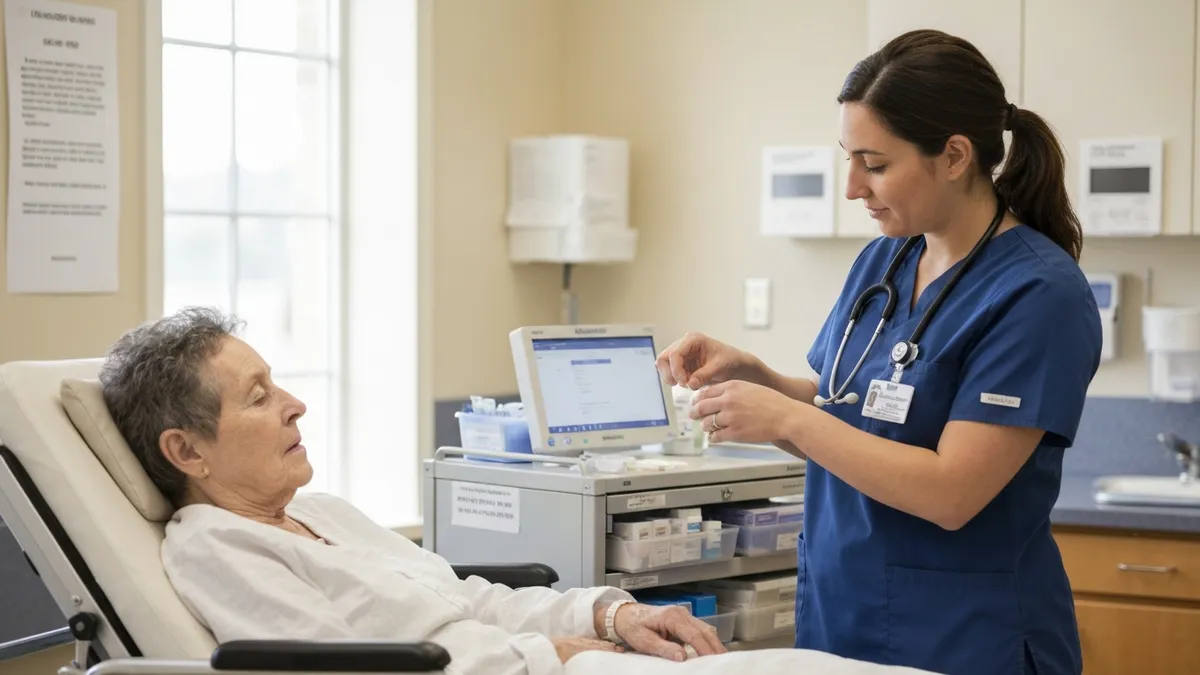
Workforce Innovation and Opportunity Act training grants operate on fiscal year cycles and have fixed funding pools that are exhausted on a first-come, first-served basis. In many states, WIOA LPN training funds run out as early as March for the following program year. Contact your local American Job Center before November to begin the eligibility process and secure your Individual Training Account before the funding window closes.
The career outlook for licensed practical nurses who complete their training through free or subsidized programs is identical to graduates of any other accredited LPN pathway. Employers do not distinguish between a diploma earned at a community college on a Pell Grant and one earned at a private vocational school charging $18,000 in tuition. What matters to hiring managers is your NCLEX-PN licensure status, your clinical rotation experience, and the professional references you have cultivated during training.
LPN salaries vary meaningfully by setting, geographic location, and years of experience. The national median sits at approximately $54,620 per year according to BLS May 2023 data, but LPNs working in home health agencies, correctional facilities, and specialty clinics often command higher rates. States like California, Alaska, Massachusetts, and Washington consistently post the highest LPN median wages, while rural Southern and Midwestern states tend toward lower averages. However, cost-of-living adjustments often narrow real-world purchasing power differences between high- and low-wage states.
Specialty certifications significantly increase LPN earning potential after licensure. The National Association for Practical Nurse Education and Service (NAPNES) offers specialty certifications in long-term care, IV therapy, and pharmacology. The American Association of Office Nurses offers a certification track relevant to clinic-based LPNs. These credentials typically require documented clinical experience, a written examination, and a modest fee — but they routinely translate into $2,000–$6,000 annual salary increases and expanded scope of practice privileges in states that recognize the designations.
Career advancement from LPN to RN is a well-worn pathway, and many employers actively support it through bridge programs and tuition assistance. LPN-to-RN bridge programs, also called LPN-to-ADN or LPN-to-BSN programs, allow working nurses to earn their registered nurse licensure while maintaining employment. Completion typically takes 12–24 additional months beyond the LPN credential. The income difference is substantial — RN median wages exceed $89,000 nationally — making the bridge investment one of the highest-return education decisions available to a working LPN.
Long-term care and skilled nursing facilities are the largest employers of LPNs in the United States, and they are also among the most aggressive in offering tuition assistance and sign-on bonuses to newly licensed nurses. The ongoing national shortage of nursing home staff has created leverage for LPN job seekers that did not exist a decade ago. New graduates willing to commit to a long-term care position for 12–24 months frequently negotiate sign-on bonuses of $2,000–$8,000 on top of competitive base salaries, effectively recovering any out-of-pocket training costs within the first year of employment.
Geographic flexibility expands your opportunities dramatically as a newly licensed LPN. Travel LPN contracts through agencies like AMN Healthcare, Aya Healthcare, and Medical Solutions offer 13-week placements in high-demand facilities across the country, with all-inclusive pay packages that typically exceed $1,500 per week. While travel nursing is not for everyone, it is a legitimate strategy for early-career LPNs who want to maximize income, build diverse clinical experience, and pay off any remaining debt before settling into a permanent position in their preferred community.
The combination of free or heavily subsidized LPN training and strong post-licensure earning potential makes this one of the most financially efficient career pathways in the entire healthcare sector. A student who completes a no-cost community college LPN program, passes the NCLEX-PN on the first attempt, and accepts a sign-on bonus from a long-term care facility can realistically begin their professional life with zero education debt and a $50,000+ annual income — a financial foundation that takes many four-year college graduates a decade to reach.
Practical preparation strategies in the final weeks before the NCLEX-PN can determine whether you pass on your first attempt or face the cost and stress of a retake. Most test-taking experts recommend a structured wind-down approach rather than cramming: heavy content review in weeks four through six before the exam, followed by a tapering strategy in the final two weeks that emphasizes timed practice exams over new content acquisition.
Identifying your weakest content areas early is far more productive than reviewing material you already understand well. Most question banks include performance analytics that show your percentage correct by NCLEX-PN content category. If pharmacology is consistently your lowest-performing area, allocate 40–50% of your final study weeks to that category alone. Targeted weakness remediation in the final month before the exam produces larger score gains than generalized review across all content equally.
Sleep and physical health in the weeks before your exam are not optional considerations — they are performance variables. Chronic sleep deprivation impairs the prefrontal cortex functions that the NCLEX-PN specifically tests: prioritization, clinical reasoning, and decision-making under uncertainty. Build a consistent 7–8 hour sleep schedule at least two weeks before your exam date and protect it aggressively, even if it means studying fewer total hours. A well-rested brain retrieves content more efficiently than an exhausted one that has logged more study hours.
On exam day, arrive at the Pearson VUE center with two acceptable forms of ID, your ATT number, and a clear understanding of the center's policies on personal items. The NCLEX-PN provides an on-screen calculator, scratch paper (erasable whiteboard at most centers), and optional earplugs. The test pauses every hour to offer a break. Taking the break at 85 questions — the minimum exam length — prevents decision fatigue if the computer has not yet determined your competency level and the exam continues beyond that point.
Managing test anxiety is a skill that requires practice, not just willpower. Controlled breathing techniques — specifically box breathing, where you inhale for four counts, hold for four, exhale for four, and hold for four — activate the parasympathetic nervous system and reduce cortisol spikes during high-stakes testing. Practicing this technique during study sessions conditions your nervous system to use it automatically when anxiety peaks during the actual exam. Several LPN students report using it between question blocks to reset focus and maintain consistent pacing throughout a long exam session.
After the exam, resist the urge to immediately dissect every question you are uncertain about with classmates. Post-exam rumination increases anxiety without providing useful information, since the adaptive nature of the NCLEX-PN means question difficulty varies by individual and comparisons between test-takers are meaningless. Use the 48-hour Quick Results service through Pearson VUE to check your preliminary pass or fail status, and then focus your energy on the next practical step: submitting your licensure application to your state board if you passed, or reviewing your performance report if you did not.
If you do not pass on the first attempt, the NCLEX-PN allows retesting after 45 days. Many state boards require a waiting period and re-application fee. Use the performance feedback report from your failed attempt — it categorizes your performance by content area — to build a targeted remediation plan. Candidates who approach a retake with a structured, data-driven study plan rather than simply reviewing all material again pass at substantially higher rates. Your training through a free LPN program has given you the clinical foundation; the NCLEX-PN is a separate skill that rewards deliberate, strategic preparation above all else.
LPN Questions and Answers
LPN Requirements 2026: Complete Guide to Becoming a Licensed Practical Nurse
LPN IV Certification: Complete 2026 Guide to Training, Requirements & Cost
LPN Programs in Florida: Complete 2026 Guide to Accredited Schools, Costs, Requirements & Licensure

LPN Salary Wisconsin 2026: Average Pay, Top Cities, and How to Earn More
LPN Duties: Complete Guide to Daily Responsibilities and Scope of Practice
About the Author

Registered Nurse & Healthcare Educator
Johns Hopkins University School of NursingDr. Sarah Mitchell is a board-certified registered nurse with over 15 years of clinical and academic experience. She completed her PhD in Nursing Science at Johns Hopkins University and has taught NCLEX preparation and clinical skills courses for nursing students across the United States. Her research focuses on evidence-based exam preparation strategies for healthcare certification candidates.
Join the Discussion
Connect with other students preparing for this exam. Share tips, ask questions, and get advice from people who have been there.
View discussion (7 replies)