
LAPD Stations: Complete Guide to Los Angeles Police Department Bureaus, Divisions, and Community Stations
Explore LAPD stations, divisions, bureaus, salary, ranks, SWAT, and headquarters. Your complete guide to how the Los Angeles Police Department is organized. 💡
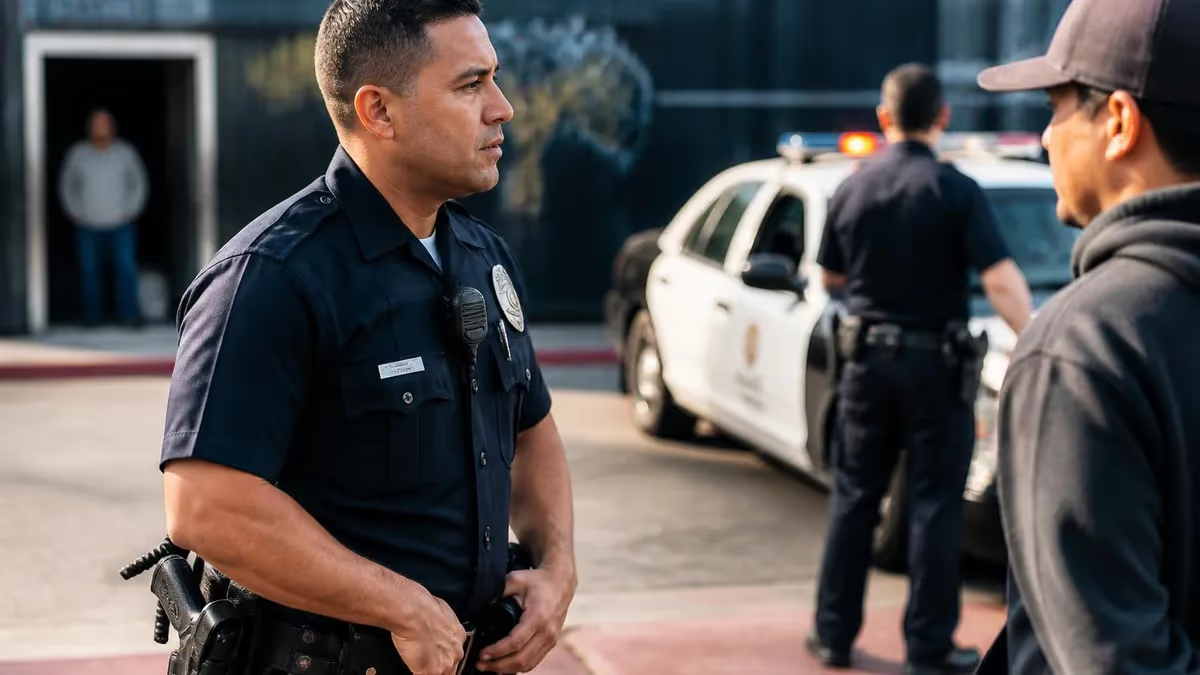
The network of lapd stations spread across Los Angeles forms the operational backbone of one of the largest municipal police forces in the United States. Anyone who follows lapd news quickly learns that the department divides the sprawling 469-square-mile city into geographic zones, each anchored by a community police station. These stations are not just buildings with patrol cars parked outside. They are the front doors of the department, the places where residents file reports, where officers report for roll call, and where detectives work cases that shape daily headlines across the region.
Understanding how LAPD stations fit together starts with the department's organizational logic. The city is carved into four geographic bureaus, and each bureau supervises a cluster of patrol divisions, most of which operate out of a dedicated station house. This structure lets a department of roughly 9,000 sworn officers respond to millions of calls each year while keeping a recognizable local presence. When you call 911 in Los Angeles, the station closest to your address typically owns the response, the follow-up, and any neighborhood policing that comes afterward.
Each LAPD station is led by a captain who functions almost like a small police chief for that area, overseeing patrol officers, detectives, community relations staff, and front desk personnel. Captains report up through their bureau commanders, who in turn answer to the office of the lapd chief at headquarters downtown. This layered command lets the department balance citywide priorities, like a major SWAT callout or a high-profile investigation, against the hyper-local concerns of a single neighborhood watch group meeting on a Tuesday night.
For aspiring officers, the station you are assigned to after the academy can define the early arc of your career. A rookie posted to a busy downtown division will see a very different workload than one stationed in a quieter valley community. The variety is part of what makes the department attractive, and it is one reason LAPD salary discussions almost always come back to the diversity of assignments available. The same badge can lead to gang enforcement, traffic investigation, air support, or specialized detail work depending on where you land.
This guide walks through the geography, the divisions, the command structure, and the everyday functions of LAPD stations. Whether you are a resident trying to figure out which station handles your block, a journalist tracking how cases route through the system, or a candidate preparing for the hiring process, knowing the station map gives you a practical mental model of how policing actually works in Los Angeles. We will also touch on how stations interact with units like SWAT and the systems that make department communications possible day to day.
The stakes are real. A station is where a domestic violence victim seeks refuge at 2 a.m., where a stolen-vehicle report becomes a recovery, and where a community impact officer builds trust with a high school class. The physical building matters less than the people and the workflows it houses. By the end of this article you will understand the full hierarchy from the front counter clerk to the operations bureau, and you will see how every piece connects to the broader mission of the Los Angeles Police Department.
LAPD Stations by the Numbers
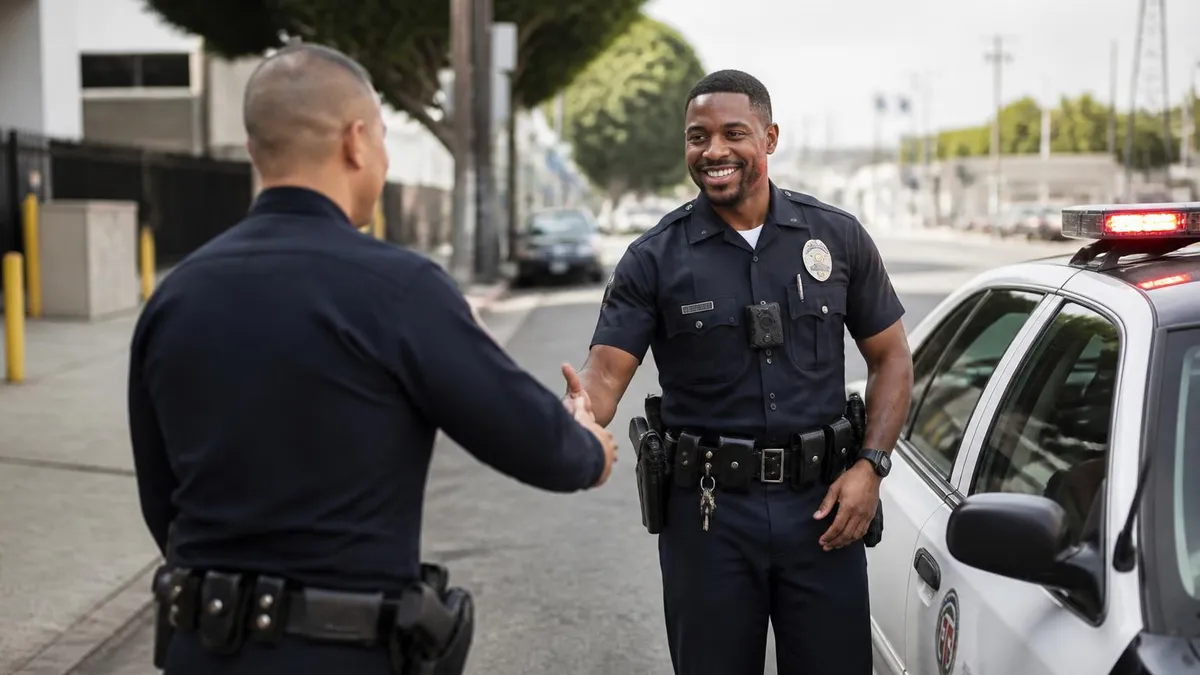
The Four Geographic Bureaus
Covers downtown Los Angeles and surrounding neighborhoods including Hollenbeck, Newton, Northeast, and Rampart. It handles dense urban policing, civic-center events, and some of the highest call volumes in the entire city.
Includes 77th Street, Southeast, Southwest, and Harbor divisions. This bureau covers historically high-activity areas and ports, with strong emphasis on gang enforcement, community trust building, and homicide investigation work.
The geographically largest bureau, spanning the San Fernando Valley with divisions like Devonshire, Foothill, Mission, North Hollywood, Topanga, Van Nuys, and West Valley. Suburban sprawl defines its patrol challenges.
Covers affluent and tourist-heavy areas such as Hollywood, Wilshire, West Los Angeles, Olympic, and Pacific divisions. Entertainment venues, beaches, and major commercial corridors shape its daily workload.
Each LAPD station, formally called a community police station, serves a single patrol division. The 21 divisions are the day-to-day units residents interact with most. Filing an lapd online report for a minor crime, picking up a copy of a traffic collision report, or attending a community advisory meeting all happen at the division level. The station is the bridge between citywide policy set downtown and the lived reality of a specific neighborhood, which is why local relationships matter so much to a captain's overall success.
A typical station houses several functional areas under one roof. Patrol officers work rotating watches that cover all 24 hours, ensuring marked units are always available. A detective bureau inside the station investigates everything from burglaries to assaults, with specialized tables for property crimes, robbery, and juvenile matters. There is usually a front desk staffed around the clock, a report-writing room, a community relations office, and a small jail or holding area for arrestees awaiting transport to a central booking facility downtown.
The watch commander is the senior officer on duty at any given hour, typically a lieutenant who makes real-time decisions about deployment, use-of-force reviews, and major incident response. When something significant happens overnight, the watch commander is the person who decides whether to call out additional resources, notify the press office, or escalate to bureau leadership. This role is the operational heartbeat of a station, keeping the gears turning when the captain and senior staff have gone home for the evening.
Stations also coordinate with specialized citywide units that do not belong to any single division. Air support, the K-9 unit, the mounted platoon, and SWAT all operate across division boundaries but stage out of or respond to specific stations when needed. A station captain might request these resources for a barricaded suspect, a large search operation, or crowd management at a major event. This blend of local ownership and shared specialized assets is what gives the department both flexibility and tactical depth.
Geographic assignment shapes everything from response times to community programs. A division covering a compact, walkable neighborhood can deploy foot beats and bicycle patrols, while a sprawling valley division leans heavily on patrol cars to cover ground. Captains tailor their strategies to the terrain, the population density, and the dominant crime patterns of their area. That is why no two LAPD stations feel exactly alike, even though they all follow the same departmental policies and rigorous training standards.
For the public, knowing your division is genuinely useful. The department's website maps every address to its serving division, and each station publishes its own phone number, address, and community meeting schedule. Building a relationship with your local station, whether through a neighborhood watch or a senior lead officer, often produces faster, more personal service than calling a central line. The senior lead officer program in particular assigns named officers to specific neighborhoods to act as ongoing points of contact.
LAPD SWAT and Specialized Units
The original lapd swat team, formed in 1967, is the prototype for modern police tactical units across the world. These officers train constantly for the highest-risk situations: barricaded suspects, hostage rescues, high-risk warrant service, and active shooter response. SWAT does not belong to a single station; it deploys citywide whenever a local division commander or watch commander determines that a situation exceeds the capability of ordinary patrol officers on the street.
Joining lapd s.w.a.t requires years of patrol experience, exceptional physical fitness, and a rigorous selection course with a notoriously high washout rate. Members carry specialized lapd gear including breaching tools, ballistic shields, and rifles. Because the unit responds across all four bureaus, stations maintain detailed protocols for requesting and supporting a SWAT callout, including perimeter setup, evacuation, and close coordination with trained crisis negotiators on scene.
Working at a Busy vs. Quiet LAPD Station
- +High call volume builds experience fast and sharpens judgment
- +More opportunities to work specialized assignments and details
- +Strong camaraderie among officers who handle intense workloads together
- +Greater visibility for promotion and recognition by command staff
- +Exposure to a wide variety of investigation types and tactics
- +Active community programs that create meaningful local impact
- −Higher stress and faster burnout risk over time
- −Less time for proactive policing between back-to-back calls
- −Heavier report-writing load at the end of every shift
- −More exposure to traumatic and high-risk incidents
- −Limited downtime for training or community relationship building
- −Greater scrutiny and media attention on individual incidents
Visiting Your Local LAPD Station: A Practical Checklist
- ✓Look up your serving division using the department's online address lookup tool.
- ✓Note the station's exact address and 24-hour front desk phone number.
- ✓Bring a valid government-issued photo ID for any in-person business.
- ✓Gather case or report numbers before requesting copies of records.
- ✓Call ahead to confirm hours for non-emergency services like fingerprinting.
- ✓Use the online reporting system for minor crimes when no suspect is present.
- ✓Ask for your area's senior lead officer for ongoing neighborhood concerns.
- ✓Check the community meeting schedule posted on the station's web page.
- ✓Never use a station front desk to report an emergency in progress; call 911.
- ✓Request a property release appointment in advance for recovered items.
Your division owns your case from start to finish
When you report a crime in Los Angeles, the station serving your address typically handles the patrol response, the detective follow-up, and any community policing afterward. Building a relationship with that single station, rather than calling a central line, almost always produces faster and more personal service.
Career paths inside LAPD stations follow a clear ladder, and understanding lapd ranks helps you see how authority flows from the front desk to the corner office. A new graduate begins as a Police Officer I and progresses to Police Officer II and III as they gain experience and complete probation. From there, the promotional path runs through detective, sergeant, lieutenant, captain, commander, deputy chief, and finally the lapd chief who leads the entire organization from headquarters. Each rank carries distinct responsibilities and a corresponding pay grade.
Salary is a major draw for candidates, and LAPD salary figures are publicly transparent. Entry-level officers earn a competitive base wage that climbs steadily with rank, longevity, and specialized assignments such as motor officer, bilingual, or hazardous duty bonuses. By the time an officer reaches sergeant or lieutenant, total compensation including overtime and benefits becomes substantial. The department also offers a defined-benefit pension that makes long careers financially attractive compared to many private-sector jobs available in the region.
Promotion is competitive and merit-based. Officers must pass written examinations, oral interviews, and assessment center exercises to advance, and the process rewards both street performance and leadership potential. A captain who leads a station has usually spent fifteen to twenty years climbing through these ranks, accumulating experience across multiple divisions and assignments. This deep institutional knowledge is exactly what the demanding job of running a community police station requires every single day of the week.
Lateral and specialized opportunities keep careers fresh. An officer might spend years on patrol, transfer to a detective table, qualify for the K-9 unit, fly with air support, or earn a coveted SWAT slot. Each specialty has its own selection process, training pipeline, and culture. The breadth of options is one reason officers describe the department as offering many careers within a single career, all anchored by the station system that serves as the common starting point for everyone.
Community-facing roles are increasingly valued. Senior lead officers, community relations officers, and youth program coordinators build the trust that makes effective policing possible. These positions require strong interpersonal skills and a genuine investment in the neighborhoods they serve. For officers who prefer relationship building over high-speed enforcement, these roles offer a rewarding alternative path that still advances the department's broader public safety mission in measurable and lasting ways across communities.
The hiring process itself is rigorous, with a multi-stage background investigation, physical fitness testing, medical and psychological evaluations, and a polygraph. Candidates who understand the structure of stations, ranks, and bureaus tend to perform better in interviews because they can speak knowledgeably about where they want to serve and why. Studying the organizational chart before applying signals genuine interest and preparation that hiring panels notice and reward during the highly competitive selection process.
A station front desk and the online reporting system are for non-emergency matters only. If a crime is in progress, someone is injured, or there is an immediate threat to life, call 911 immediately. Do not drive to a station or wait to file an online report during an active emergency.
Daily operations at an LAPD station run on routines and communication systems most residents never see. Roll call opens each watch, where supervisors brief officers on overnight crime trends, wanted suspects, and special deployments. Officers then draw their equipment and head to assigned patrol areas. The right lapd gear, from radios and body cameras to ballistic vests, is checked and signed for, because reliable equipment is the difference between a routine stop and a dangerous situation gone wrong.
Radio communication ties the whole system together. Officers use a structured set of codes and a standardized phonetic alphabet so that names, license plates, and locations are transmitted clearly over potentially noisy channels. The LAPD phonetic alphabet, paired with numeric radio codes, lets dispatchers and officers coordinate citywide without confusion. A unit calling in a suspect description relies on these conventions to ensure that every listening officer hears exactly the same information the very first time.
Reporting is a huge part of station life. For minor crimes where no suspect is present, residents are encouraged to use the online reporting system, which frees patrol officers to respond to higher-priority calls. For everything else, officers write detailed reports that become the foundation of any investigation or prosecution. A well-written report from a patrol officer can make or break a detective's case, which is why report writing is taught intensively in the academy and refined for years on the job.
Booking and custody procedures also flow through stations. When an arrest is made, the arrestee is processed, searched, and held in a station holding area before transport to a central booking facility. Property is logged, charges are documented, and the chain of custody for evidence begins. These procedures must be flawless, because any error can compromise a case in court. Stations maintain detailed logs and supervisor reviews to keep the entire process accountable and legally sound at all times.
Technology has transformed station operations in recent years. Body-worn cameras, automated license plate readers, in-car computers, and digital evidence management systems have all changed how officers document their work. Stations now manage enormous volumes of digital evidence that must be stored, tagged, and shared securely with prosecutors. This shift has added new roles and training requirements while improving transparency and accountability across every division in the department citywide.
Community engagement rounds out the operational picture. Stations host neighborhood watch meetings, youth programs, citizen academies, and public events that build trust between officers and residents. These programs are not afterthoughts; they are central to the department's philosophy that effective policing depends on community partnership. A station that invests in relationships sees more cooperation from witnesses, more tips on open cases, and ultimately safer neighborhoods for everyone who lives and works there.
If you are preparing to join the department or simply want to navigate it more effectively, a few practical strategies make a real difference. First, study the station map and bureau structure until you can name the four geographic bureaus and place the major divisions within them. This knowledge helps in interviews, in community meetings, and in understanding news coverage. Candidates who can discuss specific divisions and explain why they want to serve there consistently stand out from applicants who speak only in vague generalities.
Second, learn the radio codes and phonetic alphabet early. These conventions appear on entry exams and become second nature on the job, so getting comfortable with them before you start gives you a head start. Practice with sample radio traffic, memorize the most common codes, and quiz yourself until the responses are automatic. The faster you internalize departmental communication, the more confident you will feel during high-pressure field training scenarios after the academy graduation.
Third, understand the reporting systems from the public's side. Knowing when to use the online reporting tool versus calling for an officer, and what information you need to gather first, saves time for everyone. If you are a resident, keeping case numbers, dates, and clear descriptions organized speeds up every interaction with your station. If you are an aspiring officer, understanding the citizen experience helps you provide better service from your very first shift on patrol.
Fourth, take advantage of community programs. Citizen academies, ride-alongs, and neighborhood watch meetings give you firsthand exposure to how stations operate. These experiences are invaluable whether you are deciding to apply or simply trying to be a more informed resident. Many successful recruits point to a ride-along as the moment they decided to pursue a career, because it revealed the realities of the job in a way no brochure ever could.
Fifth, use practice questions to test your knowledge before any exam. The hiring process includes written tests covering reasoning, terminology, and procedures, and focused practice dramatically improves scores. Working through realistic questions exposes gaps in your understanding while you still have time to fill them. Pair practice tests with study of the organizational structure, and you build the kind of well-rounded preparation that hiring panels and field training officers both reward consistently.
Finally, stay current with developments at the department. Policies, technology, and even station boundaries evolve over time, so following reliable sources keeps your knowledge fresh. Whether you are a candidate, a resident, or a curious observer, understanding how LAPD stations function gives you a clearer window into how public safety actually works in one of the most complex cities in America. With the structure now mapped out, you are well equipped to engage with the department on informed footing.
LAPD Questions and Answers
LAPD Inmate Search: How to Find Someone in LA Custody, Online Tools, and What Information You Need
Los Angeles Police Department Rank Structure: Insignia & Promotion Path
LAPD M16 Rifle and Full Equipment Guide: Guns, Gear, Cars, Helicopters
LAPD Scanner: How to Listen to Los Angeles Police Radio in 2026
LAPD PIO: Complete Guide to the Los Angeles Police Department Public Information Office, Media Relations, and Press Briefings
About the Author

Law Enforcement Trainer & Civil Service Exam Specialist
John Jay College of Criminal JusticeMarcus B. Thompson earned his Master of Arts in Criminal Justice from John Jay College of Criminal Justice and served 12 years as a law enforcement officer before transitioning to full-time academy instruction. He is a POST-certified instructor who has prepared candidates for police entrance exams, firefighter assessments, and civil service examinations across dozens of agencies.
Join the Discussion
Connect with other students preparing for this exam. Share tips, ask questions, and get advice from people who have been there.
View discussion (9 replies)