
IPAF Certification Test: Elevate Your Skills 2026
Prepare for the IPAF Certification. Practice questions with answer explanations covering all exam domains.
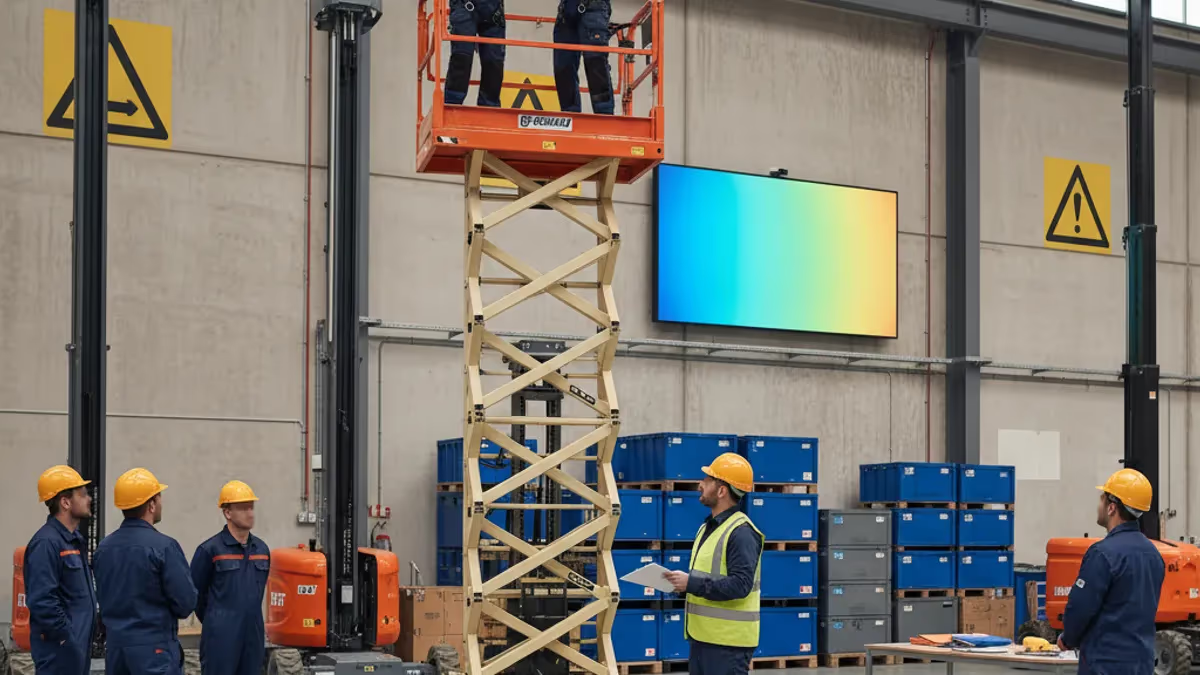
The IPAF (International Powered Access Federation Certification) certification is a globally recognized qualification designed for professionals who operate, inspect, and manage powered access equipment such as Mobile Improving Work Platforms (MEWPs), mast climbing platforms, and hoists. Earning an IPAF certification not only increases your job opportunities but also ensures compliance with safety standards in the use of these machines. This guide will help you understand the importance of IPAF certification, how to get trained, and what benefits it offers. Practice with the free IPAF PAL Card practice test on PracticeTestGeeks (150+ questions with answer explanations).
IPAF: upcoming dates and official changes
- Jan 1, 2026: The log book requirement for MEWP operator renewal courses rose to a minimum of sixty entries over five years from 1 January 2026 (it was forty entries from 1 January 2025). (International Powered Access Federation)
Facts verified Oct 16, 2026 against International Powered Access Federation. Dates that have passed are removed automatically.
- Only operators and demonstrators who have kept a log book (paper or in the ePAL app) are eligible for an IPAF PAL Card renewal test; the rest must re-sit the full course. (International Powered Access Federation)
- From 1 January 2026, MEWP operators need a minimum of sixty log book entries over five years to take an IPAF PAL Card renewal course. (International Powered Access Federation)
Facts verified Oct 16, 2026 against International Powered Access Federation. Dates that have passed are removed automatically.
Free IPAF PAL Card Study Tools
Interactive IPAF PAL Card resources on PracticeTestGeeks, free to start:
- IPAF PAL Card practice test — 150+ questions with instant scoring and answer explanations
- IPAF PAL Card flashcards — review key terms and concepts card by card
- IPAF PAL Card study guide — topic-by-topic overview of what the exam covers
- IPAF PAL Card cheat sheet — one-page printable summary for last-minute review

Key Takeaways
IPAF certification is essential for anyone working with powered access equipment, such as MEWPs and mast climbers.
Certification is globally recognized, providing professionals with increased career opportunities.
IPAF training covers theoretical and practical components, ensuring operators can safely use access equipment.
A variety of IPAF courses are available, tailored to different roles such as operators, supervisors, and loading/unloading professionals.
MEWP training is accessible through IPAF-approved centers and can be located through IPAF’s official site.
What is IPAF?
The International Powered Access Federation (IPAF) is an organization committed to promoting the safe and effective use of powered access equipment worldwide. Established in 1983, IPAF provides training, resources, and guidance on the proper use of Mobile Improving Work Platforms (MEWPs), mast climbing work platforms, and other equipment that allows workers to perform tasks at height.
IPAF-certified operators are recognized globally for their competence and safety-conscious approach to working with powered access equipment. The certification helps professionals comply with regulations and minimizes the risks associated with operating machines at height.
IPAF Certification: Why It Matters
Obtaining IPAF certification demonstrates that you have the necessary skills and knowledge to safely operate powered access equipment. The certification is designed for anyone who needs to operate, supervise, or manage MEWPs, and ensures that workers meet strict safety standards.
Key reasons to earn your IPAF certification include:
Safety Compliance: IPAF-certified operators follow the highest safety standards, reducing the risk of workplace accidents.
Global Recognition: The IPAF certification is recognized in over 60 countries, making it a valuable qualification for international projects.
Career Advancement: Certified professionals are more likely to secure jobs or promotions in industries like construction, warehousing, and event management.
IPAF Training: What to Expect
IPAF training is comprehensive and covers everything you need to know to safely operate powered access equipment. It includes both theoretical knowledge and practical experience. Training courses are typically provided by IPAF-approved training centers.
The training covers topics such as:
Pre-Use Inspections: Learning to conduct safety checks on equipment before use.
Safe Operation: How to safely operate MEWPs and other powered access equipment.
Emergency Procedures: Understanding what to do in case of an emergency, including lowering platforms safely and performing rescues.
Worksite Hazards: Identifying and mitigating potential hazards when working at height.
IPAF Course Options
IPAF offers a variety of courses depending on your job role and the type of equipment you’ll be working with. Some of the most popular courses include:
MEWP Operator Training: This is the most common IPAF course, designed for those who will be operating MEWPs. The course covers all aspects of safe operation and is available for different types of platforms such as scissor lifts, boom lifts, and vehicle-mounted platforms.
MEWP Supervisor Training: This course is ideal for managers or supervisors who oversee the use of powered access equipment on job sites. It focuses on regulations, safe practices, and supervising operators.
Loading and Unloading: Specifically for professionals responsible for transporting and securing powered access equipment, this course ensures they know how to properly load, unload, and secure MEWPs for transportation.
Use Use and Inspection Training: For those using uses while operating MEWPs, this course teaches proper use fitting, use, and inspection techniques.
MEWP Training Near Me
To find MEWP training near you, visit IPAF’s official website, which has a search tool to locate IPAF-approved training centers worldwide. These centers are accredited to provide the highest quality training and certification for powered access equipment.
Many training centers also offer flexible training options, including in-person and online courses for the theoretical components of the certification. After the theoretical training, you’ll complete the practical section on-site to gain hands-on experience with the equipment.
Conclusion
Earning your IPAF certification is a critical step in ensuring safety and compliance when working with powered access equipment. Whether you're operating a boom lift on a construction site or supervising a team of MEWP operators, this certification will give you the skills and knowledge necessary to perform your job safely and effectively.
IPAF training and certification are recognized around the world, making it an excellent investment for your career. It demonstrates that you are committed to upholding the highest safety standards and shows employers that you are qualified to handle the complexities of powered access equipment. Start your journey toward becoming IPAF certified today by finding a MEWP training center near you.
- +Validates your knowledge and skills objectively
- +Increases job market competitiveness
- +Provides structured learning goals
- +Networking opportunities with other certified professionals
- −Study materials can be expensive
- −Exam anxiety can affect performance
- −Requires dedicated preparation time
- −Retake fees apply if you don't pass
Pros and Cons at a Glance
| Pros | Cons |
|---|---|
| Validates your knowledge and skills objectively | Study materials can be expensive |
| Increases job market competitiveness | Exam anxiety can affect performance |
| Provides structured learning goals | Requires dedicated preparation time |
| Networking opportunities with other certified professionals | Retake fees apply if you don't pass |
Sample General Practice Questions
Try these questions from our free General practice tests. The correct answer and an explanation follow each question.
What is the purpose of a RACI chart in project management?
- A. Track project risks and their owners
- B. Define roles and responsibilities for project activities
- C. Plan communication with stakeholders
- D. Sequence project deliverables
Answer: B. Define roles and responsibilities for project activities
A RACI chart clarifies who is Responsible, Accountable, Consulted, and Informed for each project task or deliverable.
What is the key difference between a 'safety hazard' and a 'health hazard' in the workplace?
- A. Safety hazards cause immediate injury; health hazards cause illness over time
- B. Health hazards are always more serious than safety hazards
- C. Safety hazards only apply to construction; health hazards apply to offices
- D. There is no practical difference between the two
Answer: A. Safety hazards cause immediate injury; health hazards cause illness over time
Safety hazards typically cause acute, immediate harm (such as a fall), while health hazards often cause illness after prolonged or repeated exposure (such as chemical exposure).
What does 'sanctions compliance' involve for businesses?
- A. Complying with employee disciplinary procedures
- B. Ensuring the business does not conduct prohibited transactions with sanctioned countries, entities, or individuals
- C. Filing annual compliance reports with the SEC
- D. Adhering to workplace safety inspection schedules
Answer: B. Ensuring the business does not conduct prohibited transactions with sanctioned countries, entities, or individuals
Sanctions compliance requires businesses to screen transactions and counterparties against lists maintained by agencies like OFAC to avoid prohibited dealings.
Which of the following is an example of alliteration?
- A. The moon glowed softly over the water.
- B. Peter Piper picked a peck of pickled peppers.
- C. She was as fierce as a lion.
- D. The clock ticked endlessly through the night.
Answer: B. Peter Piper picked a peck of pickled peppers.
Alliteration is the repetition of the same initial consonant sound in closely connected words; 'Peter Piper picked' all begin with the 'P' sound.
Take the full General practice test
General Questions and Answers
How this page was made: written with AI tools and published by Nathan Beja, founder of Practice Test Geeks, who is responsible for its content. Exam facts are checked against the official sources listed below. Not reviewed by a subject-matter expert. Editorial policy
Sources & references
Exam facts on this page (fees, format, dates, passing scores) are checked against these official sources; the date is our last check. Editorial policy
- ipaf.org — Eligibility, renewal, test delivery, score validity, exam information · verified Oct 2026