
ICAS English Past Papers 2026 September: Free Practice Questions & Study Guide
Study ICAS English past papers by year level, learn what's actually tested, and practice free reading, spelling, grammar & writing questions. 📗

Searching for real ICAS English past papers usually starts the same way: a parent or student wants to know what the questions actually look like before test day arrives. The good news is that the icas english competition follows a fairly consistent structure year after year, which means past papers remain one of the most useful preparation tools available, even when the exact wording changes each sitting.
This guide walks through what's covered on ICAS English papers, where genuine past-style questions can be practiced for free, how the paper differs by year level, and how to read a score once practice is done. Rather than chasing a single downloadable PDF, the goal here is understanding the pattern behind the paper well enough that any past question, old or new, starts to feel familiar.
Most families come to past papers after hearing about ICAS from a school newsletter or a friend whose child already sat the assessment, often with only a vague sense of what "English" actually means on a competition-style paper versus a normal classroom spelling test. That gap between a familiar school routine and an unfamiliar external assessment is exactly what past-style practice is meant to close, one section at a time, well before the real sitting date.
ICAS English Papers at a Glance
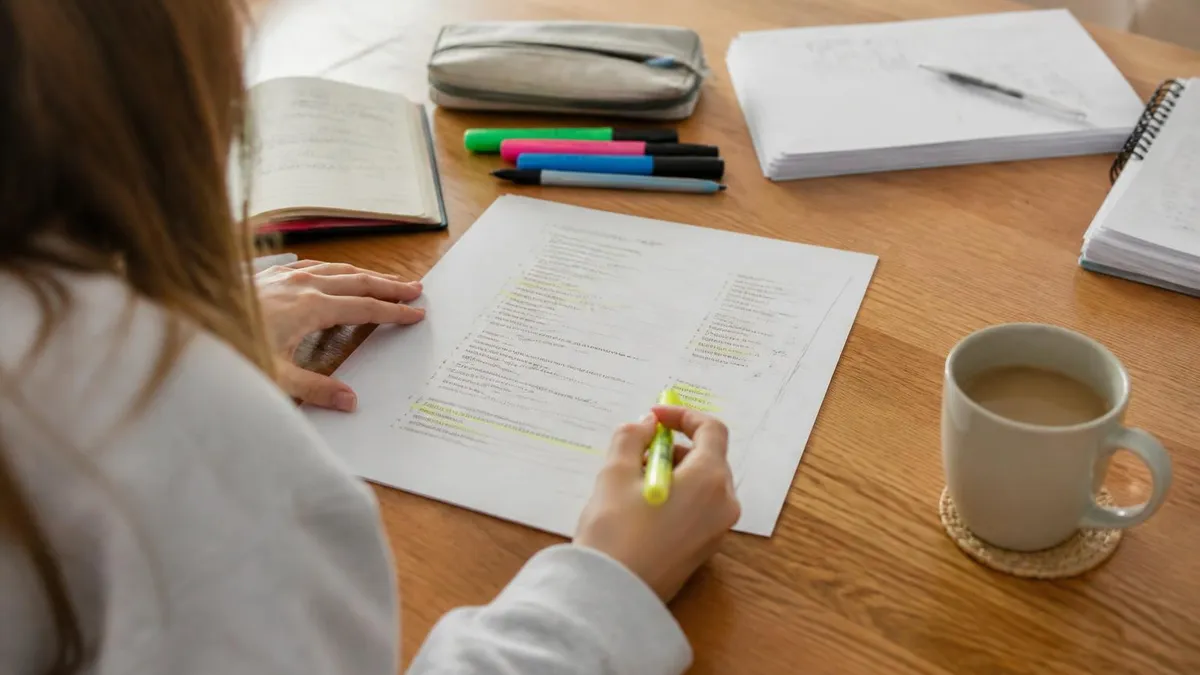
ICAS English papers are built around four recurring skill groups rather than a single reading test. Most papers open with reading comprehension passages, move through spelling and vocabulary items, cover grammar and punctuation questions, and for upper year levels, close with a written response task. Younger students typically see a shorter version focused mainly on reading and basic language conventions, while older students face a fuller mix including the persuasive or narrative writing component.
What makes past papers genuinely useful is that this skeleton barely changes from one icas english test to the next. The specific passages, word lists, and prompts rotate every sitting, but a student who's worked through a handful of past-style questions in each of the four areas walks in already knowing roughly how much time to give each section and what kind of thinking each question type actually rewards.
That consistency is also why past papers tend to outperform generic reading worksheets as a prep tool. A worksheet might build general literacy, but it won't necessarily match ICAS's particular blend of inference questions, vocabulary-in-context items, and short punctuation judgment calls that show up sitting after sitting.
It also helps to know roughly how the four skill groups are weighted before diving into practice. Reading comprehension usually accounts for the largest share of questions on most year-level papers, followed by grammar and punctuation, then spelling and vocabulary, with the writing task, where it appears, scored separately from the multiple-choice sections. Knowing that weighting up front helps a family decide where extra practice time will actually move the needle most.
Official ICAS past papers are sold directly through the organization and its regional distributors, and genuine copyrighted papers from prior years aren't something families can legally download for free from third-party sites. That doesn't mean free preparation is off the table, though. The practical alternative most families use is working through past-style questions written to match the same skill areas and difficulty curve as the real paper, without reproducing any copyrighted test content.
That's exactly the approach behind our own icas test papers free resource and the broader icas past papers hub, both built to mirror how genuine ICAS English questions are structured across reading, spelling, grammar, and writing. Working through a set of these before test day gives a student the same rehearsal value as an official past paper, minus the licensing restrictions and the cost.
It's worth being cautious of sites offering a supposedly "leaked" or scanned official paper for free download. Beyond the copyright issue, these files are frequently outdated, mislabeled by year level, or simply inaccurate copies that teach the wrong format. A current, purpose-built practice set is almost always a more reliable use of a student's limited study time than an unverified scanned PDF.
Libraries and school resource centers sometimes stock a small number of official ICAS preparation booklets that can be borrowed rather than purchased outright, which is worth asking about if a family wants to see an authentic printed example alongside free online practice. A coordinating teacher will usually know whether the school itself holds any copies from previous years that students can review during a lunchtime prep session.
If your school hasn't yet confirmed whether it's sitting ICAS English this year, that's worth checking with the coordinating teacher early in the term, since registration and internal permission forms are typically due weeks before the sitting window opens. Once the date is confirmed, working backward from it to schedule a handful of short practice sessions gives plenty of runway without needing to rush.
For families juggling multiple ICAS subjects at once, English is often easiest to fit around the edges of other study, since a short reading passage or a handful of spelling questions doesn't require the same block of uninterrupted time that a full maths or science session might need.
It's also fine to lean on everyday reading rather than only formal practice questions. A student who reads for pleasure regularly, even outside dedicated study sessions, tends to build the vocabulary range and comfort with longer sentences that show up repeatedly on the reading comprehension and spelling sections, making the more structured past-paper practice feel like reinforcement rather than the sole source of preparation.
Even ten or fifteen minutes of a novel, a magazine article, or a news story at the dinner table can quietly reinforce the same skills a formal past paper is trying to measure, without ever feeling like extra homework. Over several weeks, that casual reading habit compounds alongside the more targeted practice sessions, and many parents notice both reinforcing each other by the time the sitting date actually arrives.
How ICAS English Differs by Year Level
The junior paper leans heavily on shorter reading passages and straightforward vocabulary questions, with grammar items kept fairly basic. There's usually no extended writing task at this level, keeping the sitting shorter and more manageable for younger students.
Past-style practice for this band works best in short bursts — a single passage with a handful of questions, rather than a full-length timed sitting, since attention spans at this age respond better to shorter, focused sessions.
It's worth separating "past papers" from a full icas practice test conceptually, even though they overlap in practice. A past paper, or a past-style equivalent, is generally used to rehearse specific question types in isolation — ten grammar questions here, a reading passage there — while a full practice test simulates the entire sitting in one timed block, all four sections back to back.
Both have a place in a study plan, but they serve different purposes. Isolated past-paper practice is better for building comfort with a question type a student is genuinely struggling with, since it allows repetition without the added pressure of a ticking clock across an hour-long session. A full practice test, by contrast, is better used closer to the actual sitting, once the individual skills feel solid, to build stamina and get comfortable with the pacing of a complete paper.
Many families find a two-phase approach works well: several weeks of shorter, skill-specific past-paper style sessions, followed by one or two full-length timed practice tests in the final week or two before the real sitting.
Siblings sitting different year levels can also share this two-phase rhythm even though their papers differ, since the underlying study habit — short focused sessions building toward one or two full rehearsals — works the same way whether a child is in the junior, middle, or senior band. Coordinating practice schedules across siblings this way can make the weeks before the sitting feel less chaotic for the whole household, and it can also turn what might otherwise be a solitary chore into something closer to a shared family routine, which many students find easier to stick with over several weeks.
Getting the Most Out of a Past Paper
Use a real timer even for a short section — pacing under pressure is part of what the actual paper tests.
Understanding why an answer was wrong matters more than the raw score on any single practice run.
Rotate between reading, spelling, grammar, and writing rather than drilling only one area repeatedly.
A handful of shorter sessions across several weeks builds retention better than one long cram session.
Once results come back, they're reported as a band rather than a raw percentage, ranging from Participation through to High Distinction for the strongest scores. That band reflects performance relative to other students at the same year level who sat the same icas assessment, rather than a fixed pass or fail line the way a school test might work.
When reviewing practice-test results at home, it helps to track which of the four skill areas — reading, spelling, grammar, or writing — consistently pulls the score down, rather than treating every practice sitting as a single combined number. A student who's strong on grammar but weak on inference-based reading questions needs a noticeably different next study session than one struggling broadly across all four areas.
It's also worth remembering that a single practice sitting is a snapshot, not a verdict. A slightly rougher run on one particular passage or word list doesn't necessarily predict the real result, especially if a student was tired, rushed, or unfamiliar with a specific topic that particular passage happened to cover.
Some families also find it useful to keep a simple log across several practice sessions rather than just remembering the last score, noting which skill area came up short each time. A pattern that repeats across three or four separate sessions is far more informative than any single result, and it turns vague worry ("English feels hard") into a specific, fixable target ("inference questions on longer passages").
Once your child has completed several practice runs, their icas results from the actual sitting will land in the same band-based format as the practice scoring, making it easy to compare progress directly. A student who moved from a middling practice score to a stronger one after a few weeks of targeted work on their weakest skill area has genuinely useful evidence that the extra practice paid off, regardless of exactly where the final band lands.
It's also worth keeping a light touch about the whole process. ICAS English is a snapshot of a particular set of skills on a particular day, not a verdict on a student's overall ability with language. Framing practice sessions as short, low-stakes rehearsals rather than a source of pressure tends to produce calmer, more focused performance when the real sitting arrives.
Past-Style Practice vs. a Timed Full Test
- +Lets a student focus on one weak skill area without the pressure of a full timed sitting
- +Shorter sessions fit more easily around homework and other after-school commitments
- +Builds comfort with each question type before combining them under time pressure
- +Easier to review mistakes in depth when working through a smaller batch of questions
- +Works well for younger students who can't yet sustain a full hour-long session
- +Can be repeated across several weeks to track genuine improvement over time
- −Doesn't build the stamina needed for a full continuous sitting on its own
- −Risk of over-practicing an already-strong area while under-practicing a weak one
- −Doesn't rehearse switching between question types under real time pressure
- −Short sessions can undersell how tiring the writing task feels after three other sections
- −Easy to lose track of overall pacing without at least one full-length run
- −May give a falsely confident picture if only the easiest question types are practiced
Reading comprehension questions typically ask a student to identify a main idea, infer a character's motivation, or interpret a word's meaning from surrounding context, rather than simply locate a fact stated outright in the passage. These inference-style questions are usually where students lose the most marks, since the correct answer often isn't written word-for-word anywhere in the text.
Spelling and vocabulary items test correct word forms, commonly confused words, and word choice in context, often presenting several similar-looking options where only one fits both the meaning and the spelling convention being tested. Grammar and punctuation questions cover sentence construction, correct punctuation placement, and identifying errors in a given sentence, which rewards careful, methodical reading over quick guessing.
The writing task, where it appears, asks for a short persuasive or narrative piece responding to a prompt, generally scored on structure, idea development, and control of language rather than length alone. Understanding what makes what is icas testing across these four areas — reasoning skill as much as raw knowledge — is often the single biggest shift in how a student approaches practice, moving away from memorizing facts and toward practicing a repeatable way of thinking through each question type.
Each question type also rewards a slightly different pace. Grammar and spelling items are usually quickest to answer once a student recognizes the pattern being tested, while reading comprehension questions benefit from slowing down and rereading the relevant part of the passage before locking in an answer. Practicing that shift in pace — quick on the mechanical questions, deliberate on the inference-based ones — is a skill in its own right, separate from knowing the content.
A steady, spaced-out study rhythm tends to beat an intense last-minute push for this particular exam, mostly because English skills like inference and word choice build gradually rather than clicking into place overnight. Fifteen to twenty minutes, three or four times a week, across several weeks generally produces stronger results than a single two-hour cram session the weekend before.
It also helps to talk through a wrong answer out loud rather than just marking it and moving on. Asking "why was this the correct choice, and what in the passage actually pointed to it" turns a missed question into a genuinely useful lesson, instead of just a number that quietly lowers the practice score.
Older siblings or a patient parent can also make an effective study partner for this kind of review, since talking through a wrong answer out loud often surfaces the exact misreading that caused it in the first place. That conversation tends to stick with a student far longer than simply seeing a correct answer highlighted on an answer key with no explanation attached.
There's no substitute for actually sitting down with a handful of past-style questions in each of the four skill areas, reviewing the mistakes honestly, and repeating that a few times over several weeks. That simple rhythm, more than any single downloaded file, is what tends to move a student's ICAS English result from unfamiliar to comfortable by the time the real sitting arrives.
Whatever band the real sitting eventually produces, the process of working through reading passages, spelling patterns, grammar rules, and short writing tasks builds literacy skills that carry well beyond a single competition result, which is worth keeping in mind on any practice session that feels slower going than hoped.
Before Your ICAS English Sitting
- ✓Work through at least one set of reading comprehension practice questions
- ✓Review common spelling rules and frequently confused word pairs
- ✓Practice identifying punctuation and sentence-structure errors in short passages
- ✓If the writing task applies, draft at least two timed short responses beforehand
- ✓Complete one full-length timed practice run in the final week before the sitting
- ✓Review every incorrect answer and note which skill area needs more work
- ✓Confirm with your school which year level's paper your child will actually sit
- ✓Get a full night's sleep before the sitting rather than a last-minute cram session
Planning Around the 2026 ICAS English Paper
The core structure of the ICAS English paper — reading, spelling, grammar, and a writing task for older year levels — has stayed consistent heading into the 2026 sitting. Schools continue to confirm the exact date and format through their own ICAS coordinator, so the past-style practice covered in this guide remains a reliable way to prepare regardless of when your school's window falls.
Be cautious of third-party sites offering a supposedly leaked official ICAS English paper as a free PDF. These are frequently outdated, incorrectly labeled by year level, or simply inaccurate, and using one can teach the wrong format entirely. Purpose-built past-style practice questions are a safer and more current alternative.
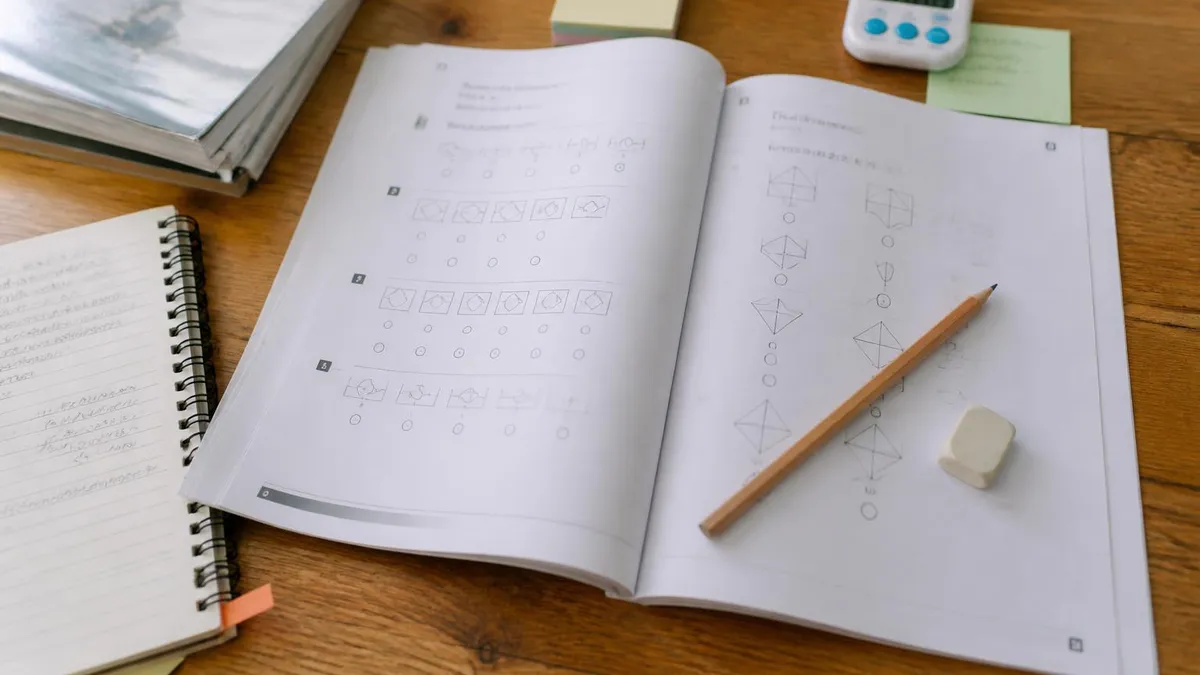
ICAS English Past Papers: Questions and Answers

Free ICAS Past Papers: The Complete Study Guide to Ace Your ICAS Exam

ICAS Exam Dates 2026: Testing Windows, Registration Deadlines, and What to Expect

ICAS Results 2026: When They Come Out, How to Check Them, and What Each Award Means
What Is the ICAS Practice Test? A Smart Start to Academic Excellence

What Is ICAS? A Complete Guide to the International Competitions and Assessments for Schools
About the Author

Educational Psychologist & Academic Test Preparation Expert
Columbia University Teachers CollegeDr. Lisa Patel holds a Doctorate in Education from Columbia University Teachers College and has spent 17 years researching standardized test design and academic assessment. She has developed preparation programs for SAT, ACT, GRE, LSAT, UCAT, and numerous professional licensing exams, helping students of all backgrounds achieve their target scores.
Join the Discussion
Connect with other students preparing for this exam. Share tips, ask questions, and get advice from people who have been there.
View discussion (8 replies)