
How to Open an ICA File: What ICAS Means for Students and Families 2026 October
Learn how to open an ICA file, what ICAS stands for, and how the ICAS realm works for students. 🎓 Full guide with tips, FAQs, and free practice tests.

If you have ever searched for how to open an ICA file or wondered what the ICAS area is all about, you are not alone. These two questions sound similar but refer to very different things — and understanding the distinction can save you considerable confusion. An ICA file is a configuration file used by Citrix software, while ICAS — the International Competitions and Assessments for Schools — is a globally recognized academic assessment program designed to measure the true ability of students from Year 2 through Year 12. Both topics matter, and this guide covers them in full detail.
The ICAS area encompasses a broad ecosystem of subject-specific assessments, preparation materials, and score reports that give students, teachers, and parents meaningful insight into academic performance. Unlike standardized school tests that simply measure grade-level content, ICAS assessments are normed against an international cohort, meaning your child's results reflect how they perform compared to students across Australia, New Zealand, Canada, Southeast Asia, and beyond. That international context is precisely what makes ICAS scores so valuable for academic planning and scholarship applications.
Understanding what an ICA file is requires a brief detour into the world of enterprise software. Citrix publishes ICA (Independent Computing Architecture) files as thin-client launch files that tell a local machine how to connect to a remote application server. When a corporate IT department deploys a cloud-hosted application, end users often receive a small .ica file they must open to start their session. The file contains server addresses, encryption settings, and application parameters — it is not a document you read but a configuration script you execute through Citrix Receiver or Citrix Workspace.
For students and families primarily interested in academic assessments, the ICAS connection is far more relevant. ICAS tests are available in English, Mathematics, Science, Writing, Spelling Bee, and Digital Technologies. Each paper is carefully constructed by assessment specialists and aligned to curriculum benchmarks across multiple countries, yet the questions go beyond rote recall. They require reasoning, analysis, and problem-solving skills — the very competencies that predict long-term academic success and are sought by selective schools and scholarship programs worldwide.
One of the first things parents and students notice when they enter the ICAS area is the medal and certificate system. Students who score in the top 1% of all participants earn a High Distinction; the next 10% earn a Distinction; the following 25% receive a Credit certificate; and remaining participants who attempt the paper receive a Participation certificate. These tiered awards give every student a meaningful benchmark while still celebrating exceptional achievement. The medal system adds an extra motivational layer for students who want to push beyond a Distinction and reach that coveted top percentile.
Preparation is the key to performing well in any ICAS paper, and that preparation starts with understanding the format, the subject matter, and your own strengths and gaps. Resources like icas general practice materials give students hands-on experience with the question styles they will encounter, helping to reduce test anxiety and build confidence. The more familiar a student is with the way ICAS frames its questions, the better positioned they are to demonstrate their actual ability on assessment day.
This guide will walk you through everything you need to know — from the technical details of opening and running an ICA file in a Citrix environment, to a deep dive into how the ICAS assessment program works, what subjects are tested, how scores are calculated, and how families across the US and internationally can use ICAS results to support their child's educational journey. Whether you arrived here looking for a quick tech fix or a comprehensive overview of the ICAS program, you will find exactly what you need in the sections that follow.
ICAS and ICA Files by the Numbers

Understanding the ICAS Assessment Structure
The majority of ICAS questions are four-option multiple-choice items. Each question is carefully designed to test reasoning and comprehension rather than simple memorization, requiring students to evaluate answer options critically and select the most accurate response.
Some ICAS papers, particularly Writing and Mathematics, include short-answer or open-response questions. These items assess a student's ability to construct and communicate an answer rather than select from provided options, rewarding deeper understanding.
ICAS assessments can be taken on paper or digitally through the school's chosen platform. Online delivery provides immediate feedback tools for teachers, while paper delivery suits schools with limited technology infrastructure or those preferring traditional formats.
Results are benchmarked against a large international cohort, not just the student's own class or country. This norming process ensures that a Distinction earned in the US carries the same meaning as one earned in Australia, Canada, or New Zealand.
Each student receives a detailed report showing their overall score, performance by skill strand, and their percentile ranking within the international cohort. These reports help families and teachers identify specific areas for targeted improvement and celebrate genuine strengths.
Now let us address the purely technical question that brings many visitors to this page: how to open an ICA file. An ICA file — short for Independent Computing Architecture — is a small plain-text configuration file published by Citrix Systems. It typically has a .ica extension and is used to launch a remote application or virtual desktop session.
The file itself is rarely more than a few kilobytes and contains parameters such as the server address, the application name, the encryption type, and session timeout settings. You do not open it to read it; you open it to trigger a connection.
The most common method to open an ICA file is to install Citrix Workspace (formerly known as Citrix Receiver). Once Citrix Workspace is installed on your Windows, macOS, or Linux machine, double-clicking any .ica file will automatically launch the configured remote application. The operating system recognizes the file extension and passes it to Citrix Workspace, which reads the configuration parameters and establishes an encrypted session with the server. Most corporate IT environments that distribute ICA files also provide instructions for installing Citrix Workspace, so check with your IT department if you are unsure which version to use.
If you want to know how to run an ICA file without Citrix Workspace installed, your options are more limited. You can open the file in any plain-text editor (Notepad on Windows, TextEdit on macOS, or gedit on Linux) to inspect the raw configuration parameters — this is useful for troubleshooting connection issues. However, you cannot actually establish the Citrix session without the Citrix client software. Some browser-based alternatives exist: certain versions of Citrix StoreFront allow HTML5 sessions that bypass the need for a local ICA file, but this depends entirely on how your organization has configured its Citrix infrastructure.
For those asking what ICA stands for beyond Citrix, it is worth noting that ICA is also an acronym for several other entities: the Immigration Consultants of Canada, the International Cooperation Administration, and in a financial context, an Individual Capital Assessment performed by banks and insurers under regulatory frameworks. The meaning of ICA depends entirely on context, so it is always worth clarifying which ICA is under discussion before diving into details. In this article, we focus primarily on the Citrix ICA file format and the ICAS academic assessment program.
What are ICA files used for in practice? Primarily, they serve large organizations that deploy software centrally on Citrix servers rather than installing applications on every individual employee's machine. A law firm, hospital, or government agency might use Citrix to deliver specialized software — legal case management tools, electronic health record systems, or custom databases — without needing to manage local installations. When an employee needs to access that software from home or a branch office, their IT department emails them an ICA file. Double-clicking it opens the remote session instantly, as if the software were running locally.
Students preparing for the ICAS assessment program can benefit from a similarly systematic approach: gather your tools, understand the configuration (in this case, the exam format), and execute your plan methodically. Resources like icas canada study guides provide structured preparation frameworks that mirror the way an ICA file structures a Citrix connection — every parameter is defined, every step is deliberate, and the result is a smooth, confident performance.
One common technical problem people encounter with ICA files is the browser download prompt failing to trigger the Citrix Workspace client. Modern browsers sometimes treat .ica downloads as generic files and open them in a text viewer instead of passing them to Citrix.
The fix is to configure your browser to always open .ica files with the Citrix Workspace application, or to download the file first and then double-click it from your downloads folder. Chrome, Firefox, Edge, and Safari all have file-handler settings where you can specify which application should handle .ica extensions, and setting this once will prevent the issue from recurring in future sessions.
What Does ICAS Stand For — Subjects, Levels, and What to Expect
ICAS assessments cover six main subject areas: English, Mathematics, Science, Writing, Spelling Bee, and Digital Technologies. Each subject is available across multiple year levels, and the difficulty of questions scales appropriately from Year 2 through Year 12. English papers assess reading comprehension, vocabulary, grammar, and language use through extended passages drawn from fiction, non-fiction, and informational texts. Mathematics papers move from number sense and basic operations in lower years to algebra, data analysis, and geometric reasoning in upper years.
Science papers explore physical, biological, chemical, and earth sciences, with questions requiring students to interpret experimental data and apply scientific reasoning rather than simply recall definitions. Writing assessments ask students to produce an extended piece of writing in a set genre within a time limit, evaluated by trained markers against international rubrics. Digital Technologies assesses computational thinking, data representation, algorithms, and digital systems knowledge — a rapidly growing subject area that reflects the increasing importance of technology literacy in modern education and future careers.
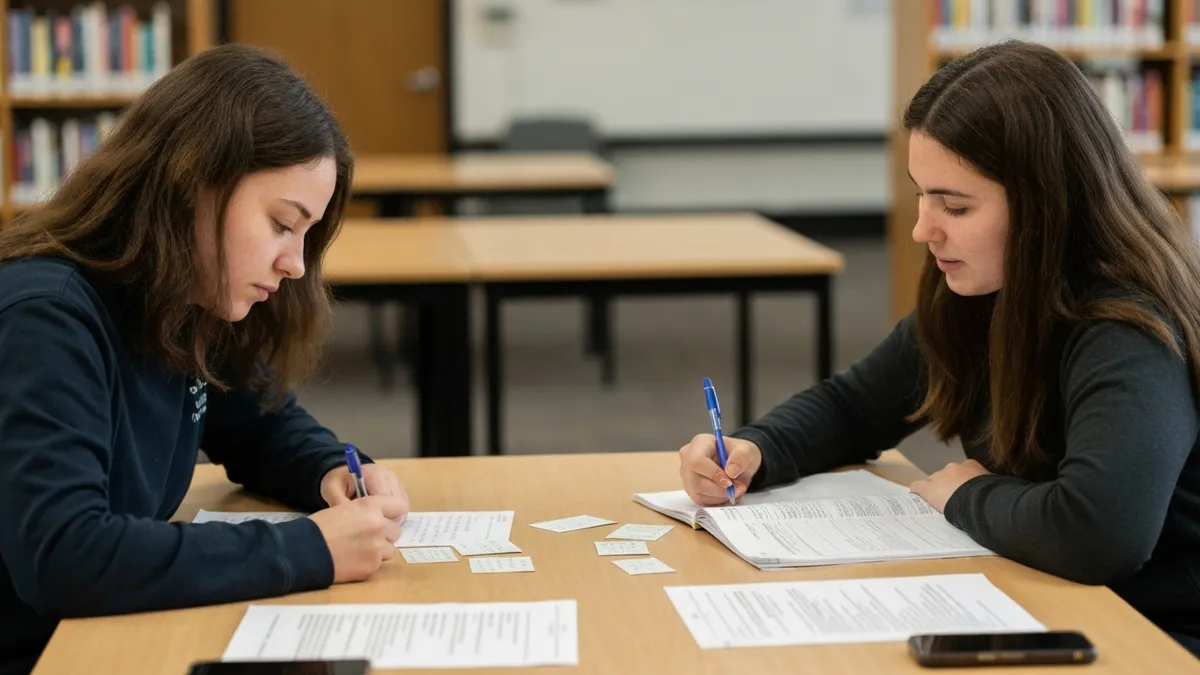
Pros and Cons of ICAS Participation for Students
- +Internationally normed results give a meaningful benchmark beyond local or national standards
- +Covers six distinct subjects, allowing students to identify and celebrate subject-specific strengths
- +Tiered award system (High Distinction through Participation) ensures every student receives recognition
- +Detailed skill-strand reports help teachers and parents target specific areas for improvement
- +ICAS medals and High Distinction certificates carry weight in selective school and scholarship applications
- +Online delivery option provides instant digital reports and reduces paper administration burden for schools
- −Registration and test fees are paid by schools or parents, adding cost that not all families can absorb
- −Not all US schools offer ICAS, requiring families to seek out participating institutions or private entry
- −The international comparison can feel discouraging for students who are strong locally but rank lower globally
- −Preparation materials and past papers can be difficult to find without a structured resource platform
- −Results arrive weeks after the assessment, limiting their use for immediate instructional adjustments
- −The Writing assessment is marked by humans rather than automated systems, introducing small marker variability
Pros and Cons at a Glance
| Pros | Cons |
|---|---|
| Internationally normed results give a meaningful benchmark beyond local or national standards | Registration and test fees are paid by schools or parents, adding cost that not all families can absorb |
| Covers six distinct subjects, allowing students to identify and celebrate subject-specific strengths | Not all US schools offer ICAS, requiring families to seek out participating institutions or private entry |
| Tiered award system (High Distinction through Participation) ensures every student receives recognition | The international comparison can feel discouraging for students who are strong locally but rank lower globally |
| Detailed skill-strand reports help teachers and parents target specific areas for improvement | Preparation materials and past papers can be difficult to find without a structured resource platform |
| ICAS medals and High Distinction certificates carry weight in selective school and scholarship applications | Results arrive weeks after the assessment, limiting their use for immediate instructional adjustments |
| Online delivery option provides instant digital reports and reduces paper administration burden for schools | The Writing assessment is marked by humans rather than automated systems, introducing small marker variability |
ICAS Preparation Checklist — 10 Steps to Your Best Score
- ✓Confirm your school is registered for ICAS and check the subject and year level papers available.
- ✓Download or access official ICAS sample questions for each subject you are sitting.
- ✓Complete at least two full timed practice sessions per subject before the assessment date.
- ✓Review every incorrect answer and identify which skill strand each error belongs to.
- ✓Focus extra study time on your two weakest skill strands rather than reviewing topics you already know.
- ✓Practice reading extended informational and literary passages to build English comprehension stamina.
- ✓Work through algebra and data interpretation problems daily for at least four weeks before the Mathematics paper.
- ✓Familiarize yourself with digital technologies vocabulary including algorithms, binary, and data representation.
- ✓On assessment day, budget your time carefully — aim to spend no more than 90 seconds on any single question.
- ✓After results are returned, review your skill-strand report with your teacher or parent to plan next steps.
High Distinction Is Rarer Than You Think
Only the top 1% of all international participants earn a High Distinction in any given ICAS paper. With tens of thousands of students sitting each subject globally, this award is a genuinely elite achievement. Students who consistently earn High Distinctions across multiple subjects and years build a compelling academic portfolio that stands out in selective high school and scholarship applications.
Understanding ICAS scores, medals, and result reports requires familiarity with the award hierarchy and the way scaled scores translate into percentile rankings. As explained in the tabs section above, ICAS uses Item Response Theory rather than raw percentage scores, which means the difficulty of each question influences its contribution to your final score.
A student who correctly answers five very hard questions may outscore a student who answers ten easy questions, even though the second student has a higher raw count of correct answers. This nuance is important for students to understand so they approach every question with full effort rather than abandoning difficult items.
The medal system adds a physical, tangible reward to the certificate framework. Schools that order medals receive gold medals for High Distinction students, and in some regions silver medals for Distinction achievers. These physical awards have genuine value to young students who can wear them at school presentation assemblies and include photos of them in personal achievement portfolios. For competitive students, earning a gold medal becomes a specific, motivating target rather than the abstract goal of performing well.
Score reports are delivered to schools in both a school summary format and an individual student format. The school summary allows teachers and coordinators to see how their class or year group performed relative to the international cohort as a whole.
This data is genuinely useful for curriculum planning — if 70% of a school's Year 7 students scored below the 40th percentile in Science, that is a clear signal that the Science program may need strengthening in specific strand areas. The individual report breaks performance down by skill strand, showing whether a student's weakness is in, for example, physical science versus life science, or in algebra versus data analysis.
Parents frequently ask whether ICAS results can be used for school entry or scholarship applications. The answer is yes — many selective schools and scholarship programs in Australia, New Zealand, and Canada explicitly list ICAS High Distinction certificates as qualifying evidence of academic merit.
In the US context, ICAS results can supplement applications to competitive private schools, gifted and talented programs, or academic enrichment programs like Johns Hopkins Center for Talented Youth. While US selective programs more commonly rely on SAT, ACT, or SCAT scores, an ICAS High Distinction in Mathematics or Science from an internationally normed assessment is a credible additional data point.
For families wondering how results compare across years, ICAS maintains equating studies that allow year-on-year score comparisons to a limited extent. If a student sat ICAS Mathematics in Year 5 and again in Year 6, the reports will show their scaled score on the same reporting scale, making growth visible. However, because each year level paper is designed for a different cohort, direct score comparisons should be interpreted carefully. The most meaningful comparison is the percentile rank, which shows whether a student has moved up, maintained, or slipped relative to their international peers as they progress through year levels.
The Writing assessment deserves special mention because it is graded differently from all other ICAS subjects. Rather than being machine-scored against an answer key, Writing papers are marked by trained human assessors against a detailed rubric that evaluates ideas, structure, vocabulary, and mechanics.
Students are given a prompt — a topic, a scenario, or a stimulus image — and must write an extended response within the allotted time. Markers are calibrated using standardized sample responses before the marking session begins, and quality assurance processes include double-marking of borderline papers. The result is a score that reflects genuine writing ability rather than just grammar knowledge.
For the Spelling Bee assessment, ICAS uses an audio delivery format in which students hear words read aloud and must write the correct spelling. This format tests auditory processing and spelling knowledge simultaneously, making it quite different from the reading-based format of other ICAS papers. Many students find the Spelling Bee especially rewarding because strong spellers who may not excel in the more reasoning-heavy English paper suddenly find a domain where their specific skill shines. The Spelling Bee is available for Year 2 through Year 8, reflecting the developmental window where spelling acquisition is most active and educationally significant.

ICAS registration deadlines typically fall several weeks before the assessment window opens, and late entries are not accepted in most regions. Schools coordinate registration on behalf of students, but families who want their child to participate should confirm with the school well in advance. Missing the deadline means waiting a full year for the next opportunity, so early communication with your school's ICAS coordinator is essential.
When families compare ICAS to other academic assessments available to students, several important distinctions emerge. The most commonly discussed alternatives include the AMC (American Mathematics Competition), NAPLAN in Australia, the UK Junior Mathematical Challenge, and various gifted-education screeners like the CogAT or OLSAT. Each assessment serves a different purpose, and understanding those purposes helps families make informed decisions about which assessments are worth pursuing alongside or instead of ICAS.
ICAS differs from competition-style assessments like the AMC in that it is curriculum-aligned rather than purely competition-oriented. The AMC is designed specifically to identify the very top mathematical talent and includes problems that are intentionally unsolvable by most participants. ICAS, by contrast, is designed so that a well-prepared student working at grade level can earn a Credit or Distinction. The bell curve of ICAS scores is broader and more inclusive, making it appropriate for a wider range of students rather than only those at the extreme right tail of mathematical ability.
Compared to NAPLAN, which is an Australian national literacy and numeracy assessment taken by all students in Years 3, 5, 7, and 9, ICAS is voluntary, covers more subjects, and provides an international rather than national benchmark. NAPLAN results are used partly for school accountability and public reporting, whereas ICAS results go directly to individual students and families without school-level public comparisons. Many Australian families use both: NAPLAN for understanding how their child performs against the national curriculum standard and ICAS for understanding how they perform against an international cohort.
For US families, ICAS fills a niche that few domestic assessments occupy: a subject-specific, internationally normed assessment available to students as young as Year 2 (second grade) across multiple academic subjects. The CogAT and OLSAT assess cognitive abilities and reasoning aptitude rather than curriculum knowledge, while ICAS assesses both. The combination of content knowledge and reasoning that ICAS requires makes it a particularly useful tool for identifying students who may be ready for advanced coursework or academic enrichment well before high-stakes standardized tests become relevant.
Digital Technologies is arguably ICAS's most forward-looking subject area and one that has grown significantly in enrollment over the past decade. As coding, computational thinking, and data literacy become increasingly embedded in school curricula worldwide, ICAS Digital Technologies provides a standardized way to measure student competency in these areas against a global peer group.
Questions assess understanding of algorithms, data representation in binary and hexadecimal, network architecture concepts, digital systems, and — in upper year levels — basic programming logic and database structures. Students preparing for careers in technology, engineering, or data science benefit particularly from having a credentialed, internationally benchmarked assessment of their digital knowledge.
Resources like icas general practice tests are especially valuable for Digital Technologies preparation because the subject evolves quickly and many students lack confidence in the vocabulary and concepts tested. Working through authentic practice questions helps students internalize terminology like binary encoding, Boolean logic, and network topology before they encounter those terms under timed assessment conditions. The more exposure a student has to the specific question styles and vocabulary of the ICAS Digital Technologies paper, the more efficiently they can allocate their working memory during the actual assessment to reasoning rather than decoding unfamiliar language.
Ultimately, the decision to participate in ICAS should be driven by a clear sense of what the family hopes to learn and how the results will be used. For families who want an internationally benchmarked picture of their child's academic strengths across multiple subjects, ICAS delivers exactly that.
For families primarily seeking contest-style recognition or competition experience, ICAS's curriculum-aligned format may feel less exciting than AMC or Science Olympiad. Understanding what ICAS is — and what it is not — ensures that students approach the assessment with realistic expectations and that families make the most of the detailed results it provides.
Practical preparation for ICAS requires a structured approach that begins well before the assessment window. The single most effective preparation strategy, supported by educational research, is spaced practice: distributing study sessions across several weeks rather than cramming in the days immediately before the test. For ICAS, this means starting serious preparation six to eight weeks ahead and committing to short daily study sessions rather than occasional marathon sessions. Thirty minutes of focused practice five days per week consistently outperforms three hours crammed into a single weekend session.
For English preparation, the highest-use activity is reading widely and actively. Students who read a variety of text types — fiction, biography, news articles, science writing, historical accounts — develop the comprehension flexibility that ICAS English papers demand. Unlike tests that draw on a single genre, ICAS English exposes students to multiple passage types within a single paper.
Active reading means pausing to summarize each paragraph, identify the author's purpose, and notice the structural features of the text. This habit transfers directly to the ICAS English paper, where questions frequently ask about authorial intent, text structure, and inference rather than surface-level fact retrieval.
Mathematics preparation for ICAS should include both procedural fluency — the ability to execute algorithms efficiently — and conceptual understanding — the ability to reason about why a procedure works. Many students who struggle with ICAS Mathematics questions are procedurally capable but conceptually thin: they can follow the steps of long division but cannot recognize when division is the appropriate operation in a novel word problem. The best ICAS Mathematics preparation therefore includes a mix of computation practice and problem-solving tasks that require students to figure out which mathematical tools apply to unfamiliar situations, not just execute familiar procedures.
Science preparation benefits enormously from engagement with science news and popular science writing alongside curriculum review. ICAS Science questions frequently embed content knowledge in the context of a described experiment, a real-world scenario, or a data visualization. Students who read science news regularly — even briefly, through sources like Science News for Students or National Geographic — develop the ability to engage with unfamiliar scientific contexts quickly and extract relevant information efficiently. This skill is distinct from knowing textbook definitions and is precisely what separates Distinction-level Science responses from Credit-level ones.
Writing preparation for the ICAS Writing paper requires students to practice the full writing process under timed conditions: generating ideas quickly, planning a structure before writing, drafting with awareness of audience and purpose, and revising for vocabulary and coherence in the final minutes.
Students who have never practiced timed writing before the ICAS paper often spend too long planning and run out of time before completing their response, or conversely rush directly into writing without a plan and produce disorganized drafts. Practicing the full cycle — plan, draft, revise — in 40 minutes or less, two to three times per week in the weeks before the assessment, builds the automaticity needed for a strong performance.
On the day of the ICAS assessment itself, time management is the most critical skill that preparation should develop. Each paper is designed so that most students can attempt all questions within the allotted time, but students who dwell on difficult questions risk leaving easier questions at the end of the paper unanswered.
The recommended strategy is to work through the paper at a steady pace, marking any question that takes more than 90 seconds and returning to marked questions only after completing the rest of the paper. This ensures that no easy marks are missed because of time lost on a single challenging item.
After the assessment, the work is not over. When results and skill-strand reports arrive, the most productive response is to treat them as a diagnostic tool rather than a final verdict. A Credit in ICAS Mathematics with a particularly low score in the data and statistics strand tells a student and family exactly where to focus preparation for the following year.
Students who review their reports carefully, discuss them with their teachers, and build targeted study plans based on specific strand weaknesses consistently improve their ICAS performance year-on-year. The assessment is most valuable not as a one-time snapshot but as an annual data point in a multi-year picture of academic growth and development.
Sample ICAS Practice Questions
Try these questions from our free ICAS practice tests. The correct answer and an explanation follow each question.
Read the passage: "Leah clutched the envelope, her fingers trembling. She had checked the letterbox every afternoon for three weeks. Now that the reply was finally here, she couldn't bring herself to open it." What does the passage suggest about Leah?
- A. She is bored by the letter
- B. She has been waiting anxiously for important news
- C. She has forgotten who sent the letter
- D. She is angry at the postal service
Answer: B. She has been waiting anxiously for important news
Her trembling fingers and daily checking show she is nervous and has been eagerly waiting.
An author ends a story with: 'As she closed the door, she finally understood what her grandmother had meant all along.' What technique is the author using?
- A. Starting a new conflict for a sequel
- B. Providing a circular ending that connects back to an earlier idea
- C. Summarizing the plot events in sequence
- D. Introducing a new character at the last moment
Answer: B. Providing a circular ending that connects back to an earlier idea
A circular or reflective ending ties the conclusion back to something established earlier, giving the story a sense of resolution.
A frequency table shows how many students scored in each grade range on a science test. The 70–79 range has the highest frequency. What does this mean?
- A. Most students failed the test
- B. Most students scored between 70 and 79
- C. The test was too easy
- D. No student scored above 79
Answer: B. Most students scored between 70 and 79
Highest frequency in the 70–79 range means more students scored there than in any other range.
What does 'open source' mean when referring to software?
- A. Software that costs money to use
- B. Software whose source code is freely available to view, modify, and distribute
- C. Software that only works online
- D. Software developed by large companies
Answer: B. Software whose source code is freely available to view, modify, and distribute
Open source software has its source code made publicly available so anyone can view, modify, and distribute it.
ICAS Questions and Answers

About the Author

Educational Psychologist & Academic Test Preparation Expert
Columbia University Teachers CollegeDr. Lisa Patel holds a Doctorate in Education from Columbia University Teachers College and has spent 17 years researching standardized test design and academic assessment. She has developed preparation programs for SAT, ACT, GRE, LSAT, UCAT, and numerous professional licensing exams, helping students of all backgrounds achieve their target scores.
Join the Discussion
Connect with other students preparing for this exam. Share tips, ask questions, and get advice from people who have been there.
View discussion (8 replies)