

IAHCSMM Practice Test
Updated November 2026Facts verified Nov 9, 2026 against Healthcare Sterile Processing Association
IAHCSMM: upcoming dates and official changes
- Updated Nov 9, 2026: Delivery is now Computer-based at Prometric test centers year-round (previously Computer-based at Prometric test centers, year-round).
- Updated Nov 9, 2026: Eligibility (CRCST) is now 400 hours of hands-on SP experience (before testing or within 6 months of passing for provisional) (previously 400 hours of hands-on SP experience (before testing, or within 6 months for provisional)).
- Updated Nov 9, 2026: Passing score is now Criterion-referenced passing score established using the Angoff procedure (previously Criterion-referenced raw-score cut (Angoff method)).
Facts verified Nov 9, 2026 against Healthcare Sterile Processing Association. Dates that have passed are removed automatically.
- The CRCST exam consists of 150 multiple-choice questions, of which 125 are scored. (Healthcare Sterile Processing Association)
- Candidates are allotted 3 hours (180 minutes) to complete the CRCST examination. (Healthcare Sterile Processing Association)
- Passing scores for HSPA certification exams are criterion-referenced and determined using the Angoff procedure supplemented by the Beuk Relative-Absolute Compromise method. (Healthcare Sterile Processing Association)
- The initial certification examination fee for an HSPA exam is $140. (Healthcare Sterile Processing Association)
- Candidates retaking an HSPA examination must submit a retake application along with the $140 exam fee. (Healthcare Sterile Processing Association)
- Candidates who fail an HSPA examination must wait a minimum of 6 weeks before being allowed to retest. (Healthcare Sterile Processing Association)
- HSPA certifications are valid for one year upon passing. (Healthcare Sterile Processing Association)
- CRCST certification renewal requires an annual $50 renewal fee along with 12 continuing education credits. (Healthcare Sterile Processing Association)
- All HSPA certification exams are computer-based and administered exclusively at Prometric testing centers throughout the year. (prometric.com)
Facts verified Nov 9, 2026 against Healthcare Sterile Processing Association. Dates that have passed are removed automatically.
IAHCSMM Exam at a Glance
| Item | Detail | Official source |
|---|---|---|
| Number of questions (CRCST) | 150 multiple-choice questions (125 scored, 25 unscored pretest) | Healthcare Sterile Processing Association |
| Time limit (CRCST) | 3 hours | Healthcare Sterile Processing Association |
| Passing score | Criterion-referenced passing score established using the Angoff procedure | Healthcare Sterile Processing Association |
| Exam fee | $140 per exam application | Healthcare Sterile Processing Association |
| Retake fee | $140 per retake | Healthcare Sterile Processing Association |
| Retake policy | Mandatory 6-week waiting period between exam attempts | Healthcare Sterile Processing Association |
| Validity | 1 year | Healthcare Sterile Processing Association |
| Renewal (CRCST) | $50 annual renewal fee plus 12 CE credits | Healthcare Sterile Processing Association |
| Delivery | Computer-based at Prometric test centers year-round | prometric.com |
| Eligibility (CRCST) | 400 hours of hands-on SP experience (before testing or within 6 months of passing for provisional) | Healthcare Sterile Processing Association |
| Score release | Preliminary pass/fail at testing center; official results in account portal within 24 hours | Healthcare Sterile Processing Association |
| Testing window | 120 days from application approval | Healthcare Sterile Processing Association |
Facts verified Nov 9, 2026 against Healthcare Sterile Processing Association. Dates that have passed are removed automatically.
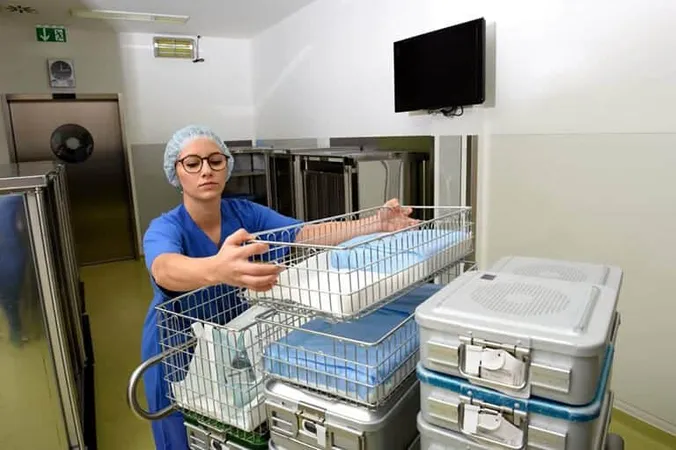
IAHCSMM Exam Requirements
The International Association of Healthcare Central Service Materiel Management (IAHCSMM) is a leading organization that sets the standards for individuals working in central service and healthcare materiel management. One of their pivotal requirements is passing the IAHCSMM exam, which demonstrates a professional's knowledge and expertise in this field. To qualify for the exam, candidates must meet certain criteria, including having completed an accredited central service or healthcare materiel management program or having at least one year of experience in the field. Try our NCLEX practice test.
The IAHCSMM exam is not an easy task. It challenges candidates to showcase their understanding of various aspects of central service and materiel management, ranging from infection control practices to sterile processing techniques. As such, it demands thorough preparation and a deep understanding of the subject matter. It is vital for aspiring professionals to invest time in studying not only textbooks but also current industry practices and guidelines.
Passing the IAHCSMM exam is more than just fulfilling a requirement – it signifies one's commitment to excellence in central service and healthcare materiel management. This certification enhances job prospects as employers recognize its value and credibility within the industry. Moreover, by establishing uniformity in knowledge and skills across professionals holding this certification, it ensures standardized quality throughout healthcare facilities worldwide. Ultimately, achieving this qualification not only benefits individuals but also contributes to ensuring safe patient care through efficient sterilization processes and effective inventory management systems.
Overall, obtaining IAHCSMM certification through passing their comprehensive exam showcases a dedication to professionalism and continued learning in the field of sterile processing. It demonstrates a commitment to upholding the highest standards of patient safety and quality care.
According to Healthcare Sterile Processing Association, “The CRCST exam has a total of 150 multiple choice questions. This includes 125 scored and 25 unscored (pretest) questions.”[1]
IAHCSMM content outline and where to practise each area
The content areas below are copied from the official IAHCSMM content outline published by Healthcare Sterile Processing Association, with the share of the exam each area carries. The right-hand column shows which of our practice sets covers it.
| Official content area | Weight | Practice on this site |
|---|---|---|
| CLEANING, DECONTAMINATION AND DISINFECTION[3] | 21% | IAHCSMM Decontamination & Cleaning Procedures Practise the order of point-of-use care, manual and mechanical cleaning, and the difference between cleaning, low-level, intermediate-level and high-level disinfection. |
| DEPARTMENTAL CONSIDERATIONS[3] | 15% | IAHCSMM Quality Management & Regulatory Co... Practise department layout and traffic flow, protective equipment, documentation and the regulatory and quality rules that shape daily work. |
| PATIENT CARE EQUIPMENT AND DISTRIBUTION[3] | 5% | IAHCSMM Surgical Instrument Identification... Practise recognising common instruments and equipment by name and purpose, and how each is handled, inspected and sent out. |
| PREPARATION AND PACKAGING[3] | 21% | IAHCSMM Packaging, Wrapping & Storage Practise inspection and assembly of sets, choosing wraps, pouches and containers, and applying indicators and labels correctly. |
| PROFESSIONAL DEVELOPMENT AND HUMAN RELATION SKILLS[3] | 8% | IAHCSMM (CRCST) Practise scenario questions on communication, teamwork, ethics and continuing education, which appear mixed in with the technical topics. |
| STERILE STORAGE, TRANSPORT AND INVENTORY MANAGEMENT[3] | 9% | IAHCSMM Inventory Management & Distribution Practise storage conditions, handling of sterile packages, event-related shelf life, rotation of stock and safe transport. |
| STERILIZATION PROCESS[3] | 21% | IAHCSMM Sterilization Methods & Monitoring Practise sterilization methods, load preparation, physical, chemical and biological monitoring, and what to do when a test fails. |
IAHCSMM Practice Test Questions
Prepare for the IAHCSMM - International Association of Healthcare Central Service Materiel Management exam with our free practice test modules. Each quiz covers key topics to help you pass on your first try.
IAHCSMM (CRCST)
IAHCSMM Exam Questions covering (CRCST). Master IAHCSMM Test concepts for certification prep.
IAHCSMM (MCQ)
Free IAHCSMM Practice Test featuring (MCQ). Improve your IAHCSMM Exam score with mock test prep.
IAHCSMM Ultimate IAHCSMM
IAHCSMM Mock Exam on Ultimate IAHCSMM. IAHCSMM Study Guide questions to pass on your first try.
IAHCSMM Decontamination & Cleaning Procedures
IAHCSMM Test Prep for Decontamination & Cleaning Procedures. Practice IAHCSMM Quiz questions and boost your score.
IAHCSMM Inventory Management & Distribution
IAHCSMM Questions and Answers on Inventory Management & Distribution. Free IAHCSMM practice for exam readiness.
IAHCSMM Packaging, Wrapping & Storage
IAHCSMM Mock Test covering Packaging, Wrapping & Storage. Online IAHCSMM Test practice with instant feedback.
IAHCSMM Quality Management & Regulatory Co...
Free IAHCSMM Quiz on Quality Management & Regulatory Compliance. IAHCSMM Exam prep questions with detailed explanations.
Worked examples: how to reason through IAHCSMM questions
These are practice questions written for this site, not questions from the real exam. Each explanation shows why the right answer is right and why the others are wrong.
Example 1
Question: What is the minimum temperature required for high-level disinfection (HLD) when using glutaraldehyde 2%?
- 50°F (10°C)
- 68°F (20°C)
- 100°F (37.8°C)
- 140°F (60°C)
Answer: B. 68°F (20°C)
Explanation:
The correct answer is 68°F (20°C). Glutaraldehyde 2% is a chemical high-level disinfectant, and how well it works depends on temperature as well as contact time and concentration. The solution has to be at or above the minimum temperature on the product label.
50°F (10°C) is below that minimum, so the solution would be too cold to disinfect reliably. 100°F (37.8°C) and 140°F (60°C) are warmer than the minimum. The question asks for the lowest acceptable temperature, not a temperature that would also work or one that suits a different process.
The rule to remember: for any chemical disinfectant, follow the manufacturer's instructions for use, and check concentration, temperature and contact time every time before relying on the result.
Example 2
Question: As a Central Service Technician, you discover that the biological indicator (BI) for the steam sterilization procedure has turned positive when processing surgical equipment. What action should you take right now?
- Use a chemical indicator to confirm the result
- Run the sterilization cycle again immediately with the same instruments
- Discard the biological indicator as it might be faulty
- Report the incident, quarantine the load, and reprocess all items
Answer: D. Report the incident, quarantine the load, and reprocess all items
Explanation:
The correct answer is to report the incident, quarantine the load and reprocess all items. A positive biological indicator means living spores survived the cycle, so nothing in that load can be called sterile. The load must be kept from use, the problem must be reported so it can be investigated, and the items must be reprocessed.
Using a chemical indicator to confirm is wrong because a chemical indicator is a less sensitive check and cannot overrule a positive biological result. Running the cycle again immediately with the same instruments skips the report and the quarantine, and does not look into why it failed. Discarding the indicator as faulty assumes the result is false without any evidence.
The rule to remember: treat a positive biological indicator as a real failure until an investigation shows otherwise, and act on the load first.
Example 3
Question: Which instrument is specifically designed to cut and ligate tissue simultaneously?
- Metzenbaum scissors
- Kocher forceps
- Ligating and dividing stapler (LDS)
- Bookwalter retractor
Answer: C. Ligating and dividing stapler (LDS)
Explanation:
The correct answer is the ligating and dividing stapler (LDS). It is built to seal tissue with staples and cut it in the same motion, so it ligates and divides at once.
Metzenbaum scissors only cut. They are used for delicate dissection and do not seal anything. Kocher forceps are clamps with teeth that grasp or hold tissue, and they neither cut nor ligate. A Bookwalter retractor is a self-retaining frame that holds an incision open so the surgeon can see and reach the site. It does not act on tissue directly.
The rule to remember: sort instruments by their action, which is cutting, clamping, grasping, retracting or stapling, and look for the one that combines the actions the question describes.
How to use these practice tests
Start with the official handbook and the content outline from HSPA. Read the outline once so you know which areas the exam draws on, then use it as a checklist.
Next, take the general CRCST set from the list above without stopping to look anything up. Record which topics you miss. Those misses tell you where to spend your time, which is more useful than a total score.
Then work through the topic sets in the order of your weakest areas. Sterilization methods and monitoring, decontamination and cleaning, and packaging and storage are good places to begin because they carry the largest share of the outline. After each set, read the explanations for every question you missed and write the rule behind the answer in a notebook in your own words.
If you are working in a department or training in one, connect each topic to what you see on the floor: a wrapped tray, a washer load, a biological indicator log. Real handling makes the rules easier to recall.
In the last days before your appointment, retake the mixed sets and review your notebook. Practise sitting through a full block of questions in one go so the 3 hours feel familiar. Our questions are written by us for practice and are not real exam questions, so always check any fact you are unsure about against the handbook and your facility's policies.

IAHCSMM Certification Study Guide
The International Association of Healthcare Central Service Materiel Management (IAHCSMM) Certification Study Guide is an invaluable resource for professionals in the field. This comprehensive guide covers a wide range of topics, including sterilization techniques, infection control measures, and inventory management principles. By studying this guide, healthcare central service materiel management professionals can enhance their knowledge and skills, ensuring they are equipped to provide safe and efficient services in their respective healthcare facilities.
One of the notable features of this study guide is its emphasis on industry best practices. It not only provides theoretical knowledge but also practical insights that have been developed through years of experience in the field. This combination allows professionals to gain a deeper understanding of the concepts and apply them effectively in real-world situations.
Moreover, the study guide also includes case studies and examples that help illustrate key concepts and demonstrate their applications. This approach helps a more engaging learning experience, enabling readers to relate theoretical information to actual scenarios they may encounter during their daily work. These real-life examples serve as powerful tools for building critical thinking skills and problem-solving abilities within the area of healthcare central service materiel management.
In conclusion, the IAHCSMM Certification Study Guide stands out as a comprehensive and practical resource for professionals seeking to advance their careers in healthcare central service materiel management. With its focus on best practices combined with real-life examples, this guide enables learners to gain both theoretical knowledge and practical skills necessary for success in this dynamic field. Investing time in studying this guide will undoubtedly bring immense benefits to individuals looking to enhance their understanding of healthcare central service materiel management.

IAHCSMM Certification Test Dates
The International Association of Healthcare Central Service Materiel Management (IAHCSMM) is the leading professional organization for individuals involved in the central service and sterile processing field. One of the key benefits of joining this association is the opportunity to earn a certification through their comprehensive testing program. The IAHCSMM offers several test dates throughout the year, giving professionals in this industry multiple chances to demonstrate their knowledge and skills.
Participating in these certification tests not only allows central service technicians and sterile processing technicians to showcase their expertise, but it also provides them with a competitive edge in the job market. As healthcare facilities increasingly prioritize patient safety and infection prevention, having an IAHCSMM certification can greatly enhance a professional's credibility and employability. By staying up-to-date with the recommended test dates provided by this prestigious association, individuals can start on a journey towards career advancement and continuous learning.
Moreover, these certification tests present an excellent opportunity for professionals to stay current with industry standards and best practices. The exams are designed to assess candidates' understanding of crucial topics such as medical terminology, disinfection methods, instrument care, inventory management, sterilization techniques, and regulatory compliance. By preparing for these exams diligently, individuals not only solidify their existing knowledge but also gain new insights into emerging trends and advanced technologies that are shaping the field.
In conclusion, it is clear that participating in the International Association of Healthcare Central Service Materiel Management certification tests offers numerous advantages for professionals in this industry. From establishing credibility and enhancing employ ability to staying updated on industry best practices and advancements, these exams provide a comprehensive platform for individuals to excel in their careers.
Direct care workers in residential settings can prepare for state competency exams with our free DCW Direct Care Worker practice test — covering personal care, communication, safety, and client rights.
Geriatric nursing assistant candidates in Maryland can prepare for state certification with our free GNA Geriatric Nursing Assistant practice test — covering basic nursing skills, dementia care, and resident rights.
Child life professional candidates can prepare for ACLP board certification with our free Child Life Specialist certification practice test — covering therapeutic play, psychosocial care, procedural support, and family-centered practice.
Patient care technicians expanding their clinical credentials often also practice with the CNA Practice Test 2026, which covers patient care fundamentals, vital signs, and healthcare competencies directly aligned with patient care technician certification.
- ✓Review the official IAHCSMM exam content outline
- ✓Take a diagnostic practice test to identify weak areas
- ✓Create a study schedule (4-8 weeks recommended)
- ✓Focus on your weakest domains first
- ✓Complete at least 3 full-length practice exams
- ✓Review all incorrect answers with detailed explanations
- ✓Take a final practice test 1 week before exam day


IAHCSMM: Pros and Cons
- +IAHCSMM exam preparation strengthens your knowledge across all domains
- +Passing the exam proves competency to employers and clients
- +Study materials and practice tests are widely available
- +Exam-based credentials are portable across states and employers
- +Clear exam objectives help focus your study plan effectively
- −Exam anxiety can affect performance — practice tests help reduce it
- −Registration fees are non-refundable if you miss your test date
- −Limited retake opportunities may apply with waiting periods
- −Exam content updates periodically — use current study materials
- −Testing center availability may require advance scheduling
Pros and Cons at a Glance
| Pros | Cons |
|---|---|
| IAHCSMM exam preparation strengthens your knowledge across all domains | Exam anxiety can affect performance — practice tests help reduce it |
| Passing the exam proves competency to employers and clients | Registration fees are non-refundable if you miss your test date |
| Study materials and practice tests are widely available | Limited retake opportunities may apply with waiting periods |
| Exam-based credentials are portable across states and employers | Exam content updates periodically — use current study materials |
| Clear exam objectives help focus your study plan effectively | Testing center availability may require advance scheduling |
Sample IAHCSMM - International Association of Healthcare Central Service Materiel Management Practice Questions
Try these questions from our free IAHCSMM - International Association of Healthcare Central Service Materiel Management practice tests. The correct answer and an explanation follow each question.
What does the term 'stock rotation' mean in central service inventory management?
- A. Physically rotating instruments in the drum sterilizer
- B. Moving older inventory to the front so it is used before newer stock
- C. Transferring stock between departments weekly
- D. Counting all inventory items once per quarter
Answer: B. Moving older inventory to the front so it is used before newer stock
Stock rotation means placing newly received items behind existing stock so that older items are used first, which maintains product integrity and prevents expiration.
What is the role of ANSI/AAMI ST79 in central service practice?
- A. It is a federal law mandating specific sterilization temperatures
- B. It provides comprehensive guidance recommendations for steam sterilization and sterility assurance in healthcare facilities
- C. It is a biological indicator testing protocol specific to ethylene oxide
- D. It sets minimum wage standards for sterile processing technicians
Answer: B. It provides comprehensive guidance recommendations for steam sterilization and sterility assurance in healthcare facilities
ANSI/AAMI ST79 is the leading consensus document providing guidance on steam sterilization practices, monitoring, and sterility assurance for healthcare facilities.
What is the primary advantage of using a computerized inventory management system in central service?
- A. It eliminates the need for physical inventory counts
- B. It provides real-time tracking of supply levels and usage patterns
- C. It automatically sterilizes instruments when stock is low
- D. It reduces the number of CS technicians required
Answer: B. It provides real-time tracking of supply levels and usage patterns
Computerized systems offer real-time visibility into supply quantities, consumption trends, and reorder needs, improving accuracy and reducing both stockouts and overstock.
The Central Service department's floors ought to be:
- A. Swept daily
- B. Wet-mopped daily
- C. Wet-mopped weekly
Answer: B. Wet-mopped daily
The Central Service department is a critical area for infection control, where instruments are processed for patient care. To maintain a sterile and safe environment, floors must be cleaned rigorously and frequently. Wet-mopping daily is essential to remove dust, debris, and microorganisms, preventing contamination and supporting aseptic practices.
IAHCSMM Questions and Answers
Written and edited by Nathan Beja, founder of Practice Test Geeks, with AI assistance. Exam facts are checked against the official sources linked below. Editorial policy
Sources & references
Exam facts on this page (fees, format, dates, passing scores) are checked against these official sources; the date is our last check. Editorial policy
- prometric.com — Test delivery · verified Nov 2026
- myhspa.org — Eligibility, fees, exam format, passing score, renewal, retake fee, retake policy, score release, test dates, time limit · verified Nov 2026