
Mold in HVAC Ducts: The Complete Homeowner's Guide to Identifying, Removing, and Preventing Duct Mold Contamination
Mold in HVAC ducts spreads spores through your home. ✅ Learn how to spot, remove, and prevent duct mold with this complete homeowner's guide.
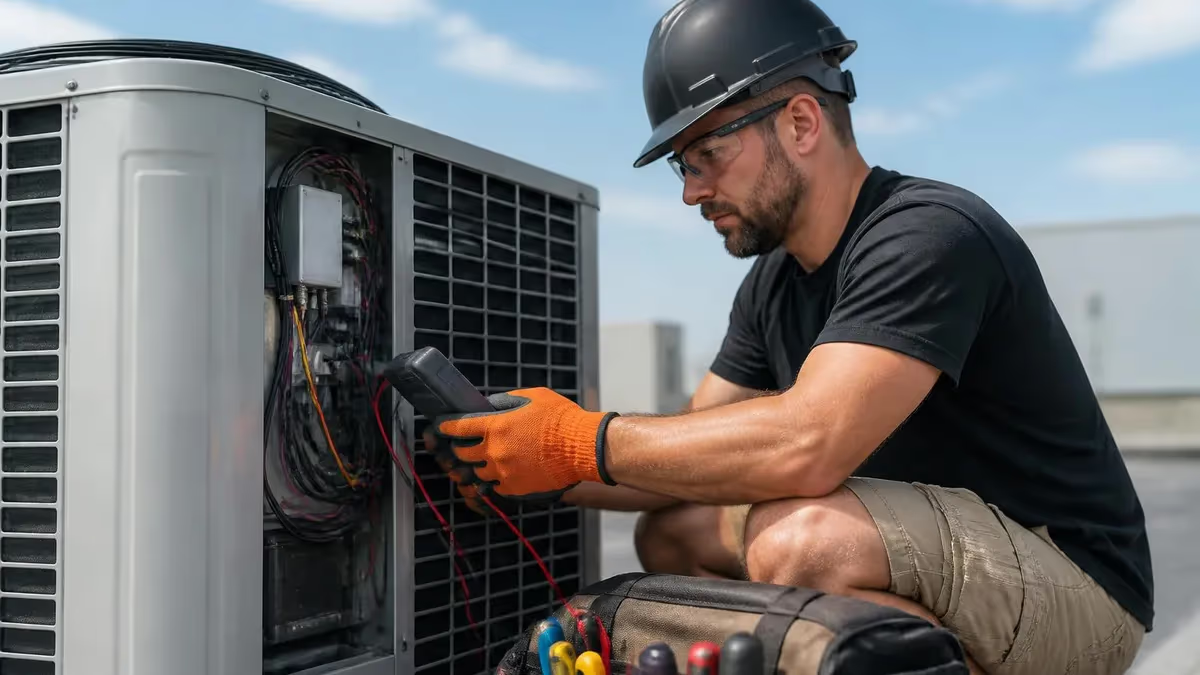
Discovering mold in HVAC ducts is one of the most unsettling problems a homeowner can face. Unlike visible bathroom mildew or basement musty spots, ductwork contamination is hidden inside the very system that distributes air throughout your living space. Every time the blower kicks on, microscopic spores can be pushed from infected duct walls into bedrooms, kitchens, and nurseries. That makes mold in HVAC ducts more than a cosmetic concern — it becomes an indoor air quality crisis that affects everyone in the building, including pets and vulnerable family members with asthma or allergies.
The good news is that duct mold is identifiable, treatable, and preventable when you understand how it grows. Mold needs three things to thrive: moisture, organic material to feed on, and temperatures between roughly 40°F and 100°F. Your HVAC system unfortunately provides all three. Cool supply air meets warm humid air at register boots, dust accumulates on duct interiors, and condensate from the evaporator coil can wick into nearby liner material. The result is a microclimate that fungi like Cladosporium, Aspergillus, and Penicillium colonize quickly.
Most homeowners first notice the problem through their nose. A persistent musty or earthy smell that intensifies when the system runs is the single most common early warning sign. Others notice unexplained allergy symptoms — runny noses, watery eyes, sinus headaches, or coughing — that improve when they leave the house and return when they come home. In severe cases, visible black, green, or white fuzzy patches appear around supply registers, on the evaporator coil, or inside accessible duct sections.
The cost of ignoring duct mold compounds quickly. Spores settle on furniture, get inhaled by occupants, and can trigger long-term respiratory sensitization. They also signal an underlying moisture problem — usually a clogged condensate drain, oversized air conditioner that short-cycles without dehumidifying properly, or leaky return ducts pulling in humid attic air. Fixing the mold without fixing the moisture source guarantees it returns within months. A thorough HVAC duct supplies upgrade may be part of a permanent solution.
This guide walks through every stage of dealing with duct mold: how to confirm it's actually mold (not just dust), what professional and DIY remediation involve, how much it realistically costs, and the specific maintenance routines that keep your system mold-free for the long haul. We'll also cover when EPA guidelines say cleaning is enough versus when full duct replacement is the only safe option.
Whether you're smelling something funky after turning on the AC for the first time in spring, dealing with chronic allergies that won't quit, or you've just bought a home with questionable ductwork, the information here will give you a clear action plan. Mold in your air distribution system is serious, but it's solvable — and understanding the science behind it puts you in control of both the cleanup and the prevention strategy.
Throughout this article you'll find practical inspection checklists, cost breakdowns, contractor vetting tips, and answers to the questions homeowners ask most often. By the end, you'll know exactly what to look for, who to call, what to pay, and how to make sure mold never colonizes your ductwork again.
Duct Mold by the Numbers
How to Identify Mold in HVAC Ducts
A persistent musty, earthy, or sour odor that intensifies when the blower runs is the number one indicator. The smell often hits hardest in the first 30 seconds of system startup as stagnant air pushes through.
Remove a supply register cover and shine a flashlight inside. Look for black, green, white, or pink fuzzy patches on duct walls, register boots, or insulation. Discoloration around vent edges is a major red flag.
If household members experience sneezing, coughing, congestion, or headaches that improve outdoors and worsen at home, especially when HVAC runs, suspect indoor air contamination — duct mold is a leading cause.
Open the air handler access panel and check the evaporator coil and drain pan. Slimy biofilm, standing water, or visible fuzz on the coil fins indicates moisture problems that almost always extend into nearby ductwork.
If you dust surfaces and they're coated again within a day or two, your ducts are likely shedding particulates. Submit a sample to a mold testing lab to confirm whether spores are part of the load.
The health risks associated with mold in HVAC ducts vary enormously depending on the species present, the spore concentration in your indoor air, and the sensitivity of each household member. For most healthy adults, low-level exposure causes nothing more than seasonal-allergy-style symptoms: a runny nose, occasional cough, mild fatigue, or itchy eyes. But for infants, elderly residents, immunocompromised people, asthmatics, and anyone with chronic obstructive pulmonary disease, even modest spore loads can trigger serious respiratory episodes requiring medical attention.
The most commonly identified household molds — Cladosporium, Aspergillus, Penicillium, and Alternaria — produce allergens that bind to mucous membranes and provoke inflammatory responses. Repeated exposure can sensitize previously unaffected people, meaning a family member who tolerated the house for years may suddenly develop symptoms. Children growing up in homes with chronic mold exposure show measurably higher rates of asthma development, according to multiple longitudinal studies published by the EPA and the World Health Organization.
A subset of molds — most notably Stachybotrys chartarum, often called "black mold" — produce mycotoxins, secondary metabolites that can cause neurological symptoms, immune suppression, and in rare cases serious illness. Stachybotrys requires sustained moisture on cellulose materials (drywall paper, fiberboard, certain duct liners), so finding it in HVAC ducts usually signals a long-standing leak or condensation problem. If a lab test confirms Stachybotrys, do not attempt DIY remediation — hire a licensed mold professional with containment equipment.
Beyond allergic and toxic responses, duct mold also carries volatile organic compounds called microbial VOCs (mVOCs). These are what create the characteristic musty smell, and emerging research suggests prolonged exposure may contribute to headaches, dizziness, and difficulty concentrating — symptoms often misattributed to stress or sleep problems. If you've noticed unexplained "brain fog" that lifts when you travel, your ducts deserve investigation.
Pets are affected too. Dogs and cats spend significant time near floor-level supply registers where heavier spores settle, and they groom themselves constantly, ingesting whatever particles land on their fur. Veterinarians increasingly link chronic feline asthma, canine bronchitis, and skin allergies to indoor air quality, including HVAC contamination. If your pet's symptoms align with yours, the shared environment is likely the culprit.
The takeaway: do not normalize "musty house smell." It's a biological warning system telling you something organic is decomposing in your air distribution path. Acting quickly — within weeks, not months — limits exposure duration and prevents the moisture conditions from spreading deeper into wall cavities and the building envelope. Understanding HVAC basics and how airflow moves through your home helps you make smarter decisions about both remediation and prevention.
Finally, document your symptoms with dates. If you eventually pursue an insurance claim, a property dispute, or a lawsuit against a builder or seller, a written symptom timeline correlated with HVAC service records is powerful evidence. Some homeowners have successfully recovered remediation costs by proving the problem predated their occupancy.
HVAC Practice Test Questions
Prepare for the HVAC - Heating Ventilation and Air Conditioning exam with our free practice test modules. Each quiz covers key topics to help you pass on your first try.
HVAC Air Conditioning
HVAC Exam Questions covering Air Conditioning. Master HVAC Test concepts for certification prep.
HVAC Code Compliance
Free HVAC Practice Test featuring Code Compliance. Improve your HVAC Exam score with mock test prep.
HVAC Electrical Controls
HVAC Test Prep for Electrical Controls. Practice HVAC Quiz questions and boost your score.
HVAC Energy Efficiency
HVAC Questions and Answers on Energy Efficiency. Free HVAC practice for exam readiness.
HVAC Heating Systems
HVAC Mock Test covering Heating Systems. Online HVAC Test practice with instant feedback.
HVAC Load Calculations
Free HVAC Quiz on HVAC Load Calculations. HVAC Exam prep questions with detailed explanations.
HVAC Tools and Equipment
HVAC Practice Questions for HVAC Tools and Equipment. Build confidence for your HVAC certification exam.
HVAC Refrigeration
HVAC Test Online for Refrigeration. Free practice with instant results and feedback.
HVAC Safety Practices
HVAC Study Material on Safety Practices. Prepare effectively with real exam-style questions.
HVAC System Design
Free HVAC Test covering System Design. Practice and track your HVAC exam readiness.
HVAC Thermodynamics
HVAC Exam Questions covering Thermodynamics. Master HVAC Test concepts for certification prep.
Mold Testing Methods for HVAC Ducts
Air sampling uses a calibrated pump to draw a fixed volume of indoor air through a spore trap cassette, then a certified microbiology lab counts and identifies the spores under a microscope. Results are reported as spores per cubic meter and compared against an outdoor control sample taken the same day. If indoor counts significantly exceed outdoor counts, or if certain indicator species appear indoors but not outside, contamination is confirmed.
Air sampling costs $200–$500 per location when done by a professional and is the gold standard for detecting hidden mold inside duct cavities. The limitation is that spore release fluctuates — a single negative test doesn't rule out contamination if the HVAC wasn't running during sampling. Always run the blower for at least an hour before collecting samples to mobilize any settled spores.

DIY vs. Professional Duct Mold Remediation
- +Professionals use HEPA-filtered negative-air machines that prevent spore spread during cleanup
- +Licensed remediators carry liability insurance covering damage to your HVAC and home
- +EPA-certified contractors can identify and fix underlying moisture sources, not just symptoms
- +Documentation from licensed work supports insurance claims and future home resale disclosures
- +Antimicrobial application is calibrated to your specific mold species, not one-size-fits-all
- +Post-remediation verification testing confirms the problem is actually solved
- −Professional remediation typically costs $2,000–$7,000 depending on system size and contamination
- −Scheduling can take 1–3 weeks during peak humidity season when demand spikes
- −Some contractors overstate problems to sell expensive packages — vetting takes effort
- −Whole-home occupant relocation may be required during heavy-containment work
- −DIY cleaning of small accessible areas is genuinely effective when done carefully
- −Insurance often excludes mold damage, leaving homeowners paying full price out of pocket
Mold in HVAC Ducts Remediation Checklist
- ✓Turn off the HVAC system at the breaker before any inspection or cleaning work begins
- ✓Photograph all visible mold growth with timestamps for insurance and contractor records
- ✓Locate and fix the moisture source — drain clog, leak, humidity, or duct condensation
- ✓Hire an IICRC-certified or NADCA-certified remediation contractor for confirmed contamination
- ✓Verify the contractor uses HEPA-filtered negative-air containment during the work
- ✓Replace porous lined duct sections that cannot be effectively cleaned of fungal growth
- ✓Clean and disinfect the evaporator coil, blower wheel, drain pan, and condensate line
- ✓Apply EPA-registered antimicrobial only after physical removal of all visible mold
- ✓Install a high-MERV filter (MERV 11–13) sized correctly for your system static pressure
- ✓Schedule post-remediation air sampling 48 hours after cleanup to verify clearance
Mold cannot grow without water — fix the source or it returns
EPA guidelines are emphatic: remediation without addressing the moisture source is guaranteed to fail. Before spending a dollar on cleanup, identify the leak, condensation, humidity, or drainage problem feeding the mold. Common HVAC culprits include clogged condensate drain lines, undersized return ducts pulling in attic humidity, oversized AC units that short-cycle without dehumidifying, and missing or damaged duct insulation causing condensation on cold supply lines in humid spaces.
Understanding what duct mold remediation actually costs helps you evaluate quotes and avoid both overpaying and underestimating the scope. Pricing varies based on home size, ductwork accessibility, contamination severity, mold species, and regional labor rates. A typical 1,800 square foot single-story home with light surface contamination and accessible metal ducts runs $1,200 to $2,500 for thorough cleaning, antimicrobial treatment, and basic source repair. The same home with heavy contamination in flexible insulated ducts can easily reach $4,000 to $7,000 if sections require replacement.
Multi-story homes, slab-on-grade foundations with under-floor ducts, or any home with substantial fiberglass duct board complicate the work and inflate costs. Under-slab ducts are particularly problematic because they're nearly impossible to fully clean and often need to be abandoned in favor of attic-routed replacement systems — a project that can exceed $15,000. Get multiple bids before committing, and always insist on a written scope of work specifying exactly which sections will be cleaned, replaced, or treated.
Beware of suspiciously low quotes. The duct cleaning industry has a reputation problem because some operators advertise $79 "whole house" specials and then upsell mold treatment with high-pressure tactics on site. Reputable mold remediation requires inspection, testing, source diagnosis, containment setup, physical cleaning, antimicrobial application, and verification — work that simply cannot be done legitimately for under a few thousand dollars in most homes. Use a proper HVAC duct calculator to confirm your system specs before approving any major repair work.
Insurance coverage for mold is notoriously limited. Most standard homeowner's policies exclude mold damage entirely or cap coverage at $5,000 to $10,000. Coverage is more likely when mold results from a sudden covered event — a burst pipe, for example — and less likely when it stems from gradual maintenance neglect. Document everything: photos, water intrusion events, repair receipts, and contractor reports. File claims promptly; delay is a common reason for denial.
When vetting contractors, look for IICRC (Institute of Inspection Cleaning and Restoration Certification) credentials, NADCA (National Air Duct Cleaners Association) membership, and state mold remediation licenses where required (Florida, New York, Texas, Maryland, and Louisiana all license mold contractors). Ask for proof of liability insurance specifically covering mold work — many general HVAC contractors are not covered for it. Request three recent local references and call them.
A red flag worth heeding: any contractor who diagnoses mold without physical inspection or testing is selling, not diagnosing. A legitimate professional will spend at least 30–60 minutes inspecting your system, asking about water history, and likely recommend lab testing before quoting remediation. If someone gives you a final price after a five-minute look, get another opinion.
Finally, consider whether full duct replacement makes more sense than aggressive cleaning. For systems older than 20 years, with significant flex duct or fiberglass interior liner, replacement often costs the same as deep remediation and gives you a fresh, sealed, easily maintained system. Modern rigid metal ductwork resists mold colonization far better than older porous materials and pays back through improved efficiency and air quality for decades.

If you see slimy black or dark green growth in your ducts and there's been chronic moisture present (a long-standing leak, flooded basement, or HVAC water damage), do not attempt to clean it yourself. Stachybotrys chartarum and similar toxigenic molds release mycotoxins that become aerosolized during disturbance. Shut the system down at the breaker, leave the area, ventilate the home, and call a licensed mold remediation specialist for assessment and containment before any cleaning begins.
Prevention is dramatically cheaper than remediation, and the strategies are surprisingly straightforward once you understand the moisture dynamics. The single most important prevention step is keeping indoor relative humidity between 30 and 50 percent year-round. Below 30 percent, occupants experience dry skin and respiratory irritation; above 50 percent, mold growth accelerates rapidly on virtually any organic surface. Inexpensive hygrometers ($15–$30) placed in the most humid rooms — basements, bathrooms, kitchens — let you monitor levels and respond to spikes.
If your home runs humid despite normal AC operation, the AC may be oversized for the space. Oversized systems cool quickly but cycle off before removing meaningful moisture, leaving humidity high. A whole-home dehumidifier integrated into the return ductwork is the proper fix and typically costs $2,000–$3,000 installed. In milder climates, simply running the AC fan in "auto" rather than "on" allows moisture to drain off the coil between cycles instead of being re-evaporated back into the airstream.
Filter discipline matters enormously. A clogged filter starves the blower of air, causing the evaporator coil to freeze, then thaw, then dump excess water into the drain pan and surrounding ducts. Replace 1-inch filters every 60–90 days and 4-inch media filters every 6–12 months. Use MERV 11–13 filters for the best balance of particle capture and airflow; higher MERV is not always better and can damage systems not designed for the static pressure. Annual professional service from qualified HVAC contractors ensures filters, coils, and drains all get attention.
Pour a cup of distilled white vinegar down the condensate drain access port every 90 days during cooling season. This prevents the algae and biofilm buildup that causes drain clogs — and a clogged drain means water backs up into the pan and overflows into duct boots and insulation. Some systems have a float switch that shuts the AC off when the pan fills; others do not, and a clogged drain produces ceiling damage and mold within days.
Seal your ductwork properly. Leaky return ducts pull humid, often dirty air from attics, crawlspaces, and wall cavities directly into your system, introducing both moisture and mold spores at the source. Have ducts pressure-tested by a contractor with a duct blaster; ideal leakage is under 6 percent of the system's rated airflow. Mastic sealant on accessible joints, professional aerosol sealing for inaccessible runs, and replacement of crushed or torn flex duct are all worthwhile investments.
UV-C lights installed near the evaporator coil are a legitimate supplemental tool. Properly sized and positioned germicidal UV lamps suppress microbial growth on the coil and drain pan, where most HVAC mold colonies originate. Expect $500–$1,500 installed, with annual bulb replacement. UV is not a substitute for moisture control — it slows growth on illuminated surfaces only — but as an add-on layer of defense it's well-supported by ASHRAE research.
Schedule a professional HVAC tune-up every spring before cooling season begins. The technician should inspect and clean the coil, flush the drain, check refrigerant charge, verify proper airflow, and inspect accessible ductwork. Catching small problems before summer humidity hits prevents the conditions that allow mold to take hold. Document each service for your records — you'll appreciate it if you ever sell the home or file an insurance claim.
Putting all this knowledge into a practical action plan starts with an honest self-assessment. Walk through your home today with notebook in hand. Note any musty smells, visible discoloration at registers, persistent allergy symptoms, or moisture problems you've been meaning to fix. If three or more boxes get checked, prioritize a professional inspection within the next two weeks. Mold problems compound rapidly during humid summer months, and waiting transforms a $1,500 cleanup into a $5,000 replacement project.
If your investigation reveals only mild concerns — a slight musty smell when the AC first kicks on, occasional sneezing, no visible growth — start with the easy wins. Replace the filter today. Pour vinegar down the condensate drain. Run a dehumidifier in the basement. Check humidity levels in every room. Many borderline cases resolve completely with these basic steps, especially when the underlying issue is just summer humidity rather than active colonization.
For homeowners ready to hire a professional, prepare a folder with HVAC service history, any prior water intrusion events, photos of suspected growth, and notes on which household members have symptoms. This information dramatically accelerates the contractor's diagnosis and helps you compare quotes apples-to-apples. Insist on written scopes from at least three companies before signing anything, and verify each contractor's credentials with your state's licensing board directly.
If you live in a high-humidity region — the entire Gulf Coast, Southeast, and Mid-Atlantic — consider duct mold prevention an ongoing maintenance category like changing car oil, not a one-time fix. Invest in a quality whole-home dehumidifier, schedule biannual professional inspections, and replace porous duct materials with sealed metal during any major HVAC upgrade. The upfront cost pays back through avoided remediation, reduced allergy symptoms, and stronger resale value.
Renters have fewer options but still meaningful ones. Document any mold concerns in writing to your landlord with photos and dates. In most states, landlords are obligated to remediate confirmed mold problems that create unhealthy conditions, and your documentation establishes the legal record. If your landlord refuses, local health departments and code enforcement offices can issue compliance orders. Persistent refusal may justify breaking your lease without penalty under habitability laws.
Home buyers should specifically request HVAC and duct inspection as part of the purchase inspection — standard home inspections rarely include duct interior examination. A separate $200–$400 indoor air quality inspection by a certified hygienist gives you negotiating leverage and protects you from inheriting an expensive hidden problem. Sellers who push back on this request often have something to hide. If you're buying in a region known for moisture issues, like HVAC repair Philadelphia markets, this step is non-negotiable.
Finally, build a relationship with one trusted HVAC company before you have an emergency. The best time to find a contractor is when you don't need one urgently — you can interview thoroughly, compare prices, and verify references without pressure. When mold or other crises do hit, you'll have someone reliable on speed dial rather than scrambling to evaluate strangers during a stressful situation. Good preventive habits and a good contractor relationship are the two pillars of a healthy, mold-free HVAC system.
HVAC Questions and Answers

HVAC Duct Supplies: The Complete Buyer's Guide to Ductwork Components, Sizing, and Installation Materials
CFM HVAC Basics: How Airflow, Sizing, and System Performance Work Together

HVAC Duct Calculator: The Complete Guide to Sizing Ductwork for Airflow, Static Pressure, and System Efficiency
Certified HVAC Contractors: How to Find, Vet, and Hire the Right Professional for Your Home or Business

HVAC Repair Philadelphia: The Complete Homeowner's Guide to Finding, Hiring, and Working With Local Heating and Cooling Pros
About the Author

NATE Certified HVAC Technician & Licensing Exam Trainer
Universal Technical InstituteMike Johnson is a NATE-certified HVAC technician and EPA 608 universal-certified refrigerant handler with a Bachelor of Science in HVAC/R Technology. He has 19 years of commercial and residential HVAC installation and service experience and specializes in preparing technicians for NATE certification, EPA 608, A2L refrigerant safety, and state HVAC contractor licensing examinations.