
Lennox HVAC Age: How to Find the Manufacture Date, Decode Serial Numbers, and Decide When to Replace Your Unit
Learn how to find your Lennox HVAC age, decode serial numbers, 🗨️ estimate remaining lifespan, and decide when repair beats replacement for your system.
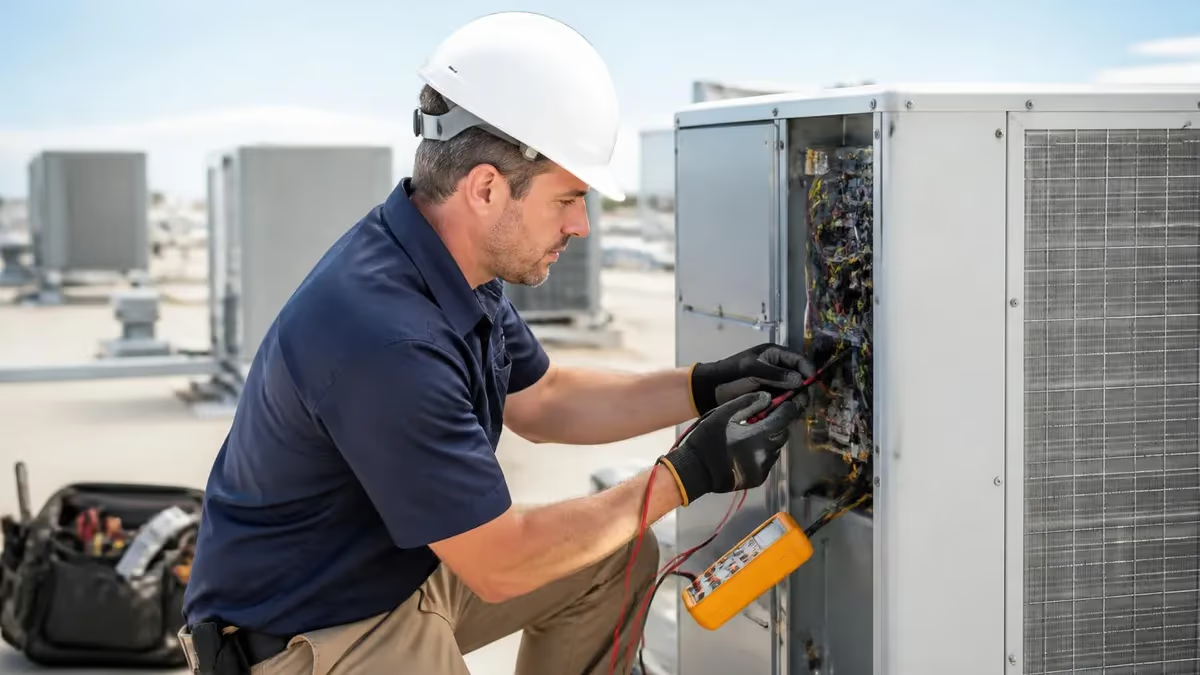
Figuring out your Lennox HVAC age is one of the most useful things a homeowner can do before scheduling a repair, requesting a quote, or budgeting for a major upgrade. The age of your Lennox furnace, air conditioner, or heat pump directly affects efficiency ratings, parts availability, warranty status, and whether a refrigerant like R-22 is still legally serviceable. A quick five-minute check of the data plate can save you hundreds in unnecessary diagnostics and help you make smarter long-term decisions about comfort and energy costs.
Lennox has manufactured residential and commercial HVAC equipment since 1895, and over that long history the company has used several different serial number formats. Some systems built in the 1980s and 1990s use a letter-coded month and a single-digit year, while newer units installed after roughly 2005 use a clean five-character format that puts the year and week of manufacture right at the front of the serial number. Knowing which format you have is the first step.
Beyond pure curiosity, knowing the age of your equipment helps you forecast realistic replacement timing. The average Lennox air conditioner lasts 15 to 20 years, gas furnaces often run 20 to 25 years, and heat pumps typically reach 12 to 15 years before the compressor or reversing valve fails. If your unit is approaching those numbers, every repair quote needs to be weighed against the cost of new, higher-efficiency equipment that could cut your utility bill by 20% or more.
Age also matters for refrigerant compliance. Any Lennox air conditioner or heat pump built before 2010 likely uses R-22 refrigerant, which the EPA banned from new production starting January 1, 2020. Repairs that require R-22 recharging are now extremely expensive, with bulk prices climbing past $90 per pound at many wholesalers. If your system is leaking and old enough to use R-22, you may find that a replacement is cheaper than a sealed-system repair.
This guide walks through every Lennox serial number format you are likely to encounter, the exact location of the data plate on indoor and outdoor units, average lifespan benchmarks by component, the maintenance habits that extend equipment life, and the warning signs that mean it is time to stop pouring money into an aging system.
We will also cover warranty lookup, model number decoding, and how contractors use age data to write quotes. For homeowners weighing a full system swap, our guide on HVAC Installations: The Complete Guide to Planning, Pricing, and Getting It Right the First Time covers what comes next.
Whether you bought a home and inherited mystery equipment, you are preparing to sell and want documentation for buyers, or you simply want to know how many more summers your condenser can handle, this article gives you a step-by-step process. By the end, you will be able to confidently read any Lennox serial number, estimate the remaining service life of your system, and make an informed call about repair, retrofit, or replacement.
Take a flashlight, a phone camera, and ten minutes outside. The information you need is printed on a metal label, usually no bigger than a credit card, glued or riveted to the side of the unit. Snap a clear photo of the model number and serial number before you start decoding so you have a permanent record for warranty claims, insurance, and future service calls.
Lennox HVAC Age by the Numbers
Where to Find the Lennox Serial Number
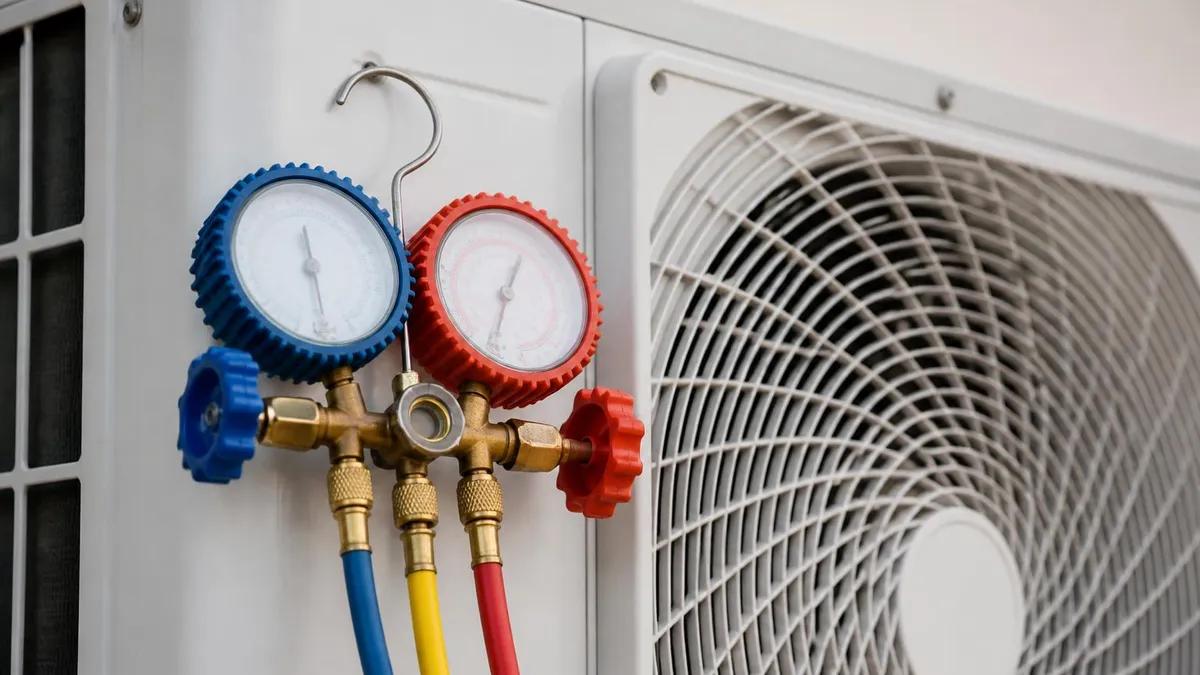
Look for a silver or white rating plate on the side of the cabinet, usually facing the house or near the service disconnect. The serial number is listed below the model number, often etched into a metallic sticker that resists weathering.
Open the upper access panel and look on the inside wall of the cabinet, near the gas valve or blower compartment. Lennox typically places the data plate on the left side, visible without removing any internal components.
On split systems, the A-coil cabinet sits directly above the furnace. The serial label is on the side panel, often partially hidden by refrigerant lines. Use a flashlight and angle your phone camera to capture the full number.
Commercial and some residential packaged systems carry the label on the control panel access door or near the high-voltage compartment. Always disconnect power before opening any electrical panel to read the plate.
Lennox ductless systems place the serial on the bottom or right side of the outdoor condenser and on the underside of the indoor head unit. Both must match for warranty and parts cross-reference.
Lennox has used several serial number formats over its history, and decoding the correct one is the key to nailing down the manufacture date. The most common modern format, used on equipment built from approximately 2005 to the present day, is a five-character prefix where the first four digits represent the year and the week of manufacture. For example, a serial number beginning with 5921 means the unit was built in 2025, week 21, or roughly the third week of May. The remaining characters identify the specific factory and production line.
For Lennox units built between roughly 1995 and 2004, the format is different. These serial numbers typically start with two letters representing the plant code, followed by a single digit for the year (with the decade inferred from context) and two digits for the week. A serial that reads AB401234 might mean plant AB, year ending in 4 (so 1994 or 2004 depending on style), week 01. When in doubt, cross-reference the model number, since major redesigns occurred at known dates.
Even older Lennox equipment from the 1980s and early 1990s used a letter-coded month system. The letters A through M (skipping I) represented January through December, followed by a year digit and a sequential production number. These units are almost always past their useful life by now, but if you encounter one in an inherited home or commercial building, the age alone is reason enough to plan replacement rather than invest in repairs.
If you find a serial number that does not match any standard Lennox format, the unit may be a private-label product built by Lennox for another brand, such as Aire-Flo, Armstrong Air, AirEase, Concord, or Ducane. All four of those brands are owned by Lennox International and share many internal components and serial structures. The decoding logic is identical, so the same date conventions usually apply across the family.
To verify the manufacture date, call Lennox customer service at 1-800-9-LENNOX with your serial and model number ready. The representative can confirm the build date, warranty status, and any open recalls. Many Lennox dealers also offer free lookup as part of their pre-quote inspection. For a deeper dive into matching equipment to ductwork specs, our HVAC Duct Calculator: The Complete Guide to Sizing Ductwork for Airflow, Static Pressure, and System Efficiency walks through compatible sizing.
Keep in mind that the installation date and the manufacture date are not the same. Equipment can sit in a distributor's warehouse for six months to two years before being installed. Warranty coverage typically starts on the installation date, but only if the homeowner registered the unit within 60 days of installation. If no registration was filed, Lennox defaults to the base warranty period from the manufacture date, which can shave significant time off your coverage window.
A practical tip: take a clear, well-lit photo of the data plate and store it in a labeled folder on your phone or cloud drive. Include photos of the model number, serial number, refrigerant type, electrical specifications, and any safety certifications. Service technicians, real estate agents, home inspectors, and insurance adjusters all benefit from this documentation, and it costs you nothing to maintain.
Finally, do not rely on the date stamped on the installation permit or HVAC sticker placed by the installing contractor. Those reflect when work was performed, not when the unit was built. The manufacturer serial number is the only authoritative source for actual equipment age, and it is the number every warranty claim and recall lookup will require.
HVAC Practice Test Questions
Prepare for the HVAC - Heating Ventilation and Air Conditioning exam with our free practice test modules. Each quiz covers key topics to help you pass on your first try.
HVAC Air Conditioning
HVAC Exam Questions covering Air Conditioning. Master HVAC Test concepts for certification prep.
HVAC Code Compliance
Free HVAC Practice Test featuring Code Compliance. Improve your HVAC Exam score with mock test prep.
HVAC Electrical Controls
HVAC Test Prep for Electrical Controls. Practice HVAC Quiz questions and boost your score.
HVAC Energy Efficiency
HVAC Questions and Answers on Energy Efficiency. Free HVAC practice for exam readiness.
HVAC Heating Systems
HVAC Mock Test covering Heating Systems. Online HVAC Test practice with instant feedback.
HVAC Load Calculations
Free HVAC Quiz on HVAC Load Calculations. HVAC Exam prep questions with detailed explanations.
HVAC Tools and Equipment
HVAC Practice Questions for HVAC Tools and Equipment. Build confidence for your HVAC certification exam.
HVAC Refrigeration
HVAC Test Online for Refrigeration. Free practice with instant results and feedback.
HVAC Safety Practices
HVAC Study Material on Safety Practices. Prepare effectively with real exam-style questions.
HVAC System Design
Free HVAC Test covering System Design. Practice and track your HVAC exam readiness.
HVAC Thermodynamics
HVAC Exam Questions covering Thermodynamics. Master HVAC Test concepts for certification prep.
Lennox Lifespan by Component
A well-maintained Lennox central air conditioner typically lasts 15 to 20 years in moderate climates. Coastal homes, where salt air corrodes condenser coils, often see lifespans drop to 8 to 12 years even with annual cleaning. Lennox premium models like the XC25 and SL28XCV use insulated cabinets and aluminum-protected coils that resist corrosion better than mid-tier units.
Compressor failure is the most common cause of mid-life retirement. Once the compressor goes, repair costs can hit $1,800 to $3,500 on a system that may already be losing efficiency. If your unit is 12 years or older and the compressor fails, replacing the entire condenser usually delivers better long-term value than rebuilding the old one with marginal warranty coverage.

Should You Repair or Replace an Older Lennox System?
- +Replacement units offer SEER2 ratings 30-50% higher than systems built before 2015
- +New equipment qualifies for federal tax credits and utility rebates worth $600 to $2,000
- +Modern R-454B and R-32 refrigerants avoid R-22 shortage pricing
- +Warranty resets to 10 years on parts and lifetime on heat exchangers for premium models
- +Variable-speed and inverter technology dramatically lowers monthly utility bills
- +Smart thermostats like iComfort integrate seamlessly with new Lennox systems
- −Upfront replacement costs range from $7,500 to $18,000 installed
- −Permit, disposal, and ductwork modifications add 10-15% to base quotes
- −Smaller refrigerant lines may require flush or full replacement for new refrigerants
- −New units take time to optimize through commissioning and balancing
- −Some older homes need electrical panel upgrades for modern equipment
- −Financing terms can stretch payback period if interest rates are high
Lennox HVAC Age Inspection Checklist
- ✓Locate the data plate on the outdoor condenser and photograph the serial number
- ✓Find the indoor furnace or air handler label inside the cabinet access panel
- ✓Decode the first four digits of modern serials as YYWW (year and week)
- ✓Record the model number to confirm refrigerant type and SEER rating
- ✓Call 1-800-9-LENNOX or use the dealer portal to verify warranty status
- ✓Check whether the unit uses R-22, R-410A, R-454B, or R-32 refrigerant
- ✓Note any visible corrosion, oil stains, or refrigerant leak indicators
- ✓Compare your unit's age to the average lifespan benchmarks for its type
- ✓Pull together past service invoices to identify repair frequency trends
- ✓Schedule a professional age and efficiency assessment if older than 12 years
Use the $5,000 Rule to Decide Repair vs Replace
Multiply the age of your Lennox system by the cost of the proposed repair. If the total exceeds 5,000, replacement usually delivers better long-term value. A 14-year-old condenser facing a $400 repair (14 × 400 = 5,600) tips toward replacement, while a 6-year-old unit with a $300 capacitor (6 × 300 = 1,800) is clearly worth fixing.
Deciding when to repair and when to replace an aging Lennox system involves more than just the age on the data plate. Smart homeowners look at four factors together: equipment age, repair history, current efficiency ratings, and projected energy savings from a new system. When two or more of those factors signal trouble, replacement becomes the financially rational choice even when the unit is still technically functional. Waiting for a complete breakdown almost always costs more because emergency installations leave little room for shopping or negotiation.
Start with repair frequency. A Lennox system that needed two or fewer service visits in its first decade is performing normally. Once you cross three repairs in a single year, or if the same component fails repeatedly, the unit is signaling end-of-life. Capacitors, contactors, and fan motors are routine wear items, but compressors, heat exchangers, and control boards are major repairs that typically warrant replacement consideration on equipment older than 12 years.
Efficiency is the second major lever. A Lennox AC manufactured before 2006 likely has a SEER rating between 8 and 10, while current SEER2 minimums in most U.S. regions range from 13.4 to 14.3. Premium Lennox systems hit SEER2 ratings of 23 or higher. The difference between a SEER 10 unit and a SEER 20 unit can cut cooling costs in half, which on a $200 monthly summer bill saves $1,200 per year and pays back a new system in roughly six to eight years.
Refrigerant type is the third factor, and it can force the decision regardless of preference. Any Lennox system using R-22 is on borrowed time because new R-22 production ended in 2020 and reclaimed supplies are limited and expensive. Recharging a leaking R-22 system can cost $600 to $1,200 for a partial fix that may not last. Meanwhile, units built after 2010 typically use R-410A, and newer 2024+ models use lower-GWP refrigerants like R-454B or R-32 that meet upcoming EPA regulations.
The fourth factor is comfort and capacity. Older systems often run inefficiently because of degraded refrigerant charge, fouled coils, or worn blower motors, even when they technically still cool the house. If certain rooms never reach setpoint, humidity stays high in summer, or run cycles feel longer than they used to, the equipment is no longer matched to your home's real load. Modern variable-capacity Lennox systems modulate output to maintain steady comfort with much shorter, gentler cycles.
Insurance and financing also affect the math. Many homeowner's policies will not cover damage from a failed HVAC system more than 15 years old, especially if poor maintenance is documented. Some utility companies offer time-limited rebates that disappear at year-end, and federal Inflation Reduction Act credits for high-efficiency heat pumps can reach $2,000 for qualifying installations. Stacking these incentives changes the breakeven point dramatically.
Get at least three written quotes before deciding. Each quote should include the exact model number, SEER2 rating, refrigerant type, warranty terms, and a load calculation. Reject any contractor who skips the load calc and just matches the old equipment size, because oversized systems short-cycle, dehumidify poorly, and wear out faster. A proper Manual J load calculation is the foundation of any age-driven replacement decision.
If your Lennox system was built before 2010, it almost certainly uses R-22 refrigerant, which the EPA banned from new production starting January 1, 2020. Reclaimed R-22 supplies are limited and pricing now exceeds $90 per pound at wholesale. A typical recharge of 4-8 pounds can cost $400 to $800 just for refrigerant, before labor. Major leaks usually mean replacement is more cost-effective than repair.
Once you know the age of your Lennox system, you can take specific steps to maximize the remaining service life and delay replacement until it makes financial sense. Routine maintenance is the single biggest lever. Lennox publishes an annual service checklist that includes coil cleaning, refrigerant level verification, electrical connection torque checks, blower assembly inspection, and condensate drain treatment. Skipping even one year of this work can shave two to three years off the equipment's useful life.
Air filter discipline matters far more than most homeowners realize. A clogged filter forces the blower motor to work harder, raises static pressure throughout the duct system, and starves the evaporator coil of airflow. That triggers coil icing, compressor overheating, and accelerated wear. Replace standard one-inch filters every 60 to 90 days, and high-MERV pleated filters every 90 to 180 days based on home conditions, pets, and occupancy.
Outdoor condenser care is equally important. Keep at least two feet of clearance on all sides for airflow, trim back vegetation seasonally, and gently rinse the coil fins with a garden hose every spring to remove pollen, cottonwood seed, and dust. Avoid pressure washers, which bend fins and damage the protective coating. If your unit sits under a tree, install a condenser cover only in winter, never during cooling season, since trapped moisture promotes corrosion.
Smart thermostat upgrades extend equipment life by reducing unnecessary cycling. The Lennox iComfort S30 and similar models learn your schedule, optimize start times, and provide diagnostic alerts that help technicians catch problems early. Even a basic programmable thermostat with proper setbacks can cut runtime by 10% to 15%, which directly translates into less wear on the compressor, blower, and igniter. For complete buying advice on a new system, our Certified HVAC Contractors: How to Find, Vet, and Hire the Right Professional for Your Home or Business guide explains how to vet installers.
Annual professional tune-ups should happen twice a year on heat pumps and dual systems: once in spring before cooling season and once in fall before heating season. Furnace-only systems can get by with one fall visit. A thorough tune-up includes combustion analysis on gas furnaces, capacitor microfarad measurement, contactor inspection, refrigerant pressure and superheat verification, and a temperature differential test across the evaporator coil. Expect to pay $150 to $250 per visit, with maintenance plans bundling both visits for $250 to $400 annually.
Duct sealing and insulation upgrades complement equipment maintenance. Leaky ducts can lose 20% to 30% of conditioned air before it reaches living spaces, which means your aging Lennox unit has to run longer and harder to compensate. Mastic sealing at every joint, plus R-8 insulation on attic runs, is one of the highest-return improvements you can make on any older system. Energy auditors with blower doors and duct blasters can measure exactly how much leakage you have.
Surge protection is a small investment with outsized returns on aging equipment. A whole-house surge protector at the panel costs $300 to $500 installed and shields the expensive control board, inverter, and ECM motor inside modern Lennox systems from lightning strikes and utility transients. Replacing a fried control board on a 14-year-old unit can easily push you into replacement territory, so a $400 surge device that prevents that outcome pays for itself the first time it acts.
Beyond decoding age and planning maintenance, there are practical strategies for getting the most accurate information about your specific Lennox unit and the strongest negotiating position when it is time to repair or replace. Start by building a complete equipment file that includes the original purchase invoice, installation permit, warranty registration confirmation, every annual maintenance report, every repair invoice, and the manufacturer's installation and operation manual. This file is gold during sale negotiations, insurance claims, and warranty disputes.
Register every new Lennox component you install within 60 days. Lennox extends the standard 5-year parts warranty to 10 years and the heat exchanger warranty to a limited lifetime for registered units on premium models. Registration is free and takes about ten minutes online at lennox.com using the model and serial numbers from the data plate. Failing to register cuts your protection in half, which can mean thousands of dollars in out-of-pocket repair costs during years six through ten of ownership.
When pricing replacement, ask for detailed line-item quotes that separate equipment cost, refrigerant line work, duct modifications, electrical upgrades, condensate disposal, permitting, disposal of old equipment, and labor. Quotes that bundle everything into one number make comparison impossible. A reputable Lennox Premier Dealer will gladly itemize because they have nothing to hide, and they will also include startup commissioning, balance testing, and a written commissioning report.
Consider a heat pump conversion if your current system is gas furnace plus AC and you live in a moderate climate. Modern Lennox cold-climate heat pumps maintain efficient heating output down to -5°F, which covers most of the contiguous United States. The federal Inflation Reduction Act offers up to $2,000 in tax credits and substantial point-of-sale rebates for income-qualified households, often making the heat pump path cheaper than like-for-like furnace replacement on a 15-year payback basis.
Local rebates stack on top of federal incentives. Check with your electric utility, gas utility, state energy office, and city sustainability office. Many programs offer $300 to $1,500 for high-SEER2 equipment, smart thermostats, duct sealing, and electrification upgrades. Some require pre-approval before installation, so investigate before signing any contract. Your Lennox dealer should know the active programs in your zip code and help you complete the paperwork.
If your Lennox system is approaching end of life but still functioning, plan replacement during shoulder seasons when contractor demand is low. Mid-September through late October and mid-March through early May usually offer the best pricing, fastest scheduling, and most negotiating leverage. Avoid emergency replacements in July heat waves or January cold snaps when prices climb and you may end up with whatever equipment is in stock rather than the optimal model for your home.
Finally, document everything during and after installation. Photograph the new data plates immediately, save copies of all paperwork to a cloud folder, register the equipment online the same week, and schedule the first professional tune-up for the next shoulder season. Treating a new Lennox system like the 15-to-20-year investment it is sets you up to know exactly how old your equipment is, how it has been cared for, and when the next big decision is coming.
HVAC Questions and Answers
HVAC Duct Supplies: The Complete Buyer's Guide to Ductwork Components, Sizing, and Installation Materials

HVAC Duct Calculator: The Complete Guide to Sizing Ductwork for Airflow, Static Pressure, and System Efficiency
Certified HVAC Contractors: How to Find, Vet, and Hire the Right Professional for Your Home or Business

Best HVAC Repair in Bandon, OR: Local Services Near Me Guide
HVAC Installations: The Complete Guide to Planning, Pricing, and Getting It Right the First Time
About the Author

NATE Certified HVAC Technician & Licensing Exam Trainer
Universal Technical InstituteMike Johnson is a NATE-certified HVAC technician and EPA 608 universal-certified refrigerant handler with a Bachelor of Science in HVAC/R Technology. He has 19 years of commercial and residential HVAC installation and service experience and specializes in preparing technicians for NATE certification, EPA 608, A2L refrigerant safety, and state HVAC contractor licensing examinations.