
HVAC Truck Equipment: The Complete Guide to Tools, Setup, and Fleet Management for HVAC Technicians
Master hvac truck equipment setup, tools, and fleet management. Learn what every HVAC van needs to run profitable service calls. ✅
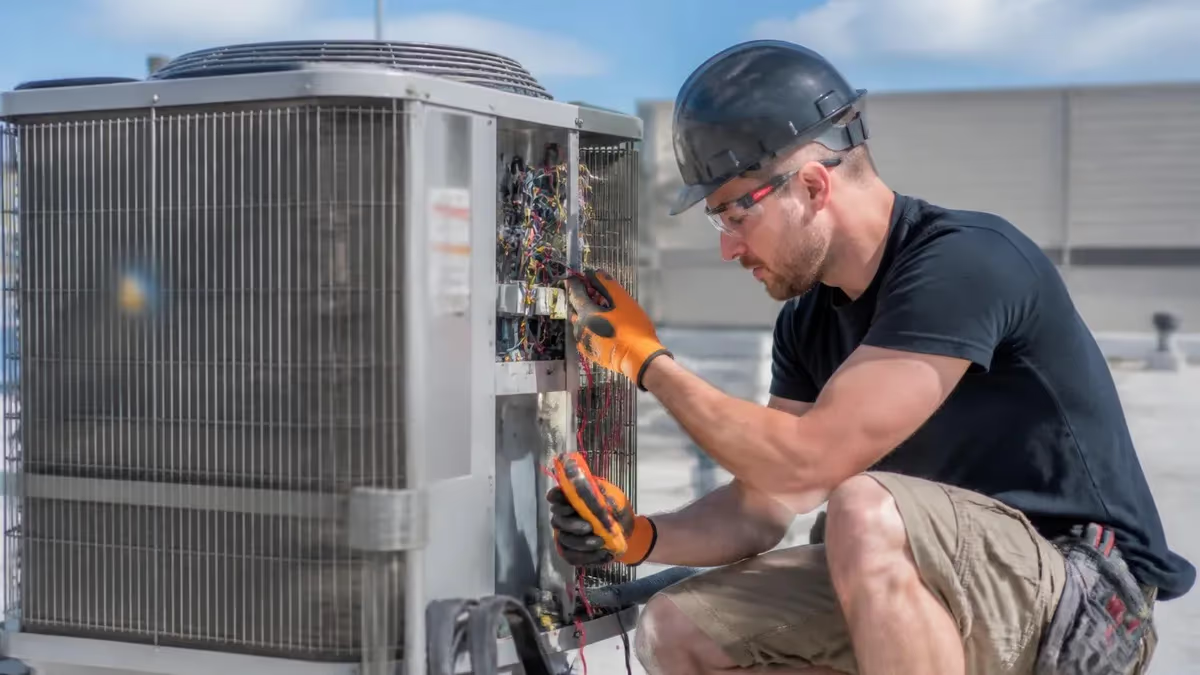
HVAC truck equipment is the backbone of every successful heating, cooling, and refrigeration service operation in the United States. A properly outfitted service vehicle is not just a convenience — it is a rolling workshop that determines how many jobs a technician can complete each day, how professional the crew appears to homeowners and facility managers, and how much money flows to the bottom line at the end of each month.
Whether you are a solo technician building your first van or a fleet manager overseeing dozens of vehicles, understanding what belongs on every truck and why is one of the most important investments of time you can make.
The demand for skilled HVAC technicians continues to grow across every region of the country. The Bureau of Labor Statistics projects a 9 percent increase in HVAC employment through 2033, well above the average for all occupations. That growth means more trucks on the road, more competition for service calls, and a higher bar for professionalism. Technicians who arrive with a well-organized, fully stocked vehicle close more calls on the first visit, earn higher customer satisfaction scores, and generate more referrals than those who must make multiple trips to the supply house.
Equipping an HVAC service truck is a significant financial decision. Entry-level sprinter van builds with basic shelving and an essential tool set can run $15,000 to $25,000 beyond the cost of the vehicle itself. Premium builds with fully fabricated aluminum shelving, power inverters, generator systems, diagnostic equipment, and branded wraps can exceed $60,000. Understanding exactly what categories of equipment matter most — and in what priority order — helps owners and technicians allocate budget intelligently without leaving productivity on the table.
The broad category of hvac truck equipment encompasses everything from hand tools and refrigerant recovery machines to GPS fleet tracking systems and mobile payment terminals. Each subcategory has its own learning curve, and the right choices depend heavily on the type of work the company performs. A residential replacement-focused company needs a very different truck layout than a commercial service shop that handles rooftop units, chiller maintenance, and building automation systems every day of the week.
Safety is another dimension that cannot be separated from equipment decisions. HVAC technicians face fall hazards from ladders and rooftops, electrical hazards from high-voltage equipment, chemical hazards from refrigerants and lubricants, and ergonomic hazards from lifting heavy equipment in tight spaces. The right truck setup includes not just the tools to do the job but the personal protective equipment, fall arrest systems, spill containment materials, and first aid supplies to do it safely every time. OSHA compliance starts at the truck.
For technicians studying for their EPA 608 certification or state licensing exams, a thorough understanding of the tools and equipment used in the field is directly tested. Questions about refrigerant recovery equipment, manifold gauges, vacuum pumps, and leak detectors appear on both core and type-specific sections of the EPA exam. Understanding what these tools do and how to use them correctly is not just good test preparation — it is the foundation of a safe and effective career. You can explore hvac trucks and fan coil unit systems in our dedicated guide to broaden your field knowledge.
This comprehensive guide walks through every major category of HVAC truck equipment, explains what each piece does, provides real cost benchmarks, and offers practical advice for building out a truck at any budget level. By the end, you will have a clear framework for equipping a service vehicle that sets you up for first-call completion, customer confidence, and long-term business success in one of the most in-demand trades in America.
HVAC Truck Equipment by the Numbers
Core Categories of HVAC Truck Equipment
Screwdrivers, nut drivers, pliers, wire strippers, drills, reciprocating saws, and sheet metal tools form the foundational layer of any HVAC truck. Quality matters here — cheap hand tools fail at critical moments and cost more in replacement over a career than premium brands purchased once.
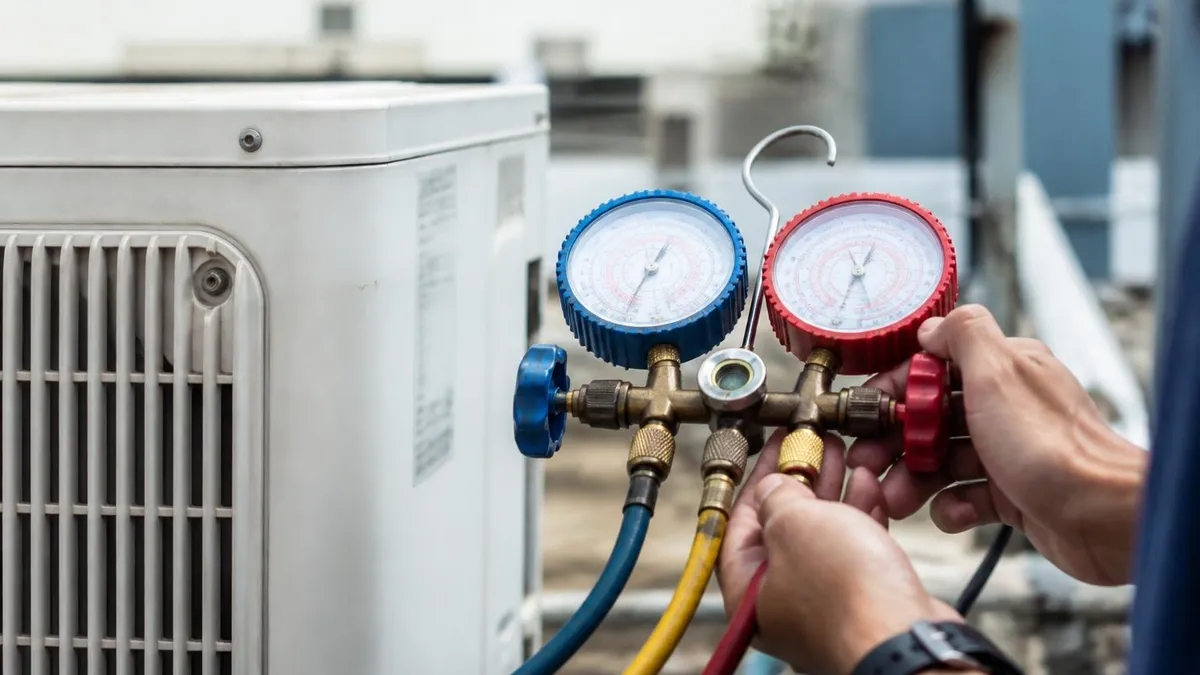
Recovery machines, manifold gauge sets, vacuum pumps, refrigerant scales, and leak detectors are the core tools that separate HVAC technicians from general tradespeople. EPA Section 608 requires certified recovery equipment for any work involving regulated refrigerants including R-410A and R-22.
Digital multimeters, clamp meters, capacitor testers, contactors, and temperature probes allow technicians to diagnose electrical faults accurately without guesswork. Quality electrical diagnostics dramatically reduce the risk of misdiagnosis, unnecessary part replacement, and callbacks that damage customer relationships.
Hard hats, safety glasses, gloves, arc flash protection, fall arrest harnesses, and OSHA-compliant safety signage protect technicians and keep companies legally compliant. Safety equipment is non-negotiable on every truck regardless of the size or type of jobs the company primarily performs.
Capacitors, contactors, motors, thermostat wire, fuses, breakers, refrigerant, flush kits, drain pans, and filter stocks allow technicians to complete the majority of service calls without leaving the job site. Strategic inventory management directly determines first-call completion rates and customer satisfaction scores.
A well-organized HVAC service vehicle starts with the right base platform. Most residential and light commercial technicians operate cargo vans — the Ford Transit, Mercedes Sprinter, Ram ProMaster, and Chevrolet Express are the most common choices across the United States. Each has different cargo dimensions, payload ratings, and fuel economy profiles. High-roof extended models provide the most flexibility for tall shelving units and eliminate the need to crouch while working inside the vehicle, which reduces fatigue over long work days significantly.
Shelving systems are the single most impactful investment inside a service van. Steel shelving from manufacturers like Adrian Steel, Weather Guard, and Ranger Design provides organized storage for small parts, tools, and equipment. Aluminum systems from Kargo Master and Bott are lighter and more resistant to corrosion in humid southern markets. The most productive setups use a combination of full-height shelving on one wall, a workbench surface, and drawers for frequently accessed small parts like capacitors, contactors, fuses, and electrical connectors.
Ladder racks and roof storage are essential for any technician who works on split systems, package units, or commercial rooftop equipment. A quality aluminum ladder rack from brands like Kargo Master or Rack-It handles the constant loading and unloading abuse that cheaper welded steel racks fail over time. Extension ladders, step ladders, and Little Giant multi-position ladders are typical for residential work, while commercial technicians may also carry scaffold planks and pump jack components for elevated rooftop access situations.
Electrical systems inside the van deserve serious attention. A quality power inverter rated at 2,000 watts or higher allows technicians to run corded power tools, battery chargers, and diagnostic equipment without hunting for an outlet at the job site. Many experienced technicians add a dedicated auxiliary battery bank with an isolator to power the inverter without draining the vehicle's starting battery. Shore power receptacles allow the van to plug into facility power when available, extending battery life and enabling heavier loads like vacuum pumps during extended evacuation periods.
Lighting inside the cargo area is frequently overlooked but dramatically affects productivity and professionalism. LED light bars mounted to the ceiling of the cargo area make it easy to find parts quickly, especially during early morning or late evening emergency calls. A portable LED work light that can be brought to the job site is equally valuable when working in dark attic spaces, mechanical rooms, or crawlspaces where building lighting is inadequate or unavailable for safe and accurate diagnostic work.
Climate control for the truck itself is worth considering in extreme climates. In southern states, an auxiliary cooling system or battery-powered fan keeps the parts inventory at stable temperatures, preventing refrigerant hoses from hardening, lubricants from separating, and adhesives from failing before use. In northern states, a propane or diesel auxiliary heater prevents lithium battery tools from losing capacity overnight and keeps refrigerant lines flexible for early morning winter service calls in residential neighborhoods.
Vehicle graphics and branding complete the professional picture. A well-designed vehicle wrap turns every truck into a rolling advertisement that generates awareness in the neighborhoods where technicians work every day. Industry data consistently shows that branded service vehicles produce measurable increases in inbound calls from neighborhoods where the trucks operate regularly. For smaller companies, even simple magnetic signs provide a baseline of professional credibility that influences customer trust during the first moments of a service visit.
HVAC Diagnostic Equipment: What Every Truck Needs
Refrigerant recovery machines are legally required by EPA Section 608 regulations whenever a technician opens a refrigerant circuit. Quality recovery machines from Robinair, Yellow Jacket, or NAVAC recover both vapor and liquid refrigerant efficiently, protecting the technician from fines of up to $44,539 per violation. Every truck must also carry a calibrated refrigerant scale accurate to 0.1 ounce increments for precise charging according to manufacturer specifications.
Manifold gauge sets — either traditional analog or modern digital wireless models — connect to the high and low sides of a refrigerant circuit to measure operating pressures and diagnose system faults. Digital manifolds from Testo, Fieldpiece, or Yellow Jacket display superheat and subcooling calculations automatically, eliminating manual chart lookups and reducing the risk of calculation errors that lead to overcharging or undercharging. A vacuum pump rated at 6 CFM or higher is essential for proper system evacuation before any refrigerant charge.
Fully Stocked HVAC Truck vs. Minimal Loadout: What's the Real Trade-Off?
- +Higher first-call completion rates — most jobs finished in one visit without supply house trips
- +Stronger customer perception of professionalism and preparedness at the first impression
- +More jobs completed per day because technicians spend less time driving to suppliers
- +Reduced fuel and vehicle wear from fewer mid-job trips across town
- +Better safety outcomes when all required PPE and safety equipment is always on board
- +Higher technician morale and confidence when the right tools are always available
- −Higher upfront investment — full truck builds can cost $40,000 to $60,000 beyond vehicle price
- −Heavier payload reduces fuel economy and increases tire and brake wear over time
- −Inventory management requires disciplined restocking protocols to avoid stockouts
- −Parts carried but not used tie up working capital that could be deployed elsewhere
- −Risk of theft increases when valuable tool and parts inventory is stored in vehicles overnight
- −More complex truck organization requires trained technicians to maintain proper system order
Pros and Cons at a Glance
| Pros | Cons |
|---|---|
| Higher first-call completion rates — most jobs finished in one visit without supply house trips | Heavier payload reduces fuel economy and increases tire and brake wear over time |
| Stronger customer perception of professionalism and preparedness at the first impression | Inventory management requires disciplined restocking protocols to avoid stockouts |
| More jobs completed per day because technicians spend less time driving to suppliers | Parts carried but not used tie up working capital that could be deployed elsewhere |
| Reduced fuel and vehicle wear from fewer mid-job trips across town | Risk of theft increases when valuable tool and parts inventory is stored in vehicles overnight |
| Better safety outcomes when all required PPE and safety equipment is always on board | More complex truck organization requires trained technicians to maintain proper system order |
HVAC Service Truck Daily Readiness Checklist
- ✓Verify all refrigerant recovery cylinders are labeled, weighed, and below the 80% fill threshold
- ✓Check that manifold gauge set hoses show no cracks, kinks, or leaking Schrader valve cores
- ✓Confirm vacuum pump oil level is correct and oil color is clear, not dark or contaminated
- ✓Test multimeter and clamp meter batteries, replace if voltage reads below operational threshold
- ✓Inspect all power tool batteries and place low-charge packs on charger before leaving the shop
- ✓Restock capacitors, contactors, and fuses used on previous day's service calls
- ✓Verify EPA 608 certification card and refrigerant purchase receipts are present in the vehicle
- ✓Check that all PPE is present — safety glasses, gloves, hard hat, and arc flash protection
- ✓Confirm ladder rungs, feet, and side rails are undamaged and ladder locks operate correctly
- ✓Review the day's job schedule and pre-pull any specific parts or equipment needed for known work orders
Stock What You Use, Not Everything You Might Use
Industry data from HVAC service software platforms shows that 80 percent of service calls are resolved with fewer than 15 distinct part numbers. Analyze your own call history for six months, identify your most-used parts, and stock those deeply rather than carrying one of everything. This focused approach maximizes first-call completion on common failures while keeping payload weight and inventory carrying costs manageable for single-technician operations.
Budgeting for HVAC truck equipment requires separating one-time capital costs from ongoing operational expenses. Capital costs include the shelving system, ladder rack, power inverter, generator or auxiliary power system, and the premium diagnostic tools that will serve a technician for a decade or more. These should be amortized over five to ten years when evaluating their true cost per service call. Operational costs include refrigerants, consumables, expendable hand tools, replacement batteries, and vehicle fuel and maintenance.
Fleet management becomes a critical discipline once a company operates more than three or four vehicles. Telematics systems from providers like Verizon Connect, Samsara, and Fleetio provide GPS tracking, engine diagnostics, driver behavior monitoring, and maintenance scheduling in a single platform. These systems pay for themselves quickly by reducing fuel waste from inefficient routing, catching deferred maintenance before it causes costly breakdowns, and providing defensible records when customers or other drivers dispute what happened during a service visit.
Vehicle maintenance for HVAC trucks is more demanding than average because service vehicles accumulate mileage rapidly — many technician vans log 30,000 to 50,000 miles per year — and carry heavy payload that stresses brakes, tires, and suspension components. Oil change intervals should follow the severe duty schedule rather than the standard schedule for any vehicle used as a service truck. Tire pressure should be checked weekly because payload variations affect recommended inflation significantly, and underinflated tires on a loaded van wear unevenly and reduce fuel economy measurably.
Insurance for HVAC service vehicles deserves careful attention. Commercial auto insurance with adequate liability limits is a legal requirement, but many small contractors underestimate how much coverage they actually need. A van involved in a serious accident while carrying $30,000 in tools and equipment exposes the business to significant liability. Inland marine coverage specifically covers tools and equipment in transit, filling the gaps that commercial auto policies leave when expensive diagnostic equipment or refrigerant recovery machines are stolen from a parked vehicle.
Tracking tool and equipment inventory is a practice that separates professionally run shops from those that constantly wonder where equipment went. Asset tagging with QR codes or RFID allows shop managers to audit tool locations quickly and hold technicians accountable for assigned equipment. Several HVAC-specific field service platforms including ServiceTitan, Jobber, and FieldEdge include tool tracking modules that integrate with dispatch and inventory management for a unified operational view.
Financing truck equipment is a practical option for newer technicians and growing companies. Equipment financing through specialty lenders often offers better terms than general business loans because the equipment itself serves as collateral. Section 179 of the tax code allows businesses to deduct the full cost of qualifying equipment in the year of purchase rather than depreciating it over multiple years, which can substantially reduce the after-tax cost of a major truck build in a profitable business year.
Environmental compliance adds another layer of responsibility to fleet management. All refrigerant must be recovered with certified equipment, documented with purchase and recovery records, and disposed of through licensed reclaim centers. Refrigerant oils, drained from compressors during replacement, must be collected and disposed of as regulated waste — they cannot be poured down drains or mixed with regular trash. Technicians who are sloppy with refrigerant handling face not just EPA fines but potential loss of the 608 certification that is required to purchase refrigerants in the first place.
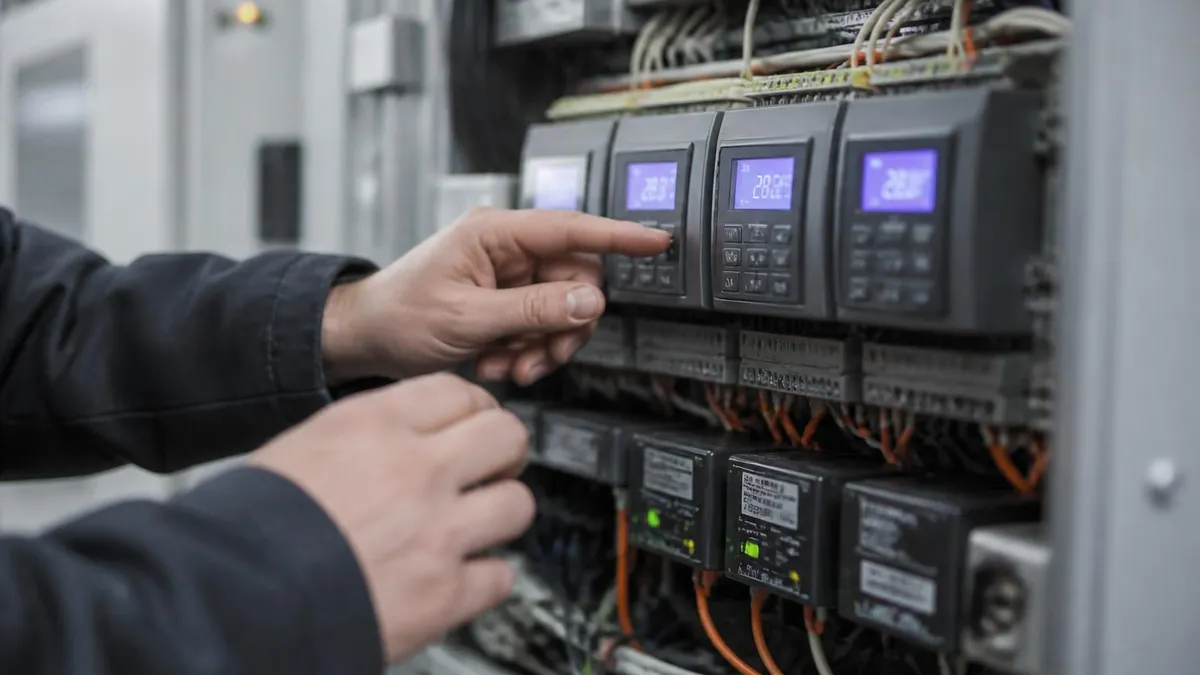
The EPA actively enforces Section 608 venting prohibitions and recovery equipment requirements. Technicians caught venting refrigerants or using uncertified recovery equipment face civil penalties of up to $44,539 per day per violation. Always carry your EPA 608 certification card, use certified recovery equipment, and maintain accurate refrigerant purchase and disposal records on every truck to demonstrate compliance during any inspection or audit.
Career advancement in the HVAC trade is directly connected to the breadth and quality of equipment a technician can operate competently. Entry-level technicians who demonstrate mastery of basic refrigerant tools and hand tools earn their EPA 608 certification and begin building their tool inventory. Within two to three years, technicians who invest in quality diagnostic equipment — digital manifolds, combustion analyzers, and advanced electrical testers — can command significantly higher hourly rates and take on more complex commercial and industrial service accounts.
HVAC licensing requirements vary by state and add another layer of credential requirements that affect what work a technician can legally perform. States like California, Texas, Florida, and New York have their own licensing examinations that test knowledge of state-specific codes, equipment requirements, and business practices. Technicians who pursue multiple certifications — EPA 608 plus state licensing plus manufacturer certifications from Carrier, Trane, Lennox, or Daikin — become more valuable to employers and more credible to customers who are making significant purchasing decisions.
Manufacturer-specific training and truck stocking requirements are a growing trend in the industry. Many HVAC manufacturers require that certified dealers maintain specific tool inventories on their service trucks to qualify for warranty work. Carrier and Trane dealer programs, for example, specify minimum diagnostic equipment, recovery machine capabilities, and technical training levels. These requirements raise the bar for entry but also increase the value of certified technician status in the eyes of both consumers and commercial customers who prefer manufacturer-backed service.
Technology is transforming HVAC truck operations faster than many in the industry realize. Connected manifold gauges that sync automatically with job management software, smart refrigerant scales that log charge weights to cloud platforms, and AI-assisted diagnostic apps that suggest probable failure modes based on system readings are all commercially available today. Forward-thinking service companies that adopt these technologies reduce diagnostic time, improve documentation quality, and generate the data needed to optimize preventive maintenance programs for commercial clients.
Soft skills and customer-facing materials complete the truck setup picture. A branded clipboard with service agreement forms, maintenance plan brochures, and a tablet for digital signatures projects competence and professionalism that distinguishes premium service companies from cut-rate competitors. Many successful HVAC companies equip their technicians with branded polo shirts, boot covers to protect customer flooring, and floor mats to keep the work area clean — details that customers notice and mention in online reviews that influence purchasing decisions for other potential customers in the neighborhood.
Technicians preparing for HVAC licensing exams should study not only the technical content but also the practical equipment knowledge that appears in many state-level examinations. Questions about proper vacuum pump maintenance, manifold gauge interpretation, refrigerant identification, and leak detection procedures are drawn directly from real-world truck operations. Hands-on experience with properly maintained professional equipment provides an enormous advantage over candidates who have only studied from books without practical field exposure on real systems.
The connection between truck equipment knowledge and exam success runs in both directions. Strong test preparation builds the theoretical foundation that makes field equipment use faster and more accurate. Technicians who understand why a vacuum pump must pull below 500 microns before refrigerant is added — not just that it must — troubleshoot pump performance problems faster and avoid the costly mistake of charging a system that still has moisture contamination in the circuit that will destroy compressor valves over time.
Building your first HVAC service truck on a limited budget requires prioritizing ruthlessly. The absolute must-haves for any technician entering the field are an EPA-certified refrigerant recovery machine, a quality manifold gauge set, a reliable vacuum pump, a calibrated refrigerant scale, a true RMS multimeter, and a set of professional-grade hand tools. Everything else — though valuable — can be added incrementally as the business generates revenue. Starting with quality core tools is far better than starting with a complete set of mediocre ones that fail under daily professional use.
As the tool inventory grows, organization becomes increasingly important. Foam tool inserts cut to match each tool's profile prevent damage during transport and make it immediately obvious when a tool is missing from the truck. Parts bins with clear labels and standardized locations mean any technician can find what they need quickly, which matters especially for emergency service companies where multiple technicians may share vehicles across shifts. The hour invested in organizing a truck properly pays back in minutes saved on every single job that follows.
Preventive maintenance kits are a truck stocking strategy that improves efficiency significantly. Pre-assembled kits for common system types — including a residential split system tune-up kit with capacitor, contactor, drain treatment, and filter — allow technicians to complete maintenance visits faster and more consistently. Some companies build these kits in the shop during slow periods, assemble them with all required parts in labeled bags, and load them by the dozen onto service trucks at the start of the week to minimize in-job part hunting.
Communication tools are an underappreciated category of truck equipment. A quality Bluetooth headset allows technicians to handle inbound calls from dispatch or customers while working without putting down tools or risking dropping a phone into an open air handler. Field service management apps running on a ruggedized tablet or smartphone allow technicians to access job history, equipment manuals, wiring diagrams, and refrigerant charging charts without carrying heavy paper binders that go out of date quickly as new equipment enters the market.
Continuing education is a truck equipment investment too. Many technicians keep reference materials — refrigerant pressure-temperature charts, wiring diagram collections, torque specification cards, and code reference summaries — organized in a binder or on a tablet in the cab. These resources reduce the time spent looking up information and improve diagnostic accuracy, especially when dealing with unfamiliar equipment brands or system types that fall outside the technician's day-to-day experience with the most common residential equipment lines.
Emergency supplies round out a professional truck setup. A basic first aid kit rated for workplace injuries, a fire extinguisher rated for electrical fires, and an emergency contact card with poison control, refrigerant emergency response, and company management contacts ensure that any incident can be addressed quickly and appropriately. Some companies also keep an emergency supply of common refrigerants, a battery jump starter, and basic vehicle repair tools so that a flat tire or dead battery does not strand a technician in the middle of a service day.
The highest-performing HVAC technicians treat their trucks as an extension of their professional identity. A clean, organized, fully stocked vehicle says everything about a technician's standards before a single word is spoken to the customer. Investing in your truck equipment is investing in your reputation, your efficiency, and your career. Whether you are preparing for your first certification exam or managing a fleet of twenty service vehicles, the principles of proper equipment selection, organization, and maintenance remain the same: the right tools, in the right place, ready to work every single day.
Sample HVAC Practice Questions
Try these questions from our free HVAC practice tests. The correct answer and an explanation follow each question.
What is 'setback' or 'setup' control in HVAC energy management?
- A. Temporarily relaxing temperature setpoints during unoccupied periods to reduce heating or cooling energy
- B. Increasing airflow during peak hours to improve comfort
- C. Raising supply fan speed during unoccupied hours for air circulation
- D. Cycling the chiller off during periods of low demand
Answer: A. Temporarily relaxing temperature setpoints during unoccupied periods to reduce heating or cooling energy
Setback (heating) and setup (cooling) raise or lower thermostat setpoints when a building is unoccupied, reducing HVAC runtime and energy consumption significantly.
A technician is servicing a rooftop unit during a lightning storm. What is the safest course of action?
- A. Continue working but avoid touching metal components
- B. Descend from the roof and wait for the storm to pass before resuming
- C. Work faster to complete the job before the storm worsens
- D. Stay low and use rubber-handled tools only
Answer: B. Descend from the roof and wait for the storm to pass before resuming
Rooftops are extremely dangerous during lightning storms due to exposure height and proximity to HVAC equipment that can attract lightning strikes.
What is 'total volatile organic compound' (TVOC) monitoring and why is it important for IAQ management?
- A. Monitoring total refrigerant levels to detect leaks before they become safety hazards
- B. Measuring the combined concentration of all VOC species in indoor air to assess overall chemical contamination levels and guide ventilation decisions
- C. Monitoring carbon monoxide from combustion equipment only
- D. Testing for radon and other radioactive gases using TVOC sensors
Answer: B. Measuring the combined concentration of all VOC species in indoor air to assess overall chemical contamination levels and guide ventilation decisions
TVOC monitoring measures the aggregate concentration of all volatile organic compounds in indoor air, providing a single indicator of overall chemical contamination that guides source control and ventilation strategies.
Which tool is used to cut copper refrigerant tubing cleanly without leaving burrs that could damage a compressor?
- A. Hacksaw
- B. Pipe wrench
- C. Tubing cutter
- D. Reciprocating saw
Answer: C. Tubing cutter
A tubing cutter uses a hardened wheel to score and cut copper tubing squarely; the reamer attachment then removes the interior burr.
HVAC Questions and Answers
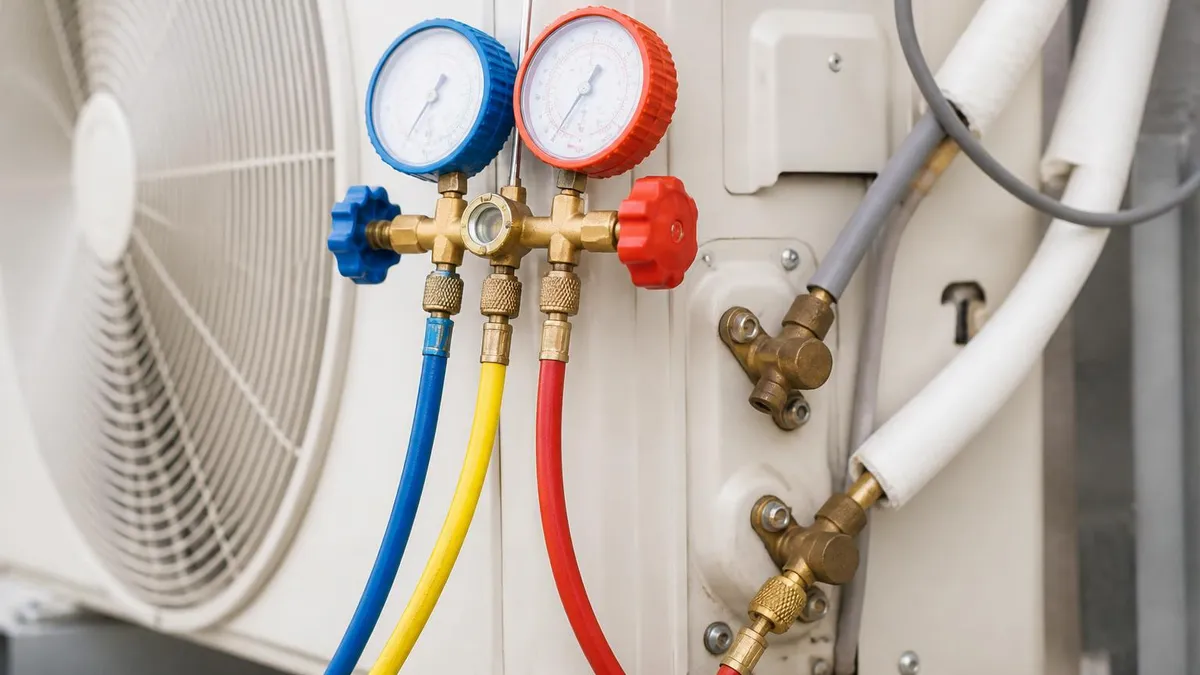
FCU HVAC: The Complete Guide to Fan Coil Units, How They Work, Where They Excel, and How to Choose the Right System

Finance a New HVAC System: 2026 Loans, 0% APR, and Rebates
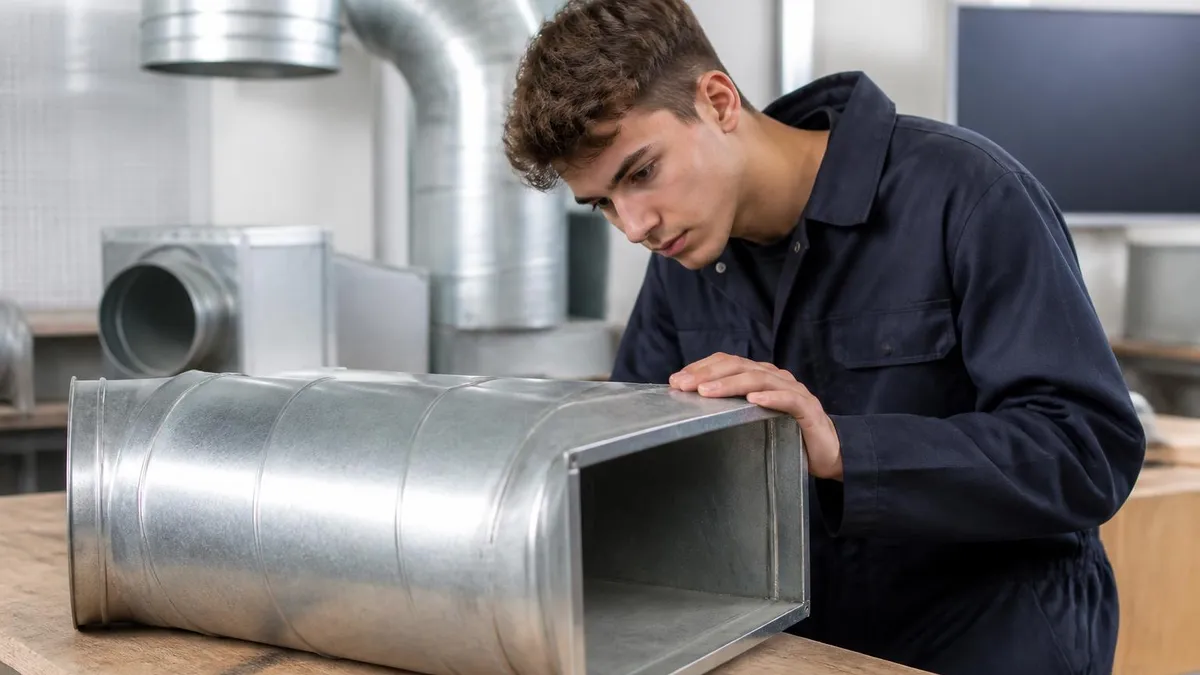
HVAC Duct Repair: Common Issues, Costs, and DIY vs Professional

HVAC School -- Programs, Costs, and Career Paths in 2026
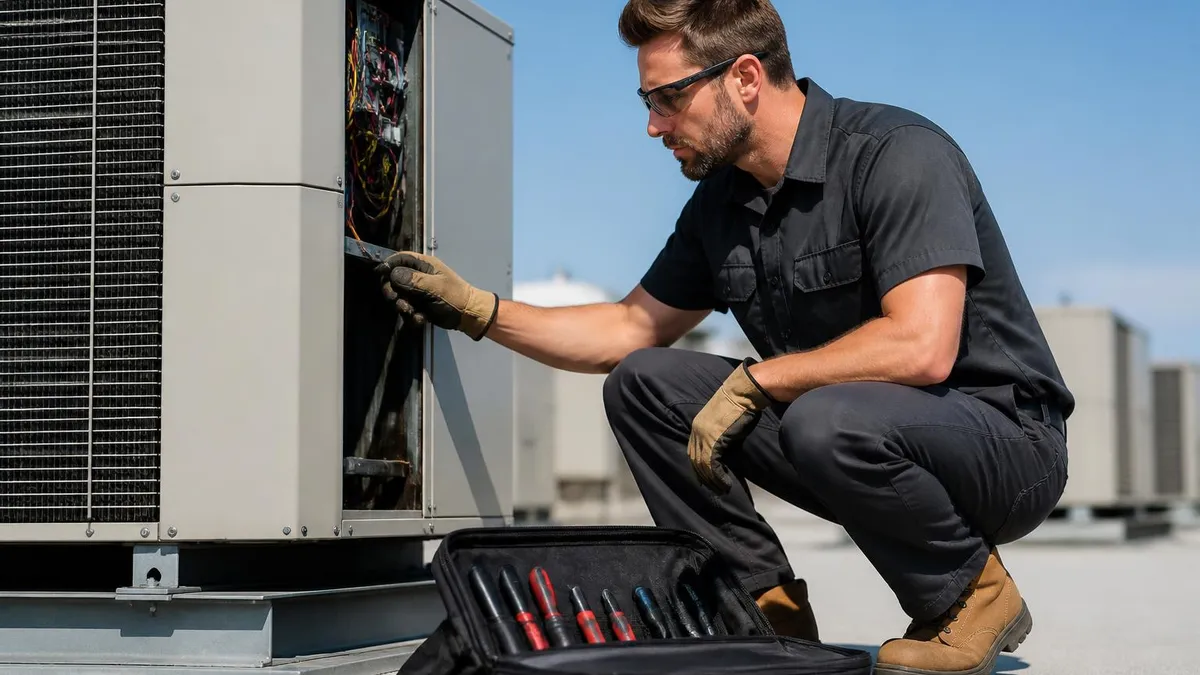
HVAC Advertising: The Complete Playbook for Generating Leads, Booking Calls, and Growing Your Heating and Cooling Business
About the Author

NATE Certified HVAC Technician & Licensing Exam Trainer
Universal Technical InstituteMike Johnson is a NATE-certified HVAC technician and EPA 608 universal-certified refrigerant handler with a Bachelor of Science in HVAC/R Technology. He has 19 years of commercial and residential HVAC installation and service experience and specializes in preparing technicians for NATE certification, EPA 608, A2L refrigerant safety, and state HVAC contractor licensing examinations.