
HVAC System Prices: Complete 2026 September Cost Guide for Homeowners
HVAC system prices range from $3,000 to $12,000+. 💡 Compare costs by system type, size, and brand to budget your next install or replacement.
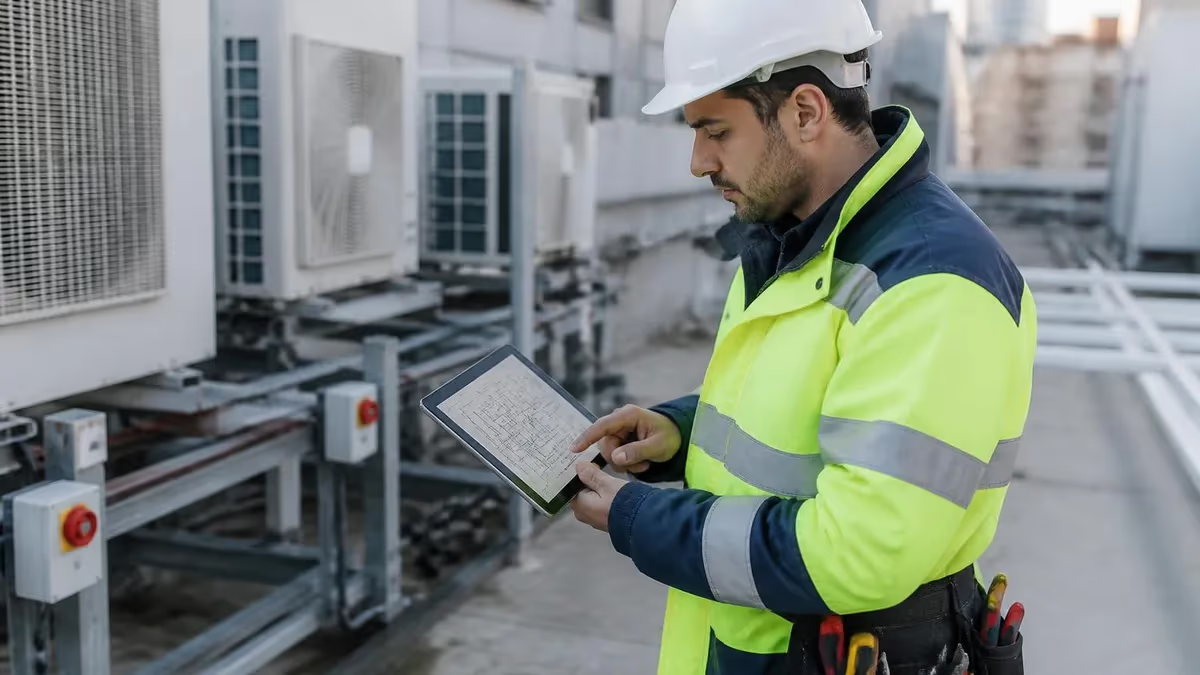
Understanding HVAC system prices before you call a contractor puts you in a much stronger negotiating position and helps you avoid costly surprises. Nationally, homeowners in 2026 spend anywhere from $3,000 for a basic window-unit upgrade to well over $12,500 for a full central-air replacement with a high-efficiency furnace, new ductwork, and smart thermostat integration. The average whole-home project lands around $7,000 to $8,500 installed, but that number shifts dramatically based on your climate zone, home size, and the specific equipment you choose.
Many homeowners are surprised to learn that the equipment itself typically accounts for only 40 to 60 percent of the total invoice. Labor, permits, refrigerant charging, and equipment disposal fees make up the rest. A new central air conditioner that lists for $1,800 at a supply house can cost $4,500 or more once a licensed HVAC technician factors in line-set work, electrical upgrades, and the time required to commission the system properly. Knowing these hidden costs in advance lets you budget realistically and compare apples to apples when reviewing multiple bids.
System type is one of the biggest price drivers. A split-system heat pump that handles both heating and cooling in a mild-climate home costs less over its lifetime than separate furnace-and-AC setups in colder regions. Ductless mini-splits carry a higher per-zone equipment cost but eliminate the expense of duct installation or repair entirely, making them cost-competitive for additions, older homes, and multi-zone remodels. Geothermal systems run $15,000 to $30,000 installed but can cut utility bills by 40 to 70 percent, paying back the premium in eight to twelve years.
Brand and efficiency rating also move the needle considerably. A 14 SEER2 entry-level Carrier or Lennox air conditioner runs roughly $1,200 to $2,000 for the condensing unit alone, while a 20+ SEER2 variable-speed unit from the same manufacturer can top $4,500. The incremental efficiency gain is real — a 20 SEER2 system uses about 30 percent less electricity than a 14 SEER2 unit — but the payback period depends entirely on your local electricity rate and how many cooling hours your climate demands each year.
Home square footage drives equipment sizing, and equipment sizing drives price. HVAC contractors use Manual J load calculations to determine the correct tonnage for your home. A correctly sized 2-ton system for a 1,000-square-foot house costs significantly less than a 5-ton system required for a 2,800-square-foot home with poor insulation and lots of west-facing glass. Oversized systems short-cycle, wear out faster, and leave rooms humid; undersized systems run constantly and never reach setpoint. Proper sizing is not optional — it is a code requirement in most jurisdictions.
Geographic region matters too. Labor rates in New York City or San Francisco run 60 to 90 percent higher than in rural Tennessee or Nebraska. Utility rebate programs, local permit fees, and whether your municipality requires duct leakage testing after installation all factor into what you ultimately pay. For a deeper look at one specific component that dramatically affects multi-zone pricing, the guide on hvac system prices for fan coil units breaks down how FCUs compare to traditional ducted distribution in both cost and performance.
This guide walks you through every major cost category — equipment, labor, permits, accessories, and ongoing maintenance — so you can enter the buying process informed, ask the right questions, and make a decision that fits both your comfort needs and your budget. Whether you are replacing a failed unit on an emergency timeline or planning a proactive upgrade before peak season, the numbers and frameworks here will help you get the best possible value for your investment.
HVAC System Prices by the Numbers
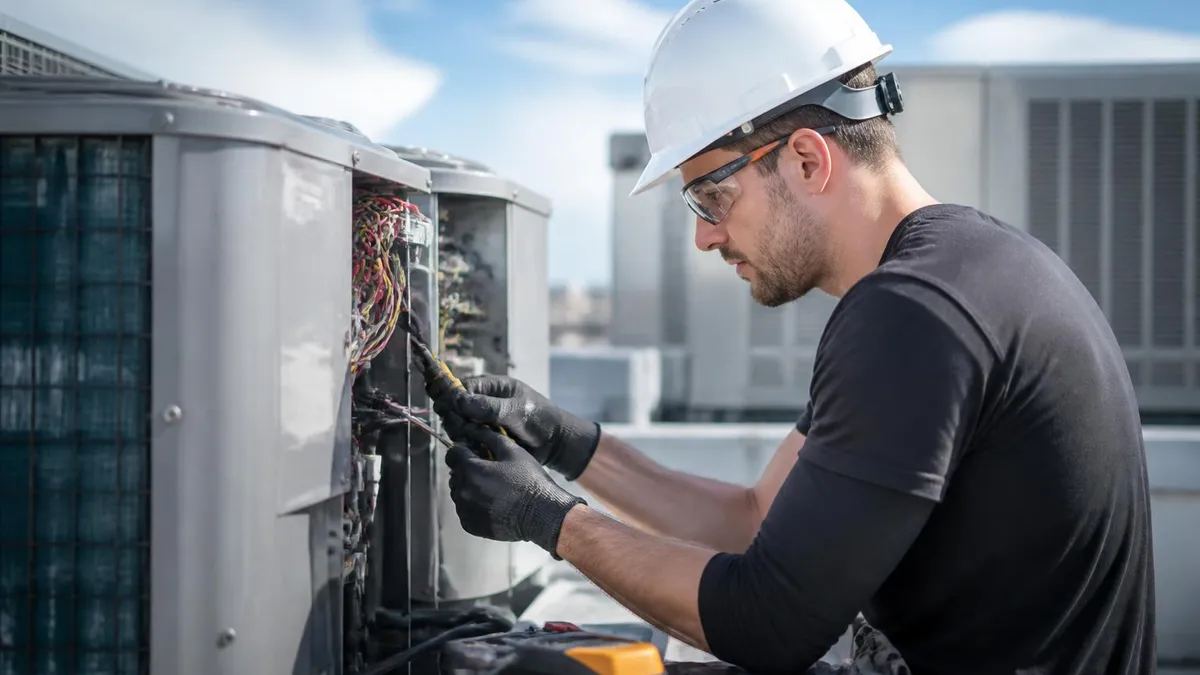
HVAC System Prices by System Type
Labor is the cost category that surprises most homeowners the most, and it deserves a careful look. A straightforward equipment swap — pulling out an old air handler and dropping in a same-size replacement on the same refrigerant and same electrical circuit — might take four to six hours for a two-technician crew. At $75 to $125 per technician per hour in a mid-size city, you are looking at $600 to $1,500 in labor for what seems like a simple job. Add refrigerant recovery, nitrogen pressure testing, a vacuum pull, and refrigerant recharge, and the time expands quickly.
Ductwork condition is often the hidden variable that blows up a seemingly reasonable quote. Homes built before 1990 frequently have fiberglass duct board or flex duct that has deteriorated, disconnected at joints, or become infested with mold. If a technician discovers that 30 percent of your duct system is leaking — not unusual in older homes — repairing or replacing those sections can add $1,500 to $4,000 to the project. Some contractors will quote equipment only, leaving the duct work as a separate line item, which makes bid comparisons difficult if you are not asking the right questions upfront.
Electrical upgrades represent another common add-on cost. Many older homes have 60-amp or 100-amp service panels that cannot safely support a new heat pump or high-efficiency air conditioner without a dedicated 240-volt circuit. Running a new circuit from the panel to the air handler location costs $200 to $600 in most markets. If the panel itself needs to be upgraded from 100 amps to 200 amps to handle the new load, that electrical work alone can run $1,500 to $3,500 — a cost the HVAC contractor will often flag but not perform themselves.
Permit and inspection fees vary widely by municipality. Some cities charge a flat $75 mechanical permit fee; others charge a percentage of project value or a per-ton fee that can push the permit cost above $400. Many homeowners ask contractors to skip permits to save money or time, but this creates real risk: unpermitted HVAC work can void homeowner's insurance claims, complicate home sales, and leave you with no recourse if the installation is substandard. Always insist on a permit and a final inspection from a third-party code inspector.
Refrigerant type has become a significant cost variable following EPA regulations phasing out R-22 and now R-410A in favor of lower-GWP refrigerants like R-32 and R-454B. If your existing system uses R-22 (Freon), replacement refrigerant costs $50 to $80 per pound on the secondary market — and a typical system holds 6 to 12 pounds. Migrating to a new system using R-454B future-proofs you against refrigerant supply issues and aligns with regulations that take full effect in 2026 and beyond for new equipment sales.
Thermostat and controls upgrades add modest cost but significant value. A basic programmable thermostat runs $30 to $80 installed. A smart thermostat like an Ecobee or Nest costs $150 to $300 installed and can cut heating and cooling costs by 10 to 15 percent through intelligent scheduling and occupancy sensing. If you are installing a variable-speed system, you will likely need a communicating thermostat from the same manufacturer to unlock the full efficiency and comfort benefits — typically a $250 to $500 add-on that is well worth the investment.
Accessories and add-ons round out the total installed cost. Whole-home air purifiers with HEPA or UV filtration add $500 to $1,500. Whole-home humidifiers — especially important in dry climates or tight, well-insulated homes — cost $300 to $800 installed. Zoning systems that divide a home into independently controlled areas run $2,000 to $4,000 for a two-zone setup. Each of these accessories solves a real problem and can meaningfully improve indoor air quality and comfort, but they also need to be budgeted for separately from the core HVAC equipment.
Comparing HVAC Systems: Efficiency, Cost, and Climate Fit
Central split systems — a furnace or air handler inside paired with a condensing unit outside — remain the most common HVAC configuration in the United States, installed in roughly 75 percent of single-family homes. Equipment costs for a matched split system run $2,500 to $5,500 for the units alone, with total installed costs averaging $5,000 to $9,500 depending on home size and local labor rates. Modern 18 SEER2 models consume about 25 percent less electricity than the 13 SEER units they replace, and most qualify for the federal 25C tax credit of up to $600 per component.
The biggest advantage of a central split system is its familiarity: every HVAC contractor in the country services them, parts are universally available, and homeowners understand how they work. The primary limitation is that they require existing ductwork in good condition. If your ducts are undersized, leaking, or poorly designed, the most efficient equipment in the world will underperform. Duct sealing and balancing should always be part of any central system replacement to ensure the new equipment delivers on its efficiency ratings in real-world operation.
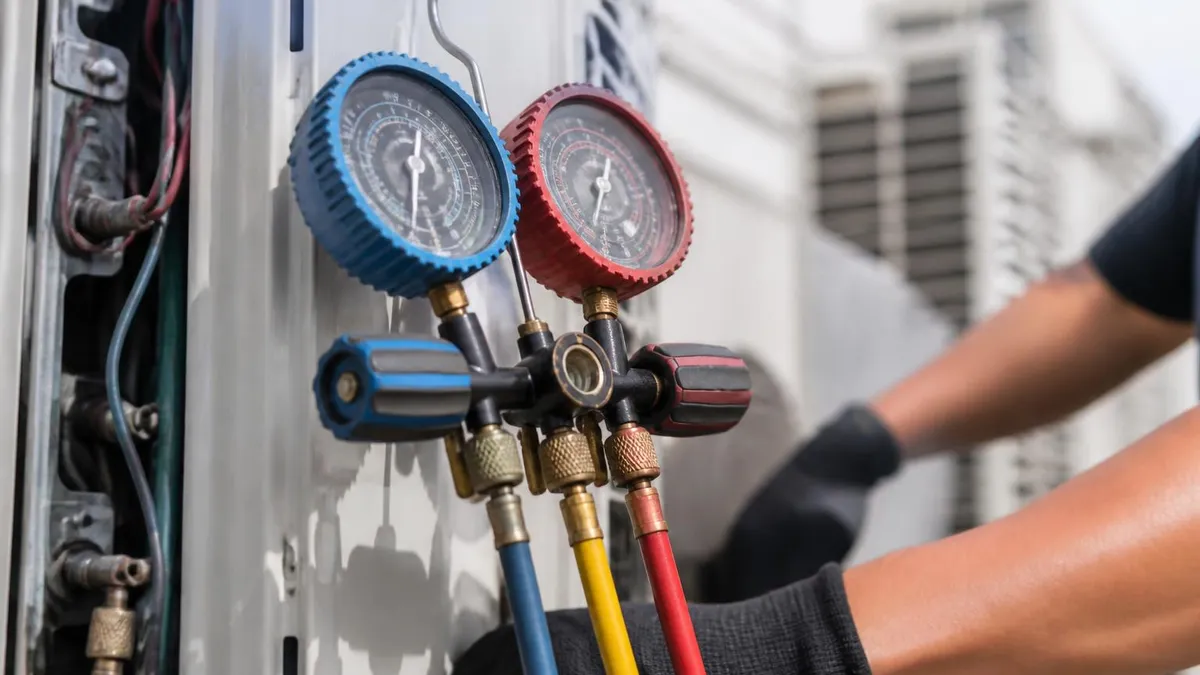
Is Now the Right Time to Replace Your HVAC System?
- +Federal 25C tax credit covers up to $600 per component for qualifying high-efficiency equipment installed through 2032
- +New systems use R-454B refrigerant, avoiding the escalating cost of legacy R-22 and R-410A recharges
- +Variable-speed equipment provides quieter, more consistent comfort than single-stage systems
- +Modern units carry 10-year parts warranties when registered within 60 days of installation
- +Replacing a 15-year-old system can cut cooling energy use by 30 to 40 percent immediately
- +Smart thermostat integration unlocks utility demand-response rebates worth $50 to $200 per year in many markets
- −Upfront installed costs of $5,000 to $12,000 are a significant out-of-pocket expense for most households
- −Supply chain disruptions can delay equipment delivery by four to eight weeks during peak seasons
- −Choosing the wrong contractor risks improper sizing, duct mismatches, and warranty-voiding installation errors
- −High-efficiency equipment with variable-speed compressors is more complex to service and repair than older single-stage units
- −Financing a new HVAC system at 9 to 14 percent APR can negate much of the energy savings in the first two to three years
- −If your ductwork is in poor condition, equipment replacement alone will not solve comfort or efficiency problems
HVAC Replacement Checklist: Before You Sign a Contract
- ✓Obtain at least three written quotes from licensed and insured HVAC contractors in your area
- ✓Verify each contractor will perform a Manual J load calculation before specifying equipment size
- ✓Confirm the quoted price includes all permits, refrigerant, and equipment disposal fees
- ✓Ask whether existing ductwork will be inspected for leaks, and get duct repair costs in writing before work begins
- ✓Check that the proposed equipment meets or exceeds your state's minimum efficiency standards for 2026
- ✓Confirm the contractor will register your equipment warranty within 60 days to activate the 10-year parts coverage
- ✓Ask specifically which federal and utility rebates the contractor will help you claim for the proposed equipment
- ✓Verify the contractor carries both general liability insurance and workers compensation coverage
- ✓Request a commissioning report documenting measured airflow, static pressure, and refrigerant charge at completion
- ✓Confirm the contract includes a workmanship warranty of at least one year on labor and installation
The Cheapest Bid Is Rarely the Best Value
Industry data consistently shows that 30 to 40 percent of HVAC systems are installed incorrectly, with improper refrigerant charge and uncorrected duct issues being the most common defects. A contractor who skips Manual J calculations, omits duct sealing, and installs an undersized unit may win the job with a low bid but deliver a system that consumes 20 to 35 percent more energy than rated and fails five to seven years ahead of its expected lifespan — costing you far more over time than a properly installed premium system would have.
Getting accurate quotes requires more preparation than most homeowners realize. Before the first contractor arrives, gather your home's square footage by floor, note the number of windows and their orientation, identify whether any rooms are always too hot or too cold, and pull out any existing equipment documentation you can find — model numbers, installation dates, and service records. This information allows a contractor to skip some preliminary measuring steps and gives you a baseline for comparing what different contractors propose.
Ask each contractor to provide a written scope of work that itemizes equipment model numbers, installation procedures, what is included in duct work, and how commissioning will be documented. A single-page proposal that says only "replace AC unit, $5,800" is not sufficient. You cannot compare that bid to a five-page proposal that specifies equipment model, SEER2 rating, refrigerant type, duct sealing scope, electrical work, and commissioning procedures. Force the comparison to be apples to apples by requiring line-item breakdowns from every bidder.
Timing your purchase can meaningfully affect price. HVAC contractors typically offer their best deals in the shoulder seasons — March through April for cooling systems before summer demand peaks, and September through October for heating systems before winter demand. Booking during off-peak periods can save 10 to 20 percent on labor and sometimes on equipment as contractors try to keep their crews busy. Emergency replacements during heat waves or cold snaps, by contrast, command premium pricing and often longer wait times for both equipment and crews.
Manufacturer rebates and dealer promotions layer on top of federal tax credits to further reduce net cost. Carrier, Lennox, Trane, and other major manufacturers run seasonal promotions offering $300 to $800 in equipment rebates when homeowners purchase through authorized dealers. These promotions are not always advertised prominently — ask your contractor what promotions are currently active for the specific models they are proposing. Some promotions also include 0 percent financing for 18 to 24 months, which can make a premium system accessible without high-interest debt.
Utility company rebates deserve special attention because they are often the largest single discount available after the federal tax credit. Many electric and gas utilities offer $200 to $800 rebates for heat pumps, $100 to $400 for high-efficiency central air conditioners, and additional incentives for smart thermostats and whole-home energy audits. These programs are funded by state public utility commissions and change annually, so check your utility's website or call their energy efficiency hotline before finalizing your equipment choice to ensure you are selecting qualifying models.
Financing terms significantly affect the true cost of a new HVAC system. HVAC contractors often offer in-house financing through GreenSky, Service Finance, or similar lenders, typically at 9 to 17 percent APR for unsecured loans.
Homeowners with good credit can often do better through a home equity line of credit at 7 to 9 percent, a personal loan from a credit union at 6 to 11 percent, or a PACE (Property Assessed Clean Energy) loan that attaches to your property tax bill at 5 to 8 percent in states where it is available. The difference between 17 percent and 7 percent on a $9,000 system over five years is nearly $2,800 in additional interest — meaningful money that should inform both your financing choice and your system budget.
Maintenance contracts are often offered at the point of sale and are worth evaluating carefully. A typical HVAC maintenance agreement costs $150 to $300 per year for biannual tune-ups — one in spring for the cooling system and one in fall for the heating system. These visits include filter replacement, coil cleaning, refrigerant pressure checks, electrical connection tightening, and safety control testing.
Homes with maintenance agreements typically see systems last two to four years longer, experience 15 to 20 percent fewer emergency breakdowns, and maintain closer to rated efficiency throughout the system's life, making the annual fee a genuinely good investment for most homeowners.
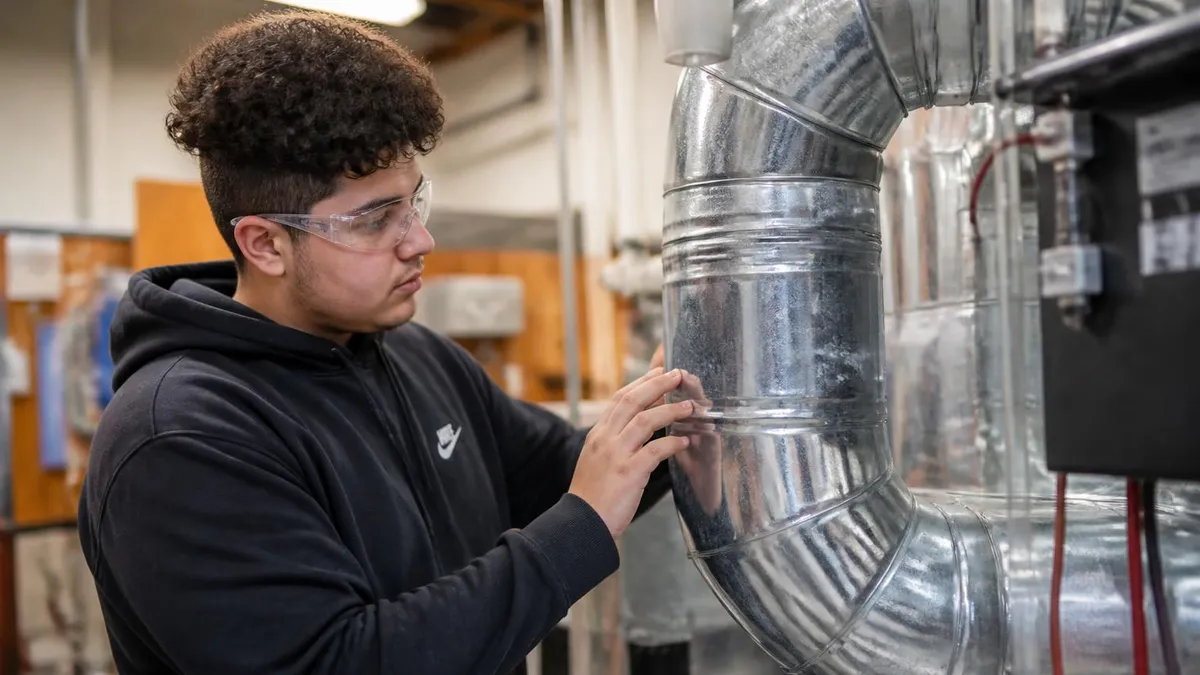
Effective January 1, 2026, EPA regulations under Section 608 prohibit the manufacture and import of new R-410A equipment for most residential applications. If a contractor is offering to install new equipment using R-410A at a steep discount, ask whether it is older stock — and verify the warranty start date carefully. Systems using R-454B (the new standard refrigerant) are what you should be purchasing in 2026 and beyond to avoid refrigerant supply issues and service complications in the future.
Saving money on your HVAC installation starts well before you call a contractor. Improving your home's building envelope — air sealing, adding attic insulation, and installing low-E window films — reduces the cooling and heating load, allowing you to install a smaller, less expensive system that will cost less to operate every month. A home energy audit, which costs $150 to $400 and may be subsidized by your utility, can identify where your home is losing conditioned air most aggressively and quantify exactly how much load reduction is achievable before you size new equipment.
Negotiating on installation timing rather than equipment price often yields better results. Contractors have much more flexibility on scheduling than on equipment margins. Agreeing to let a crew start your job on a Monday morning rather than a Friday afternoon, or scheduling installation during their slow season, can translate to discounts of $300 to $700 without compromising equipment quality or installation standards. Some contractors will also offer a modest discount — $100 to $200 — if you agree to provide a Google or Yelp review after the job is complete, since reputation management is a high-priority spend for HVAC businesses.
Bundling related work with your HVAC replacement can unlock economies of scale. If your water heater is more than ten years old, replacing it at the same time as your HVAC system saves a separate mobilization cost and may qualify you for additional rebates as part of a whole-home efficiency upgrade. Similarly, adding attic insulation, duct sealing, or a whole-home dehumidifier to the project scope gives the contractor a larger job with better margin, sometimes motivating a discount on the overall package that you would not receive by scheduling each project separately.
Do not overlook the deferred maintenance trap. Many homeowners try to squeeze one or two more years out of a failing HVAC system by patching problems rather than replacing. If a compressor replacement costs $1,800 on a twelve-year-old system, and a complete replacement costs $7,500, the math seems to favor repair — but consider that the replacement also delivers a new parts warranty, current-generation efficiency, and an expected remaining life of fifteen to twenty years.
The old system, even after the compressor repair, may still fail a blower motor, heat exchanger, or control board within the next two to three years, eating up the cost savings from deferring replacement.
Energy monitoring can help you quantify the value of upgrading before you commit. A plug-in energy monitor ($25 to $60) measures the actual kilowatt-hours your current system consumes. Multiplying that number by your utility's per-kilowatt-hour rate gives you an exact annual operating cost. Comparing that to the estimated operating cost of a new high-efficiency system — available from the yellow EnergyGuide sticker on every new unit — tells you your actual annual savings, not an estimate based on average assumptions. Divide the incremental cost of the efficient upgrade by the annual savings to get a precise payback period in years.
Tax credit strategy can further reduce net cost. The federal 25C credit under the Inflation Reduction Act allows homeowners to claim 30 percent of eligible costs, up to $600 for central air conditioners and furnaces, $600 for heat pumps, and $1,200 combined annual cap for energy efficiency improvements. These are tax credits, not deductions — they reduce your tax bill dollar-for-dollar.
If your tax liability is lower than the credit amount, you can carry unused credits forward in some cases. Consulting a tax professional before your installation can ensure you structure the purchase to maximize available credits across the current and following tax year if you are making multiple improvements.
Finally, consider the total cost of ownership rather than the sticker price when choosing between equipment tiers. A $4,500 high-efficiency variable-speed heat pump costs $2,000 more than a $2,500 single-stage unit, but if it saves $400 per year in operating costs and lasts two years longer, the premium pays back in five years and delivers an additional eight to ten years of savings — often exceeding $3,000 in net benefit over the system's life.
Factor in tax credits, utility rebates, and the value of the extended warranty that typically accompanies premium equipment, and the high-efficiency choice frequently wins even on pure financial terms, not just comfort and environmental grounds.
Preparing yourself with technical knowledge before meeting with contractors gives you a meaningful advantage during the buying process. Understanding the difference between SEER2 and EER2, knowing what Manual J means, and being able to ask about refrigerant type and warranty registration will signal to every contractor you meet that you are an informed buyer who cannot be oversold unnecessary upgrades or steered toward low-quality equipment. Contractors universally give more thorough proposals and more competitive pricing to customers they perceive as knowledgeable.
One of the most practical things you can do before replacement is to document every symptom your current system is showing. Is it short-cycling — running for two or three minutes, shutting off, and then starting again quickly? That could indicate oversizing, low refrigerant, or a failing capacitor. Are some rooms always 4 to 6 degrees warmer or cooler than the thermostat setpoint?
That may point to duct leakage, an undersized supply register, or an improperly balanced system. Are your energy bills running 20 to 30 percent higher than neighbors with similar homes? That suggests the system is working significantly harder than it should. Each symptom provides a data point that helps a skilled contractor diagnose root causes rather than just replacing parts or equipment.
Understanding HVAC system sizing in basic terms will prevent the single most common installation error: oversizing. Bigger is not better in HVAC. An oversized air conditioner cools the air temperature quickly but runs such short cycles that it cannot remove enough humidity from the air, leaving the home feeling cool but clammy.
An oversized furnace heats the air in large pulses that cause temperature swings and short equipment life. The correct size is the smallest unit that can maintain setpoint during the hottest or coldest hour of the year in your specific climate. A Manual J calculation determines this precisely using local design temperature data, your home's insulation values, window areas, infiltration rate, and internal heat gains.
Seasonal timing affects not just price but also equipment availability. The HVAC industry operates on a highly seasonal demand curve. From May through August, air conditioning demand peaks, and contractors' schedules fill weeks in advance. If your system fails during this period, you may face a one-to-two-week wait for installation even after equipment is sourced. From October through February, heating demand peaks. The shoulder months — March, April, September, and October — offer the best combination of contractor availability, competitive pricing, and the ability to do the work at your convenience rather than on an emergency timeline.
Installation day preparation can prevent costly problems and delays. Clear a three-foot perimeter around both the indoor air handler and the outdoor condensing unit before the crew arrives. Make sure the electrical panel is accessible. If pets or children are in the home, arrange to have them secured or away from work areas.
Ensure the contractor has access to your attic if ductwork needs to be inspected or modified. Have someone available throughout the day who can answer questions and sign off on any scope changes that arise — discovering unexpected ductwork issues or electrical deficiencies mid-installation is common, and having a decision-maker present avoids costly return visits.
Post-installation verification is a step many homeowners skip but should not. Before the crew leaves, ask to see the commissioning report documenting measured supply airflow at each register, return air static pressure, refrigerant suction and discharge pressures, and outdoor ambient temperature at the time of testing. These numbers confirm the system is charged and balanced correctly.
Walk through every room while the system runs and verify that air is coming from every supply register and returning at every return grille. Check that the thermostat is programmed correctly and that the system responds properly to both heating and cooling calls. A reputable contractor will welcome this walkthrough as an opportunity to demonstrate the quality of their work.
Long-term care protects your investment and maintains efficiency. Change one-inch pleated filters every thirty days, or four-inch media filters every six months, as a non-negotiable habit. Keep the outdoor condensing unit clear of vegetation — maintain at least eighteen inches of clearance on all sides and twelve inches above the unit. Schedule professional maintenance every spring and fall.
Keep records of every service visit, filter change, and repair. These records support warranty claims, provide documentation for home sale disclosure, and help your technician spot developing issues before they become expensive failures. A well-maintained HVAC system routinely reaches the upper end of its expected lifespan, delivering full value on your investment.
HVAC Questions and Answers
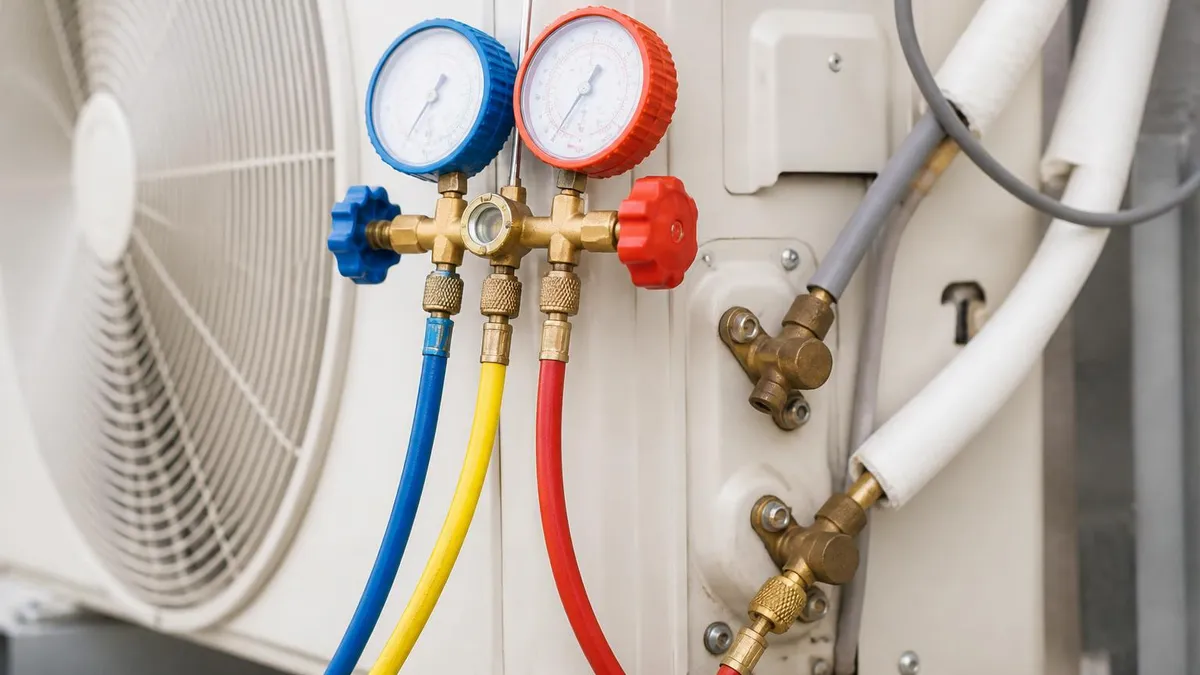
FCU HVAC: The Complete Guide to Fan Coil Units, How They Work, Where They Excel, and How to Choose the Right System
Finance a New HVAC System: 2026 Loans, 0% APR, and Rebates

HVAC Duct Repair: Common Issues, Costs, and DIY vs Professional

HVAC School -- Programs, Costs, and Career Paths in 2026
HVAC Advertising: The Complete Playbook for Generating Leads, Booking Calls, and Growing Your Heating and Cooling Business
About the Author

NATE Certified HVAC Technician & Licensing Exam Trainer
Universal Technical InstituteMike Johnson is a NATE-certified HVAC technician and EPA 608 universal-certified refrigerant handler with a Bachelor of Science in HVAC/R Technology. He has 19 years of commercial and residential HVAC installation and service experience and specializes in preparing technicians for NATE certification, EPA 608, A2L refrigerant safety, and state HVAC contractor licensing examinations.