
HVAC Service: Complete Guide to Maintenance, Repair, and Costs 2026 October
📚 Service HVAC guide covering tune-ups, repairs, costs, scheduling, and how to find a qualified technician for your heating and cooling system.
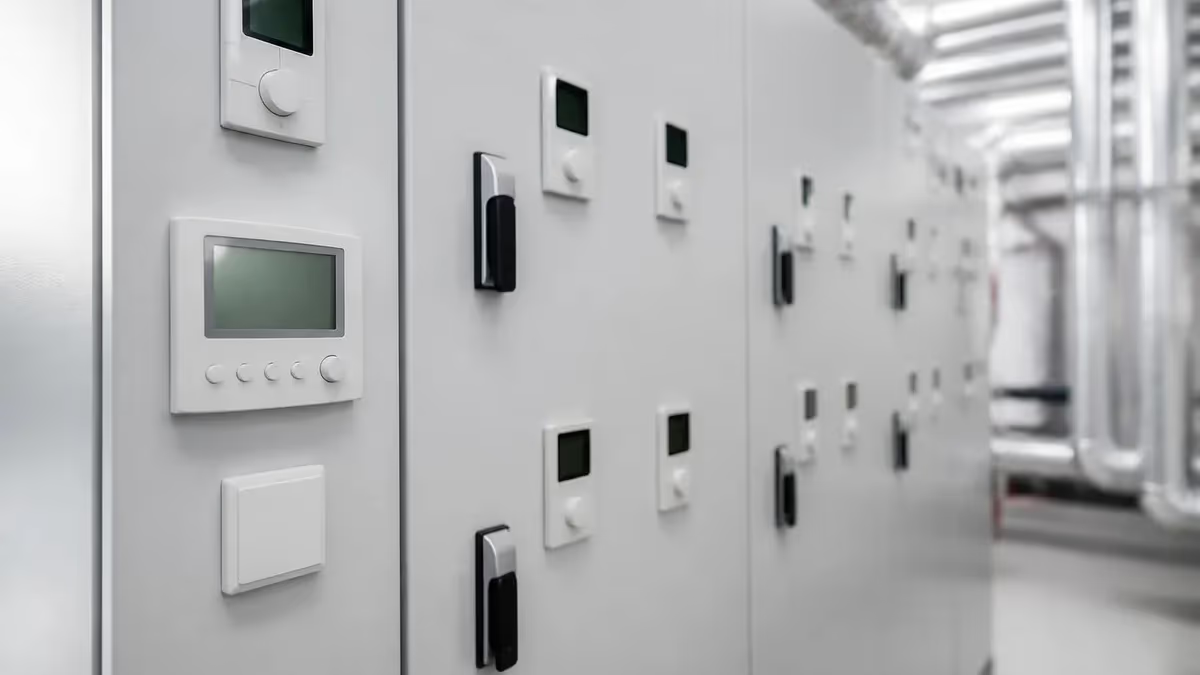
HVAC service is a routine professional inspection and cleaning of heating and cooling equipment. ENERGY STAR recommends annual pre-season check-ups, with cooling equipment checked in spring and heating equipment in fall, plus a monthly filter check.
When you service HVAC equipment on a regular schedule, you protect one of the most expensive systems in your home or building. Heating and cooling are among the largest energy uses in a home, and ENERGY STAR notes that airflow problems can reduce a system's efficiency by up to 15 percent. Professional HVAC service includes inspecting electrical connections, cleaning coils, checking refrigerant levels, lubricating moving parts, and verifying that safety controls operate correctly. You will learn what drives service pricing, plus how to spot a contractor who upsells unnecessary work. We also cover the seasonal timing that matters most: spring for air conditioning, fall for heating, and the warning signs that should trigger an immediate service call regardless of the calendar.
The cost of skipping service is rarely small. A clogged condenser coil forces the compressor to work harder, raising energy use and shortening the unit's lifespan. Many of these problems can be caught during a routine service visit.
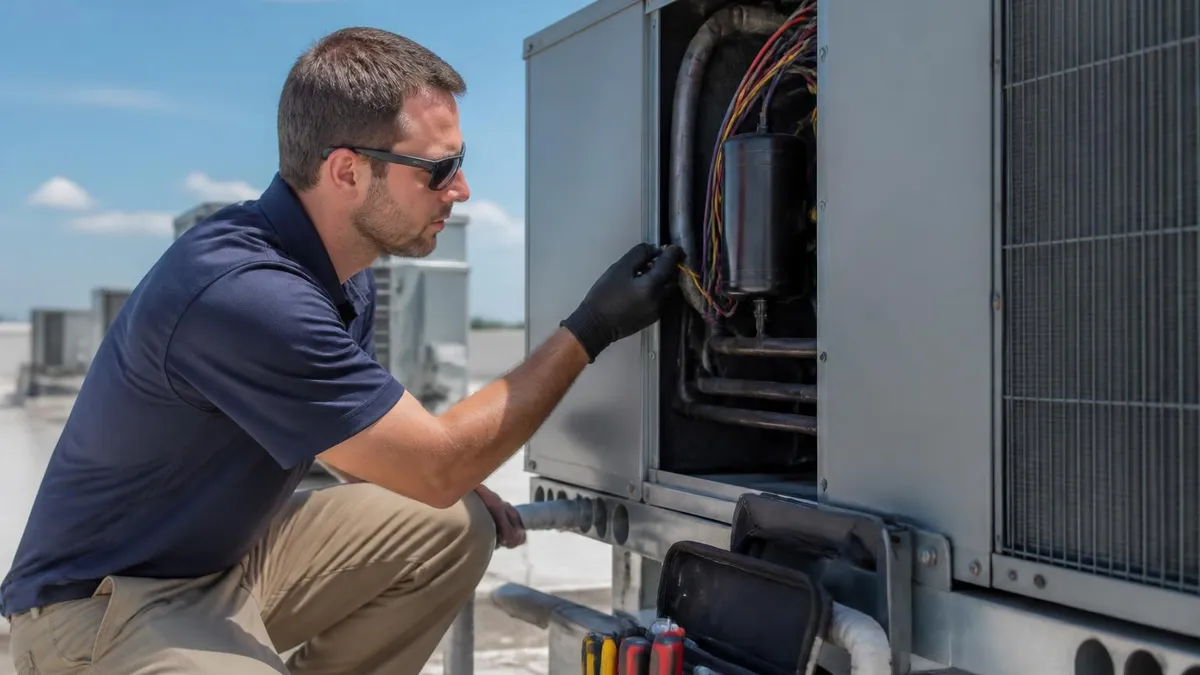
Whether you own a small ranch home with a single split system or manage a commercial building with rooftop units (RTUs), the fundamentals of HVAC service are the same. Filters need to be clean. Coils need to transfer heat efficiently. Refrigerant charge must match the manufacturer's specification. Electrical connections must be tight, and combustion appliances must vent properly. A good technician verifies all of these in a predictable, repeatable sequence.
HVAC service also intersects with indoor air quality, humidity control, and ventilation. A system that runs efficiently still fails its occupants if filters are bypassing dirty air, if ducts leak in unconditioned spaces, or if humidity stays too high during summer. Modern service appointments increasingly include checks for these factors, especially as homeowners install variable-speed equipment, ECM motors, and smart thermostats that depend on tight tolerances.
Cost varies widely by region, equipment type, and the scope of the visit. Repairs add parts and labor on top of any diagnostic fee. Knowing what to expect helps you avoid being talked into replacements you do not need.
Throughout this guide we reference best practices from ACCA, ASHRAE, and EPA guidelines, plus typical procedures used by certified NATE technicians. If you want to learn how the equipment itself is sized and selected, see our companion guide on HVAC units: types, sizing, and how to choose. By the end of this article, you should be able to evaluate a service quote, ask the right questions, and protect your investment for years.
HVAC Service by the Numbers

What a Standard HVAC Service Visit Includes
Technicians clean condenser and evaporator coils, replace or wash filters, clear condensate drains, and remove debris around outdoor units. This restores heat-transfer efficiency and prevents water damage from clogged drain lines.
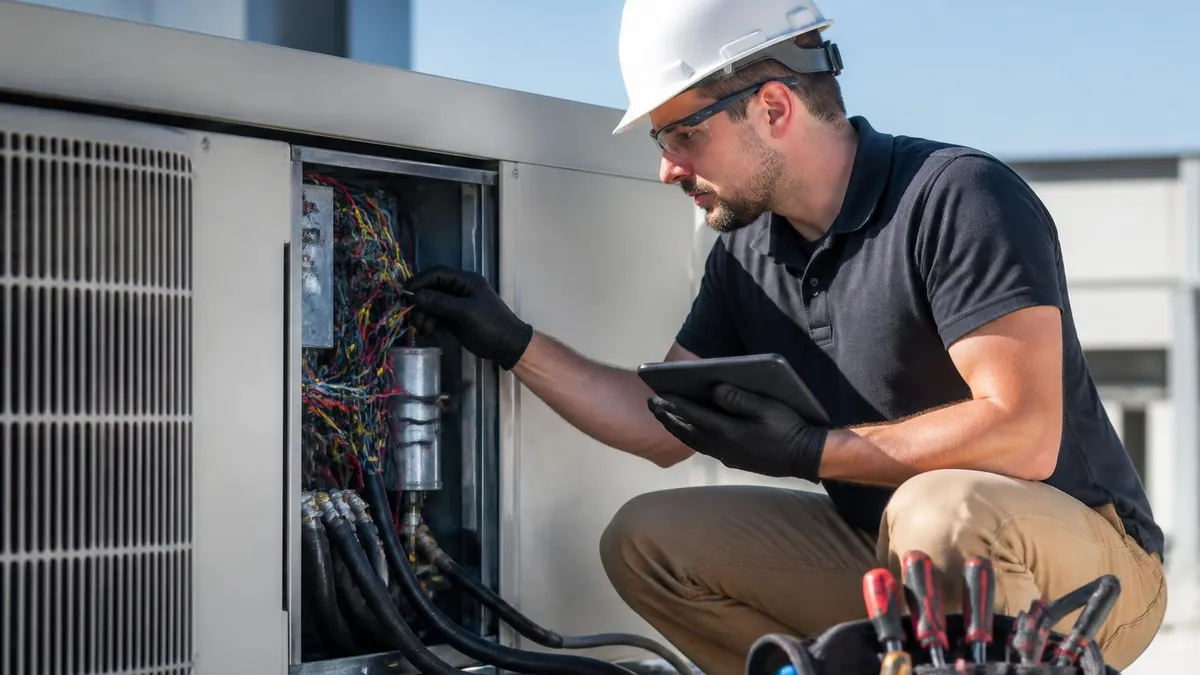
All electrical connections are tightened, contactors and capacitors are tested under load, and amp draws are measured against nameplate specifications. Loose or corroded connections can cause component failures.
Pressures and superheat or subcooling values are measured to confirm proper charge. Low refrigerant indicates a leak that should be located and repaired, not simply topped off.
For gas furnaces, the technician measures CO levels, draft, gas pressure, and temperature rise across the heat exchanger. A combustion analyzer catches problems that visual inspection alone will miss.
Final testing measures static pressure, supply and return temperatures, and overall system delta-T. These numbers verify the system delivers rated capacity and identify duct or airflow problems early.
HVAC service pricing varies widely by region, labor rates, equipment type, and the scope of the visit, so no single national price is reliable. Get written quotes from at least two licensed contractors, and ask which measurements and tasks each quote includes. Several factors drive the total: the number of systems (heat pumps, dual-fuel, and zoned setups take longer), whether a diagnostic or trip fee applies, after-hours or weekend premiums, and parts and labor for any repair. Ask whether a diagnostic fee is credited toward the repair if you approve work that day.
Parts pricing has also shifted with the refrigerant transition. R-22 has been phased out of production and import in the United States, so repairs that need R-22 can be costly, and a leaking R-22 system often points toward replacement. Newer equipment uses lower-GWP A2L refrigerants such as R-32 and R-454B, which require updated tools and training. For a fuller cost framework, our guide on HVAC servicing costs and what's included breaks down each line item.
Maintenance contracts deserve careful evaluation. Typical plans include seasonal visits and may offer priority scheduling or parts discounts, but terms vary. Compare the plan against paying per visit, and read it for auto-renewal terms and exclusions such as refrigerant and filters. Also ask what problem a recommended add-on prevents and whether the recommendation is backed by a measurement rather than a sales pitch.
HVAC Service Tasks and Recommended Frequency
This reference table summarizes routine service tasks and how often federal energy guidance recommends them.
| Task | Recommended frequency | Source |
|---|---|---|
| Check or replace air filter | Monthly check (clean or replace as needed; every month or two in cooling season if unsure) | ENERGY STAR; U.S. DOE |
| Professional cooling system check | Annually, in spring before cooling season | ENERGY STAR |
| Professional heating system check | Annually, in fall before heating season | ENERGY STAR |
| Clean evaporator and condenser coils | As needed, inspected during professional maintenance | U.S. DOE |
| Check refrigerant charge and test for leaks | During professional maintenance | U.S. DOE |
| Inspect electrical terminals and clean connections | During professional maintenance | U.S. DOE; ENERGY STAR |
| Inspect condensate drain | During professional maintenance | ENERGY STAR |
| Check gas or oil connections, burner combustion, heat exchanger | During annual heating check | ENERGY STAR |
HVAC Practice Test Questions
Prepare for the HVAC - Heating Ventilation and Air Conditioning exam with our free practice test modules. Each quiz covers key topics to help you pass on your first try.
HVAC Air Conditioning
HVAC Exam Questions covering Air Conditioning. Master HVAC Test concepts for certification prep.
HVAC Code Compliance
Free HVAC Practice Test featuring Code Compliance. Improve your HVAC Exam score with mock test prep.
HVAC Electrical Controls
HVAC Test Prep for Electrical Controls. Practice HVAC Quiz questions and boost your score.
HVAC Energy Efficiency
HVAC Questions and Answers on Energy Efficiency. Free HVAC practice for exam readiness.
HVAC Heating Systems
HVAC Mock Test covering Heating Systems. Online HVAC Test practice with instant feedback.
HVAC Load Calculations
Free HVAC Quiz on HVAC Load Calculations. HVAC Exam prep questions with detailed explanations.
HVAC Tools and Equipment
HVAC Practice Questions for HVAC Tools and Equipment. Build confidence for your HVAC certification exam.
HVAC Refrigeration
HVAC Test Online for Refrigeration. Free practice with instant results and feedback.
HVAC Safety Practices
HVAC Study Material on Safety Practices. Prepare effectively with real exam-style questions.
HVAC System Design
Free HVAC Test covering System Design. Practice and track your HVAC exam readiness.
HVAC Thermodynamics
HVAC Exam Questions covering Thermodynamics. Master HVAC Test concepts for certification prep.
Maintenance, Repair, or Replace: Which Service Do You Need?
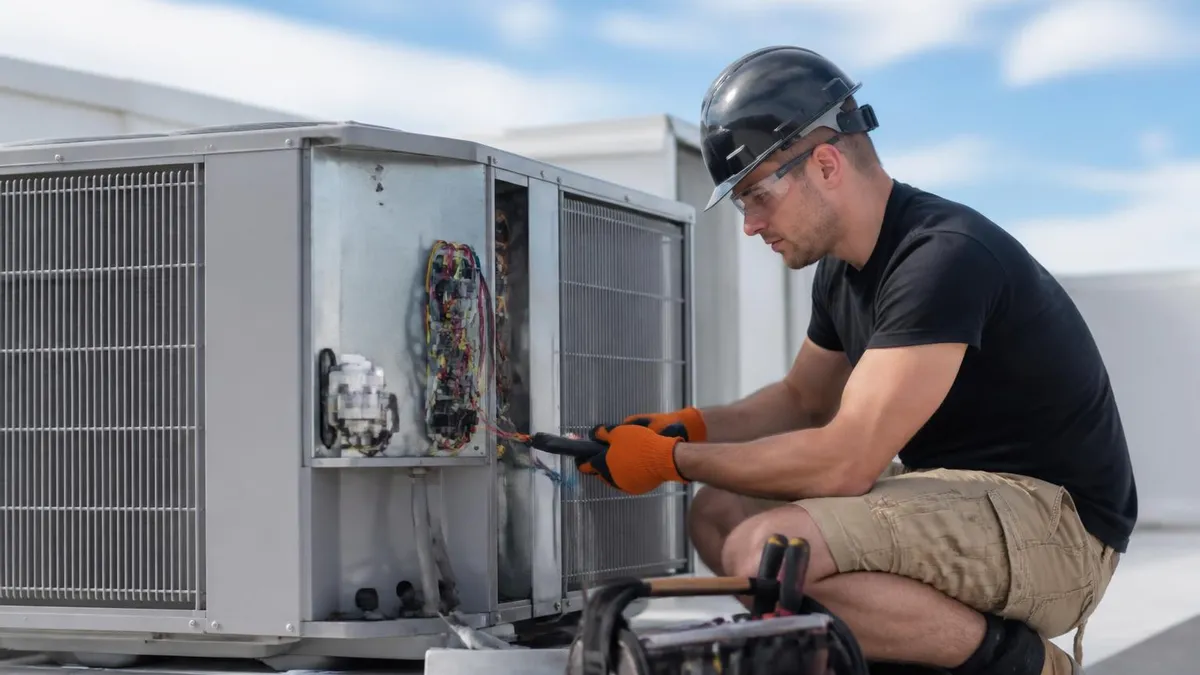
Preventive maintenance is scheduled, predictable, and aimed at keeping a working system working. The technician follows a checklist that includes cleaning, lubrication, tightening, and verification. No diagnostic puzzle solving is required because the system is operating normally. This is what an annual tune-up represents, and it is the foundation of low long-term ownership cost.
Maintenance pays back in three ways: lower energy bills from clean coils and proper charge, longer equipment life from reduced thermal and electrical stress, and fewer emergency repairs from catching small issues early. Many manufacturers ask for proof of maintenance to honor warranty claims, so check your warranty terms.
Annual HVAC Service Contracts: Worth the Money?
- +Two scheduled visits per year cover both heating and cooling seasons
- +Possible discounts on parts and repairs throughout the year
- +Priority scheduling during heat waves and cold snaps when demand peaks
- +No overtime charges on after-hours emergency calls
- +Maintains manufacturer warranty requirements for documented service
- +Locked-in pricing protects against mid-year rate increases
- +Technician familiarity with your system improves diagnostic speed
- −Annual cost may exceed two pay-as-you-go visits
- −Some contracts auto-renew with price increases you must opt out of
- −Coverage often excludes refrigerant, filters, and consumables
- −Quality varies; a bad contractor's contract is worse than no contract
- −Single-system homes often break even rather than save money
- −Switching contractors becomes harder once you have prepaid the year
Pre-Visit Homeowner Service Checklist
- ✓Replace or clean the air filter the day before the visit
- ✓Clear at least three feet of space around the outdoor condenser unit
- ✓Move stored items away from the indoor furnace or air handler
- ✓Note any unusual sounds, smells, or performance issues in writing
- ✓Locate your equipment make, model, and serial numbers for the technician
- ✓Check the thermostat batteries and confirm correct mode settings
- ✓Keep pets secured so the technician can move freely indoors and outdoors
- ✓Confirm the technician has clear access to the attic or basement
- ✓Have your maintenance records and warranty paperwork ready for review
- ✓Prepare a list of questions about efficiency, age, and upcoming repairs
Service Helps Catch Problems Early
ENERGY STAR reports that airflow problems can reduce a heating or cooling system's efficiency by up to 15 percent. Checking filters monthly and scheduling annual pre-season check-ups (cooling in spring, heating in fall) are the simplest ways to catch dirty coils, loose connections, and low refrigerant charge before they become failures.
ENERGY STAR recommends annual pre-season check-ups: cooling equipment in spring and heating equipment in fall. Heat pumps, which both heat and cool, benefit from both checks.
Timing matters as much as scope when it comes to HVAC service. The ideal calendar puts cooling service in early spring, before outdoor temperatures rise enough to stress the system, and heating service in early fall, before the first cold snap. Scheduling in the off-season also gives you better contractor availability, lower pricing in some markets, and time to address any discovered repairs before you actually need the system. Mid-season service is possible but you compete with emergency calls for technician attention.
March through May is the prime window for air conditioning tune-ups in most of the country. A tune-up in April lets the technician operate the system at higher outdoor temperatures than mid-winter would allow, which gives more accurate readings on refrigerant charge and overall performance. Heat pumps benefit from both spring and fall service visits because they work year-round.
September and October handle the heating side. Gas furnace tune-ups must include combustion analysis, which requires the furnace to actually fire and reach steady-state operation. A summer tune-up of a furnace is essentially impossible to do properly because you cannot test under load. Schedule your fall service before you turn on the furnace for the first time so any problems are caught before you need the heat.
Conventional residential split systems get serviced once or twice per year.
Beyond the calendar, certain symptoms should trigger immediate service regardless of season. These include short cycling, where the system turns on and off rapidly, ice formation on indoor coils or refrigerant lines, unusual smells especially burning or musty odors, water pooling near the indoor unit, and any sudden unexplained jump in energy bills. Ignoring these symptoms turns small repairs into major ones.
For homeowners interested in the routine details of what should be inspected and how often, the comprehensive hvac maintenance leeds walks through each component and its service interval.
Geography influences timing too. In hot climates where air conditioning runs most of the year, more frequent attention may be appropriate. In the Upper Midwest and Northeast, where heating dominates, the fall visit takes priority and the spring visit becomes a quick spot-check. Coastal homes deal with salt corrosion that accelerates outdoor unit degradation, so semi-annual cleaning of condenser coils with non-acidic coil cleaner becomes essential.
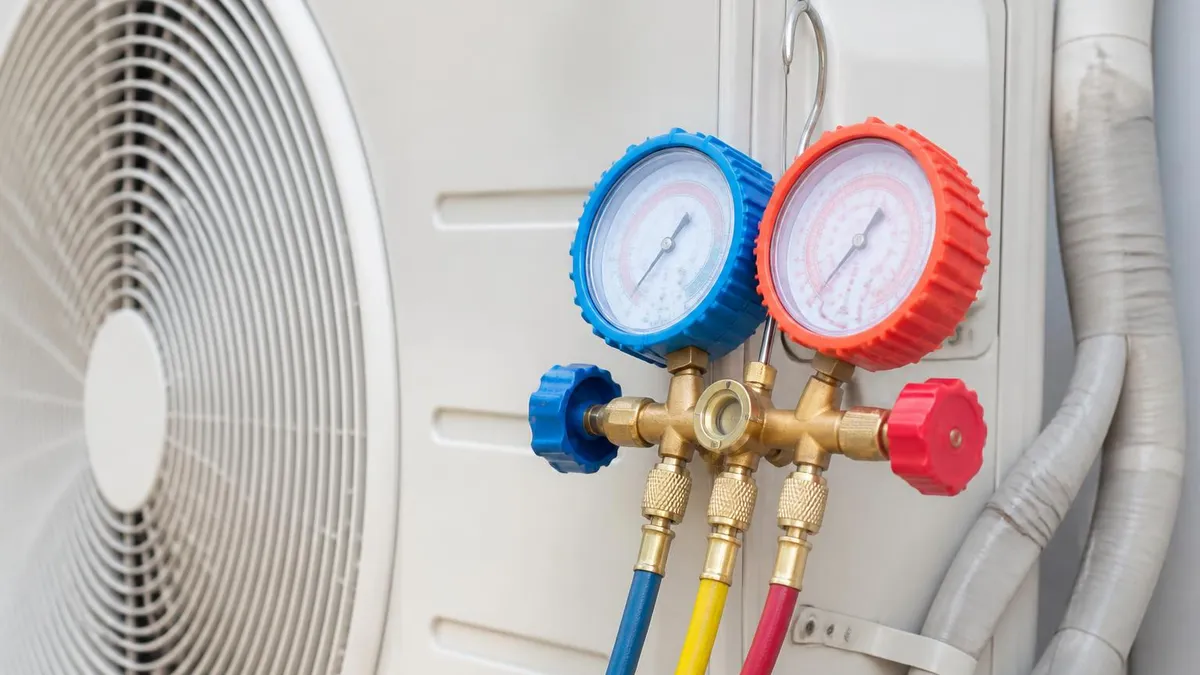
If a contractor recommends "adding a pound of refrigerant" without locating a leak, ask why. Sealed refrigeration systems do not consume refrigerant, so low charge indicates a leak that should be found and repaired. For larger systems, EPA rules require leak repair when leak rates exceed set thresholds: Section 608 covers ozone-depleting refrigerants in appliances of 50 pounds or more, and the AIM Act rule covers HFC appliances of 15 pounds or more.
Choosing the right HVAC service contractor is the single highest-use decision you make as an equipment owner. A skilled technician extends system life, catches problems early, and charges fair prices for honest work. A bad contractor sells unnecessary parts, performs incomplete service, and leaves your system worse than they found it.
Start with licensing and insurance. Most states and many localities require HVAC contractors to be licensed, and federal law requires EPA Section 608 certification for technicians who handle refrigerant. Verify both on the state contractor board's website rather than trusting what the company says. Insurance should include general liability and workers' compensation covering any technician entering your property. A contractor who cannot produce a certificate of insurance is one who will not be standing behind their warranty.
Certifications signal serious commitment to the trade. NATE certification is a widely recognized credential for residential and light commercial technicians, requiring written exams in multiple specialty areas. ACCA membership indicates familiarity with industry best practices like Manual J load calculations and Manual D duct design. BPI certifications matter for whole-home performance work. For owners who want technicians with formal training, our guide to HVAC certification online programs explains the major credentials and what each represents.
Reviews tell you about consistency, not absolute quality. Look for companies with a solid volume of reviews, but pay more attention to recent reviews and how the company responds to criticism. A contractor who professionally addresses occasional complaints is often better than one with a perfect rating and only a handful of reviews. Patterns of pricing complaints, no-shows, or upselling tactics should raise immediate flags.
Request written estimates before authorizing any work beyond the initial diagnostic. A legitimate estimate breaks out labor and parts separately, identifies specific replacement components by part number, and includes warranty terms. Verbal estimates and "flat rate" books that lump everything into menu pricing favor the contractor's margins over your understanding. If you cannot tell from an estimate what is actually being done, ask for clarification or get a second quote.
Second opinions are worth the diagnostic fee whenever a recommendation involves replacing major components like compressors, heat exchangers, or full system replacement. A second contractor's diagnostic fee can save far more if the first contractor was wrong, overzealous, or dishonest. Reputable contractors expect homeowners to verify big-ticket recommendations and will not be offended.
Long-term relationships beat shopping by price every time. The contractor who has serviced your system for five years knows its history, the previous repairs, and the quirks specific to your home. That institutional memory translates to faster diagnostics, more accurate predictions of remaining equipment life, and recommendations aligned with what you have already invested. Build that relationship deliberately by treating service appointments as opportunities to learn, not just transactions.
Practical tips to get the most from every service visit start with documentation. Keep a simple binder or digital folder with each visit's service report, the model and serial numbers of every component, dates of any repairs, and the manufacturer's installation manual. When a technician arrives, hand them this folder. The history shortens diagnostic time, prevents duplicate work, and builds a written record that strengthens warranty claims later.
Ask the technician to walk you through their findings before they leave. A good professional will point out the capacitor reading, the static pressure measurement, the temperature split, and any items that are in spec versus marginal. If a technician cannot explain what they did in language you understand, they either skipped steps or do not understand the system themselves. Either is a reason to find a new contractor.
Make small improvements between service visits. Replace filters monthly to quarterly depending on type and household conditions. Vacuum return grilles and supply registers seasonally. Clear vegetation and debris from around the outdoor condenser. Check that the condensate drain is clear each spring, following your manufacturer's guidance for cleaning it. These quick tasks help prevent avoidable service calls.
Consider indoor air quality upgrades as part of the service relationship. A MERV 11 or 13 filter captures far more particulate than standard filters, though it requires sized return ducting to avoid restricting airflow. Ultraviolet light installations on the evaporator coil are marketed to limit biofilm growth. For more on these systems, see our guide on UV light for HVAC applications, which explains where these technologies help and where they are oversold.
Smart thermostats add monitoring value when paired with service. Nest, ecobee, and Honeywell Lyric models track runtime, temperature differentials, and humidity, providing data that helps technicians identify performance trends. Some models send alerts when runtime exceeds normal patterns, which often signals dirty coils, low refrigerant, or ductwork problems. A thermostat that flags a developing problem can help you schedule service before a failure.
For commercial property owners, building automation systems extend this concept to logged trend data, fault detection algorithms, and remote diagnostics. Service contracts on commercial equipment should include access to this data for both the in-house facility team and the service contractor. The fastest commercial diagnostics happen when the technician arrives already knowing the symptom history from the previous 30 days of operation.
Finally, plan for replacement before it becomes an emergency. As your system ages, start building a replacement budget and identifying the contractor who will install the new unit. Emergency replacements during a heat wave or cold snap mean limited equipment choices, premium pricing, and rushed installations. A planned replacement during shoulder season gives you time to compare quotes, evaluate efficiency options, and capture available rebates and tax credits.
HVAC Questions and Answers

About the Author

NATE Certified HVAC Technician & Licensing Exam Trainer
Universal Technical InstituteMike Johnson is a NATE-certified HVAC technician and EPA 608 universal-certified refrigerant handler with a Bachelor of Science in HVAC/R Technology. He has 19 years of commercial and residential HVAC installation and service experience and specializes in preparing technicians for NATE certification, EPA 608, A2L refrigerant safety, and state HVAC contractor licensing examinations.