
HVAC Journeyman License: Complete Guide to Requirements, Exam Prep, and Career Path
Complete HVAC journeyman license guide covering state requirements, ❓ exam prep, costs, salary, and step-by-step path to certification.

Earning an hvac journeyman license is the single most important credential between an apprentice paycheck and a true skilled-trade career. It signals to employers, building inspectors, and homeowners that you have completed thousands of hours of supervised field work, passed a rigorous written exam, and accepted legal responsibility for the work you sign off on. In most states it also unlocks higher hourly rates, prevailing-wage projects, and the right to pull your own mechanical permits without a master on site. Practice with the free HVAC practice test on PracticeTestGeeks (35 questions with answer explanations).
The journeyman tier sits between apprentice and master in the standard three-step trade ladder. Apprentices learn under direct supervision, journeymen execute installations and service calls independently, and master mechanics design systems, sign permits, and supervise crews. Roughly 38 states regulate HVAC at the state level and another dozen leave licensing to counties or cities, so the rules you follow in Texas look very different from the rules in Florida, Ohio, or California.
This guide walks through every meaningful requirement: how many work hours you need, what shows up on the exam, how much the application and testing fees run, and what a typical 90-day study plan looks like. We pull current 2026 fee data from state board websites, NATE, and ICC, and we cross-reference it with what working journeymen report on field surveys. If you want to skip ahead and test what you already know, browse our HVAC hvac contractors guide for context on how licensing connects to hiring.
Most candidates underestimate two things. First, the paperwork. States want notarized affidavits from every employer covering every hour you claim, and gaps in your work history can delay approval by months. Second, the code portion of the exam. The International Mechanical Code, the Uniform Mechanical Code, and the state-specific amendments together account for 35 to 50 percent of test questions, and code questions tend to be the ones experienced techs miss because shop habits drift from book answers.
The good news is that the pass rate climbs sharply when candidates use a structured prep plan. Candidates can prepare for their first attempt with a mix of reading, practice questions, and timed mock exams. The exam is hard, but it is not unfair, and it rewards the same disciplined preparation that good service work rewards.
Whether you are an apprentice approaching your hour requirement, a tech who has been working in a non-licensing state and now needs reciprocity, or a homeowner trying to understand why your contractor charges what they charge, this article gives you the full picture. By the end you will know exactly what to study, how to apply, what it costs, and how a journeyman card changes your earning power over a 20-year career.
One last note before we dig in: licensing rules change. Every year at least a handful of states tweak hour requirements, raise fees, or add continuing-education mandates. Always confirm the current rule with your state board before you submit paperwork, and bookmark the board's news page so you catch amendments early.
Free HVAC Study Tools
Interactive HVAC resources on PracticeTestGeeks, free to start:
- HVAC EPA 608 Refrigerant Certification — 35 questions with instant scoring and answer explanations
- HVAC flashcards — review key terms and concepts card by card
- HVAC study guide — topic-by-topic overview of what the exam covers
- HVAC cheat sheet — one-page printable summary for last-minute review
HVAC Journeyman License by the Numbers
Key Facts at a Glance
| Item | Value | Details |
|---|---|---|
| Work Hours Required | 4,000+ | Typical state minimum |
| Apprenticeship Length | 2-4 yrs | Before exam eligibility |
| Typical Exam Questions | 100 | Mixed code + practical |

HVAC Journeyman License Requirements by State
Texas, California, Florida, and Washington require state-level licensing with strict hour documentation, written and sometimes practical exams, plus background checks. Expect 4,000 to 8,000 supervised hours and continuing education to renew.
Pennsylvania, Indiana, and Missouri leave HVAC licensing to cities and counties. Philadelphia, Indianapolis, and St. Louis each run their own programs with separate fees, exams, and reciprocity rules, so check the jurisdiction where you plan to work.
A handful of states do not require an HVAC-specific license, but most still mandate EPA Section 608 refrigerant certification and contractor registration. Workers in these states often pursue voluntary NATE certification to prove competence to employers.
Many states honor licenses from neighbors with comparable standards. Texas and Louisiana, for example, recognize one another's journeymen after a short application. Always submit reciprocity requests before moving to avoid losing licensed status mid-move.
Before you sit for any journeyman exam you have to prove you spent real time in the field. Most states require between 4,000 and 8,000 documented work hours under the supervision of a licensed master or contractor. Texas demands 48 months of practical experience, California requires 4 years, and Florida wants 4 years of verifiable employment including 1 year as a foreman. These hours cannot be self-reported on the honor system — they require notarized employer affidavits covering specific date ranges and job duties.
The cleanest path is a formal registered apprenticeship through the Department of Labor, the United Association, SMART, ABC, or IEC. Registered programs combine 144 classroom hours per year with on-the-job training, and your hours are tracked automatically by the sponsor. When you finish, the sponsor issues a completion certificate that most state boards accept as automatic proof of eligibility, skipping the affidavit process entirely. If you are weighing programs, our hvac repair services near me overview discusses how local contractor networks feed apprentices into the trade.
Informal on-the-job training also counts in most states, but the paperwork burden falls on you. Keep a personal log from day one: dates, job address, supervisor name and license number, type of work performed, and hours worked. When you eventually apply for the exam, you will hand this log to each former employer to confirm and notarize. Workers who skip the log routinely lose six months or more chasing down old bosses.
Classroom hours matter too. About 60 percent of states require formal HVAC education in addition to field experience, typically 500 to 1,000 hours from a community college, technical school, or union training center. The coursework covers refrigeration cycles, electrical theory, gas combustion, controls, load calculations, and code. Some states let you substitute additional field hours for missing classroom hours at a 2:1 ratio, but verify before assuming.
EPA Section 608 refrigerant certification is a federal requirement that runs parallel to your state license. You cannot legally buy, handle, or recover refrigerants without it, so most apprentices test for Universal 608 within their first year. The certification is good for life, costs about $25, and consists of a 100-question proctored exam. Skipping this step blocks you from doing any meaningful service work.
If you are transferring from the military, several states accept Air Force or Navy HVAC training as partial credit toward the hour requirement. Submit your DD-214 and a copy of your military job specialty training record. Programs like Helmets to Hardhats also fast-track veterans into civilian apprenticeships and can shave a year off your timeline.
Finally, watch the apprenticeship-to-journeyman ratio rules. Most states restrict how many apprentices a single master can supervise — usually 1:1 or 1:3. If your shop is overloaded with apprentices, your hours may not count, even if you worked them in good faith. Confirm your supervisor's license is active and that you fall within the legal ratio before you start logging time.
HVAC Practice Test Questions
Prepare for the HVAC - Heating Ventilation and Air Conditioning exam with our free practice test modules. Each quiz covers key topics to help you pass on your first try.
HVAC Air Conditioning
HVAC Exam Questions covering Air Conditioning. Master HVAC Test concepts for certification prep.
HVAC Code Compliance
Free HVAC Practice Test featuring Code Compliance. Improve your HVAC Exam score with mock test prep.
HVAC Electrical Controls
HVAC Test Prep for Electrical Controls. Practice HVAC Quiz questions and boost your score.
HVAC Energy Efficiency
HVAC Questions and Answers on Energy Efficiency. Free HVAC practice for exam readiness.
HVAC Heating Systems
HVAC Mock Test covering Heating Systems. Online HVAC Test practice with instant feedback.
HVAC Load Calculations
Free HVAC Quiz on HVAC Load Calculations. HVAC Exam prep questions with detailed explanations.
HVAC Tools and Equipment
HVAC Practice Questions for HVAC Tools and Equipment. Build confidence for your HVAC certification exam.
HVAC Refrigeration
HVAC Test Online for Refrigeration. Free practice with instant results and feedback.
HVAC Safety Practices
HVAC Study Material on Safety Practices. Prepare effectively with real exam-style questions.
HVAC System Design
Free HVAC Test covering System Design. Practice and track your HVAC exam readiness.
HVAC Thermodynamics
HVAC Exam Questions covering Thermodynamics. Master HVAC Test concepts for certification prep.
What the HVAC Journeyman License Exam Covers
The code portion accounts for 35 to 50 percent of total exam questions and is where most candidates lose points. You need a working knowledge of the International Mechanical Code, the International Fuel Gas Code, and your state's amendments. Expect questions on clearances, venting, combustion air, duct construction, refrigerant piping requirements, and condensate disposal.
Bring tabbed and highlighted code books to the test — most exams are open-book, but you cannot rely on flipping pages cold. Memorize the table numbers for clearances and venting, and tab the index. Candidates who tab their books in advance finish 20 to 30 minutes faster than those who do not, leaving more time for hard questions.
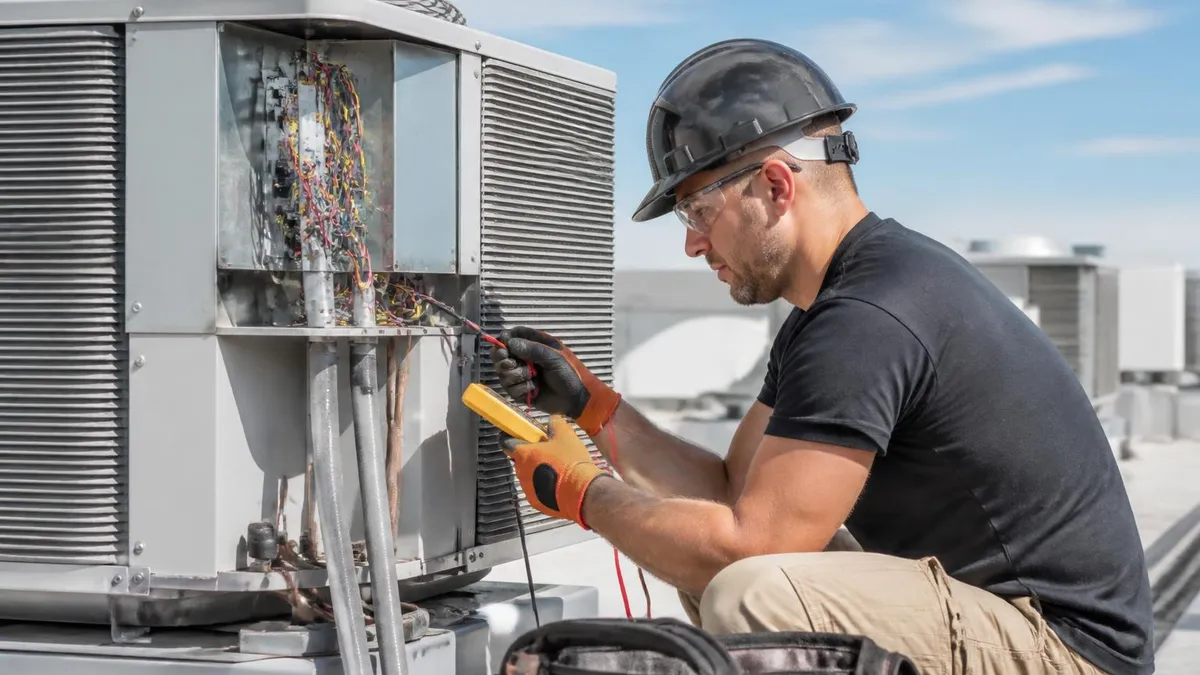
Is Getting Your HVAC Journeyman License Worth It?
- +Immediate pay bump of $4-$10 per hour above apprentice scale
- +Legal authority to pull permits and sign off on your own work
- +Eligibility for prevailing-wage and union jobs that require licensure
- +Stronger negotiating position when changing employers
- +Required stepping stone before pursuing a master license
- +Higher credibility with homeowners and commercial clients
- +Portable credential that often transfers via state reciprocity
- −Application paperwork can take 60 to 120 days to process
- −Exam fees, prep materials, and time off add up to $500-$1,500
- −Continuing education hours required annually in most states
- −Code books update every 3 years, forcing ongoing study
- −Liability exposure increases once you sign for work
- −Some employers expect more responsibility without proportional pay raises
- −Failed exams require waiting periods of 30 to 90 days before retesting
HVAC Journeyman License Application Checklist
- ✓Verify your state's specific hour and education requirements on the board website
- ✓Gather notarized affidavits from every employer covering claimed work hours
- ✓Order official transcripts from any HVAC schools or community colleges attended
- ✓Complete EPA Section 608 Universal certification if not already done
- ✓Photocopy your apprenticeship completion certificate if you have one
- ✓Pass a background check and submit fingerprints if required by the state
- ✓Pay the application fee — typically $50 to $200 by check or online portal
- ✓Schedule your exam date through PSI, Prov, or the state-contracted testing vendor
- ✓Purchase current edition code books required by your jurisdiction
- ✓Complete a structured prep course or self-study program of at least 80 hours
- ✓Bring two forms of ID and tabbed code books on test day
- ✓Pay your initial license fee within 30 days of passing the exam
The single highest-ROI exam prep activity
Candidates who arrive with pre-tabbed, indexed code books finish the code section 20 to 30 minutes faster and score roughly 12 percent higher than those with clean books. Use color-coded tabs for chapters, write a custom index inside the front cover, and highlight every table referenced in your practice questions. Do this two weeks before test day.
Understanding the real cost of getting your hvac journeyman license helps you plan and budget accurately. The application fee alone ranges from $50 in low-cost states like Tennessee to $200 in Florida and California. Exam fees through PSI or Prov run another $75 to $150. Initial licensing fees after you pass add $100 to $300, and many states require a bond or insurance certificate that costs $100 to $500 annually.
Then come the study materials. A complete code-book set — IMC, IFGC, and your state amendments — runs $200 to $400 if you buy current editions, more if you add the UMC for West Coast jurisdictions. A reputable prep course from a publisher like Tools and Concepts, Mike Holt, or a regional trade school costs $300 to $800. Add another $50 to $150 for a quality practice-question bank, and you are looking at $750 to $1,500 total in out-of-pocket prep expenses before your first paycheck as a journeyman.
The return on that investment is dramatic. According to BLS and union wage data, a licensed journeyman earns a median of $58,000 to $72,000 nationally, with top-quartile metros like Seattle, San Francisco, and Chicago paying $85,000 or more. Compare that to apprentice pay of $35,000 to $45,000, and the license pays for itself in the first three to six months after you pass. Over a 20-year career the differential exceeds $400,000 in lifetime earnings.
Continuing education adds a recurring cost most candidates overlook. Most states require 4 to 16 hours of CE per renewal cycle, usually annually or biennially. Approved providers charge $20 to $50 per hour, so budget $100 to $400 per renewal. Some employers cover this, but smaller shops often expect you to handle it on your own time and dime.
Hidden costs matter too. Time off for testing — typically a full day plus travel — represents lost wages of $200 to $400 for hourly workers. Failed exams cost you the retest fee plus another day off, and most states impose a 30-to-90-day waiting period before you can try again. Plan to pass the first time and you save real money.
If your employer offers reimbursement, take it. Union contractors, large mechanical firms, and some franchise service companies pay all or part of the licensing cost in exchange for a commitment to stay employed for 12 to 24 months after passing. Read the fine print on any reimbursement agreement — some include clawback clauses if you leave early. For most workers, accepting the deal still nets out positive.
Tax treatment is worth knowing. Licensing fees, exam fees, study materials, and required CE are generally deductible as unreimbursed business expenses if you are a W-2 employee in a state that allows the deduction, and fully deductible if you are self-employed. Keep every receipt and consult a CPA familiar with skilled-trade workers — small deductions add up over a career.
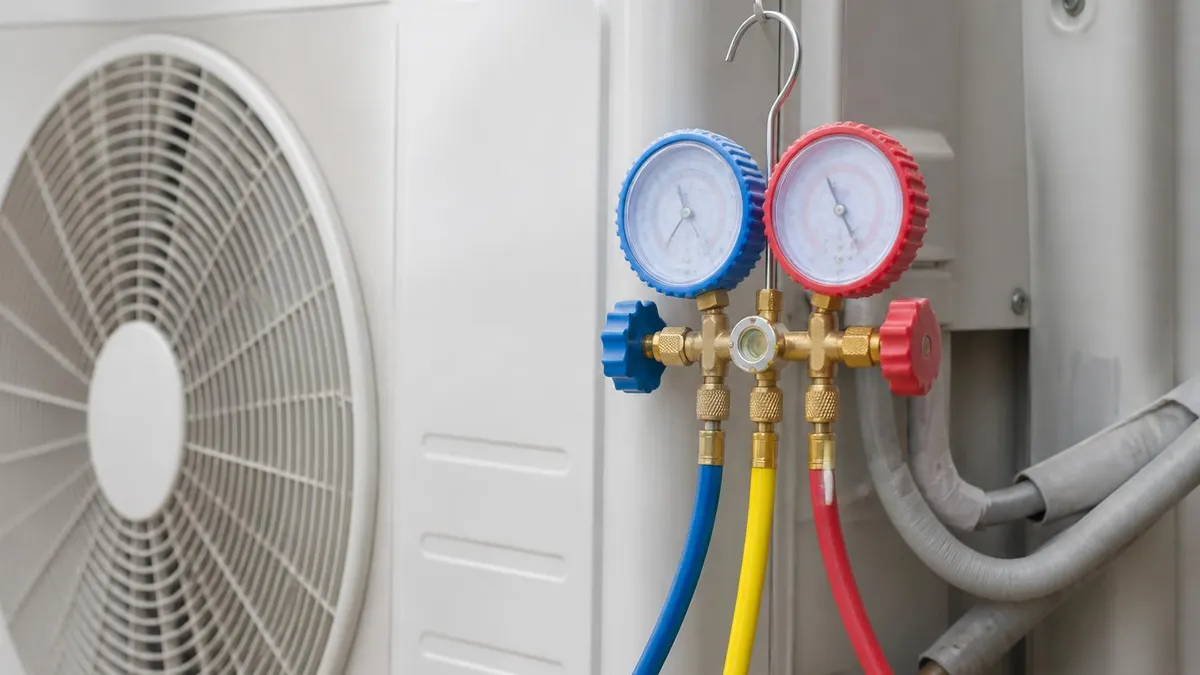
Most state boards require applications 30 to 60 days before your desired exam date. Miss the cutoff and you wait for the next testing window, which can mean another two to three months of apprentice wages. Submit early, double-check every affidavit, and follow up by phone if you do not get confirmation within 14 days.
Passing the journeyman exam is the start of a 30-year career arc, not the finish line. Your first move after getting licensed should be renegotiating pay with your current employer or shopping the market. The journeyman card is a market signal, and shops compete for licensed techs aggressively. Even a single market test — interviewing at one or two competitors — typically yields a $3 to $7 per hour bump from your existing employer once they know you have options. Our HVAC Repair Philadelphia guide details how this dynamic plays out in major metros.
Next, decide whether you want to specialize. Refrigeration, controls, hydronics, geothermal, VRF, and commercial rooftop work all pay premiums above generalist residential service. Pick a specialty that matches your local market — refrigeration in coastal cities with restaurants, geothermal in the upper Midwest, VRF in dense urban cores. Two years of focused experience plus a manufacturer certification (Daikin, Mitsubishi, Trane TPI) can push you into the $90,000+ tier.
The master license is the natural next credential. Most states require 2 to 4 additional years as a journeyman before you can sit for the master exam. Master licensure unlocks the right to operate as a contractor, pull permits in your own name, and run a crew. If running your own business appeals to you, start planning for the master exam within your first year as a journeyman so you build the field hours and savings you will need.
NATE certification, while voluntary, separates you from the crowd. NATE-certified techs earn 5 to 15 percent more on average and have access to better service-side roles at premium contractors. The Core exam plus one specialty exam runs about $200 and is widely accepted across all 50 states. Many distributors and manufacturers also offer free or low-cost certifications that boost your resume.
Teaching part-time at a community college or apprenticeship program is another lever. Most programs pay $30 to $60 per hour and only ask for one or two evenings per week. The work pays well, deepens your own knowledge, and builds a network of hiring contractors who watch your students. Many shop owners started as part-time instructors before launching their own companies.
If you want a desk-side career path, large mechanical contractors hire licensed journeymen as service managers, project managers, and estimators. These roles pay $75,000 to $120,000 and trade physical work for office time. The field background gives you instant credibility with the techs you supervise and the customers you sell to. Look at large national contractors like Comfort Systems USA, EMCOR, or Service Experts if this appeals to you.
Finally, plan for retirement early. The trades reward people who think long-term. Maximize any employer 401(k) match, open a Roth IRA, and consider buying a single rental property by your mid-30s. Journeymen who treat their license like a small business — tracking income, expenses, and assets — retire comfortably in their late 50s. Those who treat it like a paycheck often work into their 70s by necessity.
The last 30 days before your exam matter more than the previous six months of casual study. Block off at least 10 focused hours per week and structure them around weak areas, not topics you already know. Take a full-length timed practice test on day one of your final month. Score it honestly. The categories where you scored below 75 percent are exactly where you should spend the next four weeks. Re-test every weekend and watch the trend line.
Sleep and physical condition matter on test day in ways most candidates underestimate. A four-hour exam taxes working memory, and sleep deprivation hurts code-lookup speed and arithmetic accuracy. Sleep at least seven hours for three consecutive nights before the test. Skip alcohol the week before. Eat a real breakfast on test day with protein and complex carbs — not a sugar crash candy bar from the testing-center vending machine.
Bring more than the minimum required materials. Two pencils, a backup calculator with fresh batteries, your tabbed code books, a snack, a water bottle, photo ID, and your exam admission letter. Most testing centers allow water and snacks in a locker but not in the testing room — plan for a break halfway through. Showing up over-prepared lowers stress, and lower stress directly improves recall.
Pace yourself ruthlessly. Most state journeyman exams give you about 2.5 to 3.5 minutes per question. If a question takes longer than 4 minutes, flag it and move on. Coming back fresh after answering 30 easier questions almost always cracks the hard one open. The candidates who fail most often are those who fight one bad question for 15 minutes and then run out of time on the last 20 questions, where the easy points were waiting.
Read every question twice and watch for negative qualifiers — words like NOT, EXCEPT, and LEAST EFFECTIVE. Code question writers love these traps because they distinguish careful readers from rushed ones. Underline the qualifier on your scratch paper. This single habit raises most candidates' scores by 3 to 5 percentage points.
When you finish, do not second-guess yourself on review. Studies of multiple-choice testing show that your first answer is correct about 75 percent of the time. Change an answer only when you find concrete textbook evidence that your first instinct was wrong. Skim through to catch blanks and obvious bubbling errors, then submit and walk out.
If you fail, do not panic. Most states allow retests after a 30-to-90-day waiting period, and many candidates pass on attempt two. Request a score breakdown by category if your state provides one — it shows exactly where to focus. Spend the waiting period drilling those weak categories rather than restudying everything. The second exam is almost always easier than the first because you understand the format and pacing.
Sample HVAC Practice Questions
Try these questions from our free HVAC practice tests. The correct answer and an explanation follow each question.
What is a 'flexible duct' (flex duct) and what are the installation requirements for proper performance?
- A. Flexible duct can be installed in any configuration without restrictions; it is simply a convenient alternative to rigid ductwork in all applications
- B. Flexible duct is a pre-insulated duct with a flexible inner liner; it must be fully extended (not compressed or kinked), properly supported, and installed with gradual bends to achieve rated airflow
- C. Flexible duct must only be used for short connections under 2 feet; longer runs require rigid ductwork
- D. Flexible duct has identical pressure drop to rigid ductwork of the same diameter
Answer: B. Flexible duct is a pre-insulated duct with a flexible inner liner; it must be fully extended (not compressed or kinked), properly supported, and installed with gradual bends to achieve rated airflow
Flexible duct is convenient for residential branch runs but has higher friction losses than rigid duct when compressed, kinked, or poorly supported—proper installation requires full extension, support every 4 feet, and gentle bends of at least 1 duct-diameter radius.
Which document typically outlines the compliance requirements for HVAC professionals?
- A. Employee handbook
- B. Marketing brochure
- C. Standards of practice and code of conduct
- D. Annual financial report
Answer: C. Standards of practice and code of conduct
Standards of practice and codes of conduct define the professional and ethical requirements practitioners must follow.
Which ASHRAE standard covers residential ventilation requirements, including whole-house mechanical ventilation?
- A. ASHRAE 62.1
- B. ASHRAE 62.2
- C. ASHRAE 90.2
- D. ASHRAE 55
Answer: B. ASHRAE 62.2
ASHRAE 62.2 specifically addresses ventilation and IAQ requirements for low-rise residential buildings, including whole-building and local exhaust strategies.
Under the International Mechanical Code, what ventilation requirement applies to a commercial kitchen exhaust hood?
- A. Exhaust must equal supply air volume
- B. Makeup air must be provided at 80-100% of exhaust volume
- C. No makeup air is required if exhaust is under 1,000 CFM
- D. Makeup air must be heated to room temperature before introduction
Answer: B. Makeup air must be provided at 80-100% of exhaust volume
The IMC requires that makeup air be provided at approximately 80 to 100 percent of the exhaust volume to maintain proper pressure balance in commercial kitchens.
HVAC Questions and Answers

HVAC Duct Supplies: The Complete Buyer's Guide to Ductwork Components, Sizing, and Installation Materials

HVAC Duct Calculator: The Complete Guide to Sizing Ductwork for Airflow, Static Pressure, and System Efficiency
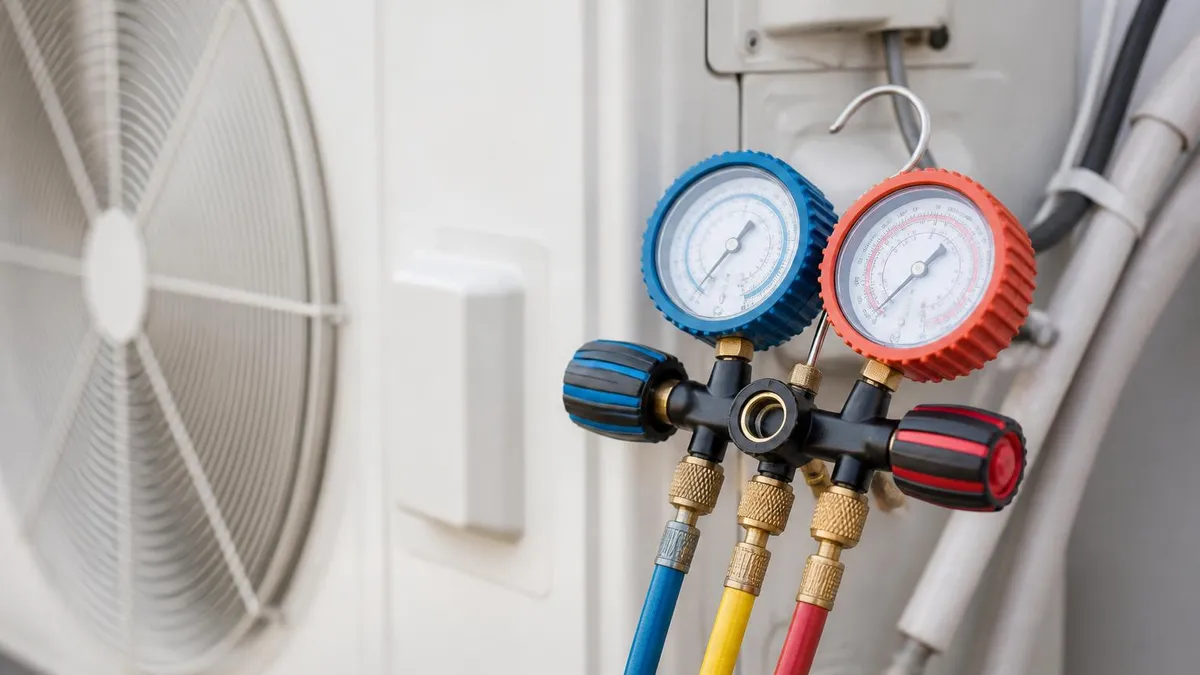
Certified HVAC Contractors: How to Find, Vet, and Hire the Right Professional for Your Home or Business

HVAC Repair Philadelphia: The Complete Homeowner's Guide to Finding, Hiring, and Working With Local Heating and Cooling Pros

Best HVAC Repair in Bandon, OR: Local Services Near Me Guide
How this page was made: written with AI tools and published by Nathan Beja, founder of Practice Test Geeks, who is responsible for its content. We have not yet matched this exam's facts to an official source, so confirm fees, dates and rules with the exam body. Not reviewed by a subject-matter expert. Editorial policy