
HazMat Endorsement Texas: Complete CDL Certification Guide for 2026 September
Complete hazmat endorsement Texas guide: 🧠 TSA background check, written test, fees, renewal timelines, and free practice questions to pass on your
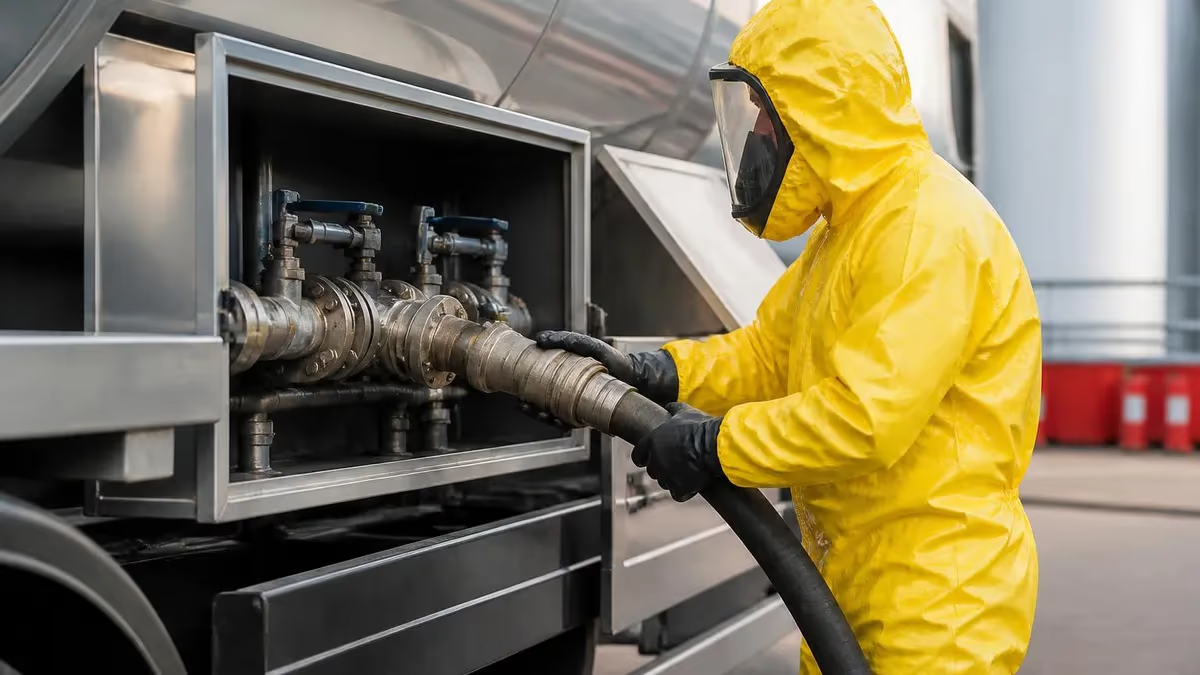
Earning your hazmat endorsement Texas certification is one of the smartest career moves a commercial driver can make in 2026, opening doors to higher-paying freight, tanker routes, and specialized fuel hauling work across the Lone Star State. Texas operates as one of the busiest hazmat corridors in the country, with thousands of loads moving petroleum, chemicals, and compressed gases through Houston, Dallas, San Antonio, and the Permian Basin every single day. Drivers who hold the H endorsement consistently earn $0.05 to $0.15 more per mile than standard CDL holders.
The hazardous materials endorsement is added to your existing Class A or Class B Texas commercial driver's license after you pass a federal TSA Security Threat Assessment, complete a Texas Department of Public Safety knowledge test, and pay all applicable state and federal fees. Unlike standard endorsements, the hazmat process involves fingerprinting, an FBI background investigation, and immigration verification because the cargo you'll haul could pose national security risks if mishandled or stolen by bad actors.
This guide walks you step by step through every Texas-specific requirement, from gathering your citizenship documents and scheduling your TSA appointment to passing the written exam at your local DPS office. We'll cover the exact fees you'll pay in 2026, how long the entire process takes from start to finish, and what study materials give you the best chance of passing on the first attempt. You can also try our free hazardous materials endorsement test to gauge your readiness.
Texas applicants face a few unique wrinkles that drivers in other states don't deal with. The Texas DPS uses a separate online appointment system for CDL services, the state requires proof of Texas residency in addition to federal documents, and certain border counties have longer wait times for TSA enrollment slots. Knowing these quirks ahead of time can shave weeks off your timeline and save you the headache of repeat trips to government offices that are already notoriously backed up.
The written knowledge test itself covers nine major topics outlined in the Texas Commercial Motor Vehicle Drivers Handbook, including hazard classes, placarding requirements, loading and unloading procedures, emergency response, and the federal hazardous materials regulations found in 49 CFR Parts 100 through 185. Most candidates need between 20 and 40 hours of focused study time to feel confident, though experienced drivers transferring endorsements from other states often pass with less prep.
Beyond the exam, holding a Texas hazmat endorsement unlocks meaningful career upgrades. Tanker fleets running gasoline and diesel out of Houston refineries pay premium rates for H-endorsed drivers, and the explosive growth of the LNG export industry along the Gulf Coast has created sustained demand that shows no signs of slowing through the rest of the decade. Even local delivery jobs hauling propane, fertilizer, or industrial chemicals pay noticeably better when hazmat is on your license.
By the time you finish this guide, you'll know exactly what documents to gather, where to apply, what to study, how much to budget, and what to expect on test day. We'll also cover renewal requirements so you don't lose your endorsement five years from now, and we'll bust some of the most common myths that trip up first-time applicants in Texas.
Texas HazMat Endorsement by the Numbers

Your Step-by-Step Texas HazMat Path
Verify Eligibility
Apply with TSA
Complete Fingerprinting
Study & Schedule Test
Pass the DPS Exam
Receive Updated CDL
The Transportation Security Administration's threat assessment is the gateway requirement for every Texas hazmat applicant, and understanding how it works will save you weeks of confusion. The TSA partners with a contractor called IDEMIA, which operates Universal Enrollment Services centers throughout Texas where you'll go in person to be fingerprinted and photographed. You cannot complete this step at a Texas DPS office, at your trucking company, or through any third-party vendor, despite what some recruiters may tell you.
To begin, visit the official Universal Enrollment portal and select Hazardous Materials Endorsement as your program. You'll fill out a detailed online application that asks for your full legal name, every address you've lived at for the past five years, employment history, citizenship status, and biographical data matching your government-issued ID. Take your time here because any discrepancy between your application and your supporting documents can trigger delays or even outright denial of your cdl hazardous materials endorsement.
After submitting your online application and paying the $92 federal fee with a credit card, debit card, or money order, you'll select an enrollment center and appointment time. Texas has more than two dozen enrollment locations, but availability varies dramatically by region. Houston, Dallas, and Austin typically have appointments within a week, while smaller cities like Lubbock, Tyler, and Brownsville may have two to three week waits. Border counties sometimes have additional capacity issues, so flexibility on travel matters.
On appointment day, bring your unexpired Texas CDL plus a second form of identification such as a U.S. passport, certified birth certificate, or permanent resident card. Lawful permanent residents and certain other non-citizens can apply, but the document requirements are more stringent and the background check takes longer. Refugees, asylees, and some visa holders are eligible under specific conditions outlined in 49 CFR 1572.105, while undocumented individuals and most temporary visa categories are not.
The fingerprinting appointment itself takes about 15 to 20 minutes. A technician will electronically scan all ten of your fingers, take a digital photograph, and verify your documents against the application you submitted online. You won't receive any results that day. Instead, TSA conducts the actual threat assessment behind the scenes, cross-referencing your prints against FBI criminal databases, terrorist watchlists, and immigration records. The standard processing window is 30 to 60 days, though some cases take longer.
Disqualifying factors include felony convictions for crimes like espionage, terrorism, treason, murder, kidnapping, certain firearms offenses, and dishonesty crimes such as fraud, bribery, and racketeering within the past seven years. Permanent disqualifiers include convictions for terrorism, espionage, and certain violent crimes regardless of when they occurred. If you have any criminal history, review the full disqualifier list in 49 CFR 1572.103 before paying your fee, since denials are not refundable.
If TSA preliminarily determines you're ineligible, you'll receive an Initial Determination of Threat Assessment letter explaining the reason and outlining your appeal rights. You have 60 days to file an appeal or apply for a waiver, which can take an additional 60 to 90 days to resolve. For most applicants with clean backgrounds, however, the process is straightforward and you'll receive an approval notice by mail or email when you're cleared to proceed.

HazMat Practice Test Questions
Prepare for the HazMat - Hazardous Materials Endorsement exam with our free practice test modules. Each quiz covers key topics to help you pass on your first try.
HazMat CDL Hazardous Materials (HazMat) En...
HazMat Exam Questions covering CDL Hazardous Materials (HazMat) Endorsement. Master HazMat Test concepts for certification prep.
HazMat CDL Hazardous Materials (HazMat) En...
Free HazMat Practice Test featuring CDL Hazardous Materials (HazMat) Endorsement Trivia. Improve your HazMat Exam score with mock test prep.
HazMat Hazardous Materials (HazMat) Endors...
HazMat Mock Exam on Hazardous Materials (HazMat) Endorsement Awareness. HazMat Study Guide questions to pass on your first try.
HazMat Hazardous Materials (HazMat) Endors...
HazMat Test Prep for Hazardous Materials (HazMat) Endorsement Operations. Practice HazMat Quiz questions and boost your score.
HazMat Hazardous Materials (HazMat) Endors...
HazMat Questions and Answers on Hazardous Materials (HazMat) Endorsement Theory. Free HazMat practice for exam readiness.
HazMat Ultimate CDL Hazardous Materials (H...
HazMat Mock Test covering Ultimate CDL Hazardous Materials (HazMat) Endorsement. Online HazMat Test practice with instant feedback.
HazMat Emergency Response
Free HazMat Quiz on HazMat Emergency Response. HazMat Exam prep questions with detailed explanations.
HazMat Loading, Unloading, and Segregation
HazMat Practice Questions for HazMat Loading, Unloading, and Segregation. Build confidence for your HazMat certification exam.
Texas Hazardous Materials Endorsement Test Breakdown
The Texas DPS hazmat knowledge test contains 30 multiple-choice questions drawn from a state-managed question bank aligned with the federal CDL standards. You need to answer at least 24 questions correctly, or 80 percent, to pass and earn your H endorsement. The test is administered on a computer terminal at your local driver license office, and most candidates finish within 30 to 45 minutes, though you have up to two hours to complete it.
Each question presents four answer choices, only one of which is correct. There's no penalty for guessing, so always select an answer even when you're unsure. If you fail, Texas DPS allows you to retake the exam, but you must wait until the next business day and pay the testing fee again. After three failed attempts, you may be required to wait longer or submit additional documentation before retesting.
Is the Texas HazMat Endorsement Worth Pursuing?
- +Earn $0.05 to $0.15 more per mile on hazmat freight loads
- +Qualify for premium tanker positions in Houston and Gulf Coast refineries
- +Unlock LNG, propane, and chemical hauling jobs with major Texas carriers
- +Stand out to recruiters in a competitive Texas trucking market
- +Combine with tanker endorsement for the highest-paying X endorsement combo
- +Open doors to military fuel contracts and government hazmat work
- −Federal $92 fee plus state testing and licensing costs
- −30 to 60 day waiting period for TSA background clearance
- −Required fingerprinting trip to an authorized enrollment center
- −Disqualifying criminal convictions can permanently block approval
- −Renewal every five years with full background check repeated
- −More restrictive route, parking, and tunnel rules while loaded

Texas Hazardous Materials Endorsement Requirements Checklist
- ✓Hold a valid Texas Class A or Class B commercial driver's license
- ✓Be at least 21 years old for interstate or 18 for intrastate hauling
- ✓Provide proof of U.S. citizenship or lawful permanent resident status
- ✓Submit a TSA Hazmat Threat Assessment application through Universal Enrollment Services
- ✓Pay the $92 federal application fee with credit, debit, or money order
- ✓Attend in-person fingerprinting at an authorized Texas enrollment center
- ✓Pass an FBI criminal background check with no disqualifying offenses
- ✓Study the Texas CDL Handbook Section 9 covering hazardous materials
- ✓Score at least 24 out of 30 on the Texas DPS hazmat knowledge test
- ✓Pay the Texas DPS endorsement fee and present approval documentation
Start Your TSA Application First
The single biggest mistake new applicants make is studying for the written test before submitting their TSA application. Because federal processing takes 30 to 60 days, you should apply with TSA on day one, then use that waiting period to prepare for the DPS knowledge exam. This parallel approach shaves a full month off your overall timeline and lets you walk into DPS ready to test the moment your approval arrives.
Budget planning for your Texas hazmat endorsement starts with understanding both the upfront fees and the hidden costs that catch many applicants off guard. The federal TSA application fee is currently $92 in 2026, paid online when you submit your threat assessment application. This fee covers fingerprinting, FBI database checks, immigration verification, and the issuance of your hazmat approval, but it is non-refundable even if you are denied or if you abandon your application before completing the process.
On top of the federal fee, Texas DPS charges a separate endorsement application fee and a knowledge test fee when you visit a driver license office to add the H to your CDL. The combined state cost typically runs between $11 and $25 depending on whether you're renewing your full CDL or just adding the endorsement to an existing license. If you fail the knowledge test, expect to pay the testing fee again for each retake, which makes thorough preparation a sound financial investment.
Indirect costs add up quickly for drivers in rural Texas. If you live in a small town without a nearby enrollment center, factor in travel time, fuel, and possibly an overnight stay to attend your TSA fingerprinting appointment. Lost wages also matter, since most enrollment centers operate Monday through Friday during business hours when you'd otherwise be driving. Some carriers reimburse hazmat fees for drivers who commit to staying on for a set period, so always ask about company-sponsored endorsement programs.
The total timeline from start to finish ranges from six weeks for organized applicants in major metro areas to twelve weeks or longer for those in remote regions or with complex backgrounds. Plan for the long end of that range, especially if you're trying to time your endorsement with a new job offer. Some Texas carriers will hire you contingent on hazmat approval and start you on non-hazmat freight while you wait, but others require the endorsement to be active before your first day.
Once you have the endorsement, the financial upside materializes quickly. Texas hazmat drivers running tanker fuel loads out of Houston or Corpus Christi commonly earn $75,000 to $95,000 annually, with experienced drivers at major carriers like Quality Distribution, Groendyke Transport, and Kenan Advantage Group earning over $100,000. Local hazmat work hauling propane, gasoline, or chemicals pays slightly less but offers home-daily schedules that many drivers value over the per-mile premium.
The endorsement remains valid for five years from the date your TSA approval is issued, not from when you pass the DPS test. Mark your calendar and start the renewal process at least 90 days before expiration, since the full background check has to be repeated. If your endorsement lapses, you lose the ability to legally haul hazmat loads until you complete the renewal, which can mean weeks of lost income if you delay starting the renewal process.
Some drivers find value in pursuing complementary endorsements alongside hazmat. Adding the N tanker endorsement converts to the X combined endorsement, which is the most valuable single-letter endorsement in trucking. Most tanker fleets specifically recruit X-endorsed drivers, and the combo opens doors to top-tier fuel hauling and chemical transport work across Texas's massive petrochemical industry along the Houston Ship Channel and Beaumont-Port Arthur corridor.
Texas hazmat endorsements expire every five years, and the renewal requires a brand-new TSA background check that takes 30 to 60 days. Begin your renewal at least 90 days before expiration or you risk losing your ability to haul hazardous loads, which can cost a working driver thousands of dollars in lost wages while waiting for re-approval.
Renewing your Texas hazmat endorsement is essentially a repeat of the original application process, but with a few important differences that catch drivers by surprise. TSA does not send renewal reminders, so the burden falls entirely on you to track your expiration date and start the renewal process in time. The endorsement itself expires on the date printed on your CDL, and once that date passes, you legally cannot haul hazardous materials until you complete the renewal and have the endorsement reissued.
The renewal application is submitted through the same Universal Enrollment Services portal you used originally, and the $92 fee is identical to a new application. You'll need to attend an in-person fingerprinting appointment again, even if your prints are already on file from a prior approval, because TSA's policy requires fresh biometrics for each five-year cycle. Bring the same citizenship and identification documents you brought to your first appointment, and verify everything matches your current legal name in case you've married, divorced, or changed it.
Once your renewal is approved, you'll need to visit a Texas DPS office to have the endorsement officially reissued on your CDL. Unlike the original application, you do not have to retake the written knowledge test as long as your endorsement is still valid when you apply for renewal. However, if your endorsement has already expired by the time you visit DPS, you may be required to retake the exam, so the 90-day head start really matters. Pair your renewal prep with a quick hazardous material endorsement practice test to refresh your knowledge.
Drivers transferring an existing hazmat endorsement from another state into Texas face a slightly different process. You must surrender your out-of-state CDL when you become a Texas resident, and the H endorsement does not automatically carry over without verification. Texas DPS will verify your TSA approval status through the federal database, and if your approval is current and your CDL transfer is otherwise valid, you can typically have the endorsement added to your new Texas license without retaking the written test or paying another TSA fee.
Maintaining your endorsement in good standing also requires staying clean of disqualifying offenses during the five-year validity period. If you're convicted of a disqualifying crime, arrested on certain charges, or become subject to immigration enforcement actions, TSA can revoke your approval mid-cycle. Carriers also conduct their own background screening, and many will pull you off hazmat loads after any DUI, reckless driving conviction, or serious safety violation regardless of whether TSA has acted yet.
Some Texas drivers find that their carrier requires additional safety training beyond the federal minimum. Major fleets typically conduct annual hazmat refresher training, document it in your DOT qualification file, and require you to pass internal exams on company-specific safety procedures. This training does not replace the federal TSA endorsement, but it does mean that even after you earn the H, you'll spend hours each year reviewing hazmat knowledge to stay current with company policies and any regulatory updates from PHMSA and FMCSA.
One overlooked aspect of endorsement maintenance is keeping your address and contact information current with both TSA and Texas DPS. If TSA sends you a renewal notice or compliance letter and it goes to an old address, you may miss critical deadlines or fail to respond to background check questions in time. Update your address with TSA within 30 days of any move, and notify Texas DPS within the state-required timeframe to avoid any administrative complications that could delay future renewals or trigger compliance issues at roadside inspections.
Test day preparation in Texas comes down to a small number of practical habits that separate first-time passers from drivers who have to come back next week. The night before your DPS appointment, gather everything you'll need into one folder: your current Texas CDL, your TSA approval letter, a second form of identification, proof of Texas residency, and any payment method the office accepts. Texas DPS offices accept cash, money orders, and most major credit and debit cards, but some smaller offices have card reader outages, so bring a backup.
Arrive at least 30 minutes before your scheduled appointment time, because Texas DPS offices can be unpredictable and sometimes call applicants early when other slots open up. Dress comfortably and bring a light snack since the entire visit can stretch to two hours between check-in, document verification, payment, photo, and the actual computer-based exam. You won't be allowed to bring your phone, notes, or any study materials into the testing area, so review your last-minute notes in the parking lot before walking inside.
The computer testing system at Texas DPS is intuitive but worth understanding ahead of time. Each question appears on screen with four answer choices, and you click your selection then click Next to move on. You generally cannot skip questions and return to them later, so commit to an answer before advancing. If a question stumps you, eliminate the obviously wrong answers first and pick the best remaining choice. Statistically, that approach lifts your odds substantially over pure guessing.
Pay close attention to questions involving the segregation table and placarding requirements, because these topics produce the highest failure rates among Texas applicants. Memorize that explosives in Division 1.1, 1.2, and 1.3 require placards at any quantity, while many other hazard classes only require placarding when the load exceeds 1,001 pounds. Know that Class 7 radioactive materials require placards in any amount and that certain materials in Table 1 of 49 CFR 172.504 always require placarding regardless of quantity.
Emergency response questions also trip up many candidates. Drivers must know that hazmat shipping papers must be located within reach of the driver while restrained by a seat belt, on the driver's seat when out of the vehicle, or in a door pouch on the driver's side. The Emergency Response Guidebook must be readily accessible, and drivers should be familiar with how to look up a UN identification number or material name to find the appropriate response actions in case of a spill, leak, or fire.
If you fail the exam on your first attempt, don't panic. Texas DPS allows multiple retakes, and you'll only need to study the topics where you struggled. Ask the examiner for general feedback on which sections gave you trouble, then focus your additional study time accordingly. Most second-time test takers pass easily because they know the format, understand the difficulty level, and have identified their personal weak spots in the material. Schedule your retake for the next available day to keep momentum.
Once you pass, the Texas DPS clerk will update your CDL record immediately and issue a temporary paper license with the H endorsement that's valid for driving hazmat loads while you wait for your permanent plastic CDL to arrive in the mail. Some carriers require the permanent license before assigning hazmat freight, so check with your employer about their policy. Keep a copy of your TSA approval letter in your truck for the first few months in case roadside inspectors question your new endorsement before your permanent license arrives.
HazMat Questions and Answers



About the Author

Educational Psychologist & Academic Test Preparation Expert
Columbia University Teachers CollegeDr. Lisa Patel holds a Doctorate in Education from Columbia University Teachers College and has spent 17 years researching standardized test design and academic assessment. She has developed preparation programs for SAT, ACT, GRE, LSAT, UCAT, and numerous professional licensing exams, helping students of all backgrounds achieve their target scores.
Join the Discussion
Connect with other students preparing for this exam. Share tips, ask questions, and get advice from people who have been there.
View discussion (8 replies)